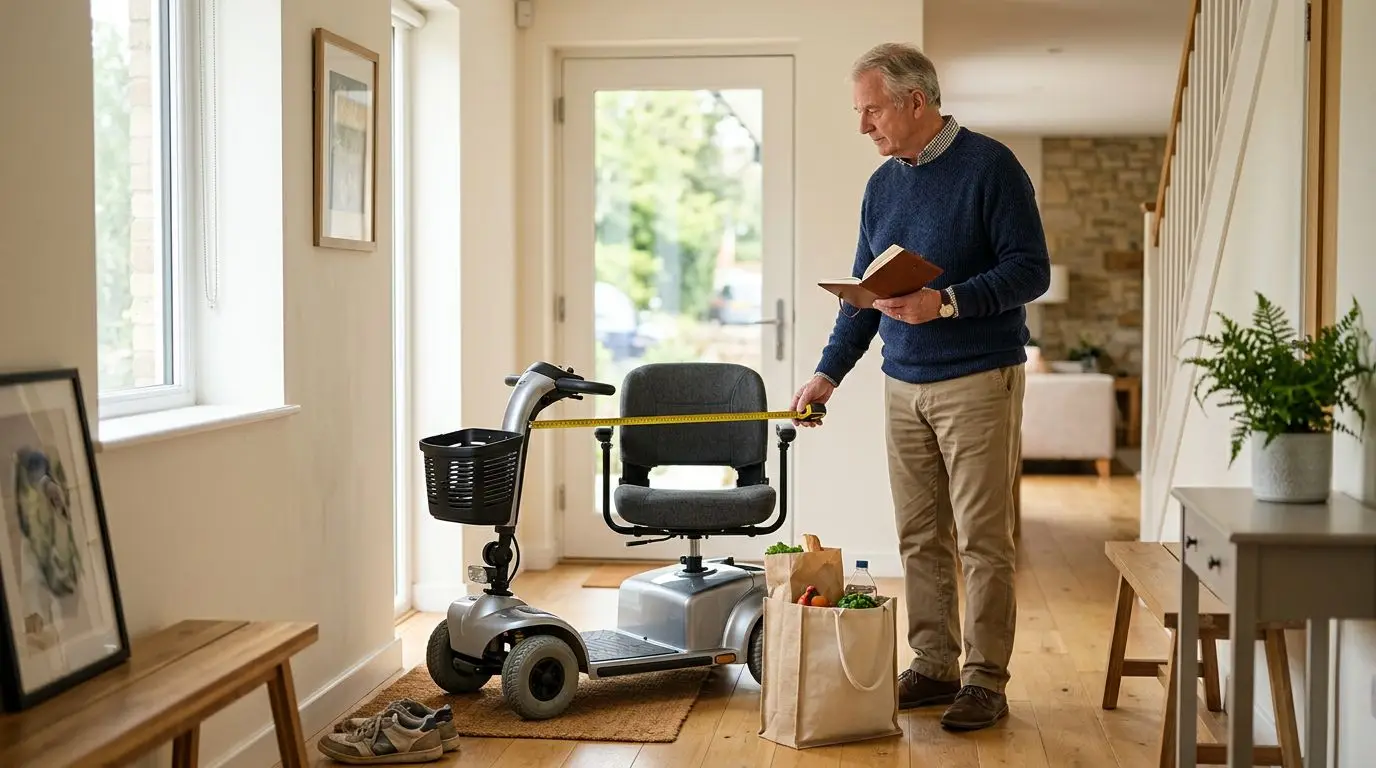
The best cheap mobility scooter is not simply the one with the lowest price. It is the least expensive scooter that safely fits your body, your home, your usual travel distance, and the surfaces you ride on. To save money without choosing the wrong type, start with weight capacity, seat fit, range, portability, and replacement battery costs before you compare any deal.
A bargain scooter can be a smart buy when it matches your daily routine. It can also become expensive quickly if it is too small, too weak on ramps, hard to transport, or limited to smooth indoor floors when you need it outside. Use the guide below to separate real value from a low upfront cost.
Cheap Does Not Mean the Same Thing as Good Value: Start With 5 Basics
A budget scooter should still meet 5 non-negotiable basics: safe weight capacity, enough range, stable handling, comfortable fit, and parts that can be replaced. If one of those is missing, the scooter may cost less on day 1 but cost more over the next 6 to 24 months.
Most low-cost mobility scooters fall into the travel or compact category. They often break into several pieces for car loading, use smaller batteries, and have smaller wheels than full-size scooters. That makes them useful for errands and smooth surfaces, but it can limit them on grass, gravel, steep driveways, or long outdoor trips.
Think of cheap as a starting filter, not the final decision. A lower upfront price only helps if the scooter can do the actual job. The better question is: what is the least expensive type that meets my real needs without pushing the scooter to its limits every day?
- Fit: seat width, legroom, tiller adjustment, and armrest comfort.
- Capacity: user weight plus items carried in a basket or bag.
- Range: usual trip distance with a safety buffer.
- Terrain: indoor floors, sidewalks, curb cuts, packed paths, or uneven ground.
- Ownership costs: batteries, tires, chargers, service calls, and accessories.
Short answer: buy the cheapest scooter that still has margin. A scooter used at its maximum rating all the time usually wears faster and feels less comfortable.
Who a Budget Scooter Is Best For: 3 Common Use Cases
A budget mobility scooter is often best for someone who rides short to moderate distances, uses mostly level surfaces, and can accept fewer premium comfort features. If your main trips are inside a home, around an apartment building, through stores, or from a parking lot to an appointment, a compact scooter may be enough.
Use case 1 is the indoor-and-store rider. This person needs a tight turning radius, easy steering, and a scooter that can fit through common doorways, which are often about 30 to 36 in. wide. A small 3-wheel scooter may work well if the user is comfortable with its stability and does not plan to ride on uneven surfaces.
Use case 2 is the car-transport rider. This person wants the scooter to disassemble into pieces that can be lifted into a trunk or cargo area. Many travel scooters separate into 4 or 5 pieces, but the heaviest piece still matters. If the largest section is too heavy for the caregiver or user to lift safely, the scooter is not truly portable.
Use case 3 is the light outdoor rider. This person rides on paved sidewalks, around a senior community, or through a parking lot. A 4-wheel compact scooter may feel steadier than a 3-wheel scooter, although it may need more room to turn.
A budget scooter is usually not the best match for frequent grass, gravel, rough pavement, long daily mileage, steep hills, or all-day outdoor use. Those needs often call for a full-size or heavy-duty scooter with larger wheels, stronger suspension, and a higher capacity rating.
Compare Cheap Scooter Types: 3 Wheels, 4 Wheels, Folding, and Full-Size
The biggest money mistake is buying the wrong category. A small travel scooter can be excellent for a 2-mile errand route on smooth surfaces, but frustrating for a long outdoor day with hills and uneven pavement.
| Type | Typical Strength | Common Tradeoff | Best For |
|---|---|---|---|
| 3-wheel compact scooter | Tighter turning in small spaces | May feel less stable on uneven ground | Indoor use, stores, apartments |
| 4-wheel compact scooter | More stable feel than many 3-wheel designs | Wider turning radius | Sidewalks, errands, mixed indoor-outdoor use |
| Folding scooter | Convenient storage and travel | May have smaller seat, wheels, and battery | Occasional trips and tight storage |
| Disassembling travel scooter | Pieces can load into many vehicles | Assembly and lifting still required | Car transport and routine errands |
| Full-size scooter | Comfort, range, stability, larger wheels | Harder to transport and store | Daily outdoor riding and longer trips |
| Heavy-duty scooter | Higher weight capacity and stronger frame | Usually larger, heavier, and less portable | Larger users, rougher surfaces, higher daily demand |
Here is the practical rule: if portability matters most, look at folding or disassembling travel scooters. If you need comfort and outdoor confidence, look beyond the smallest cheap scooters. The cheapest option in the wrong category is rarely the best deal.
Pay attention to wheel size, too. Small wheels can work well indoors but may catch more easily on sidewalk cracks, thresholds, or uneven pavement. Larger wheels generally handle outdoor imperfections better, but they also mean a larger scooter frame.
Weight Capacity Matters: Leave at Least 20 to 30 lb of Margin
Weight capacity is one of the first specifications to check because it affects safety, performance, braking, battery draw, and long-term wear. If a scooter is rated for 300 lb, that does not mean a 300 lb rider should also add a full basket, oxygen equipment, shopping bags, and daily hill climbs without concern.
A useful budget-buying approach is to leave at least 20 to 30 lb of margin above the rider’s body weight, and more if the scooter will carry groceries, medical equipment, or other items. This is not a medical rule; it is a practical equipment rule. Machines last longer when they are not constantly operated at the edge of their rating.
Also check seat dimensions. A scooter can technically support someone’s weight and still be uncomfortable if the seat is too narrow, the armrests press into the hips, or the tiller sits too close to the knees. Seat width is often listed in inches, and even 1 or 2 in. can make a noticeable difference in comfort.
Do not forget clothing and seasonal use. A rider who fits comfortably in summer clothes may feel squeezed in a winter coat. If the scooter will be used outside in colder months, test or measure with that extra bulk in mind.
Range Ratings Can Mislead: Plan for 50 to 70 Percent of the Listed Range
Range is where many cheap scooters look better on paper than they feel in real life. Published range is commonly measured under favorable conditions, often with a moderate rider weight, smooth level surface, properly charged battery, and controlled speed. Real life includes hills, stops, colder weather, rough pavement, and extra cargo.
A practical planning rule is to count on about 50 to 70 percent of the listed range for regular use. If a scooter advertises just enough range for your exact round trip with no extra distance, it may not be enough. Build in a cushion so you are not watching the battery gauge on the way home.
Battery type also affects long-term cost. Many budget scooters use sealed lead-acid batteries, which are common and generally less expensive to replace than some lithium packs, but they are heavier and need consistent charging habits. Lithium batteries are lighter and often convenient for travel-focused scooters, but replacement costs and airline rules should be checked before buying.
Charging routine matters. A scooter that sits unused for weeks with a depleted battery may develop battery problems sooner. If you want a cheap scooter to last, treat the charger and battery as part of the purchase, not an afterthought.
Portability Is Not Just Folding: Check the Heaviest Piece in Pounds
Many shoppers look for a cheap folding mobility scooter because storage and car travel matter. Folding can help, but it is not the only portable design. Some scooters fold as one unit, while others disassemble into multiple pieces so each piece is easier to manage.
The key number is the heaviest piece. If a scooter breaks into 5 sections but the largest piece is still too heavy to lift into a trunk, the design may not work for you. Ask who will lift it, how high they must lift it, and how often. A 1-time lift in a showroom is different from loading it twice a day in a crowded parking lot.
Measure your vehicle before buying. Check trunk opening height, cargo floor height, and available depth. Measure storage space at home as well. A scooter that technically folds may still be awkward in a hallway, closet, or apartment entry.
- Measure the vehicle opening at its narrowest point.
- Measure cargo depth with the back seats in the position you normally use.
- Confirm whether the basket, seat, or battery must be removed.
- Practice the lifting motion if possible before purchase.
If no one can lift the scooter safely, you may need a vehicle lift or a different scooter style. That can change the real budget substantially.
Comfort and Fit: Measure 4 Things Before You Buy
A cheap scooter that causes hip, back, shoulder, or knee discomfort will not feel cheap for long. Before buying, measure 4 things: seat width, seat depth, floorboard legroom, and tiller reach. These measurements help prevent a scooter that looks right online but feels cramped in daily use.
Seat width should let the user sit without pressure from the armrests. Seat depth should support the thighs without pressing behind the knees. Legroom matters if the rider is tall, has limited knee bend, or needs to position their feet a certain way. Tiller reach matters because leaning forward to steer can become tiring.
Armrests are another value feature. Adjustable-width or flip-up armrests can make transfers easier and improve comfort. A swivel seat can help some users get on and off the scooter more safely, especially when space beside the scooter is limited. These features are not luxuries if they determine whether the scooter can be used comfortably.
Try to test the scooter for at least 10 to 15 minutes if possible. A 30-second sit does not reveal much. Turn, stop, back up, reach for the controls, and imagine carrying a small bag or wearing a jacket.
Safety Features Worth Paying For: Lights, Brakes, and a Stable 4-Point Base
Do not cut safety features just to save a little upfront. At minimum, compare braking system, anti-tip features, lighting or reflectors, horn, speed control, and overall stability. A scooter that is hard to stop smoothly or difficult to see in a parking lot is not a good value.
Many mobility scooters use electromagnetic braking, which helps stop the scooter when the throttle is released. Still, braking feel varies by design, rider weight, slope, and surface. Test starts and stops at slow speed before riding in busy areas.
Lighting matters if the scooter will be used near driveways, parking lots, dawn or dusk conditions, or dim apartment corridors. A headlight can help you see, but reflectors and rear visibility help others see you. For daytime-only indoor use, lighting may be less important than maneuverability and seat comfort.
Stability depends on more than 3 wheels versus 4 wheels. It also depends on wheelbase, seat height, rider posture, speed, turning habits, and terrain. A 4-wheel scooter often feels more planted, while a 3-wheel scooter can be easier in tight indoor spaces. Match stability to where you ride most.
Long-Term Costs: Batteries May Need Replacement in 1 to 3 Years
A cheap mobility scooter has ongoing costs. The most common are batteries, tires, chargers, baskets, armrest parts, seats, and service labor. Batteries are especially important because they are a normal wear item, and many scooter batteries may need replacement after roughly 1 to 3 years depending on use, charging habits, storage, climate, and battery type.
Before buying, ask whether replacement batteries are standard sizes or proprietary packs. Standard battery formats can be easier to source, while proprietary packs may be convenient but limit replacement options. Also check whether the charger is common and easy to replace if lost or damaged.
Tires matter, too. Solid tires reduce flat-tire worries but can ride firmer. Air-filled tires can feel smoother on rough surfaces but may need pressure checks and occasional repair. Neither is automatically best; the value depends on your terrain and tolerance for maintenance.
Service access can make or break the deal. If the seller cannot explain how warranty support, parts ordering, or repairs work, be cautious. Saving money at checkout is less helpful if a basic repair leaves the scooter unusable for weeks.
New, Used, or Refurbished: Compare the Risk in 6 Areas
Used and refurbished scooters can save money, but they require careful inspection. Compare 6 areas before buying: battery age, charger condition, tire wear, frame damage, seat and armrest condition, and whether the scooter runs smoothly under load.
Battery age is the big unknown. A used scooter may look clean but have weak batteries that need replacement soon. Ask when the batteries were last replaced and how the scooter was stored. Long storage without proper charging can shorten battery life.
Check the frame and underside for cracks, bent parts, missing hardware, or signs of heavy impact. Test the scooter at low speed, then moderate speed, and listen for grinding, clicking, or hesitation. Make several turns. Back up. Stop on a level surface. If possible, test with the intended rider, not just an empty scooter.
Refurbished can mean different things depending on the seller. It may mean a full inspection and new batteries, or it may mean basic cleaning and a quick test. Ask for a written list of what was replaced or inspected. Clear paperwork is part of value.
How to Choose a Cheap Mobility Scooter: A 10-Step Measuring Checklist
Use this 10-step checklist before choosing a budget scooter. It turns a vague search for cheap mobility scooters into a practical fit and safety decision.
- Write down the rider’s weight and add expected cargo.
- Choose a scooter with capacity margin, not just an exact match.
- Measure seat width needed while seated comfortably.
- Measure doorway widths, especially bathroom, bedroom, and entry doors.
- Measure vehicle trunk or cargo space if transport matters.
- List the longest normal round trip in miles.
- Plan usable range at 50 to 70 percent of the listed rating.
- Identify terrain: indoor floors, sidewalks, hills, gravel, grass, or ramps.
- Confirm the heaviest piece can be lifted safely if portable use is needed.
- Ask how batteries, chargers, tires, and warranty service are handled.
This checklist often shows that two scooters with similar upfront prices are not equal. One may fit your doorways but lack range. Another may have range but be too heavy to load. The best budget choice is the one that creates the fewest compromises for your actual day.
Feature Tradeoffs: What to Keep and What to Skip on a Tight Budget
When the budget is tight, prioritize features that affect daily use and safety over appearance or convenience extras. A cup holder is nice. Correct capacity, stable braking, and a comfortable seat matter more.
| Feature | Worth Prioritizing? | Why It Matters |
|---|---|---|
| Weight capacity with margin | Yes | Supports performance, comfort, and durability |
| Seat width and armrest adjustment | Yes | Affects comfort and transfers every ride |
| Battery range cushion | Yes | Reduces risk of running low away from home |
| Largest piece weight | Yes, if transporting | Determines whether portability is realistic |
| Lights and reflectors | Yes, for outdoor or low-light use | Improves visibility around people and vehicles |
| Premium upholstery | Maybe | Comfort matters, but appearance alone should not drive the purchase |
| Extra baskets and holders | Maybe later | Useful, but often addable after purchase |
| Top speed | Usually not first | Control, stability, and range are usually more important |
Speed is a common distraction. Many scooter users are better served by smooth control at walking pace than by a higher top speed. If you ride near pedestrians, in stores, or in senior living communities, slow-speed control matters every day.
Red Flags: 7 Signs a Cheap Scooter May Cost More Later
Some budget scooters are legitimate values. Others are cheap because they cut too much or come with unclear support. Watch for these 7 red flags before you buy.
- No clear weight capacity or range information.
- No information about replacement batteries or charger availability.
- Seat dimensions are missing or vague.
- The return policy is short, unclear, or difficult to use.
- The seller cannot explain warranty service.
- The scooter is advertised for all terrains but has small wheels and limited ground clearance.
- Reviews or listing details focus only on low price, not fit, support, or durability.
Be especially careful with all-terrain language. A true outdoor-capable scooter usually needs appropriate wheel size, ground clearance, stability, and power. Small compact scooters can handle smooth sidewalks, but that is not the same as loose gravel, wet grass, or rutted paths.
If a deal feels rushed, slow down. Mobility equipment should be matched to the rider and environment. A seller who discourages measurements or basic questions is not helping you make a safe decision.
FAQ: 5 Budget Scooter Questions Answered
Are cheap mobility scooters safe?
They can be safe when used within their weight, terrain, slope, and range limits. Safety depends on fit, braking, stability, maintenance, and rider judgment, not price alone.
Is a 3-wheel or 4-wheel scooter better on a budget?
A 3-wheel scooter may be better for tight indoor turns, while a 4-wheel scooter often feels steadier outdoors. Choose based on where you ride most, not just which one costs less.
How much range do I really need?
Estimate your longest normal round trip, then add a cushion. Many shoppers plan around 50 to 70 percent of the listed range because real-world conditions reduce battery performance.
Should I buy a used mobility scooter to save money?
Used can be a good value if the batteries, frame, tires, charger, and controls check out. Ask for battery age and service history, and test the scooter with the intended rider if possible.
What is the biggest mistake when buying a cheap scooter?
The biggest mistake is buying by price before confirming type and fit. A scooter that is too small, underpowered, uncomfortable, or hard to transport can become more expensive than buying the right category first.
A cheap mobility scooter should make daily movement easier without creating new problems. Focus on fit, capacity, range, terrain, portability, and repair support. That is how you save money and still buy a scooter you can rely on.
Frequently asked questions
Are cheap mobility scooters safe? +
They can be safe when they match the rider’s weight, fit, terrain, and range needs. Do not choose by price alone; check braking, stability, visibility, and support.
Is a 3-wheel or 4-wheel scooter better on a budget? +
A 3-wheel scooter usually turns more tightly indoors, while a 4-wheel scooter often feels steadier outdoors. The better choice depends on your main riding environment.
How much range should a budget scooter have? +
Start with your longest normal round trip and add a cushion. A practical approach is to plan around 50 to 70 percent of the listed range for real-world use.
Should I buy a used mobility scooter to save money? +
Used can be worthwhile if the batteries, charger, tires, frame, seat, and controls are in good condition. Ask about battery age and test it with the intended rider when possible.
What should I avoid when buying a cheap mobility scooter? +
Avoid scooters with unclear weight capacity, missing seat measurements, vague warranty support, unknown battery availability, or claims that do not match the scooter’s size and wheels.
Related guides

Cheap Mobility Scooters Under $500: What You Can Get, What to Avoid, and When to Spend More
14 min read
How Much Does a Mobility Scooter Cost? Price Ranges, Features, and Long-Term Value
12 min read
Used vs. New Mobility Scooters: Cost Savings, Risks, and What to Check Before You Buy
13 min read