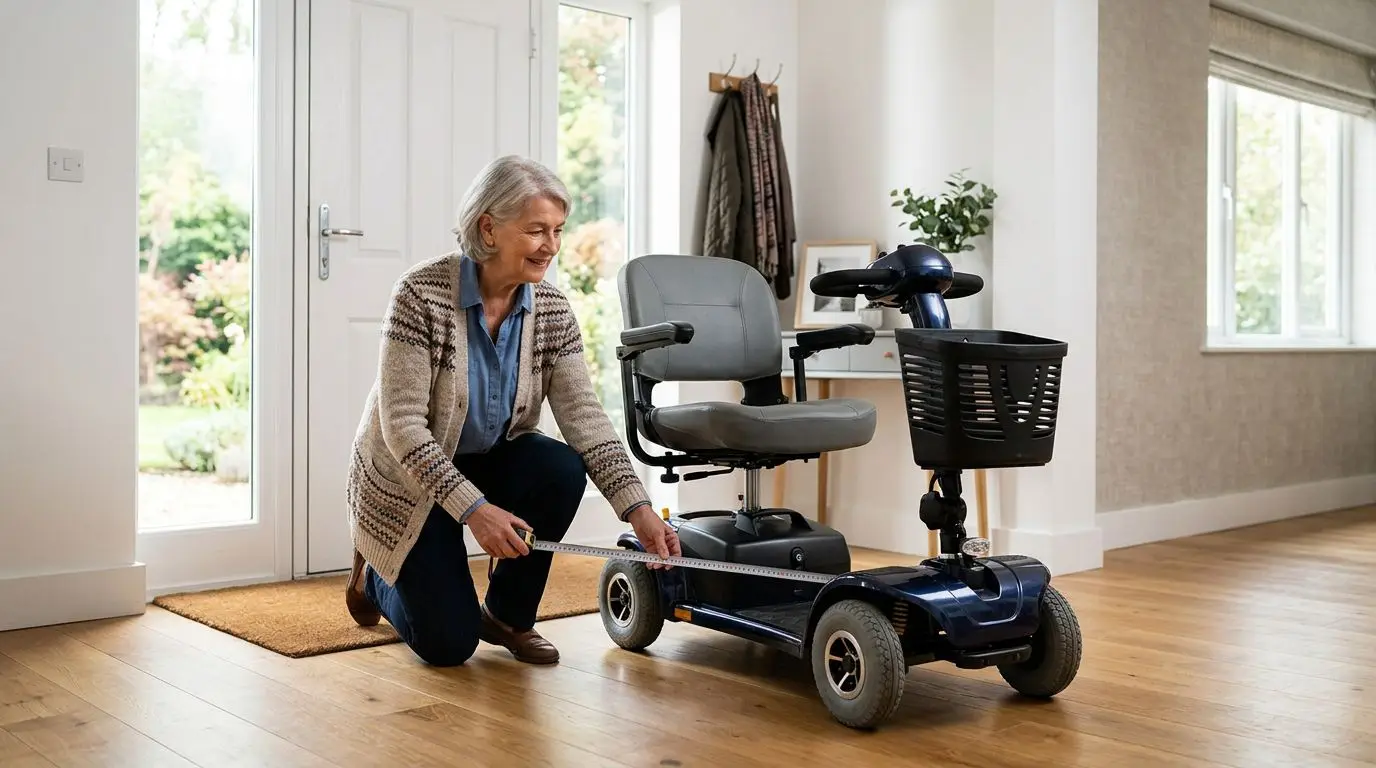
The best mobility scooter is the one that fits your body, your home, your transportation plan, and the places you go most often. Start by matching scooter size, seat comfort, battery range, turning radius, weight capacity, and wheel type to your daily routine instead of choosing by appearance alone.
For many seniors and adults, the key decision is whether you need a compact scooter for stores and travel, a mid-size scooter for everyday errands, or a larger heavy-duty scooter for outdoor terrain and higher weight capacity. Use the measurements and comparison points below to narrow your choices before you buy or schedule a test ride.
Start With Your Daily Routine: 5 Questions Before You Shop
A mobility scooter should solve real daily problems. Before comparing features, write down where you expect to use it during a typical week. Someone who rides 10 minutes to the mailbox has very different needs than someone who spends 2 hours at a shopping center or travels over cracked sidewalks.
Ask yourself these five questions:
- Where will I use it most? Indoors, outdoors, stores, sidewalks, community paths, or all of the above?
- How far do I need to go? Estimate your longest normal outing in miles, then add a safety cushion.
- Will I transport it by car? If yes, check the scooter weight, heaviest piece, and whether you can lift it safely.
- What surfaces will I cross? Smooth floors, carpet, driveway lips, gravel, grass, curb cuts, or uneven pavement?
- How long will I sit? A 15-minute ride may not require the same seat support as a full afternoon outing.
Be honest about the difficult parts. If your front door has a 1.5-inch threshold, your hallway is 34 inches wide, or your vehicle trunk opening is narrow, those measurements matter more than a long feature list.
Compare Scooter Types: 3-Wheel, 4-Wheel, Folding, and Heavy-Duty Options
Most mobility scooters fall into a few practical categories. The right type depends on turning space, stability needs, portability, terrain, and weight capacity. Many compact scooters have a turning radius around 35 to 45 inches, while larger outdoor scooters may need 50 inches or more.
| Type | Best for | Common strengths | Trade-offs |
|---|---|---|---|
| 3-wheel scooter | Indoor use, tight aisles, apartments | Smaller turning radius, easier maneuvering | May feel less stable on uneven outdoor surfaces |
| 4-wheel scooter | Sidewalks, errands, mixed indoor-outdoor use | More stable base, better outdoor confidence | Usually wider and needs more turning space |
| Folding scooter | Travel, car trunks, occasional outings | Compact storage, easier transport | Often smaller seat, lower ground clearance, limited range |
| Disassembly travel scooter | Car transport without a vehicle lift | Breaks into several pieces, practical for errands | Assembly and lifting still require hand strength and balance |
| Heavy-duty scooter | Higher weight capacity, rougher outdoor use, longer rides | Larger frame, wider seat options, bigger wheels | Heavier, harder to transport, needs more storage space |
Who it is best for
Choose a 3-wheel scooter if you mainly need tight indoor maneuvering and smooth-surface errands. Choose a 4-wheel scooter if stability on sidewalks and parking lots matters more than the smallest turning circle. A folding or take-apart scooter works best when car transport is part of your routine, while a heavy-duty style is better for larger riders, longer outdoor routes, or more demanding surfaces.
No category is automatically safer for every person. Stability depends on the rider, speed, slope, turning habits, tire type, and surface conditions. If balance, reaction time, or posture is a concern, ask a qualified mobility professional, occupational therapist, or clinician to help you evaluate fit.
Measure Fit and Comfort: Seat Width, Legroom, and 2-Inch Clearance
Comfort is not a luxury feature. If a scooter seat is too narrow, the tiller is too far away, or your knees are cramped, you may avoid using it. A practical starting point is to look for at least 1 to 2 inches of space on each side of your hips when seated, without choosing a seat so wide that you slide during turns.
Measure your seated hip width across the widest point, then compare it with the scooter seat width. Common seat widths vary widely, often from about 16 inches on compact scooters to 20 inches or more on larger models. Also measure from your lower back to the back of your knees to judge seat depth.
Check these fit points before buying:
- Seat height: Your feet should rest comfortably on the deck or foot area without straining your hips.
- Tiller reach: You should steer with relaxed shoulders and slightly bent elbows.
- Legroom: Your knees should not hit the tiller during turns.
- Armrests: Adjustable armrests can help with transfers and reduce shoulder strain.
- Seat swivel: A swivel seat can make it easier to get on and off, especially in tight parking spaces.
If you use a cane, oxygen holder, walker, basket, or other accessory, confirm that it can be carried without blocking your feet, controls, or line of sight. Accessories add convenience, but they also add weight and can change how the scooter feels.
Range, Batteries, and Charging: Plan for a 20% Reserve
Advertised range is usually measured under controlled conditions. Real-world range can drop with rider weight, hills, cold weather, tire condition, frequent stops, and rough surfaces. A wise rule is to choose a scooter with at least 20% more range than your longest normal trip.
If your usual outing is 6 miles, look for a scooter that can comfortably exceed that distance rather than one that barely meets it on paper. Battery range on mobility scooters can vary from under 10 miles on small travel units to 20 miles or more on larger outdoor scooters, depending on battery size and conditions.
Charging habits matter too. Many batteries take several hours to recharge fully, and some users charge overnight after a day of use. Ask whether the battery can be charged on the scooter, off the scooter, or both. Off-board charging can help if the scooter is stored in a garage but the battery is brought indoors.
| Range factor | Why it matters | What to check |
|---|---|---|
| Rider and cargo weight | More load can reduce range | Weight capacity and expected daily cargo |
| Terrain | Hills and rough pavement use more power | Your steepest driveway, ramp, or sidewalk route |
| Battery access | Heavy batteries may be difficult to lift | Battery weight and handle design |
| Charging location | You need a safe outlet and enough space | Outlet distance, cord path, and ventilation |
Never rely on a scooter that regularly returns home with the battery gauge nearly empty. Battery gauges are useful, but they are not perfect fuel meters. Keep a reserve.
Portability and Storage: Check 3 Weights Before You Lift
If you plan to take the scooter in a car, do not look only at total scooter weight. Check three numbers: total weight, heaviest removable piece, and battery weight. A scooter that weighs 95 pounds total may still have a 35-pound rear section that is awkward for one person to lift.
Portable scooters generally fold or disassemble. Folding designs reduce the number of parts, but the folded unit may still be heavy and bulky. Disassembly scooters break into pieces, which can make lifting easier, but you must be comfortable removing the seat, battery, basket, and frame sections repeatedly.
Measure your storage and transport spaces:
- Vehicle trunk opening: Measure width, height, and depth, not just cargo volume.
- Home storage spot: Leave space around the scooter for charging and transfers.
- Doorways: Many interior doorways are around 30 to 36 inches wide, but trim and door swing reduce usable space.
- Elevators and hallways: Check turning space, especially in apartment buildings.
- Ramps: Confirm slope, surface grip, and whether the scooter is approved for that ramp setup.
If lifting is difficult, consider whether a vehicle lift, ramp, or caregiver assistance is realistic. Do not assume you can safely lift a scooter after watching a quick showroom demonstration. Try it with the same person who will load it at home.
Terrain and Safety Features: Match Wheels From 8 to 13 Inches to Your Route
Small wheels can work well on smooth indoor floors, but outdoor routes often call for larger wheels, better ground clearance, and a more stable frame. Compact scooters may have wheels around 8 inches, while larger outdoor scooters may use wheels closer to 10 to 13 inches.
Ground clearance is another key number. If your route includes driveway lips, sidewalk cracks, thresholds, or packed gravel, a very low scooter may scrape or get hung up. More clearance helps, but it also raises the center of gravity, so speed and turning habits still matter.
Look for safety-related features that match your use:
| Feature | Useful when | Buyer note |
|---|---|---|
| Anti-tip wheels | Using ramps or mild inclines | They help, but do not make steep slopes safe |
| Headlight and reflectors | Riding in dim hallways, garages, or dusk conditions | Visibility helps others see you |
| Horn or alert sound | Stores, sidewalks, shared paths | Use politely and early |
| Speed control | Indoor use and crowded areas | Practice at the lowest setting first |
| Suspension | Longer outdoor rides or rough pavement | Can improve comfort but adds size and weight |
Practice matters. Spend at least 30 minutes learning starts, stops, tight turns, backing up, and ramp approaches in a safe open area. Avoid sharp turns at higher speeds, and slow down before door thresholds, curb cuts, wet leaves, or uneven pavement.
Weight Capacity and Stability: Leave a 25-Pound Cushion
Weight capacity is a safety and performance specification, not a comfort rating. If a scooter is rated for a certain maximum weight, that number includes the rider plus carried items such as groceries, bags, medical equipment, or accessories. Leaving a cushion of at least 25 pounds is a sensible approach for many shoppers.
For example, if a rider weighs 250 pounds and regularly carries 15 pounds of groceries or gear, a scooter rated exactly at 265 pounds leaves no practical margin. A higher-capacity scooter may provide better performance, seating support, and durability for that situation.
Capacity also affects hill climbing, braking, battery use, and frame feel. Larger-capacity scooters often have wider seats, stronger motors, and bigger batteries, but they may also be heavier and harder to maneuver indoors. Let daily use guide the decision.
Who should look closely at higher-capacity scooters
Consider a higher-capacity scooter if you are near the listed limit, need a wider seat, frequently ride outdoors, or carry heavy items. Also look at deck space and armrest width, not just the maximum capacity number.
How to Choose and Measure at Home: A 10-Minute Walkthrough
You can learn a lot in 10 minutes with a tape measure. Start where the scooter will be stored, then follow the route you expect to use most often. Measure every tight doorway, turning area, ramp, and threshold along the way.
Use this simple home checklist:
- Measure the narrowest doorway the scooter must pass through.
- Measure hallway width and note any 90-degree turns.
- Measure threshold height at exterior doors.
- Check whether there is a grounded outlet near the storage location.
- Measure the vehicle cargo area if transport is planned.
- Note the steepest ramp or driveway on your normal route.
- Measure your seated hip width and preferred seat height.
- List any accessories you must carry.
- Estimate your longest weekly trip in miles.
- Decide who will lift, assemble, charge, and maintain the scooter.
Bring these measurements when you shop or speak with a mobility professional. A scooter that fits on paper still deserves a test ride, but accurate measurements help you avoid obvious mismatches.
Costs, Service, and Test Rides: Ask at Least 7 Questions
Price is only one part of ownership. You also need to understand delivery, setup, battery replacement, tires, repairs, warranty terms, return rules, and local service options. Many buyers focus on the purchase day and forget the 2 or 3 years after it.
Before you commit, ask these seven questions:
- What is covered by the warranty, and for how long?
- Who handles repairs if the scooter stops working?
- Are batteries covered differently from the frame or electronics?
- Can replacement tires, chargers, keys, and batteries be ordered easily?
- What is the return policy if the scooter does not fit my home or vehicle?
- Is assembly included, or will I need help?
- Can I test the scooter on a surface similar to my daily route?
A good test ride should include more than going straight across a showroom floor. Try a tight turn, a full stop, a slow reverse, a transfer on and off the seat, and a basket or cargo setup similar to what you will use. If possible, test the scooter for at least 10 to 15 minutes so comfort issues have time to show up.
Quick Checklist: 10 Things to Confirm Before Buying
Use this final checklist to compare scooters side by side. If a scooter fails a must-have item, do not talk yourself into it just because it looks convenient or has one appealing feature.
- It fits through your narrowest doorway.
- The turning radius works in your home or apartment.
- The seat width, height, and tiller reach feel comfortable.
- The weight capacity includes rider plus cargo with a cushion.
- The real-world range covers your longest outing with reserve.
- The wheels and ground clearance match your terrain.
- You can store and charge it safely.
- You or your helper can lift the heaviest piece if transporting it.
- Service, parts, and warranty support are clear.
- You have completed a realistic test ride.
The right mobility scooter should make routine movement easier without creating new problems at the doorway, car trunk, sidewalk, or charging outlet. Choose patiently, measure carefully, and prioritize the way you actually live.
FAQ: 5 Common Questions About Choosing a Mobility Scooter
Is a 3-wheel or 4-wheel mobility scooter better?
A 3-wheel scooter is often better for tight indoor spaces because it usually turns in a smaller radius. A 4-wheel scooter is often preferred for outdoor stability on sidewalks, parking lots, and uneven surfaces. The better choice depends on where you will ride most.
How much battery range do I need?
Estimate your longest normal outing in miles, then choose a scooter with at least 20% extra range. If your route includes hills, rough pavement, or frequent stops, allow an even larger cushion.
Can I put a mobility scooter in a car trunk?
Some folding and disassembly scooters can fit in many vehicle cargo areas, but you must measure the trunk opening and check the heaviest piece. A scooter that technically fits may still be too heavy or awkward to lift safely.
What weight capacity should I choose?
Choose a scooter with enough capacity for your body weight plus any regular cargo, then leave a practical cushion such as 25 pounds when possible. Do not treat the maximum rating as a target weight.
Should I buy a mobility scooter without a test ride?
A test ride is strongly recommended. At minimum, confirm seat comfort, tiller reach, turning radius, braking, transfers, and how the scooter handles surfaces similar to your daily route.
Frequently asked questions
Is a 3-wheel or 4-wheel mobility scooter better? +
A 3-wheel scooter is often better for tight indoor spaces because it usually has a smaller turning radius. A 4-wheel scooter is often preferred for outdoor stability on sidewalks, parking lots, and uneven surfaces. The better choice depends on where you will ride most.
How much battery range do I need? +
Estimate your longest normal outing in miles, then choose a scooter with at least 20% extra range. If your route includes hills, rough pavement, or frequent stops, allow an even larger cushion.
Can I put a mobility scooter in a car trunk? +
Some folding and disassembly scooters can fit in many vehicle cargo areas, but you must measure the trunk opening and check the heaviest piece. A scooter that technically fits may still be too heavy or awkward to lift safely.
What weight capacity should I choose? +
Choose a scooter with enough capacity for your body weight plus any regular cargo, then leave a practical cushion such as 25 pounds when possible. Do not treat the maximum rating as a target weight.
Should I buy a mobility scooter without a test ride? +
A test ride is strongly recommended. At minimum, confirm seat comfort, tiller reach, turning radius, braking, transfers, and how the scooter handles surfaces similar to your daily route.
Related guides
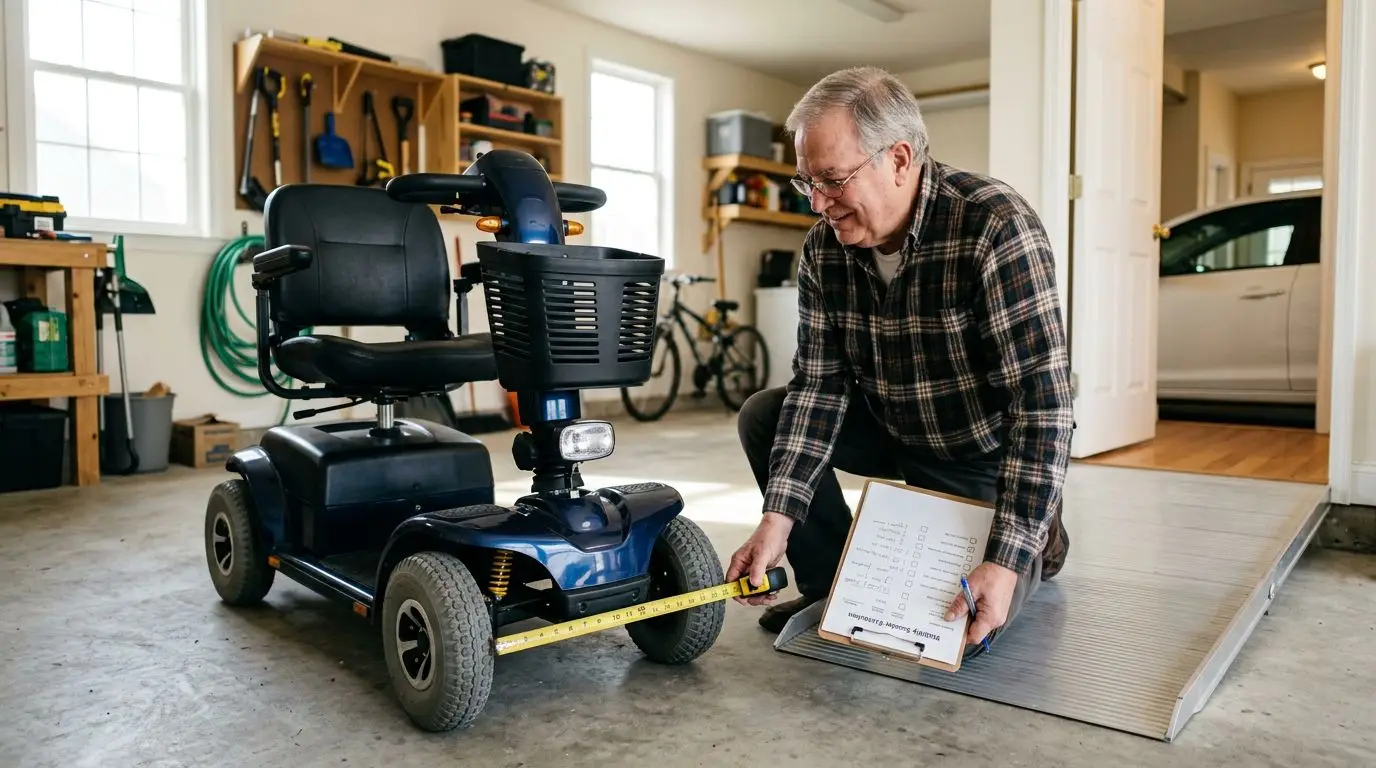
Heavy-Duty Mobility Scooters: What Higher-Weight-Capacity Buyers Should Check Before Purchasing
16 min read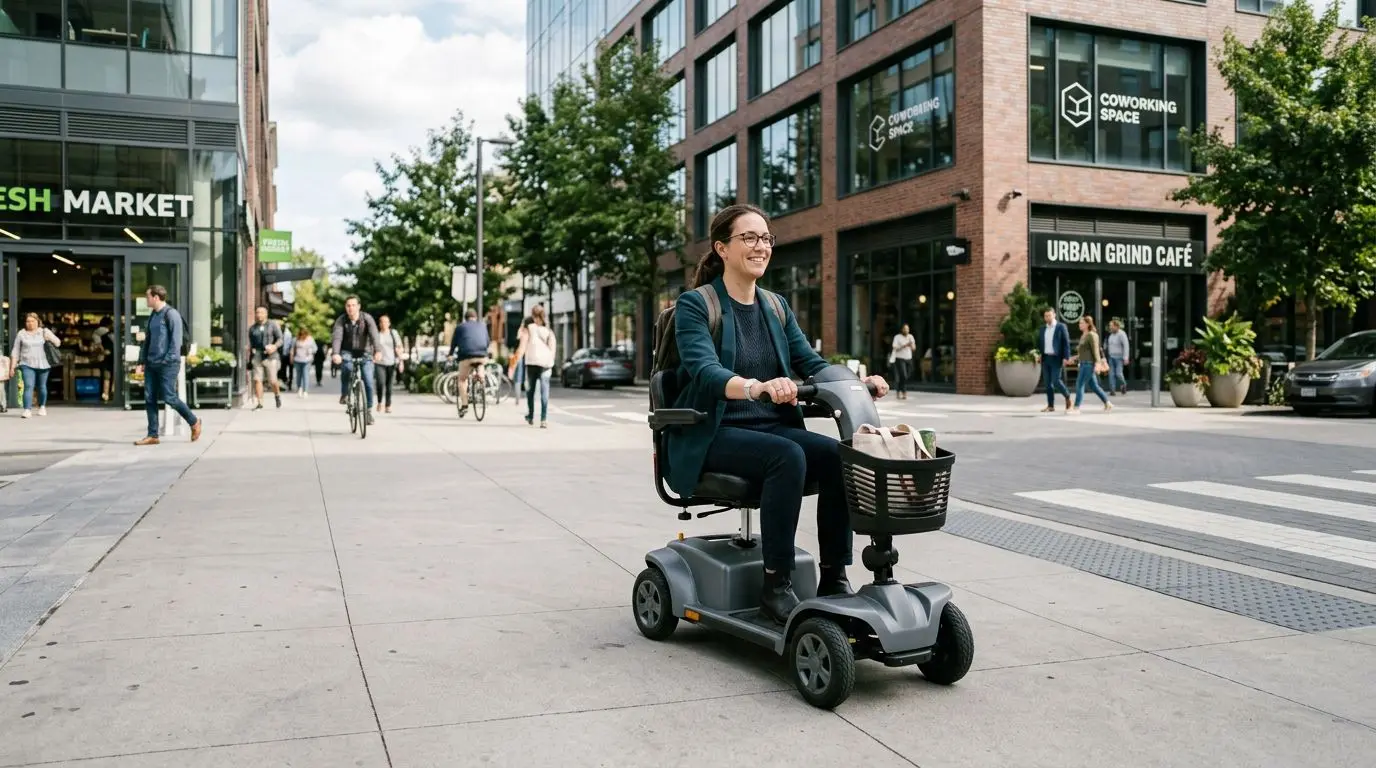
Mobility Scooters for Adults Under 65: Work, Errands, Fatigue, and Long-Term Mobility Needs
13 min read
How to Choose a Mobility Scooter for Everyday Errands, Stores, and Medical Appointments
15 min read