For theme parks, shopping centers, museums, fairs, and other long days out, most people should choose either a compact travel scooter when portability matters most or a mid-size 4-wheel scooter when comfort and stability matter most. Look for real-world battery range beyond your expected day, a seat you can tolerate for several hours, and a scooter that fits your car, hotel room, or rental plan.
If the day means 6 to 10 hours away from home, do not choose by top speed alone. The better choice is the scooter that can manage long walking distances, frequent stops, crowded paths, tight store aisles, elevators, ramps, and your own ability to lift or transport it safely.
Best scooter type for a 6- to 10-hour day out
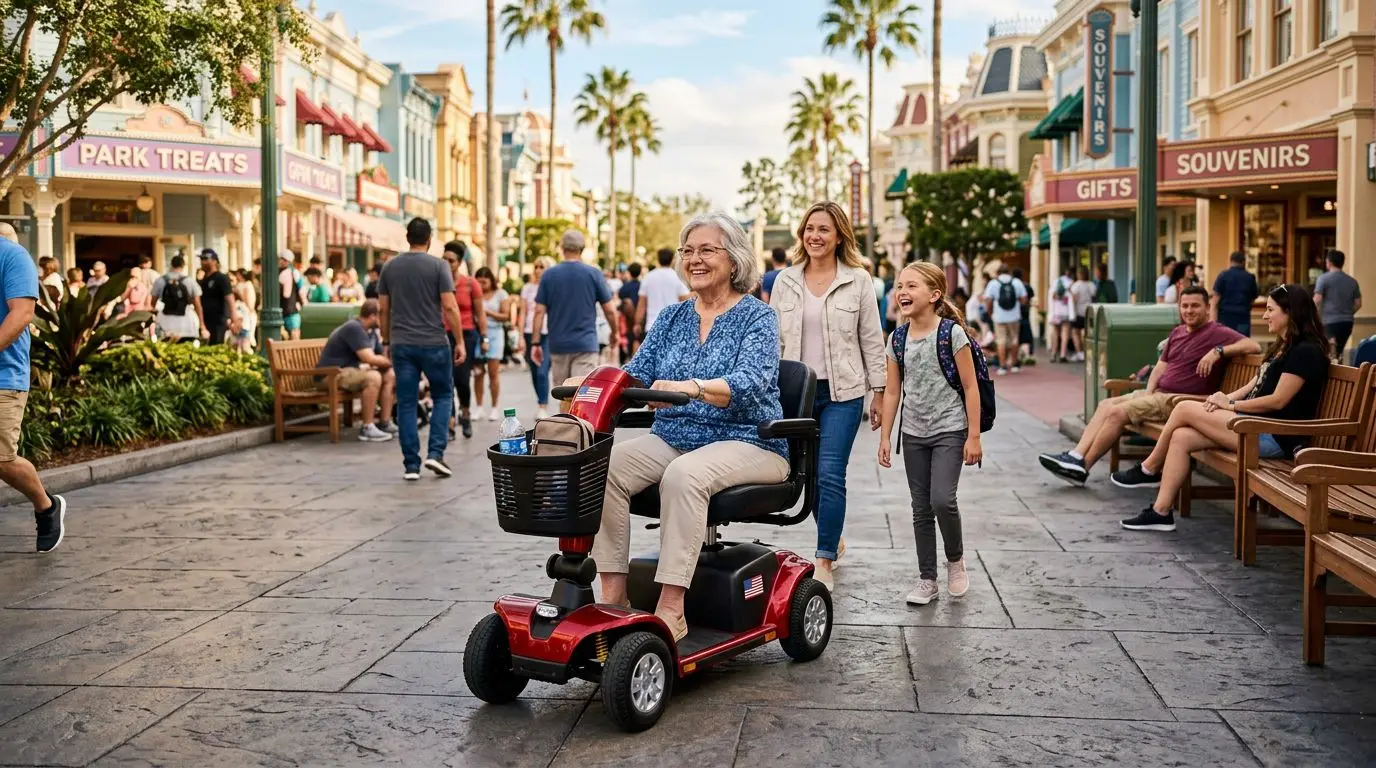
For a full day at a theme park or shopping complex, a mid-size 4-wheel scooter is often the most comfortable all-around choice. It usually provides better stability, a larger seat, more legroom, and longer battery range than the lightest portable scooters, while still being easier to manage than a heavy outdoor scooter.
A compact travel scooter can be the better pick when you need to lift sections into a car trunk, store it in a hotel room, or move through tight indoor spaces. Many travel scooters disassemble into 4 or 5 pieces, but the heaviest piece can still be 30 to 50 lb, so the word portable should not be taken lightly.
A heavy-duty or outdoor-oriented scooter may make sense for larger riders, rougher pavement, long resort campuses, or hilly areas. The tradeoff is size. These scooters can be hard to load, may not fit in smaller vehicles, and can feel awkward in crowded gift shops or restaurant waiting areas.
The main decision is straightforward: choose travel-size for transport, mid-size for all-day comfort, and larger 4-wheel designs for higher weight capacity or rougher surfaces. For many day-use situations, the sweet spot is a scooter that balances 8 to 15 miles of usable range with a seat and foot space that still feel good after lunch.
Compare scooter types for 3 to 12 miles of walking
A long day out can easily replace 3 to 12 miles of walking. Large theme parks, outlet malls, zoo paths, airports, convention centers, and downtown tourist areas all involve repeated short moves that add up. Even when you ride only at walking speed, the battery, seat, and turning radius matter all day.
| Type | Best use | Typical strengths | Common tradeoffs |
|---|---|---|---|
| 3-wheel travel scooter | Indoor shopping, smooth paths, tight turns | Small turning radius, easier to maneuver, often disassembles | Less stable on uneven ground than 4-wheel designs |
| 4-wheel travel scooter | Theme parks, malls, museums, short trips | Better stability than 3-wheel travel scooters, still transportable | Turning radius is usually wider |
| Mid-size 4-wheel scooter | 6- to 10-hour days, parks, resort areas | More comfort, more range, better legroom | Heavier and harder to lift into a car |
| Heavy-duty 4-wheel scooter | Higher weight needs, rougher pavement, longer distances | Higher capacity, larger tires, stronger frame | Bulky in crowds and often not trunk-friendly |
| Foldable scooter | Travel by car, hotel stays, limited storage | Quick storage, compact footprint | May have a smaller seat, lower ground clearance, or shorter range |
For shopping centers, turning radius can be just as important as battery range. Tight clothing racks, food courts, checkout lines, and elevators are easier with a smaller scooter. For theme parks, range and comfort rise on the list because you may be away from a charger for most of the day.
Three-wheel scooters are not unsafe by default, but they require more care on sloped curb cuts, uneven brick, gravel edges, and fast turns. Four-wheel scooters typically feel more planted, especially when crossing parking lots or riding over expansion joints in pavement.
Battery range: what 8 to 15 miles really means
Published battery range is usually measured under favorable conditions, often with a moderate rider weight, level ground, smooth surfaces, and a fully charged battery. In real use, an advertised range of 12 miles may feel closer to 8 or 9 miles if the day includes hills, heavier loads, frequent starts and stops, heat, cold, or older batteries.
That does not make range numbers useless. They are a starting point. For long outings, choose a scooter with at least 25 to 50 percent more stated range than you think you will need. If you expect 6 miles of riding across a theme park and parking area, a scooter rated near 10 miles gives you a more comfortable buffer than one rated near 6 miles.
Battery type matters too. Many scooters use sealed lead-acid or lithium-style battery packs, depending on the design. Lithium packs are often lighter, which helps with portability, while sealed batteries are common and familiar. Check charging rules before travel, especially for air travel or organized transportation.
Charge the scooter fully the night before. A typical full charge can take about 6 to 8 hours, though this varies by battery size and charger. If you are renting, ask whether the battery will be fully charged at pickup and whether a charger is included for multi-day use.
- For a half-day mall trip, a smaller battery may be enough.
- For a 10-hour theme park visit, range cushion matters.
- For hills, ramps, heavier riders, or baskets full of purchases, expect faster battery use.
- For older batteries, plan more conservatively.
Comfort features for sitting 4 or more hours
Comfort is not a luxury on a long day. If you may sit on the scooter for 4, 6, or even 8 hours with breaks, the seat, armrests, foot area, and controls can determine whether the trip feels manageable.
Start with seat width and padding. Many compact scooters have smaller seats to save weight, while mid-size scooters often provide a wider, more supportive seat. A swivel seat can make transfers easier in restaurants, theaters, and ride queues because you can turn toward the side instead of twisting your knees or hips.
Adjustable armrests help with entry, exit, and posture. A tiller that tilts closer or farther away can reduce shoulder strain, especially for shorter or taller riders. Foot space matters as well. If your knees feel crowded during a 5-minute test, they may feel much worse after 2 hours.
Suspension and tire size affect comfort over brick walkways, curb ramps, boardwalks, and older sidewalks. Small solid tires are convenient and low maintenance, but they can transmit more vibration. Larger tires or suspension can smooth the ride, although they often add weight and size.
| Feature | Why it matters on long days | What to check |
|---|---|---|
| Swivel seat | Easier transfers at tables, benches, and ride areas | Can you rotate and lock it without strain? |
| Adjustable tiller | Reduces reach and shoulder fatigue | Can you steer with elbows slightly bent? |
| Armrests | Support during sitting and transfers | Are they adjustable and secure? |
| Foot platform | Prevents cramped knees and ankles | Can both feet rest flat? |
| Tire size or suspension | Smoother ride on rough pavement | Does it handle cracks and ramps comfortably? |
Do not rely on a quick showroom ride alone if you can avoid it. Sit for at least 10 minutes, drive slowly, stop, turn, back up, and practice getting off. Small annoyances become bigger after a long day.
Portability: measuring car, bus, and hotel fit in inches
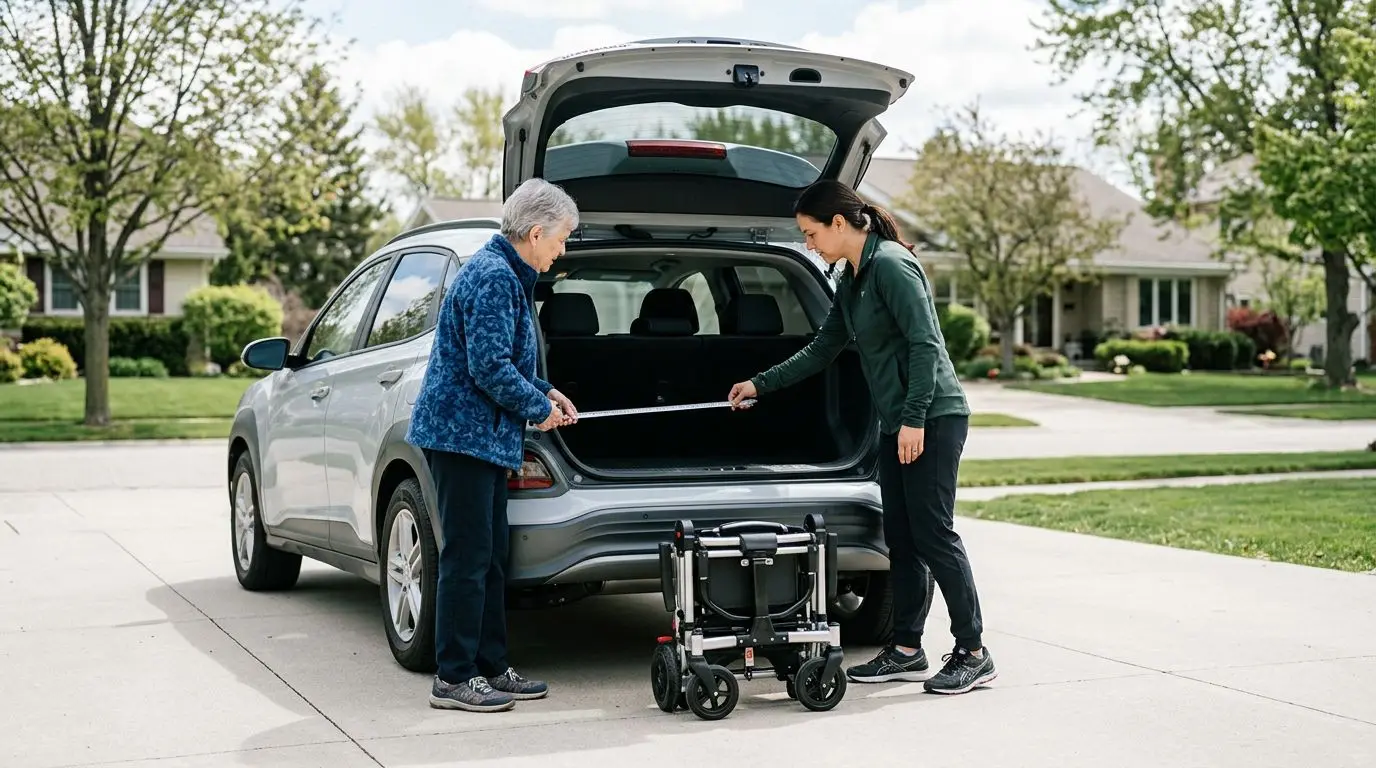
Portability is about measurements, not hope. Before choosing a scooter for day trips, measure the cargo opening of your car, the trunk depth, the height from the ground to the lift-over edge, and the storage space where the scooter will sit. A difference of 2 inches can decide whether loading is easy or impossible.
If a scooter disassembles, check the weight of the heaviest piece, not only the total scooter weight. A scooter that weighs 95 lb in total may still have a 40 lb main section. That may be fine for one household and too much for another.
For hotel stays, ask about room access, elevator size, charging locations, and whether scooters are allowed in guest rooms. In many cases, charging in your room is normal, but you should avoid blocking exits or hallways. Bring the charger, and consider a small extension cord only if permitted and safe.
Public transportation and shuttle rules vary. Some buses, trams, and accessible vans have size and combined weight limits. A common accessible securement space may be designed around mobility devices in the general range of 30 inches wide by 48 inches long, but operators set their own rules. Check before you arrive.
Quick measuring checklist
- Measure scooter length, width, and height when assembled.
- Measure folded or disassembled dimensions if storage is the priority.
- Confirm the heaviest piece in pounds.
- Measure your vehicle cargo opening at its narrowest point.
- Check whether you need a ramp, lift, or second person.
- Leave room for walkers, bags, coolers, and purchases.
If loading requires pain, twisting, or unsafe lifting, consider renting at the destination instead of transporting your own scooter. Independence should not come at the cost of a back injury in the parking lot.
Theme parks, shopping centers, and rentals: check 24 to 72 hours ahead
Rental availability can change quickly during holidays, school breaks, weekends, and special events. If you plan to rent, check 24 to 72 hours ahead, and earlier for major travel dates. Some destinations offer on-site rentals, while local medical equipment companies may deliver to hotels, resorts, or vacation rentals.
On-site rentals are convenient because you do not have to transport a scooter. The downside is that inventory can be limited, pickup locations may be far from parking, and the scooter may need to stay within the property. Off-site rentals can offer more flexibility for multi-day trips, but delivery times, deposits, and after-hours support vary.
Ask specific questions. What is the battery range? Is the charger included? What is the weight capacity? Can it be used on shuttles? What happens if the battery fails? Is there a phone number for same-day support? Clear policies help more than general answers.
| Rental type | Best for | Questions to ask |
|---|---|---|
| On-site destination rental | Single-day park or attraction visits | Can it leave the property? Is inventory first-come, first-served? |
| Hotel or resort delivery | Multi-day vacations | Where is pickup and drop-off? Is overnight charging allowed? |
| Local medical equipment rental | Shopping trips, conventions, family visits | What size scooter is available? Is roadside or same-day help offered? |
For theme parks, review accessibility information before arrival. Policies may cover ride queues, transfer requirements, reserved viewing areas, and where mobility devices may be parked. A scooter helps with distance, but it does not guarantee access to every ride vehicle or attraction without transferring.
For shopping, call the mall or large store if you are counting on a courtesy scooter. Availability may be limited, and some are intended only for use inside that property.
Who it is best for: 5 common day-use situations
The best scooter depends on the day you are planning, not just the person using it. A 2-hour grocery trip and a 9-hour theme park day place very different demands on the same rider.
- Best for theme parks: A mid-size 4-wheel scooter with comfortable seating, good battery buffer, and stable handling on ramps and outdoor paths.
- Best for indoor shopping: A compact 3-wheel or 4-wheel scooter with a tight turning radius and easy low-speed control.
- Best for travelers using a car trunk: A travel or foldable scooter that one caregiver or user can safely lift in pieces.
- Best for larger riders or rougher pavement: A higher-capacity 4-wheel scooter with larger tires and a sturdier frame.
- Best for occasional users: A rental scooter, especially when the outing is rare and transportation or storage would be difficult.
If fatigue changes throughout the day, choose more capacity than you think you need. Many people can walk comfortably in the morning but struggle after several hours of heat, crowds, standing in lines, or walking back to distant parking.
Also consider the companion group. If family members will help load the scooter, they need to be comfortable with the lifting weight and assembly steps. If you will be independent, prioritize simple controls, manageable charging, and a setup you can handle alone.
How to choose and measure in 10 minutes
You can narrow your choice in about 10 minutes by answering five practical questions. Write the answers down before you shop, rent, or reserve.
- How long is the day? For 6 hours or more, prioritize seat comfort and battery cushion.
- How far might you ride? Estimate parking, entrances, paths, stores, meals, and the return trip. Add 25 to 50 percent for range buffer.
- Where will it be used? Smooth indoor floors favor compact scooters. Outdoor parks and brick walkways favor 4-wheel stability and better tires.
- How will it get there? Measure vehicle space and confirm the heaviest piece in pounds.
- Who will lift, charge, and steer it? Match the scooter to real daily ability, not best-case effort.
If you are buying rather than renting, test the scooter the way you will actually use it. Drive at slow speed, make a U-turn, back out of a tight space, approach a table, and practice transferring. If possible, test over a threshold or ramp similar to what you expect at home or on vacation.
Weight capacity deserves a safety margin. Include the rider, bags, oxygen equipment if used, a basket, and purchases. Staying within the listed capacity supports safer handling and helps avoid excess strain on the motor and battery.
Control style matters too. Most scooters use a tiller with thumb or finger levers. People with hand arthritis, limited grip, or one-sided weakness should test whether the controls feel manageable. Ask a clinician or mobility professional for individualized advice if a health condition affects steering, transfers, vision, or reaction time.
Safety and etiquette in crowds under 4 mph
Most destination riding happens at walking speed, often under 4 mph. That is still fast enough to surprise pedestrians, especially children who stop suddenly, shoppers stepping backward, or visitors looking at phones instead of where they are walking.
Use the lowest practical speed in crowds. Give extra space near stroller parking, food lines, store entrances, elevators, and parade routes. Avoid sudden turns, and slow down before ramps or curb cuts. A horn can help, but a calm voice often works better in close quarters.
Keep bags from hanging off the tiller where they can interfere with steering. Place heavier items low and centered when possible. If the scooter has anti-tip wheels, they are a safety aid, not permission to take slopes quickly.
At restaurants and theaters, ask staff where to park without blocking aisles or emergency exits. In theme parks, follow posted mobility-device parking areas and transfer instructions. In stores, be patient with narrow aisles and displays. A scooter is a mobility tool, and courteous use keeps shared spaces easier for everyone.
FAQ: 5 questions about scooters for long days out
Is a 3-wheel or 4-wheel scooter better for a theme park?
For most theme parks, a 4-wheel scooter is the safer-feeling and more stable choice, especially outdoors on ramps, uneven pavement, and long paths. A 3-wheel scooter can work well if you need a tighter turning radius and the park has mostly smooth surfaces.
How much battery range do I need for a full day?
For a full day, look for more range than your estimated distance. If you expect to ride 6 to 8 miles, a stated range around 10 to 15 miles gives a more practical buffer, because hills, rider weight, stops, heat, and battery age can reduce real-world range.
Should I rent a scooter or bring my own?
Rent if transportation, lifting, or storage would be difficult, or if you only need a scooter for one trip. Bring your own if it fits your vehicle, you know it is comfortable, and you trust the battery for the full day.
Can mobility scooters go into stores and restaurants?
In many public places, mobility scooters are allowed as mobility devices, but layouts vary. Narrow aisles, crowded dining rooms, and safety rules may affect where you can ride or park, so ask staff for the best route or parking spot.
What is the most important comfort feature for long outings?
The seat is usually the most important feature, followed closely by legroom and tiller adjustment. If the seat feels too narrow or your knees feel cramped during a short test, the scooter may not be comfortable for a 4- to 8-hour outing.
Frequently asked questions
Is a 3-wheel or 4-wheel scooter better for a theme park? +
For most theme parks, a 4-wheel scooter is the more stable choice for ramps, uneven pavement, and long outdoor paths. A 3-wheel scooter can work if you need tighter turns and will be mostly on smooth surfaces.
How much battery range do I need for a full day? +
Choose more stated range than your estimated distance. If you expect 6 to 8 miles of riding, a scooter rated around 10 to 15 miles gives a more realistic buffer for hills, stops, rider weight, and battery age.
Should I rent a scooter or bring my own? +
Rent if lifting, vehicle space, or storage is a problem, or if the outing is occasional. Bring your own if it is comfortable, fits your transportation plan, and has a battery you trust for the whole day.
Can mobility scooters go into stores and restaurants? +
Mobility scooters are commonly used in public places, but tight layouts and safety rules can affect where you ride or park. Ask staff for accessible routes, table options, and safe parking locations.
What comfort features matter most for long outings? +
Seat support, legroom, adjustable armrests, and an adjustable tiller matter most. For rough pavement or long outdoor paths, tire size and suspension can also make a noticeable difference.
Related guides
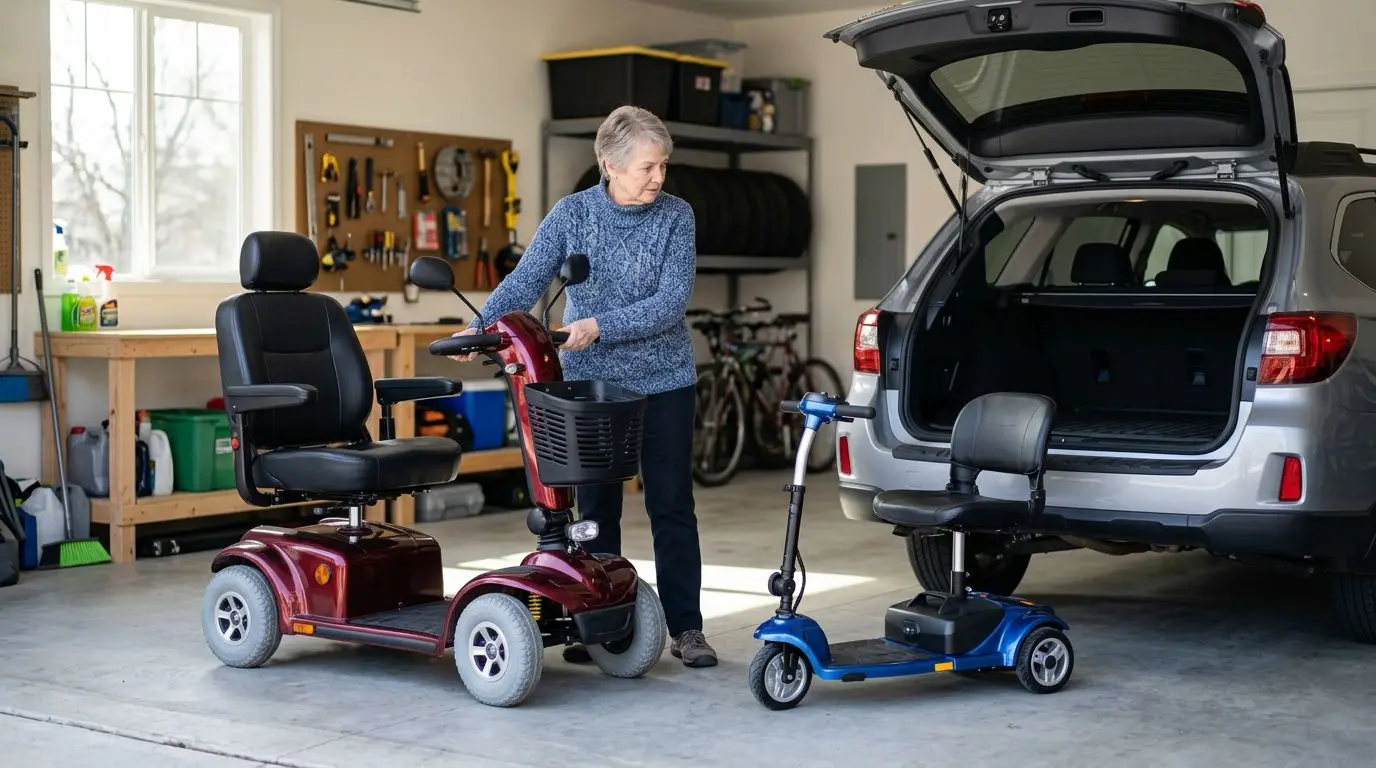
Travel vs. Full-Size Mobility Scooters: How to Choose Between Portability, Comfort, and Range
15 min read
Mobility Scooter Rentals for US Theme Parks: On-Site vs. Off-Site Planning Guide
14 min read
How to Choose a Mobility Scooter for Everyday Errands, Stores, and Medical Appointments
15 min read