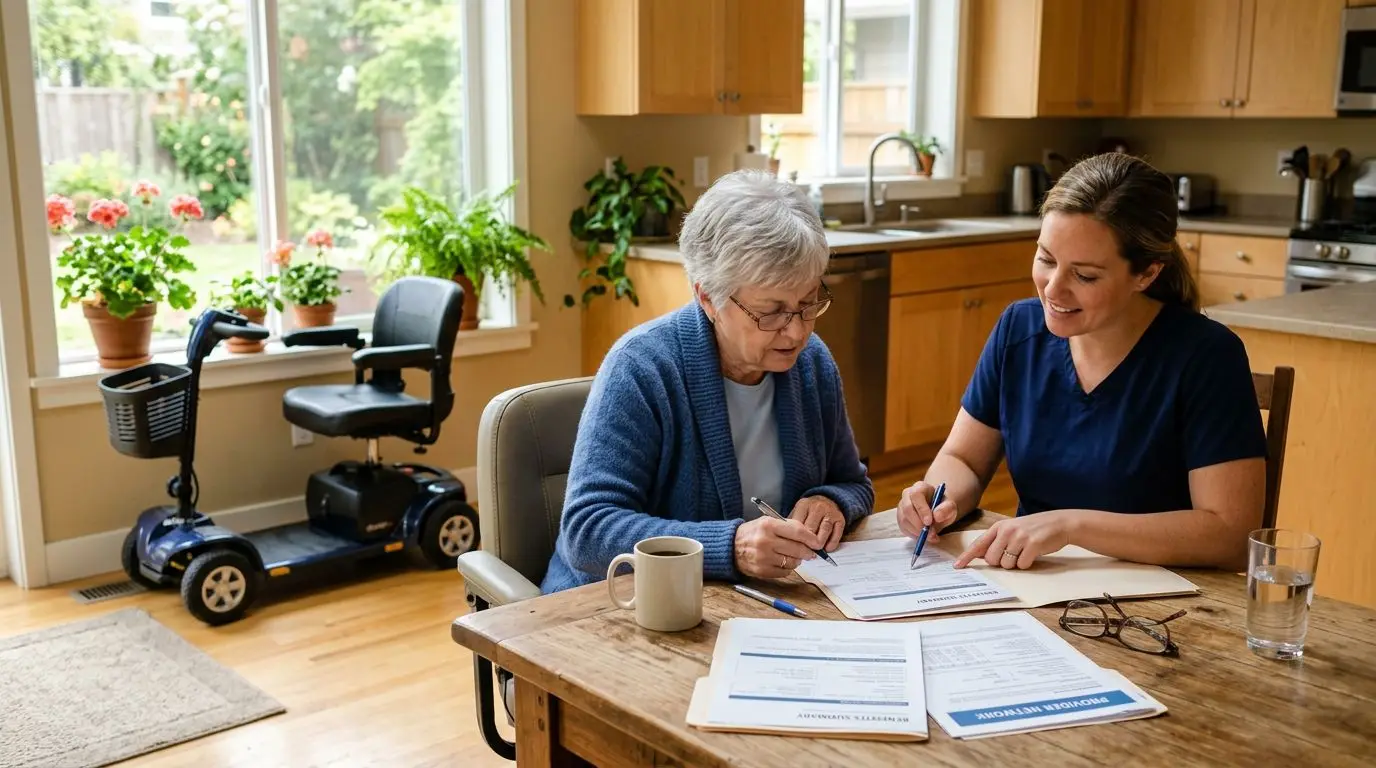
Yes, Medicaid can cover a mobility scooter, but approval depends on your state’s rules and on whether the scooter is medically necessary for daily mobility, often inside the home. Most Medicaid programs require a doctor’s order, supporting medical records, and prior authorization before they will pay for a power-operated vehicle such as a scooter.
Coverage is not automatic. A person usually must show that a cane, walker, manual wheelchair, or less complex device will not meet their needs, and that they can safely operate the scooter and transfer on and off it.
Medicaid scooter coverage in 50 states: the short answer
Medicaid is jointly funded by the federal government and each state, so there are 50 state Medicaid programs plus programs in U.S. territories. The basic idea is similar nationwide, but the paperwork, approval standards, supplier rules, and appeal deadlines can vary significantly based on where you live.
In general, a mobility scooter may be considered durable medical equipment, often shortened to DME. Medicaid DME benefits commonly cover equipment that is durable, medically necessary, appropriate for home use, and ordered by an approved medical provider. A scooter may also be called a power-operated vehicle, or POV, in medical equipment rules.
The key point is this: Medicaid is more likely to consider a scooter when it is needed to help you complete medically necessary mobility-related activities of daily living. That can include getting to the bathroom, bedroom, kitchen, or another essential area in your home. Needing a scooter mainly for shopping, neighborhood travel, or convenience usually is not enough under standard DME rules.
Some states are stricter than others. One state may require a detailed mobility evaluation by a physical or occupational therapist, while another may rely more on the prescribing clinician’s documentation. Medicaid managed care plans may also have their own authorization forms and supplier networks.
Medical necessity: 5 questions Medicaid usually asks
Medicaid does not approve a scooter simply because walking is painful or tiring. The program generally asks whether the device is medically necessary, whether it is the least costly appropriate option, and whether it can be used safely. Five questions often come up during review.
- Can you move around your home without the scooter? Reviewers look at whether you can complete essential daily tasks with a cane, walker, rollator, or manual wheelchair.
- Is your mobility limitation caused by a documented medical condition? Examples may include neurological disease, severe arthritis, amputation, cardiopulmonary limitations, or another condition documented in your records.
- Can you safely operate a scooter? You generally need enough vision, judgment, upper-body control, and hand function to steer, stop, and control speed.
- Can you transfer on and off safely? Some people can transfer independently; others may need a caregiver. The plan must be safe and realistic.
- Will the scooter work in your living space? Doorways, hallway width, turning space, flooring, and ramp access can all matter.
Medicaid reviewers often want documentation that less complex equipment will not work. For example, if a manual wheelchair could meet the person’s in-home mobility needs, Medicaid may deny a scooter request. If the person cannot self-propel a manual wheelchair because of shoulder weakness, hand limitations, or severe fatigue, that should be clearly documented.
Medical necessity is not the same as personal preference. A scooter can be life-changing for the right person, but Medicaid usually evaluates it as a medical tool, not transportation equipment.
Standard Medicaid DME vs. HCBS waivers: 2 common pathways
There are two common Medicaid pathways to ask about: standard Medicaid durable medical equipment coverage and Home and Community-Based Services waivers, often called HCBS waivers. These pathways can overlap, but they are not the same.
| Coverage pathway | What it may cover | Typical focus | Important limitation |
|---|---|---|---|
| Standard Medicaid DME | Medically necessary mobility equipment, including some scooters | Mobility inside the home and essential daily activities | Usually requires prior authorization and proof less complex devices will not work |
| Medicaid managed care plan | DME through the plan’s supplier network | Same general medical-necessity standards, with plan-specific forms | You may need to use in-network providers and approved suppliers |
| HCBS waiver | Services and supports that help a person remain at home or in the community | Community living, safety, caregiver support, home access, adaptive equipment | Waiver slots, eligibility rules, and covered items vary by state |
| State-funded assistance or local nonprofit programs | Possible repair, used equipment, small grants, or loan closets | Filling gaps when Medicaid does not approve or delays occur | Funding is often limited and not guaranteed |
Standard Medicaid DME coverage is usually the first place to start if the scooter is needed for medical mobility inside the home. HCBS waivers may help in other ways. Depending on the state and waiver, they may cover environmental modifications, adaptive equipment, or supports that make community living safer. A waiver might help with a ramp, doorway change, or other access issue, even when the scooter itself is handled under DME rules.
Waivers have their own eligibility rules. Some are for adults age 65 and older, some are for people with physical disabilities, some are for people who meet a nursing facility level of care, and some have waiting lists. In certain states, a waiting list can last months or longer, so it is wise to ask early.
Who Medicaid scooter coverage is best for: 4 signs you may qualify
Medicaid scooter coverage is best suited for people whose mobility limitation affects essential daily function and who can use a scooter safely. These 4 signs do not guarantee approval, but they suggest the request may be worth discussing with your clinician.
- You cannot reliably walk room to room for essential tasks. If reaching the bathroom, bedroom, or kitchen is unsafe or not possible, that is more relevant than difficulty walking long distances outdoors.
- A cane, walker, or rollator is not enough. Medicaid usually expects documentation showing why lower-cost equipment does not meet your medical needs.
- A manual wheelchair is not practical. This may be due to limited arm strength, severe joint disease, poor endurance, or another documented reason.
- You can safely drive and transfer. A scooter requires steering, braking, awareness of surroundings, and the ability to get on and off without unreasonable risk.
A scooter may not be the right Medicaid request for every person with limited mobility. If a person cannot safely steer, has severe cognitive impairment, cannot sit upright, or needs a very tight turning radius indoors, another device may be more appropriate. Some people are better served by a power wheelchair, which is designed differently and may be evaluated under separate criteria.
Caregiver availability also matters. If a person needs help transferring, the clinician should document how transfers will be done and whether caregiver support is consistent. Medicaid reviewers want a plan that works on a normal Tuesday, not just during an appointment.
How to choose and measure before applying: 7 home checks
Before asking Medicaid to approve a scooter, measure your living space and think through actual daily use. A common doorway in older homes may be about 28 to 32 inches wide, and many scooters need enough width plus turning clearance to be useful indoors.
Use a tape measure and write down these 7 details before your mobility evaluation:
- Doorway width. Measure the narrowest door you must pass through, including bathroom and bedroom doors.
- Hallway width. Note tight corners, narrow halls, and places where furniture reduces clearance.
- Turning space. Scooters often need more room to turn than power wheelchairs. Small apartments can be challenging.
- Floor surfaces. Thick carpet, thresholds, cords, and uneven flooring can affect safety.
- Entry access. Count steps at the main entrance and measure ramp slope if one exists.
- Storage and charging location. Most scooters need routine charging near a safe outlet, often overnight.
- Transport needs. If you need to take the scooter to appointments, ask whether a vehicle lift, paratransit, or caregiver transport is realistic.
Do not choose a scooter style based only on outdoor comfort. Standard Medicaid DME review often centers on in-home mobility. If the scooter cannot fit through the bathroom door or turn near the bed, it may not solve the medical problem Medicaid is evaluating.
There are several generic scooter types. The table below compares practical differences without naming brands or models.
| Scooter type | Typical strengths | Possible drawbacks | Best fit |
|---|---|---|---|
| 3-wheel travel scooter | Tighter turning, lighter sections, easier storage | May feel less stable outdoors or on uneven ground | Small homes, short trips, users who need maneuverability |
| 4-wheel scooter | More stable feel, often better for outdoor surfaces | Larger turning radius and heavier frame | Users with enough indoor space and mixed indoor/outdoor needs |
| Heavy-duty scooter | Higher weight capacity and stronger suspension | Wider, heavier, harder to transport or use indoors | Larger users when medically necessary and space allows |
| Compact folding scooter | Storage-friendly and travel-friendly | May have smaller batteries, lower comfort, or limited seating support | People with mild to moderate needs and safe transfer ability |
Medicaid may not approve every type even if it is available for retail purchase. The approved device must match the documented medical need and state coverage rules.
Documents you may need: 6 items for prior authorization
Most Medicaid scooter approvals require prior authorization, meaning Medicaid or the managed care plan reviews the request before the supplier provides the equipment. Missing one form can delay a decision by 2 to 6 weeks or longer, depending on the state and plan.
Ask your provider and supplier which documents are required where you live. Common items include:
- A prescription or written order. This usually comes from a physician, nurse practitioner, physician assistant, or other authorized clinician.
- Clinical notes. Office visit notes should describe your diagnosis, mobility limits, fall risk, pain, weakness, endurance, and functional problems.
- Mobility evaluation. Some states or plans require a physical therapist or occupational therapist assessment.
- Home assessment. This may document doorway widths, turning space, entry access, and whether the scooter can be used safely.
- Supplier quote and equipment details. The supplier usually submits codes, specifications, and medical justification.
- Proof that alternatives were considered. Documentation may explain why a cane, walker, manual wheelchair, or other device is not adequate.
Be specific with your clinician. Instead of saying, “I need help getting around,” describe measurable problems: “I can walk about 15 feet before I must sit,” or “I cannot reach the bathroom safely at night with my walker.” Real details help the medical record support the request.
If you are in a Medicaid managed care plan, call the member services number on your card and ask for the DME prior authorization rules. Also ask whether you must use a specific network supplier. Using the wrong supplier can cause an otherwise reasonable request to stall.
State rules and waivers: 3 calls to make before you buy
Before paying out of pocket, make 3 calls: your Medicaid plan, your clinician’s office, and your state Medicaid or Aging and Disability resource office. Buying first can create problems because Medicaid often will not reimburse equipment purchased without prior approval.
When calling Medicaid or your managed care plan, ask these questions:
- Is a mobility scooter covered as durable medical equipment under my benefit?
- Do I need prior authorization before an evaluation or delivery?
- Which providers can write the order?
- Do I need a physical or occupational therapy evaluation?
- Which DME suppliers are in network?
- Are repairs, batteries, or replacement parts covered after approval?
- Is there an HCBS waiver that may help with ramps, home modifications, or community-based support?
Then call your clinician’s office and ask if they handle Medicaid scooter documentation. Some offices are familiar with DME paperwork; others may need forms from the supplier or plan. A short appointment may not be enough, so request a visit focused on mobility and daily function.
Your third call should go to a state or local aging and disability resource center, area agency on aging, center for independent living, or Medicaid waiver office. These organizations may explain local waiver options, equipment loan closets, repair programs, or home modification resources. Availability changes, but they can point you toward real programs in your county.
If Medicaid denies the scooter: appeal within your deadline
A denial is not always the end. Many Medicaid notices give a limited appeal window, often 30 to 60 days, though the exact deadline depends on your state and plan. Read the denial letter carefully and keep the envelope, notice date, and every page.
Common denial reasons include incomplete documentation, lack of proof that less costly equipment was tried or ruled out, questions about home accessibility, or a finding that the scooter is not medically necessary. The denial letter should state the reason and explain how to appeal.
During an appeal, ask your clinician for clearer documentation. A stronger letter may explain your diagnosis, mobility limitations, why a walker or manual wheelchair is not enough, how the scooter will be used for essential daily activities, and why you can operate it safely. If a therapist evaluated you, ask whether the therapist can add specific measurements and functional findings.
You can also request the rule or policy used to deny the request. Medicaid decisions should be based on written criteria, not guesswork. If the denial came from a managed care plan, you may have both an internal plan appeal and a state fair hearing option.
Do not miss the deadline. If you need help, contact legal aid, a disability rights organization, a benefits counselor, or your local aging and disability resource center. Free help may be available, especially for low-income seniors and adults with disabilities.
Medicaid scooter FAQ: 5 quick answers
Will Medicaid pay for a scooter for outdoor use?
Usually, standard Medicaid DME coverage focuses on medically necessary mobility in the home. Outdoor use may be considered secondary, but a request based mainly on shopping, errands, or recreation is less likely to be approved.
Can I get both Medicare and Medicaid help?
Some people have both Medicare and Medicaid. In that situation, Medicare may be the primary payer for certain DME, and Medicaid may help with remaining approved costs depending on state rules. Coordination can be complex, so ask both plans before ordering equipment.
Does Medicaid cover scooter batteries and repairs?
Many Medicaid programs cover medically necessary repairs or replacement parts for approved equipment, but rules vary. Ask your plan whether batteries, tires, labor, and service calls require prior authorization.
Can my doctor just write a prescription and get it approved?
A prescription is important, but it is rarely enough by itself. Medicaid often requires clinical notes, a mobility evaluation, supplier documentation, and prior authorization.
What if my home has steps or narrow doors?
Home access problems can affect approval because the scooter must be usable and safe. Ask about HCBS waivers, ramp programs, or local home modification assistance if steps, thresholds, or narrow doors are barriers.
Bottom line: start with medical need, not the scooter
Medicaid may cover a mobility scooter when the request is medically necessary, well documented, and allowed under your state’s rules. The strongest applications explain the medical condition, the daily tasks affected, why simpler devices do not work, and how the scooter can be used safely in the home.
Start with your Medicaid plan and clinician before shopping. Measure your home, ask about prior authorization, use an approved supplier, and keep copies of every document. If a denial arrives, read it closely and appeal on time with stronger medical support.
Frequently asked questions
Will Medicaid pay for a mobility scooter? +
Medicaid may pay for a mobility scooter if it is medically necessary, covered under your state’s durable medical equipment rules, and approved before purchase. Most programs require a clinician’s order, supporting medical records, and prior authorization.
Is a scooter covered if I only need it outside the home? +
Usually not under standard Medicaid DME rules. Medicaid typically focuses on mobility needed for essential daily activities in the home, though some waiver programs may consider broader community-living supports depending on the state.
What documents are usually needed for Medicaid scooter approval? +
Common requirements include a prescription or written order, clinical notes, a mobility evaluation, proof that simpler devices are not adequate, a home accessibility assessment, and supplier paperwork submitted for prior authorization.
Can an HCBS waiver help with a mobility scooter or ramp? +
Possibly. Home and Community-Based Services waivers vary by state, but some may help with adaptive equipment, ramps, home modifications, or supports that help a person remain safely at home or in the community.
What should I do if Medicaid denies my scooter request? +
Read the denial notice, note the appeal deadline, and ask your clinician or therapist for stronger documentation addressing the reason for denial. You may also contact legal aid, a disability rights group, or an aging and disability resource center for help.
Related guides

Does Medicare or Insurance Cover Mobility Scooters? A US Buyer’s Guide
12 min read
Mobility Scooter Prior Authorization Checklist: What to Ask Your Doctor, Plan, and Supplier
12 min read
Mobility Scooter Prescription Requirements: What Doctors Must Document for Insurance Approval
14 min read