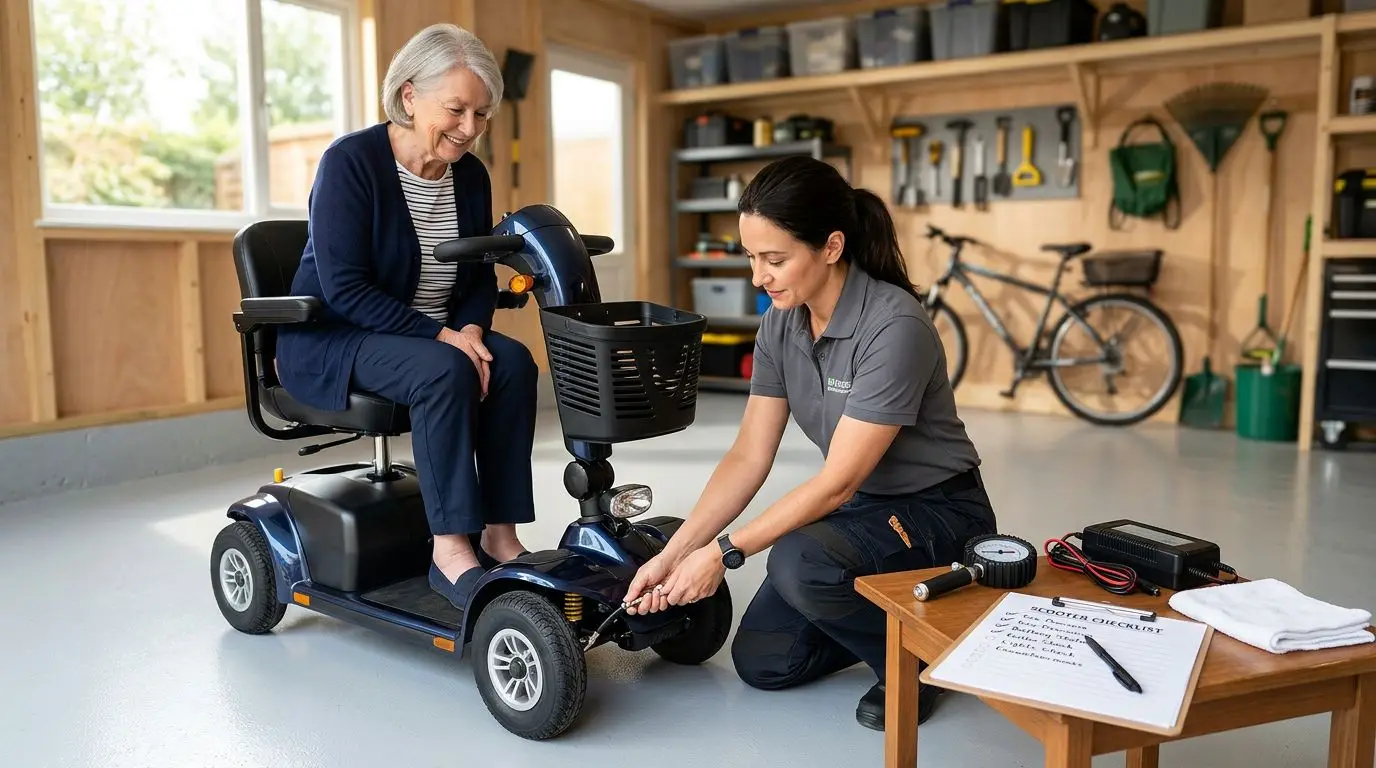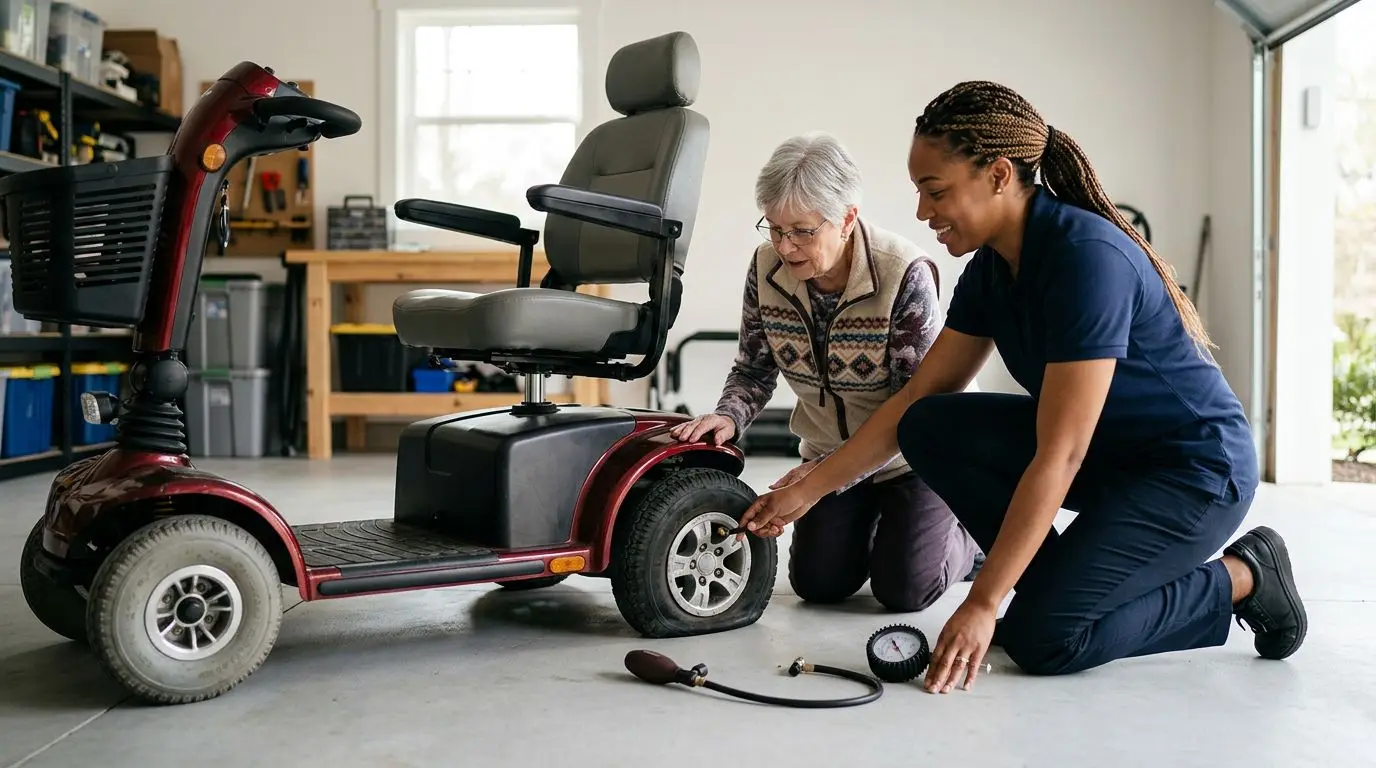
A flat mobility scooter tire can often be repaired when the puncture is small, centered in the tread, and the tire casing is still in good condition. If the sidewall is cracked, the tube keeps leaking, the tread is badly worn, or the scooter feels unstable, replacement is the safer choice.
The best fix depends on what you have: a tubed pneumatic tire, tubeless pneumatic tire, foam-filled tire, or solid tire. Before riding again, confirm the tire size, valve style, rim type, air pressure, and load rating so the scooter stays safe and predictable.
First safety check: stop riding after 1 flat tire
Do not keep driving on a flat mobility scooter tire, even for a short 100-foot trip across a parking lot. A flat tire can roll off the rim, damage the wheel, strain the motor, reduce braking control, and make a 3-wheel scooter feel especially tippy in turns.
Move the scooter to a level surface, turn the power off, remove the key if it has one, and use the freewheel lever only if you need to push it. If you lift the scooter, support it securely. Many travel scooters weigh 80 to 120 pounds without the battery, while full-size scooters may weigh well over 200 pounds, so do not rely on one hand or an unstable chair to hold it up.
- Check the tire shape: A fully flat pneumatic tire will look collapsed at the bottom.
- Look for obvious damage: Nails, glass, thorns, cracked rubber, or a torn valve stem are common clues.
- Check the rim: Bent edges, sharp rust, or separated split-rim halves need professional attention.
- Do not overinflate: Use the pressure printed on the tire sidewall, often in the 30 to 50 psi range for small pneumatic scooter tires, but always follow the tire marking.
If the scooter is your main transportation, call a local repair technician, durable medical equipment provider, or tire shop that works on small pneumatic tires. The safest repair is the one that also protects the wheel, motor, brakes, and rider.
Know your tire type: 4 common scooter tire setups
Mobility scooter tires are not all built alike. A scooter may use small pneumatic tires around 8 to 13 inches in outside diameter, or it may use solid tires that never need air. Once you know the tire type, the repair path becomes much clearer.
| Tire type | How it works | Flat repair option | Best fit |
|---|---|---|---|
| Tubed pneumatic | An inner tube holds the air inside the tire | Patch or replace the tube; inspect tire casing | Comfort, outdoor use, easier tube replacement |
| Tubeless pneumatic | The tire seals directly to the rim | Plug small tread punctures or replace tire | Outdoor scooters with proper tubeless rims |
| Foam-filled pneumatic | Air space is filled with dense foam | Usually replace the tire assembly when worn or damaged | Flat resistance with some cushioning |
| Solid tire | Rubber or urethane tire with no air chamber | No flat repair; replace when worn, cracked, or loose | Indoor use, low maintenance, puncture resistance |
A tubed tire usually has a valve stem coming through a hole in the rim, much like a bicycle or lawn cart tire. If the tire sidewall says tube type, it needs an inner tube. A tubeless tire may be marked tubeless and needs a rim designed to seal air without a tube.
Solid tires feel firmer over sidewalk seams and thresholds, but they remove the worry of sudden air loss. Pneumatic tires ride softer because the air chamber absorbs vibration. For many users with joint pain or longer outdoor trips, that comfort matters. For users who mostly travel inside stores, apartment hallways, or smooth community paths, solid tires can be a practical maintenance trade-off.
Flat repair options: patch, tube, plug, or replace within 30 minutes to 2 hours
A basic tube patch can take 30 to 60 minutes for someone experienced, while a full tire and tube replacement may take 1 to 2 hours depending on the scooter design. Split rims are often easier to service once removed, but they must be reassembled carefully with the hardware tightened correctly.
| Problem | Likely repair | When it is reasonable | When to replace instead |
|---|---|---|---|
| Small puncture in tube | Patch or replace inner tube | Hole is small and tube rubber is flexible | Tube has multiple patches, cracks, or valve damage |
| Leaking valve stem | Replace tube or valve core if serviceable | Valve core is loose or dirty | Stem is torn or separated from tube |
| Small tubeless tread puncture | Plug or internal patch by a qualified repairer | Puncture is in the center tread area | Sidewall is punctured or bead will not seal |
| Cracked sidewall | Replace tire | Not a safe patch area | Always replace if cracks are deep or widespread |
| Solid tire chunking | Replace solid tire | Minor surface scuffs are cosmetic | Chunks, flat spots, or looseness affect handling |
For a tubed pneumatic tire, the most dependable repair is often a new inner tube. Patches can work well for clean pinholes, but older tubes may fail again soon because the rubber has hardened. If the valve stem is torn, a patch will not help.
For a tubeless tire, a tread plug may get the scooter moving again if the puncture is small and straight. Still, mobility scooters run at low speeds and carry a seated rider, so stability matters more than squeezing every mile out of a questionable tire. Sidewall plugs are not a safe repair.
For foam-filled and solid tires, there is usually no traditional flat repair. Inspect them for wear, separation, deep cuts, or flat spots. When these appear, replacement is the answer.
Inner tube warning signs: 5 clues the tube is the real problem
Inner tubes fail in predictable ways. If a tire goes soft overnight, loses 5 to 10 psi in a week, or leaks only when the valve is touched, the tube or valve may be the problem rather than the outer tire.
- Air bubbles at the valve: Soapy water around the valve stem can reveal a slow leak in under 2 minutes.
- Torn valve base: A stem leaning sharply to one side may mean the tube slipped inside the tire.
- Pinch cuts: Two small parallel slits often happen when a low tire hits a curb or doorway threshold.
- Repeated flats: If a new tube fails quickly, something sharp may still be inside the tire casing.
- Dry, stiff rubber: Old tubes can crack when flexed, even if the tire tread looks acceptable.
Always run a gloved finger carefully around the inside of the tire after removing the tube. A tiny wire, thorn, staple, or glass shard can hide in the casing and puncture the next tube within minutes. Move slowly; sharp objects can cut skin.
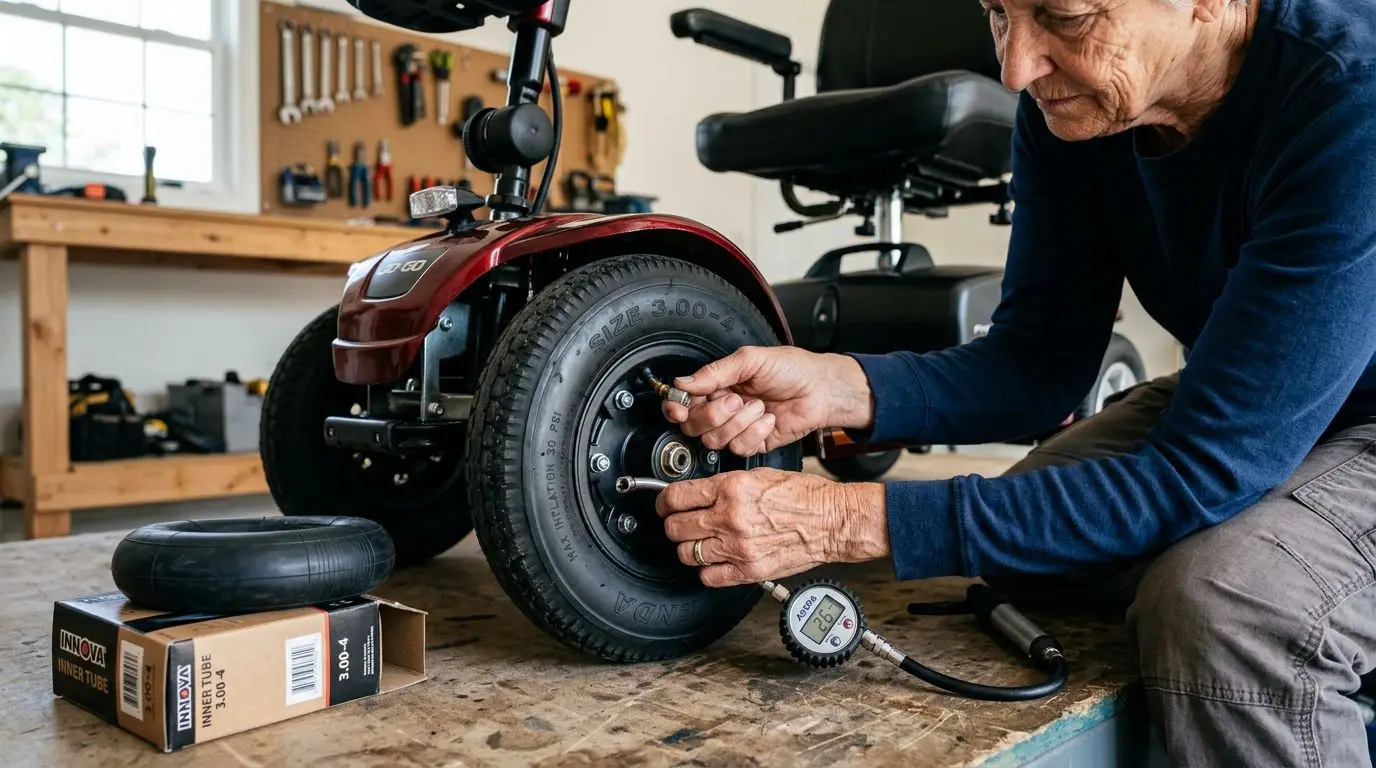
Tube size matters. A tube that is too small stretches, and a tube that is too large folds inside the tire. Either condition can cause early failure. Match the tube to the tire marking and confirm the valve style before buying a replacement.
When to replace the tire: 6 visible signs you should not ignore
Repairing a tube will not make an unsafe tire safe. If the tire has 6-year-old rubber, a sidewall split, or tread worn nearly smooth, replacement is the responsible maintenance choice.
- Sidewall cracks: Fine surface checking may appear with age, but deep cracks that open when pressed are unsafe.
- Low tread depth: If grooves are nearly gone or below about 1/16 inch, traction drops on wet pavement.
- Bulges or lumps: A bulge suggests internal casing damage and should not be ridden on.
- Uneven wear: One shoulder wearing faster may point to alignment, low pressure, overloading, or worn suspension parts.
- Bead damage: The bead is the edge that seats against the rim; cuts or stretching can cause air loss.
- Frequent flats: Two or more punctures in the same tire within a short period may mean the casing is compromised.
Age is harder to judge because many mobility scooters are stored indoors and used seasonally. Rubber can still dry out in a garage, basement, or sunroom. If the tire looks gray, cracked, or shiny-hard instead of flexible black rubber, treat it as aged even if the tread looks deep.
Replace tires in pairs on the same axle when wear is uneven. Two front tires with noticeably different diameters can affect steering, and two rear tires with different grip levels can affect braking and traction.
How to choose and measure: read 3 numbers before buying
The most important information is printed on the tire sidewall. You may see sizes such as 3.00-4, 4.10/3.50-6, or 260x85. These markings describe tire width, rim diameter, and sometimes outside diameter, depending on the format.
Write down the full sidewall marking before removing the tire. Take a photo in good light. If the marking is worn, measure three things: outside tire diameter, tire width, and rim diameter. Use inches or millimeters, but do not mix them on the same note.
What to measure
- Outside diameter: Measure from the top of the inflated tire to the bottom across the center.
- Tire width: Measure the widest part of the tire, not just the tread surface.
- Rim diameter: Measure the metal wheel where the tire bead sits, not the outside of the tire.
- Valve type: Most use Schrader-style valves, but the stem may be straight or angled.
- Load rating: The replacement must support the scooter and rider within the scooter's rated capacity.
| Feature | Why it matters | What to check |
|---|---|---|
| Tire size | Controls fit, ride height, and clearance | Match sidewall numbers exactly when possible |
| Rim type | Tubeless tires need sealing rims | Do not assume a tube rim can run tubeless |
| Valve angle | Affects access for inflation | Make sure a pump can reach the valve |
| Tread pattern | Changes traction and rolling feel | Smoother for indoor use, deeper grooves for outdoor paths |
| Pressure rating | Too much air can damage the tire | Follow the tire sidewall, not guesswork |
Do not choose a taller tire just because it looks stronger. Even a small change in diameter can reduce fender clearance, affect stability, or change how the scooter sits on ramps. A wider tire may rub the fork or frame.
Who it is best for: repair vs replacement at 1 decision point
The simplest decision point is this: repair a good tire with one clean puncture, but replace a damaged, aged, or unreliable tire. A scooter used 7 days a week for errands deserves a more conservative standard than a scooter used twice a month indoors.
| User situation | Best direction | Reason |
|---|---|---|
| Daily outdoor rider | Replace questionable tire and tube | Reliability matters for crossings, parking lots, and sidewalks |
| Mostly indoor rider | Consider solid tires when compatible | Less concern about punctures on smooth floors |
| Comfort-sensitive rider | Keep pneumatic tires in good condition | Air tires cushion joints better than hard solids |
| Caregiver maintaining scooter | Use exact-size parts and scheduled pressure checks | Reduces surprises before appointments |
| Rider with limited hand strength | Plan professional service or accessible valve extenders | Small valves can be difficult to reach and inflate |
If you depend on the scooter to reach medical visits, groceries, or transit stops, do not gamble on a tire that keeps losing air. A slow leak that seems minor at home can become a flat halfway through a trip. That can leave you stranded and may require unsafe pushing or towing.
Repair is best for newer pneumatic tires with a single puncture in the tread and no casing damage. Replacement is best when the tire is old, cracked, bald, or has already had several repairs.
Step-by-step leak check: find a slow leak in 10 minutes
A slow leak can be frustrating because the tire may look fine in the morning and feel soft by evening. A simple soapy water test often finds the problem in about 10 minutes.
- Inflate the tire to the marked pressure: Stay within the sidewall limit.
- Mix soap and water: A few drops of dish soap in a cup of water is enough.
- Brush or spray around the valve: Bubbles that grow show escaping air.
- Check the tread: Rotate the wheel slowly and look for bubbles around embedded objects.
- Check the bead area: Bubbles where the tire meets the rim may mean a sealing problem.
- Mark the spot: Use chalk or tape before the bubbles disappear.
If bubbles appear at the valve core, the core may be loose or dirty. If bubbles appear at the valve base on a tubed tire, the tube likely needs replacement. If bubbles appear along the rim on a tubeless setup, the bead or rim may need cleaning and reseating by a repair person.
Never inflate a damaged tire far beyond its rating to find a leak. Small scooter tires hold less air volume than car tires, but they can still fail suddenly if overpressurized.
Prevention tips: 5-minute checks can prevent many flats
A 5-minute tire check once a week is one of the easiest ways to avoid being stranded. Pneumatic scooter tires lose air slowly over time, even without a puncture, and low pressure is a leading cause of tube pinches and poor handling.
- Check pressure regularly: Use a gauge at least once a month, and weekly if you ride outdoors often.
- Inspect before long trips: Look for nails, glass, sidewall cracks, and low-looking tires.
- Avoid sharp edges: Approach curb cuts straight and slowly instead of clipping the tire sidewall.
- Respect weight limits: Carrying heavy bags can add 20 to 40 pounds and increase tire stress.
- Store away from sun: UV exposure and heat speed up rubber aging.
- Keep caps on valves: Valve caps help keep grit and moisture out of the valve core.
Some riders use tire sealant in pneumatic tires. It may help seal small tread punctures, but it is not a cure for sidewall cuts, cracked rubber, torn tubes, or damaged valves. Sealant can also make future service messier, so check whether it is appropriate for your tire type and rim before using it.
If flats are frequent in your area because of thorns, construction debris, or rough pavement, ask a technician about compatible puncture-resistant options such as thicker tubes, liners, foam-filled tires, or solid tires. Compatibility matters because not every wheel can accept every tire style.
When to call a professional: 3 situations that are not DIY-friendly
Many owners can inflate tires and inspect tread, but some repairs are better left to a trained technician. Call for help if you see split rims, motor wiring near the wheel, or hardware that requires controlled tightening.
- Split-rim wheels: Some scooter wheels separate into 2 halves. They must be deflated before disassembly and reassembled correctly.
- Drive wheels: Rear wheels may connect to the motor, brake, or axle key. Incorrect installation can affect braking or propulsion.
- Stubborn solid tires: Pressing a solid tire onto a small rim can require special tools and considerable force.
Professional service is also wise if you have limited grip strength, balance concerns, or no safe way to lift the scooter. There is no benefit in saving a service call if the repair process puts you at risk of a fall or injury.
When you call, provide the tire size, tire type, scooter weight class if known, and a photo of the wheel. Mention whether the tire is front or rear and whether it has a tube. Clear information helps the repairer bring the right parts the first time.
Flat tire FAQ: 5 common questions from scooter owners
Can I ride a mobility scooter with a flat tire for a short distance?
No. Riding on a flat can damage the rim, pull the tire off the wheel, strain the motor, and reduce steering control. Push the scooter only if the manual allows it and the freewheel setting is used correctly.
Is it better to patch an inner tube or replace it?
A patch can work on a newer tube with one small puncture, but replacement is usually more reliable when the tube is old, cracked, stretched, or leaking at the valve stem.
Why does my scooter tire keep going flat with a new tube?
The most common reason is a sharp object still stuck inside the tire casing. Other causes include the wrong tube size, a rough rim edge, low pressure, or a valve stem rubbing against the rim hole.
Can I switch from pneumatic tires to solid tires?
Sometimes, but only if a solid tire is compatible with the wheel size, rim design, frame clearance, and scooter use. Solid tires reduce flats, but they usually ride firmer than pneumatic tires.
How often should I check mobility scooter tire pressure?
Check at least once a month, and weekly if you ride outdoors frequently. Always use the pressure printed on the tire sidewall and check when the tire is cool.
Frequently asked questions
Can I ride a mobility scooter with a flat tire for a short distance? +
No. Riding on a flat can damage the rim, pull the tire off the wheel, strain the motor, and reduce steering control. Stop, turn the scooter off, and arrange repair before using it again.
Is it better to patch an inner tube or replace it? +
A patch can work on a newer tube with one clean puncture. Replace the tube if it is old, cracked, stretched, leaking at the valve, or has already been patched several times.
Why does my scooter tire keep going flat with a new tube? +
A sharp object may still be inside the tire casing. Other common causes include the wrong tube size, low tire pressure, a rough rim edge, or a valve stem rubbing against the rim hole.
Can I switch from pneumatic mobility scooter tires to solid tires? +
Sometimes, if the solid tire is compatible with the wheel, rim, frame clearance, and scooter use. Solid tires resist flats but usually ride firmer than air-filled tires.
How often should I check mobility scooter tire pressure? +
Check pressure at least once a month, and weekly if you ride outdoors often. Use the pressure printed on the tire sidewall and check the tire when it is cool.
Related guides
Mobility Scooter Inner Tubes and Flat Tires: How to Find the Right Size and Prevent Repeat Flats
15 min read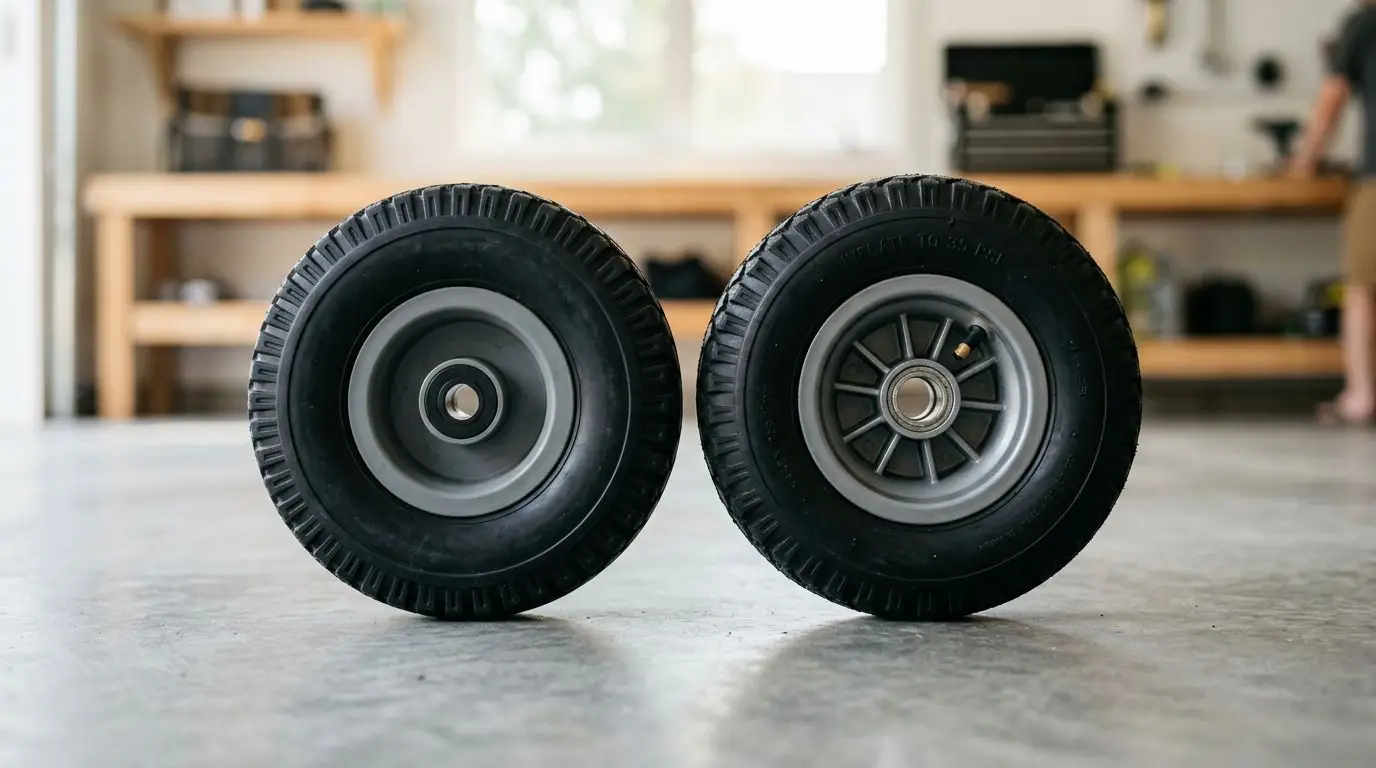
Solid vs. Air-Filled Mobility Scooter Tires: Comfort, Maintenance, and Best Uses
13 min read
Mobility Scooter Tire and Wheel Upgrades for Better Traction
15 min read