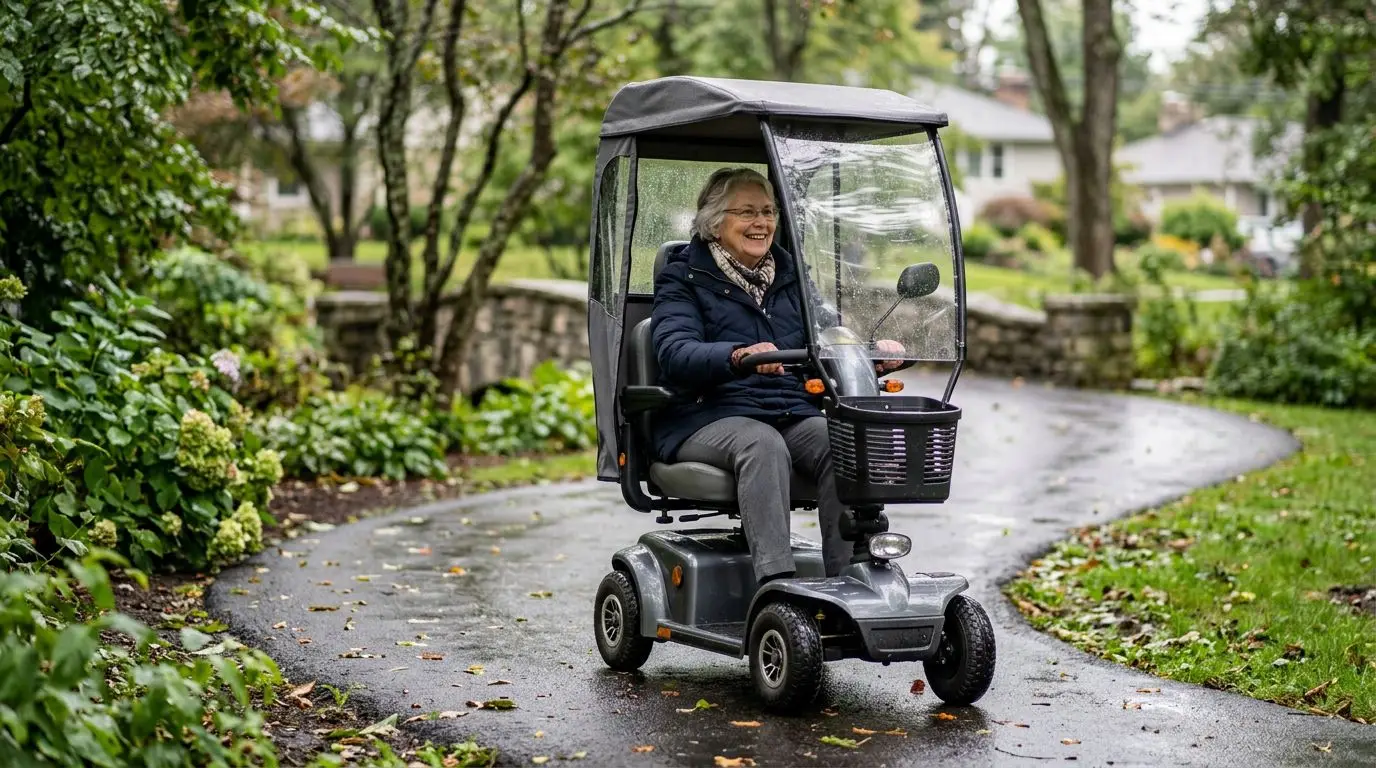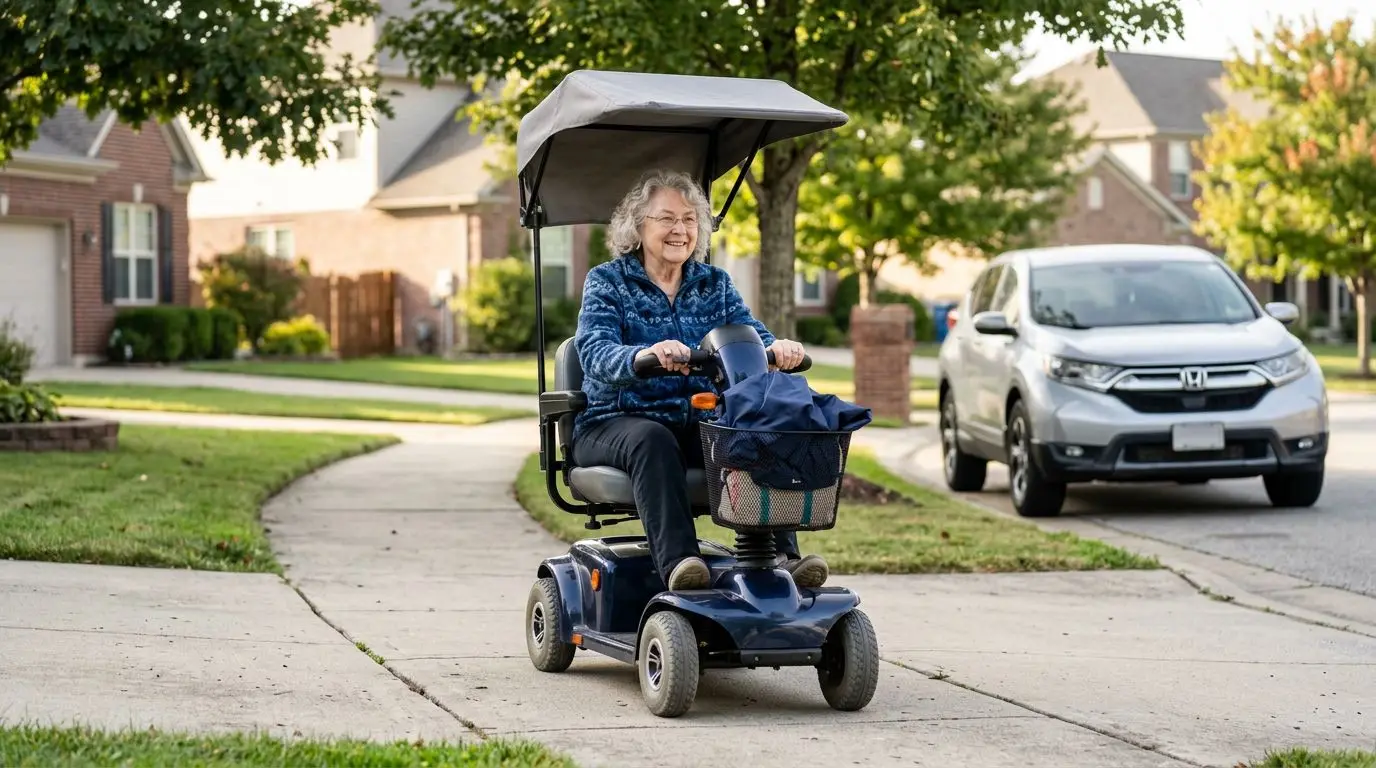
The best weather accessories for a mobility scooter protect the rider without blocking vision, controls, lights, or safe steering. For most US riders, a practical setup begins with sun protection, a tiller cover for the controls, a scooter-friendly rain layer, and cold-weather add-ons when temperatures drop.
No accessory turns a mobility scooter into an all-weather vehicle. Heavy rain, high wind, standing water, snow, and ice can still make riding unsafe, especially on scooters that commonly travel about 4 to 8 mph and have limited ground clearance.
Weather accessory comparison: 4 protection zones
Think about weather gear by protection zone: overhead sun, hand-and-control coverage, body rain coverage, and warmth. One accessory rarely handles all 4 zones well, and forcing one oversized cover to do everything can make the scooter harder to drive.
The table below compares common add-ons by comfort benefit, safety concern, and fit challenge. Exact dimensions vary, so use any number here as a measuring prompt, not a guarantee.
| Accessory type | Best protection | Typical fit checks | Main limitation |
|---|---|---|---|
| Sun shade or canopy | Head, face, neck, and upper torso shade | Seat-back height, mounting bar location, overhead clearance, rider height | Wind can catch the shade like a sail |
| Tiller cover | Controls, display, ignition area, and hands | Tiller width, throttle location, hand clearance of 2 to 3 inches | May reduce touch sensitivity or visibility of the panel |
| Rain poncho or scooter cape | Rider body and lap area | Seated length, foot platform coverage, hem position above wheels | Loose fabric can interfere with wheels or controls |
| Cold-weather add-ons | Hands, lap, torso, and seat comfort | Seat width, armrest spacing, safe access to brake release and controls | Bulk can limit movement or safe transfers |
Start with the problem you face most often. A rider in Arizona may use a sun shade more than a rain cape, while a rider in the Pacific Northwest may put control protection and waterproof outerwear first.
Sun shades and canopies: 2 mounting styles and 3 fit checks
Sun shades for mobility scooters usually fall into 2 groups: frame-mounted canopies and flexible umbrella-style shades. A frame-mounted canopy attaches to the scooter structure, often near the seat back or rear frame area, while an umbrella-style shade uses a clamp or adjustable arm.
Shade can improve comfort by reducing direct sunlight on the face, shoulders, and control panel. It may also make the display easier to read. Even so, shade does not replace sunscreen, a brimmed hat, sunglasses, or hydration in hot weather. On a 90-degree day, pavement and parking lots can feel much hotter than the air temperature.
Before buying any shade, check 3 measurements. First, measure from the top of the seat to the highest point of your head while seated. Second, measure the available mounting area behind or beside the seat. Third, measure the total height after installation, especially if you ride through doorways, garage openings, elevators, or van lifts. A typical interior doorway is about 80 inches tall, and an added canopy can cause clearance problems.
Wind is the biggest safety issue. Even a light canopy adds surface area, and a gust can push the scooter sideways or strain the mounting hardware. If the shade starts shaking, pulling, or changing the steering feel, remove it or fold it down before continuing.
- Best for: outdoor riders who travel in open sunlight for 10 minutes or more at a time.
- Use caution if: you often ride in windy parking lots, near open fields, along coastal paths, or on ramps.
- Avoid if: the mount blocks mirrors, lights, baskets, head movement, or safe transfers.
Tiller covers and control protection: 30-second access matters
A tiller cover protects the steering column, display, switches, throttle, and key area from light rain, mist, and cold wind. It is one of the most practical weather accessories because the electronics and controls are exposed on many scooter designs.
The best tiller cover still lets you operate the scooter normally within about 30 seconds of sitting down. You should be able to reach the throttle, speed dial, horn, lights, and key without searching under bunched fabric. If you use a delta tiller, thumb throttle, twist-style throttle, or finger lever, confirm that the cover leaves enough room for your normal hand position.
Clear plastic windows can help you see the battery gauge and switches, but glare and fogging are common. In cold rain, a window may become hard to read. Try the cover while stationary, and check whether you can see your speed setting and battery indicator without leaning too far forward.
Water resistance is not the same as waterproof protection. A tiller cover can reduce exposure during a short shower, but it should not make you feel safe riding through heavy rain or standing water. If the scooter has been wet, wipe the tiller area with a dry cloth and let it air out before storing it under a full cover.
| Feature | Why it helps | What to check |
|---|---|---|
| Elastic or drawcord opening | Helps reduce gaps around the tiller | Should not snag the throttle or key |
| Clear viewing panel | Allows display visibility | Check glare from sun and streetlights |
| Hand openings | Keeps hands warmer and drier | Allow at least 2 inches of movement around controls |
| Stiffened shape | Prevents fabric from collapsing onto controls | Must not press the horn or speed dial |
Rain protection: 3 levels for drizzle, showers, and storage
Rain protection comes in 3 practical levels: rider rainwear, scooter-mounted rain coverage, and parked-scooter storage covers. Each one solves a different problem, and confusing them can create safety issues.
For riding, a seated rain poncho or scooter cape can cover the shoulders, lap, and sometimes the tiller area. The key is controlled length. Fabric should cover your legs without hanging low enough to touch the front wheel, rear wheels, or ground. Leave several inches of clearance around moving parts. If you cannot see the foot platform, the hem, or the front wheel area, the cover may be too loose.
Standard rain jackets and pants can also work well, especially for riders who transfer often or walk short distances at each stop. They are less likely to flap into the wheels than a large cape, though they may leave the lap, hands, or scooter controls more exposed.
Full scooter enclosures are more complicated. They may keep more rain off, but they add wind resistance, limit ventilation, and can reduce side visibility. Some also make transfers harder because the rider must open panels, step around fabric, or bend more than usual. On a path shared with pedestrians, cyclists, and cars, visibility matters as much as dryness.
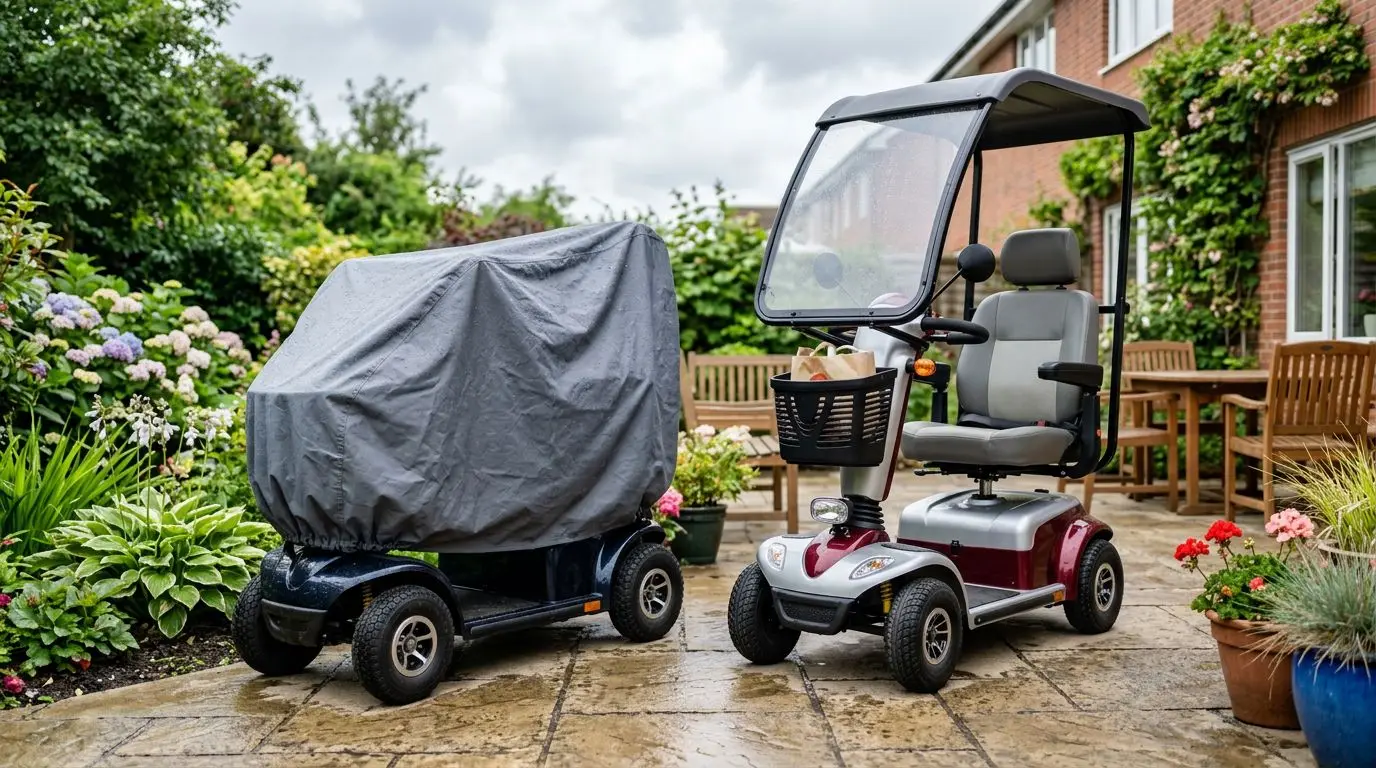
Parked-scooter covers are for storage, not riding. A storage cover can protect the seat and tiller when the scooter is outside for a short time, but it must be removed before driving. If a scooter is stored outdoors regularly, also consider security, charging access, battery temperature, and manufacturer guidance about water exposure.
- Light drizzle: tiller cover plus a fitted rain jacket may be enough for short trips under 15 minutes.
- Steady shower: seated rain cape, waterproof footwear, and a route with safe shelter are more appropriate.
- Heavy rain: delay the trip when possible, especially if puddles cover curb cuts or sidewalk seams.
Cold-weather add-ons: 5 comfort upgrades below 50 degrees
Cold-weather scooter accessories focus on keeping hands, lap, torso, seat, and batteries within reasonable operating conditions. Once temperatures drop below about 50 degrees, wind from even a slow ride can feel uncomfortable, especially on the hands.
Hand protection is often the first upgrade. Tiller mitts or hand covers can block wind while allowing access to the throttle and brake controls. The fit should be roomy enough for gloves, but not so bulky that your fingers lose contact with the throttle. Test indoors or in a safe, flat area before using them on a sidewalk or parking lot.
Lap blankets and leg covers help riders who get cold while seated. Choose options that secure around the rider or seat without trailing near wheels. A blanket that is safe in a recliner is not automatically safe on a scooter. If it can slide off your lap and reach the wheels, it needs a different setup.
Seat pads and back cushions can make a cold vinyl or synthetic seat more comfortable at the start of a trip. Keep any cushion thin enough that it does not raise you into an awkward steering position. Even a 2-inch cushion can change arm angle, foot placement, and transfer height.
Battery performance may drop in cold weather. That does not mean the scooter is damaged, but range can be shorter on cold days. If your usual errand is close to the scooter range limit, build in a larger safety margin during winter and avoid letting the scooter sit uncharged in freezing conditions unless the owner guidance allows it.
- Wind-blocking gloves or tiller mitts for hand comfort.
- Lap cover secured above the wheels.
- Layered clothing that does not restrict shoulder movement.
- Non-slip footwear with a firm sole for transfers.
- Reflective trim or lights because winter trips often happen in low light.
How to choose and measure: a 7-point fit checklist
Fit is where many weather accessories succeed or fail. Before ordering or installing anything, take 7 measurements and make one test ride in a safe area, such as a level driveway or empty community room.
Use a tape measure while the rider is seated in the usual position. If the scooter has adjustable armrests, seat height, or tiller angle, measure it in the position used for daily riding. Small changes matter. Moving the tiller 3 inches closer can affect whether a cover bunches against the throttle.
| Measurement | Why it matters |
|---|---|
| Seat width | Helps size lap covers, cushions, and side drapes |
| Armrest-to-armrest width | Shows available room for winter layers and rain capes |
| Seat top to rider head height | Helps determine canopy clearance |
| Floor to top of canopy, if installed | Checks doorways, lifts, and garage clearance |
| Tiller width and height | Helps fit control covers without blocking steering |
| Distance from lap to front wheel area | Helps prevent rain fabric from reaching moving parts |
| Basket, mirror, and light locations | Prevents accessories from blocking visibility or storage |
After measuring, do a 5-minute function check. Sit down, turn the scooter on, check the battery display, reach the horn, adjust speed, steer fully left and right, and practice stopping. If an accessory makes any of those actions slower, harder, or less certain, adjust it before using the scooter in public.
Safety limits: 6 rules for weather riding
Weather accessories can improve comfort, but they do not remove basic riding limits. Use these 6 rules before taking a scooter out in questionable conditions.
- Avoid standing water. Even 1 to 2 inches can hide potholes, curb edges, and electrical hazards.
- Respect wind. Canopies, umbrellas, and full enclosures can pull against the scooter in gusts.
- Keep lights visible. Rain covers and blankets should not block front lights, rear reflectors, or turn signals if equipped.
- Protect the controls without trapping moisture. Wipe wet areas and allow ventilation after the ride.
- Do not block transfers. You should be able to get on and off the scooter without wrestling with fabric or straps.
- Shorten the route. In heat, cold, or rain, a 20-minute trip can feel much longer than usual.
Sidewalk seams, curb ramps, metal plates, wet leaves, and painted crosswalk lines can be slick. Slow down early. A scooter may stop differently when the surface changes, and a wet ramp can be more difficult than a dry one with the same slope.
Who each accessory is best for: 5 common rider profiles
Different riders need different protection. A person using a scooter for a 5-minute mailbox trip does not need the same setup as someone who rides several blocks to transit or a grocery store.
| Rider profile | Most useful accessories | What to avoid |
|---|---|---|
| Sunny-climate outdoor rider | Canopy or sun shade, sunglasses, breathable seat cover | Large shade in windy areas |
| Short errand rider | Tiller cover, compact rain layer, small storage cover | Bulky full enclosure for quick stops |
| Transit or facility rider | Low-profile rainwear, reflective trim, easy-fold cover | Accessories that increase width in elevators or buses |
| Cold-weather neighborhood rider | Tiller mitts, secured lap cover, warm gloves, visible outerwear | Loose blankets near wheels |
| Caregiver-assisted rider | Simple covers with large openings and quick-release features | Complicated straps that slow transfers |
If a caregiver helps with setup, choose accessories that can be installed the same way each time. The safest accessory is not the most protective one on paper; it is the one that gets used correctly every time.
Care and storage: a 10-minute routine after wet rides
A short care routine can make weather accessories more useful and less frustrating. After a wet or cold ride, spend about 10 minutes drying, checking, and storing the gear.
Remove rain capes and storage covers before moisture gets trapped against the seat or tiller. Shake off water outdoors, then hang fabric where air can circulate. Wipe the control area with a dry, soft cloth, paying attention to the key area, display, and throttle. Do not use high heat, a hair dryer, or harsh chemicals on scooter controls.
Check straps, hook-and-loop closures, elastic hems, and clamps monthly during active use. Sun can weaken fabric, cold can stiffen plastic, and repeated folding can create cracks in clear panels. If a cover no longer stays in place, it may become a hazard rather than a help.
Store seasonal gear in labeled bags so it is easy to find. A simple setup near the charging area works well: one bag for rain, one for sun, and one for cold-weather items. Keep the scooter owner instructions nearby, especially any guidance on water exposure, battery charging temperature, and outdoor storage.
FAQ: 5 practical questions about scooter weather accessories
Can I ride a mobility scooter in the rain with a cover?
A cover may help in light rain, but it does not make a scooter waterproof. Avoid heavy rain, deep puddles, and routes where water covers curb cuts or sidewalk cracks. Protect the tiller, keep fabric away from wheels, and dry the scooter after the ride.
Are mobility scooter canopies safe in wind?
They can be safe in calm conditions when properly fitted, but wind is the main concern. A canopy adds surface area, and gusts can affect steering or stability. If the canopy shakes, pulls, or changes how the scooter handles, fold it or remove it.
What is better: a rain poncho or a full scooter enclosure?
For many riders, a seated rain poncho or waterproof jacket is easier and safer because it preserves visibility and access. A full enclosure may keep off more rain, but it can reduce ventilation, increase wind resistance, and make transfers harder.
How do I keep my hands warm without losing control?
Use thin warm gloves or tiller mitts that leave enough room to operate the throttle, horn, and speed controls. Test them for at least 5 minutes in a safe, level area before using them near traffic, ramps, or pedestrians.
Can I leave a mobility scooter outside under a cover?
A storage cover can protect against dust and light moisture for short periods, but long-term outdoor storage depends on the scooter design, battery type, charging setup, and local weather. Follow the owner guidance and avoid trapping moisture under a cover.
Frequently asked questions
Can I ride a mobility scooter in the rain with a cover? +
A cover can help in light rain, but it does not make a scooter waterproof. Avoid heavy rain, standing water, and flooded curb cuts, and dry the tiller and seat area after the ride.
Are mobility scooter canopies safe in wind? +
Canopies can be safe in calm weather when fitted correctly, but wind can catch them and affect steering. Fold or remove a canopy if it shakes, pulls, or changes how the scooter handles.
What is better: a rain poncho or a full scooter enclosure? +
A seated rain poncho or waterproof jacket is often easier to manage and preserves visibility. Full enclosures may block more rain, but they can add wind resistance, reduce ventilation, and complicate transfers.
How do I choose the right size tiller cover? +
Measure the tiller width and height, then confirm that your hands have room to reach the throttle, horn, key, speed dial, and display. A good cover protects the controls without pressing buttons or blocking visibility.
What cold-weather accessory should I start with? +
Start with hand protection, such as warm gloves or tiller mitts, because cold hands can make controls harder to use. Add a secured lap cover only if it stays clear of the wheels and foot platform.
Related guides
Mobility Scooter Covers, Canopies, and Weather Enclosures: What Protects the Scooter vs. the Rider?
13 min read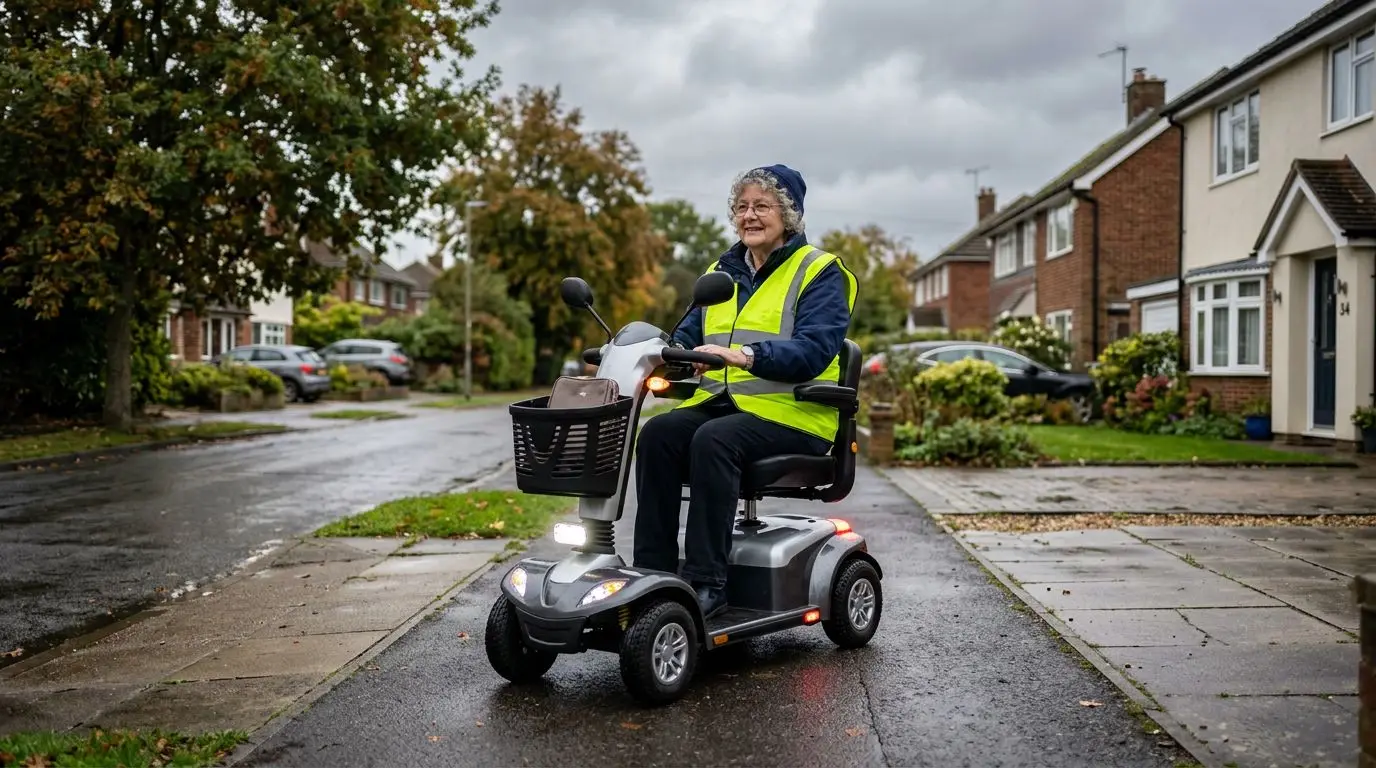
Mobility Scooter Weather Safety: Riding in Rain, Heat, Cold, and Low Visibility
13 min read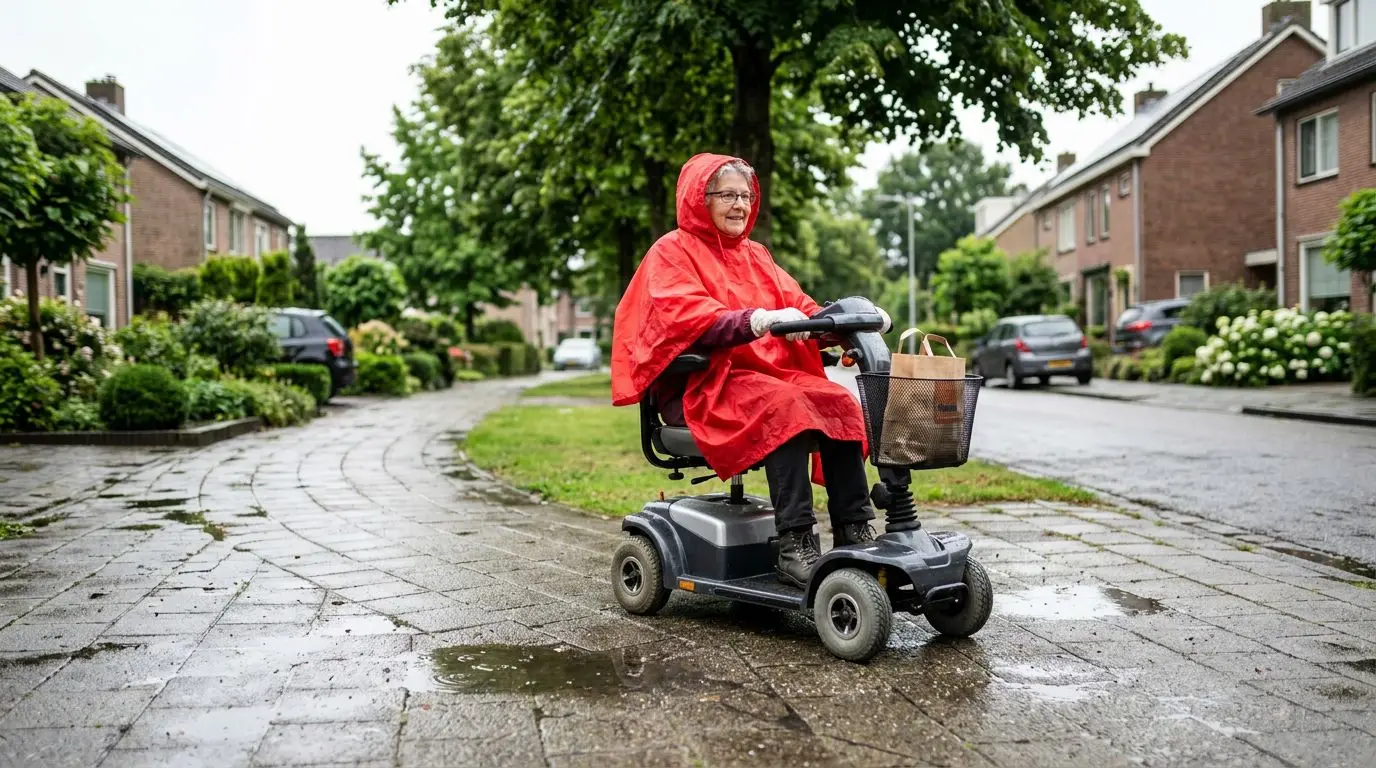
Can You Use a Mobility Scooter in Rain? Wet-Weather Riding Risks and Safety Tips
13 min read