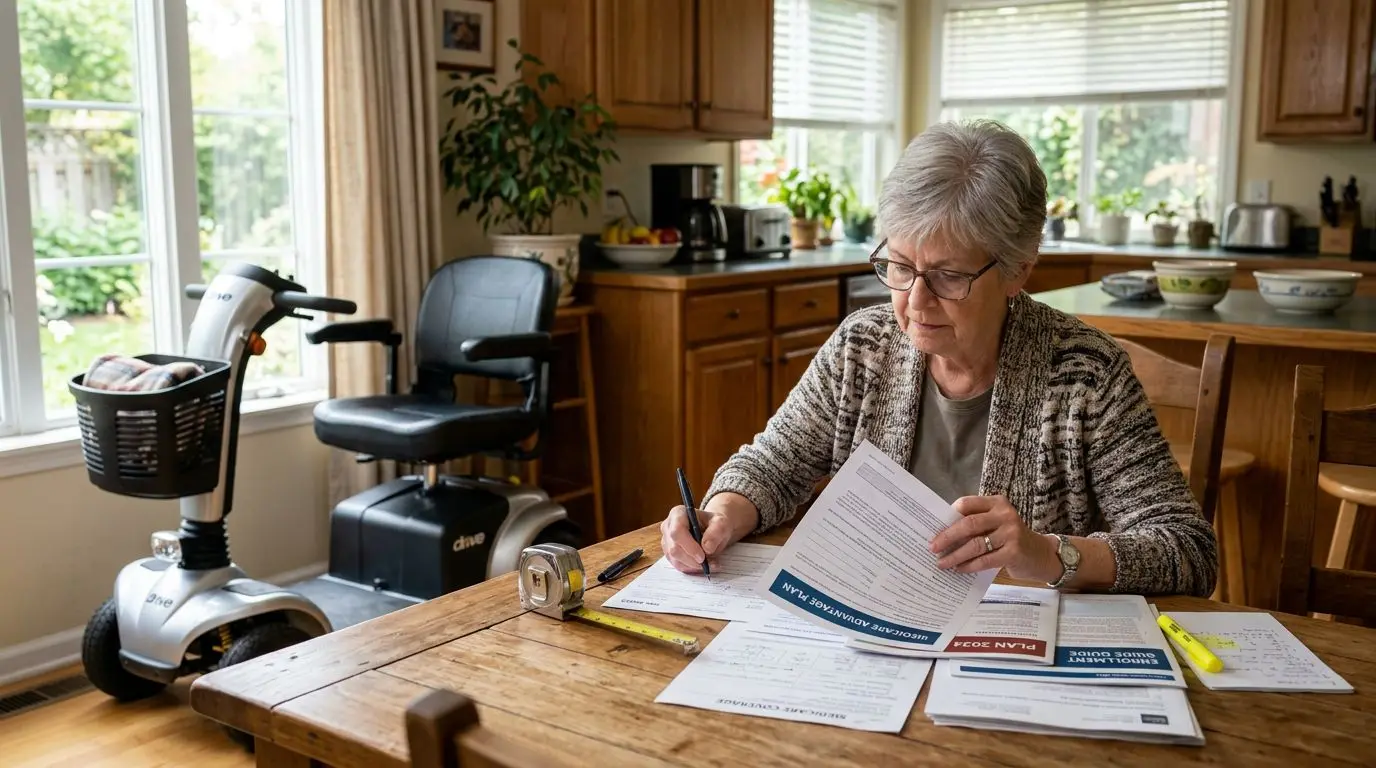
Mobility scooter HCPCS codes matter because they tell Medicare and other insurers exactly what type of power operated vehicle is being billed. The code links the scooter’s weight capacity, performance category, and medical necessity documentation to a coverage decision. A code does not guarantee payment, but the wrong code can delay, reduce, or prevent coverage.
For Medicare billing, mobility scooters are generally classified as power operated vehicles, often shortened to POVs. They fall within the broader power mobility device category, but they are not coded the same way as power wheelchairs. Knowing that difference can help you ask better questions before a supplier submits paperwork.
What a 5-character HCPCS code means for a scooter claim
HCPCS stands for Healthcare Common Procedure Coding System. For durable medical equipment, insurers usually rely on Level II HCPCS codes, which are 5 characters long and often begin with a letter followed by 4 numbers. Many mobility scooter codes begin with K, which is commonly used for certain durable medical equipment billing categories.
Think of the HCPCS code as the billing label, not the scooter’s name. It does not identify a specific brand, color, seat style, or model. Instead, it describes the general class of equipment being provided, such as a standard power operated vehicle with a stated patient weight capacity.
That is why two scooters that look different in a showroom may be billed under the same HCPCS code. If they fit the same Medicare code description, the insurer may treat them as the same type of base item for payment purposes. By contrast, two scooters that both have 4 wheels may fall under different codes if their weight capacity or performance group differs.
The code is only one part of the file. A typical claim may also involve a practitioner’s face-to-face evaluation, a written order, supplier documentation, proof that the item meets coverage criteria, and any required prior authorization rules from the payer. In traditional Medicare, the question is not simply whether a scooter would be useful outdoors. The central question is whether the person needs the device to perform mobility-related activities of daily living inside the home.
Common scooter HCPCS codes from K0800 to K0812
Medicare scooter billing commonly uses power operated vehicle codes in the K0800 through K0812 range. The exact code depends on the scooter category and weight capacity. Code descriptions can be updated, and private insurers may publish their own policy language, so the supplier should verify the current code before billing.
Here is a plain-English way to understand the common groupings:
| HCPCS code or range | Plain-English category | Typical meaning for coverage review |
|---|---|---|
| K0800 | Group 1 standard power operated vehicle | Often tied to a standard scooter category with patient weight capacity up to about 300 lb |
| K0801 | Group 1 heavy duty power operated vehicle | Generally used when the patient weight capacity falls in a higher range, commonly 301 to 450 lb |
| K0802 | Group 1 very heavy duty power operated vehicle | Generally associated with still higher capacity, commonly 451 to 600 lb |
| K0806 | Group 2 standard power operated vehicle | A different performance group, often with standard weight capacity up to about 300 lb |
| K0807 | Group 2 heavy duty power operated vehicle | Generally associated with 301 to 450 lb capacity in Group 2 |
| K0808 | Group 2 very heavy duty power operated vehicle | Generally associated with 451 to 600 lb capacity in Group 2 |
| K0812 | Group 2 extra heavy duty power operated vehicle | Generally associated with extra-high capacity, commonly 601 lb or more |
The weight numbers above are common code-description benchmarks, not shopping recommendations. A person weighing 295 lb should not automatically assume a 300 lb capacity scooter is appropriate, because clothing, carried items, seat size, stability, and safe operation still matter. Likewise, a higher-capacity scooter may be harder to maneuver in a tight home.
Group 1 and Group 2 do not mean good and better. They are billing and performance categories. A scooter must match the user, the home, and the payer’s medical necessity rules. A higher code is not automatically more likely to be covered.
Why the HCPCS code affects 3 insurance decisions
The HCPCS code can influence at least 3 major parts of an insurance review: whether the item fits a covered benefit category, how much the payer allows for the equipment, and whether the documentation supports that exact level of equipment.
First, the code tells the payer what is being requested. A scooter code means the supplier is billing for a power operated vehicle, not a manual wheelchair, power wheelchair, walker, or accessory. If the medical record supports a walker but not a power mobility device, the claim may fail even if the person would prefer a scooter.
Second, the code connects to payment rules. Insurers set allowable amounts by code, not by a store’s retail price. If a supplier provides features beyond what the code covers, the payer may not reimburse extra upgrades unless they are separately covered and properly documented. This is one reason beneficiaries should ask what is included in the base item and what, if anything, may be an out-of-pocket upgrade.
Third, the code must match the person’s documented need. If a supplier bills a heavy duty code, the record should support why that capacity is medically and functionally necessary. If the file only supports a standard scooter, the higher-capacity code may be questioned. If the person needs a device that can fit through a 30-inch bathroom doorway, the documentation and selected equipment should not ignore that home measurement.
For Medicare Part B, power mobility coverage generally focuses on safe, necessary mobility inside the home. Outdoor use may be valuable for quality of life, but coverage is not usually approved just because someone wants to go farther at a park, store, or mailbox. Medicare Advantage and private insurance plans may use similar concepts, but they can have network rules, prior authorization steps, copays, or formularies that differ from traditional Medicare.
Who a Medicare-coded scooter is best for under Part B rules
A Medicare-coded scooter may be appropriate for someone who cannot safely complete needed daily mobility tasks in the home with a cane, walker, or manual wheelchair, yet can safely operate and transfer on and off a scooter. In practical terms, the person must be able to use the tiller steering, maintain seated balance, understand controls, and maneuver through the home’s usable pathways.
This distinction matters. A scooter can be a poor fit for someone who lacks the upper-body function to steer with both hands, cannot transfer safely, or has a home layout that will not accommodate the turning radius. In those cases, a different mobility solution may be considered by the clinician and supplier, but that does not mean any device is automatically covered.
A scooter is often most practical for users who meet several of these 6 conditions:
- They can sit upright and maintain posture while driving.
- They can operate a tiller control safely and consistently.
- They can transfer to and from the seat without unsafe strain or falls.
- Their home has doorways, halls, and rooms wide enough for scooter use.
- Their mobility limitation affects essential daily activities, such as toileting, bathing, dressing, or meal access.
- A lower-level aid, such as a cane, walker, or manual wheelchair, is not enough for safe in-home mobility.
It is not best for everyone. A person who mainly needs help during 2-hour shopping trips but moves safely at home may not meet Medicare’s in-home medical necessity standard. A person who has severe difficulty steering or judgment changes may also need a different approach. Coverage decisions should be based on documented functional need, not convenience or sales pressure.
How to measure your home and scooter needs in 7 steps
Before a scooter is selected or billed, the home should be measured. This is not busywork. A scooter that cannot turn into the bedroom or reach the bathroom may fail the very purpose Medicare looks at: in-home mobility.
Use a tape measure and write down these 7 details before meeting with a supplier:
- Narrowest doorway width. Measure the clear opening, not just the door slab. Many interior doors are around 28 to 32 inches wide, and trim or hinges can reduce usable space.
- Hallway width. A 36-inch hallway may still feel tight if there are tables, laundry baskets, oxygen tubing, or sharp turns.
- Turning spots. Note whether the scooter must make a 90-degree turn into a bathroom, bedroom, or kitchen.
- Flooring changes. Record thresholds, rugs, and transitions over about 1 inch high. Loose rugs can create safety problems.
- Seat-to-surface transfers. Measure bed, toilet, and favorite chair heights. A difference of several inches can make transfers harder.
- Storage and charging location. Identify a dry indoor spot near a standard electrical outlet where the scooter can charge for several hours.
- User dimensions and weight. Record current weight, hip width while seated, leg position needs, and whether extra seat width is necessary.
Do not guess on width. One inch can matter. A scooter with a comfortable seat but a wide base may be harder to use indoors than a smaller scooter with a tighter turning radius. The goal is not to choose the biggest device; it is to choose the safest device that meets the documented need.
6 scooter features that can change fit, documentation, and daily use
HCPCS codes do not describe every feature you will notice, but features still matter. A payer may focus on code and medical necessity, while the user feels the daily impact of seat size, turning radius, controls, batteries, and transportability.
| Feature | Why it matters | Question to ask |
|---|---|---|
| Weight capacity | Must safely support the user and match the billed category | What is the rated capacity, and does it leave a reasonable margin? |
| Overall width | Affects doorways, bathrooms, kitchens, and bedside access | Will it pass through the narrowest measured doorway? |
| Turning radius | Important for 90-degree turns and small rooms | Can it turn where I actually need it indoors? |
| Seat dimensions | Impacts comfort, posture, and transfers | Is the seat wide and deep enough without making the scooter too large? |
| Battery range | Determines how long it can operate between charges | Is the stated range realistic for my weight, terrain, and daily routine? |
| Disassembly or transport | Some scooters come apart for vehicle loading, while others are heavier | Who will lift the parts, and how much does the heaviest piece weigh? |
Insurance coverage and personal preference can pull in different directions. A swivel seat, basket, lighting package, or special upholstery may be useful, but not every feature is medically necessary or separately reimbursable. Ask the supplier to separate covered base equipment from optional upgrades in writing.
Be cautious with range claims, too. Published battery range often comes from controlled conditions. Real-world range can drop with hills, higher user weight, cold weather, thick carpet, and frequent starts and stops. For many users, dependable charging habits matter more than chasing the longest advertised number.
How to check supplier paperwork in 10 minutes
You do not need to become a billing specialist, but you should be able to spot the basics before a claim is submitted. A 10-minute review can prevent confusion later.
Ask the supplier to show you the HCPCS code they intend to bill and the plain-English description of that code. Confirm whether the device is being billed as a power operated vehicle and whether the weight capacity category matches your situation. If you are enrolled in Medicare Advantage or a private plan, ask whether the supplier is in network and whether prior authorization is required before delivery.
Next, compare the code to the clinical documentation. The practitioner’s record should describe why you need powered mobility for essential activities inside the home, not just that walking is difficult outside. It should also address why a cane, walker, or manual wheelchair is not sufficient, and whether you can safely operate a scooter.
Keep copies of these items when available:
- The written order or prescription information.
- The face-to-face mobility evaluation notes, if provided to you.
- The supplier’s product description without brand-focused sales language.
- The HCPCS code and any accessory codes being billed.
- Prior authorization approval or denial letters.
- Any advance notice or estimate showing what you may owe.
If something is denied, read the denial reason carefully. A denial may be about missing documentation, lack of medical necessity, wrong place of use, out-of-network supplier, or a code mismatch. The fix depends on the reason. Do not assume a denial means no scooter could ever be covered.
Key differences between scooters and power wheelchairs in 4 points
Scooters and power wheelchairs are both power mobility devices, but insurers do not treat them as interchangeable. The distinction can matter for coding, documentation, and safe use.
| Point of comparison | Mobility scooter or POV | Power wheelchair |
|---|---|---|
| Steering | Usually uses a front tiller with hand controls | Often uses a joystick or alternative drive control |
| Transfers | User typically transfers onto a scooter seat | May offer more seating and positioning options |
| Turning space | May need more room, especially with a longer base | Some designs turn in a smaller footprint |
| Common billing path | Often billed under POV codes such as K0800 to K0812 | Uses different power wheelchair HCPCS code categories |
A scooter is not automatically easier to get covered because it looks simpler. The same core issue remains: does the person need this type of device for safe, necessary mobility in the home, and does the documentation support it? If a scooter cannot be operated safely or cannot fit the home, a clinician may evaluate other options.
FAQ: 5 HCPCS questions scooter users ask
Does having a scooter HCPCS code mean Medicare will pay?
No. The code identifies the type of equipment being billed, but Medicare still reviews medical necessity, documentation, supplier eligibility, and coverage rules. A correct code is necessary for billing, but it is not an approval by itself.
Can I choose any scooter if the HCPCS code is covered?
Not necessarily. The scooter must match the covered code, your documented needs, and your home environment. Optional features or upgrades may not be covered even when the base scooter is covered.
Why would a heavier-duty scooter need different documentation?
A higher-capacity code should be supported by the record. For example, if a code category is tied to a 301 to 450 lb capacity range, the payer may expect documentation showing why that capacity is needed rather than a standard category.
Do private insurers use the same HCPCS codes as Medicare?
Many private insurers and Medicare Advantage plans use HCPCS codes, but their approval rules, networks, prior authorization requirements, and cost sharing can differ. Always check the plan policy before delivery.
What should I do if the code on my paperwork looks wrong?
Ask the supplier to explain the code in plain English before the claim is submitted. If the answer does not match the scooter type, weight capacity, or order, request clarification and contact your insurer if needed.
Frequently asked questions
Does having a scooter HCPCS code mean Medicare will pay? +
No. The code identifies the type of equipment being billed, but Medicare still reviews medical necessity, documentation, supplier eligibility, and coverage rules.
Can I choose any scooter if the HCPCS code is covered? +
Not necessarily. The scooter must match the covered code, your documented needs, and your home environment. Optional upgrades may not be covered.
Why would a heavier-duty scooter need different documentation? +
A higher-capacity code should be supported by the medical record, such as documentation showing why the user needs that weight capacity rather than a standard category.
Do private insurers use the same HCPCS codes as Medicare? +
Many do use HCPCS codes, but private insurers and Medicare Advantage plans may have different approval rules, networks, prior authorization steps, and cost sharing.
What should I do if the code on my paperwork looks wrong? +
Ask the supplier to explain the HCPCS code before the claim is submitted. If it does not match the scooter type or your order, request clarification and contact your insurer if needed.
Related guides

Does Medicare or Insurance Cover Mobility Scooters? A US Buyer’s Guide
12 min read
Medicare-Approved Mobility Scooter Suppliers: Assignment, Documentation, and Billing Questions to Ask
12 min read
Private Insurance Coverage for Mobility Scooters: Medical Necessity, Prior Approval, and What You May Pay
13 min read