Heavy-duty and all-terrain mobility scooters are made for riders who need higher weight capacity, steadier outdoor handling, and more comfort on uneven ground. The best choice is usually the scooter that gives you a safe capacity margin, fits your body and home, and has the tires, suspension, range, and braking you need for the places you actually ride.
For many heavier adults and outdoor users, the decision involves more than the published weight limit. One scooter rated for 400 lb can feel very different from another 400-lb model, depending on seat size, wheelbase, tire diameter, ground clearance, suspension travel, and real-world battery range.
Heavy-Duty vs. All-Terrain Scooters: The 300-to-500-lb Capacity Difference
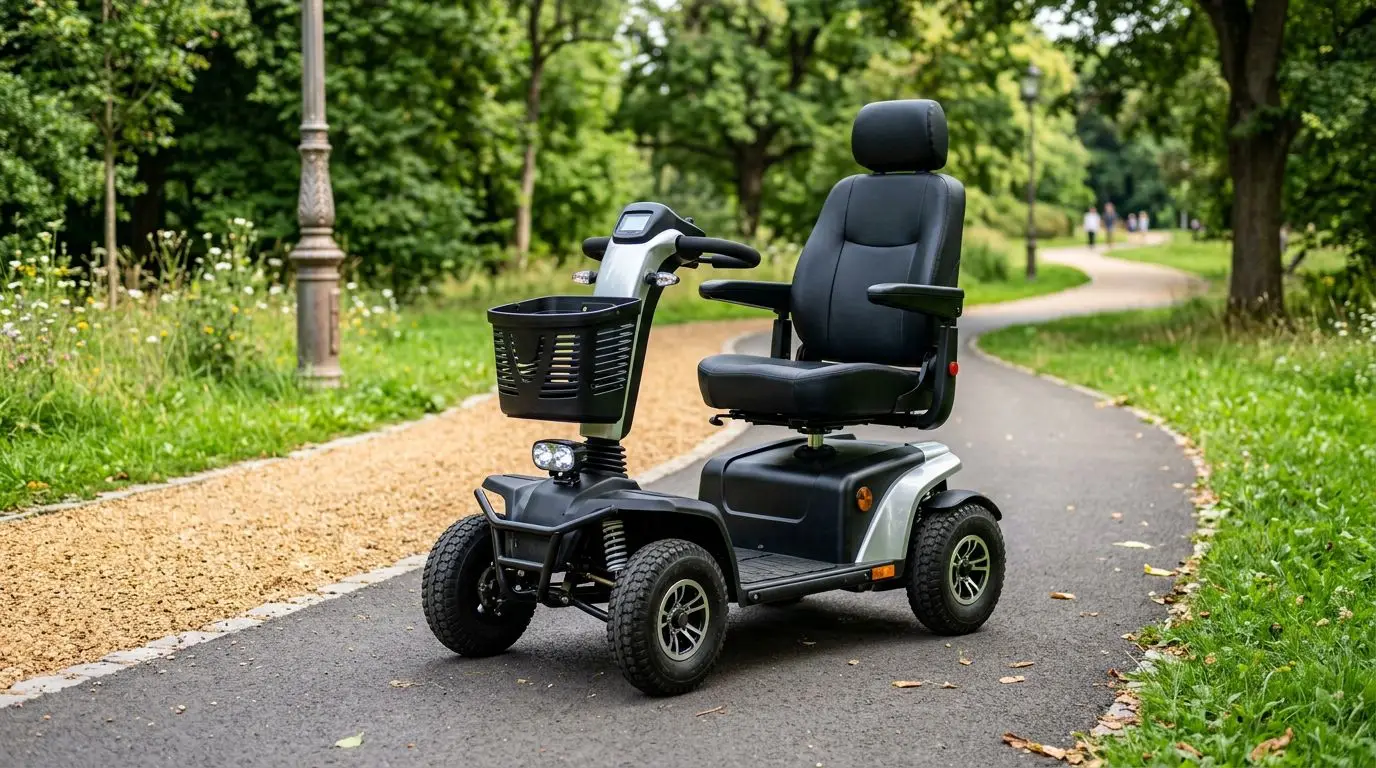
A standard full-size mobility scooter commonly supports around 250 to 300 lb, while heavy-duty models often start around 350 lb and may reach 400, 450, or 500 lb depending on design. All-terrain scooters overlap with heavy-duty scooters, but their main purpose is outdoor traction and stability rather than capacity alone.
Think of the terms this way: heavy-duty refers to structure and load handling; all-terrain refers to outdoor performance. Some scooters are both. Others may have a high weight rating but small, smooth tires better suited to sidewalks than gravel, while some outdoor-focused scooters may have larger tires but a lower rider capacity.
The frame, motor, controller, seat post, suspension, tires, and brakes all affect how a scooter behaves with a larger rider or on rougher paths. A published weight rating matters, but it is only part of the picture.
| Type | Typical capacity range | Best surfaces | Common tradeoff |
|---|---|---|---|
| Standard full-size scooter | 250 to 300 lb | Sidewalks, stores, smooth pavement | Limited room and capacity for larger riders |
| Heavy-duty scooter | 350 to 500 lb | Pavement, ramps, packed paths | Heavier frame and wider turning radius |
| All-terrain scooter | 300 to 500 lb | Grass, gravel, packed dirt, uneven sidewalks | Larger size and less indoor maneuverability |
| 4-wheel outdoor scooter | 300 to 500 lb | Driveways, parks, campuses, neighborhoods | May not fit tight hallways or small lifts |
Here is a quick filter: if you regularly ride outside more than 1 mile at a time, cross cracked sidewalks, or travel over packed gravel, look beyond capacity and focus on tire diameter, suspension, ground clearance, and battery range.
Weight Capacity: Why a 50-lb Safety Margin Matters
For comfort and durability, many shoppers should look for a scooter with at least a 50-lb margin above their actual riding load. That includes the rider's body weight plus anything carried on the scooter: oxygen equipment, groceries, a backpack, weather gear, a cane holder, or accessories.
If a rider weighs 330 lb and usually carries 15 lb of items, the working load is about 345 lb. In that case, a 350-lb scooter is technically close, but a 400-lb rated scooter may provide a more comfortable margin. Staying well below the stated limit can help the scooter feel less strained on inclines, longer rides, and rough pavement.
Weight capacity also affects stopping and climbing. A scooter near its maximum rating may accelerate more slowly, use more battery power, and need more distance to stop, especially on slopes. This does not mean heavier riders cannot ride safely; it means the scooter should be sized for realistic conditions.
- Add your carried items. A basket load can easily add 10 to 25 lb.
- Consider clothing and seasonal gear. Coats and boots count in real use.
- Leave a cushion. A 50-lb margin is a practical shopping target when possible.
- Check accessory limits. Rear baskets, holders, and lifts may have separate ratings.
Do not confuse scooter weight with rider capacity. A heavy-duty scooter may weigh 175 to 300 lb by itself, which affects transport, ramps, vehicle lifts, and storage.
Stability Outdoors: 4 Wheels, 3 Wheels, and Wheelbase Over 40 Inches
For outdoor use, a 4-wheel scooter is usually the more stable choice because it provides a wider support base. Many outdoor scooters have a wheelbase longer than 40 inches and an overall length in the 48-to-60-inch range. That helps them feel steadier on uneven surfaces, though it also makes them less nimble indoors.
Three-wheel scooters can turn more tightly, sometimes with a turning radius under 45 inches, but they are generally less stable when crossing bumps, driveway lips, and side slopes. That does not make them unsafe by default. It simply means they are often better for smooth surfaces and careful low-speed turning.
Stability is also influenced by seat height, rider posture, speed, tire width, and ground conditions. A higher seat can make transfers easier for some people, but it also raises the rider's center of gravity. Tight turns at speed are risky on any scooter, especially on slopes or uneven pavement.
| Design factor | Why it matters outdoors | What to look for |
|---|---|---|
| 4-wheel base | Improves side-to-side stability | Best for frequent outdoor travel |
| Longer wheelbase | Smooths ride and improves tracking | Often 40 inches or more on outdoor scooters |
| Wider stance | Helps resist tipping on uneven ground | Check overall width for doorway clearance |
| Lower, supportive seat | Can improve planted feel | Balance comfort with transfer height |
| Speed control | Reduces risk in turns and crowds | Adjustable speed dial or multiple speed settings |
For example, a scooter that feels excellent in a grocery aisle may feel nervous on a sloped driveway. Test the kind of surface you will actually use, not only a smooth showroom floor.
Suspension and Seat Comfort: What Matters on a 30-Minute Ride
Comfort becomes more important when rides last 30 minutes or longer. Heavy-duty and all-terrain scooters may include front suspension, rear suspension, or full suspension, and the difference is noticeable on cracked sidewalks, brick paths, and packed gravel.
Suspension reduces some of the sharp jolts that travel through the frame and seat. Larger riders often benefit from a stronger suspension system because the scooter is carrying more load, but the setup still needs to feel controlled. A ride that is too soft can feel bouncy; one that is too stiff can transfer every bump.
The seat deserves just as much attention. Look at seat width, seat depth, back support, armrest width, and whether the armrests adjust outward. Many full-size scooter seats are roughly 18 to 20 inches wide, while some heavy-duty seats may be wider. The right seat should support the hips without squeezing and should not force the rider to perch forward.
- Seat width: Measure hip width while seated, then allow a little room for clothing.
- Seat depth: The front edge should not press hard behind the knees.
- Armrests: Adjustable-width armrests can make transfers easier.
- Swivel seat: A 90-degree swivel can help with safer entry and exit.
- Tiller adjustment: The handlebar column should allow relaxed shoulders and elbows.
Comfort is personal. A high-back seat may help one rider feel supported, while another may prefer a lower back for easier twisting during transfers. If possible, sit for more than 5 minutes during a test, because pressure points often appear after the first few minutes.
Tires, Ground Clearance, and Traction: 10-to-14-Inch Wheels Make a Difference
Outdoor scooters often use larger tires, commonly in the 10-to-14-inch range, because bigger wheels roll over small obstacles more easily than small wheels. Tire width matters too: a wider tire can spread weight and improve grip on grass or packed dirt, although it may increase steering effort.
There are two common tire styles to consider. Pneumatic tires use air and can provide a smoother ride with better shock absorption. Solid or foam-filled tires reduce the chance of flats, but they often feel firmer on rough pavement.
| Tire type | Outdoor comfort | Maintenance | Best use |
|---|---|---|---|
| Pneumatic air-filled | Softer ride and better bump absorption | Needs pressure checks and can puncture | Rough sidewalks, gravel, longer outdoor rides |
| Solid rubber | Firmer ride | No air pressure, lower flat risk | Pavement, facilities, riders avoiding tire upkeep |
| Foam-filled | Between air and solid in feel | Flat-resistant | Mixed pavement and light outdoor use |
| Knobby tread | More grip on loose surfaces | Can wear faster on pavement | Grass, packed dirt, gravel paths |
Ground clearance is the space between the lowest part of the scooter and the ground. A clearance of about 4 inches or more can help with driveway transitions, uneven sidewalks, and small obstacles, though riders should still avoid curbs unless there is a proper curb cut. Higher clearance can help outdoors, but it may also raise the center of gravity, so it should be paired with a stable frame and careful speed control.
No mobility scooter is a true off-road vehicle. Wet grass, loose sand, deep gravel, mud, and steep slopes can trap wheels or reduce traction. If a route looks questionable, it is safer to avoid it or have another person nearby.
Range and Batteries: Why a 20-Mile Rating May Not Mean 20 Miles
Many full-size outdoor scooters advertise ranges around 15 to 35 miles per charge, but real-world range can be lower. Rider weight, hills, stop-and-go travel, tire pressure, temperature, battery age, and surface resistance all affect how far a scooter goes.
A 20-mile rating is usually measured under controlled conditions. In daily use, a heavier rider traveling on hills or rough paths may see noticeably less. A good planning habit is to use only about 60 to 70 percent of the stated range for routine trips, especially when returning home under your own power is essential.
Battery size is often expressed in amp-hours, such as 35 Ah, 50 Ah, or higher on larger scooters. Bigger batteries can support longer range, but they also add weight and charging time. Many scooter batteries take 6 to 12 hours to charge fully, depending on capacity and charger output.
- For errands under 3 miles: Most full-size scooters have enough range if charged regularly.
- For neighborhood rides of 5 to 10 miles: Look for a generous range rating and a battery gauge that is easy to read.
- For parks, campuses, or long outdoor days: Plan around terrain, hills, and a return buffer.
- For cold climates: Expect batteries to perform less efficiently in colder temperatures.
Your charging routine matters. Keeping the battery topped up according to the owner's instructions is usually better than running it down to empty. If the scooter will be stored for weeks, follow the battery maintenance guidance for that battery type.
Hills, Motors, and Braking: Pay Attention to 6-to-10-Degree Slopes
Outdoor riders should compare rated incline capability, often listed around 6 to 10 degrees on many mobility scooters. A higher rating does not mean every slope is safe; surface condition, rider weight, battery level, and turning angle all change the risk.
Driveways can be steeper than they look. A short ramp into a van, a sidewalk curb cut, or a sloped parking lot may challenge a scooter more than a long flat path. Climbing requires motor power and battery output, while descending requires controlled braking and stable steering.
Most mobility scooters use an electromagnetic brake that engages when the throttle is released. This helps with controlled stops, but riders still need to slow down before turns, hills, and uneven areas. Heavy-duty riders should allow more stopping distance, especially when carrying bags or traveling downhill.
- Avoid turning on slopes. Go straight up or down when possible.
- Use low speed on ramps. Fast entry can unsettle the scooter.
- Keep the battery charged. Low voltage can reduce climbing performance.
- Watch for wet leaves and gravel. Both can reduce traction quickly.
If your home has a ramp, measure it. The Americans with Disabilities Act guideline for many public ramps is a 1:12 slope, meaning 1 inch of rise for every 12 inches of run, but private homes may have steeper ramps. A gentler ramp is generally easier and safer for scooter use.
How to Measure Before You Buy: 7 Checks at Home and Outside
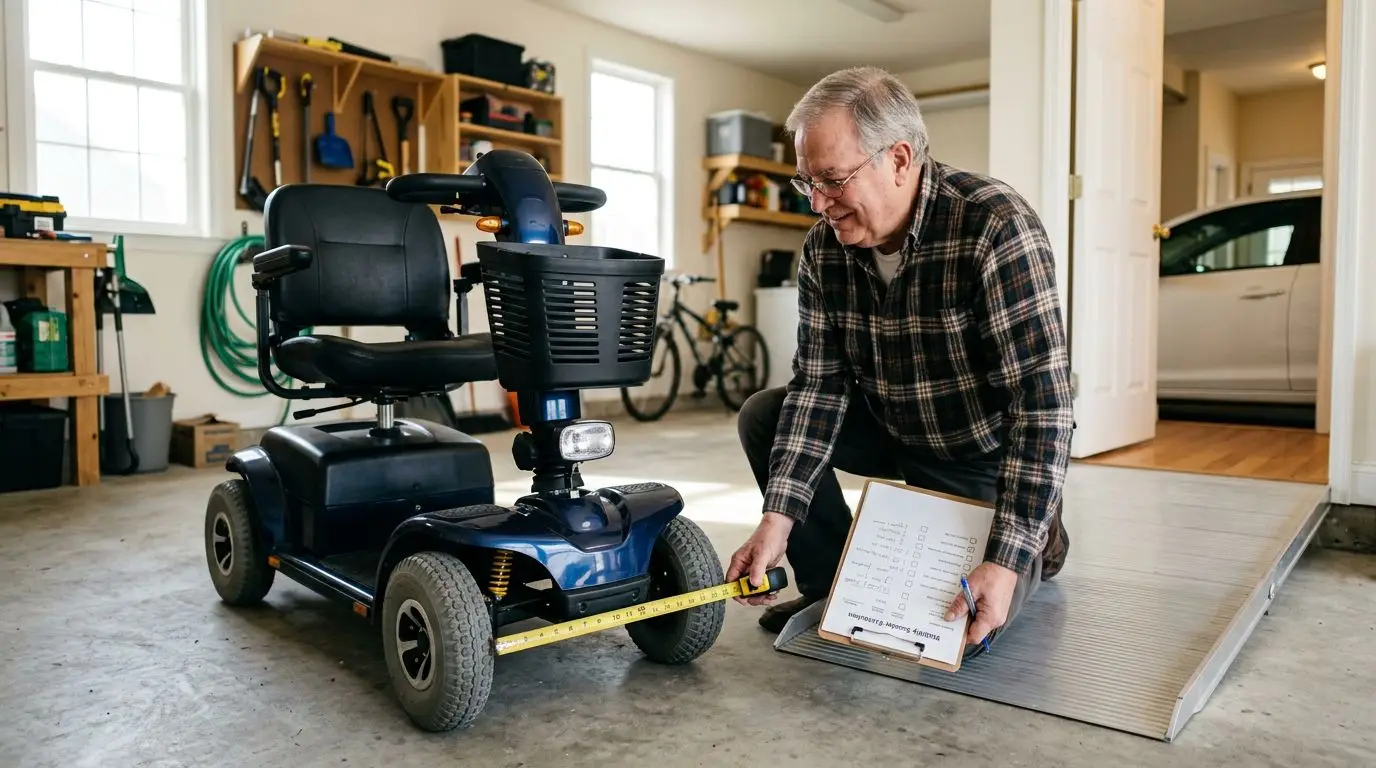
Before choosing a heavy-duty or all-terrain scooter, take 7 basic measurements: rider load, seat fit, doorway width, storage space, vehicle lift capacity, ramp slope, and typical trip distance. These numbers prevent many expensive fit problems.
Start with your body and daily equipment. Measure hip width while seated on a firm chair. Measure from the back of the hips to the back of the knee for seat depth. Add the weight of items you normally carry. These details help you choose a seat and capacity that match real life.
Next, measure the spaces the scooter must pass through. Many home doorways are about 30 to 36 inches wide, but trim, furniture, and tight turns can reduce usable space. Outdoor scooters may be 24 to 30 inches wide or more, so doorway fit is not automatic.
- Doorways: Measure the narrowest clear opening, not just the door size.
- Hall turns: Check whether the scooter can turn near bedrooms or bathrooms.
- Storage: Measure length, width, and outlet location for charging.
- Vehicle transport: Confirm the lift can handle the scooter's total weight.
- Ramp: Measure rise and run to estimate slope.
- Trip distance: Track a normal outing with a map app or odometer.
- Surfaces: List pavement, grass, gravel, thresholds, and hills separately.
A simple route audit helps. Walk or drive the path you expect to ride and note the roughest 3 spots. If those spots include loose gravel, a steep driveway, and a narrow doorway, your priorities become clearer: traction, climbing control, and size.
Who It's Best For: 3 Common Heavy-Duty and Outdoor Rider Profiles
Heavy-duty and all-terrain scooters are best for riders who need higher capacity, a roomier seat, and dependable outdoor performance. They are not the best fit for every user, especially when indoor maneuverability, transport weight, or apartment storage are the top concerns.
1. The heavier adult who needs daily reliability
This rider may need a 350-to-500-lb capacity, a wider seat, adjustable armrests, and a stable 4-wheel base. The main goal is not speed; it is comfort, fit, and confidence over routine surfaces like sidewalks, parking lots, and store entrances.
2. The outdoor neighborhood rider
This rider travels several miles at a time on sidewalks, paved trails, park paths, and driveways. Larger tires, full suspension, bright lights, reflectors, and a practical battery range matter more than compact size.
3. The rural or uneven-surface user
This rider may encounter packed gravel, grass, uneven pavement, or long distances between buildings. An all-terrain design with strong traction, higher ground clearance, and a generous range buffer is important, but the rider should still avoid mud, soft sand, and steep loose ground.
These scooters may be less ideal for people who need to load the scooter into a small car trunk, navigate very tight indoor spaces, or lift parts by hand. Many heavy-duty outdoor scooters are built as one large unit rather than lightweight take-apart designs.
Feature Priorities: A 10-Point Comparison Table for Outdoor Performance
When two scooters have similar weight ratings, compare the 10 features below. Capacity gets you into the right category, but these details determine comfort, usability, and safety in everyday outdoor travel.
| Feature | Why it matters | Decision tip |
|---|---|---|
| Weight capacity | Supports rider and carried load | Target at least a 50-lb margin when possible |
| Seat width | Affects comfort and transfers | Measure seated hip width before shopping |
| 4-wheel stability | Improves outdoor confidence | Prefer 4 wheels for uneven surfaces |
| Suspension | Reduces harsh bumps | Full suspension helps on longer outdoor rides |
| Tire size | Helps roll over small obstacles | Look for larger tires for gravel and rough sidewalks |
| Tire type | Balances comfort and maintenance | Air-filled for comfort, solid for flat resistance |
| Ground clearance | Helps with driveway lips and uneven paths | About 4 inches or more is useful outdoors |
| Range | Determines practical trip length | Plan on 60 to 70 percent of the stated rating |
| Lighting | Improves visibility | Front light, rear lights, and reflectors are helpful |
| Transport weight | Affects lifts and storage | Check total scooter weight before buying a lift |
Do not let one impressive number distract from a poor fit elsewhere. A long-range scooter that cannot fit through your garage door, or a high-capacity scooter with an uncomfortable seat, will not serve you well.
Safety and Maintenance: 5 Habits That Protect Outdoor Performance
Outdoor scooters need routine checks. Spending 5 minutes before a ride can catch low tires, loose accessories, weak lights, or a low battery before they become a problem away from home.
- Check tires weekly. For pneumatic tires, maintain the pressure recommended by the manufacturer.
- Charge on a routine. Start longer trips with a full battery whenever possible.
- Inspect the route. Avoid mud, deep gravel, standing water, and steep side slopes.
- Slow down early. Reduce speed before turns, ramps, crowds, and cracked pavement.
- Keep lights visible. Use lights and reflectors in low light, even on sidewalks.
Maintenance needs vary by scooter type and use. All-terrain tires may wear faster if used mostly on pavement. Air-filled tires can lose pressure over time. Batteries age gradually and may hold less charge after years of use. If braking, steering, or battery behavior changes, have the scooter inspected by a qualified technician.
Safety also means honest route planning. A mobility scooter can support independence and access, but it should be used within its design limits. When in doubt, choose the smoother route, cross slopes carefully, and avoid riding where cars, poor visibility, or unstable surfaces create unnecessary risk.
FAQ: Heavy-Duty and All-Terrain Mobility Scooters
What weight capacity should a heavier adult choose?
Choose a scooter rated above your total riding load, including anything you carry. A 50-lb cushion is a practical target when available because it gives the scooter more working margin for hills, rough pavement, and battery use.
Are all-terrain mobility scooters safe on grass or gravel?
They can handle some firm grass, packed dirt, and compact gravel better than standard scooters, especially with larger tires and good ground clearance. They are not designed for deep gravel, mud, loose sand, or steep uneven ground.
Do heavy-duty scooters fit inside a house?
Some do, but many are wide and have a larger turning radius. Measure doorways, hallways, storage space, and turning areas before buying. A scooter that is 28 inches wide may not work well in a tight 30-inch doorway once trim and approach angle are considered.
Which is better for outdoor use, 3 wheels or 4 wheels?
For frequent outdoor use, 4 wheels are usually better because they provide more stability on uneven surfaces. Three-wheel scooters can be easier to turn in tight indoor spaces but are generally less planted on rough ground.
How much range do I really need?
Estimate your longest normal trip, then choose a scooter with more range than that. A safe planning rule is to count on only 60 to 70 percent of the published range for real-world use, especially with heavier loads, hills, or cold weather.
Are pneumatic tires worth the maintenance?
For many outdoor riders, yes. Air-filled tires often ride smoother and grip better on rough surfaces, but they need pressure checks and can puncture. If avoiding flats is your top priority, solid or foam-filled tires may be more practical.
Frequently asked questions
What weight capacity should a heavier adult choose? +
Choose a scooter rated above your total riding load, including anything you carry. A 50-lb cushion is a practical target when available because it gives the scooter more working margin for hills, rough pavement, and battery use.
Are all-terrain mobility scooters safe on grass or gravel? +
They can handle some firm grass, packed dirt, and compact gravel better than standard scooters, especially with larger tires and good ground clearance. They are not designed for deep gravel, mud, loose sand, or steep uneven ground.
Do heavy-duty scooters fit inside a house? +
Some do, but many are wide and have a larger turning radius. Measure doorways, hallways, storage space, and turning areas before buying. A scooter that is 28 inches wide may not work well in a tight 30-inch doorway once trim and approach angle are considered.
Which is better for outdoor use, 3 wheels or 4 wheels? +
For frequent outdoor use, 4 wheels are usually better because they provide more stability on uneven surfaces. Three-wheel scooters can be easier to turn in tight indoor spaces but are generally less planted on rough ground.
How much range do I really need? +
Estimate your longest normal trip, then choose a scooter with more range than that. A safe planning rule is to count on only 60 to 70 percent of the published range for real-world use, especially with heavier loads, hills, or cold weather.
Are pneumatic tires worth the maintenance? +
For many outdoor riders, yes. Air-filled tires often ride smoother and grip better on rough surfaces, but they need pressure checks and can puncture. If avoiding flats is your top priority, solid or foam-filled tires may be more practical.
Related guides
Heavy-Capacity Mobility Scooters: What Higher Weight Ratings Mean for Comfort, Range, and Transport
13 min read
Indoor vs. Outdoor Mobility Scooters: How to Match the Scooter Type to Where You’ll Use It
14 min read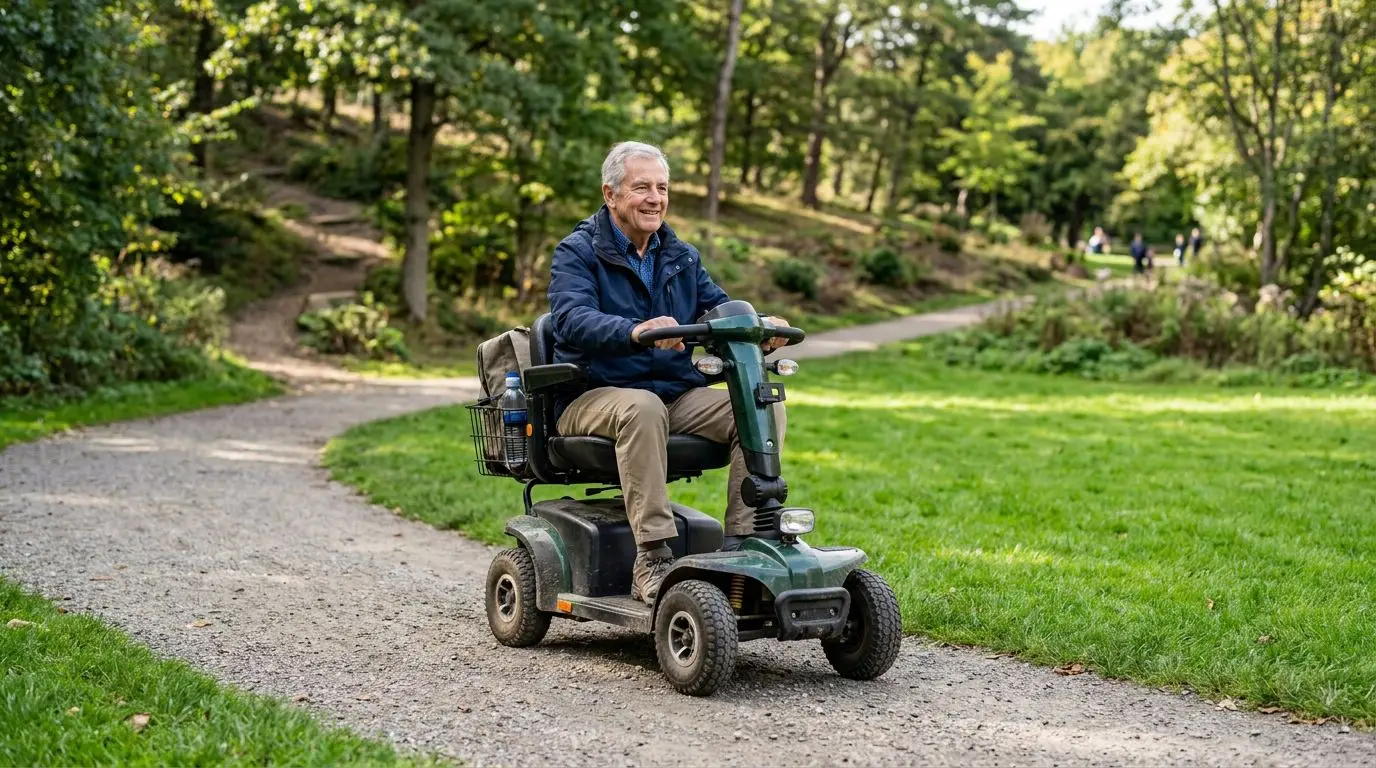
All-Terrain Mobility Scooters: What to Know Before Buying
12 min read