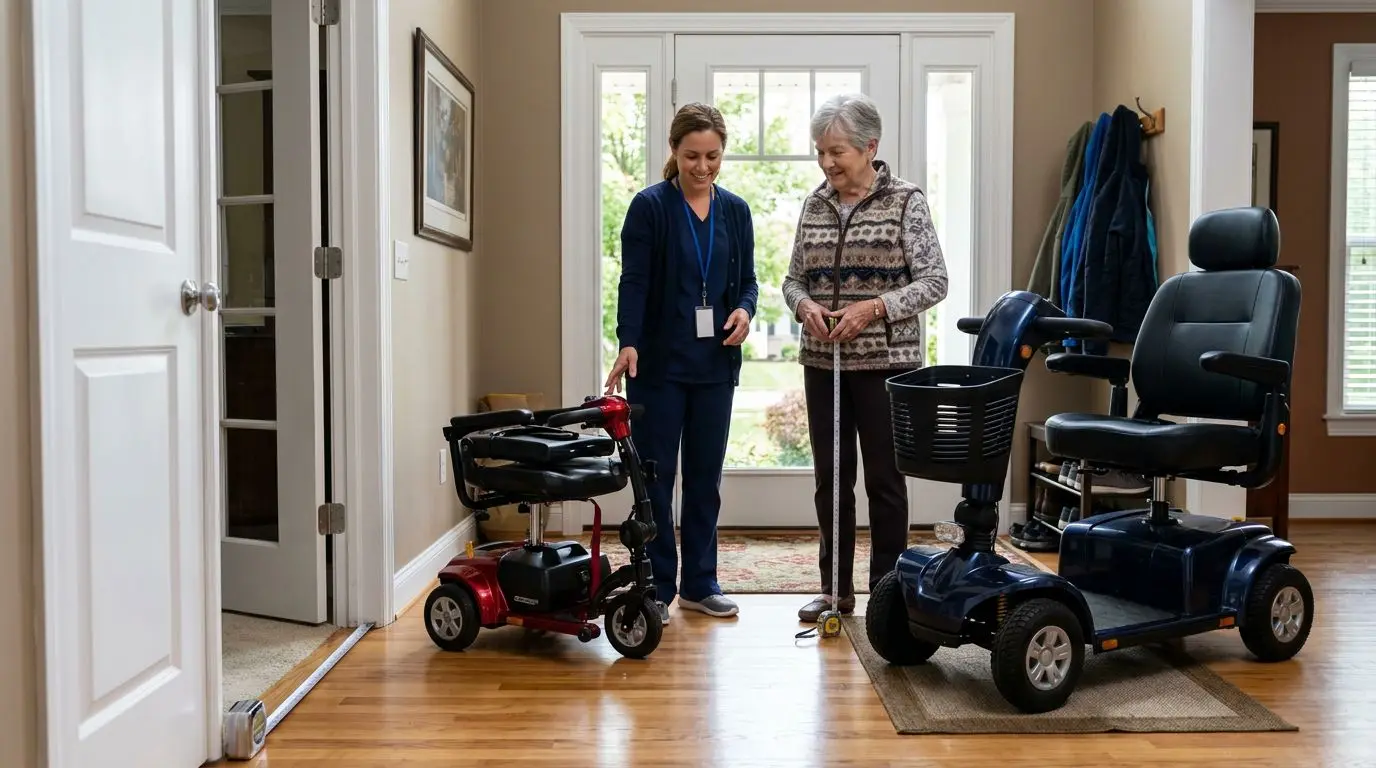
Yes, insurance can sometimes cover a mobility scooter rental, but only when the scooter is medically necessary and the plan’s rules are followed before delivery. Coverage is strongest when the scooter is needed inside the home for daily activities, rather than for errands, travel, or convenience.
For short-term needs such as surgery recovery or a temporary disability, you will usually need a clinician’s order, documentation explaining why a cane, walker, or manual wheelchair is not enough, and approval from an in-network equipment supplier. Trial rentals are rarely covered unless they are part of a documented medical equipment evaluation.
Insurance coverage in 3 short-term situations
Short-term scooter rentals usually fall into 3 common situations: recovery after surgery, a temporary injury or disability, and a trial period before deciding whether a power mobility device is appropriate. The reason matters because insurers do not treat all short-term needs the same way.
A post-surgery rental may be considered if your surgeon or treating clinician documents that you cannot safely move through your home to complete basic daily activities. Examples include getting to the bathroom, kitchen, bedroom, or a necessary household area. A scooter requested only to get through a large store or attend an outdoor event is much less likely to qualify.
A temporary disability can be harder to approve because many plans first look for simpler, lower-cost options. If a walker, crutches, cane, knee scooter, or manual wheelchair can meet the need safely, the insurer may deny a powered scooter rental. If those options are unsafe or impractical because of arm strength, balance, endurance, pain, or another documented limitation, the case becomes stronger.
Trial use is the weakest coverage category. Insurers generally do not pay for a scooter just so someone can see whether they like it. A short equipment trial may be covered only when it is part of a formal medical evaluation, such as testing whether the person can steer, transfer safely, and use the device inside the home.
| Short-term need | Coverage outlook | Documentation usually needed |
|---|---|---|
| Surgery recovery lasting 2 to 12 weeks | Possible if needed inside the home | Medical order, recovery restrictions, home-use need |
| Temporary injury or flare-up | Plan-dependent | Functional limits and why simpler aids are not enough |
| Trial before purchase | Usually not covered | Formal mobility evaluation if covered at all |
| Vacation, cruise, theme park, or airport use | Usually not covered | Typically considered convenience or travel use |
How Medicare Part B typically looks at scooter rentals
Medicare Part B may cover a power-operated vehicle, often called a mobility scooter, as durable medical equipment when it is medically necessary for use in the home. If approved under standard Part B rules, Medicare generally pays 80% of the Medicare-approved amount after the Part B deductible is met, and the patient is responsible for the remaining 20% unless other coverage applies.
The key point is home use. Medicare does not approve a scooter simply because walking long distances outside is difficult. The documentation must show that the device is needed to perform mobility-related activities of daily living inside the home, such as toileting, bathing, dressing, or getting to meals.
Medicare also considers whether a less complex device would meet the need. A person typically must be unable to use a cane, walker, or manual wheelchair safely and effectively for necessary home activities. The person must also be able to get on and off the scooter, sit upright, operate the controls, and use it safely in the home environment.
Medicare rules for power mobility devices include specific ordering and supplier requirements. A face-to-face visit with a treating clinician is commonly required, and the supplier must be properly enrolled. Some power mobility claims may require prior authorization depending on the item and current Medicare rules, so ask the supplier before accepting delivery.
Medicare Advantage plans must cover at least the same basic benefits as Original Medicare, but they may use network suppliers, prior authorization, and different cost-sharing. If you have a Medicare Advantage plan, call the plan before renting. Ask whether the rental supplier is in network and whether approval must be issued before the scooter is delivered.
Prior approval rules: a 5-step paper trail
Prior approval, also called prior authorization or preauthorization, is the insurer’s permission before the rental starts. For mobility scooters, this step often makes the difference between a covered rental and a surprise bill.
A typical approval path has 5 parts. First, the treating clinician documents the mobility limitation. Second, the clinician explains why lower-level aids are not enough. Third, the scooter is tied to necessary activity inside the home. Fourth, an in-network equipment supplier submits the order and supporting records. Fifth, the insurer issues an approval, denial, or request for more information.
Do not assume a doctor’s note alone is enough. Many denials happen because the order says “mobility scooter needed” but does not explain the functional details. Stronger documentation states what the person cannot do, how far they can safely walk, whether they can use a manual wheelchair, and why the scooter is expected to solve a home mobility problem.
Timing matters. Some insurers take several business days to review a request, while others may take 1 to 2 weeks if medical records are missing. If surgery is scheduled, ask about mobility equipment as soon as discharge needs are discussed. A same-day rental may be available privately, but insurance coverage may not be retroactive if prior approval was required.
- Ask whether prior authorization is required before delivery.
- Confirm the exact rental dates approved, such as 30 days or 90 days.
- Use an in-network or approved equipment supplier when required.
- Get the approval number in writing.
- Ask what happens if the rental needs to be extended.
Who a short-term scooter rental is best for
A short-term scooter rental is best for someone who has limited walking ability but can safely sit, steer, brake, and transfer on and off the scooter. Many scooters have weight capacities in the 250 to 400 lb range, but capacity varies by scooter type, and the user’s weight should stay within the stated limit.
For insurance purposes, the best candidate is not simply someone who gets tired in large public spaces. The best candidate has a documented home mobility problem. That may include being unable to reach the bathroom without a high fall risk, being unable to prepare basic meals because walking is too painful or unsafe, or being unable to use a manual wheelchair due to shoulder, hand, or endurance limitations.
A rental may also make sense when the condition is expected to improve. For example, a person recovering from a lower-limb procedure may need powered mobility for several weeks but not permanently. In that situation, the clinician should estimate the expected rental duration, such as 4 weeks, 8 weeks, or 12 weeks, and describe the follow-up plan.
A scooter is not best for everyone. People with poor trunk control, unsafe transfers, severe vision limitations, or difficulty understanding controls may need a different mobility solution. A power wheelchair, manual wheelchair, walker, or caregiver-assisted plan may be safer depending on the situation. The right device should match the person, the home, and the medical need.
Rental types and features to compare before approval
Mobility scooter rentals are not all the same. Common categories include compact portable scooters, standard 3-wheel scooters, standard 4-wheel scooters, and larger heavy-duty scooters. Widths often range from about 21 to 28 inches, while turning radius can range from roughly 32 inches on tighter designs to 60 inches or more on larger models.
Insurers usually focus less on comfort extras and more on medical necessity. Still, the selected scooter must fit both the user and the home. A scooter that cannot turn in a hallway or pass through a bedroom door may fail the practical test, even if it looks appropriate on paper.
| Scooter type | Typical strengths | Common limits | Best short-term use |
|---|---|---|---|
| Portable scooter | Breaks into pieces; lighter sections | Smaller seat and lower ground clearance | Temporary home use in tighter spaces |
| 3-wheel scooter | Tighter turning radius | May feel less stable on uneven ground | Indoor use with narrow turns |
| 4-wheel scooter | More stable feel | Often wider and less maneuverable | Homes with adequate turning space |
| Heavy-duty scooter | Higher weight capacity and larger seat | Needs more room and may be harder to transport | Users who need extra support and space |
Battery range is another detail to read carefully. Many scooters list an estimated range, often somewhere around 8 to 20 miles depending on scooter size and battery type. Real-world range can drop with higher user weight, carpet, hills, cold weather, frequent stops, and older batteries. For insurance approval, range matters less than whether the device meets the daily home mobility need.
| Feature | Why it matters | What to check |
|---|---|---|
| Seat width | Affects comfort and safe positioning | User hip width plus room for clothing |
| Overall width | Determines whether it fits through doors | Compare with the narrowest doorway |
| Turning radius | Affects hallway and bathroom access | Measure tight turns at home |
| Weight capacity | Safety and durability issue | Do not exceed the stated limit |
| Disassembly | Helps with transport and storage | Ask the weight of the heaviest piece |
How to measure your home before you rent
Before you ask insurance to cover a scooter rental, measure the areas where the scooter must be used. A common interior doorway may be about 30 to 32 inches wide, but older homes, bathroom entries, and bedroom doors can be narrower. Measure the actual opening with the door fully open.
Start with the path from the bed or main chair to the bathroom. Then measure the route to the kitchen, medication area, and exit if the scooter must be stored or charged elsewhere. Note any thresholds, thick rugs, tight corners, ramps, or steps. A scooter cannot solve a home mobility problem if it cannot physically reach the room where the daily activity happens.
Hallway width is important. A scooter that is 24 inches wide may still need much more room to turn. If the hallway is 36 inches wide and there is a sharp turn into a bathroom, ask the supplier whether the turning radius will work. When possible, give the supplier measurements rather than estimates.
Also plan for charging. Many scooters charge from a standard household outlet, but the charger should be placed where cords do not cross a walking path. If the user gets up at night, a loose charging cord can become a fall hazard. A simple sketch with 3 or 4 measurements can help the clinician and supplier recommend a safer rental type.
- Measure the narrowest doorway in inches.
- Measure hallway width at the tightest point.
- Measure the space needed to turn near the bathroom and bedroom.
- Check whether the scooter must cross rugs, thresholds, or ramps.
- Confirm where it will be parked and charged for several hours.
What insurers usually will not cover
Most insurers will not cover a scooter rental for convenience, travel, or outdoor-only use. A 7-day vacation rental, a weekend family event, airport use, a cruise, or a theme park visit is usually considered noncovered, even when walking long distances is difficult.
Insurance also may not pay if the scooter is delivered before required approval. If the plan requires prior authorization and the rental starts first, the claim may be denied. The supplier may then bill the renter directly under the rental agreement.
Noncovered upgrades can be another issue. A plan may approve a basic medically necessary scooter but not pay for accessories or premium comfort features that are not medically required. Larger seats, baskets, canopies, specialty cushions, or transport add-ons may be out-of-pocket unless the plan specifically approves them.
Coverage can also be denied if the home cannot accommodate the scooter. If measurements show that the device cannot reach the bathroom or bedroom, the insurer may decide it does not meet the medical need. In that case, a different mobility device may be more appropriate.
Appealing a denial: deadlines and documents
If insurance denies the scooter rental, read the denial letter carefully. Many plans allow an appeal, but deadlines vary. Medicare Advantage and private plans often have specific windows, such as 60 days or 180 days, depending on the plan and type of decision.
The denial reason tells you what to fix. If the letter says the scooter is not medically necessary, ask the clinician whether the records clearly describe the home mobility limitation. If it says a lower-level device was not tried or considered, the clinician may need to explain why a cane, walker, crutches, or manual wheelchair is unsafe or ineffective.
Appeals are stronger when they include practical details. Add home measurements, therapy notes if available, discharge instructions, fall-risk concerns, and a clear estimate of the expected rental period. If the need is temporary after surgery, include the surgical restrictions and the expected recovery timeline.
Keep copies of everything. Save the prescription, clinical notes, supplier quote, prior authorization request, denial letter, appeal form, and any approval number. If phone calls happen, write down the date, the representative’s name, and what was said. A simple 1-page timeline can prevent confusion.
5 FAQs about insurance and scooter rentals
Will insurance cover a mobility scooter rental for surgery recovery?
It may, but only if the scooter is medically necessary for mobility inside the home and the plan’s approval rules are met. The clinician must usually document why simpler aids, such as a walker or manual wheelchair, are not enough during the recovery period.
Does Medicare cover scooter rentals for travel?
Generally, no. Medicare coverage for a mobility scooter is based on medical necessity in the home. A rental for a trip, cruise, airport, hotel, or outdoor sightseeing is usually not covered.
Can I rent first and submit the receipt later?
That is risky. Many plans require prior authorization and an approved supplier before the rental begins. If you rent first, the insurer may deny reimbursement even if you have a doctor’s note.
How long can a covered rental last?
The approved duration depends on the plan and medical need. Short-term approvals may be written for 30, 60, or 90 days, with extensions requiring updated documentation.
What if my insurance denies the rental?
You can often appeal. Review the denial reason, ask the clinician to strengthen the medical documentation, include home measurements, and submit the appeal before the plan’s deadline.
Is a scooter better than a wheelchair for temporary recovery?
Not always. A scooter may work well for someone who can transfer safely, sit upright, and operate the controls. A manual wheelchair, transport chair, walker, or power wheelchair may be safer depending on strength, balance, home layout, and medical restrictions.
Insurance coverage for a mobility scooter rental is possible, but it is not automatic. The strongest cases connect the rental to a specific, documented home mobility need, follow prior approval rules, and use a supplier accepted by the plan. Before you rent, measure the home, confirm the paperwork, and ask the insurer exactly what is covered.
Frequently asked questions
Will insurance cover a mobility scooter rental for surgery recovery? +
It may if the scooter is medically necessary for use inside the home and prior approval rules are met. The clinician usually must document why simpler mobility aids are not enough during recovery.
Does Medicare cover a mobility scooter rental for travel? +
Generally, no. Medicare coverage for mobility scooters is based on medical necessity in the home, not vacation, airport, cruise, or outdoor-only use.
Do I need prior authorization before renting a scooter? +
Often, yes. Many Medicare Advantage, private insurance, Medicaid, and managed care plans require approval before delivery. Renting first can lead to a denied claim.
How long can insurance cover a short-term scooter rental? +
The approved period depends on the plan and medical need. Some short-term rentals may be approved for 30, 60, or 90 days, with extensions requiring updated documentation.
What documents help support a scooter rental request? +
Helpful records include a clinician’s order, functional limitations, why a cane or manual wheelchair is not enough, home measurements, recovery restrictions, and the requested rental duration.
Related guides

Does Medicare or Insurance Cover Mobility Scooters? A US Buyer’s Guide
12 min read
Private Insurance Coverage for Mobility Scooters: Medical Necessity, Prior Approval, and What You May Pay
13 min read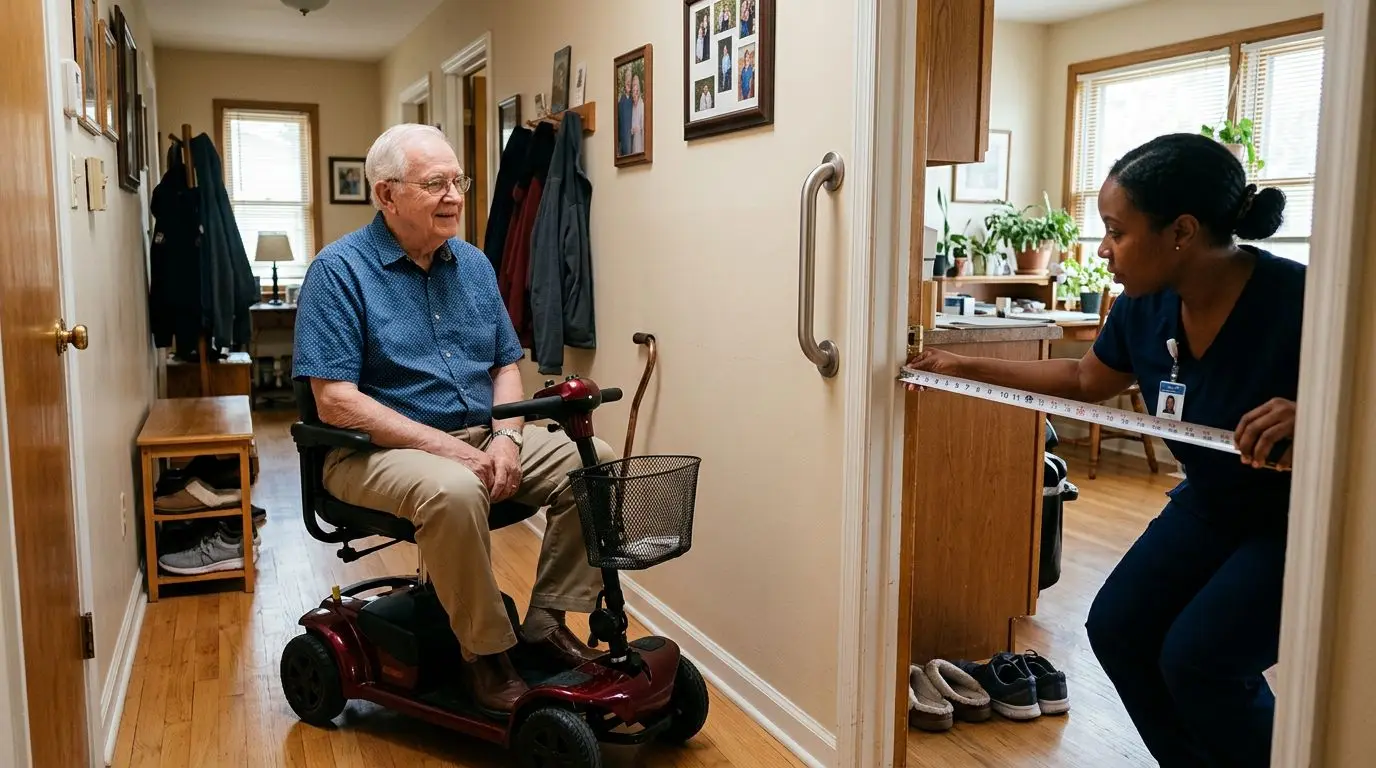
Why Insurance-Covered Mobility Scooters Must Be Needed at Home, Not Just Outdoors
12 min read