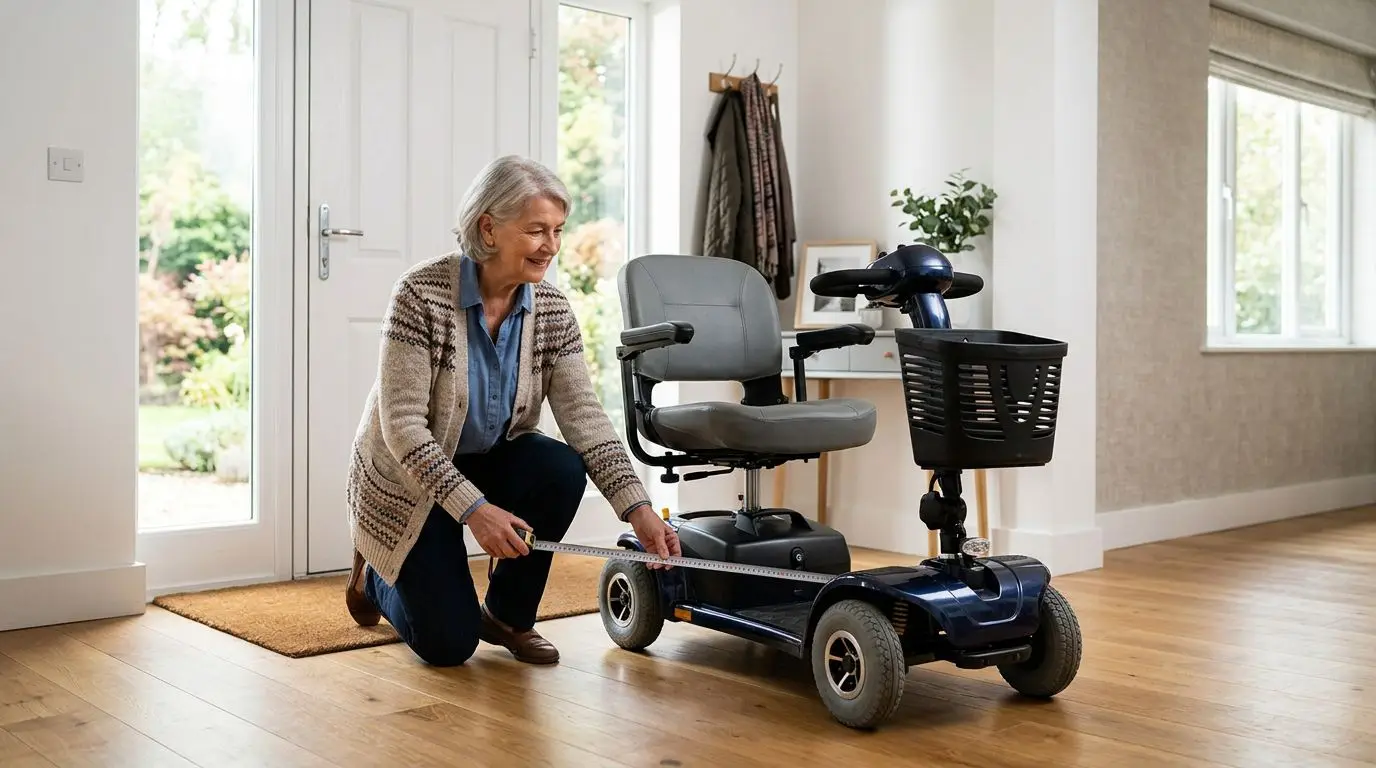
A mobility scooter seat cushion or back support upgrade can make longer rides more comfortable by improving pressure distribution, posture, and stability. The right choice depends on where you feel pain, how long you ride, your seat dimensions, and whether extra cushion height affects safe transfers or driving posture.
Start by measuring your scooter seat, checking your seated position, and matching the cushion material to your needs. If you have open skin, a history of pressure injuries, numbness, or worsening pain, ask a healthcare professional for guidance before changing your seating setup.
When a Cushion Upgrade Makes Sense After 30–60 Minutes of Riding
Many riders feel fine for the first 10 or 15 minutes, then begin to notice hip soreness, tailbone pressure, low-back fatigue, or slumping after 30 to 60 minutes. That timing matters. It often points to pressure buildup, poor weight distribution, or a backrest that is not supporting the pelvis and lower spine.
A standard mobility scooter seat is built to be durable, easy to clean, and reasonably comfortable for general use. It is not always shaped for an individual rider’s posture, body weight, or pain points. A cushion or back support may help if you often shift side to side, lean on one armrest, slide forward, or cut trips short because sitting becomes uncomfortable.
Comfort upgrades are not just about softness. A very soft cushion can feel good for 5 minutes but let the pelvis sink unevenly, which may make posture worse over a longer ride. The goal is balanced support: enough give to reduce pressure, enough firmness to keep you stable, and the right shape to keep your hips and back aligned.
- Tailbone pain: often points toward a coccyx cutout, contoured foam, or pressure-relief design.
- Hip or thigh soreness: may be related to seat width, cushion firmness, or uneven sitting posture.
- Low-back fatigue: often suggests the need for lumbar support or a better backrest angle.
- Sliding forward: can come from a cushion that is too thick, too slippery, or angled incorrectly.
- Numbness or skin redness lasting more than 30 minutes: should be discussed with a clinician.
3 Main Cushion Materials: Foam, Gel, and Air
Most scooter seat cushions fall into 3 broad material groups: foam, gel, and air-cell designs. Some combine materials, such as foam with a gel layer, but the buying logic is similar. Choose the material that fits your ride time, pressure needs, transfer routine, and climate.
| Type | Best for | Watch-outs | Typical feel |
|---|---|---|---|
| Foam | General comfort, posture support, mild pressure relief | Can compress over time; quality and density matter | Supportive, stable, familiar |
| Gel | Localized pressure relief and riders who dislike a firm surface | Can feel heavier; may retain heat depending on cover design | Cushioned, slightly conforming |
| Air-cell | Higher pressure redistribution needs and sensitive sitting areas | Requires inflation checks; may feel less stable for some riders | Adjustable, floating, pressure-relieving |
| Hybrid | Riders who need both structure and pressure relief | More variables to fit correctly | Balanced support and softness |
Foam is the most straightforward option. A contoured foam cushion can support the pelvis and reduce the tendency to slump. Higher-density foam usually holds its shape better than very soft foam, although density is only one factor. If you transfer in and out of the scooter several times a day, foam often feels predictable because it does not shift much under you.
Gel cushions are popular with riders who feel pressure at the tailbone or sitting bones. The gel layer can spread force across a wider area, but gel does not automatically mean better. A gel cushion that is too thick, too narrow, or poorly placed can still cause pressure or make transfers harder.
Air-cell cushions can provide excellent pressure redistribution when adjusted correctly. They are often more sensitive to setup. Too much air can make the cushion hard; too little can let you bottom out. If hand strength, vision, or memory make regular air checks difficult, choose carefully or ask for help setting a routine.
Seat Fit Checks: Measure Width, Depth, and Height to the Nearest 1 Inch
Before buying any cushion, measure your existing scooter seat. Use a tape measure and write down width, usable depth, armrest clearance, and the distance from the seat to the floorboard. Measure to the nearest 1 inch. A cushion that overhangs, blocks armrests, or raises you too high can create new safety problems.
Seat width is the left-to-right usable sitting area, usually measured between the armrests. Cushion width should fit within that space without bunching. If it is too wide, it may curl at the edges or interfere with armrest supports. If it is too narrow, it may not support the thighs evenly.
Seat depth is measured from the backrest to the front edge of the seat. The cushion should not push behind your knees. A good seated position usually leaves a small gap, often around 1 to 2 inches, between the cushion edge and the back of the knees. Too much pressure there can reduce comfort and make it harder to place your feet securely.
Height matters just as much. Adding a 2-inch or 3-inch cushion changes your position relative to the tiller, armrests, mirrors, and foot platform. Steering may feel easier, or you may feel perched and less stable. After placing the cushion, sit down and check that both feet rest securely, your knees are comfortable, and your hands reach the controls without shrugging your shoulders.
- Measure seat width between armrests.
- Measure seat depth from backrest to front edge.
- Check cushion thickness under body weight, not just on the label.
- Confirm the cushion does not cover the seat swivel lever or adjustment controls.
- Make sure the seat belt, if used, still sits properly across the pelvis.
Back Support Upgrades: 2 Areas Matter Most
For scooter comfort, back support usually comes down to 2 areas: the pelvis and the lumbar spine. If the pelvis tips backward, the lower back rounds, shoulders drift forward, and the head may lean toward the tiller. That posture can become tiring after a short ride, especially during errands that involve waiting in lines or traveling over uneven pavement.
A lumbar cushion fills the natural curve of the lower back. It should support, not shove. If it is too thick, it may push you forward and reduce seat depth. If it is too low, it may press against the tailbone. If it is too high, it may arch the back uncomfortably. A practical starting point is to position the thickest part around the beltline, then adjust in small steps.
Some riders need a taller back pad because their discomfort is more mid-back than low-back. Others benefit from lateral support, meaning gentle side support that reduces leaning. On a scooter, be cautious with bulky supports that limit your ability to turn, look over a shoulder, or mount and dismount safely.
| Back support issue | Possible upgrade | Fit check |
|---|---|---|
| Low-back ache after 30 minutes | Lumbar pad | Should support the curve without pushing you off the seat |
| Slumping or sliding forward | Contoured cushion plus lumbar support | Feet must stay flat and steering must feel relaxed |
| Leaning to one side | Postural back cushion or side support | Do not restrict safe turning or transfers |
| Upper-back fatigue | Taller back pad | Should not interfere with head movement or visibility |
Back support and seat cushion choices affect each other. Adding lumbar support can change how your hips sit on the cushion. Adding a thick cushion can change where the backrest touches you. Test them together, not separately, before deciding the fit is right.
Who It’s Best For: 5 Common Rider Situations
Seat and back upgrades work best for riders who can identify a repeatable comfort problem and want a practical adjustment before replacing the entire scooter seat. They are especially useful when the scooter is mechanically sound, the seat frame is stable, and the main issue is sitting comfort during longer use.
- The errand rider: If you use the scooter for 45-minute grocery trips or appointments, a stable foam or hybrid cushion may reduce fatigue without adding too much complexity.
- The tailbone-sensitive rider: A cushion with a rear cutout or pressure-relief contour may help reduce direct pressure, as long as the cutout lines up correctly.
- The posture-focused rider: A contoured cushion and lumbar support can help discourage slumping, but they should not force an unnatural arch.
- The heat-sensitive rider: Breathable covers and moisture-management fabrics matter, especially in warm climates or for rides over 1 hour.
- The transfer-conscious rider: A lower-profile cushion may be better if a thick cushion makes standing, pivoting, or sliding transfers harder.
These upgrades are not a cure for medical conditions. They can improve seating comfort and help position the body more comfortably, but persistent pain, skin changes, weakness, or numbness should be evaluated. A seating specialist, physical therapist, occupational therapist, or clinician may recommend a more customized approach.
How to Choose in 7 Steps Before You Buy
A good cushion choice starts with observation, not shopping. Take 7 simple steps before you buy so the upgrade addresses the actual problem instead of adding height, heat, or instability.
- Time your discomfort. Note whether pain starts after 10, 30, or 60 minutes. Faster onset may require a more careful pressure assessment.
- Map the location. Tailbone, sitting bones, hips, thighs, and low back point toward different solutions.
- Measure the scooter seat. Record width, depth, and available height under the armrests.
- Check transfer height. Sit on the scooter with a folded towel approximating the cushion thickness. Confirm you can still get in and out safely.
- Review control reach. Your elbows should stay slightly bent, and shoulders should not lift toward your ears.
- Consider maintenance. Air cushions need inflation checks; removable covers need washing; straps may need re-tightening.
- Test on a real ride. A 5-minute sit is not enough. Try to evaluate comfort over at least 30 minutes in a safe setting.
If possible, test one change at a time. Add the seat cushion first, ride, then add back support. If you change everything at once, it becomes harder to tell what helped or what caused a new problem.
Pressure Relief and Skin Safety: Check Every Ride Over 1 Hour
Pressure relief means spreading body weight and reducing concentrated force on sensitive areas. For riders who use a scooter for more than 1 hour at a time, skin checks and position changes become more important. Even a well-made cushion cannot replace movement, good fit, and attention to warning signs.
Watch for redness that does not fade, tenderness, warmth, numbness, or skin breakdown. These signs need prompt attention, especially for riders with reduced sensation, diabetes, circulation problems, spinal cord injury, or a history of pressure injuries. Do not wait for a small skin issue to become serious.
Small posture breaks can help. If safe for you, shift weight, stand briefly, or transfer out of the scooter during longer outings. Some riders plan a 2-minute break during long shopping trips or community events. Others set a phone reminder. The right routine depends on your balance, strength, and medical situation.
Cushion covers matter too. A waterproof cover protects foam or gel, but it may trap heat. A breathable cover can feel cooler but may need more frequent washing. Wrinkles, seams, and bunched fabric can create pressure points, so smooth the cover after every cleaning.
Safety Trade-Offs: A 2-Inch Cushion Can Change Scooter Handling
Comfort should not compromise control. Adding a 2-inch cushion raises your center of gravity and changes how you sit relative to the scooter’s armrests and tiller. On a compact scooter, that change may feel more noticeable than on a larger scooter with a wider seat and longer wheelbase.
After any seating change, test the scooter slowly in a familiar area. Practice starting, stopping, turning, backing up, and getting on and off. Notice whether you feel more top-heavy on ramps, curb cuts, or uneven sidewalks. If the cushion slides, stop using it until it can be secured properly.
Non-slip bottoms and attachment straps can help, but they must not interfere with the seat swivel, folding mechanism, battery access, or seat latch. Do not use loose pillows that can shift during turns or braking. A cushion should function like part of the seat, not like an afterthought placed on top.
| Feature | Why it matters | What to check |
|---|---|---|
| Non-slip base | Reduces sliding during turns | Cushion stays put when you shift weight |
| Low to moderate thickness | Limits height change | Feet and controls remain comfortable |
| Removable cover | Makes cleaning easier | No wrinkles, rough seams, or bunching |
| Contoured shape | Supports pelvis and thighs | Contours match your body, not just the seat |
| Secure straps | Helps keep cushion aligned | Does not block levers or folding parts |
Care and Replacement: Inspect Covers and Foam Every 3 Months
Seat upgrades wear out. A cushion that worked well last year may flatten, tear, or shift after daily use. Inspect the cushion every 3 months, and sooner if you notice new discomfort. Look for permanent dents, cracked gel pockets, air leaks, stretched straps, flattened foam, or a cover that no longer stays smooth.
Cleaning should follow the cushion’s care instructions, but the general rule is simple: keep the cover dry, smooth, and free of grit. Outdoor scooter use brings dust, moisture, sunscreen, and clothing lint into the seating area. Those small irritants can affect both comfort and skin.
If a cushion has a removable cover, make sure it is fully dry before reinstalling it. Moisture trapped between layers can create odor and fabric breakdown. If the cushion uses air cells, check inflation after temperature changes because air pressure can vary with heat and cold.
Replace a cushion when it no longer supports you evenly, when it slides despite proper fastening, or when cleaning cannot restore a smooth surface. Do not keep using a cushion simply because it looks acceptable from the outside; the internal support is what matters.
FAQ: 5 Answers About Scooter Seat Cushions and Back Support
Can I use a regular household pillow on my mobility scooter?
A household pillow is not ideal because it can slide, compress unevenly, and raise you unpredictably. A purpose-made seating cushion with a stable base and appropriate thickness is usually safer and more supportive.
How thick should a mobility scooter cushion be?
Many riders do best with a low to moderate thickness, often around 1 to 3 inches, but fit matters more than the number. The cushion should improve comfort without making transfers harder or changing control reach in an unsafe way.
Will a cushion fix tailbone pain?
It may help if the pain is caused by direct pressure or poor seat contour, especially when the cushion includes pressure relief at the rear. If tailbone pain is severe, new, or persistent, seek medical advice rather than relying on a cushion alone.
Do I need lumbar support if my scooter already has a backrest?
Possibly. Many scooter backrests are broad and lightly padded, but they may not fill the lower-back curve. A lumbar pad can help some riders sit more upright, as long as it does not push the body too far forward.
How do I know if the cushion is making my scooter less safe?
Warning signs include sliding during turns, feeling top-heavy, difficulty reaching the tiller, feet not resting securely, or harder transfers. If any of these occur, remove the cushion and reassess the size, thickness, and attachment method.
The best mobility scooter cushion or back support upgrade is the one that improves comfort while preserving safe control. Measure carefully, test patiently, and treat pressure, posture, and transfer safety as equal priorities.
Frequently asked questions
Can I use a regular household pillow on my mobility scooter? +
A household pillow is not ideal because it can slide, compress unevenly, and raise you unpredictably. A purpose-made seating cushion with a stable base and appropriate thickness is usually safer and more supportive.
How thick should a mobility scooter cushion be? +
Many riders do best with a low to moderate thickness, often around 1 to 3 inches, but fit matters more than the number. The cushion should improve comfort without making transfers harder or changing control reach in an unsafe way.
Will a cushion fix tailbone pain? +
It may help if the pain is caused by direct pressure or poor seat contour, especially when the cushion includes pressure relief at the rear. If tailbone pain is severe, new, or persistent, seek medical advice rather than relying on a cushion alone.
Do I need lumbar support if my scooter already has a backrest? +
Possibly. Many scooter backrests are broad and lightly padded, but they may not fill the lower-back curve. A lumbar pad can help some riders sit more upright, as long as it does not push the body too far forward.
How do I know if the cushion is making my scooter less safe? +
Warning signs include sliding during turns, feeling top-heavy, difficulty reaching the tiller, feet not resting securely, or harder transfers. If any of these occur, remove the cushion and reassess the size, thickness, and attachment method.
Related guides

Mobility Scooter Seat Size and Comfort: How to Choose Width, Cushioning, Armrests, and Back Support
15 min read
Do You Need Suspension on a Mobility Scooter? A Practical Comfort Guide
11 min read
Mobility Scooter Seat, Armrest, and Tiller Adjustments: How to Get a Better Fit
14 min read