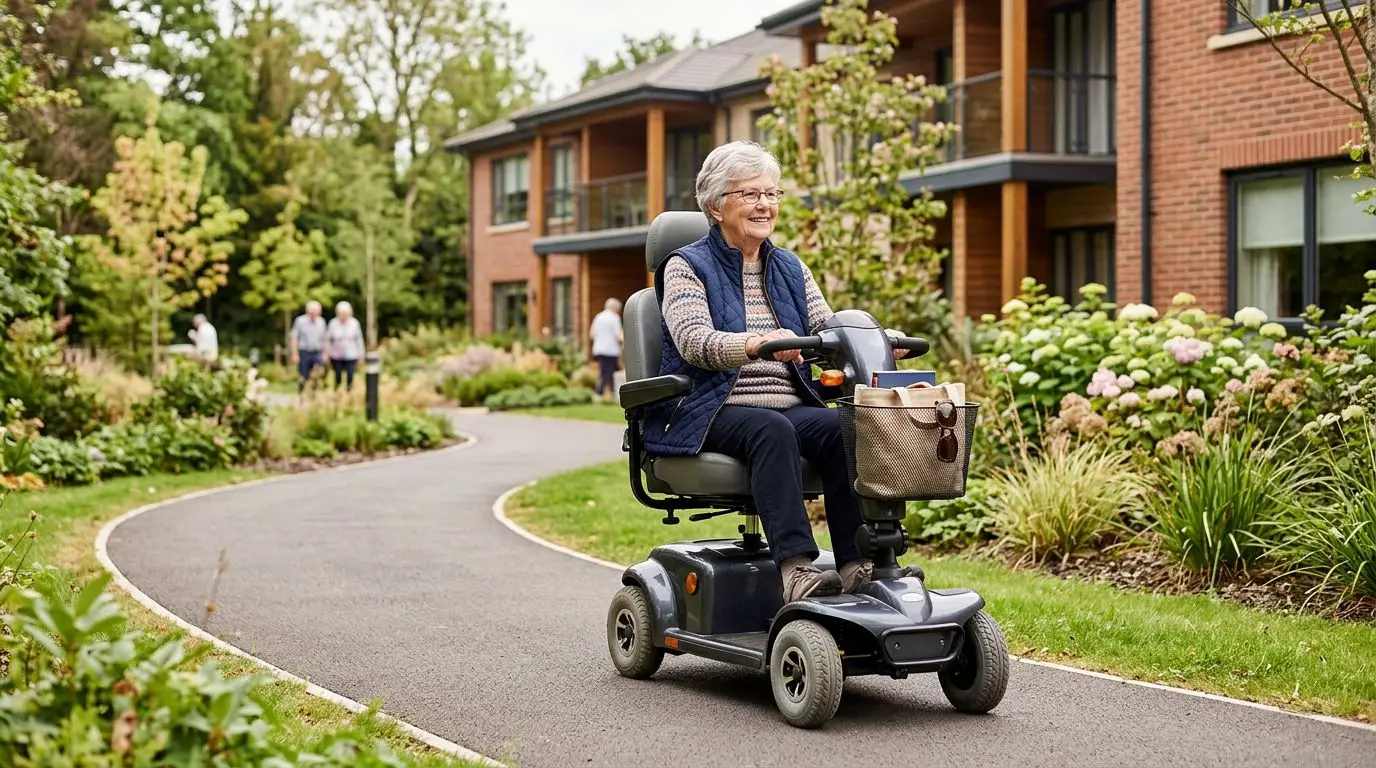
A full-size mobility scooter is usually the best fit when you want more comfort, range, and stability than a lightweight travel scooter, but do not need the added size and weight capacity of a heavy-duty scooter. It is a practical middle ground for everyday errands, paved outdoor paths, apartment communities, senior living campuses, and longer indoor trips where comfort matters.
Most full-size scooters are made for daily use, with larger seats, bigger batteries, better suspension options, and a wider wheelbase than compact models. They are not the easiest scooters to lift into a car, but they can be easier to live with than a heavy-duty scooter if your rooms, vehicle lift, and storage area are moderate in size.
What counts as a full-size mobility scooter? Typical range: about 40 to 55 inches long
A full-size mobility scooter is a standard adult scooter designed for regular daily use rather than occasional travel. Exact dimensions vary, but many full-size scooters are around 40 to 55 inches long, with overall widths commonly in the 22 to 27 inch range. They are larger than most folding or disassembling travel scooters, but usually smaller and lighter than heavy-duty outdoor scooters.
Think of this category as the comfort-first middle class. A full-size scooter typically has a roomier captain-style seat, larger tires, higher ground clearance than compact scooters, and batteries meant for longer outings. Many are used in grocery stores, neighborhood sidewalks, medical campuses, retirement communities, parks with paved paths, and larger homes.
Weight capacity often falls in the general 250 to 350 lb range, although this is not a guarantee. Always check the published capacity for the exact scooter, and remember that the rating includes the rider plus carried items, such as oxygen equipment, groceries, bags, or a rear basket.
Full-size scooters can have 3 or 4 wheels. A 3-wheel version usually turns in a tighter radius, which helps in hallways, elevators, and small stores. A 4-wheel version usually feels more planted on uneven pavement and may be the better choice if outdoor stability is a top concern.
Comfort: why a 17 to 20 inch seat can make a big difference
Comfort is one of the clearest reasons to move up from a lightweight scooter. Many compact travel scooters use smaller, thinner seats to save weight and fit into a trunk. Full-size scooters usually offer wider seats, taller backs, adjustable armrests, and more legroom. A seat width of roughly 17 to 20 inches is common in this class, while some larger configurations may be wider.
Seat comfort is not only about softness. Support matters, too. A seat that swivels makes it easier to get on and off without twisting your knees or hips. Adjustable armrests can help with transfers and reduce shoulder strain. A height-adjustable seat can improve posture, especially if your knees feel cramped or your feet do not rest comfortably on the deck.
Legroom is another everyday concern. If you are taller than about 5 feet 10 inches, or if you have stiffness in your knees, a compact scooter may feel tight during longer rides. Full-size scooters usually provide more foot space and a longer deck, which can reduce that cramped feeling on a 30-minute trip through a large store or medical center.
Suspension is worth noting as well. Not every full-size scooter has suspension, but many offer front, rear, or full suspension systems that smooth out sidewalk cracks, curb cuts, and parking lot seams. This does not turn a scooter into an off-road vehicle, and it does not remove the need to slow down over bumps. It simply makes daily paved-surface riding less jarring.
Range and battery life: many full-size scooters are built for 10 to 25 miles per charge
Range is one of the main reasons buyers choose a full-size scooter instead of a lightweight model. Many standard full-size scooters are designed for approximately 10 to 25 miles per charge under typical rated conditions. Real-world range can be lower depending on rider weight, hills, speed, tire condition, temperature, battery age, and how often the scooter stops and starts.
If your usual day includes a half-mile ride to the dining room, a trip to the mailbox, a loop around a senior living campus, and later a ride through a large store, a small travel scooter may be enough. If you expect several miles of use in a day, or you dislike charging after every outing, the larger battery setup of a full-size scooter becomes valuable.
Battery type also matters. Many full-size scooters use sealed lead-acid or lithium battery systems, depending on the design. Sealed batteries are common and widely understood by service providers, while lithium batteries can reduce weight in some scooters. Regardless of type, charging habits matter. A typical full recharge may take about 6 to 12 hours, so overnight charging is common.
Do not choose by the range number alone. Published range tests are usually done under controlled conditions, often with a specific rider weight and smooth surface. A safe planning rule is to leave a reserve. If your longest regular outing is 8 miles, a scooter rated far above that distance gives you more cushion than one rated just slightly higher.
Stability and ride quality: 3 wheels turn tighter, 4 wheels feel steadier
Stability is a major strength of full-size scooters. Wider frames, longer wheelbases, and larger tires usually create a more confident ride than compact travel scooters. Tire sizes in this category often range from about 8 to 12 inches, which helps when crossing sidewalk seams, shallow driveway transitions, or rougher pavement.
The choice between 3 and 4 wheels is important. A 3-wheel full-size scooter can turn more sharply, sometimes with a turning radius in the 40 to 55 inch range. That can help inside apartments, narrow store aisles, elevators, and clinics. The trade-off is that 3-wheel designs may feel less stable on side slopes or uneven surfaces than comparable 4-wheel designs.
A 4-wheel full-size scooter is typically preferred for outdoor use because the front end has two contact points instead of one. It may need more room to turn, sometimes closer to 50 to 70 inches depending on size, but many riders prefer the steadier feel. If you ride across parking lots, older sidewalks, and paved community paths, 4 wheels are often worth considering.
Stability still depends on rider behavior. Slow down before turns. Approach curb cuts straight on when possible. Avoid steep side slopes. Do not hang heavy bags from the tiller, because that can affect steering and balance. A stable scooter helps, but safe operation is still the most important factor.
Full-size vs lightweight vs heavy-duty scooters: 3 categories compared
The best scooter is the one that matches your daily environment. A full-size scooter is not automatically better than a lightweight or heavy-duty scooter. It is better when its strengths match your needs: comfort, range, and stable everyday use without moving all the way into the largest class.
| Category | Typical strengths | Common trade-offs | Best everyday fit |
|---|---|---|---|
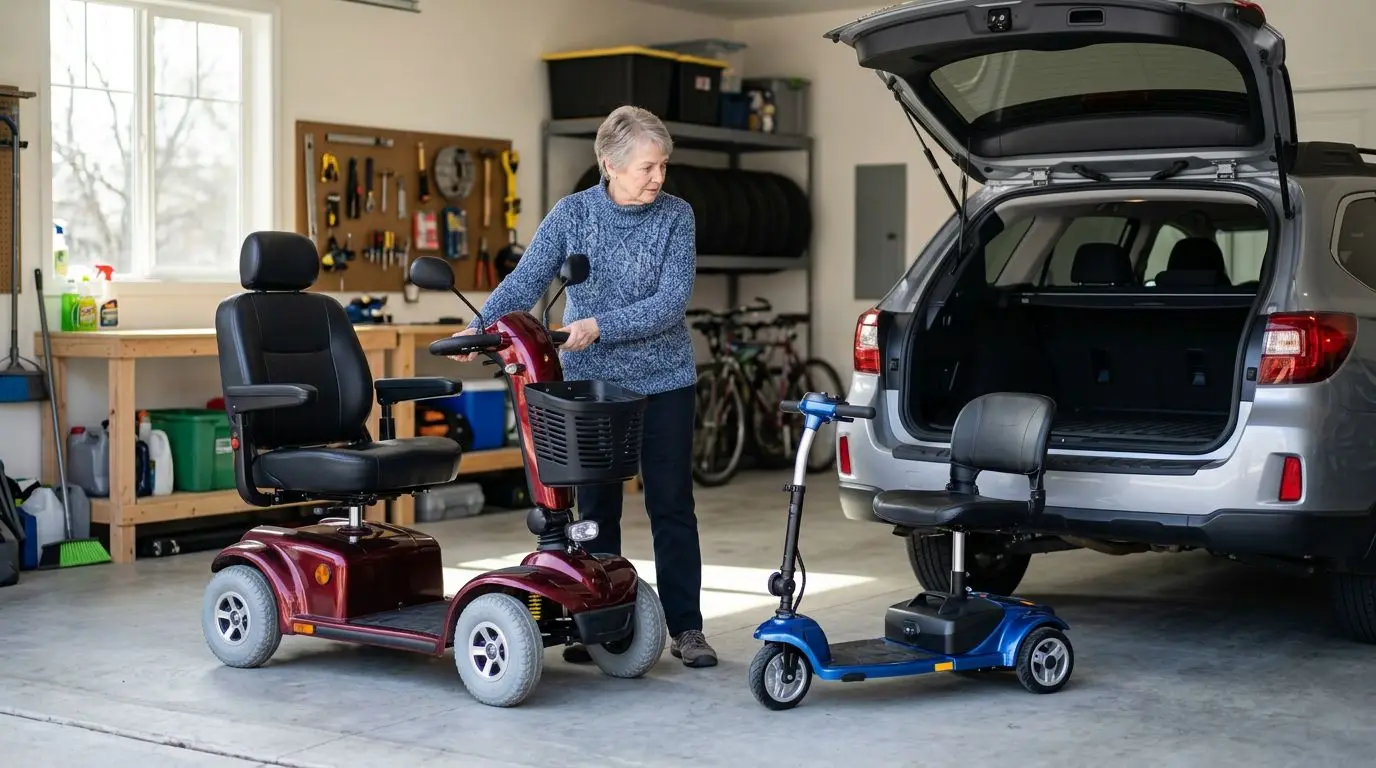
| Lightweight or travel scooter | Easier to disassemble, lift, store, and transport; often compact enough for tighter indoor areas | Smaller seat, shorter range, less suspension, lower ground clearance | Occasional outings, car travel, smaller homes, users who need portability first |
| Full-size scooter | Better comfort, more legroom, longer range, larger tires, stronger daily-use feel | Heavier, less trunk-friendly, needs more storage and turning space than compact scooters | Daily errands, paved outdoor routes, senior campuses, longer store or clinic visits |
| Heavy-duty scooter | Higher weight capacity, larger frame, stronger motors, more outdoor capability in some designs | Wider, heavier, harder to transport, may not fit tight indoor spaces | Higher weight needs, rougher paved surfaces, larger riders, users needing maximum sturdiness |
As a general guide, choose lightweight if you must lift or transport the scooter often. Choose full-size if you ride often and want comfort without the bulk of the largest scooters. Choose heavy-duty if your weight, terrain, or stability needs exceed what a standard full-size scooter is designed to handle.
Who a full-size scooter is best for: 5 common buyer profiles
A full-size scooter fits many people who are still active but need seated mobility support for longer distances. It can help conserve energy and reduce walking strain, but it should not be viewed as a medical treatment or a substitute for professional guidance. If your mobility is changing quickly, or if you are unsure whether a scooter is safe for you, ask a clinician, physical therapist, or occupational therapist for advice.
- The daily errand rider. You use a scooter several times a week for groceries, appointments, pharmacy trips, or community activities.
- The senior living or campus user. You travel 0.25 to 2 miles at a time between buildings, dining areas, mailrooms, and activities.
- The comfort-sensitive rider. You find compact scooter seats too narrow, too low, or too stiff for rides longer than 15 to 20 minutes.
- The moderate outdoor user. You mostly ride on paved sidewalks, parking lots, and smooth paths, not grass, gravel, trails, or steep hills.
- The rider who does not need maximum capacity. You want a sturdier scooter than a travel model, but you do not require a heavy-duty weight rating or very large frame.
It may not be the best fit if you live in a very small apartment with tight turns, need to put the scooter into a car trunk by yourself, or regularly ride on rough, sloped, or unpaved ground. In those cases, another scooter type may serve you better.
How to choose and measure: bring a tape measure and check 6 spaces
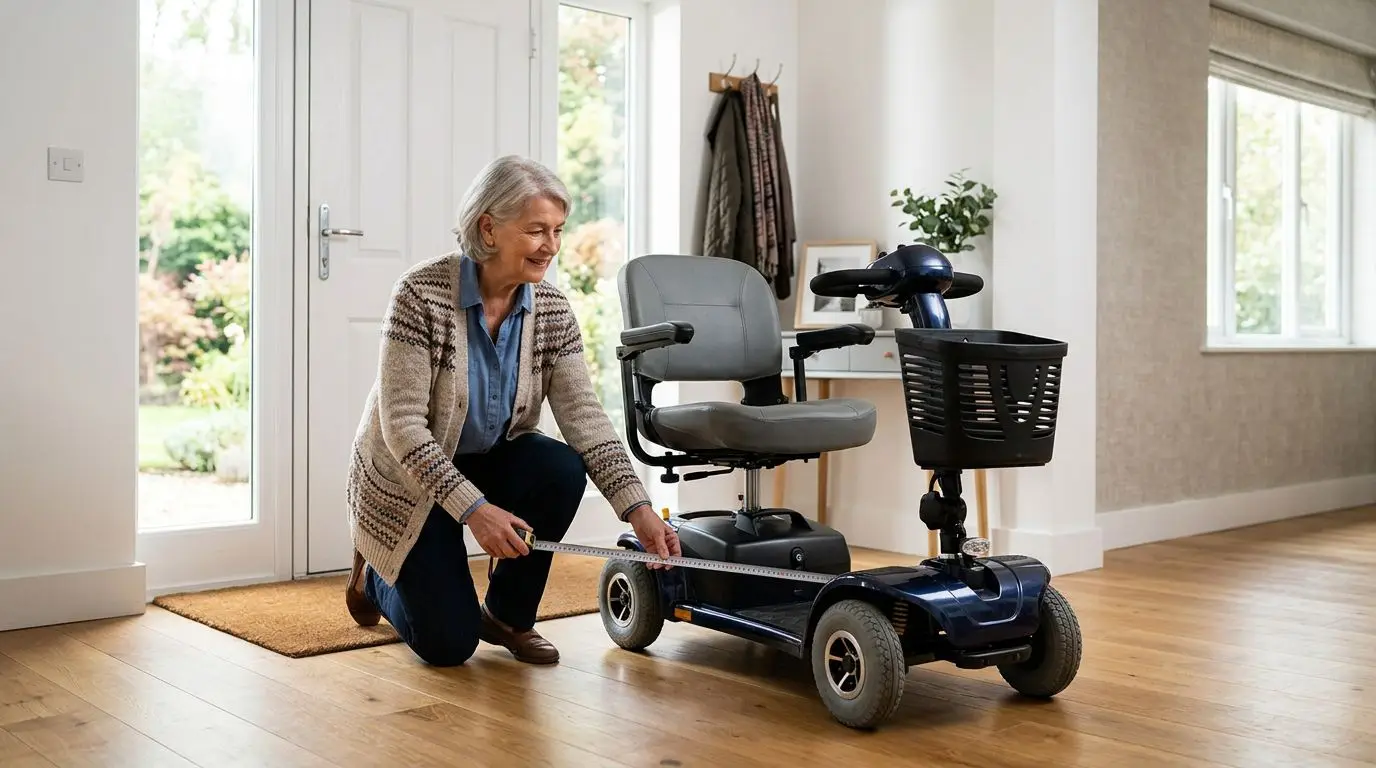
Measurements prevent expensive mistakes. Before choosing a full-size scooter, measure the spaces where it will actually be used and stored. A scooter that looks reasonable online can feel very large in a narrow hallway or small elevator.
- Doorways: Measure the clear opening, not just the door size. Many interior doorways are around 28 to 32 inches wide, but trim and hinges reduce usable space.
- Hallways: Check whether you can turn into rooms. A straight hallway is easier than an L-shaped turn.
- Turning areas: Measure kitchens, bedrooms, bathrooms, elevator lobbies, and entryways. Compare these spaces with the scooter turning radius.
- Storage spot: Allow extra space for the charger, walking around the scooter, and safely getting on and off.
- Vehicle transport: If you plan to use a lift or carrier, confirm its weight rating and platform size. Include the scooter battery weight if it stays installed.
- Routes outside: Look at curb cuts, sidewalk width, ramp slope, driveway transitions, and where you will cross parking lots.
Also measure yourself. Seat width should allow comfortable sitting without squeezing your hips, but it should not be so wide that you lose side support. Your feet should rest flat and secure. Your knees should not be jammed against the tiller. If possible, sit in a similar scooter for at least 10 minutes, because quick test sits can hide pressure points.
Features worth comparing: 8 practical items that matter daily
Features should make everyday use safer and easier, not just sound impressive. Focus on what you will notice every time you ride, charge, park, and transfer.
| Feature | Why it matters | What to check |
|---|---|---|
| Seat size and back height | Affects comfort on 20 to 60 minute outings | Width, padding, swivel, armrest adjustment, seat height |
| Battery range | Determines how far you can ride before charging | Rated range, battery type, charger location, replacement availability |
| Ground clearance | Helps over small thresholds and uneven pavement | Lowest point under the scooter, not just deck height |
| Tires | Influence traction and ride feel | Solid vs pneumatic, diameter, maintenance needs |
| Suspension | Reduces harshness over cracks and seams | Front, rear, or full suspension; test on real surfaces if possible |
| Controls | Important for hand strength and reaction time | Tiller angle, throttle style, horn, lights, speed dial visibility |
| Lighting and reflectors | Improve visibility in garages, dusk, and indoor corridors | Headlight, rear lights, reflectors, control brightness |
| Disassembly or service access | Affects transport and maintenance | Heaviest piece weight, battery access, ease of removing the seat |
If you have reduced hand strength, pay close attention to the throttle and brake release feel. If you have trouble turning your head, mirrors may be useful, but they do not replace looking carefully before backing up or crossing driveways. If you ride in dim parking garages or early evening, lights and reflective surfaces become more important than decorative trim.
Trade-offs to know before buying: full-size scooters can weigh 100 lb or more
The same features that make a full-size scooter comfortable also make it less portable. Many full-size scooters weigh well over 100 lb when assembled, and some are much heavier. Even if the scooter disassembles, the heaviest piece may still be difficult for one person to lift safely.
Storage is another consideration. A full-size scooter may not fit in a small closet or crowded apartment entry. It also needs a nearby outlet for charging. Extension cords are not ideal unless the scooter manual specifically allows them and they are used safely, because cords can create tripping hazards.
Transport can be solved with a vehicle lift, hitch carrier, or accessible van, but each option has limits. Vehicle tongue weight, lift platform size, ramp angle, and weather exposure all matter. A scooter that fits your body but not your vehicle can create daily frustration.
Indoor maneuverability may also be a concern. If your home has narrow doorways, sharp turns, or thick rugs, a full-size scooter may feel awkward. In some homes, a compact scooter or power chair may maneuver more easily. Try not to choose from specifications alone; your actual rooms and routes are the real test.
Safety and maintenance basics: check tires, brakes, and batteries every 30 days
Routine care helps keep a full-size scooter dependable. At least once every 30 days, inspect the tires, test the brakes, check the lights, look for loose armrests or seat movement, and make sure the charger connection is secure. If the scooter uses pneumatic tires, check tire pressure according to the manual.
Charge the scooter as directed by the manufacturer. Many owners charge overnight after use, but storage charging rules can vary by battery type. If the scooter will sit unused for several weeks, follow the battery storage instructions to avoid shortening battery life.
Keep the scooter clean and dry when possible. Most mobility scooters are not built to be driven through heavy rain, deep puddles, or standing water. Moisture can affect electronics and brakes. If you get caught in wet weather, dry the scooter and have it checked if anything feels unusual afterward.
Practice in a quiet area before riding in busy places. Spend 15 to 20 minutes learning the throttle response, braking distance, reverse speed, and turning behavior. Start at a low speed setting. Confidence should come from control, not speed.
FAQs: 5 common questions about full-size mobility scooters
Is a full-size mobility scooter good for indoor use?
It can be, but it depends on your home or building. A 3-wheel full-size scooter may work in wider hallways and elevators, while a 4-wheel version may need more turning space. Measure doorways, hallway turns, and storage areas before deciding.
Can a full-size scooter fit in a car trunk?
Usually not as easily as a lightweight travel scooter. Some full-size scooters disassemble, but the heaviest section may still be too large or heavy for safe lifting. Many users need a vehicle lift, hitch carrier, ramp system, or accessible vehicle.
How far can a full-size mobility scooter go on one charge?
Many are rated around 10 to 25 miles per charge, but real-world distance depends on rider weight, terrain, speed, temperature, battery age, and stop-and-go use. Plan with a reserve rather than using the full rated range.
Is a 3-wheel or 4-wheel full-size scooter better?
A 3-wheel scooter usually turns tighter, which helps indoors. A 4-wheel scooter usually feels steadier outdoors and on uneven paved surfaces. The better choice depends on whether maneuverability or outdoor stability matters more for your routine.
When should I choose heavy-duty instead of full-size?
Consider a heavy-duty scooter if you need a higher weight capacity, a wider seat, more rugged construction, or better performance on rougher paved surfaces. A full-size scooter is better when you want comfort and range without the extra bulk of the largest category.
Frequently asked questions
Is a full-size mobility scooter good for indoor use? +
It can be, depending on the layout. A 3-wheel full-size scooter may work in wider hallways and elevators, while a 4-wheel version usually needs more turning room. Measure doorways, hallway turns, and storage space first.
Can a full-size scooter fit in a car trunk? +
Usually not as easily as a lightweight travel scooter. Some full-size scooters disassemble, but the heaviest section may still be difficult to lift. Many users need a lift, carrier, ramp system, or accessible vehicle.
How far can a full-size mobility scooter go on one charge? +
Many full-size scooters are rated around 10 to 25 miles per charge, but real-world range depends on rider weight, hills, speed, temperature, battery age, and stop-and-go use.
Is a 3-wheel or 4-wheel full-size scooter better? +
A 3-wheel scooter usually turns tighter for indoor use. A 4-wheel scooter usually feels steadier outdoors and on uneven paved surfaces. Choose based on your main riding environment.
When should I choose heavy-duty instead of full-size? +
Choose heavy-duty if you need a higher weight capacity, wider seating, stronger construction, or more capability on rougher paved routes. Choose full-size if you want comfort and range without maximum bulk.
Related guides
Travel vs. Full-Size Mobility Scooters: How to Choose Between Portability, Comfort, and Range
15 min read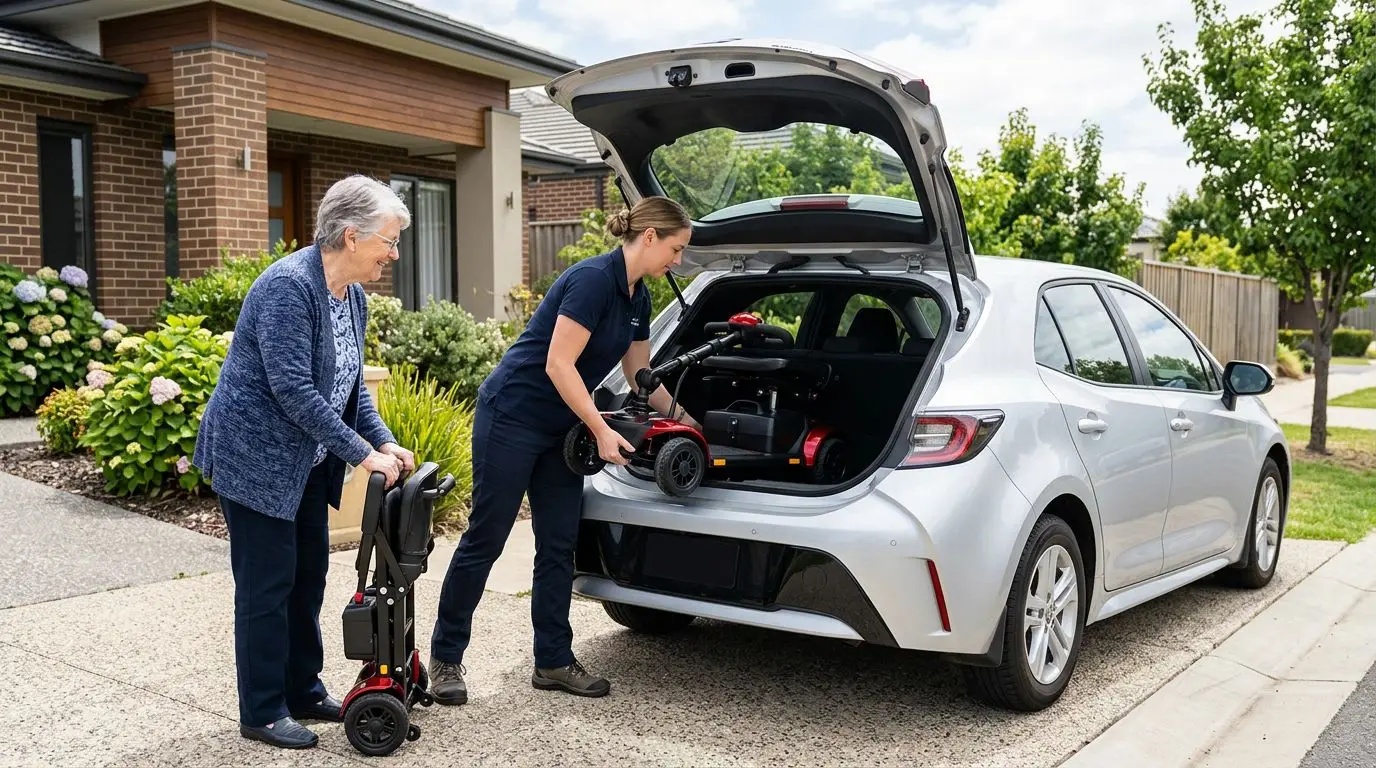
Lightweight Mobility Scooters: What You Gain and Give Up With a Lighter Scooter
13 min read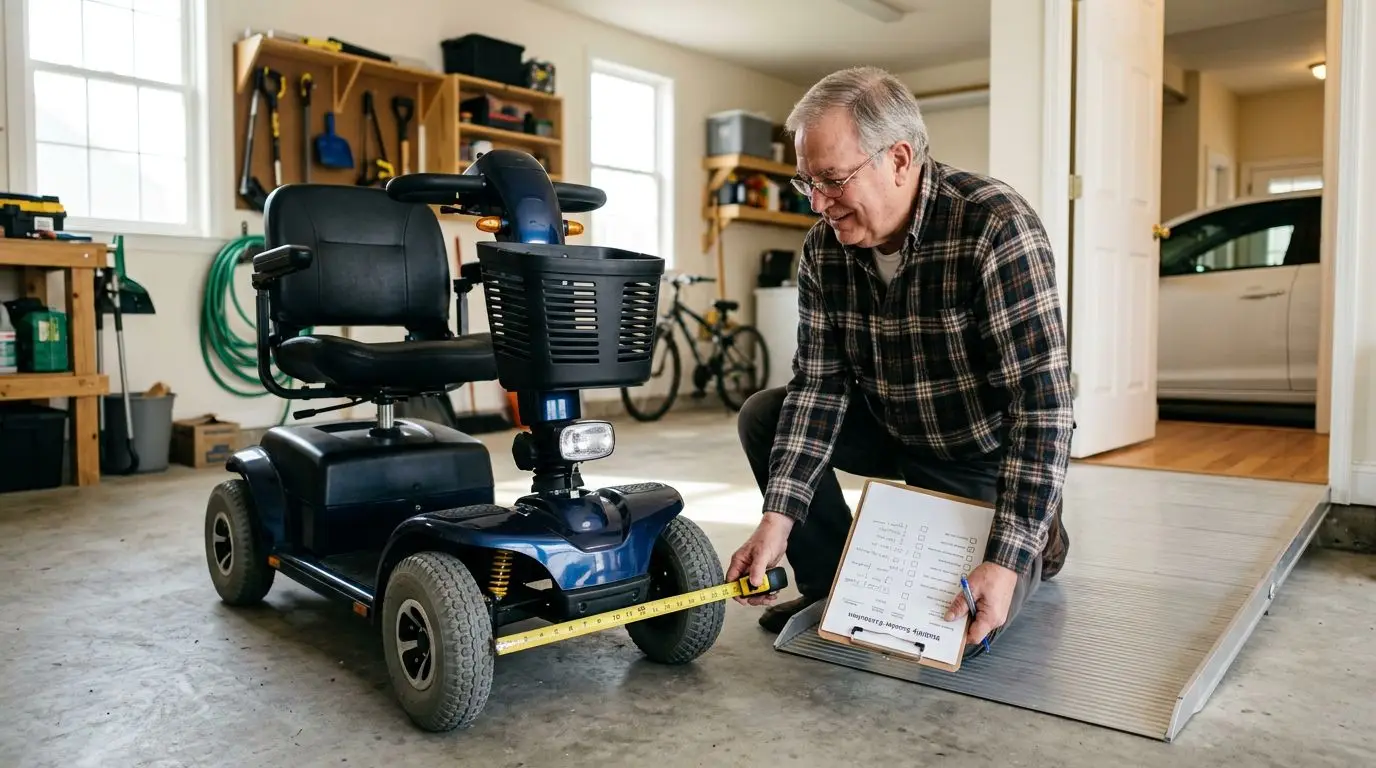
Heavy-Duty Mobility Scooters: What Higher-Weight-Capacity Buyers Should Check Before Purchasing
16 min read