
The right mobility scooter seat should support your hips without squeezing, let your feet rest securely, and make transfers feel controlled instead of awkward. For most adults, a good fit starts with measuring seated hip width, seat depth, armrest clearance, and back support needs before comparing scooter types. If you expect to sit for several hours a day, comfort features such as adjustable armrests, a supportive back, and pressure-friendly cushioning matter just as much as battery range or turning radius.
A scooter seat is more than a place to sit. It affects how you get on and off, how steady you feel while driving, how long you can ride comfortably, and whether you can reach the tiller without slouching. This guide explains how to choose seat width, cushioning, armrests, and back support in a practical, brand-neutral way.
Why seat fit matters after 30 minutes
A seat that feels acceptable for 5 minutes in a showroom can feel very different after 30, 60, or 120 minutes of real use. Pressure can build at the hips and tailbone, shoulders may round forward to reach the controls, and armrests that seemed fine at first can become a barrier during transfers.
Mobility scooter seating is different from wheelchair seating. Many scooter seats are built for comfort and convenience, not complex medical positioning. That works well for many riders, but it also means fit should be checked carefully if you use your scooter for all-day errands, long community outings, or as your primary mobility device outside the home.
Good seat fit usually improves three things: comfort while riding, control while steering, and confidence while transferring. It should not force your knees high, press your thighs against the seat edge, or make you twist your back to reach the tiller. Small differences count. A seat that is 2 inches too narrow or an armrest that is 1 inch too low can make a ride feel cramped.
Who it's best for: 3 riders who need extra seating support
This guide is especially useful if you expect to use a scooter for more than quick trips to the mailbox. Seat size and support deserve extra attention in at least 3 common situations.
- All-day or frequent riders: If you sit on the scooter for 2 hours or more at a time, cushioning, back support, and posture become more important than they are for short indoor rides.
- People who need easier transfers: If standing from a chair is difficult, look closely at swivel seats, armrest height, seat height, and how much open space you have beside the scooter.
- Riders with hip, back, or balance concerns: A wider seat, taller back, or more supportive cushion may help you sit more securely, though persistent pain or skin problems should be discussed with a qualified clinician.
Seat comfort is personal. A petite rider may need a narrower seat and lower armrests, while a larger rider may need more width and a stronger-feeling seat base. A rider with limited hip motion may care most about seat height and swivel clearance. There is no single best scooter seat, but there is usually a better fit.
How to measure scooter seat width, depth, and height in 10 minutes
You can take the most useful measurements at home in about 10 minutes with a firm chair, a tape measure, and the shoes you normally wear outside. Sit upright with your feet flat and your back lightly supported. Do not measure while sitting on a soft couch, because the cushion can change your posture by several inches.
1. Measure seated hip width
Sit with your hips level. Measure the widest point across your hips or thighs while seated. Add about 1 to 2 inches for comfort and clothing clearance. For example, if your seated width is 18 inches, a seat around 19 to 20 inches wide may feel better than an exact 18-inch fit. Too much extra width, however, can reduce side support and make armrests harder to use.
2. Measure seat depth
Measure from the back of your hips to the bend behind your knee, then subtract about 1 to 2 inches. This helps keep the front edge of the seat from pressing into the backs of your knees. If your thigh measurement is 19 inches, a seat depth around 17 to 18 inches may be more comfortable.
3. Check seat-to-floor height
With your shoes on, measure from the floor to the back of your knee while your feet are flat. Scooter seat height varies by design, and some seats adjust in 1-inch increments. Aim for a height that lets you sit down without dropping hard and stand up without pushing from a deep squat.
4. Measure your reach
Sit upright and reach forward as if holding the scooter tiller. Your elbows should remain slightly bent, not locked straight. If you have to lean forward more than a few inches to steer, the seat-to-tiller distance or tiller adjustment may not suit you.
Seat width and depth: common ranges from 16 to 22 inches
Many mobility scooter seats fall in a general range of about 16 to 22 inches wide, with compact travel scooters often on the narrower end and full-size scooters more likely to offer wider seating. Seat depth commonly runs around 15 to 18 inches, although designs vary. These are broad ranges, not guarantees, so always check the actual dimensions for the scooter you are considering.
| Seat size factor | What to check | Why it matters |
|---|---|---|
| Width | Seated hip width plus about 1 to 2 inches | Prevents squeezing while keeping enough side support |
| Depth | Thigh length minus about 1 to 2 inches | Reduces pressure behind the knees |
| Height | Ability to stand and sit with control | Supports safer transfers and easier foot placement |
| Weight rating | User weight, clothing, and carried items | Helps keep the scooter within its intended limits |
A wider seat is not always more comfortable. If the seat is too wide, your arms may not rest naturally on the armrests, and you may shift from side to side while turning. If the seat is too deep, you may slide forward or lose contact with the back. If it is too shallow, your thighs may not feel supported.
Pay attention to the seat pan as well as the cushion. A thick cushion on a small base can still feel unstable. A broad, firm seat base with a moderate cushion often feels more supportive on longer rides than an overly soft cushion that lets the hips sink unevenly.
Cushioning options: foam, gel, and air layers under 3 inches
Cushion thickness is only one part of comfort. A 3-inch cushion that collapses under your weight may be less comfortable than a firmer 2-inch cushion with better support. The goal is to reduce pressure while keeping you stable enough to steer, brake, and transfer.
| Cushion type | Typical feel | Best use | Tradeoff |
|---|---|---|---|
| Standard foam | Light to medium firmness | Everyday rides and basic comfort | May flatten over time |
| High-density foam | Firmer and more supportive | Longer outings or riders who dislike sinking | Can feel hard at first |
| Gel layer | Pressure-spreading, cooler feel for some users | Riders sensitive at the tailbone or hips | Adds weight and may shift if poorly fitted |
| Air-cell or air-layer cushion | Adjustable pressure relief | Users who need more pressure management | Requires monitoring and may feel less stable |
| Contoured cushion | Shaped support under thighs and pelvis | Riders who need help staying centered | Must match body shape and seat size |
If you add an aftermarket cushion, remember that it changes seat height. Adding 2 inches of cushion can make transfers easier for some riders and harder for others. It can also raise your center of gravity, which may affect how stable you feel during turns or on uneven pavement.
For riders with a history of pressure sores, numbness, fragile skin, or reduced sensation, cushion choice should not be guesswork. A clinician, occupational therapist, or seating specialist can help evaluate pressure risk. A scooter cushion can improve comfort, but it is not a substitute for medical seating when medical seating is needed.
Armrests and transfers: 2 clearance checks
Armrests affect both comfort and safety. The 2 biggest checks are whether the armrests support your forearms at a relaxed height and whether they move out of the way for transfers. Many scooter seats have flip-up, width-adjustable, or height-adjustable armrests, but the range of adjustment can vary.
For comfort, sit upright with your shoulders relaxed. Your elbows should rest near a natural bend of about 90 degrees without lifting your shoulders. If the armrests are too high, your neck and shoulders may tighten. If they are too low, you may lean sideways or lose useful support when turning.
For transfers, check how you actually get on and off the scooter. Do you stand and pivot? Slide from a chair? Use a cane or walker nearby? Need a caregiver to assist? A flip-up armrest can create several more inches of side clearance, which may be the difference between a controlled transfer and an awkward one.
- Width-adjustable armrests: Helpful when the seat is wide enough but your arms need a little more room.
- Flip-up armrests: Useful for side transfers, especially when parking next to a bed, chair, or vehicle seat.
- Padded armrests: Better for longer rides when elbows and forearms rest for extended periods.
- Short armrests: May improve access to tables but may offer less support during standing.
Do not judge armrests only while driving straight. Try turning, reaching for a door handle, backing up, and preparing to stand. Those small movements show whether the armrests help or get in the way.
Back support and posture: 90 to 110 degrees
A comfortable scooter seat should let you sit upright without forcing a rigid posture. Many riders do best with a back angle somewhere around 90 to 110 degrees, depending on body shape, hip flexibility, and how far the tiller adjusts. The key is steady contact: your lower back should not be floating several inches away from the seatback while you drive.
Low-back seats are common on compact scooters because they reduce weight and make transport easier. They may be enough for short rides. For longer use, a taller backrest, mild lumbar contour, or adjustable recline can be more comfortable. A headrest is not necessary for everyone, but some riders appreciate it during longer periods of sitting or when resting between destinations.
Look for posture problems during a test sit. If you round your shoulders, tuck your pelvis, or lean to one side after 10 minutes, the back support may not fit. Sometimes the issue is not the backrest itself but the seat depth, cushion height, or tiller reach. Seating works as a system.
Lumbar support should feel gentle, not like a hard bar pressing into your spine. If you add a lumbar pillow, make sure it does not push you so far forward that you lose thigh support or slide toward the front edge of the seat.
Comfort feature comparison: 7 choices to weigh
Seat comfort features can add convenience, but each one has a tradeoff. A heavily padded captain-style seat may feel comfortable for 2 hours, yet add bulk and weight to a scooter that needs to be transported. A compact folding seat may be easy to load but less supportive for long rides.
| Feature | Comfort benefit | Best for | Watch for |
|---|---|---|---|
| Swivel seat | Turns toward the side for easier entry | Riders with limited hip or knee motion | Needs room to rotate safely |
| Height-adjustable seat | Fine-tunes transfer height | Users between standard sizes | Higher settings may feel less stable |
| Sliding seat | Adjusts distance to tiller | Shorter or taller riders sharing a scooter | Must lock securely before driving |
| Reclining back | Changes back angle for comfort | Long outings with rest breaks | Too much recline can affect reach |
| Flip-up armrests | Improves side transfer clearance | Transfers from bed, chair, or vehicle | Armrest must lock or stay stable when down |
| Contoured seat | Helps center hips and thighs | Riders who feel unstable on flat seats | Contour must match body size |
| Removable cushion cover | Easier cleaning after daily use | Frequent outdoor riders | Check that cover does not slip |
Choose the features that solve your actual problem. If transfers are your biggest challenge, prioritize swivel, height, and armrests. If long sitting is the issue, prioritize cushion quality, back shape, and tiller reach. If transport is essential, remember that larger seats can make the heaviest scooter component harder to lift.
How to choose by scooter type: 3 seating tradeoffs
Seat comfort often changes by scooter category. A small travel scooter may have a lighter seat to keep parts manageable, while a larger 4-wheel scooter may offer a wider and more supportive seat. The right choice depends on where you ride, how long you sit, and whether the scooter must fit in a vehicle.
| Scooter type | Typical seating pattern | Best for | Comfort tradeoff |
|---|---|---|---|
| Compact travel scooter | Narrower, lighter seat | Short trips and transport in a car | Less padding and back support |
| Mid-size scooter | Moderate width with more adjustment | Daily errands and mixed indoor/outdoor use | Heavier parts than travel designs |
| Full-size scooter | Wider seat, taller back, more padding | Longer outdoor rides and larger riders | Requires more storage and turning space |
Three-wheel scooters may offer more knee room around the front column, which can help some taller riders. Four-wheel scooters often feel more planted outdoors, though the seat itself depends on the design. Do not assume the wheel count determines comfort. Measure the seat.
If you ride indoors, check doorway and hallway access along with seat width. A wide seat that works beautifully outdoors may feel cumbersome in a tight kitchen or bathroom doorway. If you use accessible transportation, also check tie-down rules and whether the seat must remain upright during travel.
Test sitting before you buy: a 20-minute checklist
A real test sit should last at least 20 minutes when possible. Five minutes tells you whether the seat is obviously wrong. Twenty minutes gives your hips, back, and shoulders time to show whether the fit is sustainable.
- Minute 1: Sit down the way you normally would. Notice whether you drop into the seat or can lower yourself with control.
- Minute 3: Place both feet where they belong. Check whether knees feel cramped or unsupported.
- Minute 5: Rest your arms. Shoulders should stay relaxed, not shrugged.
- Minute 8: Reach the tiller. Your back should stay in contact with the seat.
- Minute 10: Turn left and right slowly. Watch for sliding, leaning, or hip pressure.
- Minute 15: Practice a safe transfer off and back on, using the armrests as intended.
- Minute 20: Recheck pressure points at the tailbone, hips, thighs, and behind the knees.
Bring the items you normally use. That may include a cane, purse, oxygen bag, jacket, or lap blanket. Extra clothing can add an inch or more around the hips, and carried items may change how you sit. If someone assists you, include that person in the test because helper positioning affects transfer safety.
When shopping online, look for detailed seat measurements rather than broad phrases like comfortable or deluxe. Confirm seat width, depth, back height, armrest adjustability, seat height range, and user weight rating. If the seller cannot provide basic measurements, it is harder to judge fit responsibly.
Common fit mistakes to avoid: 6 red flags
Several seating problems show up again and again. The good news: most can be spotted before purchase if you slow down and measure.
- Choosing only by weight rating: A scooter may meet a weight rating but still have a seat that is too narrow or shallow.
- Buying the widest seat available: Extra width can reduce arm support and make steering feel less centered.
- Ignoring seat height: Even a comfortable cushion can be wrong if transfers become harder.
- Adding a thick cushion without retesting: A 2-inch cushion changes reach, posture, and stability.
- Forgetting winter clothing: Coats and layered clothing can change fit, especially around the hips and arms.
- Testing only on flat floors: Outdoor surfaces, curb cuts, and turns reveal whether you stay steady in the seat.
If a seat causes numbness, sharp pain, skin redness that does not fade, or repeated sliding, stop treating it as a minor comfort issue. Those signs deserve professional guidance, especially for riders with reduced sensation, diabetes-related concerns, circulation issues, or a history of skin breakdown.
FAQ: 5 mobility scooter seat comfort questions
How wide should a mobility scooter seat be?
Measure your seated hip width and add about 1 to 2 inches. That usually gives enough room for clothing and movement without making the seat so wide that the armrests become hard to use.
Is a thicker cushion always better?
No. A thicker cushion can raise your seat height and may make the scooter feel less stable. Support, firmness, and pressure distribution matter more than thickness alone.
What seat features help with transfers?
A swivel seat, flip-up armrests, and adjustable seat height are often the most useful transfer features. The best choice depends on whether you stand and pivot, slide sideways, or transfer with assistance.
Do I need a high-back scooter seat?
Not always. A low or mid-back seat may be fine for short trips, while a taller back can be more comfortable for longer rides or riders who need more trunk support.
Can I add my own cushion to a scooter seat?
Often, yes, but retest your transfer height, tiller reach, and stability after adding it. If you have pressure injuries, numbness, or reduced sensation, ask a clinician or seating specialist before relying on an added cushion.
The most comfortable mobility scooter seat is the one that fits your body, your transfer method, and your real riding routine. Measure first, test for at least 20 minutes when possible, and choose features that solve the problems you actually have. A well-fitted seat can make daily mobility feel calmer, safer, and more sustainable without promising more than seating can responsibly deliver.
Frequently asked questions
How wide should a mobility scooter seat be? +
Measure your seated hip width and add about 1 to 2 inches. This usually gives enough comfort clearance without making the seat too wide for useful armrest support.
Is a thicker mobility scooter cushion more comfortable? +
Not always. A thicker cushion can raise your seat height, change your reach to the tiller, and affect stability. Firmness, pressure distribution, and fit matter more than thickness alone.
Which scooter seat features make transfers easier? +
A swivel seat, flip-up armrests, and adjustable seat height are commonly helpful. The right combination depends on whether you stand and pivot, slide sideways, or transfer with assistance.
Do I need a high-back mobility scooter seat? +
A high-back seat is not necessary for every rider. It is usually more helpful for longer rides or for people who want more trunk and upper-back support than a low-back seat provides.
Can I add an aftermarket cushion to my scooter seat? +
Often you can, but retest transfer height, steering reach, and stability afterward. If you have pressure sores, numbness, reduced sensation, or fragile skin, ask a clinician or seating specialist for guidance.
Related guides
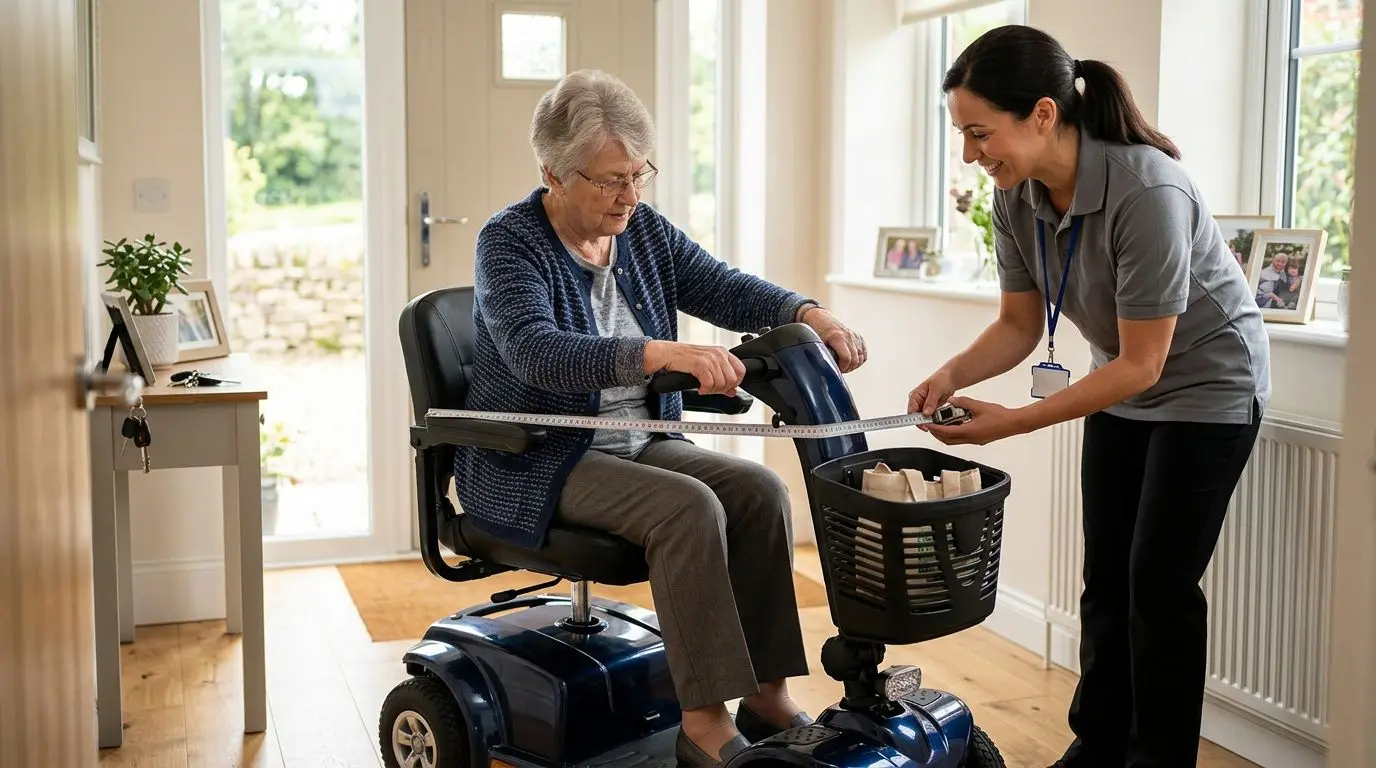
Mobility Scooter Seat, Armrest, and Tiller Adjustments: How to Get a Better Fit
14 min read
Mobility Scooter Seat Cushions and Back Support Upgrades: Comfort, Pressure Relief, and Fit Checks
13 min read
Mobility Scooter vs. Power Wheelchair: Which Mobility Device Is Right for You?
15 min read