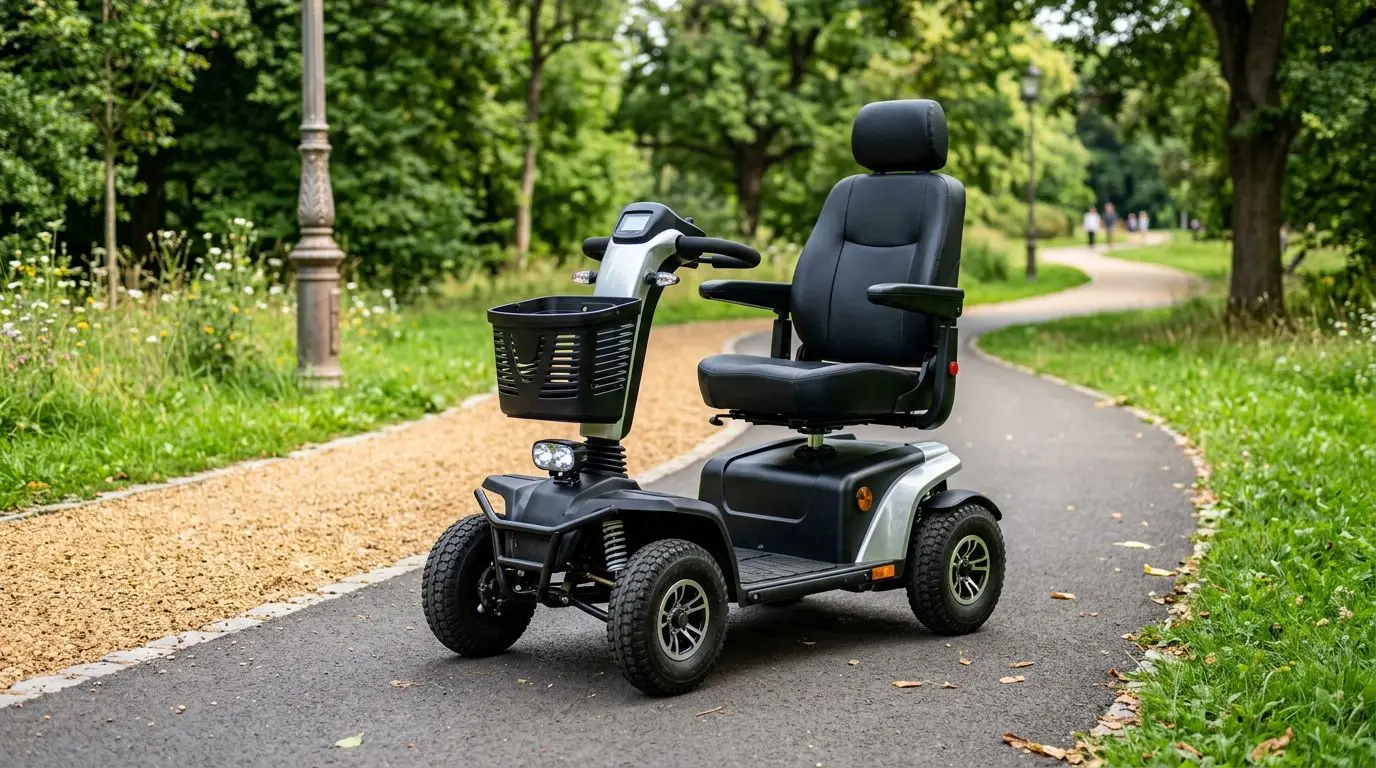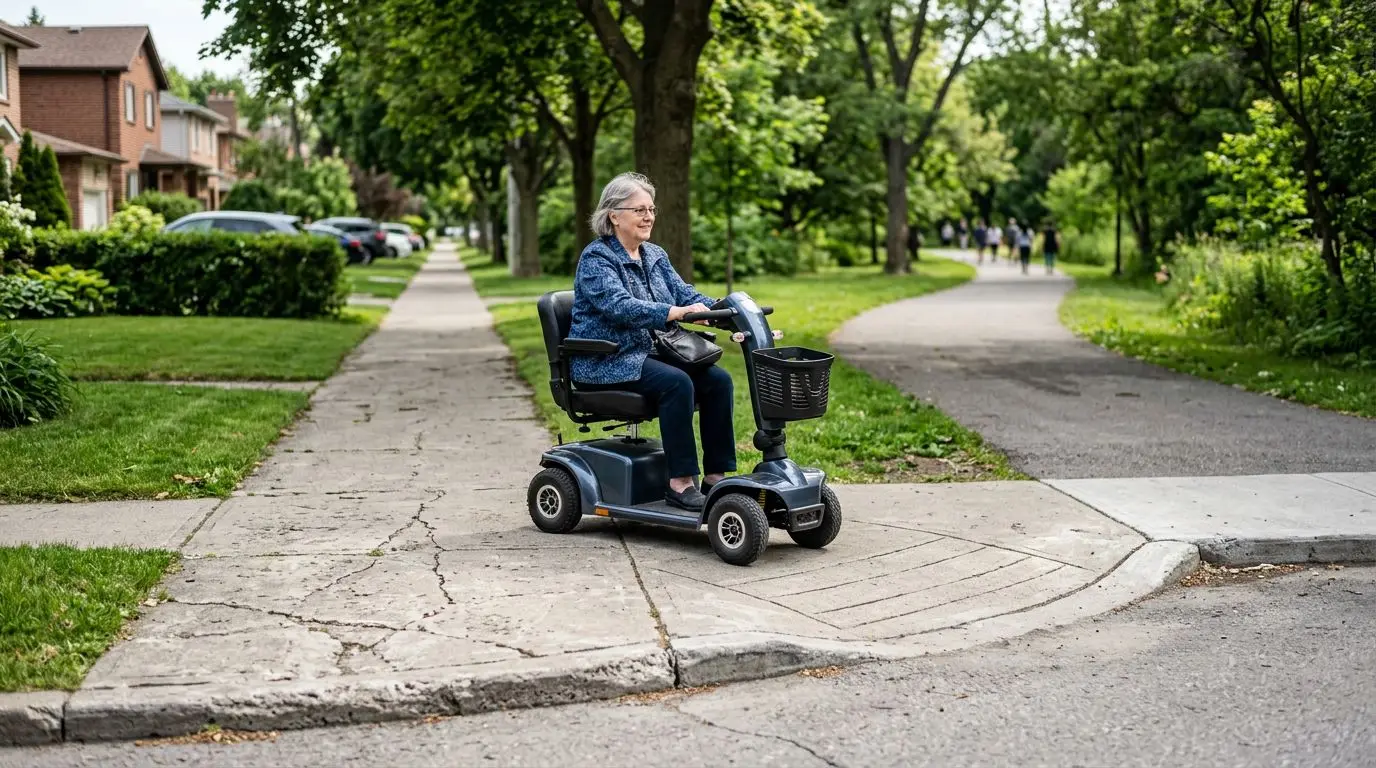
You need suspension on a mobility scooter if you regularly ride over sidewalk cracks, uneven curb cuts, brick, gravel, or outdoor paths. If most of your travel is indoors, on smooth pavement, or at walking speed under about 4 mph, tire type, wheel size, seat comfort, and careful speed control may matter more than suspension.
The right answer depends on your real route, not a feature list. Full suspension can feel much smoother outdoors, but a slower scooter with larger pneumatic tires may outperform a stiff, fast scooter on cracked sidewalks. Use the guide below to match comfort features to the surfaces you actually use.
What suspension does at 3 to 8 mph
Mobility scooter suspension is designed to reduce the jolt you feel when the wheels hit small bumps, dips, and edges. At typical scooter speeds of 3 to 8 mph, those impacts are more than uncomfortable; they can make your hands tighten on the tiller, shift your posture in the seat, or rattle cargo in the basket.
Most scooters use some combination of springs, shock absorbers, rubber bushings, or flexible frame components. The goal is simple: let the wheel or seat area move slightly instead of sending the whole bump straight into the rider.
| Suspension type | What it usually helps with | Common limitation |
|---|---|---|
| No suspension | Smooth indoor floors, flat driveways, short paved trips | Can feel harsh over 1/2-inch sidewalk lips or rough asphalt |
| Front suspension | Initial impact from cracks, curb cuts, and small debris | Rear wheels may still hit sharply |
| Rear suspension | Seat comfort when the back wheels cross bumps | Front tiller area may still transmit vibration |
| Full suspension | Repeated outdoor bumps, uneven paths, longer rides | Adds weight, complexity, and sometimes transport difficulty |
| Seat-post or seat cushioning | Vertical comfort for the rider | Does not improve wheel traction or reduce frame vibration as much |
Suspension is not permission to drive over high curbs, deep potholes, or steep transitions. A scooter can still bottom out if ground clearance is low or if the curb cut has a sharp raised edge. Think of suspension as comfort support, not off-road protection.
When suspension is worth it on 1/2-inch cracks and curb cuts
Suspension becomes more valuable when your route includes repeated bumps, not just one occasional rough patch. A single 1/4-inch seam in a store entry is usually manageable on many scooters. A neighborhood route with dozens of 1/2-inch sidewalk cracks, tilted slabs, and curb cuts with raised lips is different.
Who it is best for
- Riders who travel outdoors most days, even for 10 to 20 minutes at a time.
- People who use sidewalks with tree-root lift, patched concrete, or older curb ramps.
- Riders who feel jarred in the lower back, hips, shoulders, wrists, or neck on rough surfaces.
- Anyone carrying groceries, oxygen equipment, a cane, or other items that should not bounce around.
- Users who ride on paved park paths, compacted dirt, boardwalk seams, or brick plazas.
If your scooter rides well inside a grocery store but feels unpleasant from the parking lot to the entrance, front or full suspension may help. If the discomfort mostly happens when the back wheels hit bumps, rear or full suspension is more relevant than front suspension alone.
Pay attention to curb cuts. Many look smooth from a distance but have a 1/2-inch to 1-inch lip where the ramp meets the road. Suspension can soften the impact, but the scooter still needs adequate ground clearance, a stable approach angle, and enough tire diameter to roll up without catching.
When tires and speed matter more under 4 mph
Suspension is only one part of ride comfort. At slower speeds, especially under about 4 mph, tire design and wheel size often make a bigger difference than people expect. A larger tire can bridge small gaps better, and a tire with air or softer material can absorb vibration before it reaches the frame.
| Feature | Comfort effect | Best use | Watch for |
|---|---|---|---|
| Solid tires | Low maintenance but firmer ride | Indoor use, smooth pavement, users who want puncture resistance | More vibration on brick, gravel, and cracked concrete |
| Pneumatic tires | Air cushioning improves small-bump comfort | Outdoor sidewalks, longer rides, uneven pavement | Require air checks and can lose pressure |
| Larger wheels, about 9 to 13 inches | Roll over cracks and shallow gaps more easily | Outdoor paths and older sidewalks | May increase scooter size and turning radius |
| Lower speed setting | Reduces impact force and gives more time to steer | Curb cuts, crowds, narrow sidewalks, turns | Long trips take longer |
| Wider tire profile | Can feel steadier on compacted surfaces | Park paths, packed dirt, uneven asphalt | May drag more on tight turns |
Speed is the simplest comfort adjustment. Hitting a raised seam at 6 mph feels different from rolling over it at 2 mph. If your scooter has a speed dial, turn it down before curb cuts, driveway aprons, gravel transitions, and crowded sidewalks.
Tire pressure also matters on pneumatic tires. Underinflated tires can feel squishy, reduce range, and affect steering. Overinflated tires can feel harsh. Follow the pressure range printed on the tire sidewall or in the scooter manual, and check it with a gauge at least monthly if you ride outdoors often.
How to measure your route in 10 minutes
You do not need engineering tools to decide whether suspension matters. A 10-minute route check can reveal more than a showroom test on smooth flooring. Bring a small tape measure, your phone camera, and a notepad.
- Step 1: Identify your 3 most common trips. Examples include apartment to mailbox, home to bus stop, parking lot to clinic, or house to nearby park.
- Step 2: Mark the worst 3 spots on each route. Look for cracked slabs, driveway slopes, curb cut lips, brick sections, gravel patches, and puddle-prone dips.
- Step 3: Measure height changes. A raised edge of 1/4 inch is minor for many scooters. Around 1/2 inch becomes noticeable. At 1 inch or more, comfort and clearance both deserve careful attention.
- Step 4: Count repeated bumps. Ten small cracks in 100 feet can be more tiring than one larger seam.
- Step 5: Note slope and turning space. A curb ramp that is comfortable straight on may feel awkward if you must turn immediately at the top.
- Step 6: Take photos at wheel height. A low-angle photo helps a dealer, therapist, or experienced technician understand the surface better than a description alone.
Use this information to decide your comfort priority. If your route is smooth except for one curb cut, better technique and appropriate tires may matter more than full suspension. If every trip includes long stretches of patched sidewalk, suspension becomes much more important.
Matching scooter comfort to 1-mile terrain examples
A mobility scooter that feels excellent in a hallway may not feel the same over a 1-mile outdoor loop. Terrain, distance, and speed work together. Longer rides reveal small comfort problems because vibration builds over time.
| Typical route | Comfort priority | Suspension need | Helpful setup |
|---|---|---|---|
| Inside home, store aisles, smooth hallways | Tight turning and easy control | Low | Comfortable seat, responsive speed dial, solid or low-maintenance tires |
| Apartment to mailbox, under 1/4 mile | Small thresholds and pavement seams | Low to moderate | Moderate tire size, slow speed, seat padding |
| Neighborhood sidewalks, about 1 mile | Repeated cracks and curb cuts | Moderate to high | Front or full suspension, larger wheels, careful speed control |
| Paved park paths, 1 to 3 miles | Vibration over time | High | Full suspension, pneumatic tires, supportive seat, adequate battery range |
| Brick plazas or boardwalk seams | Frequent small impacts | Moderate to high | Softer tires, suspension, reduced speed |
| Compacted dirt or fine gravel | Traction and stability | High, if scooter is rated for it | Larger tires, ground clearance, full suspension, avoid loose or deep gravel |
Ground clearance is part of the decision. Many scooters have only a few inches of clearance at the lowest point. If the frame or anti-tip wheels scrape at transitions, suspension will not solve the whole problem. You need a scooter type suited to outdoor use, with enough clearance for the route.
Battery range should not be ignored. Outdoor comfort features are not helpful if your typical round trip is 4 miles and the scooter is not realistically suited to that distance with your weight, terrain, temperature, and speed. Published range is often measured under controlled conditions; real-world range can be lower.
Comfort features beyond suspension: 16 to 20 inches of seat width
Ride comfort starts where your body meets the scooter. Suspension can reduce jolts, but an unsupportive seat, cramped foot space, or awkward tiller angle can still make a ride tiring. Seat width commonly falls around 16 to 20 inches on many scooters, though exact sizes vary by type.
- Seat width and depth: You should feel supported without being squeezed. Too wide can reduce armrest usefulness; too narrow can create pressure.
- Seat padding: Thicker is not always better. A supportive cushion that does not bottom out may feel better than a soft cushion that collapses after 15 minutes.
- Back support: A taller or more contoured back can help posture on longer rides, but it should not push you forward.
- Armrests: Adjustable width and height can reduce shoulder strain and help with transfers.
- Tiller adjustment: Your elbows should stay slightly bent, not locked straight, when holding the controls.
- Foot deck space: Enough room to place both feet comfortably reduces fatigue, especially if you ride for 30 minutes or longer.
- Weight capacity: Choose a scooter with a rated capacity comfortably above the combined weight of the rider and usual cargo. Operating at the upper limit can affect comfort, hill performance, and range.
If you have pain, balance concerns, pressure sensitivity, or a medical condition that affects seating tolerance, ask a qualified clinician or mobility professional for individualized guidance. Suspension can improve comfort for many riders, but it is not a medical treatment.
Trade-offs: suspension can add 10 to 40 pounds
Suspension has benefits, but it is not free in practical terms. Outdoor-oriented scooters with larger tires, stronger frames, batteries, and suspension can weigh 10 to 40 pounds more than simpler travel designs, and sometimes much more depending on the scooter category.
That extra weight matters if you plan to lift parts into a car trunk, use a vehicle lift, store the scooter in a small apartment, or maneuver in tight indoor spaces. A smooth-riding outdoor scooter may have a wider turning radius than a compact indoor scooter. It may also be harder to disassemble.
Maintenance is another factor. More moving parts can mean more inspection points. Springs, bushings, fasteners, tires, and wheel assemblies should be checked periodically, especially if you ride on rough pavement. Listen for new rattles, clunks, scraping, or uneven tire wear.
Stability deserves careful thought. A softer ride can feel pleasant, but riders should still approach slopes, curb cuts, and turns slowly. Do not take sharp turns at higher speed because the scooter feels cushioned. Suspension reduces harshness; it does not change the basic need for safe driving habits.
Test ride checklist for a 15-minute comfort trial
A good test ride should include more than a smooth showroom floor. If possible, spend at least 15 minutes on surfaces similar to your real route. Bring your usual shoes, bag, cane holder, or basket load so the scooter feels like daily use.
- Start indoors for 3 minutes. Check turning, throttle smoothness, braking, and whether your knees or hands feel cramped.
- Ride over a small threshold. A 1/4-inch to 1/2-inch transition can reveal harshness quickly.
- Try a curb cut slowly. Approach straight, reduce speed, and notice whether the front or rear impact bothers you more.
- Cross rough pavement. Listen for rattles and feel whether vibration reaches your hands, feet, or back.
- Check the seat after 10 minutes. Early pressure or sliding may become worse on a longer outing.
- Test low-speed control. Comfort is not only softness. You need predictable movement near pedestrians, doors, and ramps.
- Confirm transport and storage. If you must lift or load it, test that process before you commit.
Ask yourself one practical question after the ride: Would I still want to use this scooter after the third curb cut, not just the first? That answer often separates a feature that looks good on paper from one that improves daily independence.
FAQ: 5 common suspension questions
Is full suspension always better on a mobility scooter?
No. Full suspension is usually more comfortable on rough outdoor routes, but it can add weight, size, and maintenance. If you ride mainly indoors or on smooth pavement, a compact scooter with good tires, a supportive seat, and precise speed control may be the better fit.
Do pneumatic tires replace the need for suspension?
Sometimes, for mild unevenness. Pneumatic tires can absorb vibration from small cracks and textured pavement, especially at lower speeds. On repeated curb cuts, broken sidewalks, or longer outdoor rides, tires and suspension often work best together.
Can suspension help with sidewalk cracks?
Yes, especially when cracks are repeated or raised around 1/2 inch. Suspension can reduce the sharp jolt, while larger tires help the scooter roll over the edge more smoothly. Slow down before the crack rather than relying on suspension alone.
What matters most for curb cuts?
Approach angle, speed, tire size, ground clearance, and stability all matter. Suspension can make the impact feel softer, but a raised curb-cut lip of 1 inch or more may still be difficult for some scooters. Approach straight and slow whenever possible.
Should I choose a 3-wheel or 4-wheel scooter for comfort?
Comfort depends more on suspension, tires, seat, wheelbase, and terrain than wheel count alone. Three-wheel scooters often turn tighter, while four-wheel scooters often feel steadier outdoors. Test both styles on the surfaces you actually use.
Frequently asked questions
Is full suspension always better on a mobility scooter? +
No. Full suspension is usually more comfortable on rough outdoor routes, but it can add weight, size, and maintenance. For mostly indoor or smooth-pavement use, good tires, a supportive seat, and precise speed control may matter more.
Do pneumatic tires replace the need for suspension? +
Sometimes, for mild unevenness. Pneumatic tires can absorb vibration from small cracks and textured pavement. On repeated curb cuts, broken sidewalks, or longer outdoor rides, tires and suspension often work best together.
Can suspension help with sidewalk cracks? +
Yes. Suspension can reduce the jolt from repeated or raised cracks, especially around 1/2 inch. Larger tires and slower speed also help the scooter roll over cracks more smoothly.
What matters most for curb cuts? +
Approach angle, speed, tire size, ground clearance, and stability all matter. Suspension can soften the impact, but it will not make every curb cut safe or comfortable, especially if the lip is high or the ramp is uneven.
Should I choose a 3-wheel or 4-wheel scooter for comfort? +
Comfort depends more on suspension, tires, seat support, wheelbase, and terrain than wheel count alone. Three-wheel scooters often turn tighter, while four-wheel scooters often feel steadier outdoors.
Related guides
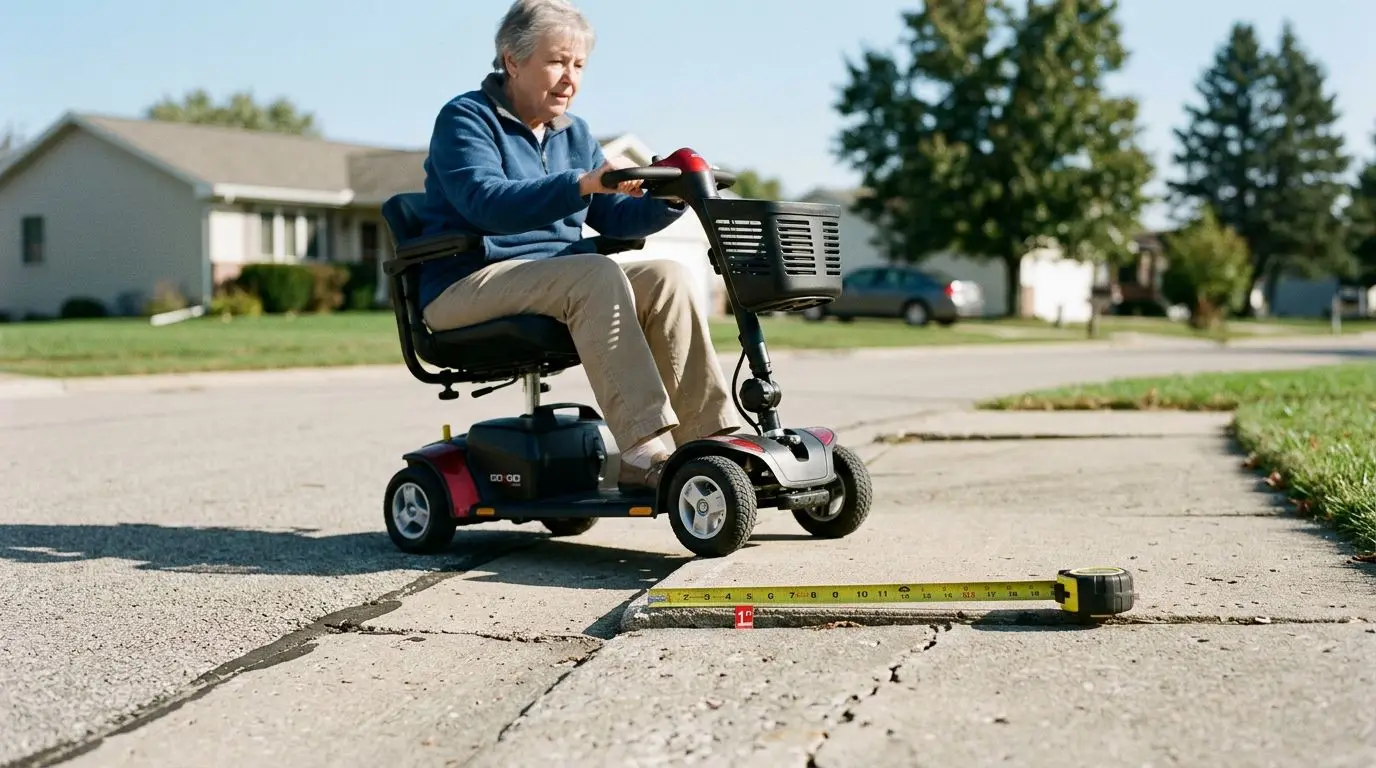
Mobility Scooter Tires, Suspension, and Ground Clearance: Matching Features to Sidewalks, Thresholds, and Rough Pavement
14 min read
Heavy-Capacity Mobility Scooters: What Higher Weight Ratings Mean for Comfort, Range, and Transport
13 min read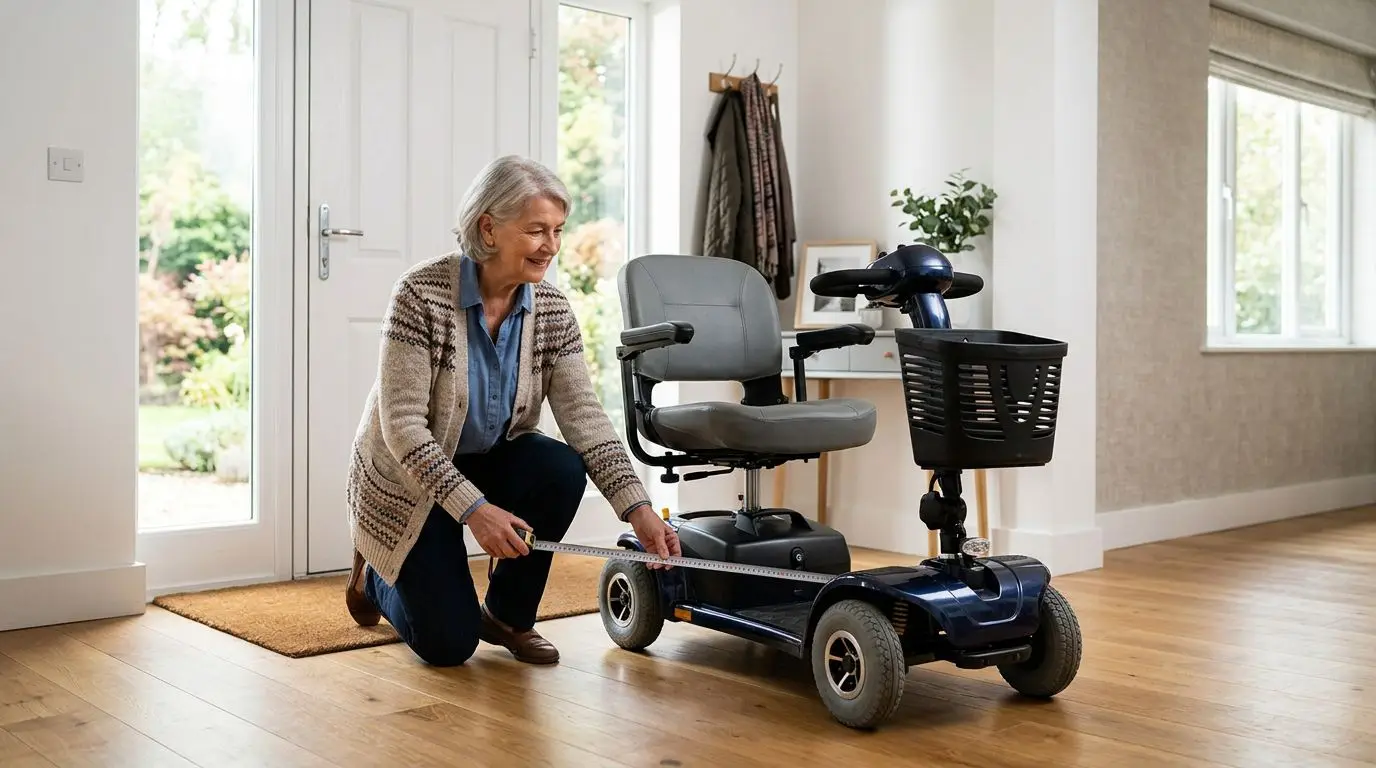
How to Choose a Mobility Scooter: A Practical Buying Guide for Seniors and Adults
13 min read