
To compare mobility scooter prices near you without overpaying, ask at least 3 local sellers for the same written, out-the-door quote: scooter type, batteries, charger, delivery, setup, warranty, return terms, and service options. Do not compare sticker price alone. A lower advertised price can cost more once delivery, assembly, restocking fees, or repair support are added.
The goal is not to find the cheapest scooter in town. It is to find the right scooter from a seller who can deliver it safely, explain it clearly, and support it if something goes wrong. A fair deal is one that fits your home, your body, your transportation needs, and your local service options.
Why local scooter prices can differ within 10 miles
Two mobility scooter sellers within 10 miles of each other may quote very different totals for similar-looking scooters. That does not always mean one is unfair. Local prices can reflect delivery distance, in-home setup time, battery age, warranty handling, return rules, and whether a technician is available nearby.
A mobility scooter is not like a simple household appliance you can judge by size and color alone. The same general scooter type may be sold with different battery condition, seat style, weight capacity, tires, controls, and service support. One quote may include setup and basic instruction. Another may leave the scooter boxed at the curb.
When you compare local prices, look at the full cost of owning and using the scooter during the first year. Ask what happens if the scooter arrives damaged, does not fit through your doorway, feels unstable on your driveway, or needs a battery or controller check after a few months.
Use the phrase “out-the-door total” with every seller. That means the total amount you would pay to have the scooter ready to use at your home, with all required parts included and all fees disclosed in writing.
Get 3 apples-to-apples quotes in 48 hours
Try to collect 3 written quotes within 48 hours. This keeps the information fresh and makes it easier to compare the same scooter category under similar availability conditions. A quote gathered 3 weeks ago may no longer reflect inventory, delivery scheduling, or current return terms.
Call or visit local mobility equipment stores, medical supply retailers, repair shops that sell scooters, and reputable online sellers that deliver to your ZIP code. Give each seller the same basic information: your approximate height, weight, main use, doorway width, whether you need to transport the scooter by car, and the surfaces you expect to ride on.
Ask each seller to put the quote in writing by email, printed sheet, or invoice draft. A verbal quote is easy to misunderstand, especially when separate fees are added later.
| Quote item | What to ask | Why it matters |
|---|---|---|
| Scooter category | Is it travel, mid-size, full-size, or heavy-duty? | Different categories serve different needs and cannot be judged by price alone. |
| Batteries and charger | Are batteries included, new, installed, and charged? | Batteries are essential and can change the true value of the quote. |
| Delivery | Is delivery to the room, driveway, lobby, or curb? | Curbside delivery may leave you responsible for unpacking and assembly. |
| Setup | Will the scooter be assembled, inspected, and adjusted? | Proper setup can prevent frustration and early safety issues. |
| Warranty handling | Who handles warranty claims locally? | A warranty is more useful when service is reachable. |
| Return policy | How many days, what condition, and what fees? | Return rules can erase the savings from a lower price. |
If one seller refuses to provide details in writing, proceed carefully. Good sellers understand that mobility equipment is a serious purchase and should be compared with care.
Compare the scooter type first: 3 wheels, 4 wheels, travel, and heavy-duty
Before comparing price, make sure you are looking at the same type of scooter. A compact 3-wheel travel scooter and a larger 4-wheel outdoor scooter may both be called “mobility scooters,” but they are built for different situations.
Three-wheel scooters often have a tighter turning radius, which can help in apartments, stores, and hallways. Four-wheel scooters usually feel more planted outdoors and on uneven surfaces, though they often need more room to turn. Travel scooters may disassemble into several pieces, and the heaviest piece is commonly in the 35 to 60 lb range, depending on the design. Heavy-duty scooters may offer higher weight capacities, wider seats, larger batteries, and stronger motors, but they are harder to transport and store.
| Scooter type | Common strengths | Price comparison warning | Who it may fit best |
|---|---|---|---|
| 3-wheel compact | Tighter turns, easier indoor handling | Do not compare it directly with a larger outdoor scooter. | Apartment users and shoppers who ride mostly indoors. |
| 4-wheel mid-size | More stable feel, better outdoor confidence | May cost more because of frame size, tires, and battery capacity. | People using sidewalks, parking lots, and longer indoor routes. |
| Travel scooter | Breaks down for car transport | Lower weight can mean less comfort or range. | Riders who need to load it into a vehicle. |
| Full-size scooter | Comfort, larger seat, longer typical range | Delivery and storage needs may add cost. | Daily users with garage or covered storage space. |
| Heavy-duty scooter | Higher capacity, stronger frame, larger seating | Requires careful measurement of ramps, doors, and turning areas. | Larger riders or those who need more support and outdoor capability. |
A fair quote starts with the right category. If one quote is much lower, confirm it is not for a smaller scooter that cannot safely or comfortably handle your routine.
Delivery, setup, and haul-away: ask about the first 30 minutes
Delivery terms can change the real value of a local scooter quote. Ask exactly what happens during the first 30 minutes after the scooter reaches your home. Will the driver bring it inside, remove packaging, attach the seat, install the batteries, adjust the tiller, and show you how to charge it?
Many scooters require some setup, even when they arrive mostly assembled. The seat may need to be locked in place, the tiller adjusted, the battery pack connected, and the charger explained. If you have limited hand strength, balance concerns, or no helper at home, a quote that includes in-home setup may be worth more than a lower curbside-only offer.
Ask these delivery questions before you buy:
- Is delivery curbside, threshold, room-of-choice, or full setup?
- How many days is the usual delivery window?
- Will the seller call before arriving?
- Will packaging be removed from the home?
- Is there an extra charge for stairs, elevators, gated communities, or rural routes?
- Can the driver demonstrate charging, braking, speed control, and freewheel mode?
- Is old equipment haul-away available, and is it listed as a separate fee?
If you live in an apartment building, senior community, or condo, ask whether the delivery team needs loading dock access, elevator reservations, or proof of insurance. A missed delivery because those details were not handled can be stressful and may create extra fees.
Warranty, returns, and service: read the 30-day details
Warranty and return terms deserve as much attention as price. A 30-day return policy with strict conditions may be very different from a 30-day comfort exchange, and some sellers may charge restocking, pickup, or return freight fees.
Read the warranty in parts. The frame, electronics, motor, batteries, charger, upholstery, tires, and labor may all be treated differently. Batteries are especially important because they are wear items and may have shorter coverage than structural components.
| Policy area | What to confirm | Why it affects value |
|---|---|---|
| Return window | Number of days from purchase or delivery | A clock that starts before delivery gives you less time to test it. |
| Condition rules | Indoor-only trial, mileage limits, packaging requirements | Normal outdoor use may affect return eligibility. |
| Restocking or pickup | Whether fees apply and how they are calculated | A low price can become expensive if the scooter does not fit. |
| Labor coverage | Whether labor is included or only parts | Parts-only coverage may still leave you paying for diagnosis and repair. |
| Service location | In-home, shop drop-off, or ship-back service | Ship-back service can be difficult for a heavy scooter. |
| Response time | Typical appointment window, such as 3 to 7 business days | Downtime matters if the scooter is your main transportation. |
Ask who performs repairs near you. A seller 5 miles away with a technician may offer more practical support than a seller hundreds of miles away, even if the remote seller has a lower advertised price. That does not mean local is always better, but service access belongs in the comparison.
How to measure your home and route in 15 minutes
You can prevent many costly buying mistakes with a tape measure and 15 minutes. Measure the spaces where the scooter must actually move, not just the front door. A scooter that fits through the entry may still fail at the bathroom turn, bedroom doorway, elevator, or storage spot.
Start with doorway width. Many interior doors are about 28 to 32 inches wide, while exterior doors are often around 32 to 36 inches, but older homes and apartments vary. Measure the clear opening with the door fully open, from the narrowest point to the opposite stop or hinge obstruction.
Next, measure turning areas. If the scooter must turn around in a hallway, kitchen, or bedroom, compare that space with the scooter’s turning radius or overall turning diameter. Do not rely on memory. Furniture, rugs, pet bowls, oxygen tubing, and floor transitions all matter.
- User weight: Choose a scooter with a listed capacity above the rider’s weight, allowing for clothing, bags, and daily items.
- Seat height: Feet should reach the floor or foot platform comfortably when transferring.
- Storage space: Measure length, width, and charger access near an outlet.
- Vehicle loading: Confirm the heaviest piece weight if you plan to lift it into a car.
- Ramp angle: Short, steep ramps can be harder and less comfortable than longer, gentler ramps.
- Outdoor surfaces: Note gravel, cracked sidewalks, grass, thresholds, and sloped driveways.
Bring these measurements to each seller. A responsible seller should help match the scooter to your environment instead of pushing one unit simply because it is available.
Who it’s best for: local store, online seller, or private sale within 25 miles
The best place to buy depends on how much support you need, how comfortable you are inspecting equipment, and whether the scooter must work correctly on day 1. Local stores, online sellers, and private sellers can all make sense in different situations.
| Buying source | Who it’s best for | Main advantage | Main caution |
|---|---|---|---|
| Local mobility store | First-time buyers, daily users, people who need fitting help | Hands-on guidance, setup, and possible local service | May not be the lowest advertised price |
| Local medical supply retailer | Buyers who want nearby pickup or basic support | Convenient access and local paperwork | Staff expertise can vary by location |
| Online seller delivering locally | Confident buyers who know the scooter type they need | Wide selection and easy quote comparison | Returns and repairs may require shipping or remote approval |
| Private seller within 25 miles | Experienced buyers who can inspect condition carefully | Potentially lower upfront cost | No standard return policy, uncertain battery age, limited support |
If buying used from a private seller, test the scooter long enough to check acceleration, braking, steering, seat lock, charger function, battery indicator behavior, lights if equipped, and freewheel lever operation. Ask how long the scooter sat unused. Batteries can weaken when stored for months without proper charging.
Private sales can work well for some people, but they place more responsibility on the buyer. If you depend on the scooter for daily mobility, lack a way to transport it for repairs, or cannot inspect mechanical condition, local professional support may be worth paying for.
Red flags: 7 signs a low price may cost more later
A low quote is not automatically a bad quote. Still, certain warning signs should make you pause before paying a deposit or signing paperwork. If you notice 2 or more of these issues, slow down and ask more questions.
- No written quote: The seller gives only a verbal total or avoids listing fees.
- Unclear battery condition: The seller cannot say whether batteries are new, used, installed, or covered.
- Pressure to buy immediately: You are told the offer disappears today without time to measure or compare.
- No return terms in writing: The seller says returns are “no problem” but provides no policy.
- Delivery details are vague: You do not know whether the scooter will be assembled or left boxed.
- No local service path: The seller cannot explain who repairs it if it stops working.
- Wrong fit is dismissed: Your doorway width, weight needs, or terrain concerns are brushed aside.
Trust clear answers over smooth sales talk. A seller who helps you avoid the wrong scooter is often more valuable than one who simply cuts the advertised price.
A simple 10-line worksheet for comparing local quotes
Use a 10-line worksheet so every quote is judged the same way. You can write this on paper, enter it in a spreadsheet, or ask a family member to help organize the answers.
| Line | What to record |
|---|---|
| 1 | Seller name, location, phone number, and date of quote |
| 2 | Scooter category and major features |
| 3 | Weight capacity, overall width, and turning radius |
| 4 | Battery type, age or condition, and charger included |
| 5 | Delivery method and expected delivery window |
| 6 | Setup, adjustment, demonstration, and packaging removal |
| 7 | Warranty parts, labor, and battery coverage |
| 8 | Return window, condition rules, and possible fees |
| 9 | Local repair options and typical service response time |
| 10 | Final out-the-door total, with every fee listed |
After filling out the worksheet, rank each quote as good fit, possible fit, or poor fit. The best choice should meet your measurements, include clear delivery and warranty terms, and come from a seller who can explain service in plain language.
If two quotes are close, choose the one with better fit and support rather than chasing a small savings. If one quote is far lower, ask what is missing. It may exclude delivery, have a stricter return policy, include older batteries, or offer limited service access.
FAQ: 5 questions to ask before buying near you
Should I visit a local store before comparing online prices?
Yes, if you are a first-time buyer or unsure which scooter type fits your home and body. A local visit can help you understand seat comfort, turning space, control layout, and size. You can still compare online quotes afterward using the same specifications.
Is the lowest local quote usually the best deal?
Not always. The lowest quote may be best if it includes the right scooter, delivery, setup, warranty support, and fair return terms. If those items are missing or unclear, the lower price may not be the better value.
How important is local repair service?
Local repair service is very important if you use the scooter every day, cannot transport it easily, or live alone. Even a strong warranty can be inconvenient if the only repair option requires shipping a heavy scooter or waiting a long time for approval.
What should I ask about batteries?
Ask whether the batteries are included, new or used, installed, charged, and covered by warranty. Also ask how to charge them, how often to charge them, and what battery care mistakes could shorten their life.
Can I return a scooter if it does not fit my home?
Sometimes, but only if the seller’s return policy allows it. Before buying, confirm the return window, condition requirements, pickup process, and any restocking or freight fees. Measuring your home before purchase is safer than relying on a return.
Frequently asked questions
How many mobility scooter quotes should I get near me? +
Get at least 3 written quotes from local or delivery-to-your-area sellers. Make sure each quote includes the scooter type, batteries, charger, delivery, setup, warranty, return terms, and service options.
Why is the advertised scooter price different from the final price? +
The advertised price may not include delivery, in-home setup, assembly, old equipment haul-away, return freight, restocking fees, or local service. Always ask for the out-the-door total in writing.
Is buying a mobility scooter locally better than buying online? +
Local buying can be better if you need fitting help, delivery setup, or nearby repairs. Online buying may work if you already know the exact scooter type and measurements you need, but you should read return and service terms carefully.
What measurements should I take before comparing prices? +
Measure doorways, hallways, turning spaces, storage space, vehicle cargo space if transporting the scooter, and any ramps or thresholds. Also compare the scooter’s weight capacity and overall width with your needs.
What is the biggest mistake when comparing mobility scooter prices? +
The biggest mistake is comparing only the sticker price. A fair comparison includes fit, battery condition, delivery method, setup, warranty, return policy, and access to local repair service.
Related guides

Buying a Mobility Scooter Near You vs. Online: Test Rides, Delivery, Setup, Service, and Returns
12 min read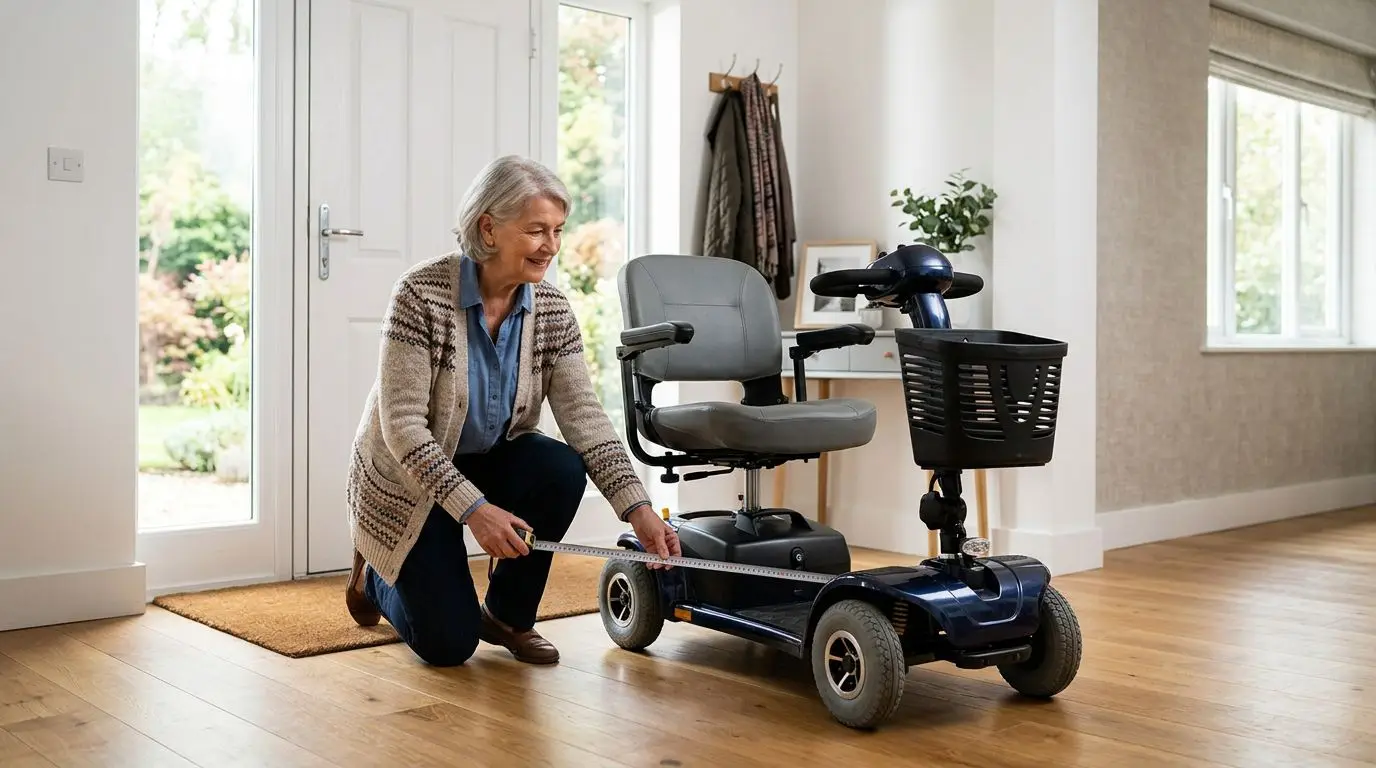
How to Choose a Mobility Scooter: A Practical Buying Guide for Seniors and Adults
13 min read
New vs. Used Mobility Scooter Costs: Upfront Savings, Battery Risk, Repairs, and Long-Term Value
13 min read