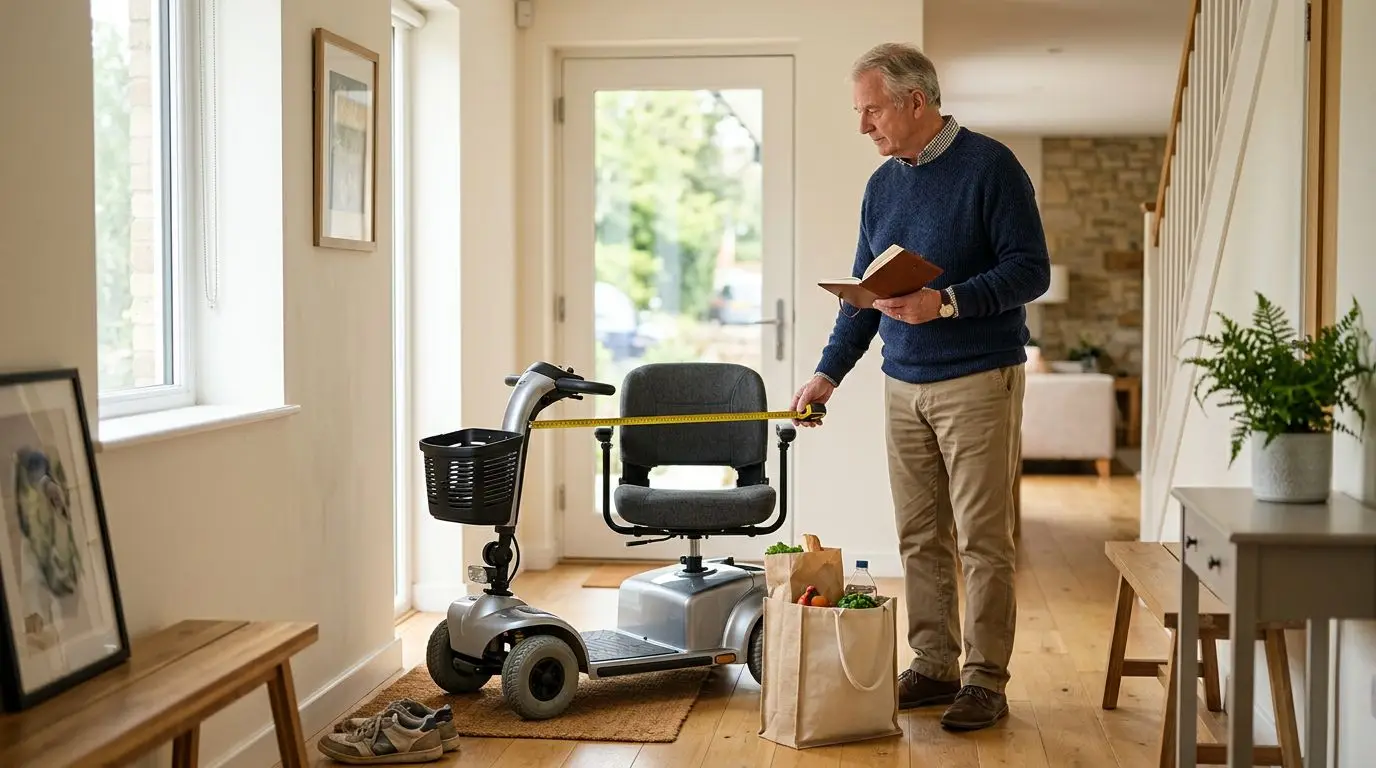
Buying a mobility scooter near you is often the better choice when you need a test ride, personalized fitting, in-home setup, or local service after the sale. Buying online can work well if you already know the scooter type, measurements, and support plan you need. The safest choice is the one that lets you confirm fit, delivery, service, and return terms before you pay.
A mobility scooter is not like ordering a small household item. Seat height, turning radius, battery range, ramp access, and repair support can determine whether the scooter fits your daily life. This guide compares nearby dealers and online sellers so you can shop with a clear checklist instead of guessing.
Local vs. online buying: a 6-point quick comparison
Most shoppers are really weighing 6 areas: test rides and product fit, delivery and setup, repair help, return protection, and total cost. A nearby dealer may cost more upfront, but it may also include hands-on service that is hard to get from a box left at your door. An online seller may offer a wider selection and convenient shopping, but you need to verify the details in writing.
| Buying factor | Nearby dealer | Online seller |
|---|---|---|
| Test ride | Often possible in a showroom or by appointment | Usually not available before purchase |
| Fit and measurements | Staff may help check seat, controls, and transport needs | You compare specs yourself using measurements |
| Delivery | May include local delivery and basic setup | Often curbside, threshold, or upgraded in-home delivery |
| Assembly | May arrive assembled and adjusted | May require attaching seat, battery, basket, or tiller |
| Service | Local repairs may be easier to schedule | Support may be by phone, email, parts shipment, or third-party technician |
| Returns | Policies vary; ask before purchase | Policies vary; shipping and restocking fees can matter |
The right answer depends on your needs. A person who plans to ride mainly in a single-level home faces a different buying decision than someone who needs to load a scooter into a vehicle twice a week.
Who it is best for: local dealer within 25 miles vs. online seller
A nearby dealer is often best if you live within about 25 miles of a store or service provider and want in-person help. This can be especially useful for first-time buyers, shoppers with limited hand strength, anyone unsure about seat size or steering style, and households that need the scooter delivered fully assembled. If you use a walker, cane, or oxygen equipment, local staff may also help you think through practical storage and transfer questions without making medical claims.
Local buying is also helpful when the scooter will be used in tight indoor spaces. A few inches can make the difference between easy turns and daily frustration. If your hallway is 36 inches wide and the scooter needs a large turning area, a test ride can show that quickly.
Online buying may be best if you already know the class of scooter you want, have measured your home and vehicle, and feel comfortable comparing specifications. It can also work well for replacement buyers who have owned a similar scooter before. If you shop online, do not rely on photos alone. Read the listed weight capacity, scooter weight, seat width, turning radius, battery range, tire type, and delivery method.
Use this simple rule: buy locally when uncertainty is high; buy online only when your measurements and support plan are clear.
Test rides: what to check in the first 15 minutes
A 15-minute test ride can teach you more than an hour of reading specifications. You are not trying to see how fast the scooter can go. You are checking whether it feels safe, comfortable, and manageable at normal walking-speed travel.
- Getting on and off: Can you transfer without twisting awkwardly? Does the seat swivel if you need that feature?
- Seat fit: Do your feet rest comfortably? Is the seat too narrow, too deep, or too high?
- Controls: Can you use the throttle, horn, speed dial, and key without strain?
- Turning: Try a slow 180-degree turn. Does the scooter feel stable and predictable?
- Stopping: Release the throttle and feel how the scooter slows. It should not surprise you.
- Visibility: Check whether you can see ahead clearly over the tiller and basket.
- Noise and vibration: Listen for rattles and feel how the ride handles small floor changes.
If you are at a store, ask whether you can test more than 1 type: travel scooter, full-size scooter, and heavy-duty scooter if appropriate. The goal is not to choose the biggest scooter. It is to choose the scooter that fits your environment.
How to measure before you buy: doors, ramps, turning space, and vehicle fit
Measure at least 5 areas before you buy: your narrowest doorway, hallway width, turning area, storage space, and vehicle cargo area if you plan to transport the scooter. Write the numbers down. Do not estimate from memory.
Start with doorways. Many interior doors are about 28 to 32 inches wide, while exterior doors are often around 36 inches wide. Actual usable width can be smaller because of trim, hinges, rugs, baskets, and door swing. Measure the clear opening with the door fully open.
Next, measure turning areas. If a scooter lists a turning radius, remember that real-life turning also depends on your comfort, speed, walls, furniture, and foot position. A compact travel scooter may handle tighter turns better than a larger full-size scooter, but it may have less legroom or a smaller battery.
If you use ramps, check slope and width. A scooter that feels stable on a flat showroom floor may feel different on a ramp. Never assume a scooter is safe on a steep ramp just because it has enough power. Follow the scooter manual and ramp guidance, and ask the seller how the specific scooter type should be used on inclines.
For vehicle transport, measure the cargo opening height, cargo floor length, and lifting height. Also check the scooter’s heaviest removable piece if it disassembles. A scooter that breaks into 4 or 5 pieces may still have one piece that is too heavy for the person doing the lifting.
| Measurement | Why it matters | What to write down |
|---|---|---|
| Narrowest doorway | Confirms indoor access | Clear width in inches |
| Hallway and turning area | Helps prevent tight daily maneuvering | Width and open floor area |
| Ramp width and slope | Affects stability and safety | Width, length, and rise if known |
| Storage spot | Needed for charging and parking | Length, width, outlet location |
| Vehicle cargo area | Important for travel scooters | Opening height, depth, and lifting height |
Delivery and setup: 3 common options to compare
Delivery terms matter because a mobility scooter can be large, heavy, and awkward to unpack. Some scooters arrive on a pallet or in a large carton. Others may be delivered by a local provider who removes packaging, attaches parts, checks the battery connection, and shows you the basics.
| Delivery option | What it usually means | Best for |
|---|---|---|
| Curbside delivery | The scooter is delivered to the curb, driveway, or building entrance | Homes with someone able to move and unpack a large shipment |
| Threshold delivery | The carton is brought just inside the first accessible door | Shoppers who can handle setup but need help getting it indoors |
| In-home or white-glove setup | The scooter may be unpacked, assembled, inspected, and packaging removed | First-time buyers, seniors living alone, or anyone who cannot manage tools or heavy boxes |
Ask 3 delivery questions before you pay. Will the driver bring it inside? Who removes the packaging? What happens if the scooter arrives damaged? If the seller says setup is included, ask what setup means. It may mean attaching a seat and charging the battery, or it may include a basic user demonstration.
If you live in an apartment, ask about stairs, elevators, hallway access, and appointment windows. A large carton may not fit through a tight elevator vestibule. If your building requires a certificate of insurance for deliveries, mention that before ordering.
Service and repairs: ask these 8 questions before paying
After-sale support is one of the biggest differences between local and online buying. Mobility scooters use batteries, chargers, tires, brakes, wiring, switches, seats, and controllers. Even with careful use, parts can wear. Many rechargeable scooter batteries last a limited number of years depending on chemistry, charging habits, storage, terrain, and use, so know where replacement help will come from.
- Who handles warranty questions: the seller, a distributor, or a service company?
- Is there a local technician within a reasonable driving distance, such as 30 to 50 miles?
- Can service be done at home, or must the scooter be brought to a shop?
- What is the typical appointment wait time?
- Are batteries, chargers, tires, and common wear parts easy to order?
- Who pays freight if a major part must be shipped?
- Does the seller provide phone support for troubleshooting?
- Will repairs be available after the written warranty ends?
Local dealers often have an advantage here because they may provide in-house repair or know local technicians. Online sellers can still be reliable, but you need details. A promise to provide support is less useful than a written explanation of who will come, what is covered, and what costs extra.
Keep your receipt, serial number, charger information, and warranty paperwork in one folder. Take a photo of the scooter label when it arrives. If you ever need parts or service, those details can save days of back-and-forth.
Return policies and trial periods: 7 details that protect you
Return rules vary widely, and mobility scooters are not always simple to send back. Some sellers offer a short return window, often measured in days rather than months. Others may restrict returns once the scooter has been used outdoors, damaged, modified, or removed from its original packaging.
Before buying, check these 7 return details in writing:
- Return window: How many calendar days do you have to start the return?
- Condition rules: Can the scooter be test ridden, or must it be unused?
- Packaging: Must you keep the original box, pallet, or foam inserts?
- Return shipping: Who pays, and how is pickup arranged?
- Restocking fee: Is there a percentage or flat fee?
- Damage inspection: Who decides whether damage occurred in delivery or use?
- Refund timing: When is money returned after pickup or inspection?
This matters especially with online purchases. A return may require freight shipping, not a standard parcel label. If you cannot lift or repack the scooter, a return that looks easy on paper may be difficult in real life.
For local purchases, ask whether the store allows a home trial, exchange, or restocking arrangement. Some stores may be more flexible before a scooter is used outside. Others may treat all mobility equipment sales as final once delivered. The key is not whether the policy sounds friendly; it is whether you understand the written terms.
Total cost: compare more than 1 sale price
The lowest listed price is not always the lowest total cost. Compare the full purchase picture across at least 6 items: scooter price, delivery, setup, accessories, service access, and possible return costs. You do not need a fancy spreadsheet. A simple two-column list is enough.
| Cost item | Why to compare it |
|---|---|
| Base scooter price | The advertised number may not include delivery or setup |
| Delivery method | Curbside may be cheaper but less practical |
| Setup help | In-home assembly can be valuable for first-time users |
| Needed accessories | Examples include cup holder, rear basket, flag, cover, or extra charger if appropriate |
| Service access | Local repair availability may reduce downtime |
| Return costs | Freight return and restocking fees can change the real risk |
Also consider battery replacement and tire type over time. Solid tires may reduce flat concerns but can ride firmer. Air-filled tires may feel smoother on some surfaces but can require air checks and occasional repair. Larger batteries may offer more range, but they can add weight and may be harder to handle if removable.
Insurance coverage and health benefit programs vary by situation and plan. If you are hoping for reimbursement, ask the payer directly before purchase and get documentation requirements in writing. Do not assume a seller’s general statement applies to your case.
A practical 48-hour shopping plan
You can make a confident decision in 48 hours if you slow down and gather the right facts. This plan works whether you start with a search for mobility scooters near me or browse online from home.
Day 1: measure and list your use case
Measure your doorway, hallway, storage spot, ramp if any, and vehicle cargo area. Then write 3 real trips you want the scooter to handle. Examples might include getting from bedroom to kitchen, visiting a nearby mailbox, or moving through a grocery store aisle. Real trips are more useful than vague wishes.
Day 1: call 2 local dealers
Ask whether they offer test rides, delivery, in-home setup, service, and written return terms. Tell them your measurements. If they avoid basic questions or pressure you to buy before measuring, keep shopping.
Day 2: compare 2 online sellers
Check the same details online: specifications, delivery level, assembly requirements, service process, and return policy. Save or print the pages. If a detail is unclear, contact customer support and ask for a written answer.
Day 2: decide by risk, not just price
If local and online choices are close, choose the path that reduces your biggest risk. If your biggest risk is fit, prioritize a test ride. If it is setup, prioritize in-home delivery. If it is future repairs, prioritize local service. If you already know exactly what works and can manage delivery, online may be reasonable.
FAQ: 5 common questions before you buy
Is it better to buy a mobility scooter locally or online?
It is better to buy locally if you need a test ride, fitting help, delivery setup, or nearby repairs. Buying online can be a good choice if you know the exact type and measurements you need and the seller clearly explains delivery, service, and returns.
Can I test ride a mobility scooter before buying?
Many local dealers allow test rides in a showroom or by appointment. Online sellers usually cannot provide a test ride before purchase, so measurements, specifications, and return terms become more important.
What should I ask about delivery?
Ask whether delivery is curbside, threshold, or in-home setup. Also ask who removes packaging, whether an appointment is required, and what to do if the scooter arrives damaged.
Are mobility scooters hard to assemble?
Some scooters need only basic setup, such as attaching the seat, basket, battery, or tiller parts. Others are heavier and more awkward. If you cannot lift, bend, or use tools comfortably, consider in-home setup or local delivery.
What is the biggest mistake shoppers make?
The biggest mistake is buying before measuring. Check doorways, turning space, storage, ramps, and vehicle fit before you compare prices.
Frequently asked questions
Is it better to buy a mobility scooter locally or online? +
Buy locally if you need a test ride, fitting help, in-home setup, or nearby service. Buying online can work well if you already know the scooter type and measurements you need and the seller clearly explains delivery, service, and return policies.
Can I test ride a mobility scooter before buying? +
Many local dealers offer test rides in a showroom or by appointment. Online sellers usually do not offer pre-purchase test rides, so you need to rely more heavily on measurements, specifications, reviews of policies, and written return terms.
What delivery option should I choose? +
Choose curbside only if someone can move and unpack a large shipment. Threshold delivery may help get the box indoors, while in-home or white-glove setup is often better for first-time buyers or anyone who cannot lift parts or manage assembly.
What should I measure before buying a mobility scooter? +
Measure your narrowest doorway, hallway width, turning space, storage area, ramp if used, and vehicle cargo area if you plan to transport the scooter. Also compare these measurements with the scooter width, length, turning radius, and heaviest removable piece.
Why do return policies matter so much with mobility scooters? +
Mobility scooters can be large freight items, so returns may involve special pickup, repacking, shipping charges, or restocking fees. Always check the return window, condition rules, packaging requirements, and who pays return freight before ordering.
Related guides

How to Compare Mobility Scooter Prices Near You Without Overpaying
13 min read
Used vs. New Mobility Scooters: Cost Savings, Risks, and What to Check Before You Buy
13 min read
How to Choose a Mobility Scooter: A Practical Buying Guide for Seniors and Adults
13 min read