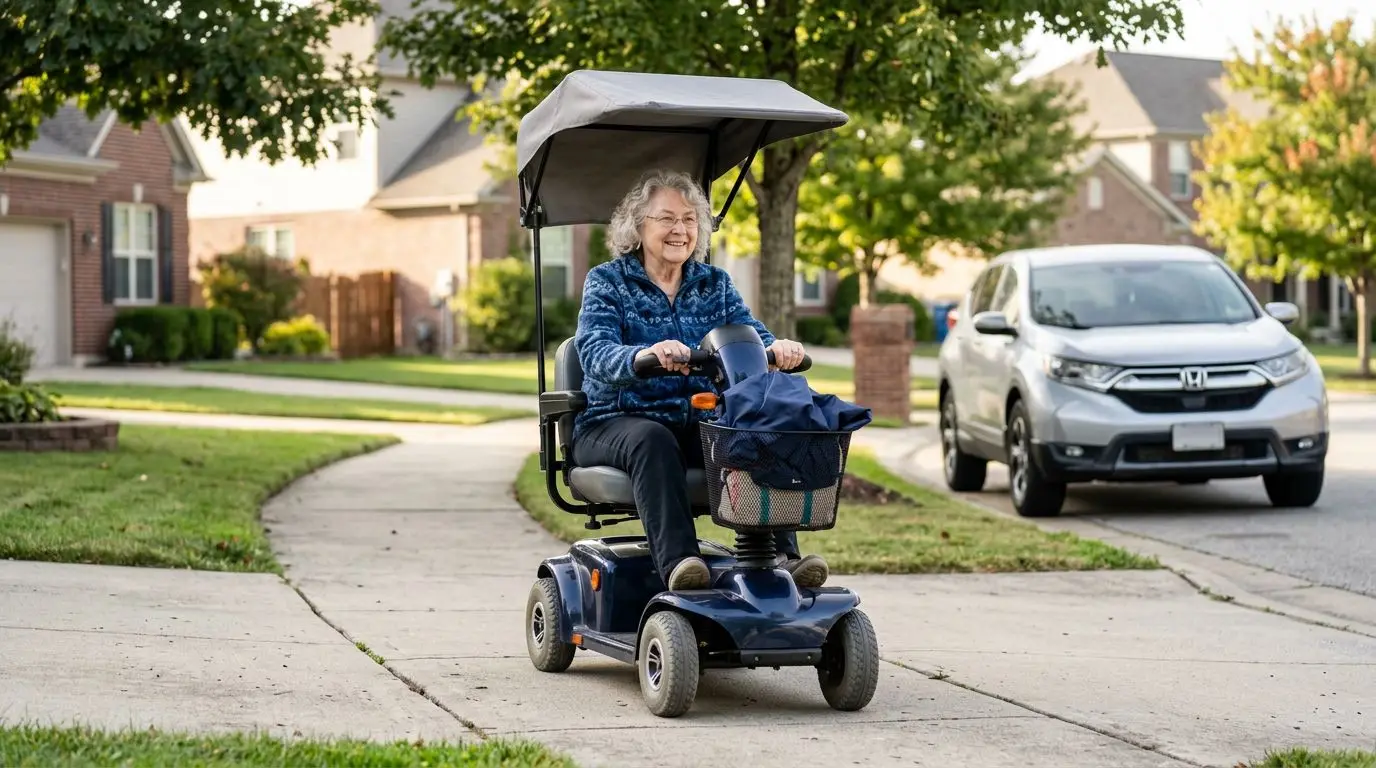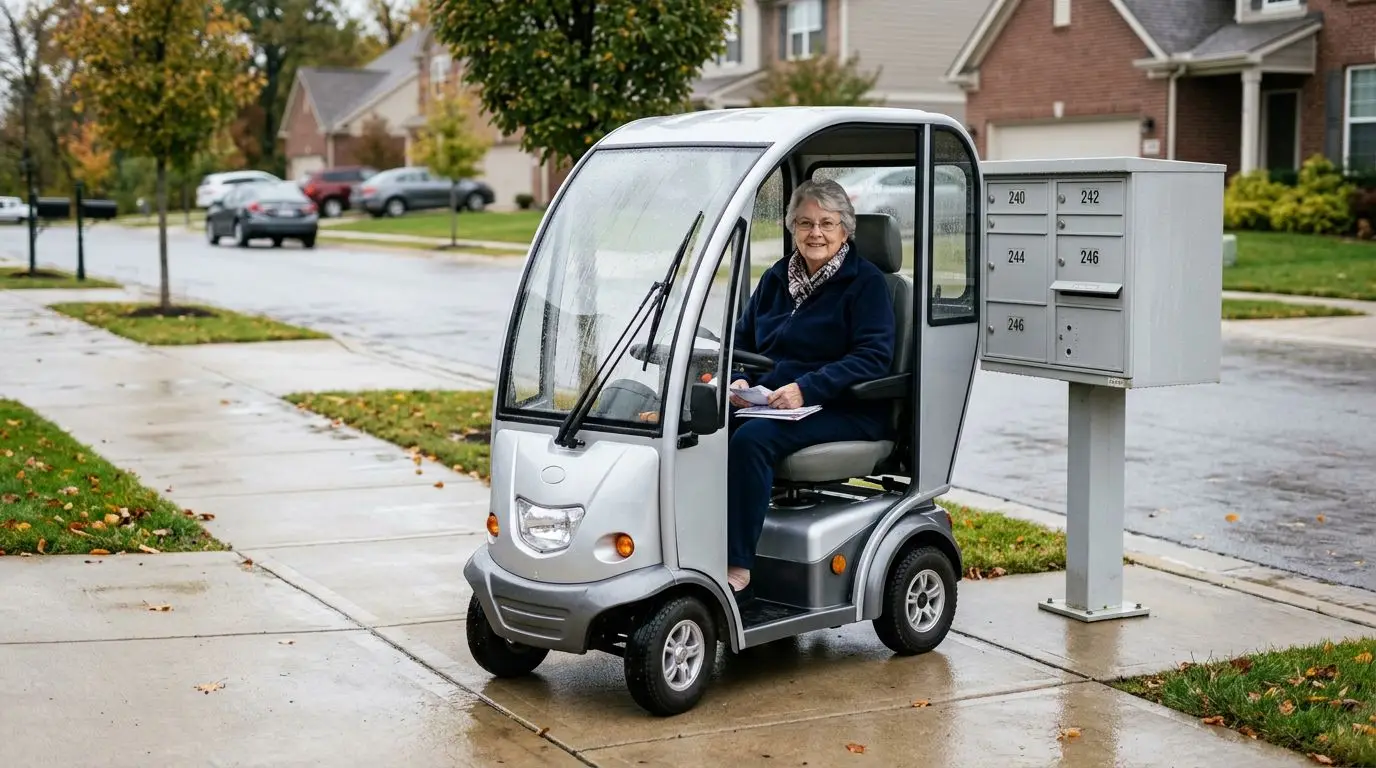
Enclosed mobility scooters are best for people who take regular local trips and need more protection from rain, wind, sun, or cold than a standard open scooter offers. They can improve comfort and visibility, but they are usually wider, heavier, and harder to transport, so they are not the right choice for every home, sidewalk, or vehicle.
Think of an enclosed scooter as a mobility scooter with a weather shell, canopy, or cabin—not as a small car. Before choosing one, check door widths, storage space, turning room, local rules, and how you plan to charge and maintain it.
What an enclosed mobility scooter is—and what it is not
An enclosed mobility scooter is a powered mobility scooter with some level of covering around the rider. The enclosure may be a simple overhead canopy, a soft-sided rain cover, or a more complete cabin with doors, windshield panels, lights, mirrors, and ventilation. Most still operate like scooters, with a seat, tiller or steering controls, battery power, and a limited travel range.
The key difference is protection. A standard open scooter leaves the rider exposed on all sides. An enclosed design blocks at least some wind and rain, while a full cabin may shield the rider from spray, bright sun, falling leaves, and cold air. That added structure affects nearly everything else: size, weight, turning radius, storage, visibility, and transport options.
Typical open mobility scooters may be around 21 to 27 inches wide, depending on whether they are compact, travel, or full-size units. Enclosed versions can be closer to 30 to 40 inches wide, and some cabin-style units are even larger. That extra 5 to 15 inches can determine whether the scooter fits through a gate, into a shed, or along a narrow sidewalk.
It is also important to be realistic about what an enclosure can and cannot do. It may help keep you drier, warmer, and more comfortable, but it does not make the scooter crashworthy like a passenger vehicle. It also does not remove the need for safe speed, smooth braking, good lighting, and careful route planning.
Key benefits: weather protection, visibility, and comfort
The main appeal is weather protection. A roof and windshield can make a 10-minute ride to the mailbox, pharmacy, clubhouse, or neighborhood store more practical when conditions are breezy or damp. A soft enclosure may reduce light rain and wind exposure, while a hard cabin can provide steadier coverage from several directions.
Comfort matters. Many riders avoid trips not because the distance is too far, but because the conditions are unpleasant. Direct sun, cold wind, or drizzle can turn a short errand into a tiring experience. An enclosed scooter can make routine trips feel more predictable, especially for riders who already know they will travel the same 1 to 3 miles several times a week.
Visibility is another benefit when the design includes useful lighting and reflective surfaces. A practical enclosed scooter should have front lighting, rear lighting, brake lights or rear reflectors, turn indicators where appropriate, and mirrors. Even 2 well-positioned mirrors can reduce how much twisting or shoulder-checking a rider needs to do, though mirrors never replace looking carefully before changing direction.
Some riders also appreciate feeling more separated from traffic noise, wind gusts, insects, and splashing water. That can be especially helpful on paved community paths, retirement campuses, large apartment properties, and rural driveways where open scooters may feel exposed. The enclosure can also help keep a lap blanket, grocery bag, or oxygen holder drier, as long as those items are secured and do not block controls.
There is a privacy benefit, too. A cabin or canopy can feel less exposed in public spaces. That does not mean the scooter is invisible or protected like a vehicle, but it can make daily mobility feel more dignified and less dependent on the weather.
Drawbacks: size, turning radius, storage, and transport limits
The biggest drawback is size. A scooter that is 34 inches wide may fit easily in a garage but struggle with a 32-inch residential doorway once the door, hinges, trim, and turning angle are considered. Many interior doors are roughly 28 to 32 inches wide, and even exterior doors that measure 36 inches on paper may have less usable clearance.
Turning radius is the next concern. Compact open scooters may turn in a fairly tight area, but enclosed and full-size scooters often need much more room. A turning radius in the 60- to 80-inch range is not unusual for larger mobility scooters, and a cabin can make tight indoor turns feel even less forgiving. Hallways, small patios, elevator lobbies, and U-shaped ramps deserve special attention.
Weight also changes the ownership experience. Enclosures, larger frames, bigger batteries, and reinforced components add pounds. Many enclosed scooters are not designed to be lifted into a trunk, and some may be too heavy for common vehicle lifts once the scooter, batteries, and accessories are counted. Always check the combined weight, not just the base frame.
Storage can be more complicated than it first appears. A covered scooter still needs a safe, dry place to park and charge. Leaving any electric mobility device outdoors day after day can shorten the life of electronics, upholstery, tires, and batteries. If the scooter is about 5 feet long and 3 feet wide, you will want more than that exact footprint because you still need room to open doors, plug in the charger, and walk around it safely.
Wind is another practical drawback. A taller enclosure catches more air than an open scooter. On a flat, calm path this may not matter much, but gusts around buildings, parking lots, bridges, or open fields can make a covered scooter feel less stable. Riders should slow down in wind and avoid using side curtains or panels in a way that turns the scooter into a sail.
Types of enclosed scooter setups compared
Not all enclosed mobility scooters are built the same. The right setup depends on how much weather protection you need and how much size you can realistically manage. A rider who only needs shade for 15-minute daylight trips may not need a full cabin, while someone who travels in light rain several days a week may need more coverage.
| Enclosure type | Typical protection | Best use | Main trade-off |
|---|---|---|---|
| Canopy or roof only | Overhead sun and light rain protection | Warm climates, short trips under 2 miles | Little side protection from wind or spray |
| Soft-sided weather cover | Roof plus flexible side panels | Seasonal rain or cool-weather use | Panels may reduce visibility and flap in wind |
| Hard windshield with canopy | Better front wind and rain blocking | Neighborhood paths and paved community routes | Still exposed at the sides or rear |
| Full cabin-style enclosure | Most complete protection from several directions | Frequent local errands and outdoor storage-adjacent use | Largest footprint, heaviest weight, widest turning space |
The more complete the enclosure, the more carefully you should examine ventilation, windshield clarity, wiper function, and emergency exit access. A cabin that feels comfortable in 45-degree weather may feel stuffy at 85 degrees if it does not vent well. Clear panels should not distort your view of curbs, pedestrians, pets, or driveway edges.
Who enclosed mobility scooters are best for
Enclosed scooters are usually best for riders who use a scooter outdoors often and have predictable local routes. Good examples include trips around a senior living campus, visits to a nearby mailbox cluster, travel between buildings on a large property, or errands within a small neighborhood. If most rides are 10 to 30 minutes and weather often affects your plans, an enclosure may be worth considering.
They can also make sense for riders who have secure ground-level storage. A garage, carport, wide shed, or covered charging space can make ownership much easier. If you live in an apartment, measure the elevator, hallway turns, unit entry, and parking area before assuming the scooter will fit. A 36-inch-wide scooter may be too awkward for a narrow elevator even if the elevator door technically opens wide enough.
Enclosed scooters are less ideal for people who need frequent vehicle transport. If you expect to drive to medical appointments, parks, or family visits and take the scooter along, a folding or travel scooter may be more practical. Many enclosed scooters do not disassemble into small liftable pieces, and their height can conflict with van, SUV, or hitch-lift limits.
They are also not the best choice for tight indoor use. Grocery stores, clinics, older homes, and small restaurants can be difficult with a wide enclosed scooter. If your primary need is indoor maneuverability through 30-inch doorways and tight aisles, a smaller open scooter or powered wheelchair may be easier to manage.
- Best fit: outdoor-focused riders with 1 to 3 mile local routes, wide storage, and a need for weather protection.
- Possible fit: campus, resort, or community residents who ride on paved paths and can charge at home.
- Poor fit: riders who need trunk transport, tight indoor turning, or frequent public transit use.
How to choose and measure before you buy
Start with measurements, not features. A comfortable seat, bright lights, and full enclosure will not help if the scooter cannot leave your home or fit where you need to park it. Use a tape measure and write down at least 8 numbers before comparing scooter types.
- Door clearance: Measure the narrowest usable opening, not just the labeled door size. Check exterior doors, gates, storage doors, and elevator doors.
- Turning space: Measure hallways, landings, patios, and the area where you would turn around. Compare this with the scooter’s listed turning radius.
- Storage footprint: Add walking and charging room around the scooter. A 60-inch-long scooter should not be parked in a 60-inch-deep space with no extra clearance.
- Ramp width and slope: Measure ramp width and note steepness. A common accessible ramp guideline is a 1:12 slope, which is about 1 inch of rise for every 12 inches of run.
- Rider fit: Check seat width, legroom, tiller reach, headroom, and whether winter clothing changes your comfort.
- Weight capacity: Include the rider plus everyday items such as groceries, oxygen equipment, bags, or a cane holder.
- Charging location: Confirm that a standard outlet is reachable without stretching a cord across a walkway.
- Route hazards: Note curb cuts, driveway slopes, broken pavement, gravel, puddling areas, and blind corners.
Test visibility if possible. Sit at rider height and check whether the windshield frame, roof supports, mirrors, or side panels block your view. You need to see low obstacles, not just objects at eye level. Curbs, parking blocks, raised seams, and small pets are all below the sightline of many cabin frames.
Comfort should be evaluated over time. A 5-minute sit can reveal seat height and reach, but it may not show whether the cabin feels cramped after 30 minutes. If a test ride is available, try a slow turn, a stop on a mild incline, and a route with the kind of pavement you use most.
Practical US use: sidewalks, roads, transit, and insurance
Rules for mobility scooters vary across the United States by state, city, facility, and roadway type. In many places, mobility scooters are treated differently from bicycles, golf carts, low-speed vehicles, and cars. That distinction matters because an enclosed scooter may look more vehicle-like than it legally is.
Sidewalk use depends on local rules and safe operation. Even if scooters are permitted, a wide cabin-style unit may not be appropriate on crowded sidewalks or narrow curb ramps. Many accessible design standards use a 36-inch minimum clear width for accessible routes, but real sidewalks may be narrowed by signs, planters, snow, parked cars, or uneven pavement.
Public transit is another important limit. Many bus lifts and securement areas are designed around a 30-by-48-inch mobility device footprint and a combined weight limit that may be around 600 pounds, though policies vary by transit agency. Some enclosed scooters exceed those dimensions or are hard to secure safely. Call your local transit provider before relying on bus, rail, or paratransit access.
Road use should be approached carefully. An enclosed scooter may have lights and mirrors, but that does not mean it belongs in traffic lanes with cars. Some communities allow certain mobility devices on low-speed local streets when sidewalks are unavailable; others do not. Visibility to drivers, safe crossing behavior, and speed differences are serious concerns.
Insurance and liability are worth asking about, especially if you ride in shared areas. Homeowners, renters, or umbrella policies may handle mobility equipment differently. If you store the scooter in a shared garage or use it on private community paths, ask the property manager about charging rules, parking locations, and any fire-safety requirements for batteries.
Feature checklist: safety, batteries, and daily convenience
Features should support real use, not just look impressive. For an enclosed scooter, prioritize control, visibility, weather management, and easy maintenance. A single missing feature, such as poor ventilation or weak lighting, can matter more than an extra accessory.
| Feature | Why it matters | What to check |
|---|---|---|
| Windshield and wiper | Maintains forward visibility in rain or mist | Clear view, no distortion, replaceable wiper blade |
| Lights and reflectors | Helps others see you at dawn, dusk, and in shade | Front light, rear light, side reflectors, brake indication if available |
| Mirrors | Reduces blind spots | At least 1 mirror, preferably 2, adjustable from the seat |
| Ventilation | Prevents heat buildup and window fogging | Vents, opening panels, fan or defogging method where applicable |
| Battery access | Simplifies charging and service | Reachable port, clear charge indicator, no cord trip hazard |
| Braking and speed control | Supports safe stops on paths and ramps | Smooth throttle response, predictable braking, low-speed control |
Battery performance is affected by temperature. Cold weather can reduce range, and some battery types have specific charging limits. For example, charging certain lithium batteries below 32 degrees Fahrenheit can be unsafe unless the battery system includes low-temperature protection. Read the owner’s manual and store or charge the scooter within the stated temperature range.
Tires matter, too. Pneumatic tires may ride more comfortably over cracks and seams, while solid tires reduce flat-tire worries. For a heavier enclosed scooter, tire condition is part of stability. Check tire pressure if the tires require air, and inspect tread and sidewalls at least monthly if the scooter is used several times a week.
Do not overlook emergency handling. The rider should be able to exit the enclosure without help, reach the key or power switch quickly, and understand how to disengage the drive system only when safe. If a caregiver assists with transport or charging, they should know these steps as well.
FAQ: enclosed mobility scooters
Are enclosed mobility scooters legal on sidewalks?
It depends on local rules and the specific setting. Many mobility scooters are allowed where pedestrians travel, but a large enclosed scooter may be too wide or fast for crowded sidewalks. Check city rules, property policies, and transit guidelines before relying on a route.
Can an enclosed scooter be used in the rain?
Many are designed to handle light rain better than open scooters, but they are not waterproof vehicles. Avoid deep puddles, flooding, heavy storms, and high winds. Water can still affect brakes, controls, batteries, and visibility.
Will an enclosed scooter fit through a standard door?
Not always. Many residential doors are 30 to 36 inches wide, and the usable opening can be smaller. Since enclosed scooters may be 30 to 40 inches wide, measure the actual clearance before buying.
Can I transport an enclosed mobility scooter on a car lift?
Sometimes, but many enclosed scooters are too heavy, tall, or long for common lifts. You must compare the scooter’s total weight and dimensions with the lift, hitch rating, and vehicle limits. Do not estimate.
Is an enclosed scooter better than a regular scooter?
It is better for weather protection and outdoor comfort, but not automatically better overall. A regular open scooter is usually easier to maneuver indoors, store, and transport. The best choice depends on your routes, space, and support needs.
Frequently asked questions
Are enclosed mobility scooters legal on sidewalks? +
Sidewalk rules vary by city, property, and transit setting. Many mobility scooters are allowed in pedestrian areas, but larger enclosed scooters may be too wide for crowded or narrow sidewalks, so check local rules before relying on a route.
Can an enclosed mobility scooter be used in the rain? +
Many enclosed scooters handle light rain better than open scooters, but they are not waterproof vehicles. Avoid deep puddles, flooding, heavy storms, and high winds because water can affect controls, brakes, batteries, and visibility.
How wide are enclosed mobility scooters? +
Many enclosed scooters are roughly 30 to 40 inches wide, though designs vary. Measure actual doorways, gates, elevators, and storage areas before choosing one.
Can I take an enclosed mobility scooter on public transit? +
Possibly, but many transit systems have size and weight limits. Some bus lifts and securement areas are based around a 30-by-48-inch footprint and a combined weight limit that may be around 600 pounds, but every agency sets its own policy.
Who should consider an enclosed mobility scooter? +
They are best for people who ride outdoors often, have predictable local routes, need better weather protection, and have secure ground-level storage and charging space.
Related guides
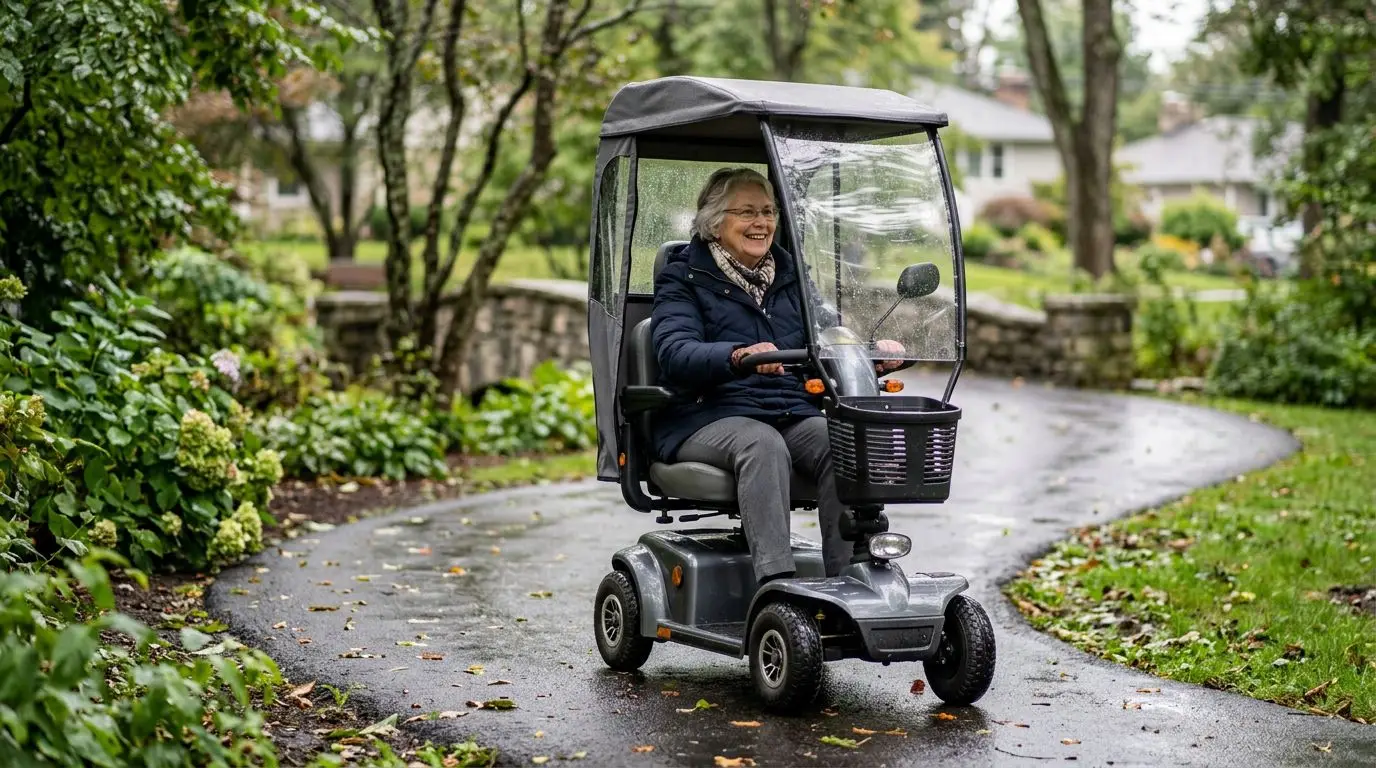
Enclosed Mobility Scooters and Canopy Scooters: Weather Protection, Comfort, and Trade-Offs
13 min read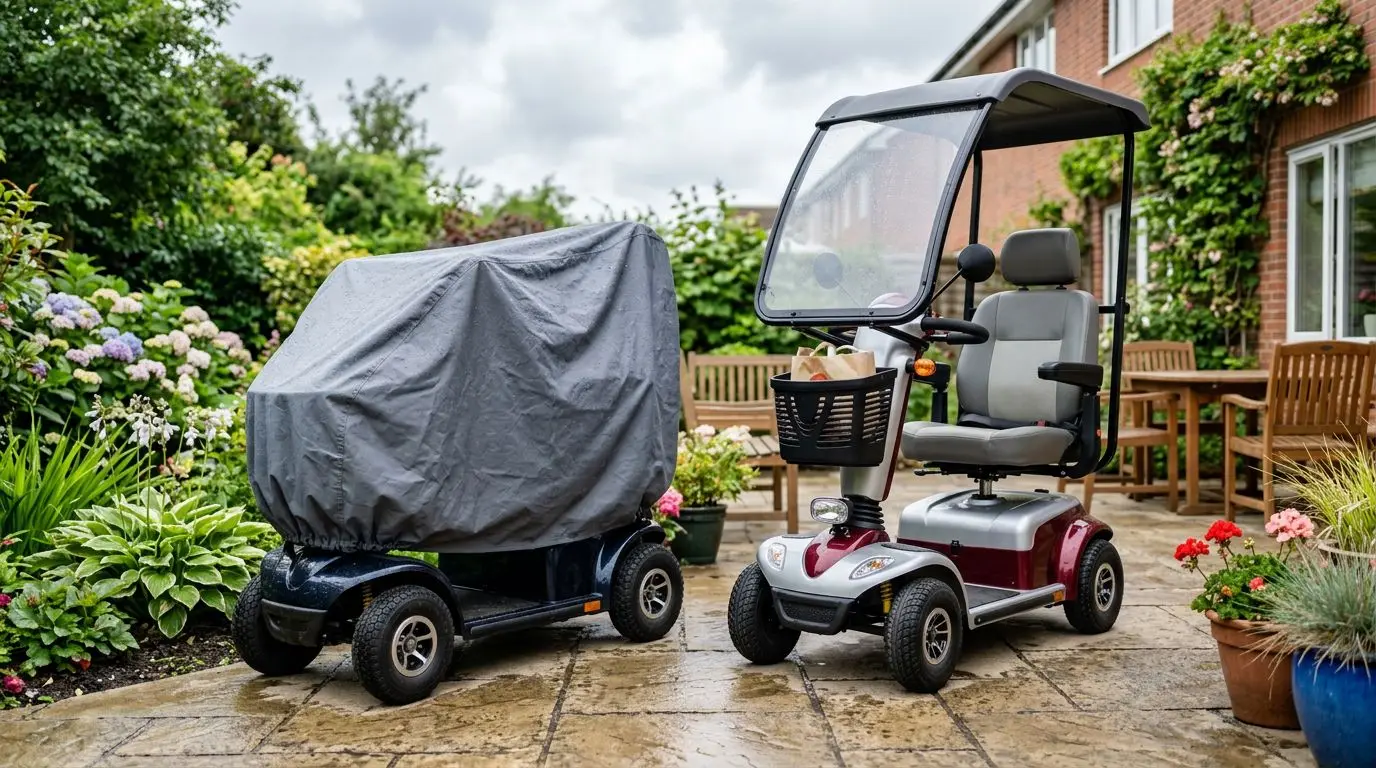
Mobility Scooter Covers, Canopies, and Weather Enclosures: What Protects the Scooter vs. the Rider?
13 min read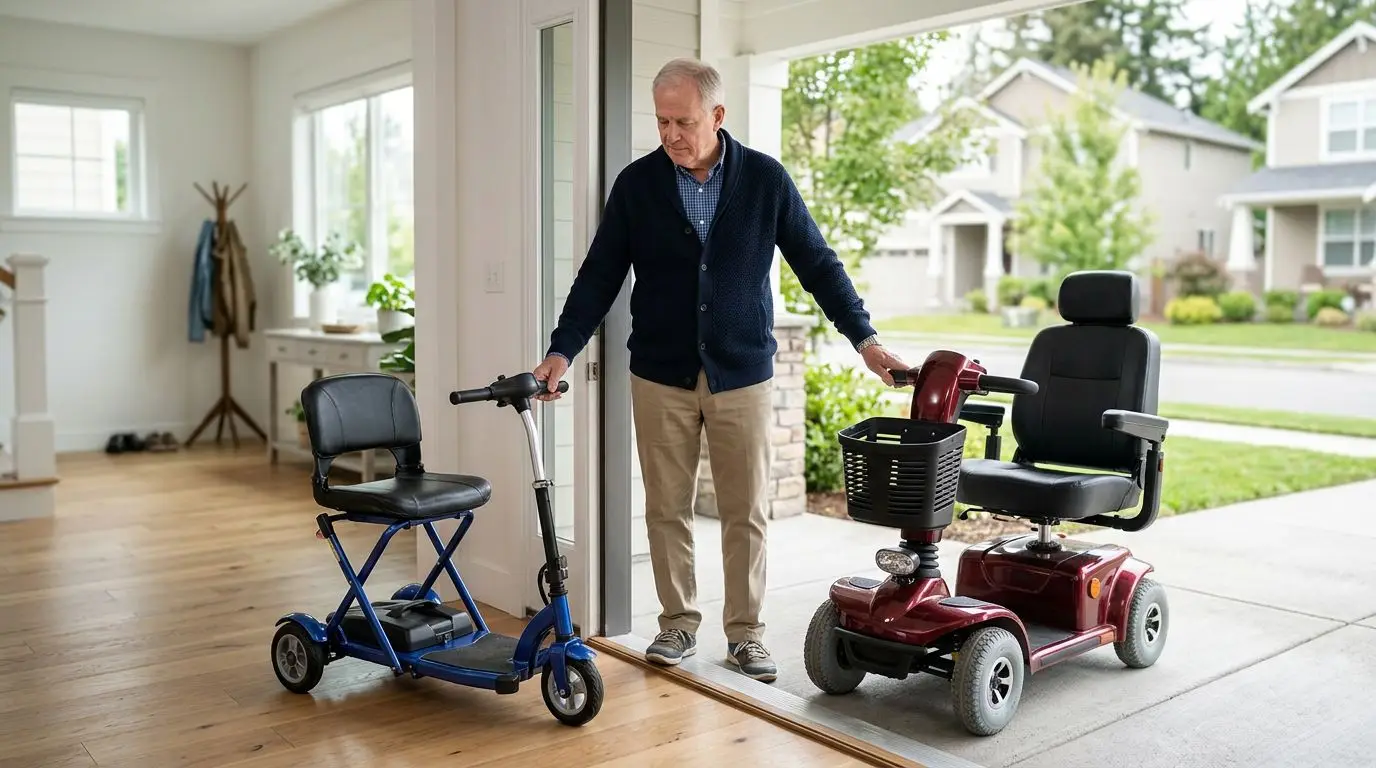
Indoor vs. Outdoor Mobility Scooters: How to Match the Scooter Type to Where You’ll Use It
14 min read