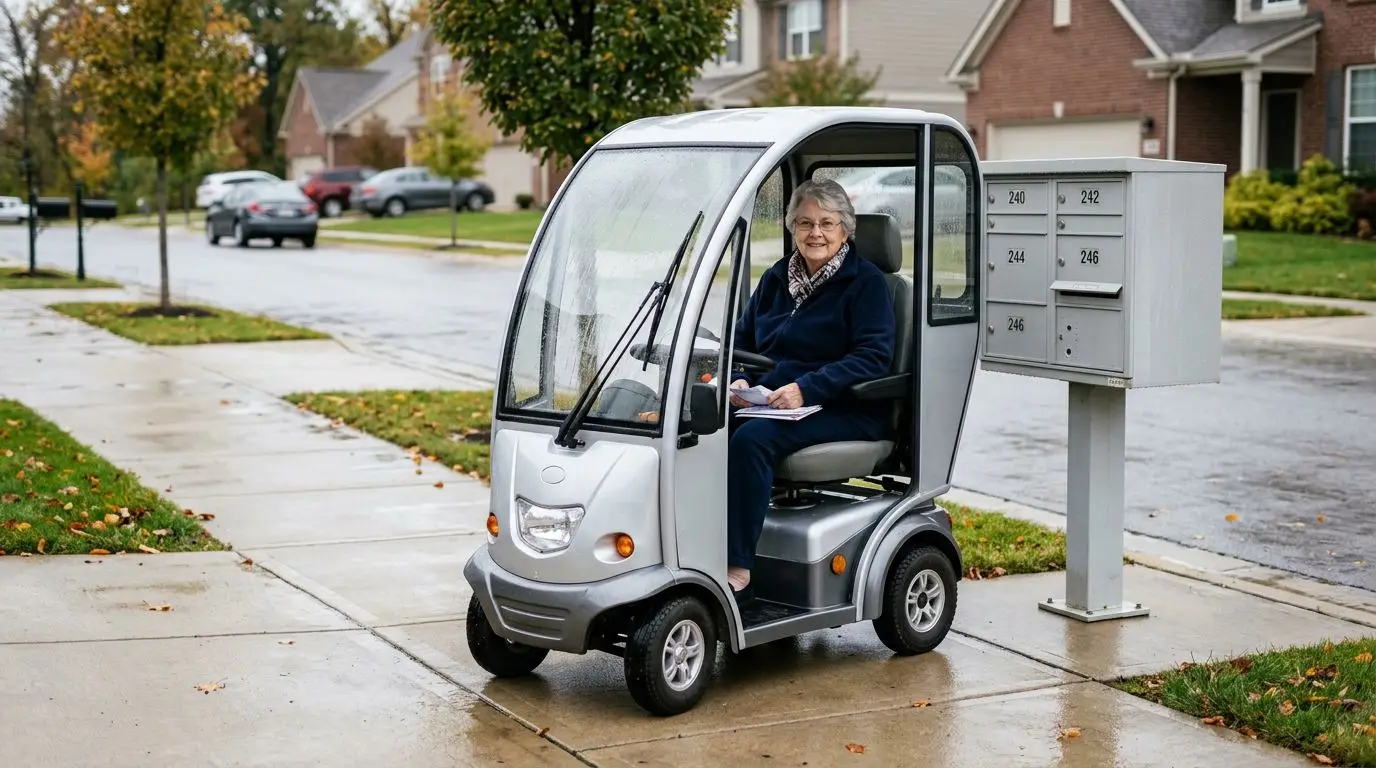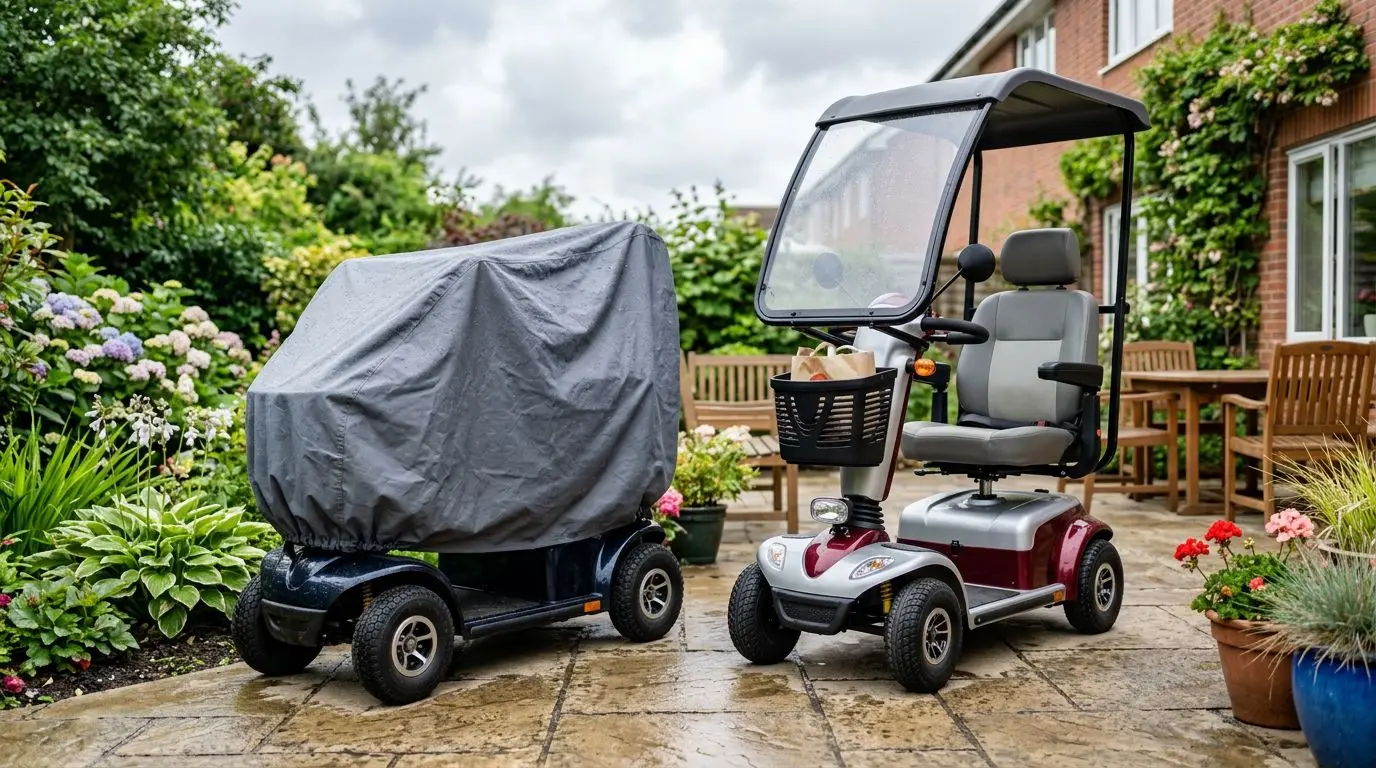
A mobility scooter storage cover protects the scooter while it is parked. A canopy or weather enclosure is meant to help shield the rider during use. Rain covers, tiller covers, and seat covers are usually smaller accessories for short-term weather protection, not replacements for a fully enclosed mobility scooter. The right choice depends on whether you need to protect the machine, the person, or both.
That distinction matters. A cover that looks waterproof can be unsafe if used while driving, and a canopy may keep rain off your shoulders without protecting the scooter overnight. Use the guide below to compare each option by purpose, fit, safety, and everyday practicality.
Quick comparison: 4 common scooter cover categories
Most mobility scooter weather accessories fall into 4 broad groups: storage covers, rain or dust covers, canopies, and partial weather enclosures. They are often described with similar words, but they solve different problems. A parked scooter may need full-length coverage from bumper to bumper, while a rider may only need overhead shade for a 20-minute trip to the mailbox, clinic, or grocery store.
| Accessory type | Primary purpose | Protects scooter? | Protects rider? | Used while driving? |
|---|---|---|---|---|
| Full storage cover | Covers scooter while parked | Yes, usually most of the scooter | No | No |
| Seat, tiller, or basket rain cover | Protects key areas from rain and dust | Partly | No, or very little | Some tiller covers may be used carefully; most storage pieces are parked-use only |
| Canopy | Overhead shade and light rain reduction | No, except small areas | Yes, mainly head and upper body | Often, if designed for riding and securely mounted |
| Partial enclosure | Side and front weather shielding | Some exposed areas | Yes, more than a canopy | Only if designed for riding and compatible with the scooter |
The key question is simple: will the accessory be used on a parked scooter or on a moving scooter? If it is not specifically designed for riding, do not drive with it attached. Loose fabric near wheels, controls, mirrors, or lights can create a hazard.
Storage covers: best for protecting a parked scooter for 8 hours or overnight
A storage cover is the closest thing to a raincoat for the scooter itself. It is usually a one-piece fabric cover that drapes over the seat, tiller, deck, armrests, and sometimes the wheels. Most are intended for parked use only, such as overnight storage, garage storage, apartment balcony parking, or keeping dust off a scooter between trips.
Storage covers help reduce exposure to rain, sun, dust, pollen, bird droppings, and leaves. They are especially useful when the scooter sits outside for more than a few hours at a time. Even when a scooter is weather-resistant, repeated soaking can be hard on upholstery, charging ports, plastic trim, switches, and metal fasteners. A cover adds a practical layer of protection.
Fit matters. A typical small travel scooter may be around 40 to 45 inches long, while a larger 4-wheel scooter can be 50 to 60 inches long or more. Widths often run from about 20 to 30 inches, depending on the scooter and armrest position. If the cover is too tight, it may tear at the mirrors, tiller, or seatback. If it is too loose, wind can lift it and expose the scooter.
Look for common parked-use features: elastic hems, buckle straps, reinforced seams, vent panels, and openings for charging access if the scooter is routinely charged while covered. Venting matters more than many shoppers expect. A fully sealed cover can trap moisture after a wet ride, which may contribute to mildew odors or condensation under the fabric.
A good routine is to let the scooter dry before covering it when possible. If you must cover it wet, remove the cover later and allow both scooter and cover to air out. That small habit can do more for long-term cleanliness than simply buying the thickest fabric available.
Rain covers and control covers: small protection for 1 key area at a time
Rain covers are more focused accessories. They may cover the seat, basket, tiller controls, joystick-style controls, or the whole top half of a scooter for short periods. They are useful when you need targeted protection instead of full storage coverage.
A tiller cover, for example, may help keep rain off the control area while the scooter is parked outside a store for 15 or 30 minutes. Some are made with a clear viewing panel so the user can still see the speed dial, battery indicator, and key area. Even then, the rider should make sure the cover does not interfere with throttle levers, horn buttons, lighting switches, or steering movement.
Seat covers are also practical. A wet seat can be uncomfortable and slippery, and it may take time to dry. A simple seat cover can protect the cushion while the scooter is parked, then be removed before the rider sits down. Some people keep one in the front basket or under-seat storage if available.
These smaller covers do not protect the entire scooter. Rain can still reach the motor housing, deck, tires, underside, armrest hardware, and battery compartment seams depending on scooter design. They are best viewed as convenience accessories, not all-weather storage solutions.
Use caution with anything that remains attached during a ride. If a cover bunches up around the tiller, blocks the display, hides the key, or changes how the throttle feels, it should not be used while moving. A dry control panel is helpful, but clear access to controls is more important.
Canopies: overhead rider coverage for sun and light rain, often 30 to 45 inches wide
A mobility scooter canopy is a roof-like accessory mounted above the rider. It is mainly for the person, not the scooter. Canopies can reduce direct sun, provide light rain coverage, and make short trips more comfortable when the weather is mild but not ideal.
Most canopies cover the rider’s head and upper body. They usually do not protect the hands, lower legs, feet, rear basket, motor area, or controls from wind-driven rain. If rain is falling straight down, a canopy may help quite a bit. If rain blows sideways at 10 to 20 mph, the rider and scooter can still get wet.
Mounting is the biggest buyer consideration. A canopy needs a stable connection to the scooter frame or seat area, depending on the design. The mounting system must not block seat rotation, armrest movement, battery access, folding parts, lights, reflectors, or the charging port. It also should not make the scooter too tall for common doorways, ramps, van lifts, or storage sheds.
Height is easy to overlook. A standard interior doorway is often about 80 inches high. If the scooter and canopy together approach that height, the rider may have trouble entering buildings, elevators, covered walkways, or accessible vans. Measure while seated, because the canopy must clear the rider’s head and any hat, hair, or helmet-style headwear they use.
Wind is another concern. A canopy increases the surface area of the scooter. That can make the scooter feel less stable in gusts, especially on open sidewalks, parking lots, curb cuts, and sloped driveways. Riders should slow down, avoid sudden turns, and remove or fold the canopy if conditions exceed what the accessory instructions allow.
Partial weather enclosures: more rider coverage, but not the same as a fully enclosed scooter
A partial weather enclosure adds side panels, a front panel, or a wraparound shell to a scooter. It is meant to shield the rider from rain, wind, and cooler air more than a simple canopy can. Many designs use clear vinyl-like windows so the rider can see ahead and to the sides.
These accessories can make a noticeable difference on short local trips, especially when temperatures drop by 10 to 20 degrees from a comfortable indoor setting. Still, a partial enclosure is not the same as a fully enclosed mobility scooter. It usually does not provide an integrated hard body, heating system, windshield wipers, automotive-style defrosting, sealed doors, or a crash-protective cabin.
Visibility is the first thing to check. Clear panels can wrinkle, fog, scratch, or collect raindrops. If the rider cannot clearly see pedestrians, curb edges, driveway aprons, pets, traffic movement, or a companion walking nearby, the enclosure is not safe to use in that condition. Side visibility matters just as much as front visibility.
Entry and exit also change. A rider may need to unzip a panel, lift a flap, or step around hanging material. That can be frustrating for someone with limited hand strength, balance concerns, or arthritis. A scooter accessory should not turn every stop into a 2-minute struggle.
Partial enclosures may also affect turning space. Extra material can brush against door frames, store displays, elevator walls, porch railings, or vehicle lifts. Before using one in public, practice in a safe, open area and confirm that the scooter still turns, reverses, and stops normally.
Who it’s best for: match the cover to 3 real-life situations
The best accessory depends less on the product name and more on the user’s routine. A person who stores a scooter in a carport has a different need than someone who rides 6 blocks to a community center in summer heat.
| Situation | Best-fit accessory | Why it fits | Watch-outs |
|---|---|---|---|
| Scooter parked outside overnight or all day | Full storage cover | Protects most of the scooter from rain, dust, sun, leaves, and pollen | Must fit snugly and allow moisture to escape |
| Short errands with unpredictable showers | Seat cover, basket cover, or tiller cover | Small, portable, and quick to put on during stops | Does not protect the whole scooter or rider |
| Sunny rides of 15 to 60 minutes | Canopy | Gives overhead shade and light rain reduction | Adds height and wind resistance |
| Cool, damp local trips | Partial weather enclosure | Offers more rider coverage from wind and rain | Can reduce visibility and complicate entry |
For many owners, the most practical setup is a combination: a full storage cover at home plus a small seat or control cover carried on the scooter. A canopy or enclosure is a bigger commitment because it changes how the scooter handles, stores, and fits through tight spaces.
People who ride only indoors usually do not need a canopy or weather enclosure. They may still benefit from a dust cover if the scooter sits unused for weeks. Outdoor riders who travel near traffic, busy sidewalks, or parking lots should give priority to visibility, control access, and stability before comfort.
How to choose and measure: 6 checks before buying any cover or canopy
Measure the scooter before choosing a cover. Guessing by scooter size category can lead to poor fit because baskets, mirrors, headrests, oxygen holders, rear bags, and armrest positions can add several inches.
- Overall length: Measure from the front bumper or basket to the farthest rear point. Many scooters fall between about 40 and 60 inches, but accessories can add more.
- Overall width: Measure the widest point, usually the armrests, rear wheels, or mirrors. Add a little room if the cover must slide on easily.
- Overall height: Measure from the ground to the top of the seatback, headrest, mirror, or canopy mount. For canopies, also compare total height with an 80-inch doorway.
- Seat and tiller area: If buying a small rain cover, measure the control pod and seat width separately. A cover that fits the seat may not fit the tiller.
- Storage location: A cover used outdoors needs better water resistance and tie-downs than one used in a hallway or garage.
- Handling impact: For canopies and enclosures, confirm that steering, braking, throttle use, lights, reflectors, and mirrors remain clear.
Fabric descriptions can be confusing. Terms like water-resistant and waterproof are not always used consistently. A water-resistant cover may shed light rain, while a more waterproof fabric and sealed seams may hold up better during longer exposure. Even then, no soft cover should be treated as a guarantee that electronics can be left in heavy rain indefinitely.
Check the care instructions, too. A cover that cannot be easily wiped, dried, folded, or stored may not get used. If the rider has reduced grip strength, avoid complicated buckles or tight elastic that requires force to stretch.
Safety and maintenance: inspect straps, visibility, and drying time every 30 days
Weather accessories need occasional inspection. A 30-day check is a simple habit: look for torn seams, loose straps, cloudy clear panels, cracked mounting hardware, and areas where fabric rubs against moving parts.
For storage covers, make sure the cover is not touching hot components right after use and is not trapping standing water in a sagging pocket. If water pools on the seat or tiller area, adjust the fit or add a harmless high point, such as raising the tiller if the scooter allows it. Do not place sharp objects under the cover to create a tent shape.
For canopies and enclosures, inspect the mounting points. Loose brackets can rattle, shift, or change the rider’s balance when turning. If the accessory makes the scooter feel top-heavy, harder to steer, or less predictable over curb ramps, remove it and reassess. Comfort is not worth reduced control.
Keep lights and reflectors visible. A rear panel or draped cover should not hide brake lights, reflectors, flags, or a visibility triangle if the scooter uses one. During winter or rainy months, bright clothing and reflective accessories may help others notice the rider, but they do not replace safe routes and cautious speed.
Store covers dry when possible. Folding a wet cover and leaving it in a basket for several days can lead to odor and mildew. If a cover becomes dirty, follow its care label rather than using harsh cleaners that may damage coatings or clear panels.
FAQ: 5 practical questions about scooter covers and weather protection
Can I drive with a full storage cover on my mobility scooter?
No. A full storage cover is for a parked scooter. Driving with one on can block controls, lights, wheels, steering, and visibility, and loose fabric can become a safety hazard.
Will a canopy keep my mobility scooter dry?
Only partly. A canopy mainly protects the rider from overhead sun and light rain. It usually will not keep the scooter controls, deck, wheels, or battery area fully dry in wind-driven rain.
Is a weather enclosure the same as a fully enclosed scooter?
No. A partial enclosure is an accessory that adds soft panels or clear windows around an open scooter. A fully enclosed scooter is a different type of vehicle-style design with an integrated body. Do not expect a soft enclosure to provide the same sealing, visibility systems, or structure.
What size cover do I need for a 4-wheel mobility scooter?
Measure the exact scooter rather than relying only on 3-wheel or 4-wheel labels. Check overall length, width, and height with baskets, mirrors, armrests, and rear accessories included. Many larger scooters need more length and height than compact travel scooters.
Can I leave my scooter outside under a cover all winter?
A cover can help, but long-term outdoor storage is hard on a scooter. Cold, moisture, and repeated temperature swings may affect batteries, upholstery, and electrical connections. If possible, store the scooter in a dry, sheltered location and follow the battery charging guidance in the owner’s manual.
The simplest way to shop is to separate protection for the scooter from protection for the rider. Buy a storage cover for parked protection, small rain covers for quick targeted protection, and a canopy or partial enclosure only if it fits your riding conditions and does not compromise safety. Measure first, check visibility, and choose the accessory that makes daily use easier without making the scooter harder to control.
Frequently asked questions
Can I drive with a full storage cover on my mobility scooter? +
No. A full storage cover is designed for a parked scooter. Driving with it on can block controls, lights, steering, and wheels, and loose fabric can create a hazard.
Does a canopy protect the scooter or the rider? +
A canopy mainly protects the rider from overhead sun and light rain. It usually does not protect the scooter’s controls, deck, wheels, or battery area from wind-driven rain.
Is a scooter weather enclosure the same as a fully enclosed mobility scooter? +
No. A weather enclosure is usually a soft accessory with panels or clear windows added to an open scooter. A fully enclosed scooter is a different design with an integrated body.
How do I measure for a mobility scooter cover? +
Measure overall length, width, and height with baskets, mirrors, armrests, headrests, and rear accessories included. Compare those measurements with the cover’s stated fit range.
Can a mobility scooter be stored outside under a cover? +
A cover can reduce exposure, but dry sheltered storage is better when available. Long-term outdoor storage can expose batteries, upholstery, and electrical parts to moisture and temperature swings.
Related guides
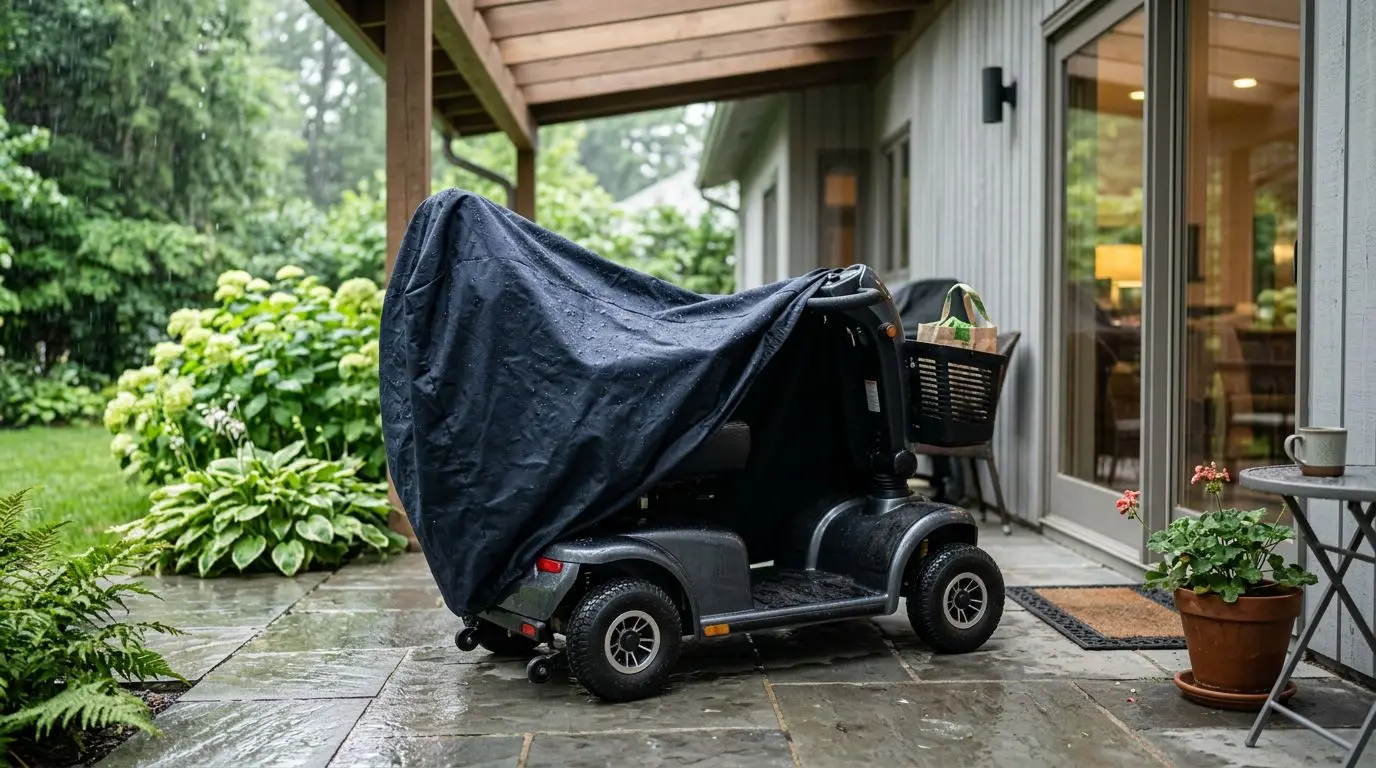
Waterproof Mobility Scooter Covers: What to Look For for Outdoor Storage, Travel, and Rain Protection
15 min read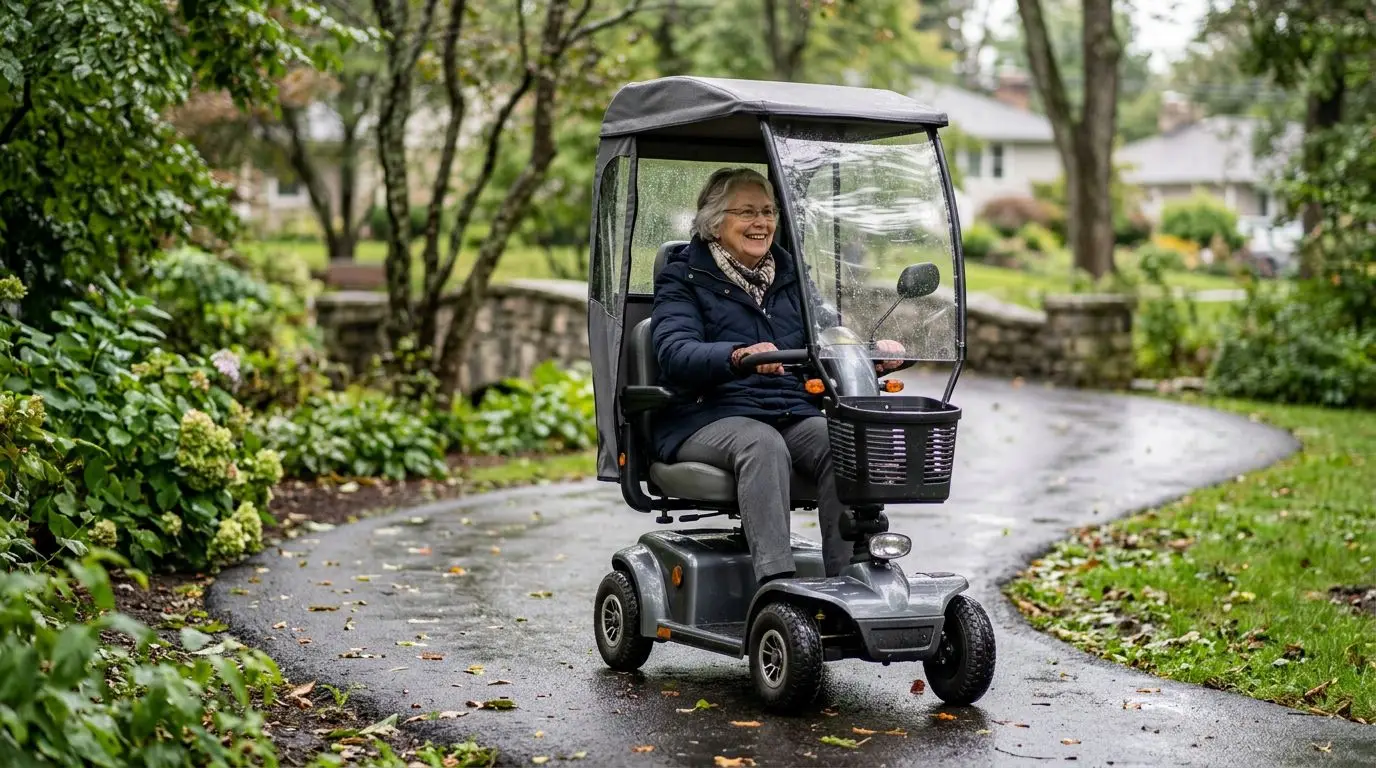
Enclosed Mobility Scooters and Canopy Scooters: Weather Protection, Comfort, and Trade-Offs
13 min read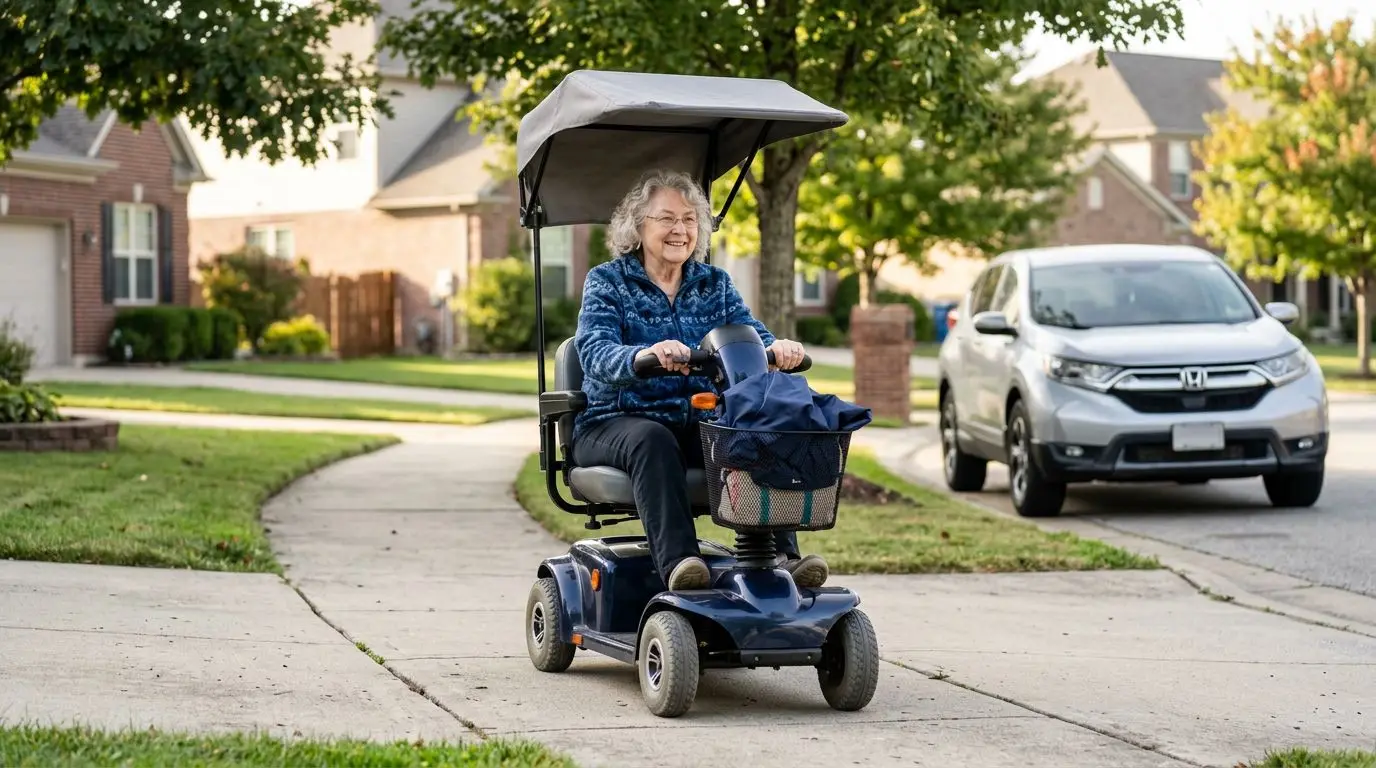
Weather Accessories for Mobility Scooters: Sun, Rain, and Cold Protection
13 min read