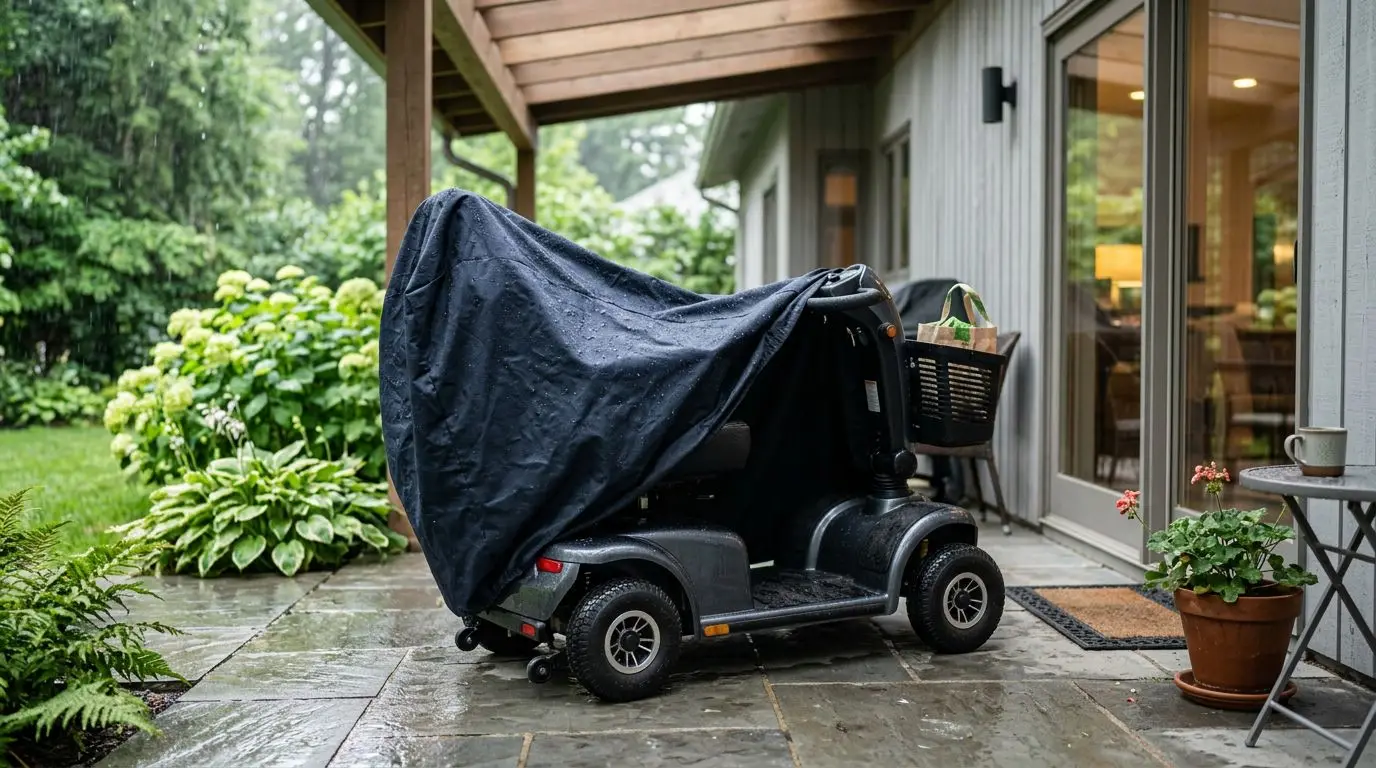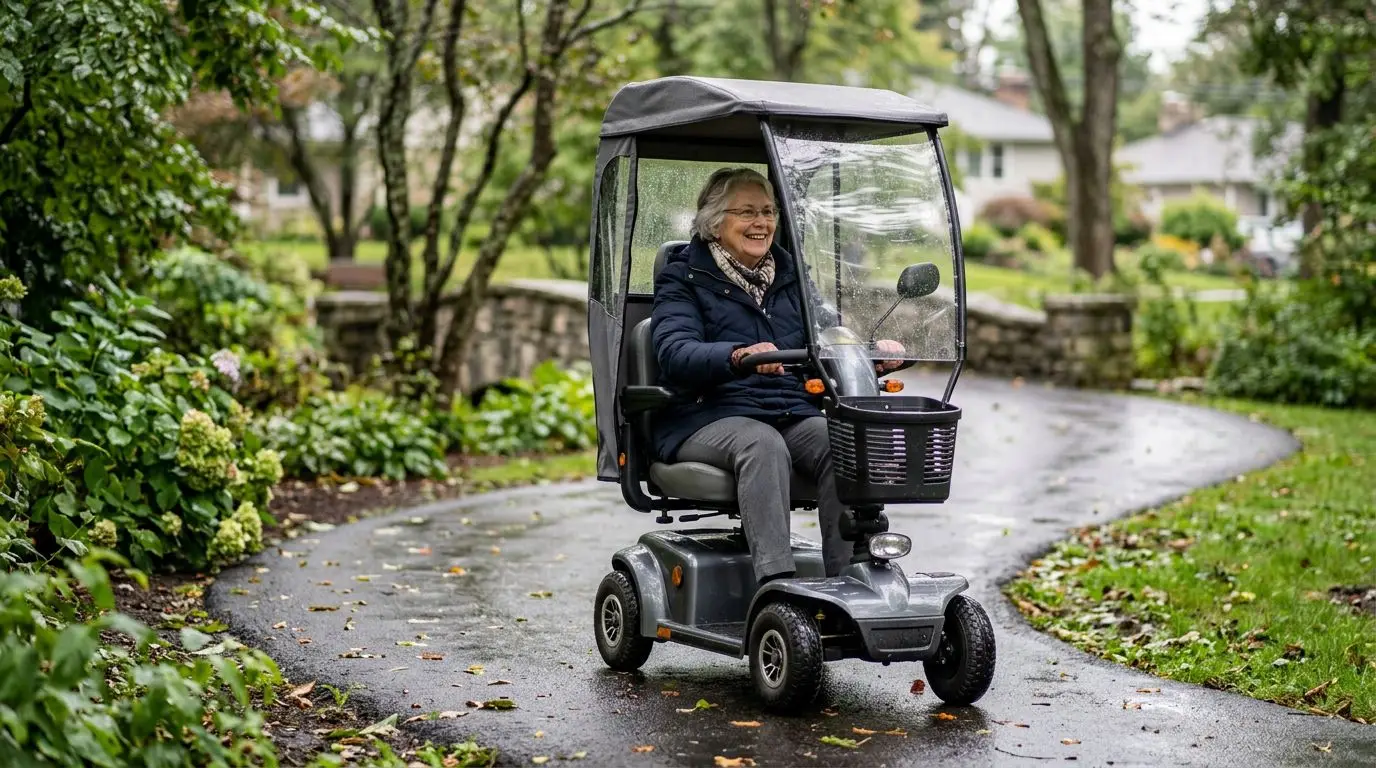
Enclosed mobility scooters and canopy scooters can make outdoor trips more comfortable by reducing exposure to rain, sun, wind, and cold air. The trade-off is that covers, curtains, and cabin-style bodies usually add height, width, weight, and storage challenges, so choose around your real routes rather than appearance alone.
If you mainly need shade or light rain protection, a canopy may be enough. If you ride outdoors often in damp or chilly weather, a soft enclosure or cabin-style scooter may be worth considering, as long as it fits your doors, sidewalks, storage area, and transportation plans.
Enclosed vs. canopy scooters: 4 common setups
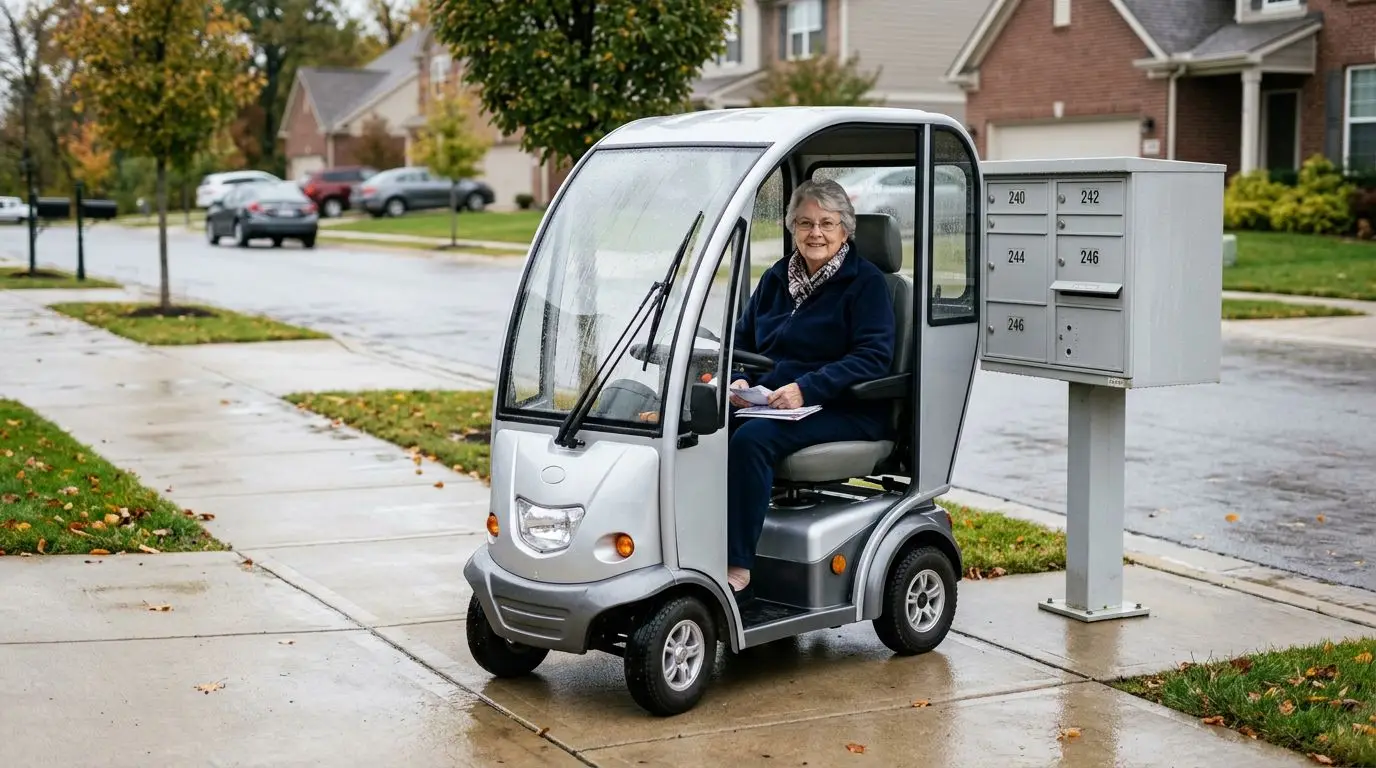
People use terms like enclosed scooter, covered scooter, canopy scooter, and mobility scooter enclosure in different ways. In practice, most options fall into 4 broad categories: a simple overhead canopy, a canopy with a windshield, a soft-sided enclosure, or a hard-sided cabin-style scooter.
The more coverage you add, the more the scooter starts to behave like a small personal vehicle instead of a compact mobility aid. That can be helpful outdoors. It can also make tight turns, doorways, elevators, and vehicle transport harder.
| Type | Typical protection | Main advantages | Main trade-offs |
|---|---|---|---|
| Overhead canopy | Shade and light overhead rain | Lower weight, easier access, better airflow | Little side protection from wind-driven rain |
| Canopy with windshield | Sun, light rain, some wind protection | Better face and torso coverage | More glare, fogging, and storage height |
| Soft enclosure with curtains | Rain and wind protection on several sides | Often removable or seasonal | Can flap, fog, scratch, or reduce side visibility |
| Hard-sided enclosed scooter | Most complete weather barrier | Greater comfort in poor weather | Heaviest, largest, least portable |
A canopy is usually the simplest upgrade because it shades your head and shoulders without enclosing the whole seating area. A windshield improves comfort at speed, especially when wind makes your eyes water. Soft enclosures usually use clear panels with zippered or roll-up sections. Hard cabins may include doors, roof panels, and fixed windows.
None of these options turns a mobility scooter into a car. Most mobility scooters are designed for low-speed travel, commonly in the walking-speed to neighborhood-speed range, and they still require careful route planning, safe surfaces, and good visibility.
Weather protection: rain, sun, and wind when 1 inch of water matters
Weather protection is the main reason shoppers look for enclosed mobility scooters. Rain is the obvious concern, but sun exposure and wind can be just as important for comfort.
For rain, think in layers. An overhead canopy keeps vertical rain off your head and shoulders, but it does little when rain blows sideways. A windshield can protect your face and chest. Side curtains or a cabin body reduce spray on your legs and lap.
Still, covered is not the same as waterproof. Mobility scooter electronics, motors, brakes, and controls are not meant to be submerged. Even a protected scooter should avoid standing water, deep puddles, and flooded curb cuts. As a practical rule, if water is approaching the lower deck, axle area, or wheel hubs, turn around. Even 1 to 2 inches of water can hide potholes, debris, or a sudden drop at a curb ramp.
Sun protection works differently. A canopy can reduce direct overhead sun and make a summer ride feel more tolerable, especially during mid-day errands. Light-colored roof material may absorb less heat than dark material, and open sides allow air to move. Fully enclosed designs can trap heat, particularly when outdoor temperatures climb above 80 degrees Fahrenheit.
Wind is often overlooked. The larger the covered surface, the more the scooter can feel wind pressure. A tall canopy or full enclosure may catch gusts near open parking lots, waterfronts, bridges, or building corners. Riders in windy areas should prioritize a stable, lower-speed setup and avoid riding in severe weather.
Comfort and visibility: 3 details that affect every ride
Protection only helps if you can still see, steer, and get in and out comfortably. With covered scooters, visibility is not a small detail. It is central to safety.
First, look at the front viewing area. A clear windshield should give you a wide, undistorted view of sidewalks, curb ramps, pedestrians, pets, and vehicles backing out of driveways. Clear vinyl panels can scratch over time, especially if wiped when dusty. Harder plastic or glass-like panels may resist distortion better, but they can add weight and may still glare in low-angle sun.
Second, think about fogging. Enclosed spaces collect moisture from breathing, wet clothing, and temperature differences between inside and outside. A vent, roll-up panel, small opening, or fan can make a big difference. If the enclosure has no airflow, visibility can drop quickly on a cool morning.
Third, check entry and exit. Some riders need a wide side opening because they transfer from a walker, cane, or wheelchair. Others need room to swing both feet through without twisting. A side curtain that unzips 24 inches may be easy for one person and frustrating for another. If you have shoulder stiffness, limited hand strength, or balance concerns, small zippers and snaps may become a daily obstacle.
Lighting matters, too. Covered scooters should have a bright front light, rear light, and side reflectors for low-light conditions. A canopy can cast shade over the controls, which is helpful in sunlight but may make the display harder to read at dusk. High-contrast controls are easier on aging eyes.
Who it is best for: daily trips under 3 miles, outdoor routes, and predictable storage
An enclosed or canopy scooter is usually best for someone who rides outdoors often and follows predictable routes. Examples include trips to a mailbox cluster, a nearby grocery store, a community clubhouse, a medical office in a campus setting, or a neighbor’s home.
If most of your rides are short outdoor trips under about 3 miles round trip, a canopy or enclosure can make them more comfortable without turning the scooter into something too hard to manage. The benefit is especially noticeable when you ride several days a week instead of only on rare outings.
It is also a good fit for riders who have reliable ground-level storage. A garage, covered patio, wide shed, or apartment scooter room can work if the scooter fits and charging is allowed. Covered scooters are less convenient when you must carry parts upstairs, fold the scooter into a car trunk, or navigate narrow hallways every day.
Who should be cautious? Anyone who primarily uses a scooter indoors should think carefully before choosing a canopy or enclosure. Many indoor doorways are about 30 to 36 inches wide, and a scooter with side panels or a wide roof may feel bulky in kitchens, laundry rooms, and elevators. Riders who need public transportation or frequent vehicle loading should also pay close attention to weight and disassembly.
- Best fit: outdoor neighborhood travel, senior communities, campuses, paved paths, and errands close to home.
- Possible poor fit: tight apartments, small elevators, frequent trunk loading, steep ramps, or high-wind locations.
- Worth testing: hand access to zippers, door openings, mirror adjustment, and control visibility.
How to choose and measure: 6 numbers to check before buying
Before choosing any enclosed or canopy mobility scooter, measure your environment. Six numbers matter most: overall width, overall length, total height, turning radius, storage footprint, and rider clearance.
Start with width. Measure the narrowest doorway, gate, hallway turn, elevator entrance, and ramp rail opening you use. Many residential interior doors are around 30 inches wide, while exterior doors are often about 32 to 36 inches. A scooter that technically fits may still be difficult if you have only 1 inch of clearance on each side.
Next, measure height. A canopy can raise a scooter’s total height into the 55 to 65 inch range, depending on design. A hard enclosed scooter may be taller. Check garage door tracks, van openings, porch roofs, shed doors, and low tree branches along your route. If you store the scooter indoors, also check ceiling-mounted storage shelves or hanging bikes.
Length affects elevators, landings, and turns at the bottom of ramps. A longer scooter can feel stable outdoors but may require a larger turning radius, often several feet. If your route includes a 90-degree turn through a doorway, tape the scooter’s approximate footprint on the floor and practice the path with a walker or chair as a visual guide.
Rider clearance is personal. Sit in your normal riding posture and consider headroom, knee room, elbow room, and shoulder space. If you wear a winter coat, leave extra room. If you carry oxygen equipment, a cane, or a small bag, plan where it will go without blocking controls or exits.
| Measurement | Why it matters | Practical check |
|---|---|---|
| Width | Doorways, sidewalks, gate openings | Measure the narrowest point and allow several inches of comfort clearance |
| Height | Canopies, garages, sheds, transport | Check overhead obstacles, not just floor space |
| Length | Elevators, ramps, landings | Confirm you can turn at both ends of your route |
| Turning radius | Indoor corners and tight sidewalks | Test a U-turn in the smallest area you use |
| Weight | Loading, ramps, floor limits | Include batteries, canopy, enclosure, and accessories |
| Entry opening | Transfers and daily access | Try entering with your usual shoes, coat, cane, or bag |
Ask about installation, too. Some canopies are removable with basic hardware, while other enclosures are meant to stay on the scooter. If someone else will help with seasonal changes, make sure the job is realistic. A cover that takes 45 minutes to install may not be used often.
Storage, charging, and portability: the 50-pound question
Portability is where many covered scooters disappoint buyers. A lightweight travel scooter may be manageable when disassembled, but adding a canopy or enclosure can make it awkward, tall, or fragile. Even if the canopy itself does not weigh 50 pounds, its shape can make lifting, fitting, and storing more difficult.
Think about your charging spot. The scooter should be parked on a dry, level surface with access to an appropriate outlet. Extension cord use can create trip hazards and may not be allowed in shared housing areas. If you store the scooter outdoors, use a weather-resistant storage plan, but avoid sealing moisture inside a cover after a wet ride. Letting panels dry helps reduce mildew and clouding.
Vehicle transport needs special attention. A scooter with a roof or full enclosure usually will not fit into a standard car trunk. Some may require a larger vehicle, a hitch-mounted carrier rated for the scooter’s full weight, or a ramp system. Always account for the total loaded weight, including batteries and accessories, not just the base scooter.
Public spaces can create another problem. A tall roof may not fit easily under some bus lifts, transit vehicle interiors, or building awnings. Policies vary by location, so check before relying on a covered scooter for public transportation.
Feature comparison: 8 upgrades that can be helpful or unnecessary
Covered scooters can include many comfort and safety features. Some are genuinely useful; others add cost, complexity, or maintenance without solving your main problem. Focus on your route first.
| Feature | Most useful when | Watch out for |
|---|---|---|
| Removable canopy | You need summer shade and occasional rain protection | Loose hardware, added height, limited side coverage |
| Windshield | Wind bothers your eyes or chest | Glare, scratches, fogging |
| Side curtains | You ride in light rain or cool weather | Zippers, reduced airflow, blind spots |
| Rear window | You back up or ride in shared areas | Distortion and poor nighttime visibility |
| Mirrors | You ride near driveways or parking lots | Need adjustment and vibration control |
| Wiper or defogging vent | You ride in wet climates | Maintenance and battery draw |
| Interior light | You load items at dusk or in garages | Must not distract or reflect in windshield |
| Storage basket or rear box | You run errands | Added length and blocked rear visibility |
For many riders, the most valuable combination is simple: shade overhead, clear forward visibility, reliable lights, and easy entry. More enclosure is not automatically better. If a feature makes the scooter harder to use every day, it may reduce independence rather than support it.
Safety trade-offs at 4 to 8 mph
Mobility scooters are often used at low speeds, commonly around 4 to 8 mph depending on the scooter type and local setting. Even at those speeds, added enclosure changes how the scooter handles.
A canopy raises the scooter’s profile. A full enclosure adds more surface area for wind. Hard panels may increase total weight and change the center of gravity. None of this means covered scooters are unsafe, but it does mean riders should be realistic about terrain and weather.
Use extra caution on slopes, curb ramps, gravel, wet leaves, and uneven pavement. Slow down before turns, not during them. Avoid sudden steering inputs when the roof or enclosure is catching wind. If the weather is bad enough that drivers have poor visibility, it is usually not a good time for a scooter trip.
Braking distance can also feel different when surfaces are wet. Covered scooters may keep you drier, but the tires still contact wet pavement. Painted crosswalk lines, metal plates, and smooth tile near building entrances can become slick.
If you have medical concerns such as dizziness, low vision, limited neck rotation, or slow reaction time, talk with a qualified clinician or mobility professional about safe use. A scooter can support mobility and independence, but it should match your functional abilities and environment.
Buying checklist: 10 questions to answer before you decide
Use this checklist before choosing a canopy, enclosure kit, or enclosed mobility scooter. Ten minutes with a tape measure can prevent months of frustration.
- Will it fit through my narrowest doorway, gate, and storage entrance?
- Can I enter and exit without twisting, ducking too much, or fighting zippers?
- Does the windshield or front panel provide a clear view in sun, rain, and shade?
- Can I ventilate the enclosure to reduce fogging?
- Where will I park it while charging?
- Can it be transported if I move, travel, or need service?
- Will the added height fit under my garage door, shed door, or vehicle lift area?
- Does it have enough lighting and reflectivity for dawn, dusk, or cloudy days?
- Can I clean and dry the panels without damaging them?
- Is my usual route smooth, wide, and sheltered enough for a covered scooter?
If you are unsure, start with the least restrictive solution that solves the actual problem. For shade, that may be a canopy. For cool wind, a windshield and lap cover may help. For frequent rain, a better enclosure may be worth the added bulk.
FAQ: 5 common questions about enclosed and canopy scooters
Are enclosed mobility scooters waterproof?
No. Enclosures can help keep the rider drier, but the scooter itself should not be treated as waterproof. Avoid deep puddles, flooded curb ramps, and heavy storms that could expose electronics, brakes, or batteries to excess water.
Can I add a canopy to any mobility scooter?
Not always. The scooter needs appropriate mounting points, enough stability, and enough clearance for safe use. A canopy that fits poorly can interfere with steering, transfers, visibility, or storage.
Do canopies make scooters harder to transport?
Often, yes. A canopy adds height and an awkward shape even when it does not add much weight. If you load your scooter into a vehicle, confirm whether the canopy removes easily and whether all parts fit.
Is a full enclosure better than a canopy?
Only if you need that level of protection and can manage the size. A full enclosure offers better rain and wind coverage, but a canopy is usually easier for storage, airflow, entry, and maneuvering.
What should I clean clear panels with?
Use a soft cloth and a cleaner recommended for the panel material. Avoid dry wiping dusty clear vinyl or plastic, because grit can scratch the surface and reduce visibility over time.
Frequently asked questions
Are enclosed mobility scooters waterproof? +
No. An enclosure can keep the rider drier, but the scooter should not be driven through deep puddles, flooded curb ramps, or heavy storms that may expose electronics, brakes, or batteries to excess water.
Is a canopy enough for rain protection? +
A canopy helps with overhead rain and sun, but it does little against wind-driven rain. For frequent wet weather, a windshield or side curtains may provide better coverage.
Can I put a canopy on any mobility scooter? +
Not necessarily. The scooter must have suitable mounting points, enough stability, and enough clearance so the canopy does not interfere with steering, visibility, transfers, or storage.
Do enclosed scooters fit through standard doors? +
Some do, but you must measure. Many residential doors are about 30 to 36 inches wide, and a covered scooter needs extra clearance for safe, comfortable passage.
Are enclosed mobility scooters easy to transport? +
They are usually harder to transport than open scooters. Roofs, curtains, and cabin panels add height, shape, and sometimes weight, so they may not fit in a standard car trunk.
Related guides
Enclosed Mobility Scooters: Benefits, Drawbacks, and Who They’re Best For
13 min read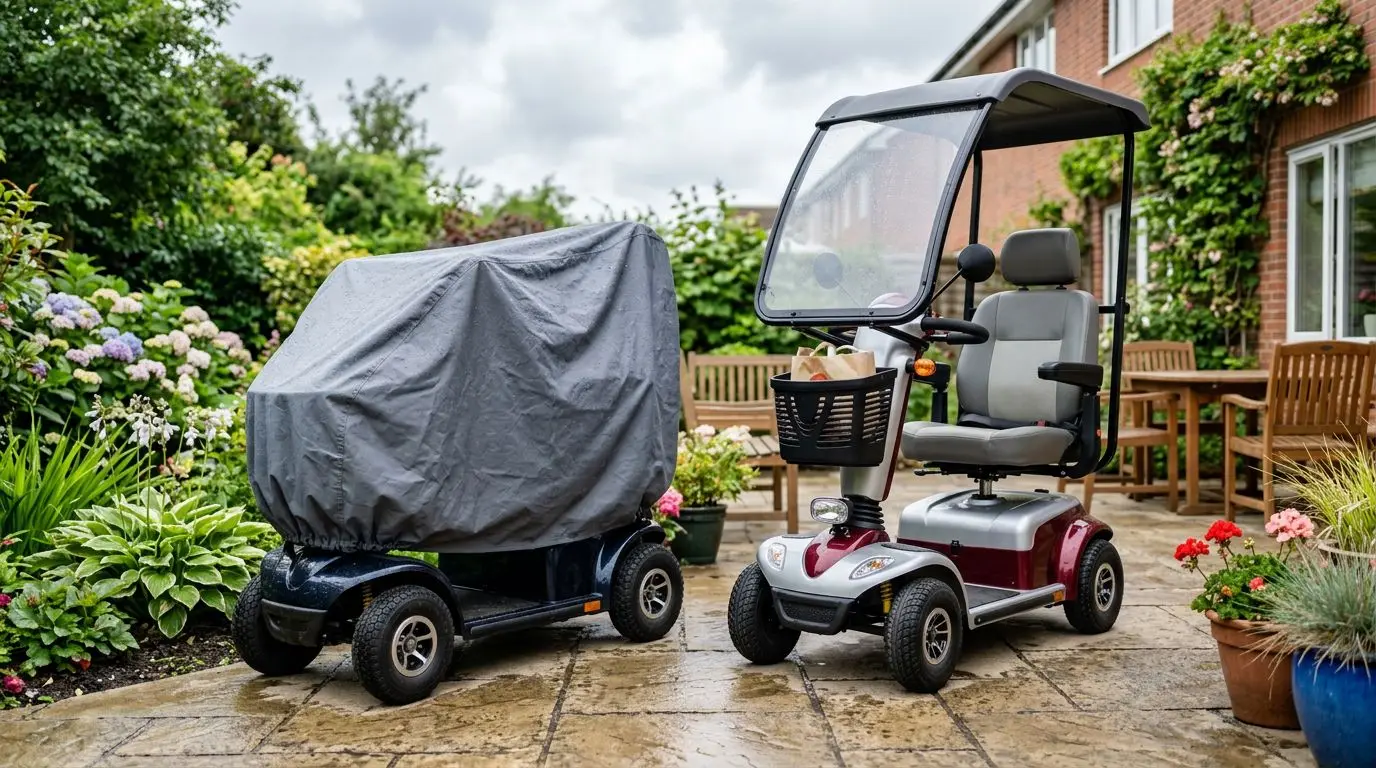
Mobility Scooter Covers, Canopies, and Weather Enclosures: What Protects the Scooter vs. the Rider?
13 min read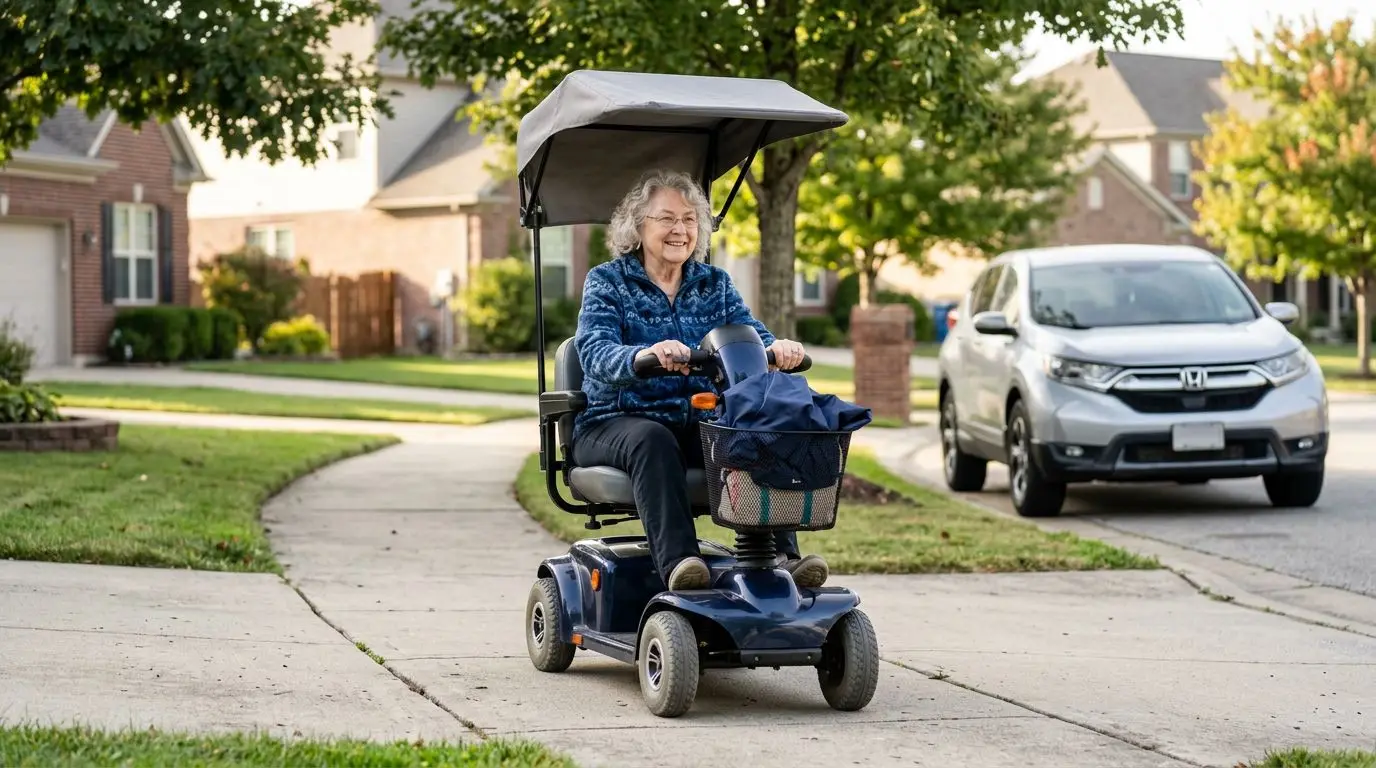
Weather Accessories for Mobility Scooters: Sun, Rain, and Cold Protection
13 min read