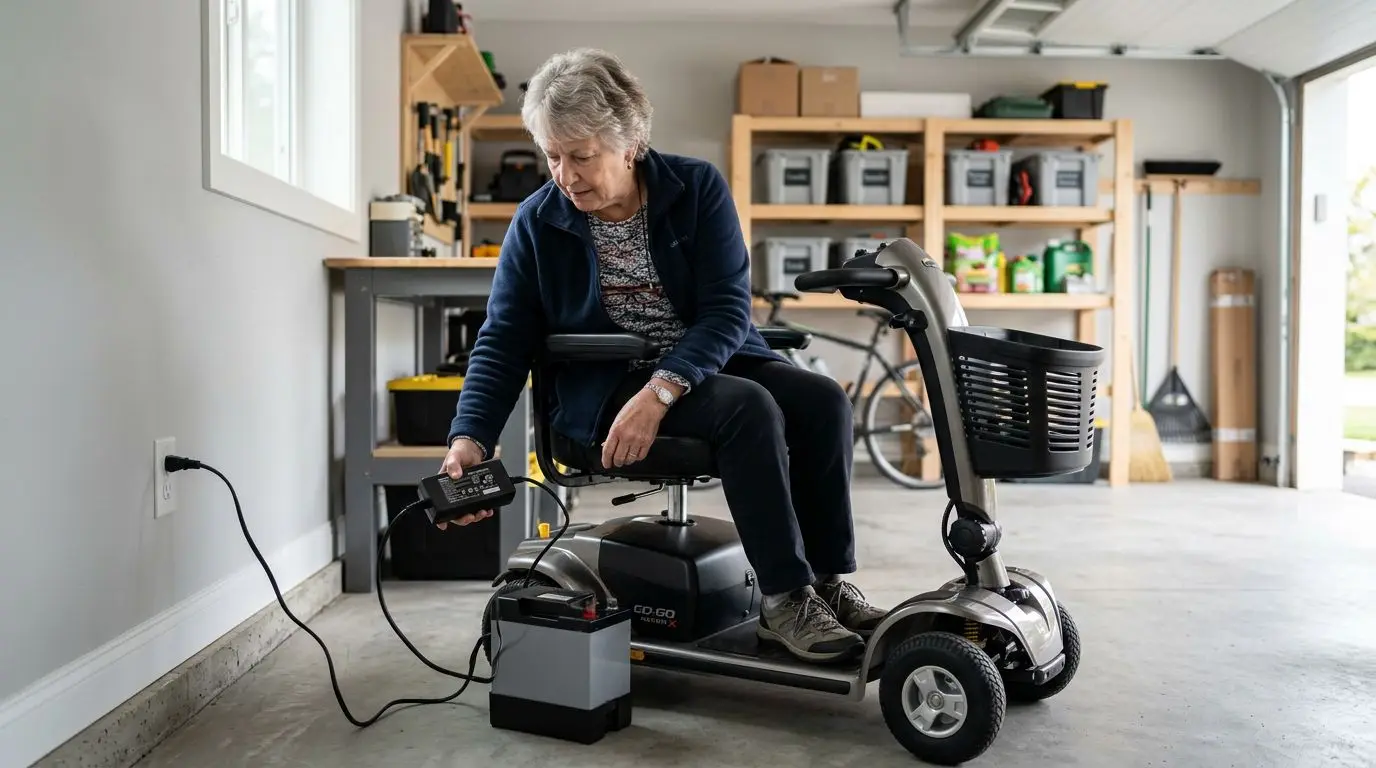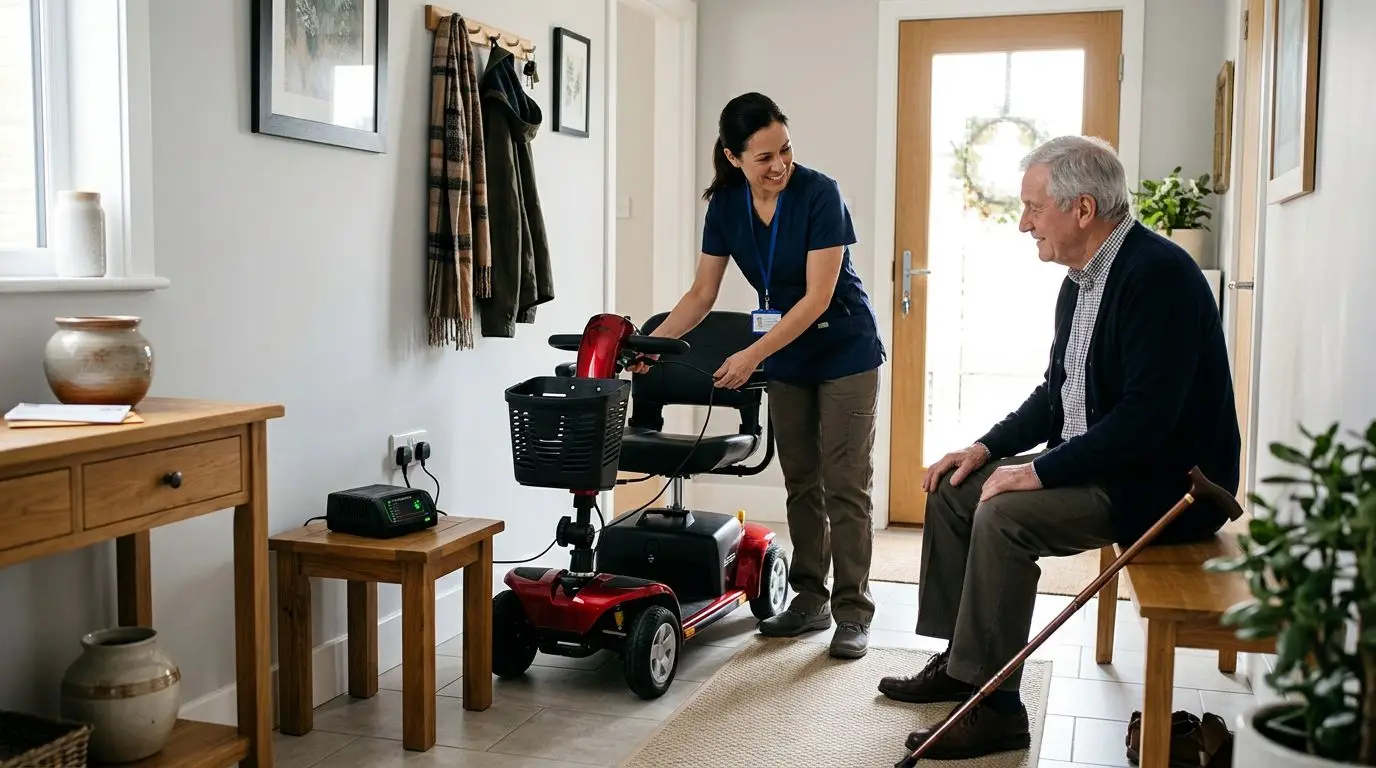
The best way to charge a mobility scooter battery is to plug it in after normal use, let it reach a full charge, and use only a charger that matches the scooter battery type and voltage. For most scooters, this means charging overnight for about 8 to 12 hours, unplugging once charging is complete unless the manual says the charger may stay connected, and avoiding deep discharges whenever possible.
Good charging habits reduce surprise breakdowns, help the battery hold capacity longer, and make daily trips safer. Details vary by battery chemistry, scooter size, charger design, and storage conditions, so the safest guide is always the owner’s manual and the label on the battery pack or charger.
Daily charging basics: the 8-to-12-hour routine most riders need
For daily use, most mobility scooter owners do best with a simple routine: charge after the day’s riding, leave the scooter plugged in long enough to reach full, and check that the charger indicator shows the cycle is complete before the next trip. On many scooters, a full charge takes about 8 to 12 hours when the battery has been used moderately.
That overnight schedule works well because it is predictable. A senior who rides to the dining room, mailbox, grocery aisle, or neighborhood clubhouse can plug in after returning home and start the next morning with a full battery. Caregivers can build charging into an evening checklist too, along with locking brakes, storing keys, and clearing walkways.
Try not to treat the battery gauge like a car fuel gauge. Scooter battery meters are often voltage-based, so the reading can dip during acceleration or hill climbing and rise again after the scooter rests. If the display shows half charge after a short hill, it may not mean half the usable range is gone. Still, if the gauge regularly ends the day low, charge the scooter before the next outing.
A practical daily routine looks like this:
- Park the scooter near a safe, dry outlet.
- Turn the scooter off and remove the key if it has one.
- Connect the charger to the scooter first, then plug the charger into the wall unless the manual says otherwise.
- Confirm the charger light or display shows charging has started.
- Let it charge until the full or ready light appears.
- Unplug from the wall, then disconnect from the scooter.
Short top-off charges are not usually harmful when done with the correct charger, especially for sealed lead-acid and lithium batteries used in many modern scooters. The bigger issue is repeatedly running the scooter until it slows, flashes a low-battery warning, or stops. Deep discharges add stress and can shorten battery life.
Battery types compared: 2 lead-acid styles and 1 lithium option
Mobility scooters commonly use sealed lead-acid batteries, including AGM and gel designs, or lithium-ion battery packs. They all power the same basic job, but they do not charge, age, or store in exactly the same way. A charger made for one battery type may not be safe for another.
| Battery type | Common scooter use | Charging notes | Care concern |
|---|---|---|---|
| AGM sealed lead-acid | Travel, mid-size, and full-size scooters | Often charged overnight after use | Avoid repeated deep discharge |
| Gel sealed lead-acid | Some indoor/outdoor scooters | Needs a compatible gel-safe charging profile | Wrong charger can shorten life |
| Lithium-ion | Many lightweight and folding scooters | Often lighter and may charge faster depending on pack size | Use only the approved charger and avoid heat |
Sealed lead-acid batteries are widely used because they are dependable and relatively simple, but they are heavy. A pair of 12-volt batteries is often wired together to create a 24-volt scooter system. Larger scooters may have higher amp-hour ratings, which usually means longer potential range, more weight, and longer charge time.
Lithium batteries are typically lighter for the same usable energy, which is why they are common in portable folding scooters. They often include a battery management system that helps regulate charging and discharging. That system is not a reason to mix chargers. The charger still needs to match voltage, connector style, and charging profile.
If you are not sure what battery you have, look for a label on the battery case, under the seat, inside the battery box, or in the manual. You may see terms such as AGM, gel, sealed lead-acid, lithium-ion, 24V, 36V, Ah, or Wh. If the label is missing or hard to read, a mobility equipment technician or battery supplier can help identify it safely.
Overcharging myths: what happens after 12, 24, or 48 hours?
One common myth is that any overnight charge will ruin a scooter battery. Another is that a scooter can stay plugged in forever with no downside. The truth is in the middle and depends heavily on the charger. A modern automatic charger is designed to taper or stop charging when the battery is full, but older, damaged, mismatched, or very basic chargers may not manage the battery correctly.
For many scooter owners, charging for 8 to 12 hours after normal use is expected. Accidentally leaving a scooter connected for 24 hours once in a while with the proper automatic charger may not cause immediate harm. Leaving it connected for days or weeks without confirming that the manual allows long-term maintenance charging is different.
| Charging situation | Usually acceptable? | What to do |
|---|---|---|
| Overnight, about 8 to 12 hours | Often yes | Follow the charger lights and manual |
| 24 hours by accident | Often not an emergency with an automatic charger | Unplug when noticed and check for heat or odor |
| 48 hours or longer | Not ideal unless manual permits maintenance charging | Unplug and review instructions |
| Weeks plugged in during storage | Only if charger is designed for that use | Use the storage plan recommended for the battery type |
Heat is a warning sign. A charger may feel slightly warm during normal operation, but it should not smell burnt, buzz loudly, melt plastic, or make the battery case hot to the touch. If that happens, stop charging, unplug from the wall first if it is safe to do so, and have the scooter inspected before riding again.
Do not cover the charger with a blanket, towel, seat cushion, or shopping bag. Chargers need airflow. Also avoid charging near oxygen equipment, open flames, space heaters, or wet floors. These precautions are simple, but they matter.
How to choose the right charger: match 24V, amps, plug, and battery chemistry
The safest charger is the one specified for the scooter’s battery system. At minimum, it must match the scooter voltage, battery chemistry, connector type, and suitable output current. Many scooters use 24-volt systems, but you should never assume that based on appearance alone.
Check 4 things before replacing or borrowing a charger:
- Voltage: The charger output must match the scooter battery system, such as 24V, 36V, or another listed voltage.
- Battery chemistry: AGM, gel, and lithium packs may require different charging profiles.
- Connector: The plug must fit correctly without force, wobbling, or exposed metal.
- Output current: The amp rating should be appropriate for the battery size and scooter specifications.
A higher-amp charger is not automatically better. Charging too aggressively can create heat or battery stress if the battery pack is not designed for it. A very low-output charger may be safer in some cases, but it can take too long or fail to complete a proper charge on a larger pack. Use the scooter documentation instead of guessing.
Borrowing a neighbor’s charger is risky even if the plug fits. Two chargers can look nearly identical and still use different voltage or battery profiles. If a charger is lost, damaged, or replaced, match the specifications from the manual or battery label and get help from a qualified mobility equipment provider if any detail is unclear.
Caregivers should label the correct charger with the rider’s name or scooter description. In senior apartments, assisted living settings, or shared storage rooms, this small step can prevent mix-ups. A piece of tape with large print can save a battery pack.
How to measure your real range: a 3-trip log beats guessing
Published scooter range is usually measured under controlled conditions, often with a steady speed, smooth surface, moderate rider weight, and a fresh battery. Real life is different. Carpet, ramps, hills, cold weather, stop-and-go turns, rider weight, and baskets full of groceries can reduce range. A simple 3-trip log gives a better picture of what your scooter can actually do.
To measure real-world range safely, do not ride until the scooter dies. Choose familiar routes and track distance, time, and battery gauge behavior. If you have a phone, pedometer app, caregiver’s vehicle odometer, or building hallway map, estimate the distance. Even rough notes are useful.
| Trip detail to record | Example entry | Why it helps |
|---|---|---|
| Starting charge | Full after overnight charge | Creates a fair baseline |
| Distance or time | 35 minutes around a grocery store | Connects use to battery drain |
| Surface and slopes | Sidewalk, 2 curb ramps, slight hill | Explains heavier power use |
| Ending gauge | 3 of 5 bars remaining | Shows reserve for the ride home |
| Weather | 42°F morning | Cold can reduce available range |
After 3 normal trips, patterns appear. You may learn that the scooter handles the mailbox and dining room easily but needs a full charge before a long medical appointment. You may also notice that range drops in winter or when carrying heavier items.
A good rule for planning is to keep a reserve. If a route uses about half the battery on a mild day, avoid turning it into a full-day errand without a charging plan. Running out of power away from home is more than inconvenient; it can leave the rider stranded in a parking lot, hallway, or sidewalk crossing.
Battery-life tips: 7 habits that help batteries last longer
No charging routine can make a battery last forever, but everyday habits can slow avoidable wear. Many scooter batteries last roughly 1 to 3 years with typical use, though actual life varies widely by battery type, quality, rider weight, terrain, charging routine, storage, and climate. Some last longer; some fail earlier after deep discharge or heat exposure.
- Charge after use. Do not wait until the scooter is nearly empty if you use it often.
- Avoid deep discharges. Repeatedly riding until the scooter slows or stops is hard on most battery packs.
- Use the correct charger. Matching voltage and chemistry protects both the scooter and battery.
- Keep it dry. Charge indoors or in a protected, dry area, never in rain or standing water.
- Control temperature. Store and charge away from extreme heat and freezing conditions when possible.
- Check tire pressure if pneumatic tires are used. Low tires create drag and make the motor draw more power.
- Keep terminals and connectors clean. Loose or corroded connections can cause poor charging and erratic performance.
Temperature deserves special attention. Batteries generally perform best in moderate indoor conditions, often around normal room temperature. Very cold conditions can temporarily reduce range, while high heat can speed aging. If a scooter is kept in a garage, porch, shed, or vehicle trunk, charging and storage conditions may be much harsher than the rider realizes.
Weight and terrain matter too. A scooter carrying a rider, oxygen holder, rear basket, and groceries up repeated ramps will use more energy than the same scooter on level indoor floors. That does not mean the scooter is defective. It means the battery is doing harder work.
Storage charging plan: protect the battery during 30 days or more of non-use
If a scooter will sit unused for 30 days or longer, storage charging becomes important. Batteries can slowly self-discharge even when the scooter is off. If they sit too long at a low charge, they may lose capacity or fail to accept a full charge later.
Before storage, charge the battery fully unless the manual for a lithium pack gives a different long-term storage recommendation. Turn the scooter off, remove the key, and store it in a dry, moderate-temperature location. If the battery pack is removable and the manual allows it, storing the pack indoors may be better than leaving it in a cold garage.
For sealed lead-acid batteries, many owners are advised to recharge about once per month during storage. Some automatic maintenance chargers are designed to remain connected, but not all scooter chargers are intended for weeks of continuous use. Read the charger instructions carefully.
For lithium batteries, follow the battery-specific storage guidance. Some lithium packs prefer partial charge for long storage rather than sitting at 100% for months. Because lithium systems vary, this is not an area for guesswork. Use the manual or ask a qualified technician.
If the scooter has been stored for several months, charge it fully before riding and take a short test drive close to home. Check that the battery gauge behaves normally, the scooter accelerates smoothly, and the charger completes a full cycle. Do not make the first ride after storage a long trip to an appointment.
Warning signs: 6 clues your battery or charger needs attention
Charging problems often show up gradually. Catching them early can prevent a rider from being stranded. If any of these 6 signs appear, the battery, charger, wiring, or scooter electronics may need inspection.
- The scooter used to complete a normal route but now loses power halfway.
- The charger never changes to the full or ready light after 12 to 14 hours.
- The charger light turns green immediately even after the scooter was used heavily.
- The battery case looks swollen, cracked, leaking, or unusually hot.
- The scooter jerks, cuts out, or shuts down when climbing a ramp.
- The charging plug feels loose, sparks, smells burnt, or has damaged pins.
Do not keep trying to force a charge through a damaged connector. Do not tape a loose plug into place. Electrical faults can worsen and may create fire or shock hazards.
Battery replacement should be handled carefully because scooter battery packs can be heavy. A single sealed lead-acid battery can weigh many pounds, and larger scooters often use 2 batteries. Seniors with lifting limits should ask for help rather than trying to remove a battery box alone.
When replacing batteries, replace the set together if the scooter uses paired batteries. Mixing one old battery with one new battery can reduce performance and may cause uneven charging. The replacement batteries should match the required voltage, size, terminal type, and chemistry specified for the scooter.
Who this charging routine is best for: daily riders, caregivers, and occasional users
This charging approach works best for 3 common groups: seniors who ride most days, caregivers who manage equipment, and occasional users who want the scooter ready when needed. Each group has a slightly different priority.
| User situation | Best charging habit | Main benefit |
|---|---|---|
| Daily rider | Charge every evening after use | Starts each day with predictable range |
| Caregiver-managed scooter | Use a written 2-step check: plugged in, full light confirmed | Reduces missed charges |
| Occasional user | Charge after use and check monthly during storage | Prevents low-charge sitting |
| Long outing planner | Fully charge before appointments or shopping trips | Keeps reserve for delays |
For independent riders, the best routine is one that is easy to remember. Plugging in right after parking is better than planning to do it later. For caregivers, consistency matters more than perfection. A large-print note near the scooter or outlet can help: Scooter off, charger on, full light in morning.
For occasional users, the risk is forgetting the scooter for weeks. A scooter used only for doctor visits may sit long enough to self-discharge. Put a monthly reminder on a calendar, phone, or medication-management sheet to check the charge.
Mobility scooters support independence, but they are not medical treatment and they do not remove the need for safe walking, transferring, or balance precautions. If a rider has new weakness, dizziness, falls, or trouble operating controls, speak with a healthcare professional or mobility specialist before relying on the scooter for longer outings.
Charging safety checklist: 10 seconds before you walk away
Before leaving a scooter to charge for several hours, take 10 seconds to check the setup. It is a small habit that can prevent many charging problems.
- The scooter is turned off.
- The charger plug is fully seated.
- The charger is on a hard surface with airflow.
- The cord is not stretched across a walkway.
- The outlet is dry and not overloaded.
- No blanket, bag, or cushion is covering the charger.
- The area is away from heaters, flames, and water.
- The correct charger is being used.
- The charger indicator shows charging has started.
- The rider knows when to unplug or check the full light.
If cords create a trip hazard, rearrange the parking spot rather than running an extension cord across the floor. If an extension cord is absolutely necessary, it should be heavy-duty, in good condition, and used according to the charger instructions. Many manuals discourage extension cords, so check before making that a routine.
The best charging setup is boring: same outlet, same charger, same parking spot, same time of day. That predictability is exactly what helps seniors and caregivers avoid dead batteries and last-minute stress.
FAQ: 5 common charging questions
Should I charge my mobility scooter after every use?
Usually, yes. If you use the scooter for daily transportation, charging after each day’s use is a good habit. You do not need to drain the battery first, and frequent deep discharges can shorten battery life.
Can I leave my mobility scooter plugged in all night?
In many cases, yes. An overnight charge of about 8 to 12 hours is normal when using the correct automatic charger. Unplug once the charge is complete unless your manual specifically allows longer maintenance charging.
Is it bad to charge a scooter battery before it is empty?
No. Most mobility scooter batteries do not need to be empty before charging. In fact, regularly running the battery very low is usually harder on the pack than topping it off after normal use.
Why does my scooter show full charge but lose power quickly?
The battery may be aging, the charger may not be completing a proper charge, or the scooter may be working harder because of hills, cold weather, low tire pressure, or added weight. If this happens repeatedly, have the battery and charger tested.
How often should I charge a scooter that is not being used?
For storage of 30 days or more, many sealed lead-acid scooter batteries should be recharged about once a month. Lithium packs may have different storage instructions, so follow the manual for that battery type.
Frequently asked questions
Should I charge my mobility scooter after every use? +
Usually, yes. If you use the scooter for daily transportation, charging after each day’s use is a good habit. You do not need to drain the battery first, and frequent deep discharges can shorten battery life.
Can I leave my mobility scooter plugged in all night? +
In many cases, yes, an overnight charge of about 8 to 12 hours is normal when using the correct automatic charger. Unplug once the charge is complete unless your manual specifically allows longer maintenance charging.
Is it bad to charge a scooter battery before it is empty? +
No. Most mobility scooter batteries do not need to be empty before charging. Regularly running the battery very low is usually harder on the pack than topping it off after normal use.
Why does my scooter show full charge but lose power quickly? +
The battery may be aging, the charger may not be completing a proper charge, or the scooter may be working harder because of hills, cold weather, low tire pressure, or added weight. If this happens repeatedly, have the battery and charger tested.
How often should I charge a scooter that is not being used? +
For storage of 30 days or more, many sealed lead-acid scooter batteries should be recharged about once a month. Lithium packs may have different storage instructions, so follow the manual for that battery type.
Related guides
Mobility Scooter Charger Not Working? How to Troubleshoot Charging Problems Safely
15 min read
How to Make Mobility Scooter Batteries Last Longer: Charging, Storage, and Cold-Weather Care
12 min read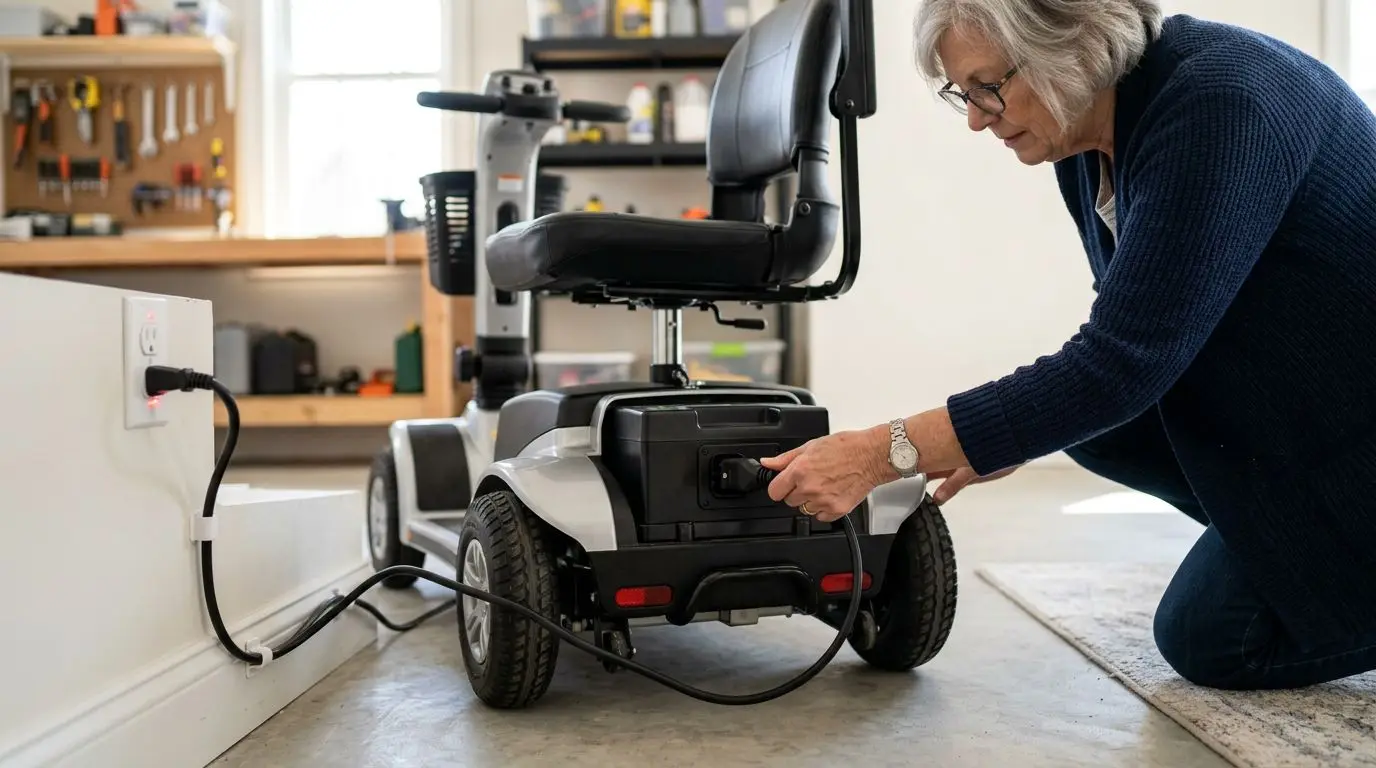
Mobility Scooter Batteries and Chargers: Range, Replacement Cost, and Care Tips
14 min read