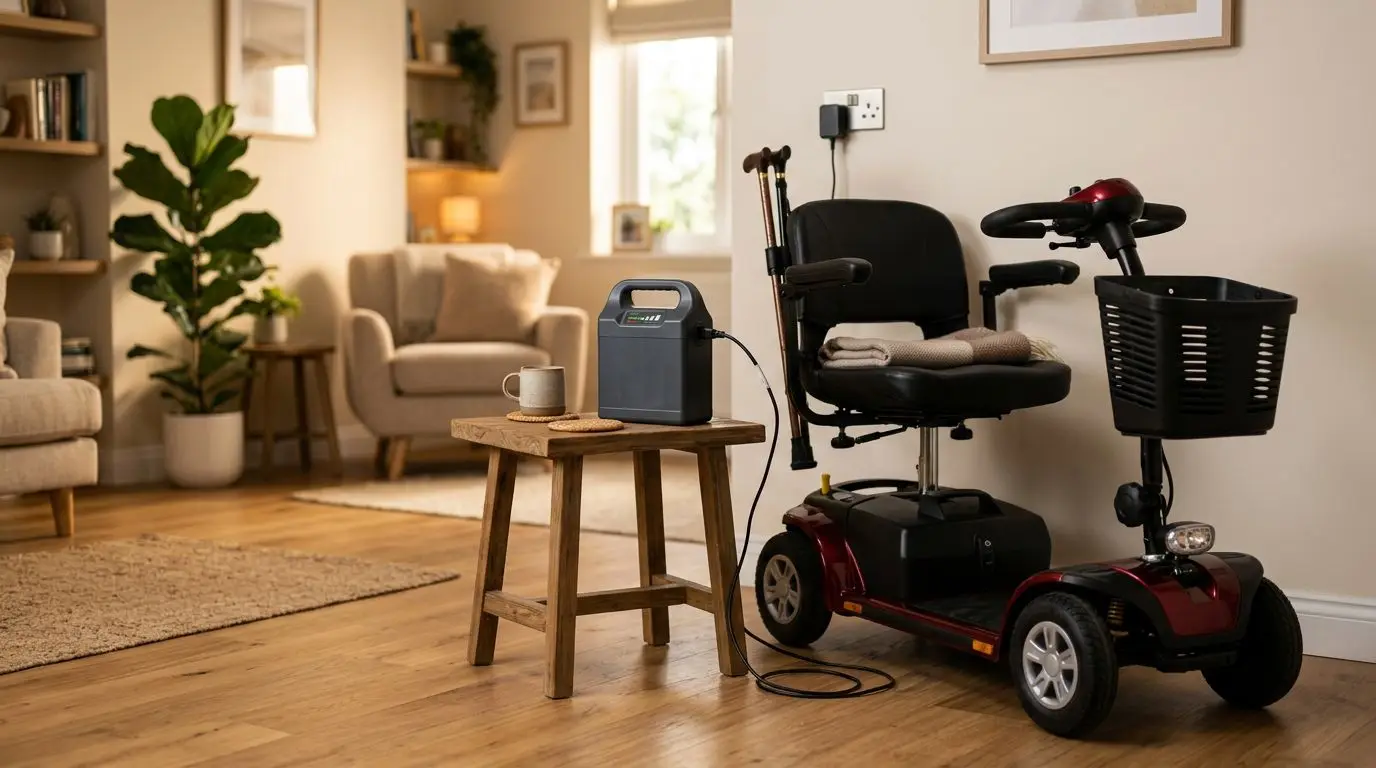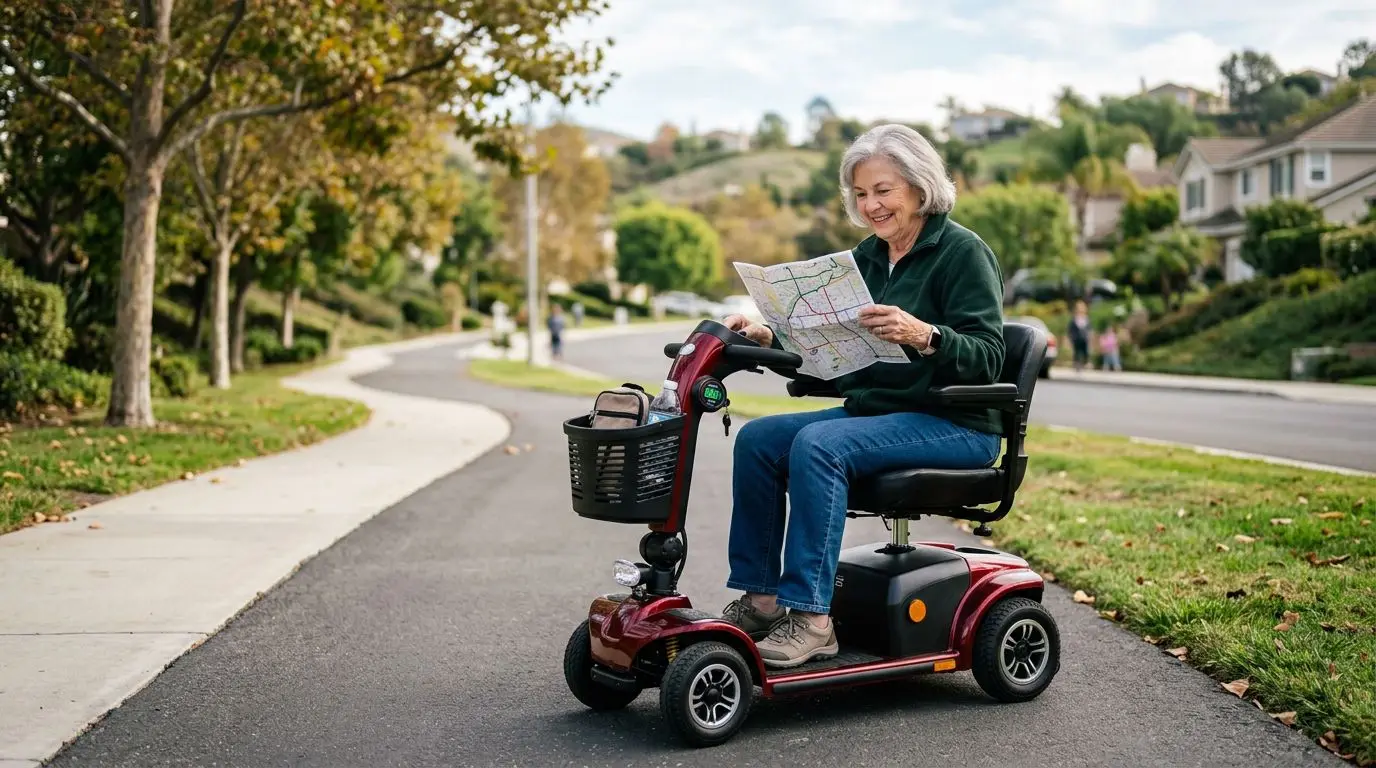
A mobility scooter usually does not go as far in daily use as the brochure range suggests. A practical planning rule is to use about 50% to 70% of the listed range, then leave extra battery for hills, wind, cold weather, heavier loads, and unexpected detours. If a scooter is rated for 20 miles, many riders should plan routine trips closer to 10 to 14 miles instead of using every last mile on the battery gauge.
That does not make range ratings useless. They give you a starting point for comparing scooter types, battery sizes, and intended use. The key is knowing what changes the number once the scooter leaves a flat test surface and starts carrying a real person over sidewalks, ramps, driveway lips, grass edges, and neighborhood hills.
What range per charge really means when ratings run from about 8 to 35 miles
Range per charge is the estimated distance a mobility scooter can travel on a fully charged battery under controlled conditions. Those conditions are usually easier than real life: a smooth level surface, moderate temperature, steady speed, a battery in good condition, and a rider load within the scooter's stated capacity.
Small travel scooters commonly list shorter ranges, often in the neighborhood of 8 to 15 miles. Mid-size and full-size scooters may list roughly 15 to 25 miles. Some heavy-duty or long-range designs may claim 25 to 35 miles or more under ideal conditions. These are broad categories, not promises for every rider.
The range number is best treated like highway fuel economy on a car. It helps you compare categories, but your route, load, speed, battery age, and weather determine what you actually get. A person riding 2 miles on smooth indoor flooring and level pavement may come much closer to the rating than someone riding 2 miles up a hill, across uneven sidewalks, and into a headwind.
Battery gauges also need caution. Many scooter gauges are voltage-based, so the display can drop faster under load, bounce back when the scooter rests, or look more optimistic than the battery really is. A gauge showing half may not always mean half of the usable range remains. For daily planning, mileage notes are more dependable than guessing from bars alone.
The 7 biggest real-world range factors to watch
Two scooters with the same advertised range can perform very differently on the same day. The following 7 factors explain most of the gap between rated range and real-world distance.
1. Rider weight and carried load
A scooter uses more energy when it carries more total weight. That includes the rider, oxygen tank, groceries, backpack, walker holder, seat bag, or any other accessory. A 250 lb total load will usually reduce range compared with a 150 lb total load on the same route. Staying within the scooter's stated weight capacity is also a safety issue, not just a range issue.
2. Hills, ramps, and long inclines
Climbing takes much more power than rolling on a flat surface. A short curb ramp may not matter much, but a route with several long grades can drain the battery quickly. Even a 5-degree incline can feel very different from flat pavement, especially on a smaller scooter with smaller batteries and wheels.
3. Terrain and rolling resistance
Smooth indoor floors and paved paths are easiest. Rough asphalt, brick, gravel, packed dirt, thick carpet, grass, and cracked sidewalks all add rolling resistance. A scooter that can comfortably complete 6 miles on smooth pavement may feel sluggish and use more battery on a route with repeated sidewalk gaps and uneven surfaces.
4. Speed setting and stop-start riding
Higher speed uses more energy, and frequent stopping and starting also draw extra power. Riding steadily at a moderate pace is usually more efficient than running at top speed, braking often, then accelerating again. Many scooters top out around 4 to 8 mph depending on type, but the most efficient daily pace is often below the maximum.
5. Battery type, size, and condition
Battery capacity is often listed in amp-hours, such as 12 Ah, 20 Ah, 35 Ah, or higher. Larger capacity generally supports longer range, but the scooter's motor, controller, weight, wheel size, and terrain still matter. An older battery may also deliver noticeably less usable distance than it did when new.
6. Temperature
Cold weather can reduce battery performance, especially if the scooter or battery is stored in an unheated space. Many battery systems perform best around typical room temperatures, roughly 68°F to 77°F. Very hot conditions are not ideal either, especially for battery longevity and comfort.
7. Tire pressure and mechanical drag
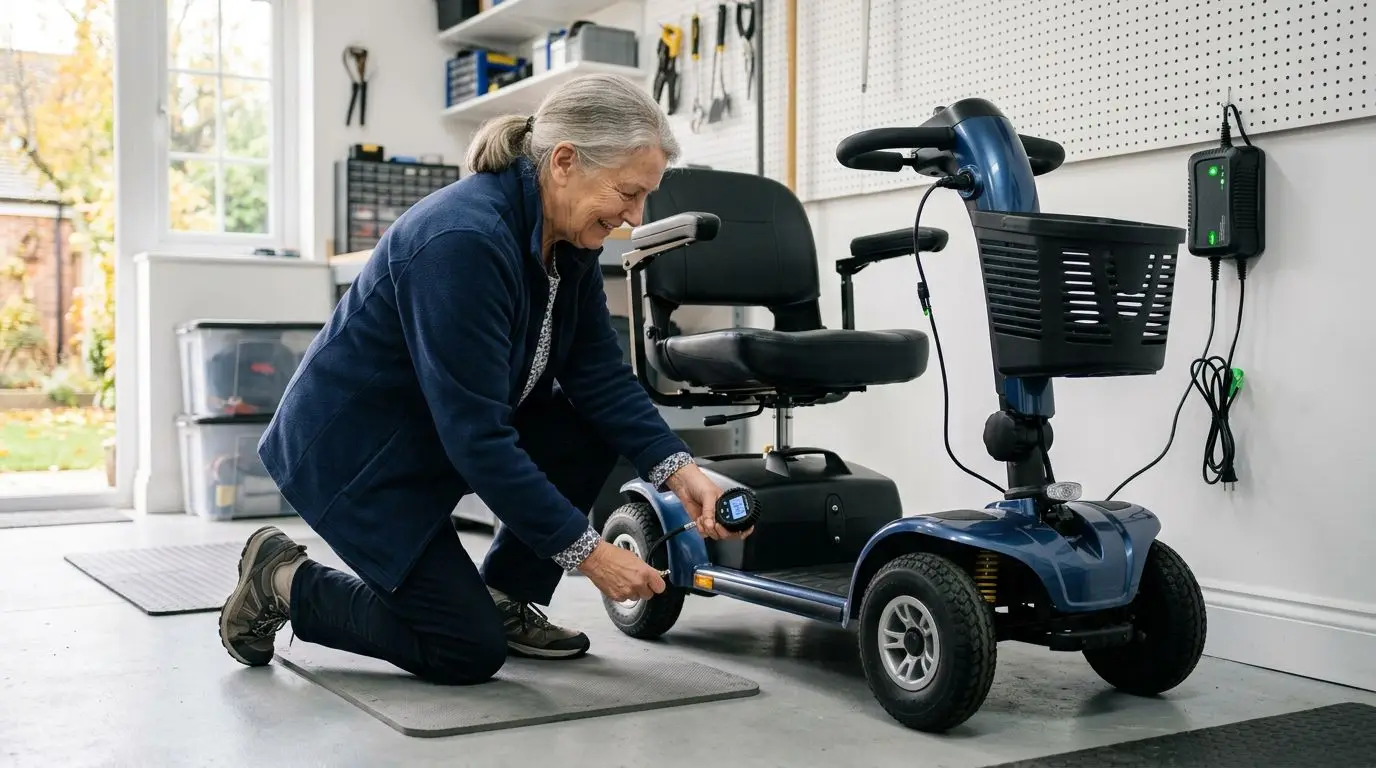
If the scooter uses pneumatic tires, low pressure can shorten range and make steering feel heavy. Even a tire that is 5 psi below the recommended pressure can add rolling resistance. Worn bearings, dragging brakes, misalignment, or debris wrapped near a wheel can also waste energy.
Battery type and age: why a 12V pack can behave differently after 18 months
Most mobility scooters use either sealed lead-acid batteries or lithium-based batteries, depending on scooter type and design. Many traditional scooters use two 12V batteries wired together for a 24V system. Common capacities vary widely, from compact travel packs around 10 to 15 Ah to larger batteries around 35 Ah, 50 Ah, or more in bigger scooters.
Sealed lead-acid batteries are widely used and generally less expensive to replace, but they are heavier and can be more sensitive to deep discharging. Lithium batteries are typically lighter for the same usable energy and may offer steadier performance, but they require a compatible charger and battery management system. Neither type makes a scooter automatically long range; total capacity and scooter efficiency still count.
Battery age matters. After 12 to 24 months of regular use, many riders notice some reduction in range, especially if batteries have often been run very low or left uncharged for long periods. A scooter that once handled a 9-mile errand loop may start feeling less confident on the same trip as the batteries age.
Charging habits also affect dependable range. Most owners are best served by charging after routine use and avoiding repeated deep drains. Always follow the owner's manual for charging time, storage, and charger type, because using the wrong charger can damage the battery or create a safety hazard.
Typical real-world range by scooter type, from 4-mile errands to 20-mile days
Scooter type is one of the easiest ways to set realistic range expectations. A compact scooter built to come apart for transport has different priorities than a larger outdoor scooter with a heavier frame and bigger battery compartment. The table below gives broad planning ranges, not guarantees.
| Scooter type | Common advertised range | More realistic planning range | Best fit |
|---|---|---|---|
| Compact travel scooter | About 8 to 15 miles | About 4 to 10 miles | Stores, appointments, short neighborhood trips, car transport |
| Mid-size scooter | About 12 to 25 miles | About 7 to 16 miles | Daily errands, parks, longer sidewalks, mixed indoor and outdoor use |
| Full-size outdoor scooter | About 18 to 30 miles | About 10 to 20 miles | Frequent outdoor travel, larger riders, longer community routes |
| Heavy-duty or long-range scooter | About 25 to 35+ miles | About 14 to 25+ miles | Longer days, rougher pavement, higher weight capacity needs |
A light travel scooter may be perfect for a 1.5-mile grocery visit where the scooter is loaded into a vehicle afterward. It may not be the right tool for a hilly 12-mile round trip with bags on the return ride. On the other hand, a larger scooter may offer more range and stability outdoors but can be harder to transport and may have a wider turning radius inside tight homes or shops.
Four-wheel scooters are often chosen for outdoor stability, while three-wheel scooters can offer tighter turning in narrow spaces. Wheel count alone does not determine range, but it often lines up with the scooter's intended use, battery size, and overall weight.
How to estimate your safe daily range in 5 minutes
You do not need a technical formula to plan safer trips. A simple 5-minute estimate can prevent the most common mistake: planning around the full advertised range instead of usable range.
- Step 1: Find the scooter's listed range. Example: 20 miles.
- Step 2: Multiply by 0.6 for a conservative everyday number. A 20-mile rating becomes 12 miles.
- Step 3: Subtract more for hills, cold weather, rough terrain, or a heavier total load. A hilly route might bring that 12 miles closer to 9 or 10 miles.
- Step 4: Keep a reserve. Try not to plan a routine trip that ends with 0 battery bars or a near-empty pack.
- Step 5: Test the route on a low-pressure day before depending on it for an important appointment.
For a 6-mile round trip on flat sidewalks, a scooter rated at 15 miles may be reasonable if the battery is healthy and the rider load is within capacity. For the same 6-mile trip with steep hills, cracked pavement, and cold temperatures, a higher-rated scooter may be the better choice.
A useful habit is keeping a small range log for the first 2 weeks. Note the starting battery level, approximate miles traveled, terrain, temperature, and ending gauge reading. Patterns show up quickly. You may learn that your scooter handles a 4-mile store trip easily but drops more than expected on a 3-mile route with a long hill.
How to measure your route before you ride the first mile
Trip planning starts with distance, but distance is not the whole story. A 3-mile route can be easy or demanding depending on crossings, inclines, surface quality, and places to turn around safely.
Use a mapping app, paper map, or vehicle odometer to estimate the round-trip distance. If the store is 1.8 miles away, the ride is at least 3.6 miles before you add movement inside the store, detours around construction, or side trips. Add 10% to 20% to your estimate for real-world wandering and route changes.
Check the route for hills and long ramps. If you can, drive or walk the route first and look for broken sidewalks, missing curb cuts, narrow shoulder areas, railroad crossings, gravel patches, and steep driveway aprons. A route that is technically short may be frustrating if it has 8 rough curb ramps and no safe place to pause.
Plan charging around your real schedule. If you ride in the morning, come home for lunch, and ride again in the afternoon, a partial recharge may help, but charging speed varies by battery size and charger output. Many scooter batteries need several hours for a full recharge. A quick 30-minute plug-in may add little usable range, so do not count on it unless you have tested it.
For unfamiliar trips, identify a bailout plan. That may mean a family member who can pick you up, a safe indoor place to wait, a shorter alternate route, or simply deciding not to take the scooter if the battery gauge is already low.
Range features worth comparing, including 20 Ah versus 50 Ah batteries
When comparing scooters, range is not just one line in a specification chart. Look at the whole design. A larger battery can help, but a scooter also needs the right motor, tires, frame, brakes, and seating for the way you ride.
| Feature | Why it affects range | What to compare |
|---|---|---|
| Battery capacity | More amp-hours usually mean more stored energy | Compare 20 Ah, 35 Ah, 50 Ah, or other listed capacities within the same voltage class |
| Total scooter weight | Heavier scooters require more energy to move, but may carry larger batteries | Balance transport needs against outdoor range needs |
| Weight capacity | Operating near the limit can reduce performance | Choose capacity with a comfortable margin above rider plus cargo weight |
| Wheel size | Larger wheels may roll over uneven outdoor surfaces more efficiently | Look at front and rear wheel diameter in inches |
| Tire type | Pneumatic tires can ride smoother but need pressure checks; solid tires avoid flats | Match tire type to maintenance ability and terrain |
| Speed control | Smoother acceleration can reduce wasted energy | Look for easy-to-use speed adjustment and predictable throttle response |
| Charger access | Convenient charging supports better habits | Check port location, battery removal options, and expected full-charge time |
Do not choose range in isolation. A scooter that is too wide for your doorway, too heavy for your vehicle lift, or too large for your apartment may create daily problems even if the battery capacity looks impressive. Measure your real spaces before deciding that bigger is automatically better.
Who a longer-range scooter is best for when trips exceed 8 miles
A longer-range scooter is best for riders who regularly travel beyond short errands, use outdoor routes, carry extra items, live in hilly neighborhoods, or need a larger reserve because charging opportunities are limited. If your typical day includes 8 to 12 miles of riding, a compact scooter with a short listed range may leave too little margin.
Longer-range designs may also make sense for community living, large retirement campuses, rural properties with long driveways, or frequent trips to parks and outdoor events. A rider who travels 2 miles to a community center, moves around for another mile or two while there, then rides 2 miles home has already used 5 to 6 miles before any detours.
A shorter-range scooter may still be the smarter choice for people who primarily ride indoors, travel by car to destinations, or need a scooter that breaks down into lighter pieces. Range is only useful if the scooter fits the rider's transportation, storage, and handling needs.
If range concerns are tied to fatigue, balance, pain, or a medical condition, consider discussing mobility needs with a qualified clinician or mobility professional. A scooter can support independence and reduce walking strain for some people, but it should fit the user's abilities, environment, and safety needs.
Practical tips to get more dependable range over the next 30 days
Range is not fixed forever. Good habits can make daily distance more predictable and may help batteries last longer.
- Charge after use: Follow the manual, but most riders should avoid letting batteries sit deeply discharged.
- Keep tires properly inflated: If your scooter uses air-filled tires, check pressure at least monthly or before a longer trip.
- Use moderate speed: Riding just below top speed can improve efficiency and gives more time to react.
- Reduce unnecessary cargo: Removing 15 lb of items you do not need can help on long or hilly routes.
- Store batteries thoughtfully: Avoid long storage in very hot or freezing conditions when possible.
- Plan flatter routes: A slightly longer route with fewer steep climbs may use less battery than a shorter hilly route.
- Service dragging parts: If the scooter feels harder to push in freewheel mode or makes new rubbing sounds, have it checked.
- Test before important trips: Do a practice ride before relying on a new 7-mile route for an appointment.
Pay attention to changes, too. If your normal 3-mile route suddenly uses much more battery than it did last month, the cause may be low tire pressure, colder weather, a charger issue, aging batteries, or mechanical drag. A noticeable range drop is worth investigating before it becomes a stranded trip.
FAQ: range questions riders ask before a 10-mile day
How far can a mobility scooter really go on one charge?
Many scooters can realistically handle about 50% to 70% of their advertised range in everyday conditions. For example, a scooter listed at 20 miles may be better planned for about 10 to 14 miles, depending on rider weight, hills, terrain, battery age, and temperature.
Why does my battery gauge drop quickly on hills?
Hills require more motor power, so battery voltage can dip under load. The gauge may fall during the climb and recover slightly after resting or returning to level ground. That bounce-back does not always mean the full range has returned.
Does riding at top speed reduce range?
Usually, yes. Higher speed and fast acceleration use more energy. A steady, moderate pace often provides better range than repeated hard starts, stops, and top-speed riding.
Is lithium always better for range than sealed lead-acid?
Not always. Lithium batteries are often lighter and can provide strong usable performance, but range depends on capacity, scooter efficiency, rider load, terrain, and battery condition. A small lithium pack may not outlast a larger well-maintained lead-acid pack.
How much reserve should I keep?
For routine trips, try to finish with a comfortable reserve rather than arriving at empty. Many riders plan around no more than 60% of the listed range until they have tested their exact route and scooter.
What should I do if my scooter range suddenly drops?
Check tire pressure, charger connection, battery age, recent temperature changes, cargo weight, and whether the brakes or wheels are dragging. If the drop is large or sudden, have the scooter and batteries inspected before taking longer trips.
Frequently asked questions
How far can a mobility scooter really go on one charge? +
A practical estimate is about 50% to 70% of the advertised range for everyday riding. A scooter rated for 20 miles may be better planned for about 10 to 14 miles once rider weight, hills, terrain, temperature, and battery age are considered.
What reduces mobility scooter range the most? +
Long hills, heavier total load, rough terrain, high speed, cold weather, aging batteries, low tire pressure, and frequent stop-start riding can all reduce range. Hills and battery condition are often the biggest surprises for riders.
Does a bigger battery always mean more range? +
A larger battery capacity usually helps, but it is not the only factor. Scooter weight, motor efficiency, rider load, tire type, speed, terrain, and battery condition also affect how many miles you get.
How should I plan a 10-mile mobility scooter trip? +
Start with a scooter rated well above 10 miles, ideally leaving a wide reserve. Check the route distance, hills, sidewalk condition, weather, and charging options, then test the trip on a low-pressure day before relying on it for an appointment.
Why does my scooter show full charge but lose range quickly? +
The battery may be aging, undercharged, affected by cold weather, or dropping voltage under load. Low tire pressure, extra cargo, dragging brakes, and hilly terrain can also make the gauge fall faster than expected.
Can I improve my scooter range without replacing the battery? +
Often, yes. Charge regularly, keep pneumatic tires at the recommended pressure, ride at moderate speed, reduce unnecessary cargo, choose flatter routes, and have the scooter checked if wheels or brakes seem to drag.
Related guides
Why Your Mobility Scooter Battery Range Is Dropping: Common Causes and Practical Fixes
12 min read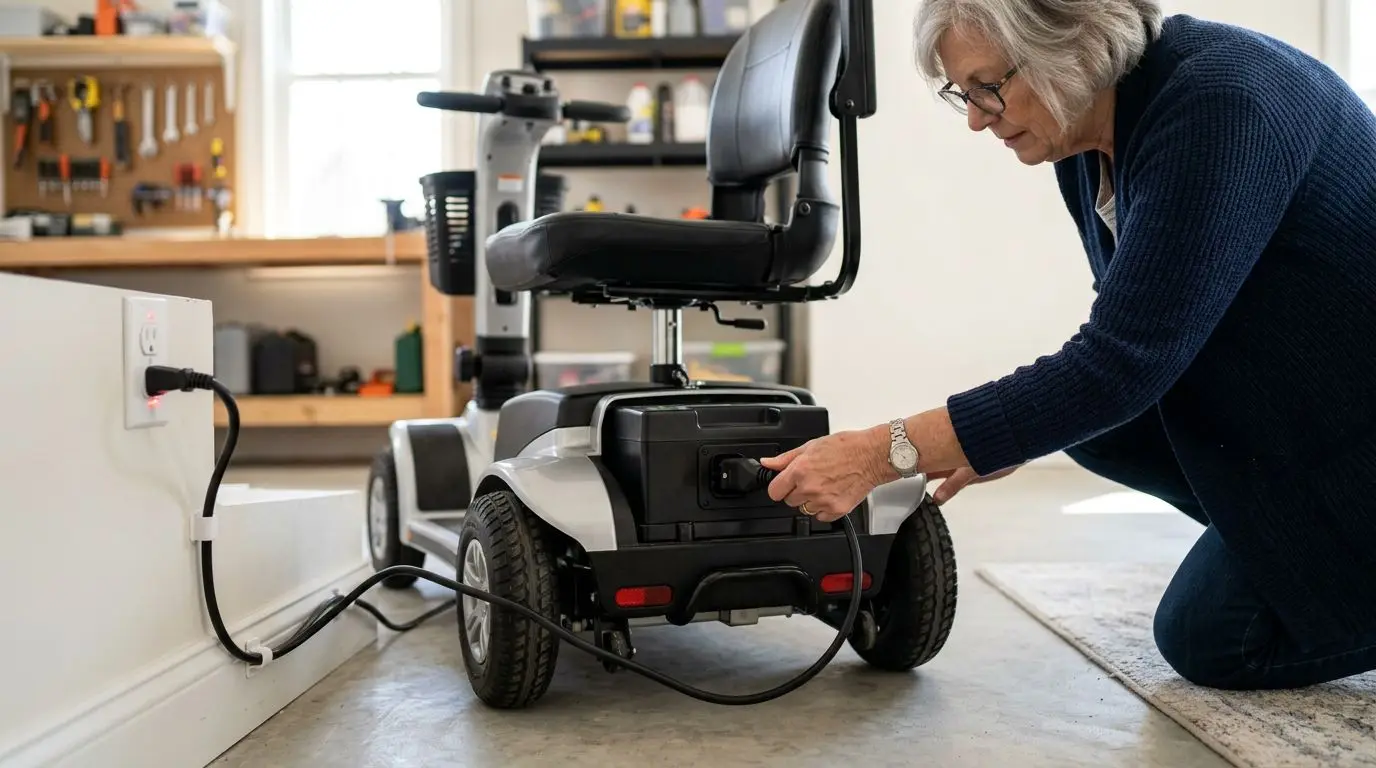
Mobility Scooter Batteries and Chargers: Range, Replacement Cost, and Care Tips
14 min read
Can You Upgrade a Mobility Scooter Battery for More Range? Compatibility, Cost, and Safety Limits
14 min read