A heavy-capacity mobility scooter is built to support a higher rider weight, often starting around 300 lb and commonly ranging to 500 lb or more. That higher rating usually points to a stronger frame, wider seat, larger motor, bigger batteries, and a more stable wheelbase. It can also mean a heavier scooter that is harder to transport. The right choice depends on your body size, daily travel distance, storage space, and whether you need to lift, ramp, or vehicle-haul the scooter.
For heavier adults, the listed weight capacity is only part of the decision. Comfort, usable range, seat width, turning space, ground clearance, and transport weight matter just as much. This guide explains the trade-offs in plain terms, without brand comparisons or catalog-style recommendations.
What a 300 to 500+ lb Weight Rating Really Means
Most standard mobility scooters are designed around moderate everyday loads. Heavy-capacity scooters are engineered for higher rider weights, often in the 300 to 500+ lb range. That number is the maximum user weight the scooter is designed to carry under specified conditions. It is not a comfort guarantee or a promise of full range on every surface.
A higher rating usually reflects several design changes. The frame may use heavier-duty tubing or reinforced attachment points. The suspension, seat post, tires, axle components, motor controller, and braking system may also be chosen for higher loads. A scooter rated for 450 lb typically has to manage more stress during starts, stops, turns, curb-cut transitions, and uneven pavement than one rated for 250 lb.
Still, capacity should not be treated as a target. A practical rule is to leave a margin when possible. If a rider weighs 330 lb, a scooter rated exactly at 330 lb may technically meet the number, but a higher-capacity design may feel more stable and less strained, especially when a basket, oxygen holder, winter coat, or groceries add another 10 to 30 lb.
Weight ratings also interact with terrain. A scooter carrying a heavier rider up a long driveway or over thick outdoor carpet will draw more power than the same scooter on a smooth indoor floor. That does not mean the scooter is unsafe when used within its limits, but real-world performance can vary.
| Common capacity class | Typical design focus | Common trade-off |
|---|---|---|
| Up to about 300 lb | Portability, smaller footprint, indoor use | Narrower seats and lighter frames |
| 300 to 400 lb | Stronger frame, more seat options, mixed indoor/outdoor use | Heavier parts and wider turning path |
| 400 to 500+ lb | Maximum support, stability, outdoor comfort | Harder vehicle transport and storage |
Comfort Changes: Seat Width, Suspension, and 20+ Inch Seating
Comfort is where many heavy-capacity scooters feel most different. Standard scooter seats may be around 16 to 18 inches wide, while higher-capacity designs often offer wider seating, commonly around 20 to 24 inches. That added width can reduce hip pressure, improve posture, and make it easier to sit without feeling squeezed by the armrests.
Seat depth matters too. A seat that is too shallow can leave the thighs unsupported, while one that is too deep may press behind the knees. Adjustable armrests, swivel seating, and a seat that slides forward or back can make transfers easier, especially if the user moves from a walker, cane, recliner, or vehicle seat.
Suspension becomes more important as weight rises. A heavier rider can feel every sidewalk crack if the scooter uses small solid tires and minimal suspension. Larger pneumatic or foam-filled tires, rear suspension, or full suspension can soften the ride. Even so, no scooter suspension turns rough terrain into a smooth path. Gravel, uneven grass, broken sidewalks, and steep curb cuts still require caution.
Legroom is another comfort factor. Many heavier adults also need more knee space or a longer floorboard. A cramped deck may force the knees outward or leave the feet awkwardly positioned. For a rider over 6 feet tall, floorboard length and tiller adjustment can be just as important as the weight rating.
- Seat width: measure hip width while seated, then allow extra room for clothing and movement.
- Armrest spacing: check the distance between armrests, not just the cushion width.
- Tiller reach: controls should be reachable without leaning forward.
- Foot space: both feet should rest securely, without hanging off the platform.
Range Expectations: Why a 15-Mile Rating May Be Less in Real Life
Scooter range is usually tested under controlled conditions. A listed range of 15 miles may be based on a specific rider weight, smooth surface, moderate speed, fully charged batteries, and mild temperatures. In daily use, heavier rider weight, hills, frequent starts and stops, cold weather, older batteries, and soft surfaces can all reduce range.
Heavy-capacity scooters often use larger batteries to offset the increased load. Many full-size scooters use two 12-volt batteries wired for a 24-volt system, though battery size and chemistry vary. Larger battery packs can support longer trips, but they also add weight. That matters if batteries must be removed, charged indoors, or handled by a caregiver.
Think in usable range, not maximum range. If your regular trip is 2 miles to a store and 2 miles back, you need at least 4 miles plus a safety margin for detours, slopes, wind, and battery aging. Many owners feel more comfortable when their routine trip uses no more than half the advertised range.
Speed also affects range. Riding at top speed drains batteries faster than steady, moderate travel. So does stopping every few yards in a crowded store or climbing a ramp repeatedly. A scooter may feel strong when fully charged and sluggish near the end of the battery cycle, particularly under higher load.
| Range factor | Why it matters | Practical takeaway |
|---|---|---|
| Rider and cargo weight | More weight requires more motor effort | Leave capacity margin when possible |
| Hills and ramps | Climbing draws heavy current | Plan extra battery reserve |
| Battery age | Capacity decreases over time | Expect less range after years of use |
| Surface type | Carpet, grass, and gravel add resistance | Use pavement or firm paths when available |
| Temperature | Cold can reduce battery performance | Charge and store batteries as directed |
Stability and Handling: 4 Wheels, Wider Bases, and Turning Radius
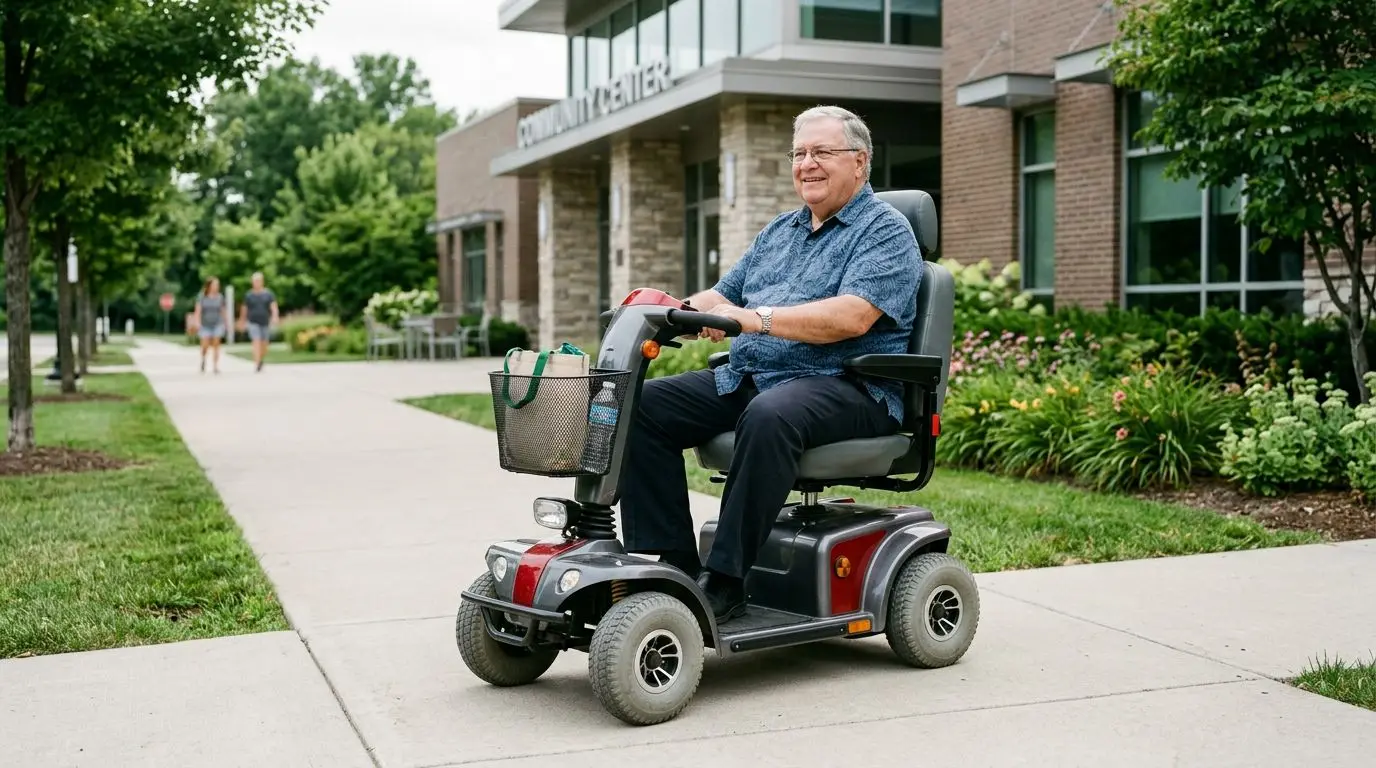
Many heavy-capacity scooters use a 4-wheel layout because it provides a broad support base. Three-wheel scooters can turn more tightly, but 4-wheel designs are often preferred when stability is the priority. A full-size 4-wheel scooter may have a turning radius around 55 to 80 inches, depending on length, tire size, and steering design.
A wider wheelbase can feel reassuring outdoors, especially on sidewalks, parking lots, and curb cuts. The trade-off is maneuverability. A scooter that feels steady in a driveway may be frustrating in a narrow hallway or small bathroom. Before choosing a high-capacity scooter, compare its turning radius with the tightest places you expect to use it.
Ground clearance is another handling detail. Some heavy-duty scooters offer around 4 inches or more of clearance, which can help over thresholds, uneven pavement, and small obstacles. More clearance is not permission to climb curbs. Mobility scooters are not off-road vehicles, and curb impacts can damage parts or cause tipping.
Speed control matters for safety. A heavier scooter has more mass, so smooth acceleration and predictable braking are important. If the rider has reduced hand strength, look for controls that can be operated without strain and brakes that engage automatically when the throttle is released.
Who it is best for
A higher-stability, heavy-capacity scooter is often best for someone who primarily rides outdoors, needs a wider seat, carries extra supplies, or feels unsteady on compact scooters. It may not fit as well for someone who lives in a very small apartment, needs to navigate tight indoor turns daily, or must lift scooter sections into a trunk without help.
Transport Trade-Offs: 200 to 350 lb Scooters Are Not Trunk-Friendly
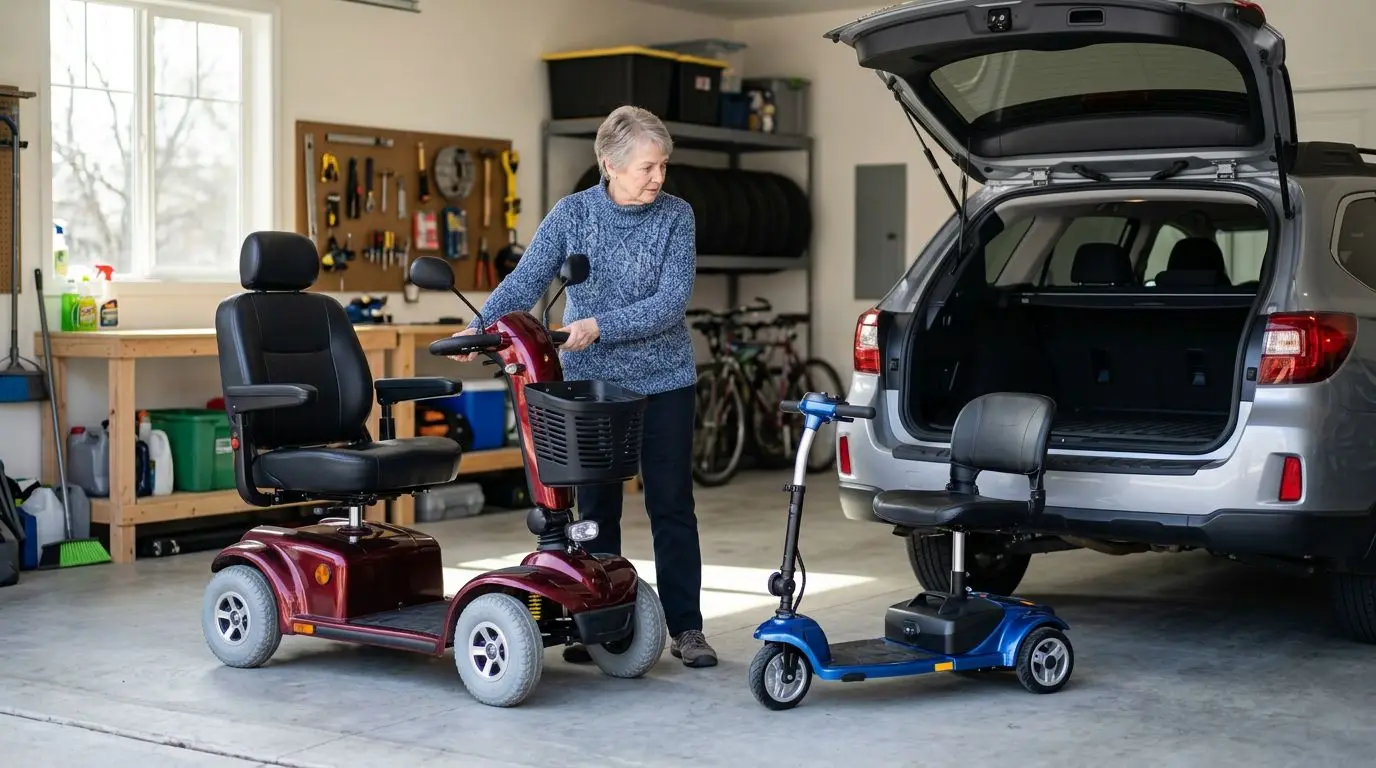
Transport is one of the biggest compromises. Many heavy-capacity scooters weigh far more than travel scooters. A full-size or bariatric-style scooter may weigh roughly 200 to 350 lb or more with batteries installed. Even if it can be disassembled, the heaviest section may still be difficult for one person to lift safely.
Compact scooters are often designed to break down into lighter pieces, but high-capacity scooters prioritize strength and stability. That means larger frames, heavier seats, bigger batteries, and sturdier wheels. These are useful features on the road, but inconvenient at the back of a sedan.
If vehicle transport is required, think through the entire loading system. Some owners use a platform carrier with a ramp, a hitch-mounted lift, or a van with a ramp. These options also have limits. A vehicle hitch has a tongue weight rating, and a lift has its own weight capacity. The combined scooter weight, batteries, accessories, and carrier must stay within safe limits.
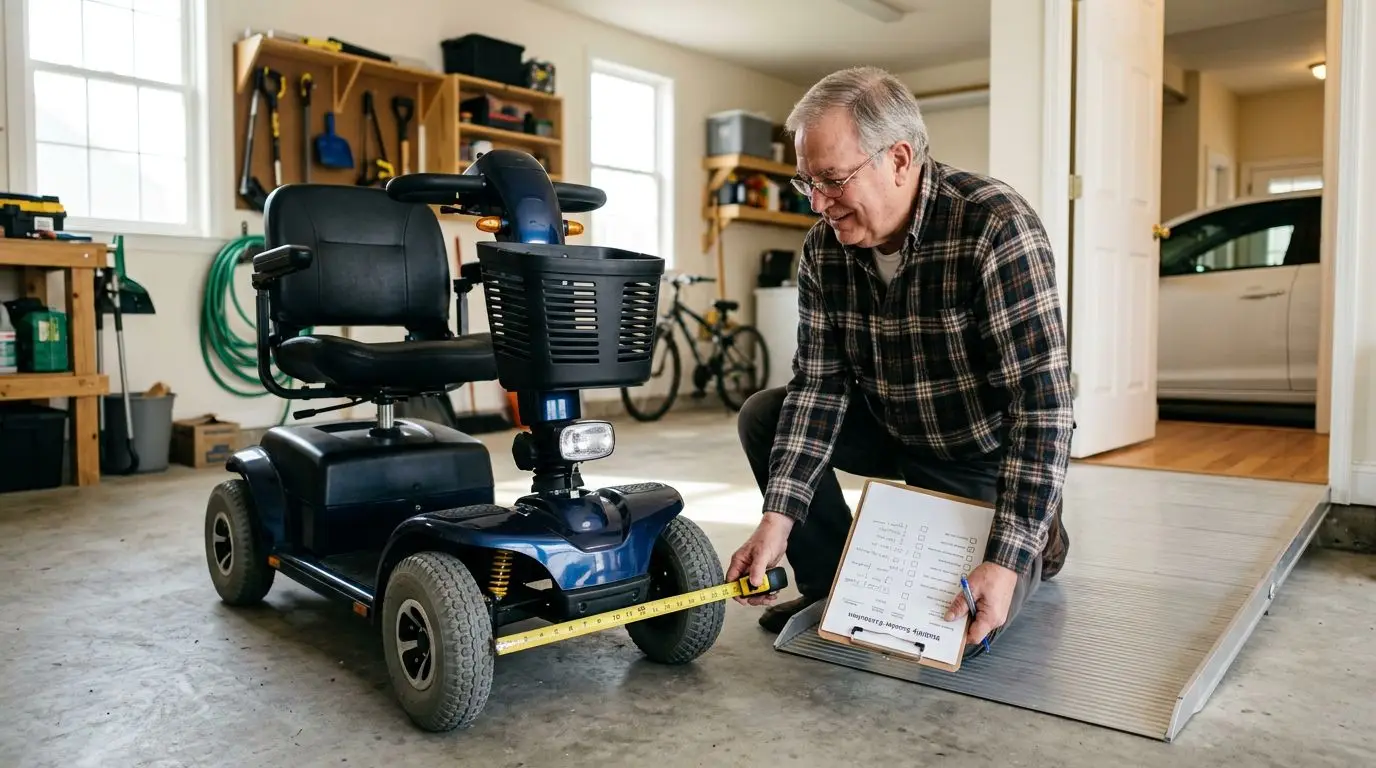
Storage space at home matters too. A full-size scooter may be 50 to 60 inches long and around 25 to 30 inches wide. Measure the doorway, hallway, turning area, and charging location before buying. A scooter that cannot pass through a 28-inch doorway or turn near the bed can become a daily obstacle.
| Transport method | Works best when | Watch out for |
|---|---|---|
| Disassembly by hand | Scooter parts are light enough to lift | Heavy batteries and awkward frame sections |
| Vehicle ramp | Van or SUV height is manageable | Ramp angle and secure tie-down points |
| Hitch carrier | Vehicle and hitch are rated for the load | Added rear weight and blocked access |
| Powered lift | Frequent transport is needed | Lift rating, installation, and battery draw |
| Home-only use | Trips are local or on property | Door widths, storage, and charging access |
How to Choose and Measure: 7 Checks Before You Buy
Choosing a heavy-capacity scooter should start with measurements, not marketing language. A 400 lb rating, 22-inch seat, or 60-inch length tells you more than vague terms like heavy duty. Use a tape measure and write down the numbers before shopping.
1. Confirm total supported weight
Include the rider, typical clothing, bags, cane holder, oxygen equipment, groceries, and accessories. If that total is 360 lb, look for a capacity comfortably above 360 lb rather than right at the line.
2. Measure seated hip width
Sit on a firm chair and measure the widest point across the hips or thighs. Add at least 1 to 2 inches for comfort, more if bulky clothing is common. Also check armrest width, because armrests can reduce usable space.
3. Measure legroom
Note your height, inseam, and preferred foot position. If possible, test whether the knees clear the tiller when turning. A scooter can have a wide seat and still feel cramped if the deck is short.
4. Measure doors and paths
Measure the narrowest doorway, hallway, elevator, porch, and storage area. Many interior doors are about 28 to 32 inches wide, and usable clearance can be less after trim, hinges, or rugs.
5. Check turning space
Mark the turning radius on the floor with tape if you can. A scooter with a 70-inch turning radius needs more than a narrow hallway to reverse direction comfortably.
6. Estimate daily mileage
Map your common route. A half-mile to the mailbox, 1 mile through a senior community, or 4 miles round trip to errands creates very different battery needs.
7. Plan charging and storage
Batteries should be charged according to the manual in a dry, accessible area. Make sure the outlet is reachable without stretching a cord across a walking path.
Feature Comparison: Tires, Motors, Brakes, and 4-Inch Clearance
Features matter more when the scooter carries higher weight. A small difference in tires, braking, or seat adjustment can change daily comfort. For example, moving from small solid tires to larger pneumatic-style tires may improve ride feel outdoors, while automatic electromagnetic braking can help the scooter stop when the throttle is released.
Motor size is often discussed, but the number alone does not tell the whole story. Gearing, controller programming, battery condition, wheel size, and total load all affect hill performance. If hills are part of daily life, ask about the scooter's rated incline and test it on a similar grade when possible. Many common access ramps are built around a 1:12 slope, meaning 1 inch of rise for every 12 inches of run, but driveways can be steeper.
| Feature | Why it helps | Trade-off |
|---|---|---|
| Wider seat, 20 to 24 inches | More room and less side pressure | Wider scooter footprint |
| Full or rear suspension | Smoother ride on sidewalks | More parts and added weight |
| Larger tires | Better outdoor comfort and clearance | Less compact turning |
| Higher ground clearance, about 4+ inches | Helps over thresholds and uneven spots | May raise seat height |
| Adjustable tiller | Improves reach and posture | Must lock securely before riding |
| Automatic braking | Stops when throttle is released | Still requires safe speed control |
Lighting, mirrors, reflectors, and a horn are useful for outdoor travel, especially in parking lots. They do not replace careful route planning. Use sidewalks, marked crossings, and low-speed settings in crowded areas whenever practical.
Safety and Fit: Why a 10 Percent Margin Can Help
A scooter that fits well is easier to use safely. If possible, leave at least a modest capacity margin, such as 10 percent, between expected load and the scooter's maximum rating. This is not a formal medical rule; it is a practical buffer for comfort, accessories, and real-world conditions.
Transfers deserve attention. A swivel seat can reduce twisting. Flip-up armrests can help with side transfers. A stable parked position, level ground, and engaged brake system are important before sitting down or standing up. If transfers are difficult, an occupational or physical therapy professional can provide individualized guidance without treating the scooter as a medical cure.
Do not modify a scooter to exceed its rating. Adding a nonapproved seat, oversized basket, homemade trailer, or altered suspension can change balance and stress parts in ways the scooter was not designed to handle. Follow the owner's manual for tire pressure, battery care, cleaning, and service intervals.
Visibility matters as well. A heavier scooter may take longer to stop on slopes or wet surfaces. Slow down before turns, avoid side slopes when possible, and do not carry loose items on the floorboard where they can interfere with pedals or steering.
FAQ: Heavy-Capacity Scooter Questions Answered in 5 Minutes
Is a heavy-capacity scooter the same as a bariatric scooter?
Often, but not always. Bariatric generally refers to equipment designed for larger body sizes and higher weight support. Heavy-capacity is a broader term and may include scooters rated around 300 lb as well as models rated much higher.
Will a higher weight rating automatically give me a longer range?
No. Higher-capacity scooters may have larger batteries, but they also weigh more and carry higher loads. Range depends on battery size, rider weight, terrain, speed, temperature, and battery age.
Can I put a heavy-capacity scooter in a car trunk?
Usually not easily. Many full-size high-capacity scooters are too heavy or bulky for trunk loading, even when disassembled. Check the heaviest piece weight, vehicle space, and whether a ramp, lift, or carrier is needed.
Is a 4-wheel scooter always better for heavier riders?
Not always, but 4-wheel scooters often provide a wider base and more stable feel. A 3-wheel scooter may turn more tightly indoors. The best choice depends on where you ride and how much turning space you have.
How much seat width should I choose?
Measure your seated hip or thigh width and add at least 1 to 2 inches for comfort. Also check the space between armrests, because that can be narrower than the cushion itself.
Do I need suspension?
If you ride mainly outdoors, suspension and larger tires can improve comfort on cracked sidewalks and pavement seams. For smooth indoor floors, suspension may be less important than turning radius and overall width.
Frequently asked questions
What weight capacity should I look for in a heavy-capacity mobility scooter? +
Choose a scooter rated above your total expected load, including body weight, clothing, bags, and accessories. If possible, leave a practical margin rather than choosing a scooter rated exactly at your weight.
Does a higher weight rating mean the scooter will be more comfortable? +
It can, because many high-capacity scooters include wider seats, stronger frames, larger tires, and better suspension. Comfort still depends on seat width, legroom, armrest spacing, tiller reach, and ride surface.
Why might real-world range be lower than the listed range? +
Range can drop because of heavier rider weight, hills, frequent stops, cold weather, soft surfaces, high speed, and battery age. Treat the listed range as a best-case estimate and plan a reserve.
Are heavy-capacity mobility scooters easy to transport? +
Many are not easy to lift into a trunk because they may weigh 200 to 350 lb or more with batteries. Transport may require a ramp, hitch carrier, powered lift, or van-style setup rated for the scooter's weight.
Should heavier adults choose a 3-wheel or 4-wheel scooter? +
A 4-wheel scooter often feels more stable and is common in heavy-capacity designs. A 3-wheel scooter may turn more tightly indoors, so the better choice depends on your home layout, outdoor use, and comfort with stability.
Related guides
Heavy-Duty Mobility Scooters: What Higher-Weight-Capacity Buyers Should Check Before Purchasing
16 min read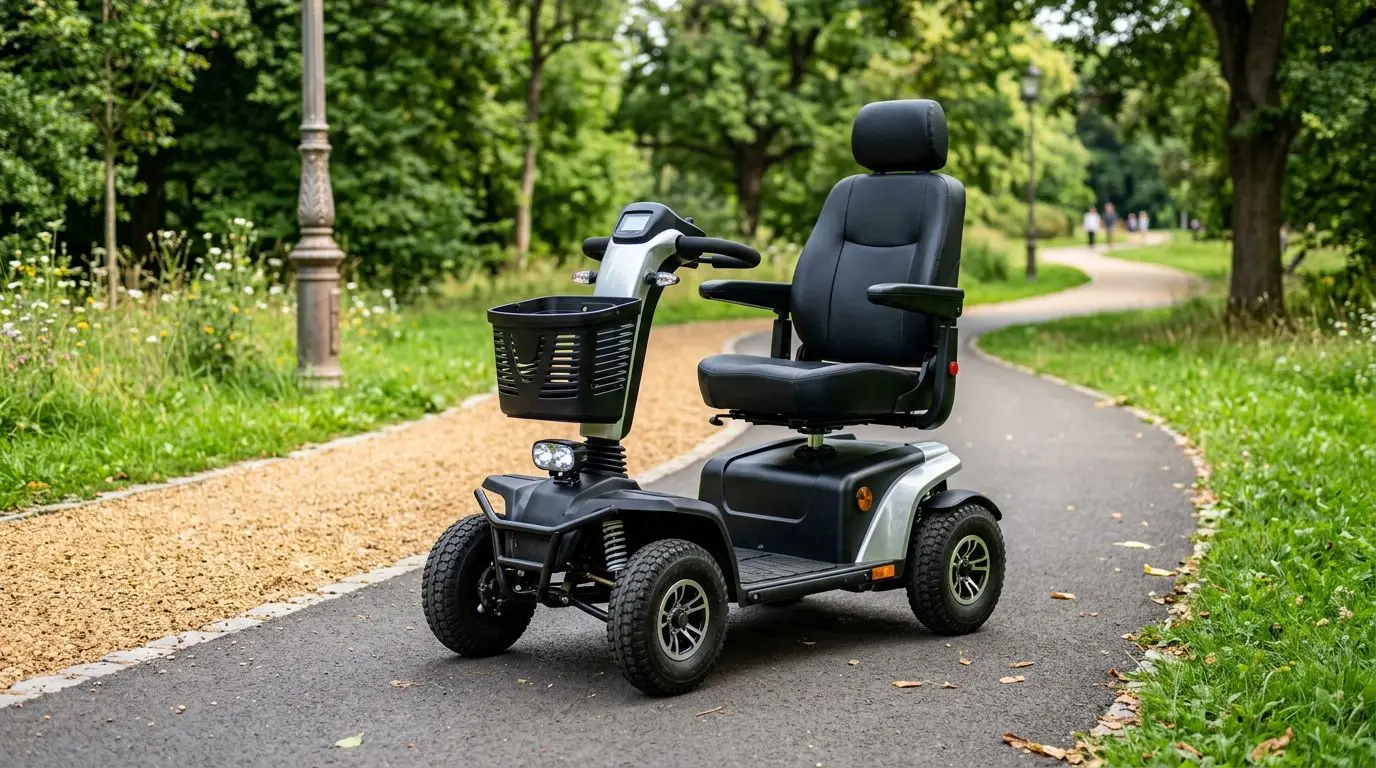
Heavy-Duty and All-Terrain Mobility Scooters: Weight Capacity, Comfort, and Outdoor Performance
15 min read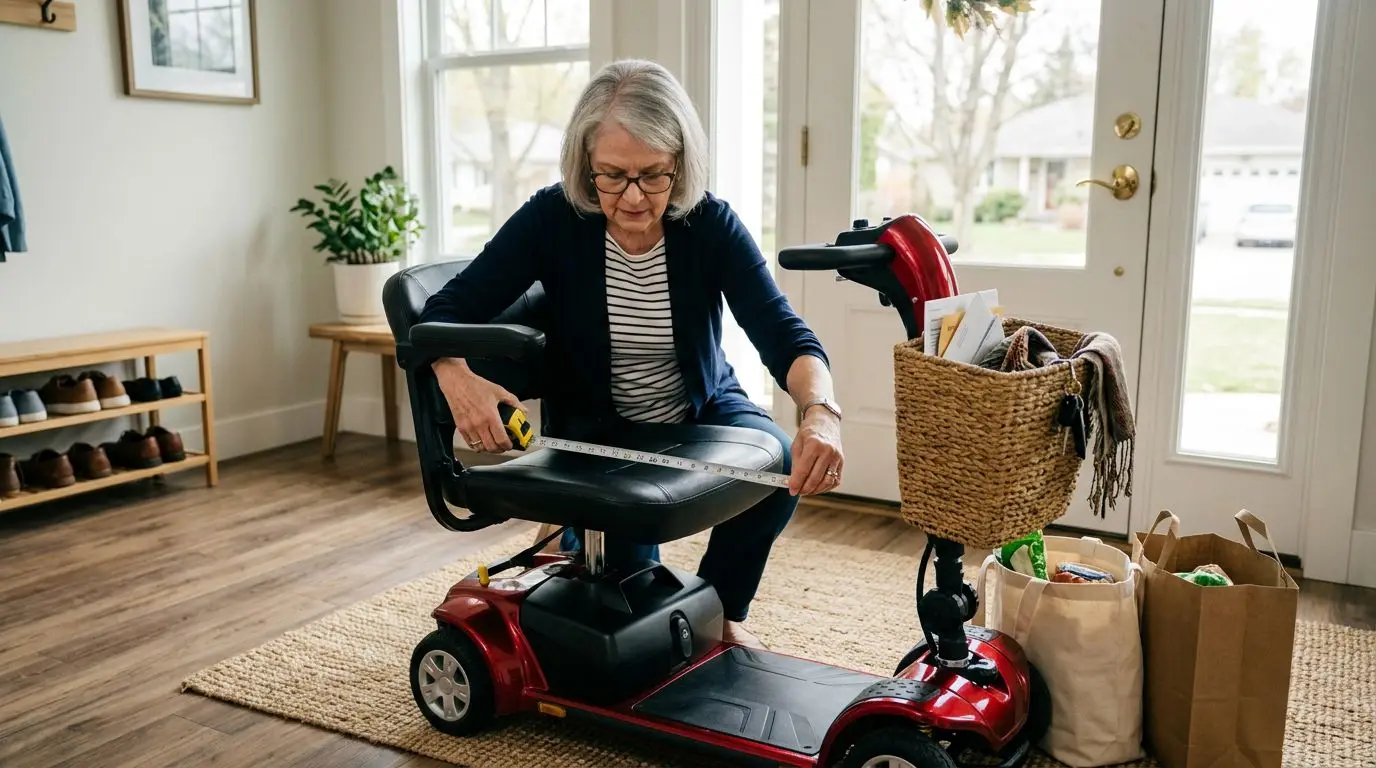
Mobility Scooter Weight Capacity: How Much Safety Margin Do You Really Need?
12 min read