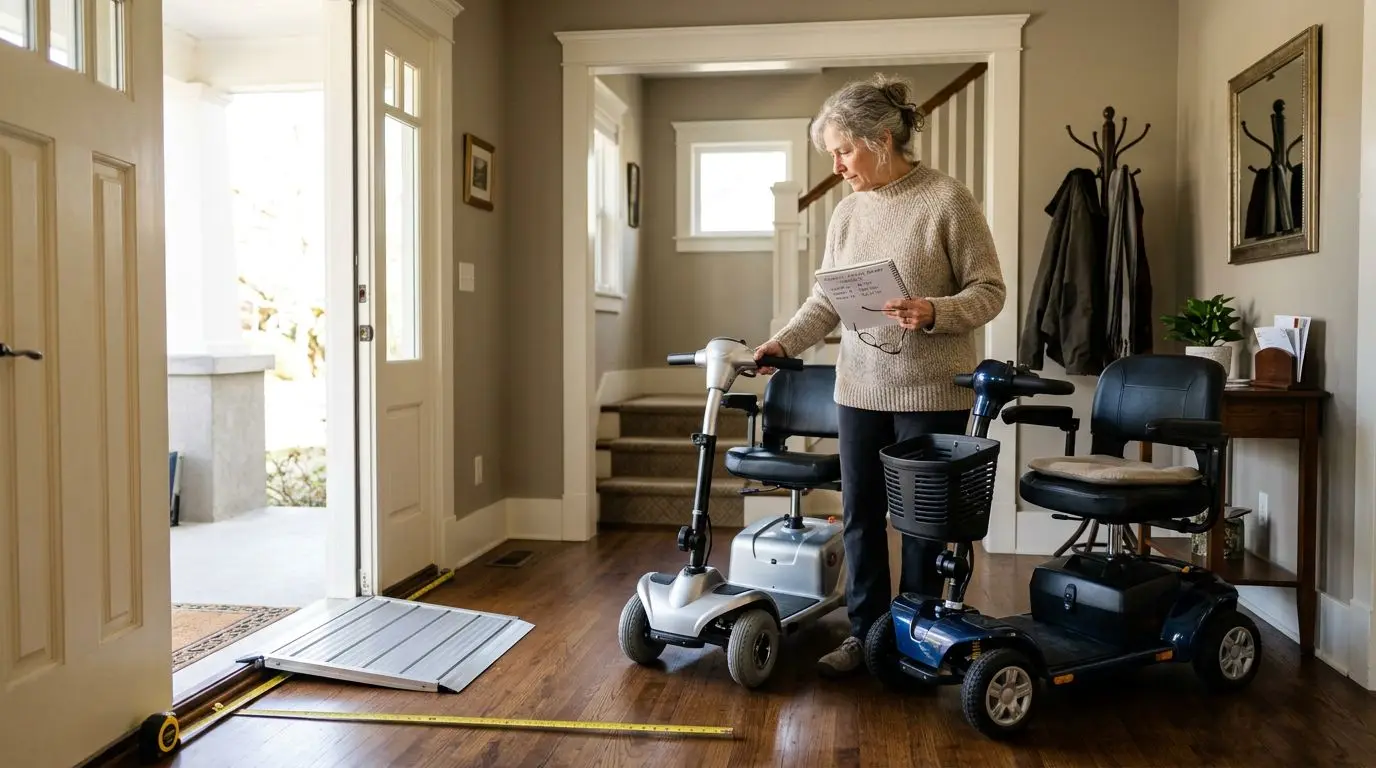
You can finance a mobility scooter through retailer payment plans, medical credit accounts, personal loans, credit cards, insurance benefits, or assistance programs. The best choice is the one with the lowest total cost, a monthly payment you can manage for the full term, and a scooter that truly fits your home, body, and daily travel needs.
Before applying, compare the monthly payment, APR, fees, payoff rules, and what happens if you miss a payment. A scooter is a mobility tool, not an impulse purchase, so financing should support safe use and independence without creating avoidable debt.
What mobility scooter financing means in 30 seconds
Mobility scooter financing means spreading the cost over time instead of paying the full amount upfront. Many buyers consider it because mobility scooters can range from under $1,000 for basic portable units to several thousand dollars for larger, higher-capacity, or specialty designs.
Most financing falls into 3 buckets: a payment plan arranged at the point of sale, a credit product such as a medical credit card or personal loan, or help from an insurance or assistance program. Each option has tradeoffs. One may offer a low monthly payment but a long repayment period. Another may look interest-free at first, then charge high deferred interest if the balance is not paid by a specific date.
The goal is not just getting approved. The goal is affordability. A $75 monthly payment can be manageable for one household and stressful for another, especially after adding delivery, accessories, maintenance, and possible battery replacement later.
5 common ways to finance a mobility scooter
There is no single best financing method for every buyer. The right option depends on your credit profile, income, medical documentation, urgency, and whether the scooter is needed mainly inside the home or for community use.
| Financing option | How it works | Typical fit | Key caution |
|---|---|---|---|
| Retail payment plan | Payments are split over a set term, often 6 to 36 months. | Buyers who want a simple application when purchasing. | Check the APR and whether the price changes when financed. |
| Medical credit account | A healthcare-focused credit line may be used for eligible medical equipment. | Buyers who can pay off a promotional balance on time. | Deferred interest can be expensive if the balance remains after the promo period. |
| Personal loan | A bank, credit union, or online lender provides a fixed loan with monthly payments. | Buyers who want a set payoff date and predictable payments. | Rates vary widely by credit, income, and loan term. |
| General credit card | You charge the scooter and repay the card balance over time. | Short-term financing or buyers using an existing low-interest promotion. | High ongoing APR can make the scooter cost much more. |
| Insurance or assistance | A public or private program may pay part or all of an eligible scooter. | Buyers with medical necessity documentation and program eligibility. | Approval rules can take weeks and may limit scooter type. |
A payment plan is convenient, but convenience is not the same as value. Ask for the cash price, the financed price, the term length, the APR, the monthly payment, and the total of payments in writing before you decide.
Who each financing option is best for: 3 common buyer situations
If you need a scooter soon and can manage predictable payments, a fixed-term plan or personal loan may be a reasonable fit. A 24-month term is easier to understand than an open-ended credit card balance because you can see the payoff date from the start.
If your need is medical and the scooter will be used in your home for daily activities, ask your clinician and insurer about durable medical equipment rules before paying out of pocket. Some coverage paths require a face-to-face evaluation, a written order, and a supplier that meets the plan’s requirements.
If your credit is limited or rebuilding, you may still receive offers, but read them carefully. A lower approval bar can come with a higher APR, a larger down payment, or stricter late-payment penalties. It may be safer to save for a larger down payment, choose a simpler scooter type, or ask about nonprofit assistance before accepting a costly loan.
| Buyer situation | Options to check first | Reason |
|---|---|---|
| Can pay off quickly, within 6 to 12 months | Promotional payment plan or low-interest card | Short payoff can reduce interest risk if the terms are clear. |
| Needs predictable budgeting over 2 to 3 years | Fixed-rate personal loan or installment plan | Set monthly payment and payoff date help with planning. |
| Has a documented medical need | Insurance, Medicare, Medicaid, veterans benefits, or local aid | Programs may reduce out-of-pocket cost if eligibility rules are met. |
| Needs only temporary mobility support | Rental, used equipment, or short-term assistance program | Financing a new scooter may not make sense for a 2- or 3-month need. |
How to choose a payment plan using 4 numbers
Before you apply, write down 4 numbers: the total scooter price, the down payment, the monthly payment, and the total amount you will pay by the end of the term. These numbers matter more than an advertisement promising “easy payments.”
Here is a simple way to compare offers. If one plan is $120 per month for 24 months, the payment total is $2,880 before any upfront fees. If another is $95 per month for 36 months, the payment total is $3,420. The smaller monthly payment may cost more overall because the term is longer.
Build in ownership costs too. Many scooters use rechargeable batteries, and battery life depends on battery type, rider weight, terrain, charging habits, and storage. Accessories such as a weather cover, basket, cup holder, rear-view mirror, ramp, lift, or extra charger can add to the upfront cost. Delivery or in-home setup may also be separate.
- Monthly comfort test: Choose a payment you could still make during a tight month, not just a normal month.
- Total cost test: Compare the full repayment amount, not only the advertised payment.
- Early payoff test: Ask whether there is a prepayment penalty.
- Late payment test: Ask what happens after 1 missed payment and after 30 days late.
A good financing choice should leave room for groceries, prescriptions, utilities, transportation, and emergency expenses. If the payment only works when everything goes perfectly, it may be too tight.
Medical coverage, prescriptions, and DME rules: start with the 1-home test
In the United States, coverage for a mobility scooter often depends on whether it is considered medically necessary durable medical equipment, commonly called DME. One important test is whether the scooter is needed to help you perform daily activities inside the home, such as getting to the bathroom, bedroom, or kitchen.
Medicare Part B may cover certain power mobility devices when strict medical necessity and supplier rules are met. If approved, Medicare commonly pays 80% of the Medicare-approved amount after the Part B deductible, and the beneficiary is responsible for the remaining 20% unless they have other coverage. Rules can change, and not every scooter or supplier qualifies, so verify directly with Medicare, your plan, and your clinician.
Medicaid coverage varies by state. Private insurance plans have their own prior authorization rules, documentation requirements, and supplier networks. Veterans may have additional benefit pathways through eligible programs. Local aging agencies, disability resource centers, charitable groups, and state assistive technology programs may also help with equipment loans, grants, refurbished devices, or low-interest financing.
Do not assume a doctor’s note automatically guarantees payment. Many programs require specific documentation, such as a mobility evaluation, diagnosis, functional limitation, home-use justification, and proof that a cane, walker, or manual wheelchair is not sufficient for the stated need.
Credit checks, APR, and fees: review 6 items before signing
Financing terms can look similar at first glance, but small details change the real cost. Review at least 6 items before you sign: APR, term length, total of payments, fees, promotional rules, and repossession or return terms.
APR stands for annual percentage rate. It reflects the yearly cost of borrowing, including interest and certain fees. A 0% promotional offer can be useful, but only if you understand whether it is truly interest-free or deferred-interest financing. With deferred interest, interest may be charged from the original purchase date if the full balance is not paid by the deadline.
Ask whether the application uses a hard credit inquiry, which can affect your credit score temporarily, or a soft inquiry, which usually does not. If a co-signer is required, that person is legally responsible for the debt if you do not pay. That can strain family finances, so have a clear conversation first.
- APR: Is it fixed or variable?
- Term: Is it 12, 24, 36, or more months?
- Fees: Are there origination, documentation, late, returned-payment, or processing fees?
- Promotional deadline: What exact date must the balance be paid?
- Returns: Can the scooter be returned, and does financing cancel automatically?
- Default: What happens if payments stop?
Keep copies of every agreement. If the salesperson explains something verbally, ask where it appears in the written contract.
How to measure before financing: 7 scooter fit checks
Financing the wrong scooter is an expensive mistake. Before you commit to a loan or payment plan, measure the places where the scooter must work and confirm the rider’s support needs.
Start with doorway width. Many interior doorways in older homes are around 28 to 32 inches wide, and hallways may be narrow or have tight turns. A scooter that works well outdoors may be frustrating inside if its turning radius is too large. Also measure ramp length, storage space, vehicle cargo area, and elevator dimensions if you live in an apartment or senior community.
Rider fit matters too. Check the scooter’s stated weight capacity, seat width, seat-to-floor height, tiller adjustment, legroom, and whether the controls can be used comfortably. If you have limited hand strength, shoulder pain, balance changes, or difficulty transferring, ask an occupational therapist, physical therapist, or qualified mobility professional for guidance.
| Fit check | What to measure or confirm | Why it matters |
|---|---|---|
| Doorways | Measure the narrowest doorway in inches. | The scooter must pass through safely without scraping or forcing turns. |
| Turning space | Check halls, kitchens, bedrooms, and bathroom approaches. | A larger turning radius can limit indoor use. |
| Rider weight | Compare body weight plus carried items to the stated capacity. | Overloading can reduce performance and safety. |
| Seat size | Check seat width and comfort during a real sit test if possible. | Poor seating can make daily use uncomfortable. |
| Transport | Measure trunk, SUV cargo area, lift, or ramp space. | Portable scooters still have parts that may be heavy to lift. |
| Battery range | Estimate your typical daily travel in miles. | Published range can drop with hills, weight, surfaces, and cold weather. |
| Storage and charging | Identify a dry charging spot near a standard outlet. | Batteries need regular charging and safe storage conditions. |
For travel, ask about the heaviest piece if the scooter disassembles. A scooter may be called portable, yet the heaviest section can still be difficult for one person to lift safely.
Renting, used scooters, and assistance programs for short needs under 90 days
If the scooter is needed for recovery after surgery, a temporary condition, or a specific trip, renting may cost less than financing a new unit. A 30-, 60-, or 90-day need is worth comparing with the total cost of a multi-year payment plan.
Used scooters can also reduce the upfront price, but they require careful inspection. Ask about battery age, charger condition, service history, tire wear, brakes, key or control issues, and whether parts are still readily available. If possible, have a knowledgeable technician inspect the scooter before money changes hands.
Community options vary, but many areas have centers for independent living, Area Agencies on Aging, faith-based groups, veterans organizations, and assistive technology reuse programs. Some lend equipment temporarily. Others sell refurbished devices at reduced cost or connect buyers with grants.
Used or rented equipment still needs to fit the rider and home. A lower price is not a bargain if the scooter cannot turn in the hallway or the seat causes unsafe transfers.
Application checklist: 10 documents and questions to prepare
Having documents ready can make financing or coverage applications smoother. Some lenders decide within minutes, while insurance or assistance programs may take days or weeks depending on documentation.
- Government-issued ID.
- Current address and contact information.
- Income information, such as Social Security, pension, employment, or other benefits.
- Monthly housing cost, if requested by a lender.
- Insurance card and plan information.
- Clinician’s order or mobility evaluation, if seeking medical coverage.
- Measurements of home doorways, hallway turns, and storage area.
- Preferred scooter type, such as travel, full-size, heavy-duty, or outdoor-oriented.
- Written quote showing cash price, delivery, accessories, taxes, and fees.
- Questions about APR, term, early payoff, late fees, returns, and warranty service.
Take your time with the paperwork. If you feel rushed, pause. A reputable financing process should allow you to read the terms, ask questions, and take a copy home or save a digital version.
Feature choices that affect financing cost: compare 6 scooter types and features
The scooter itself drives the amount you need to finance. A compact travel scooter usually costs less than a larger scooter designed for higher weight capacity, longer range, or rougher outdoor surfaces. The right choice is the least complicated scooter that safely meets your daily needs.
| Type or feature | Usually affects cost because | Best for |
|---|---|---|
| 3-wheel design | Often offers tighter turning and a simpler frame. | Indoor use and users who prioritize maneuverability. |
| 4-wheel design | May add stability and a wider base. | Outdoor paths, longer trips, and users wanting a steadier feel. |
| Travel scooter | Designed to disassemble or fold, with smaller batteries and lighter parts. | Car transport and occasional errands. |
| Full-size scooter | Often includes a larger seat, stronger motor, and longer battery range. | Daily use and users who need more comfort. |
| Heavy-duty scooter | Higher capacity components, larger frame, and stronger drivetrain add cost. | Higher rider weight needs or more demanding surfaces. |
| Outdoor-oriented features | Larger tires, suspension, lighting, and ground clearance increase complexity. | Sidewalks, uneven pavement, and longer community trips. |
Avoid paying for features you will rarely use. If your main need is moving from the bedroom to the kitchen and mailbox, a large outdoor scooter may create storage and turning problems. If you regularly travel over cracked sidewalks or long distances, a very small travel unit may not be supportive enough.
Frequently asked questions: 5 quick answers
Can I make monthly payments on a mobility scooter?
Yes. Many buyers use installment plans, medical credit accounts, personal loans, or credit cards to make monthly payments. Compare the APR, term, fees, and total repayment amount before choosing.
Will Medicare pay for a mobility scooter?
Medicare Part B may cover certain power mobility devices when they are medically necessary for use inside the home and all program rules are met. You generally need a clinical evaluation, proper documentation, and an enrolled supplier. Coverage is not guaranteed.
Is medical financing better than a personal loan?
It depends on the terms. Medical financing may offer a promotional period, while a personal loan may offer fixed payments and a clear payoff date. The better choice is the one with the lower total cost and manageable monthly payment.
Can I finance a scooter with bad credit?
Some financing programs consider applicants with lower credit scores, but the cost may be higher. Review APR, fees, down payment, and late-payment rules carefully. Also check assistance programs, used equipment, or a larger down payment before accepting expensive credit.
Should I rent instead of finance?
Renting can make sense for a short-term need, such as 30 to 90 days after an injury or surgery. If you expect to use a scooter daily for years, buying or financing may be more practical, provided the payment is affordable.
Frequently asked questions
Can I make monthly payments on a mobility scooter? +
Yes. Common options include installment payment plans, medical credit accounts, personal loans, and credit cards. Compare the APR, term, fees, and total repayment amount before choosing.
Will Medicare pay for a mobility scooter? +
Medicare Part B may cover certain power mobility devices when they are medically necessary for use inside the home and all program rules are met. Coverage usually requires clinical documentation and an eligible supplier, and approval is not guaranteed.
Is medical financing better than a personal loan? +
It depends on the written terms. Medical financing may have a promotional period, while a personal loan may offer fixed payments and a clear payoff date. Choose based on total cost, monthly affordability, and repayment rules.
Can I finance a mobility scooter with bad credit? +
Some programs may consider applicants with lower credit, but the interest rate, fees, or down payment may be higher. Check assistance programs, used equipment, or a larger down payment before accepting high-cost financing.
Should I rent a mobility scooter instead of financing one? +
Renting can be a better fit for a short-term need, such as 30 to 90 days. If you expect daily use for years, buying or financing may make more sense if the scooter fits your needs and the payment is manageable.
Related guides

Free and Low-Cost Mobility Scooters: Grants, Nonprofits, Donations, and Local Assistance in the US
12 min read
Renting vs. Buying a Mobility Scooter: Which Option Makes Sense?
13 min read
Can Insurance Cover a Mobility Scooter Rental? Short-Term Needs, Recovery, and Prior Approval Rules
13 min read