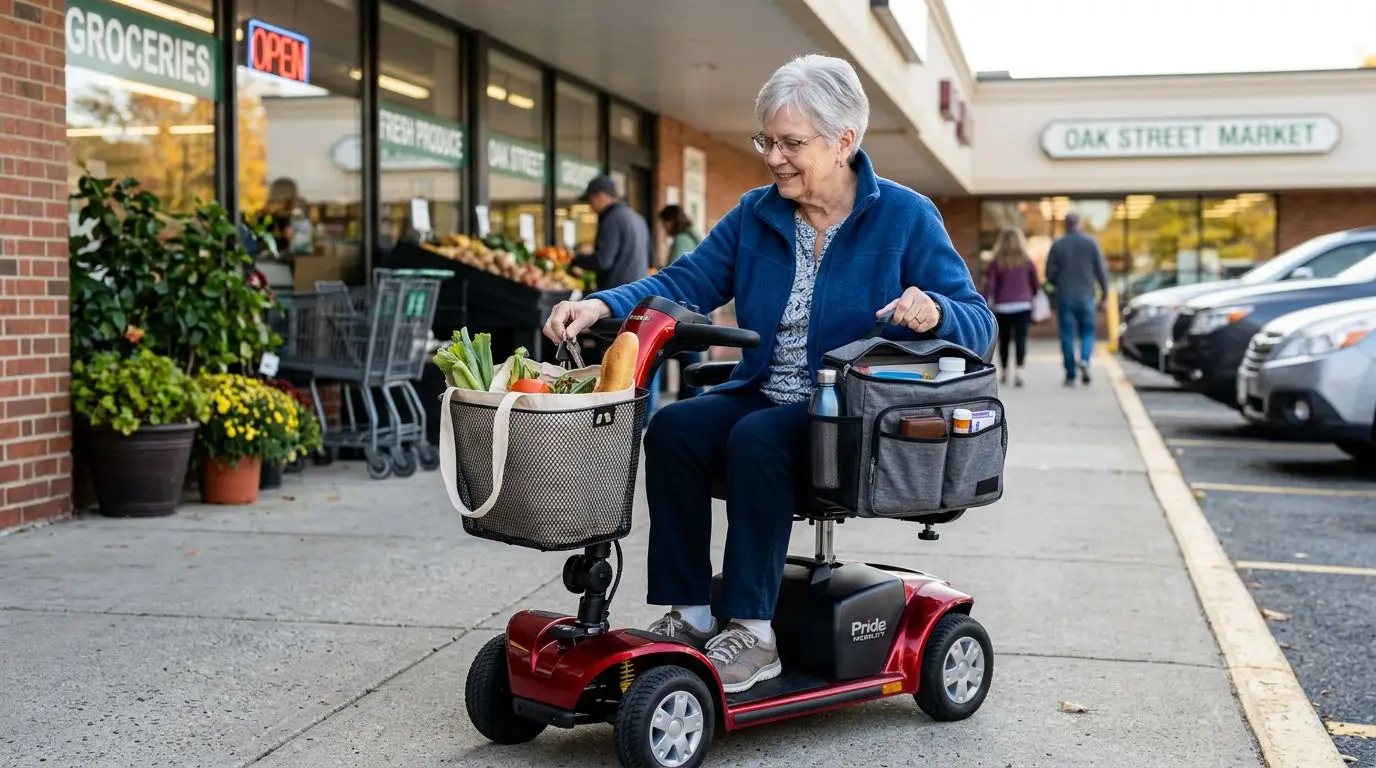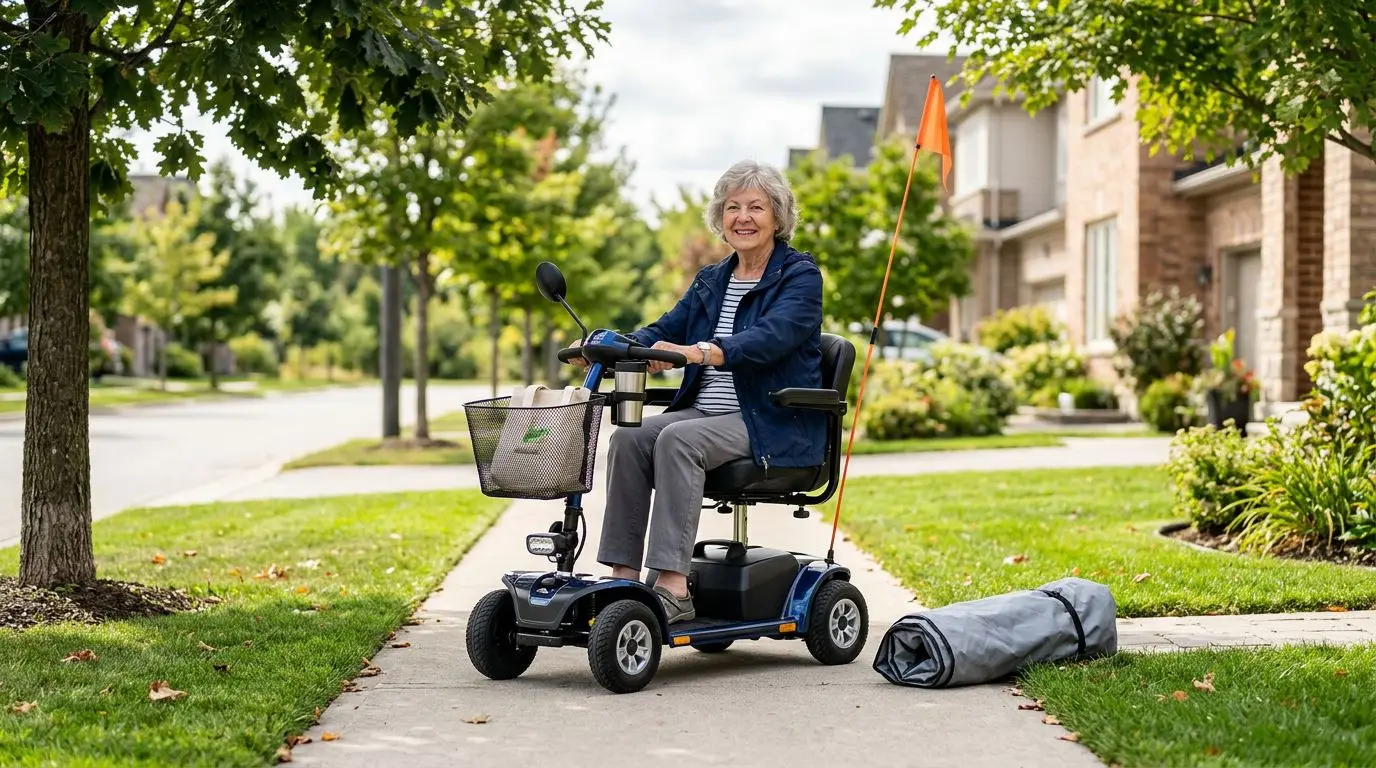
The best mobility scooter accessories solve real daily problems: seeing better, being seen, carrying essentials, staying dry, or sitting more comfortably. For most riders, the most useful add-ons are a rear-view mirror, extra lights or reflectors, a front basket or rear bag, a weather cover, and a cup holder or phone holder that fits the scooter safely.
Start with safety, then move to convenience. A bright light, stable storage, and properly secured accessories can make everyday trips smoother without adding clutter or affecting your scooter's balance.
Start with the top 10 mobility scooter accessories worth considering
Not every accessory fits every scooter. A compact travel scooter with a narrow tiller has different needs than a full-size 4-wheel scooter used for shopping trips, and a rider in a rainy climate may prioritize covers before cup holders.
These 10 categories are the most practical place to start for everyday use:
- Rear-view mirrors
- Front, rear, or side lights
- Reflective tape, flags, or high-visibility panels
- Front baskets and removable storage bags
- Rear seat-back bags
- Cane, crutch, or walker holders
- Cup holders and phone holders
- Seat cushions or back support cushions
- Rain covers, tiller covers, and scooter storage covers
- Weather protection such as ponchos, lap blankets, and wind-resistant outerwear
The right mix depends on how you use your scooter. Someone who rides 15 minutes to the mailbox needs a different setup than someone who spends 2 hours at a store, clinic, park, or community event.
Safety accessories: mirrors, lights, reflectors, and flags for visibility within 100 feet
Visibility is the first accessory category to review because many scooters sit lower than bicycles and cars. A seated rider may be harder to see in parking lots, near driveways, or at dusk. Accessories cannot replace safe riding habits, but they can give you and others more time to react.
Rear-view mirrors
A mirror is one of the simplest upgrades. It helps you check behind you before turning, backing up, or moving around other pedestrians. Many mirrors mount to the tiller, handlebar area, or armrest. The best choice depends on where your hands naturally rest and whether the mirror stays steady on uneven sidewalks.
Look for a mirror that gives a wide view without blocking your controls. If your scooter folds or disassembles for transport, confirm the mirror can be folded inward or removed in under 1 minute to prevent damage.
Lights and reflectors
Many scooters include basic lighting, but extra lights can help if you ride in the early morning, evening, indoor parking areas, or apartment hallways. A forward-facing white light improves your view of cracks, thresholds, and curb cuts. A red rear light helps others notice you from behind.
Reflective tape is low-cost, lightweight, and useful on the rear basket, scooter sides, and back of a bag. For best results, place reflective material at multiple heights, not only near the floorboard.
Safety flags
A flag can help drivers and pedestrians spot a scooter behind parked vehicles, store displays, shrubs, or other obstacles. This is especially useful for riders who use low-profile travel scooters. A flag mounted 4 to 6 feet high is easier to notice than the scooter seat alone.
| Safety accessory | Best use | Key buying point |
|---|---|---|
| Rear-view mirror | Checking behind before turns or backing up | Choose stable mounting and easy adjustment |
| White front light | Dim hallways, dusk rides, parking lots | Look for simple controls and secure attachment |
| Red rear light | Being seen from behind | Pick a position not blocked by bags or baskets |
| Reflective tape | Side and rear visibility | Apply to clean, dry surfaces |
| High flag | Low scooters near cars or crowds | Confirm it does not interfere with transport |
Storage accessories: baskets and bags that handle 5 to 25 pounds safely
Storage is often the accessory category riders notice first. Groceries, mail, a purse, oxygen supplies, a water bottle, and small medical items all need a safe place to ride. The key word is safe. Hanging a heavy bag from the tiller can affect steering and may tip the scooter forward on slopes.
Front baskets
Front baskets are convenient for light items you use often. They work well for keys, a small purse, mail, a water bottle, gloves, or a folded hat. Many front baskets are best treated as light-duty storage, often in the 5 to 10 pound range depending on the scooter and basket design. Always follow the stated limit for your equipment.
A basket should not block the headlight, tiller display, or your knees when turning. If the basket is deep, use a small pouch inside it so tiny items do not rattle or fall through.
Rear seat-back bags
Rear bags mount behind the seat and are a good choice for items you do not need while driving. They may carry a jacket, shopping items, paperwork, or a small umbrella. Because the weight sits behind the seat, pack it evenly and do not overload it. Heavy rear loads can change how the scooter feels on ramps.
Choose a bag with easy-pull zippers, high-contrast lining, and straps that stay tight. If you have reduced hand strength, a large zipper pull can make a real difference.
Under-seat and armrest pouches
Small pouches are helpful for phones, medication reminders, reading glasses, or a garage remote. Keep emergency information accessible, but avoid storing valuables in open compartments when leaving the scooter unattended.
| Storage type | Typical capacity use | Best for | Caution |
|---|---|---|---|
| Front basket | Light items, often 5 to 10 pounds | Mail, small purse, gloves | Do not block lights or steering |
| Rear seat-back bag | Bulky but moderate items | Jacket, paperwork, shopping | Avoid uneven or heavy loads |
| Armrest pouch | Small personal items | Phone, glasses, keys | Secure before driving |
| Lockable box | Items needing more protection | Medication pouch, wallet, documents | Adds weight and may require mounting |
Comfort accessories: cushions, cup holders, and phone holders for rides over 30 minutes
Comfort accessories matter most when you spend longer stretches on the scooter. A 10-minute trip may not reveal pressure points, but a 30- to 60-minute outing can make seat shape, armrest height, hydration, and reach feel much more important.
Seat cushions and back support
A cushion can change your seated height, hip angle, and reach to the controls. Common cushion thicknesses run about 1 to 3 inches, and even a 2-inch change can affect how safely your feet rest on the floorboard. Before using a thick cushion, sit on the scooter and confirm you can still steer, brake, and transfer safely.
Foam, gel, and air-style cushions each feel different. Some are built for pressure distribution, while others are mainly for softness. If you have a history of pressure injuries, circulation concerns, or complex seating needs, ask a qualified clinician for guidance instead of guessing.
Cup holders
A cup holder sounds simple, but placement matters. It should not block the throttle, horn, key, speed control, or your ability to turn the tiller fully. It should also grip the container well enough that a bump does not spill liquid near electronics.
Choose a holder that fits your usual drink size. A narrow holder may fit a small bottle but not an insulated cup. A deep holder is usually more stable than a shallow ring.
Phone holders
A phone holder can help with navigation, caregiver communication, ride-share pickup, or emergency calls. Mount it where you can see it without looking down for long. Do not text, scroll, or adjust settings while moving. Stop in a safe place first.
For many riders, the best phone holder has 1-hand release, firm corner support, and a mount that does not loosen on sidewalk seams.
Weather protection: covers, ponchos, and tiller guards for rain, sun, and 40-degree mornings
Weather accessories protect both the rider and the scooter. Moisture, grit, heat, and cold can make a scooter less pleasant to use and may affect controls if the scooter is not protected. Always check your owner's manual for weather guidance, because scooters vary in water resistance.
Scooter storage covers
A full scooter cover is useful if the scooter is stored in a garage, carport, porch, shared hallway, or storage room. Choose a cover that reaches low enough to shield the seat and tiller but does not drag where it can collect water. Breathable material helps reduce trapped moisture.
If you store the scooter outdoors, use extra care. Many mobility scooters are not designed for long-term exposure to rain, snow, or extreme heat. A cover is helpful, but it is not the same as indoor storage.
Tiller covers and control protection
A tiller cover protects the control area from light rain, dust, and splashes. It should let you see the display and operate the controls clearly. A cover that wrinkles over the throttle or horn can create a safety issue, so test it while parked before using it outside.
Rainwear and lap blankets
A poncho, waterproof jacket, or lap blanket can keep you more comfortable during a short wet trip. Avoid loose fabric that can hang near wheels, axles, or the floorboard. In cold weather, even a 40-degree morning can make hands stiff, so gloves with good grip may be more useful than a bulky blanket.
Canopy-style weather shields can add shade, but they also add height and wind exposure. Use caution in gusty conditions, on slopes, or near traffic. If a canopy makes the scooter feel less stable, remove it.
How to choose accessories: measure 4 areas before you buy
The best accessory is not just the one that looks useful. It has to fit your scooter, your body, and your routine. Before buying any add-on, measure four areas with a tape measure and write the numbers down.
- Tiller width and handle area: Measure the open space where a mirror, cup holder, or phone mount might attach.
- Seat-back width and height: Measure the area where a rear bag may hang without blocking the seat swivel or charging port.
- Basket mounting area: Measure the width, depth, and clearance around the headlight and tiller.
- Floorboard clearance: Confirm that bags, blankets, or cane holders do not interfere with your feet or turning radius.
Also check your scooter's total weight capacity. Accessories count toward the overall load when combined with the rider and cargo. For example, a 4-pound bag plus 12 pounds of groceries adds 16 pounds before you include anything else. That weight can affect range, braking distance, and ramp handling.
Fit questions to ask before ordering
- Does it mount with straps, clamps, brackets, or hook-and-loop fasteners?
- Can I install or remove it with my hand strength?
- Will it interfere with folding, disassembly, seat rotation, or battery removal?
- Can it stay attached during vehicle transport?
- Is it easy to clean with a damp cloth?
- Does it have reflective material or a high-contrast color?
When in doubt, choose the simpler accessory. Simple usually means fewer parts to loosen and fewer things to catch on doorways.
Who each accessory is best for: a 6-situation buying guide
Different riders have different priorities. This table matches common situations with practical accessory choices without assuming everyone needs the same setup.
| Rider situation | Best first accessories | Why it helps |
|---|---|---|
| Rides in parking lots or near driveways | Mirror, rear light, reflective tape | Improves awareness and visibility |
| Uses scooter for shopping | Rear bag, basket, secure pouch | Keeps items stable and off the tiller |
| Has limited hand strength | Large zipper pulls, easy-release phone holder, simple cup holder | Reduces fussing with small parts |
| Stores scooter in garage or shared space | Full cover, control cover, small lockable pouch | Protects from dust and discourages casual handling |
| Rides in cool or damp weather | Tiller cover, rainwear, grippy gloves | Helps keep controls usable and rider comfortable |
| Uses cane, crutch, or walker | Proper mobility-aid holder | Keeps equipment secure during travel |
A cane or crutch holder deserves special attention. Carrying a cane across your lap or hanging it loosely from the tiller can be awkward and unsafe. A proper holder should keep the aid vertical or securely contained without affecting steering or transfers.
Features that matter most: compare 8 accessory details before deciding
Many scooter accessories look similar online, but small details affect daily usability. The difference between a helpful add-on and an annoying one may be a strap that slips, a zipper that is hard to grip, or a mount that blocks the charging port.
| Feature | Why it matters | What to look for |
|---|---|---|
| Mounting method | Controls stability | Straps or clamps that stay tight |
| Weight | Adds to scooter load | Lightweight materials when possible |
| Water resistance | Protects contents and controls | Sealed seams or water-shedding fabric |
| Visibility | Helps others see you | Reflective trim or bright color |
| Ease of removal | Important for transport | Tool-free removal in 1 to 2 minutes |
| Cleaning | Reduces odor and grime | Wipeable surfaces |
| Control clearance | Prevents interference | No blockage of throttle, horn, or display |
| Security | Protects personal items | Closed zippers, covered pockets, or lockable options |
If you use paratransit, a vehicle lift, or a scooter carrier, removable accessories are often worth the extra attention. A bag or mirror that sticks out can be damaged during loading.
Installation and safety checks: a 5-minute routine before your first ride
After installing any accessory, take 5 minutes to test the scooter while parked and then at very low speed in a safe area. New accessories can change balance, reach, steering, and visibility in ways that are not obvious at first glance.
- Turn the tiller fully left and right. Nothing should hit your knees, basket, cup, or phone.
- Check the throttle, brake lever, horn, speed control, and key access.
- Sit down and transfer off again. The accessory should not block your usual movement.
- Drive slowly over a small threshold or sidewalk seam to check for rattling or shifting.
- Confirm lights, reflectors, or flags are not hidden by bags.
- Remove accessories before transport if the scooter manual or carrier instructions require it.
Recheck straps and clamps weekly if you ride often. A mount that was tight on Monday can loosen after several curb cuts, bumpy sidewalks, or trips in and out of a vehicle.
Do not modify the scooter frame, drill holes, bypass electronics, or attach anything to moving parts unless the scooter manufacturer or a qualified technician confirms it is appropriate. Accessories should improve daily use, not compromise the scooter's safety design.
Frequently asked questions: 5 answers about mobility scooter accessories
What is the most important mobility scooter accessory for safety?
For many riders, a rear-view mirror and added visibility are the best first safety upgrades. A mirror helps you check behind you, while lights, reflectors, or a flag help others notice you sooner.
Can I add a basket to any mobility scooter?
Not always. You need the right mounting area, enough clearance, and a basket that does not block the controls, headlight, or steering. Also check the basket's weight limit and your scooter's total weight capacity.
Are weather covers safe to use while riding?
Some tiller covers and rider rainwear can be used while riding if they do not interfere with controls or visibility. Full scooter storage covers are for parked scooters only and should be removed before driving.
Will accessories reduce scooter battery range?
They can if they add meaningful weight or wind resistance. A few small accessories may have little effect, but heavy cargo, a large rear bag, or a canopy in windy conditions can make the scooter work harder.
How do I keep bags from making my scooter unstable?
Keep weight low, centered, and within the accessory's stated limit. Avoid hanging heavy bags from the tiller, and test the scooter slowly after loading groceries or other items.
Frequently asked questions
What is the most important mobility scooter accessory for safety? +
A rear-view mirror plus added visibility is a smart starting point. Mirrors help you check behind you, while lights, reflectors, or a flag help others see you sooner.
Can I add a basket to any mobility scooter? +
Not always. The basket must fit the mounting area, stay clear of the controls and headlight, and remain within both the basket limit and the scooter's total weight capacity.
Are mobility scooter weather covers safe to use while riding? +
Tiller covers and rider rainwear may be safe if they do not block controls or visibility. Full scooter storage covers are only for parked scooters and should be removed before driving.
Do accessories affect mobility scooter battery range? +
They can. Light accessories usually have little effect, but heavy cargo or wind-catching items such as large covers or canopies may reduce range by making the scooter work harder.
How should I carry groceries on a mobility scooter? +
Use a basket or rear bag designed for scooter storage, keep weight balanced, and avoid hanging heavy bags from the tiller. Test the scooter slowly after loading it.
Related guides
Best Mobility Scooter Accessories for Daily Use: Storage, Safety, Comfort, and Weather Protection
14 min read
Mobility Scooter Attachments for Errands and Independence
15 min read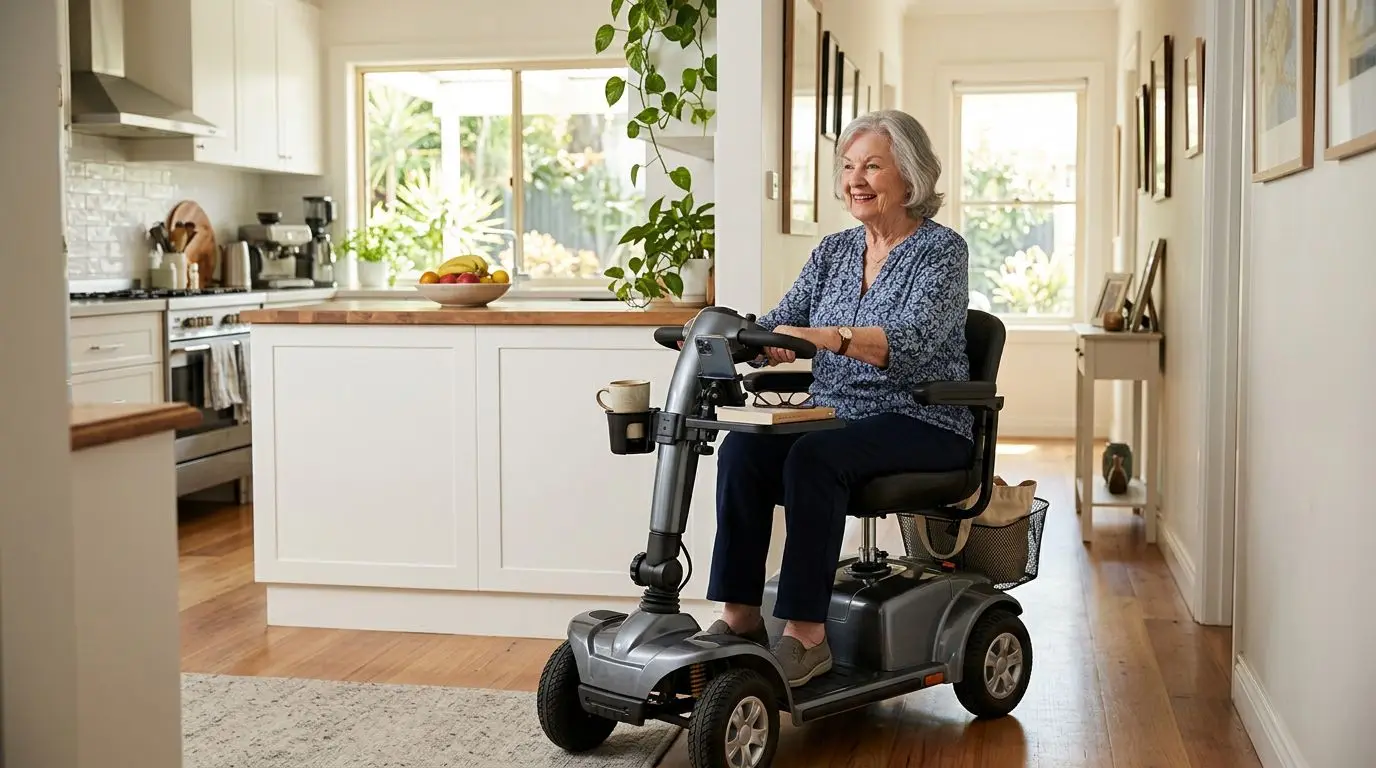
Mobility Scooter Cup Holders, Trays, and Phone Mounts: Safe Convenience Add-Ons
15 min read