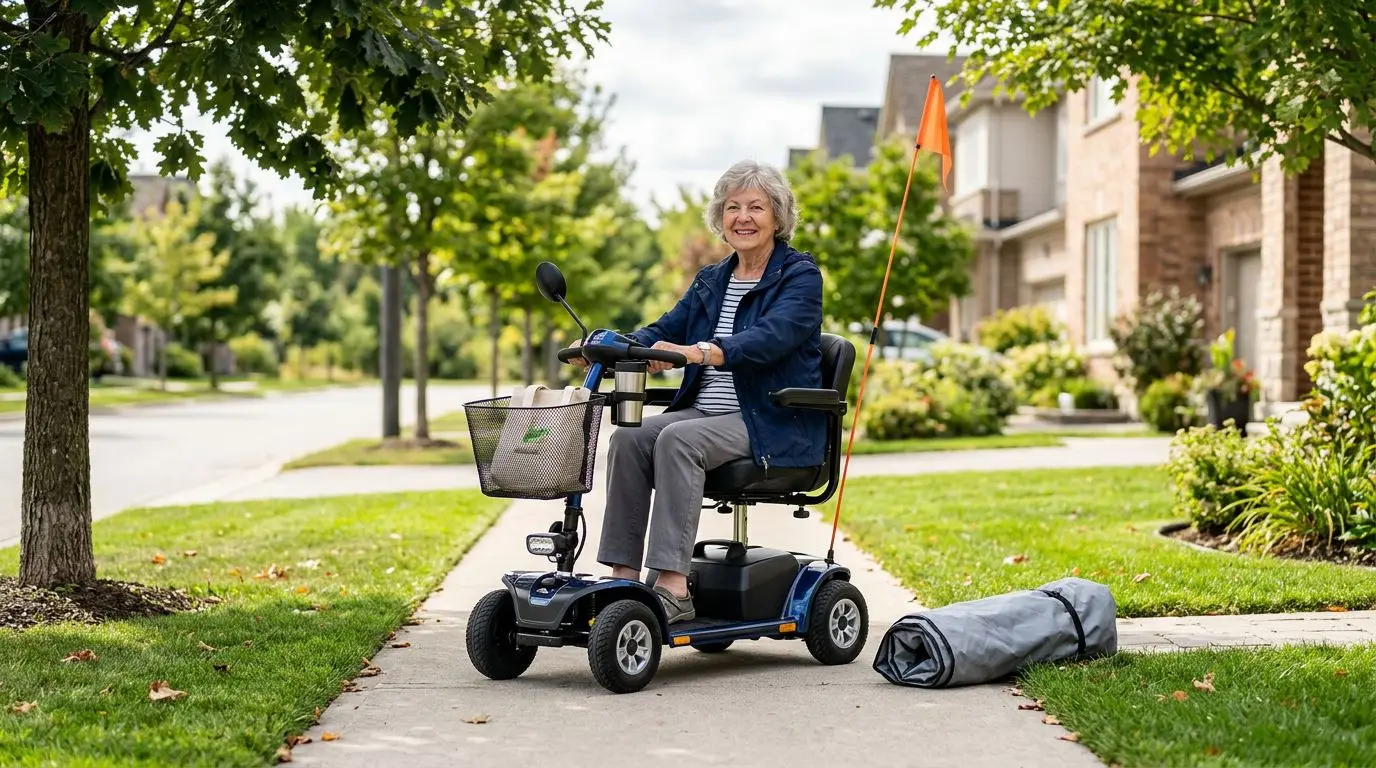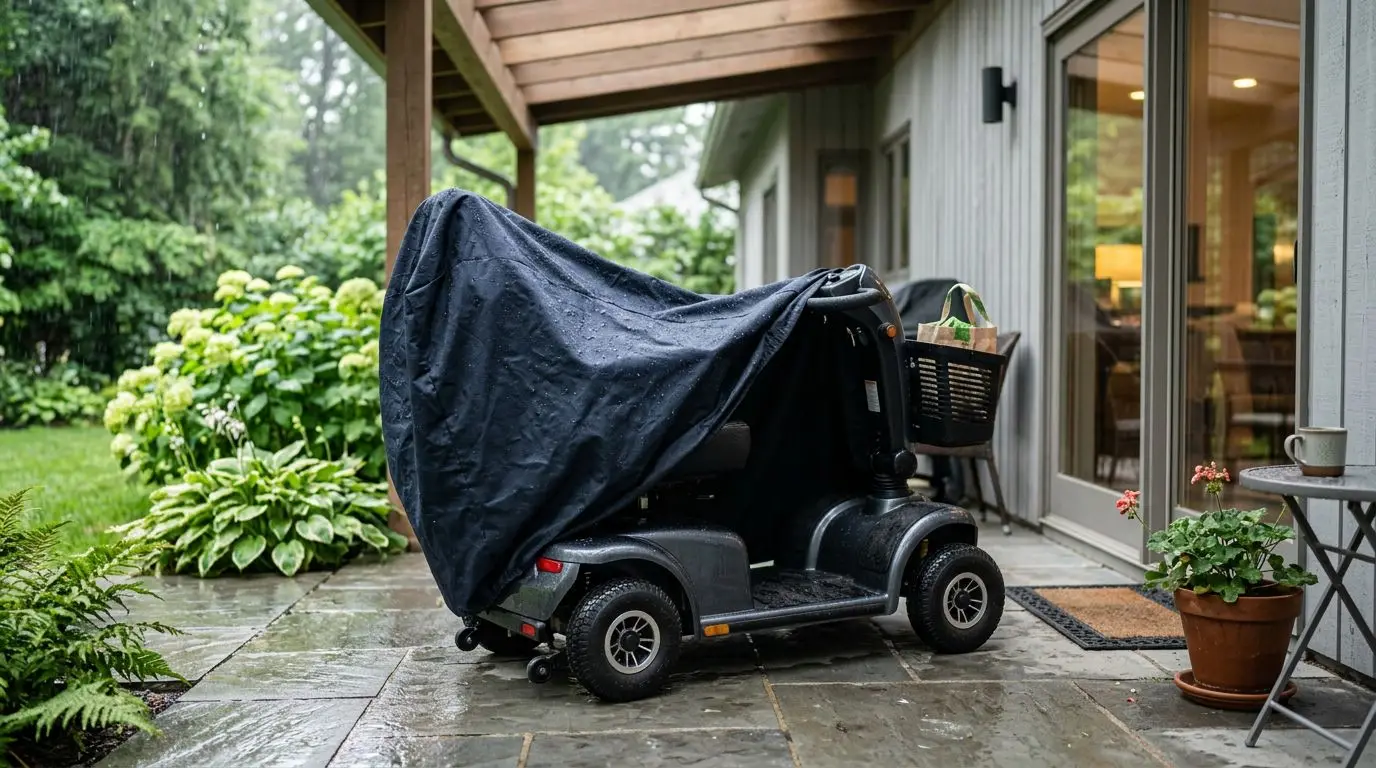
A good waterproof mobility scooter cover should fit the whole scooter, shed rain at the seams, let trapped moisture escape, and stay secure in wind or during transport. For most shoppers, the best choice depends on where the scooter will sit for 8 to 24 hours at a time, how often it rides on a vehicle lift, and whether you need full-scooter coverage or only short-term rain protection.
The right cover is not just a tarp. It should match the scooter’s length, width, height, storage location, and weather exposure so the seat, controls, battery area, and tires stay protected without creating condensation problems.
Why scooter covers matter for 30-minute rain and 30-day storage
Mobility scooters are built for everyday use, but they are not meant to sit uncovered through repeated rain, sun, dust, tree sap, or road spray. A cover adds a practical barrier over vulnerable surfaces: the padded seat, armrests, display panel, throttle area, charging port, basket, lights, and exposed hardware.
Rain protection is only part of the job. Outdoor storage can expose a scooter to UV rays for 6 or more hours a day, and travel on a rear vehicle lift can drive water, grit, and wind against the scooter at highway speeds. Indoor storage has issues too. Garages and sheds collect dust, pollen, and moisture swings.
A cover cannot make a scooter submersible or replace routine maintenance. It also should not be treated as permission to drive through deep standing water. For normal storage and transport, though, the right cover can reduce wear on upholstery and controls while keeping the scooter cleaner between rides.
3 main cover types: storage, travel, and rain poncho styles
Most scooter covers fall into 3 useful categories. Sellers may use different names, but the purpose is usually clear: long-term storage, vehicle travel, or quick rain shielding while the scooter is in use or parked briefly.
| Cover type | Best use | Typical coverage | Key concern |
|---|---|---|---|
| Outdoor storage cover | Patio, carport, garage, shed, or driveway parking | Full scooter, often down near the wheels | Ventilation and secure fit |
| Travel or transport cover | Rear vehicle lift, trailer, or open carrier | Full scooter with tighter shaping | Wind resistance and tie-down points |
| Rain poncho or tiller cover | Short rain exposure, waiting outside, or protecting controls | Controls, seat, lap area, or partial scooter | Limited protection for wheels and base |
An outdoor storage cover is usually the right choice when the scooter sits outside overnight. Look for full coverage that reaches low enough to shield the battery compartment and foot deck, with an elastic hem or straps to reduce flapping.
A travel cover has a tougher job. At 55 mph, loose fabric can whip, chafe, and tear. If you carry a scooter behind a car, the cover needs a snug shape, multiple tie-down locations, and a design that will not balloon like a sail.
A rain poncho or control cover is lighter and faster to use. It may be enough for a 20-minute stop at a medical appointment, but it is not a full outdoor storage solution.
How to measure your scooter in 4 steps before buying
Measure the scooter itself, not just the published scooter class. Two scooters described as full-size can differ by 8 to 12 inches in total length, especially if one has a front basket, larger rear tires, or an extended seat back.
Step 1: Measure total length
Use a tape measure from the farthest front point to the farthest rear point. Include the basket, bumper, anti-tip wheels, rear rack, and any accessory mounted on the scooter. If the scooter is 48 inches long, do not choose a cover that maxes out at exactly 48 inches. A little allowance helps the cover slide over the scooter without pulling tight at the corners.
Step 2: Measure total width
Measure across the widest point, often the armrests or rear wheels. Compact scooters may be around 20 to 22 inches wide, while larger scooters may be 24 to 28 inches wide or more. If your armrests angle outward, measure them in the position you normally use for storage.
Step 3: Measure total height
Measure from the floor to the highest fixed point. This may be the top of the seat back, headrest, mirror, canopy frame, or tiller. A scooter with a tall captain-style seat may need several extra inches compared with a folding travel scooter.
Step 4: Decide whether accessories stay on
Accessories change the fit. Baskets, oxygen tank holders, cane holders, rear bags, flags, cup holders, and mirrors can all create pressure points. If you leave these on during storage, measure with them installed. If you remove them, measure the scooter in that storage setup.
For easier daily use, many shoppers choose a cover with 2 to 4 inches of extra room in length and width. Too much extra fabric is not ideal, though. A cover that is 12 inches oversized can sag, collect water, and flap in wind.
Material and waterproofing: what 210D, 300D, and coated fabric mean
Cover fabric is often described by denier, such as 210D or 300D. Denier is a measure related to fiber thickness, not a complete quality score, but it offers a rough sense of fabric weight. A 300D fabric is generally heavier than a 210D fabric of the same material type.
Common scooter cover materials include polyester, nylon, and coated woven fabrics. The waterproof layer may be polyurethane, PVC, or another backing applied to the fabric. Some covers also have a UV-resistant finish to slow sun fading and brittleness.
Here is the practical way to read material claims:
- Water-resistant means the fabric sheds light moisture but may leak in steady rain.
- Waterproof fabric means the fabric layer resists water penetration, but seams and openings still matter.
- Sealed or taped seams help prevent leaks where panels are stitched together.
- Ripstop fabric uses a reinforced weave that may slow small tears from spreading.
- UV protection matters if the scooter is exposed to direct sun for several hours a day.
Do not judge by thickness alone. A heavy cover with poorly finished seams may leak faster than a lighter cover with better seam treatment. For outdoor storage, seam quality is one of the most important details because water naturally runs toward stitching, corners, and low spots.
Full-scooter coverage vs partial coverage: which protects the most?
Full-scooter coverage usually means the cover reaches from the top of the seat and tiller down near the wheels, often covering at least 80 to 90 percent of the scooter exterior. Partial coverage may shield only the seat, tiller, dashboard, or upper half.
| Coverage level | Protects well | Does not fully protect | Best for |
|---|---|---|---|
| Full cover | Seat, controls, deck, battery area, tires, frame | Underside and water rising from the ground | Outdoor storage and vehicle lifts |
| Upper-half cover | Seat, armrests, tiller, display, basket | Lower frame, wheels, deck edges | Covered patios and short parking periods |
| Tiller or control cover | Throttle, key area, display, switches | Seat, battery area, wheels, body panels | Quick rain protection during errands |
| Seat cover only | Seat cushion and backrest | Controls, base, battery compartment | Indoor dust or damp garage use |
If the scooter is stored outdoors for more than one night at a time, full coverage is the safer choice. The controls and seat are obvious priorities, but the lower scooter body also benefits from protection against splashing rain, mud, leaves, and winter debris.
Partial covers still have a place. They are lighter, easier to fold, and faster to install. A person with limited hand strength may prefer a smaller cover for daily errands and a larger full cover for home storage.
Ventilation matters after 8 hours under a cover
A waterproof cover that traps moisture can create its own problem. After 8 hours outdoors, temperature changes can leave condensation inside the cover, especially if the scooter was damp when covered or the ground underneath is wet.
Good ventilation helps moisture escape without letting rain pour in. Look for covered vents, mesh-backed vent openings, or a shape that allows some air movement under the lower edge while still shielding the scooter from direct rain. Vents are especially useful in humid climates, coastal areas, and garages where temperature swings happen overnight.
Never cover the scooter immediately after washing it unless you dry it first. The same rule applies after riding in rain. Wipe the seat, tiller, controls, and charging area with a dry cloth, then cover the scooter once visible water is removed.
Ventilation also helps with odor and mildew risk on upholstery. A breathable design is not a substitute for a dry storage area, but it reduces the chance that damp air sits against the seat for days.
Tie-downs, elastic hems, and wind control at 25 mph
Wind is one of the most common reasons covers fail. Even a moderate 25 mph gust can lift a loose cover, expose the scooter, or rub fabric against mirrors, armrests, and corners. Fit and fastening matter as much as waterproof fabric.
Useful fastening features include:
- Elastic hem: Helps the bottom edge hug the scooter body.
- Adjustable buckle straps: Let you tighten the cover under the scooter or around the base.
- Drawcord: Reduces loose fabric around the lower edge.
- Grommets: Provide tie points for cords, though metal grommets should be rust-resistant.
- Panel shaping: Reduces ballooning during outdoor storage or travel.
For a scooter parked in a driveway or patio, at least one under-body strap is useful. For a scooter carried on a vehicle lift, multiple secure points are better. The cover should not rely only on elastic if it will face road wind.
Avoid tying cords around brake cables, throttle parts, wiring, or delicate control areas. Anchor around sturdy frame areas when possible, and keep straps clear of hot exhaust, moving lift parts, and the vehicle license plate or lights.
Outdoor storage: what to look for if the scooter sits outside 24 hours
If a scooter stays outdoors for 24 hours or longer, choose a full cover designed for weather exposure rather than a thin dust cover. Outdoor conditions combine rain, UV light, wind, pollen, insects, and temperature changes.
For regular outdoor storage, prioritize these features:
- Full coverage down near the wheels
- Waterproof or strongly water-resistant coated fabric
- Taped, sealed, or well-protected seams
- Covered vents for air movement
- At least one under-scooter strap
- UV-resistant material or coating
- A storage bag so the cover can be kept clean when not in use
Location still matters. A covered porch or carport is better than open sky. Try to park the scooter on a level, hard surface rather than grass or bare soil, which can add moisture under the cover. If possible, keep the charger and electrical outlet protected from rain according to the scooter manual.
During long storage, check the scooter every few days after heavy weather. Make sure no water is pooling on top of the cover. Large puddles can stretch fabric and push water toward seams.
Travel covers for vehicle lifts: 5 checks before the first trip
Transporting a scooter on an open rear lift exposes it to road spray and wind from every direction. A cover that works on a patio may not be safe or durable at highway speed. Before the first trip, do these 5 checks.
- Check fit with the scooter loaded. Make sure the cover clears the lift platform and does not bunch near moving parts.
- Secure all loose edges. Loose fabric can whip against the scooter or vehicle.
- Keep lights and plate visible if required. Do not let the cover block required vehicle lighting or license plate visibility.
- Remove fragile accessories. Mirrors, baskets, flags, and bags may create stress points under wind.
- Stop after a short drive. After 5 to 10 minutes, pull over safely and check whether the cover shifted.
Some scooter owners remove the seat or fold the tiller before transport to reduce height and wind resistance. If you do that, measure the scooter in its travel position and choose a cover that fits that setup.
Do not use a cover that drags near the road. Fabric caught under a tire, lift hinge, or carrier rail can tear quickly and may create a safety hazard.
Indoor, garage, and shed use: a lighter cover may be enough for 7 days
If the scooter is stored indoors, in a dry garage, or in a shed for 7 days at a time, waterproofing may be less important than dust control and easy handling. A lighter cover can protect the seat and controls from dust, pet hair, pollen, and accidental scratches.
That said, garages and sheds are not always dry. Concrete floors can hold moisture, and uninsulated spaces may swing from cold nights to warm afternoons. If the storage area feels damp or smells musty, choose a cover with ventilation rather than a completely sealed plastic-like shell.
Indoor users should also think about weight and folding size. A large outdoor cover may be harder to lift over the scooter every day. If you use the scooter frequently, a lighter cover that you can install in 1 or 2 minutes is more likely to be used consistently.
Who it is best for: matching covers to 4 common scooter owners
The best cover depends on the owner, not just the scooter. Here are 4 common situations and the cover style that usually fits each one.
| User situation | Best cover approach | Why it works |
|---|---|---|
| Outdoor parking every night | Full waterproof outdoor cover with vents and straps | Protects against rain, sun, dust, and overnight moisture |
| Rear vehicle lift travel | Snug travel cover with multiple tie-down points | Controls flapping and road spray during transport |
| Apartment hallway or garage storage | Light dust cover or breathable water-resistant cover | Easier daily use with enough protection for indoor conditions |
| Errands in unpredictable weather | Small tiller cover plus a full home storage cover | Protects controls quickly without carrying a bulky cover |
If hand strength, shoulder range, or balance is limited, ease of use should matter more. A cover that is technically stronger but too hard to install may sit unused. Look for a manageable fabric weight, a clear front-to-back shape, and fasteners that can be handled without pinching.
How to choose: 9 features worth comparing before you buy
Before choosing a waterproof mobility scooter cover, compare these 9 features side by side. This keeps the decision practical and lowers the risk of buying a cover that looks right online but does not work well at home.
- Size range: Match length, width, and height, with a few inches of allowance.
- Coverage depth: Full coverage is better for outdoor storage; partial coverage is better for quick use.
- Seam protection: Taped or sealed seams help in steady rain.
- Ventilation: Covered vents reduce condensation.
- Fastening system: Elastic, drawcords, and straps prevent lifting in wind.
- Fabric weight: Heavier fabric may last longer outside, but it may be harder to handle.
- UV resistance: Important for scooters stored in direct sun.
- Packability: A travel cover should fold into a size you can store in a basket, trunk, or closet.
- Cleaning: Smooth coated fabric is easier to wipe down after pollen, road spray, or bird droppings.
Read the care instructions before washing. Many coated covers should not be machine dried because heat can damage waterproof layers. Mild soap, a soft cloth, and air drying are often safer.
Common mistakes that shorten cover life in 1 season
A cover can wear out quickly if it is used the wrong way. One season of sun, wind, and poor fit can damage fabric that might otherwise last much longer.
Common mistakes include buying a cover too small, leaving sharp accessories installed, covering a wet scooter without ventilation, allowing water to pool on a flat top, and using the same loose patio cover for highway travel. Another mistake is pulling the cover tight across mirrors or a tall seat back, which can stress the seams.
Storage matters too. When the cover is removed, shake off leaves and debris, let it dry, and fold it into its storage bag if provided. Do not pack a wet cover into a closed compartment for several days. That invites odor and mildew.
Inspect the cover monthly during heavy use. Small tears can often be addressed before they spread. Also check straps and buckles, since these parts take repeated stress in wind.
FAQ: 5 waterproof scooter cover questions answered
Are mobility scooter covers truly waterproof?
Some are made with waterproof coated fabric, but performance depends on seams, vents, openings, and fit. For steady outdoor rain, look for seam protection and full coverage rather than relying on the word waterproof alone.
Can I leave my mobility scooter outside under a cover all year?
A cover helps, but year-round outdoor storage is hard on any scooter. A covered porch, carport, shed, or garage is better. If outdoor storage is the only option, use a full ventilated cover and check the scooter after heavy rain, wind, snow, or extreme heat.
Should a scooter cover touch the ground?
Usually no. A cover should reach low enough to protect the scooter but not drag on the ground. Ground contact can wick moisture into the fabric and make the cover dirty or harder to remove.
Can I use a regular tarp instead?
A tarp can provide temporary rain protection, but it often fits poorly, traps condensation, and flaps in wind. A shaped scooter cover with vents and straps is usually safer and easier for repeated use.
Do I need a separate cover for the tiller controls?
Not always. A full cover protects the tiller during storage. A separate tiller cover can be useful for errands, light rain, or when you want quick protection without installing a full cover.
Bottom line: fit, vents, and secure straps matter most
The best waterproof mobility scooter cover is the one that fits your scooter dimensions, matches your storage or travel routine, and controls both rain and condensation. Full-scooter coverage is the strongest option for outdoor storage, while a snug travel cover is better for vehicle lifts and road spray.
Measure carefully, compare seam quality and ventilation, and do not overlook tie-downs. A cover that is easy to install in 2 minutes and secure in real weather will do more good than a bulky cover that stays folded in the garage.
Frequently asked questions
Are mobility scooter covers truly waterproof? +
Some covers use waterproof coated fabric, but the real protection depends on seam treatment, vents, openings, and fit. For steady rain, choose full coverage with protected seams and secure straps.
How do I measure my scooter for a cover? +
Measure total length, width, and height with any accessories left on. Include baskets, mirrors, rear racks, armrests, and anti-tip wheels, then allow a few extra inches so the cover fits without stretching.
Can I use the same cover for outdoor storage and vehicle travel? +
Sometimes, but only if the cover is snug and has strong tie-down points. A loose outdoor cover can flap or tear on a rear vehicle lift, especially at highway speeds.
Should a waterproof cover have vents? +
Yes, vents are helpful for outdoor and garage storage because they let trapped moisture escape. Without ventilation, condensation can build up under the cover after temperature changes.
Is a tarp good enough for a mobility scooter? +
A tarp may work for short emergency coverage, but it usually fits poorly and can trap moisture. A shaped scooter cover with vents, elastic, and straps is better for regular use.
Related guides
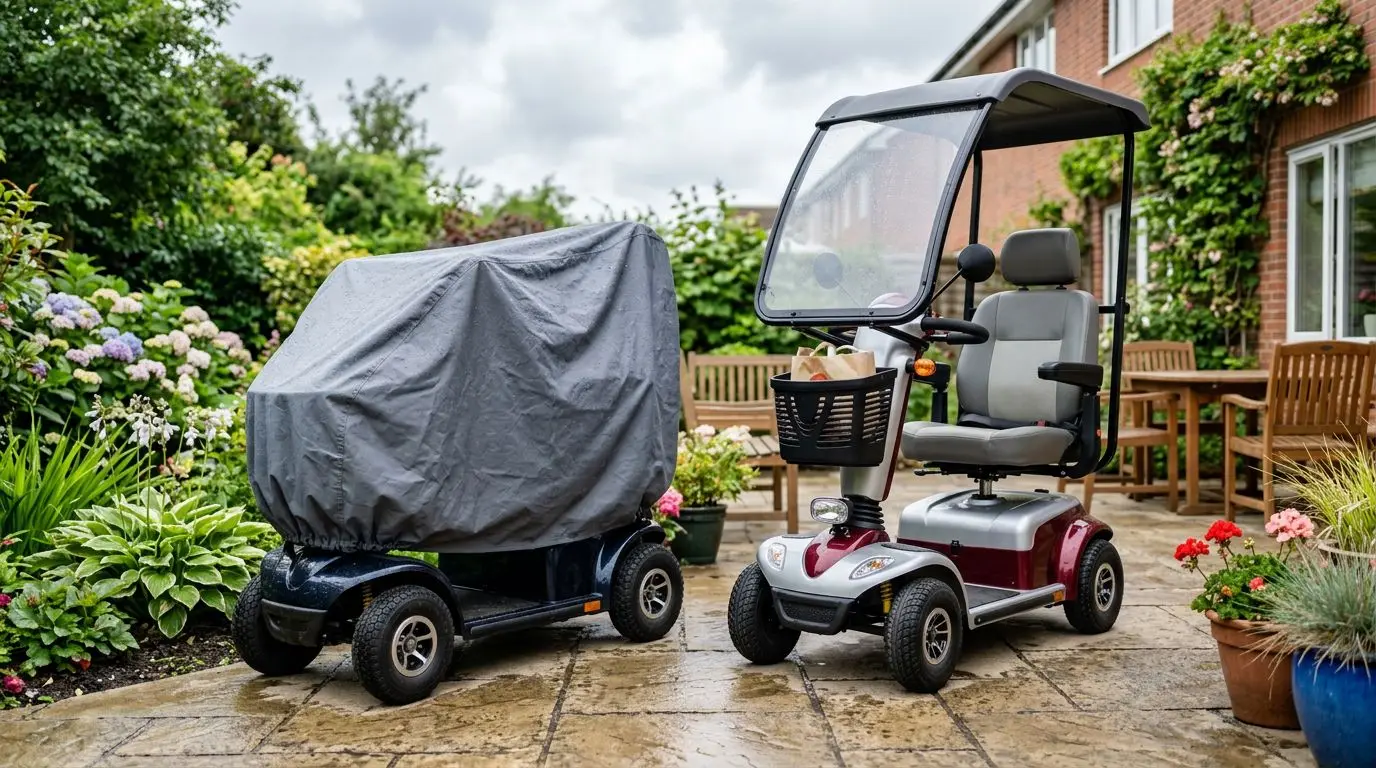
Mobility Scooter Covers, Canopies, and Weather Enclosures: What Protects the Scooter vs. the Rider?
13 min read
Weather Accessories for Mobility Scooters: Sun, Rain, and Cold Protection
13 min read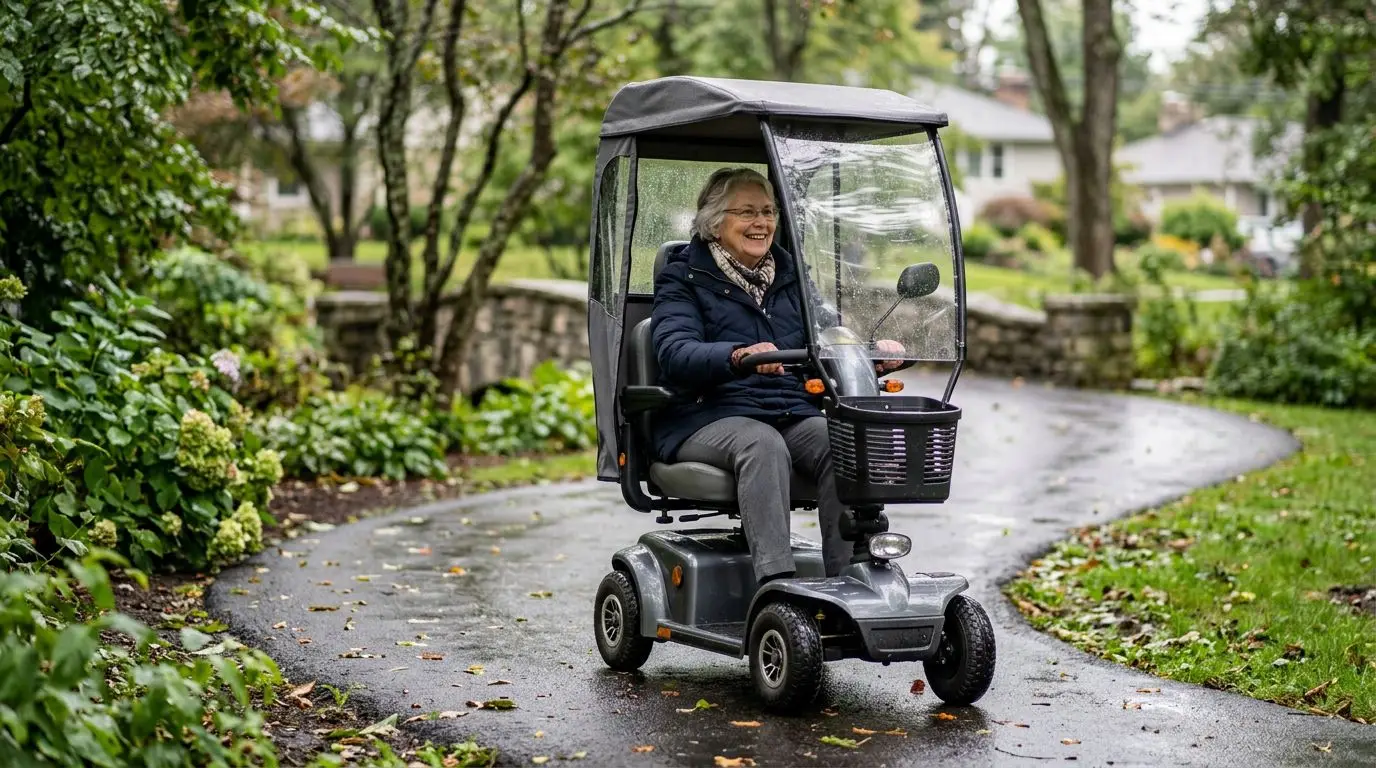
Enclosed Mobility Scooters and Canopy Scooters: Weather Protection, Comfort, and Trade-Offs
13 min read