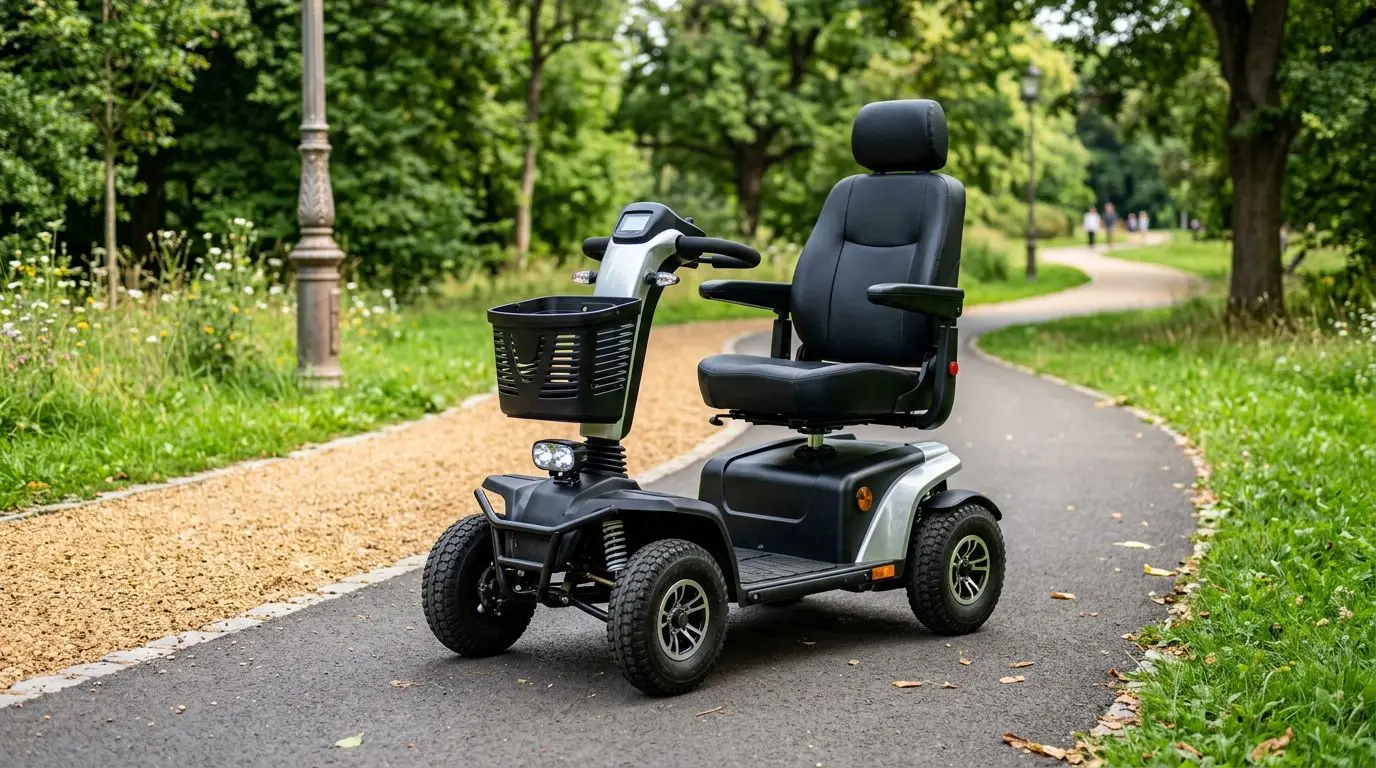
Mobility scooter tire and wheel upgrades can improve traction on grass, gravel, rough sidewalks, and wet pavement, but they cannot turn every scooter into a true off-road vehicle. The best upgrade depends on your scooter’s wheel size, ground clearance, motor power, braking system, and how much extra vibration or maintenance you are willing to accept. In many cases, changing the tire type or tread pattern costs less than buying a different scooter, but only if the upgrade fits safely and does not overload the scooter.
Think of tires as the contact point between your scooter and the ground. A small change in tread, rubber compound, width, or air pressure can affect grip, ride comfort, steering effort, and stopping distance. The goal is not to choose the most aggressive tire possible; it is to choose the safest tire for the surfaces you actually use.
Tire traction basics: 3 contact factors that matter
Traction comes from three main factors: contact patch, tread design, and tire compliance. The contact patch is the small area where the tire touches the ground, often only a few square inches per tire on a compact scooter. Tread design affects how that patch grips loose gravel, damp concrete, grass, or smooth indoor flooring. Compliance describes how much the tire can flex over bumps instead of bouncing across them.
On a mobility scooter, traction is also limited by weight distribution. A rear-wheel-drive scooter may climb better when there is weight over the rear tires, while a front-wheel-drive layout can lose grip sooner on inclines or wet grass. Scooter weight, rider weight, batteries, and baskets all change how much load each tire carries.
More tread is not always better. Deep lugs may bite into grass and packed dirt, but they can feel noisy or less stable on indoor tile. Smooth solid tires roll easily on firm surfaces, yet may slip sooner on wet ramps. A tire that improves grip in one setting can create drawbacks in another.
| Traction factor | What it changes | Typical effect |
|---|---|---|
| Wider tire | Larger contact patch | Better flotation on grass, sometimes heavier steering |
| Deeper tread | More edges biting the surface | Better on gravel or turf, more vibration on pavement |
| Softer pneumatic tire | More flex over bumps | Smoother ride, needs pressure checks |
| Hard solid tire | Less flex | No flats, rougher ride on cracks |
Common scooter tire types: 4 options and where they work
Most mobility scooters use one of four tire styles: pneumatic, foam-filled, solid, or hybrid-style non-pneumatic tires with some cushioning built in. Wheel diameters commonly range from about 7 inches on small travel scooters to 13 inches or more on larger outdoor scooters. Bigger wheels usually roll over cracks and gravel more easily because they meet obstacles at a gentler angle.
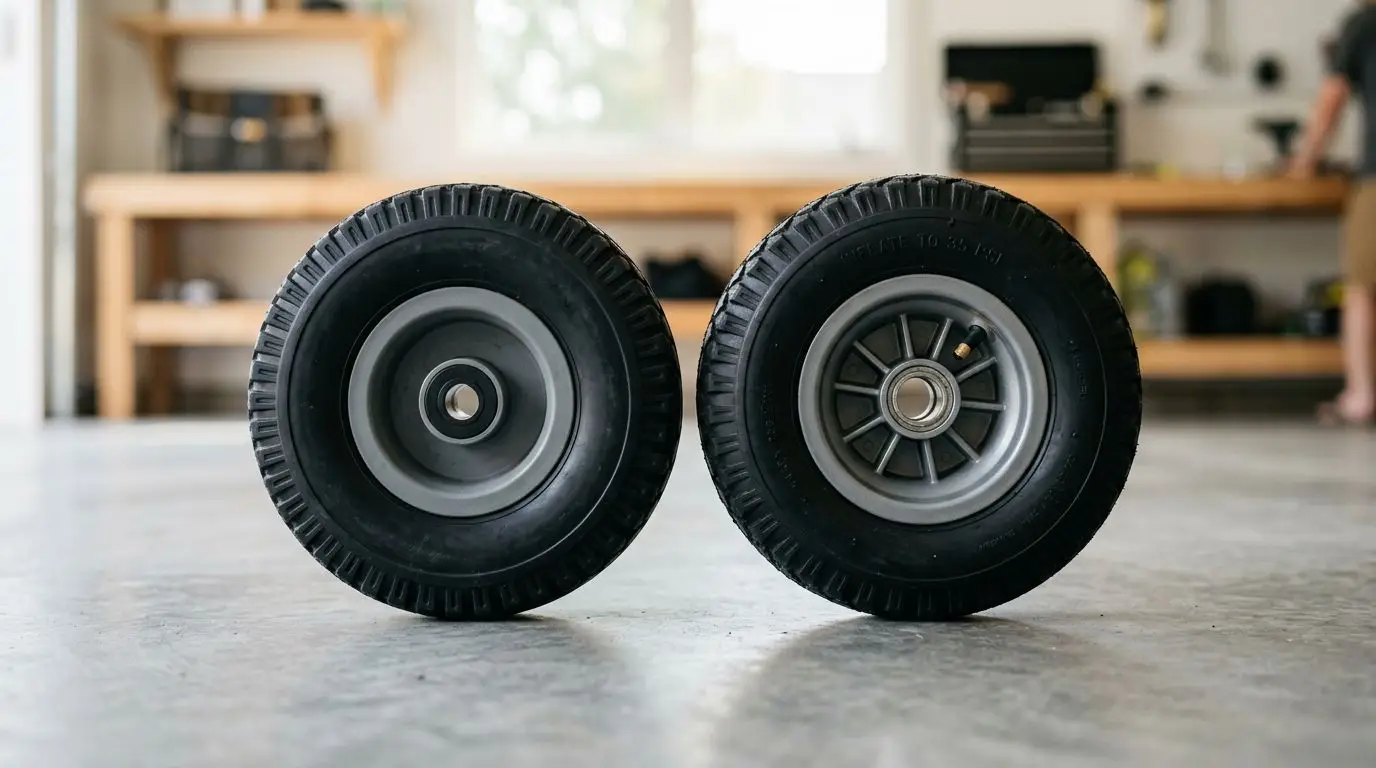
Pneumatic tires are air-filled. They provide the most natural cushioning and can conform to uneven ground, which helps on rough sidewalks and small gravel. They do require maintenance. A pressure difference of just 5 psi can change steering feel, range, and stability.
Foam-filled tires lower the risk of flats while keeping more cushioning than a hard solid tire. They are usually heavier than air-filled tires and may feel less lively. Solid tires are common on smaller scooters because they are simple and puncture-proof. Their weak points are comfort and grip on rough or slick surfaces.
| Tire type | Best use | Advantages | Trade-offs |
|---|---|---|---|
| Pneumatic | Outdoor sidewalks, gravel paths, mixed surfaces | Good comfort and traction | Can puncture; needs pressure checks |
| Foam-filled | Outdoor use where flats are a concern | No air pressure to maintain; decent cushioning | Heavier; may reduce range slightly |
| Solid | Indoor floors, smooth pavement, travel scooters | No flats; low maintenance | Firm ride; less grip on rough or wet surfaces |
| Cushioned non-pneumatic | Moderate outdoor use | Some shock absorption without air | Fit and ride quality vary by design |
Grass and gravel upgrades: why 10-inch wheels feel different
Grass and gravel challenge a scooter in different ways. Grass can be slippery, soft, and uneven, especially after rain. Gravel shifts under the tire, so the scooter needs enough tread to grip loose stone and enough wheel diameter to avoid digging in. A scooter with 10-inch or 12-inch wheels will usually feel more secure outdoors than one with 7-inch or 8-inch wheels, assuming the motor and frame are suited to the terrain.
For grass, look for a tread pattern with separated blocks or channels that can clear moisture and debris. A slightly wider tire may help the scooter float over soft spots instead of sinking. Still, wet grass on a slope is one of the most traction-limited surfaces a scooter can encounter. Even aggressive tread may spin if the slope is steep or the soil is soft.
For gravel, moderate tread often works better than very tall lugs. Tall, widely spaced lugs can squirm on hard surfaces, while a tighter all-terrain pattern keeps more rubber on the ground. If your normal route includes a 100-foot gravel driveway, the priority is controlled steering and steady braking, not mud-style bite.
Wheel size matters. When a small wheel hits a 1-inch stone or raised sidewalk edge, it has to climb a relatively steep face. A larger wheel approaches the same obstacle more gradually. That is why tire upgrades help, but they do not replace ground clearance, suspension, and stable frame geometry.
Rough sidewalks and cracks: ride comfort starts at 1 inch
Rough sidewalks are hard on both the rider and the scooter. Cracks, tree-root heaves, curb cuts, utility covers, and uneven concrete can create repeated jolts. A 1-inch raised slab may not sound like much, but it can feel harsh on a small solid tire and may jar the tiller, seat, or rider’s back.
Pneumatic tires are usually the biggest comfort upgrade because air acts like a small suspension system. Lower pressure can soften the ride, but only within the tire’s safe pressure range. Underinflation can increase rolling resistance, shorten range, and make steering vague. Overinflation can make the scooter bounce and lose grip over broken pavement.
If your scooter already has suspension, tires and suspension should work together. A firm solid tire on a scooter with front suspension may still feel choppy because the tire cannot absorb small sharp edges. A pneumatic tire on a scooter without suspension can make a noticeable difference, but it will not eliminate all vibration.
Pay attention to caster size on scooters with smaller front wheels. Front wheels take the first impact from cracks and curb cuts. Upgrading only the rear tires may improve drive traction, but it may not improve steering comfort if the front tires remain narrow and hard.
Wet pavement traction: stopping distance can increase by several feet
Wet pavement is not the same as off-road terrain. The surface may look smooth and safe, but water reduces friction, especially on painted crosswalk lines, metal plates, sealed concrete, polished store entrances, and leaves. At walking speeds, stopping distance can still increase by several feet when the surface is slick.
A tire for wet pavement should have channels that move water away from the contact patch. Smooth tires are more likely to slide on ramps or sloped curb cuts. Very aggressive off-road lugs are not automatically safer on wet pavement, because large gaps in the tread can reduce the amount of rubber touching the ground on a hard surface.
Rubber condition matters as much as tread style. Tires harden with age, sunlight, and heat. If the tread still looks acceptable but the rubber has small cracks or feels glassy, grip may be reduced. Many users inspect tread depth but forget sidewall condition.
Slow down before turns, not during them. Sudden steering, braking, or acceleration can break traction. This is especially important on three-wheel scooters, where a sharp turn on a slick surface can feel less stable than the same turn on dry pavement.
Solid vs pneumatic vs foam-filled: 6 feature trade-offs
Choosing between tire types is a practical decision. The right answer depends on your surfaces, maintenance ability, and tolerance for flats. A person who rides 2 miles daily on rough sidewalks may benefit from pneumatic tires. Someone who mainly rides indoors and occasionally crosses a parking lot may prefer solid tires for reliability.
Use this table to compare the features most buyers notice first.
| Feature | Pneumatic | Foam-filled | Solid |
|---|---|---|---|
| Flat resistance | Lowest | High | Highest |
| Ride comfort | Highest | Medium | Lowest |
| Wet traction | Often good with proper tread | Varies by rubber and tread | Often lower on slick surfaces |
| Grass/gravel grip | Good if tread is suitable | Moderate to good | Limited unless treaded |
| Maintenance | Pressure and puncture checks | Visual inspection | Visual inspection |
| Weight and range impact | Usually lighter | Often heavier | Varies, often firm rolling |
If you have limited hand strength or cannot check tire pressure regularly, pneumatic tires may still be possible with help from a caregiver, repair shop, or local mobility service provider. If that support is not realistic, a foam-filled or cushioned non-pneumatic option may be safer than riding on underinflated air tires.
Wheel upgrades and fit: measure 5 areas before buying
Before ordering any replacement tire or wheel, measure and confirm fit. A tire that is only half an inch wider may rub the fork, fender, frame, or anti-tip hardware. A wheel that changes overall diameter can affect speed readings, braking feel, and ground clearance.
Measure these five areas: tire outside diameter, tire width, rim diameter, axle or hub fit, and available clearance. Use a ruler or tape measure, and write the numbers down. Check clearance with the scooter loaded, because suspension compression or tire bulge can reduce space when a rider is seated.
- Outside diameter: Measure from the floor to the top of the tire, or across the tire when removed.
- Tire width: Measure the widest part of the inflated or mounted tire.
- Rim size: Match the tire to the rim, not just the outside tire diameter.
- Axle or hub style: Some scooters use specific hubs, bearings, spacers, or keyed fittings.
- Clearance: Leave room for tread, debris, and tire flex; a visible gap is not always enough.
Also check the scooter manual if available. Some manufacturers approve only certain tire sizes or pressure ranges. Using a tire outside the intended size can affect warranty coverage, load rating, and handling. When in doubt, ask a qualified mobility technician rather than guessing.
Who tire upgrades are best for: 4 common rider situations
Tire and wheel upgrades make the most sense when the scooter is already close to meeting your needs. If the frame is stable, the battery range is adequate, and the motor handles your usual inclines, better tires can improve confidence and comfort. If the scooter struggles badly, tire upgrades may only mask a deeper mismatch.
1. The neighborhood sidewalk rider
You ride several blocks at a time on cracked concrete, curb cuts, and driveway aprons. Pneumatic or cushioned tires can reduce vibration, especially if your current tires are hard solids. A treaded pattern may also help when sidewalks are damp or covered with leaves.
2. The gravel driveway user
You cross a short gravel driveway, parking area, or campground lane. A moderate all-terrain tread and larger diameter wheel, if compatible, may help. For loose gravel deeper than about 2 inches, scooter stability and wheel sinking become bigger concerns.
3. The lawn or park path visitor
You occasionally cross firm grass or packed dirt at a park, family yard, or outdoor event. Wider pneumatic tires with open channels can help on dry grass. Wet grass, ruts, and slopes should still be treated cautiously.
4. The wet-weather errand rider
You need better grip on parking lots, ramps, and sidewalks after rain. Look for wet-surface tread channels and healthy rubber. Lights, reflectors, slower turns, and careful route choice matter too, because tires are only one part of wet-weather safety.
When tires are not enough: limits on slopes, clearance, and power
A tire upgrade cannot overcome every scooter limitation. Many mobility scooters are designed for paved surfaces and moderate grades, often with stated incline limits such as 6 degrees, 8 degrees, or 10 degrees depending on the scooter type. Exceeding those limits can reduce stability, strain the motor, and increase braking risk.
Ground clearance is another hard limit. If your scooter has 2.5 inches of clearance and the path has rocks, roots, or ruts higher than that, better tread will not prevent bottoming out. Low-hanging battery boxes, foot platforms, or anti-tip wheels can catch on uneven terrain.
Power and gearing matter on soft ground. Grass and gravel increase rolling resistance. A scooter that feels strong on a smooth store floor may slow down or overheat on a long grassy route. Heavier tires can add rotating mass, which may slightly reduce range or acceleration.
Braking is also part of traction. If the scooter’s brakes are worn, poorly adjusted, or not designed for steep outdoor use, grippier tires do not solve the stopping problem. A full safety check is wise before adding traction for more demanding terrain.
How to choose: a 7-step tire upgrade checklist
Use a simple process before spending money. The wrong upgrade can make the scooter harder to steer, reduce range, or create rubbing that damages the tire. A careful 15-minute measurement session can prevent many returns and safety problems.
- List your surfaces. Estimate your use: for example, 70% sidewalk, 20% wet pavement, 10% grass.
- Check current tire size. Read the sidewall markings and measure the actual tire.
- Confirm load rating. Tires should support the scooter, rider, batteries, and carried items within the scooter’s rated capacity.
- Measure clearance. Check forks, fenders, frame, and anti-tip hardware with the scooter loaded.
- Choose the least aggressive tread that solves the problem. This keeps steering smoother and reduces vibration.
- Plan maintenance. If choosing pneumatic tires, decide who will check pressure every few weeks.
- Test slowly. After installation, try dry pavement first, then gentle slopes, then rougher surfaces.
After any tire change, listen for rubbing and feel for wobble. Recheck fasteners, axle hardware, and tire pressure after the first few rides. If the scooter pulls to one side or feels unstable, stop using it until the issue is inspected.
Installation and maintenance: check pressure every 2 to 4 weeks
Some tire changes are simple; others require removing wheels, handling split rims, bearings, tubes, or motor hubs. If a drive wheel contains a motor or brake assembly, professional installation is often the safer choice. Incorrect installation can affect steering, braking, or electrical components.
For pneumatic tires, pressure checks every 2 to 4 weeks are a good habit, and more often if the scooter is used daily outdoors. Use the pressure range printed on the tire sidewall or specified in the scooter manual. Do not inflate by feel alone; small scooter tires can feel firm even when underinflated.
Inspect tread and sidewalls monthly. Look for cuts, embedded glass, uneven wear, bulges, cracking, or flat spots. Uneven wear can point to alignment issues, worn suspension parts, or underinflation. If a tire repeatedly loses air, replacing only the tube may not fix the problem if the tire casing or rim strip is damaged.
Keep tires clean. Mud, leaves, and small stones can reduce grip or hide damage. After riding on gravel, check that stones are not lodged in the tread where they can work deeper into the tire.
Cost vs replacing the scooter: compare before a major upgrade
Even without quoting specific prices, it is smart to compare the full cost of tire upgrades against the value and capability of the scooter. Add the cost of tires, tubes if needed, labor, possible wheels, and any follow-up adjustment. A four-tire change can be a meaningful investment on an older scooter.
Upgrade tires when the scooter is otherwise sound. That means the batteries still deliver useful range, the seat and tiller are stable, the brakes work properly, and the frame is not damaged. If the scooter already lacks ground clearance, outdoor stability, or battery range, a different class of scooter may be the better long-term answer.
A practical test helps: identify the one surface you most need to improve. If your only issue is vibration on a 3-block sidewalk route, tire changes may help. If you need to travel daily across wet grass, steep slopes, and loose gravel, tires alone are unlikely to provide the margin of safety you want.
FAQ: 5 common tire and wheel upgrade questions
Can I put all-terrain tires on any mobility scooter?
No. The tire must fit the rim, fork, frame, axle or hub, and available clearance. The scooter also needs enough motor power, braking ability, and stability for the surfaces you plan to use.
Are pneumatic tires always better than solid tires?
Not always. Pneumatic tires usually ride smoother and grip better outdoors, but they can puncture and need pressure checks. Solid tires are better for users who prioritize low maintenance and mainly ride on smooth surfaces.
Will wider tires make my scooter safer on grass?
They may help on firm, dry grass by spreading weight over a larger contact patch. On wet grass, slopes, mud, or ruts, wider tires still may slip or sink, so route choice and speed remain important.
Do bigger wheels increase ground clearance?
Sometimes, but not always. A larger outside tire diameter may raise the scooter slightly, but only if it fits without rubbing and does not interfere with the frame or fenders. It can also affect handling and braking feel.
How often should I replace scooter tires?
Replace tires when the tread is worn, the rubber is cracked or hardened, the tire has bulges or cuts, or traction has noticeably declined. Many riders inspect tires monthly and before longer outdoor trips.
Can tire upgrades void a warranty?
They can if the scooter is still under warranty and the tire size or wheel setup is outside approved specifications. Check the owner’s manual or ask a qualified technician before changing sizes or wheel assemblies.
Frequently asked questions
Can I put all-terrain tires on any mobility scooter? +
No. The tire must fit the rim, fork, frame, axle or hub, and available clearance. The scooter also needs enough motor power, braking ability, and stability for the surfaces you plan to use.
Are pneumatic tires always better than solid tires? +
Not always. Pneumatic tires usually ride smoother and grip better outdoors, but they can puncture and need pressure checks. Solid tires are better for users who prioritize low maintenance and mainly ride on smooth surfaces.
Will wider tires make my scooter safer on grass? +
They may help on firm, dry grass by spreading weight over a larger contact patch. On wet grass, slopes, mud, or ruts, wider tires still may slip or sink, so route choice and speed remain important.
Do bigger wheels increase ground clearance? +
Sometimes, but not always. A larger outside tire diameter may raise the scooter slightly, but only if it fits without rubbing and does not interfere with the frame or fenders. It can also affect handling and braking feel.
How often should I replace scooter tires? +
Replace tires when the tread is worn, the rubber is cracked or hardened, the tire has bulges or cuts, or traction has noticeably declined. Many riders inspect tires monthly and before longer outdoor trips.
Can tire upgrades void a warranty? +
They can if the scooter is still under warranty and the tire size or wheel setup is outside approved specifications. Check the owner’s manual or ask a qualified technician before changing sizes or wheel assemblies.
Related guides
Solid vs. Air-Filled Mobility Scooter Tires: Comfort, Maintenance, and Best Uses
13 min read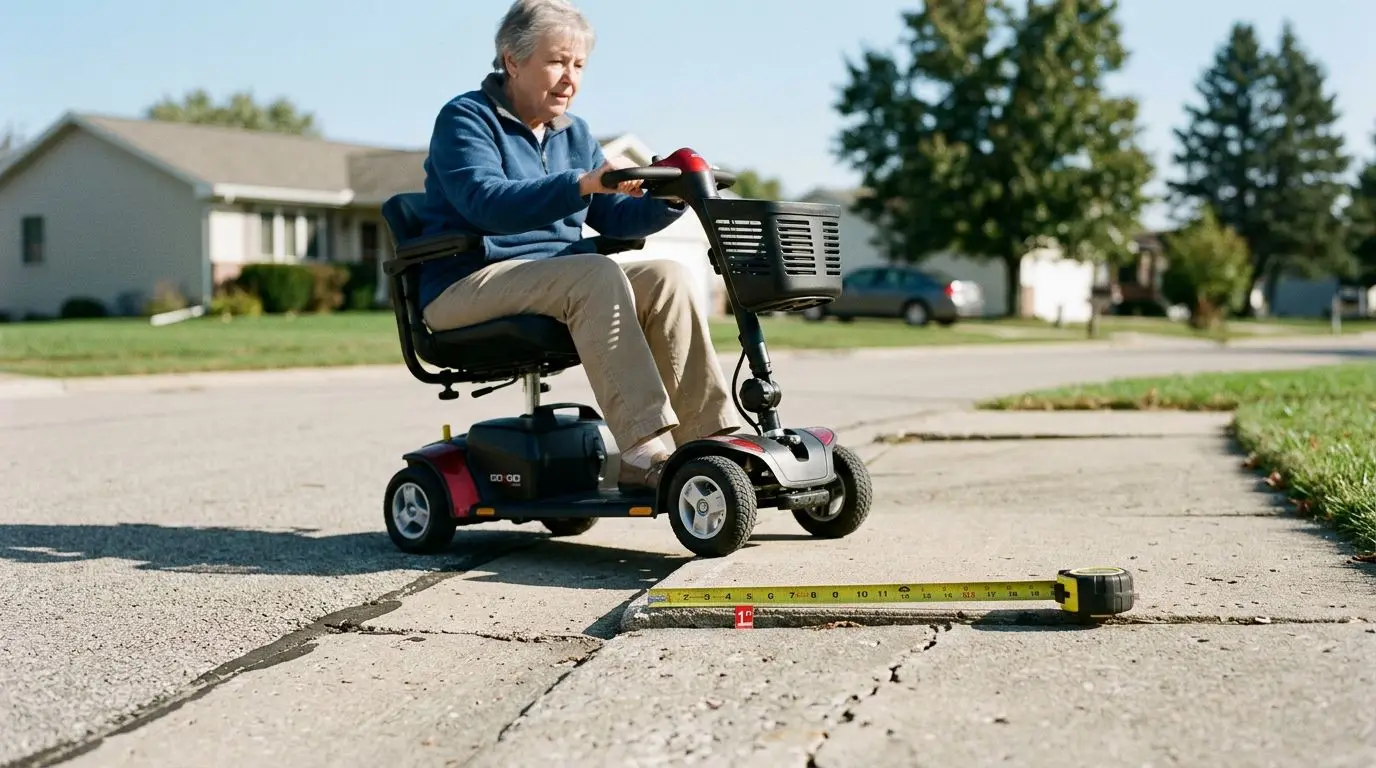
Mobility Scooter Tires, Suspension, and Ground Clearance: Matching Features to Sidewalks, Thresholds, and Rough Pavement
14 min read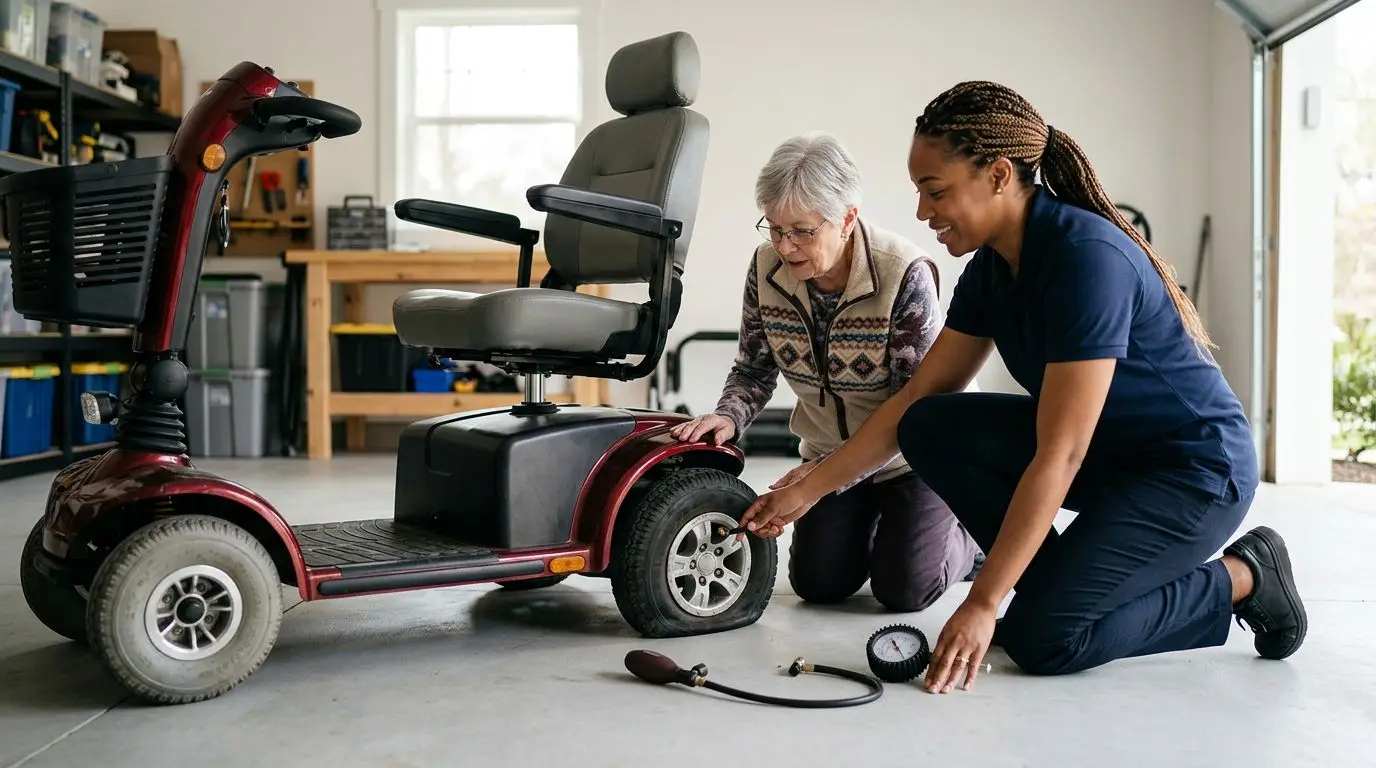
Flat Mobility Scooter Tire or Inner Tube? Repair Options, Replacement Signs, and Prevention Tips
14 min read