
A used mobility scooter can be a smart buy when it is clean, fits your body and home, has healthy batteries, and can be serviced locally. A new scooter is usually the safer choice if you need reliable daily transportation, a warranty, or a specific weight capacity, seat size, range, or transport setup. The real decision is not simply used versus new; it is whether the total 12-month cost, safety condition, and repair risk make sense for your needs.
Budget-conscious buyers often look at the purchase price first, which is understandable. But a low upfront price can vanish quickly if the scooter soon needs batteries, tires, a charger, a seat repair, or controller work. Use the checks below to compare the whole deal, not just the sticker.
Used vs. new at a glance: 6 cost and risk differences
A secondhand scooter may offer meaningful savings, especially for occasional use, but it also puts more responsibility on the buyer. With a new scooter, you are usually paying for predictable condition, fresh components, documentation, and warranty support. With a used scooter, you are buying its history.
| Factor | Used mobility scooter | New mobility scooter |
|---|---|---|
| Upfront cost | Usually lower, but varies widely by age, battery condition, and local demand | Higher upfront cost, but condition is known |
| Batteries | May be near the end of life; many scooters use 2 batteries as a set | Typically supplied with fresh batteries or a new battery pack |
| Warranty | Often none, especially in private sales | Usually includes written coverage for a defined period |
| Repairs | Buyer may pay right away for worn tires, brakes, charger, wiring, or seating | Less likely to need repairs immediately |
| Fit and features | Limited to what is available locally | Easier to choose seat width, weight capacity, portability, turning radius, and range |
| Risk level | Higher unless you inspect carefully and can test drive | Lower because parts, manuals, and support are easier to confirm |
For a fair comparison, review at least 3 used listings and 3 new options in the same general category, such as travel scooters, full-size scooters, or heavy-duty scooters. Comparing a compact used scooter with a new heavy-duty scooter will distort the decision.
Start with categories. A travel scooter is easier to lift and store, but it may have smaller wheels and a shorter range. A full-size scooter is more comfortable for many riders and often feels steadier outdoors. A heavy-duty scooter may support a higher user weight and rougher surfaces, but it can be too large for apartments, narrow halls, or vehicle lifts.
Who a used scooter is best for: 5 buyer situations
A used mobility scooter is best for buyers who can tolerate some uncertainty and have a clear, limited use case. It can be a good fit if the scooter will be used occasionally, if you have a backup mobility option, or if someone knowledgeable can help inspect it before money changes hands.
- Occasional users: A person who needs a scooter for shopping trips, community events, or weekend outings may not need to pay for every new feature.
- Short-distance riders: If your typical outing is 1 to 3 miles, a well-kept used scooter with verified battery health may be enough.
- Buyers with local repair access: A used scooter is less risky if a nearby mobility repair shop will service generic scooter components.
- Caregivers buying a backup: A second scooter for travel, family visits, or emergencies may justify a used purchase.
- People who can inspect in person: Used scooters should be test driven, not bought only from photos.
A used scooter is a weaker choice if you rely on it every day to reach meals, appointments, work, or essential errands. It is also risky if the seller cannot demonstrate the charger, answer basic battery questions, or allow a test drive.
New may be worth the extra cost when safety margins matter. For example, a rider near the upper end of a scooter's weight rating should not compromise on capacity. A scooter rated too close to the rider's weight, especially when carrying groceries or oxygen equipment, may feel sluggish and wear components faster.
How to inspect a used scooter in 30 minutes
Plan a 30-minute inspection, preferably in daylight. Bring a small flashlight, a tape measure, a notepad, and a phone so you can photograph labels, battery dates, tires, and charger details. Do not rush; a scooter can look clean and still have costly problems.
Start with the frame and seating
- Check the frame for cracks, bends, deep rust, missing bolts, or signs of a hard impact.
- Rock the seat gently from side to side. Some movement is normal, but it should not feel loose or unsafe.
- Look at the seat post, armrests, tiller, and floorboard for wobble or stripped adjustment knobs.
- Measure the seat width. Common scooter seats vary by several inches, and a seat that is too narrow can be uncomfortable or unsafe.
Check tires, wheels, and brakes
- Look for flat spots, cracking, uneven wear, or embedded debris.
- On air-filled tires, ask when they were last inflated and check for slow leaks.
- On solid tires, check for chunking or heavy wear around the edges.
- Test the stopping response at walking speed. The scooter should stop smoothly when you release the throttle.
Test the controls and drive system
- Turn the scooter on and watch the battery indicator. It should not drop sharply after a few minutes of movement.
- Move forward, reverse, turn left and right, and test the horn and lights if equipped.
- Listen for grinding, clicking, squealing, or hesitation from the motor or transaxle.
- Drive for at least 10 minutes if the seller allows it. A 30-second driveway test is not enough.
Notice how the scooter behaves while turning. A three-wheel scooter may turn tighter in a small apartment or store aisle, while a four-wheel scooter may feel more stable on uneven outdoor surfaces. Neither layout is automatically better; the right choice depends on where you will use it.
Battery age and range: the 2 numbers to verify
The 2 most important battery numbers are the battery age and the battery rating. Battery age tells you how much useful life may remain, while the rating helps confirm that the scooter has the correct battery type and capacity. Many scooters use 2 sealed batteries connected as a set, and replacing only 1 weak battery is usually not a good long-term fix.
Ask when the batteries were purchased and request a receipt if available. If there is no receipt, look for a date code on the battery case or label. Battery date codes are not always easy to read, but a seller who says the batteries are new should be able to explain when and where they were installed.
Battery condition matters more than many buyers expect. A scooter that sat unused for 6 months without proper charging may have batteries that test poorly even if the scooter has low mileage. Deep discharge can shorten battery life, especially in common sealed lead-acid batteries.
Ask these battery questions before you buy:
- How old are the batteries?
- Were both batteries replaced at the same time?
- How often was the scooter charged?
- Was it stored indoors, in a garage, or outside?
- Does the charger complete a full charge cycle?
- Has range noticeably declined in the last 3 months?
Range estimates can be optimistic because they depend on rider weight, hills, surfaces, temperature, battery health, tire condition, and speed. A scooter that once handled a long park path may now struggle with the same route if the batteries are aging. If the seller claims a certain range, ask how recently that distance was actually tested.
Check the charger too. It should match the scooter's battery system, plug in securely, and show normal indicator lights. A missing or questionable charger is a real cost and a real inconvenience, not a minor detail.
Total cost of ownership: a 12-month worksheet
The cheapest scooter on purchase day is not always the cheapest scooter after 12 months. Before buying used, write down every likely cost and compare that total with the cost of buying new in the same scooter category. This simple worksheet can prevent an emotional buy.
| Cost item | Used scooter question | New scooter question |
|---|---|---|
| Purchase price | What is the actual out-the-door amount? | Does it include setup or delivery? |
| Batteries | Are they more than 2 years old or showing weak range? | What battery type is included? |
| Charger | Is the correct charger included and working? | Is a charger included as standard? |
| Tires | Are there cracks, flat spots, or worn tread? | What tire type fits your terrain? |
| Seat and armrests | Is the upholstery torn or padding collapsed? | Can you choose a better seat width? |
| Repairs | Can a local shop inspect or service it? | What repairs are covered by warranty? |
| Transport | Will it fit your vehicle or lift? | Can you choose a travel design from the start? |
| Accessories | Will you need baskets, mirrors, lights, or a cover? | Which accessories are included, if any? |
A useful rule is to price the used scooter as though the batteries may need replacement soon unless you have proof they are recent and healthy. Batteries are wear items. Tires, arm pads, seat upholstery, baskets, and chargers can add up as well.
Do not overlook transportation. A scooter that cannot fit through your door, into your storage space, or onto your vehicle lift may require extra equipment. If the heaviest removable piece is too heavy for the caregiver or driver to lift, a bargain travel scooter can still be the wrong buy.
New scooter advantages: 4 reasons paying more can be smarter
Buying new is not always necessary, but there are 4 strong reasons it can be the better value: warranty protection, correct fit, predictable battery condition, and access to documentation. These advantages matter most for daily riders and for anyone who cannot easily deal with breakdowns.
A warranty can reduce uncertainty, although coverage varies by seller and component. Read the written terms before you buy. Batteries, tires, upholstery, and labor may be handled differently than the motor, frame, or electronics.
New also gives you more control over the scooter type. If you need a compact turning radius for a small home, a transportable scooter with a low heaviest-piece weight, or a higher weight capacity for safety margin, it is easier to choose correctly from the beginning. Used listings are often limited to whatever happens to be nearby.
Documentation is another practical benefit. A manual can confirm charging instructions, basic troubleshooting, adjustment steps, and approved battery type. With used scooters, manuals may be missing, and online information may not match the exact version in front of you.
New can be especially worthwhile when the rider has changing needs. If you expect more outdoor use, longer trips, or added medical equipment, buying the right class of scooter now may prevent another purchase later. This is not a medical recommendation; it is a planning point to discuss with a clinician, mobility specialist, or experienced dealer when your mobility needs are changing.
How to choose and measure before buying: 7 fit checks
Measure before you buy. A scooter can run well and still fail if it does not fit your body, your home, or your transportation plan. Use these 7 checks for both used and new scooters.
- User weight plus carried items: Compare the total load with the scooter's weight capacity. Leave a safety margin rather than buying at the limit.
- Seat width and depth: Measure a comfortable chair at home, then compare. A difference of 2 inches can be noticeable.
- Doorway width: Many interior doorways are around 28 to 32 inches wide, but older homes can be narrower. Measure the tightest doorway, not the widest.
- Turning space: Measure hallways, kitchen corners, bedroom turns, and elevator space. A scooter that turns well in a parking lot may be awkward indoors.
- Thresholds and surfaces: Note door thresholds, curb cuts, gravel, grass, slopes, and cracked pavement. Small wheels are less forgiving on rough surfaces.
- Storage and charging location: Make sure there is a dry indoor spot near an outlet. Charging in a safe, ventilated location is better than using long extension cords.
- Transport weight: If the scooter disassembles, find the heaviest piece. A piece that weighs 40 to 60 lb may still be too heavy for many people to lift safely.
Match scooter type to real use. A lightweight travel scooter may suit smooth floors, medical buildings, and car trips. A full-size scooter may be better for neighborhood sidewalks and longer seated comfort. A heavy-duty scooter may be needed for higher weight capacity or rougher outdoor use, but its size can make indoor use and vehicle transport harder.
| Scooter type | Best use | Trade-off to check |
|---|---|---|
| Travel or portable | Vehicle trips, tight storage, shorter outings | Smaller wheels, limited comfort, shorter range |
| Three-wheel standard | Indoor turns, stores, smooth paths | May feel less steady on uneven outdoor surfaces |
| Four-wheel standard | Sidewalks, parks, mixed indoor and outdoor use | Wider turning space may be needed |
| Heavy-duty | Higher capacity, longer rides, rougher surfaces | Heavier, larger, harder to transport |
Paperwork, safety, and red flags: 10 things to confirm
Before handing over payment, confirm 10 basic items. These checks help protect you from unsafe equipment, missing parts, and ownership confusion.
- Ask for the original receipt or any service records.
- Confirm the scooter is not borrowed, rented, or owned by a facility.
- Photograph the serial number or product label for your records.
- Make sure the charger is included and works.
- Confirm the key, basket, armrests, seat, and any removable parts are present.
- Check that the freewheel lever engages and disengages correctly.
- Test forward, reverse, turning, stopping, horn, and lights if equipped.
- Look for water damage, corrosion, frayed wiring, or melted connectors.
- Avoid sellers who pressure you to skip the test drive.
- Get a simple written bill of sale with date, buyer, seller, description, and payment amount.
Be cautious with scooters advertised as barely used if the batteries are old. Low mileage does not guarantee good battery health. Storage habits matter.
Walk away if the scooter jerks unexpectedly, will not hold a charge, smells like burnt electronics, has visible frame damage, or has been heavily modified. Also avoid buying if the seller cannot show the scooter powering on with its own charger. A promise that it only needs batteries may be true, but it may also hide controller, motor, or wiring problems.
If possible, have a mobility repair shop inspect the scooter before purchase. Even a brief inspection can identify battery weakness, brake concerns, worn tires, and missing parts. For a buyer who depends on the scooter daily, that second opinion is often worth the effort.
FAQ: 5 common questions about buying used mobility scooters
Is it safe to buy a used mobility scooter?
It can be safe if the scooter is structurally sound, stops properly, holds a charge, fits the rider, and can be serviced. Avoid any scooter with frame damage, erratic controls, a missing charger, or batteries the seller cannot explain.
How old is too old for a used mobility scooter?
Age alone is not the only issue. A 3-year-old scooter stored indoors and maintained well may be better than a newer scooter left discharged in a garage. Battery age, parts availability, and condition matter more than the calendar.
Should I replace the batteries right after buying used?
Not always. If the batteries are recent, matched, charge normally, and perform well on a real test drive, replacement may not be needed immediately. If they are old, unverified, or range is weak, include replacement in your 12-month cost estimate.
What should I test first during a used scooter inspection?
Start with powering on, charger operation, forward and reverse movement, smooth stopping, and a 10-minute test drive. Then inspect tires, seat stability, frame condition, wiring, and any unusual noises.
Is a used scooter better than renting?
For a one-time trip or short recovery period, renting may be simpler. For repeated weekly use, a carefully inspected used scooter may make more sense, but only if storage, charging, transport, and repair access are practical.
Frequently asked questions
Is it safe to buy a used mobility scooter? +
It can be safe if the scooter is structurally sound, stops properly, holds a charge, fits the rider, and can be serviced locally. Avoid scooters with frame damage, erratic controls, missing chargers, or unexplained battery history.
How old is too old for a used mobility scooter? +
Age alone is not the deciding factor. Battery condition, indoor storage, maintenance, parts availability, and safe operation matter more than the calendar age.
Should I replace the batteries right after buying used? +
Not always. If the batteries are recent, matched, charge correctly, and perform well on a real test drive, immediate replacement may not be necessary. If age or range is uncertain, include replacement in your ownership cost estimate.
What should I check first when inspecting a used scooter? +
Check that it powers on, charges with the included charger, moves forward and reverse, stops smoothly, and completes at least a 10-minute test drive. Then inspect tires, frame, seat, wiring, and controls.
Is buying used better than renting a mobility scooter? +
Renting may be better for a one-time trip or short recovery period. Buying used can make sense for repeated use if the scooter is in good condition and you have a safe place to store and charge it.
Related guides

New vs. Used Mobility Scooter Costs: Upfront Savings, Battery Risk, Repairs, and Long-Term Value
13 min read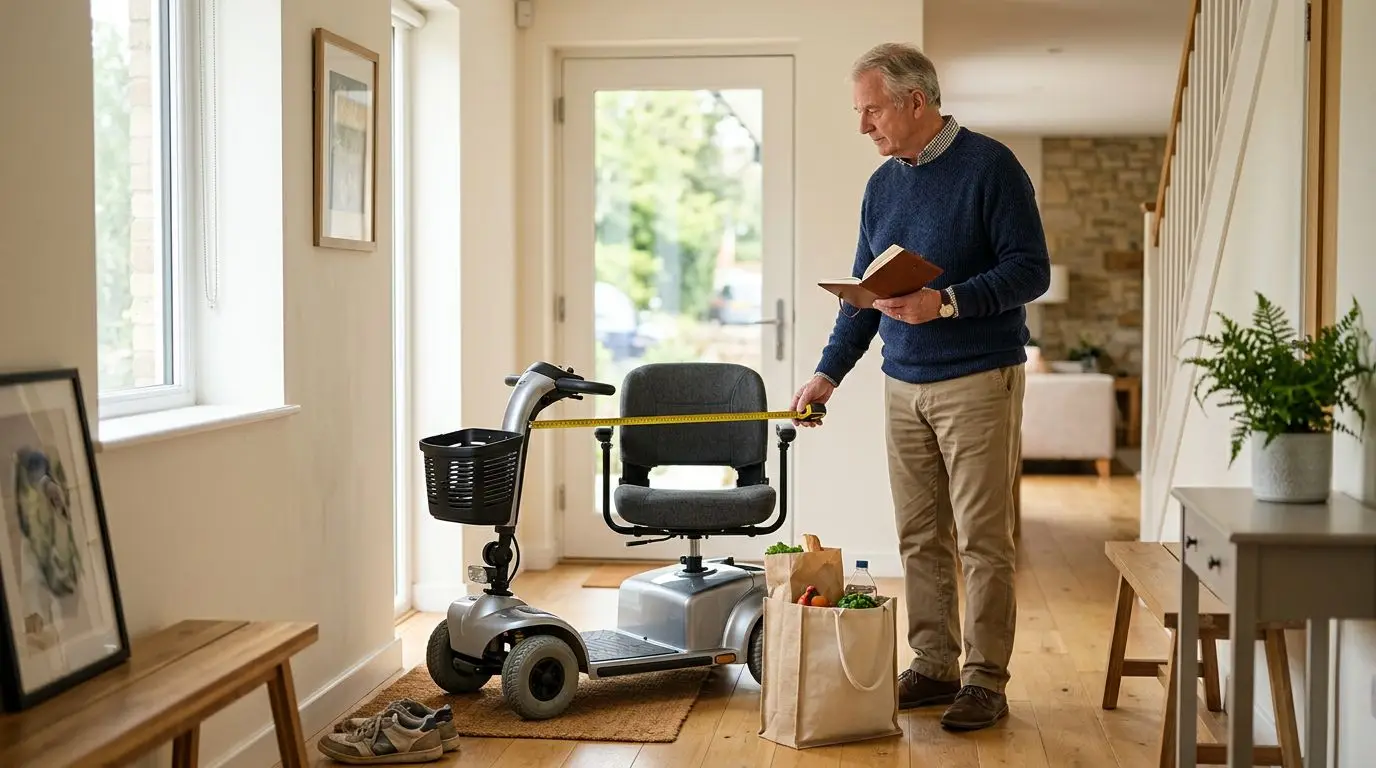
Is a Mobility Scooter Worth the Cost? How to Weigh Price Against Independence, Safety, and Daily Use
17 min read
Cheap Mobility Scooters: How to Save Money Without Buying the Wrong Type
16 min read