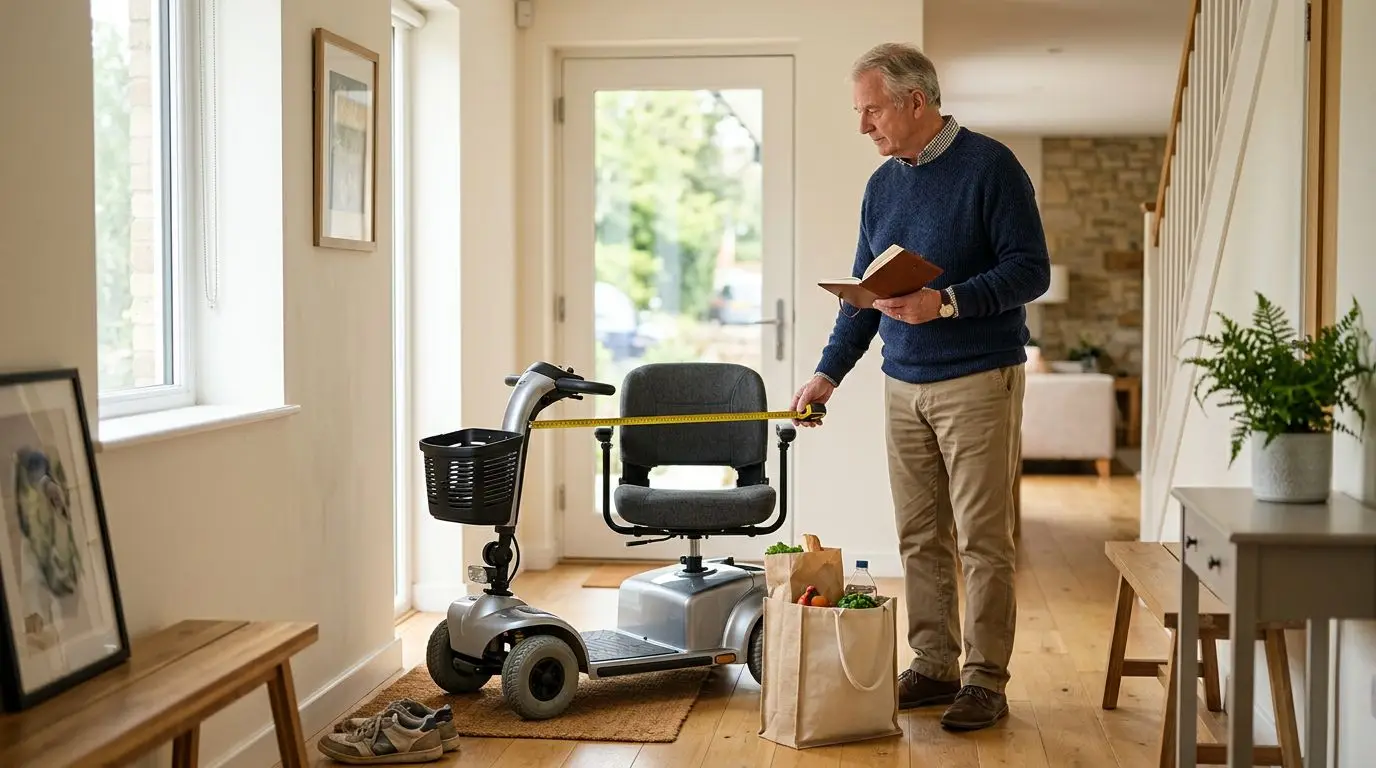
The total cost of owning a mobility scooter goes beyond the purchase price. Over time, you should budget for battery replacement, tires, routine service, accessories, transportation needs, storage, and occasional repairs. The smartest approach is to build a 3-year ownership budget before you buy, then choose a scooter type that fits both your mobility needs and your long-term costs.
A scooter that looks inexpensive on day one can become frustrating if it requires a vehicle lift, frequent battery replacement, or repairs you cannot easily get locally. On the other hand, a higher-capacity scooter may cost more to transport and store than a compact travel scooter. This guide walks through the common ownership costs so you can compare scooters realistically and avoid surprises.
Start with a 3-year ownership view, not just the first receipt
Most shoppers compare scooters by upfront price, seat comfort, weight capacity, and range. Those details matter, but they do not tell the whole story. A practical ownership budget should cover at least 3 years because that is long enough for batteries, tires, chargers, upholstery, transport equipment, and service needs to appear.
Think of the scooter as a small electric vehicle. It has wear parts, a battery system, and possible service needs if brakes, wiring, controls, or the drive system act up. If you travel with it, you may also need a ramp, vehicle lift, carrier, protective cover, or airline-compliant battery planning.
The biggest long-term cost categories usually fall into these buckets:
- Power: batteries, charger replacement, charging habits, and storage conditions.
- Wear parts: tires, armrest pads, seat components, anti-tip wheels, and lighting.
- Repairs: diagnostic labor, controller issues, brake adjustments, wiring, motor or transaxle problems.
- Accessories: baskets, cane holders, weather covers, mirrors, cup holders, oxygen tank holders, and safety flags.
- Transport: ramps, hitch carriers, vehicle lifts, tie-downs, and cargo space limitations.
- Maintenance: cleaning, inspections, tire checks, battery care, and annual service.
You do not need to predict every future expense. Instead, ask 3 local providers or service shops about typical service availability, battery replacement timing, and labor policies before buying. That step alone can prevent a scooter from becoming unusable while you wait for parts or search for a technician.
Batteries can be the biggest repeat cost every 12 to 36 months
Battery replacement is often the most predictable major ownership cost. Many mobility scooters use sealed lead-acid batteries or lithium batteries, depending on scooter type and design. Battery lifespan varies widely, but a planning range of about 12 to 36 months is reasonable for many owners, depending on use, charging habits, storage temperature, rider weight, terrain, and battery chemistry.
Lead-acid batteries are common in many full-size and mid-size scooters. They are usually heavier and should be kept charged regularly. Lithium batteries are often lighter and common in many folding or travel-oriented scooters, though not every lithium battery is airline-approved. Always verify the battery watt-hour rating and airline rules before flying.
Several everyday habits affect battery life:
- Charging after regular use instead of letting the scooter sit deeply discharged.
- Storing the scooter in a dry space, ideally away from extreme heat or freezing temperatures.
- Using the correct charger for the battery system.
- Avoiding repeated overload from steep hills, soft grass, heavy cargo, or towing.
- Checking the manual for long-term storage charging intervals, often every few weeks or monthly.
Range estimates also deserve caution. If a scooter is advertised or described as having a certain maximum range, that figure is usually based on controlled conditions. Real-world range can be lower with hills, cold weather, rough surfaces, heavier riders, frequent starts and stops, or older batteries. If you need to travel 6 miles in a day, do not choose a scooter that barely reaches that number under ideal conditions. Build in a margin.
| Battery consideration | Why it affects cost | What to ask before buying |
|---|---|---|
| Battery chemistry | Weight, charging needs, and replacement process differ | Is it lead-acid or lithium, and who can replace it locally? |
| Battery access | Some packs are easy to remove; others require service | Can I lift the battery pack, or will I need help? |
| Storage temperature | Heat and freezing conditions can shorten battery life | Where can I store and charge it safely year-round? |
| Charging routine | Poor charging habits can reduce usable lifespan | How often should I charge it during normal use and storage? |
| Travel rules | Airlines and cruise lines may restrict battery types | What is the watt-hour rating, and is documentation available? |
Repairs and service: plan for at least 1 annual checkup
Even if your scooter runs well, it is wise to plan for at least 1 professional checkup per year, especially if you rely on it daily. A technician can inspect brakes, wiring, throttle response, tires, steering, seat hardware, battery connections, and the charger. Small issues are often easier to fix before they leave you stranded.
Repair costs vary by region and scooter type. A simple travel scooter with basic components may be easier to diagnose than a heavy-duty scooter with suspension, larger batteries, lights, and more complex electronics. Labor policies also differ. Some shops charge a diagnostic fee, some offer mobile service, and some require you to bring the scooter in.
Common repair areas include:
- Brakes: adjustment, worn components, or electronic brake issues.
- Controls: throttle levers, key switches, speed knobs, or display problems.
- Electrical connections: loose plugs, corrosion, or damaged wiring.
- Drive components: motor, transaxle, bearings, or unusual noises.
- Seat and tiller hardware: looseness, broken knobs, or worn adjustment points.
- Lighting and signals: bulbs, wiring, switches, or reflectors.
Before you buy, ask how warranty service works, who performs it, and how the scooter would be transported for repairs. This matters more than many shoppers expect. If the scooter weighs 180 pounds assembled and you drive a small sedan, getting it to a service center may require a helper, a carrier, or mobile service.
Keep a folder with your receipt, manual, battery information, serial number, service records, and any warranty documents. If you ever need a repair, having those details ready can speed up the process and reduce confusion.
Accessories: 5 small add-ons can change comfort and safety
Accessories are easy to overlook because each one may seem minor. Add 5 of them together, however, and they become a real part of the ownership budget. The best accessories are not about decoration. They solve practical problems: carrying items, improving visibility, supporting medical equipment, protecting the scooter from weather, or making the ride easier on your body.
Common scooter accessories include baskets, rear bags, cane or crutch holders, oxygen tank holders, cup holders, phone mounts, mirrors, safety flags, lap belts where appropriate, armrest bags, seat cushions, and weather covers. Some accessories attach easily; others require brackets or compatibility with the scooter frame.
Be careful with accessories that change balance or visibility. A heavy rear bag, for example, can affect stability if it is overloaded. A large front basket may make tight indoor turns harder. A weather canopy or tall flag can catch wind outdoors. The goal is to improve everyday use without creating a new safety issue.
| Accessory type | Best use | Cost question to ask |
|---|---|---|
| Basket or bag | Groceries, mail, personal items | What is the weight limit, and will it affect turning? |
| Cane or crutch holder | Keeping mobility aids secure | Does it fit the scooter frame without blocking lights? |
| Weather cover | Storage protection from dust and moisture | Is it for indoor storage, outdoor storage, or transport? |
| Mirror or flag | Visibility in parking lots and shared paths | Can it be adjusted without tools? |
| Seat cushion | Comfort during longer rides | Does it raise seat height or affect posture? |
For many owners, the most useful first accessories are a protective cover, a visibility aid, and a carrying solution that does not overload the scooter. Choose slowly. Use the scooter for 2 weeks, notice what is missing, then add what solves a real problem.
Transport costs depend on 3 measurements: weight, length, and lift height
Transportation can be the hidden budget breaker. A scooter that works beautifully at home may be difficult to take to medical appointments, restaurants, stores, or family visits if it does not fit your vehicle. The 3 measurements to check are scooter weight, overall length, and the height you must lift it into your vehicle.
Travel scooters often disassemble into multiple pieces, with the heaviest piece sometimes still heavy enough to challenge many older adults. Folding scooters may roll like luggage in some situations, but they can still be awkward to lift. Full-size and heavy-duty scooters may require a hitch-mounted carrier, platform lift, interior vehicle lift, ramp, or accessible van.
Measure before you buy:
- Vehicle cargo opening width: Measure the narrowest point, not just the widest interior space.
- Cargo floor height: Measure from the ground to the trunk, hatch, or van floor.
- Scooter length: Include baskets, anti-tip wheels, and any rear accessories.
- Heaviest piece: If it disassembles, find out the weight of the heaviest component.
- Your safe lift limit: Be honest. A 40-pound piece can feel much heavier when lifted at an awkward angle.
If you need a hitch carrier or lift, check your vehicle’s hitch rating, tongue weight rating, and ground clearance. Not every vehicle can safely carry a scooter outside the rear bumper. A carrier also adds length to the vehicle, which can affect parking and driveway clearance.
Transport planning is especially important for people who live alone. If you need another person every time you load the scooter, it may not support independence the way you hoped. A lighter scooter, a vehicle lift, or a different transport plan may be worth considering before purchase.
Maintenance takes 10 minutes a week and prevents bigger problems
Routine maintenance does not need to be complicated. A 10-minute weekly check can help catch loose parts, low tire pressure, weak charging, and damage before they become bigger issues. The owner’s manual should always be your main reference, but most scooters benefit from a simple inspection routine.
Weekly or regular checks may include:
- Confirm the battery charges normally and the charger indicator behaves as expected.
- Inspect tires for wear, cracks, embedded debris, or low pressure if pneumatic.
- Check that the seat locks securely and armrests are not loose.
- Make sure the tiller adjustment is tight.
- Test the horn, lights, and brakes in a safe area.
- Wipe down dust, moisture, and grit, especially around moving parts.
- Look for unusual noises, smells, or jerky movement.
Tires deserve special attention. Solid tires reduce flats but may provide a firmer ride. Pneumatic tires can improve comfort on uneven surfaces, but they need pressure checks and can be punctured. If your scooter uses pneumatic tires, keep a pressure gauge handy and follow the pressure listed in the manual or on the tire sidewall.
Cleaning also matters. Mobility scooters are electrical devices, so avoid spraying them with a hose or pressure washer. Use a damp cloth, mild soap when needed, and dry the scooter afterward. If you ride through rain, puddles, road salt, or lawn debris, clean and dry the scooter promptly.
Storage is part of maintenance. A dry indoor location is best when available. If outdoor storage is unavoidable, use a breathable cover designed for mobility equipment and avoid trapping moisture underneath. Make sure charging is done in a safe, ventilated area according to the manufacturer’s instructions.
Compare scooter types by ownership cost over 24 months
Different scooter categories come with different long-term costs. A compact scooter may reduce transport expenses but require compromises in range, comfort, or outdoor capability. A larger scooter may handle rougher paths and longer outings, yet require more storage space, larger batteries, and a more serious transport solution.
Use this table as a decision aid. It does not rank scooters from best to worst; it shows where ownership costs commonly appear during the first 24 months.
| Scooter type | Typical ownership strengths | Cost areas to watch | Best fit |
|---|---|---|---|
| Portable travel scooter | Easier vehicle loading, smaller storage footprint | Battery size, comfort on long rides, smaller tires | Short errands, indoor use, occasional travel |
| Folding scooter | Compact storage, useful for tight spaces | Lift weight, battery rules for travel, repair access | Apartments, taxis, rides with family |
| Mid-size scooter | Better comfort and stability than many compact units | Transport equipment, larger batteries, tire wear | Daily errands and mixed indoor-outdoor use |
| Full-size scooter | Longer rides, larger seat, stronger outdoor performance | Storage space, service transport, battery replacement | Frequent outdoor use and longer trips |
| Heavy-duty scooter | Higher capacity, stronger frame, rougher surface capability | Vehicle lift, larger components, professional service needs | Larger riders, uneven terrain, demanding daily use |
Track the trade-offs honestly. If you only need help crossing large parking lots and shopping centers, a portable scooter may keep long-term costs lower. If you need to travel several miles outdoors on uneven pavement, a scooter that is too small may wear faster and feel unsafe or uncomfortable.
Who a long-term scooter budget is best for: 4 common buyer situations
A full ownership budget is useful for every shopper, but it is especially important in 4 situations. First, daily users should plan carefully because the scooter is not occasional equipment; it is part of everyday life. A dead battery or delayed repair can disrupt appointments, meals, work, volunteering, and social plans.
Second, people who live in apartments or senior communities should think about storage, charging access, elevator size, doorway width, and building rules. A scooter that is too large for a hallway or too difficult to charge safely may create frustration.
Third, caregivers and family members should budget for transport and service. If a spouse or adult child will be loading the scooter, the heaviest part and lifting angle matter. Repeatedly lifting a heavy component can create strain or lead to the scooter being left at home.
Fourth, people who travel should verify battery documentation, folding or disassembly steps, and transport protection. A scooter used for cruises, flights, hotels, and rental cars needs a different ownership plan than one used mainly around a neighborhood.
This budget-first approach is not meant to scare anyone away from a scooter. It is meant to match the scooter to real life. A well-chosen scooter can support mobility, conserve energy, and make daily activities more manageable, but it should be selected with safety, service, and affordability in mind.
How to choose and measure before buying: a 7-step checklist
Use a 7-step checklist before committing to a scooter. Write the answers down. If two scooters look similar, these details often reveal which one will cost less to own and be easier to live with.
- Measure your home route. Check doorway widths, hallway turns, elevator depth, storage area, and charging outlet location.
- Measure your vehicle. Record cargo opening width, cargo depth, floor height, and whether rear seats must fold.
- Check the heaviest piece. If the scooter disassembles, focus on the single heaviest component, not just total scooter weight.
- Estimate your daily distance. Count a normal day in miles or blocks, then choose range with a margin rather than the bare minimum.
- List your surfaces. Smooth indoor floors, sidewalks, curb cuts, gravel, grass, and hills place different demands on tires and batteries.
- Call service providers. Ask who can repair it locally, how diagnostics work, and whether mobile service is available.
- Plan accessories last. Start with essentials, then add items after 1 to 2 weeks of real use.
Also check fit. Seat width, seat height, armrest adjustment, tiller reach, and foot space affect comfort and control. A scooter should let the rider sit upright, reach the controls without stretching, and place feet securely on the deck or foot area. If posture feels forced during a short test, it may feel much worse during a longer trip.
Do not skip the turning radius. A scooter that turns well in a showroom may still be hard to use in a small kitchen, narrow bathroom doorway, crowded elevator, or tight apartment hallway. If indoor use is important, measure your tightest turn and compare it with the scooter’s turning needs.
Build your ownership worksheet with 9 line items
A simple worksheet can turn a confusing purchase into a clear decision. Use 9 line items and fill them in with quotes, not guesses. If a seller or service provider cannot answer basic questions about batteries, repairs, or transport, that is useful information too.
| Line item | What to record | When it may occur |
|---|---|---|
| Initial scooter purchase | Base scooter, delivery, setup | Day 1 |
| Batteries | Type, quantity, replacement process | Often within 12 to 36 months |
| Charger | Replacement availability and correct rating | If lost, damaged, or failed |
| Tires | Solid or pneumatic, replacement access | As tread wears or flats occur |
| Annual service | Inspection, brake check, diagnostics | About once per year |
| Repairs | Labor policy, mobile service, parts access | As needed |
| Accessories | Basket, cover, mirror, holder, cushion | First month and later |
| Transport equipment | Ramp, lift, carrier, tie-downs | Before regular outings |
| Storage | Cover, charging area, weather protection | Immediately |
When comparing two scooters, do not just compare the first line. Compare the whole worksheet. The better value is the scooter that fits your body, your routes, your vehicle, your storage space, and your service options with the fewest expensive workarounds.
FAQ: 5 ownership-cost questions buyers ask
How often do mobility scooter batteries need replacement?
Many owners should plan around a 12- to 36-month battery replacement window, depending on battery type, use, charging habits, terrain, rider weight, and storage conditions. Daily outdoor use and poor charging habits can shorten battery life.
Is a portable scooter always cheaper to own?
Not always. A portable scooter may reduce transport and storage costs, but it may not be the lowest-cost choice if it is used beyond its intended range, terrain, or comfort limits. Undersized scooters can lead to faster wear and dissatisfaction.
Do I need a vehicle lift for a mobility scooter?
You may need a lift, ramp, or carrier if the scooter or its heaviest piece is too heavy or awkward to load safely. Measure your vehicle’s cargo opening, floor height, and available space before buying the scooter.
What maintenance can I do myself?
Most owners can handle basic checks such as charging, cleaning, looking for loose parts, checking lights and horn, and inspecting tires. Brake, electrical, motor, controller, and structural problems should be handled by a qualified technician.
What is the best way to avoid surprise costs?
Build a 3-year worksheet before purchase, get local service information, measure your home and vehicle, and ask about battery replacement. The goal is to confirm that you can store, charge, transport, and repair the scooter without major workarounds.
Frequently asked questions
How often do mobility scooter batteries need replacement? +
Many owners should plan around a 12- to 36-month battery replacement window, depending on battery type, use, charging habits, terrain, rider weight, and storage conditions.
Is a portable scooter always cheaper to own? +
Not always. Portable scooters can reduce transport and storage costs, but they may cost more over time if used on terrain, distances, or daily routines they were not designed to handle.
Do I need a vehicle lift for a mobility scooter? +
You may need a lift, ramp, or carrier if the scooter or its heaviest piece is too heavy or awkward to load safely. Measure the scooter, vehicle opening, cargo space, and lift height before buying.
What maintenance can mobility scooter owners do themselves? +
Most owners can do basic charging, cleaning, tire inspection, light and horn checks, and loose-part checks. Electrical, brake, motor, controller, and structural repairs should be handled by a qualified technician.
How can I avoid surprise mobility scooter costs? +
Create a 3-year ownership worksheet, ask about local service and battery replacement, measure your home and vehicle, and budget for accessories, transport equipment, and annual inspections.
Related guides

How Much Does a Mobility Scooter Cost? Price Ranges, Features, and Long-Term Value
12 min read
Used vs. New Mobility Scooters: Cost Savings, Risks, and What to Check Before You Buy
13 min read
Renting vs. Buying a Mobility Scooter: Which Option Makes Sense?
13 min read