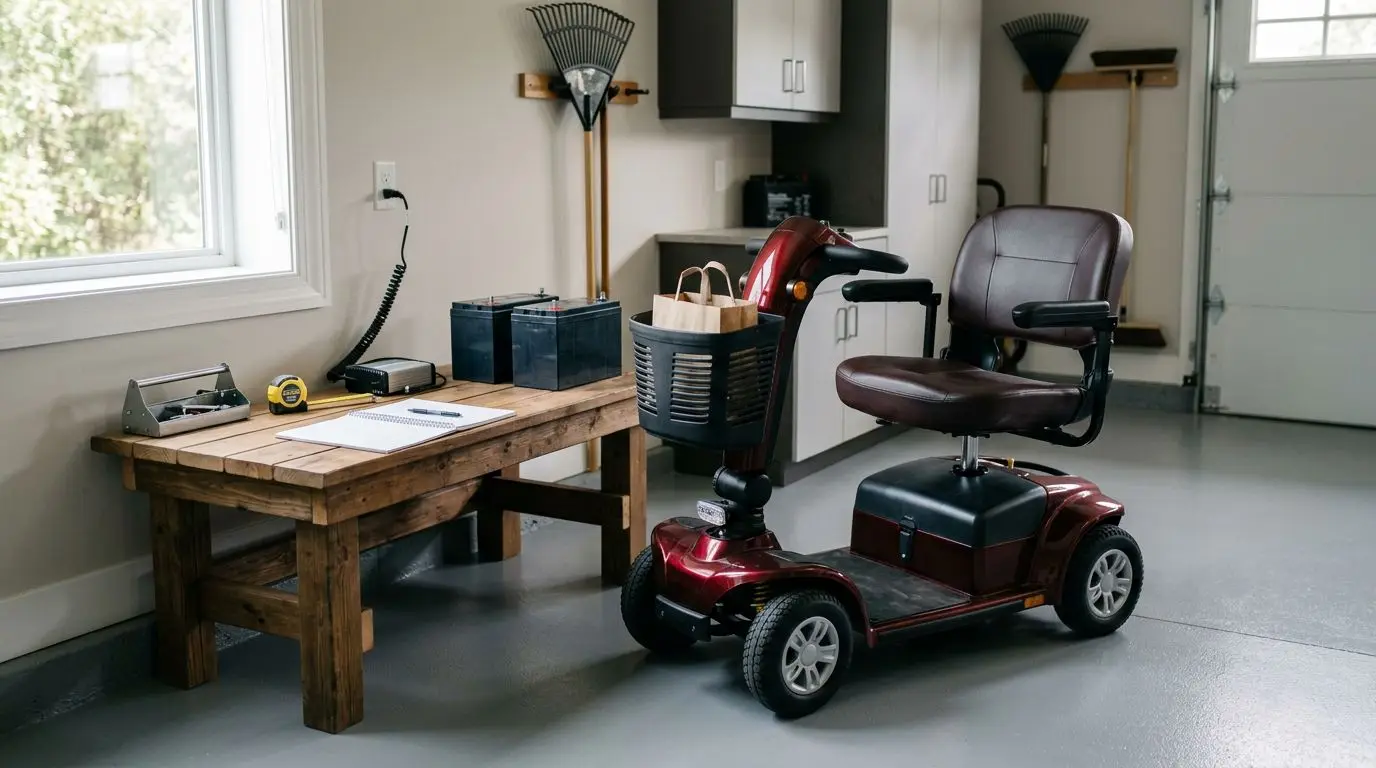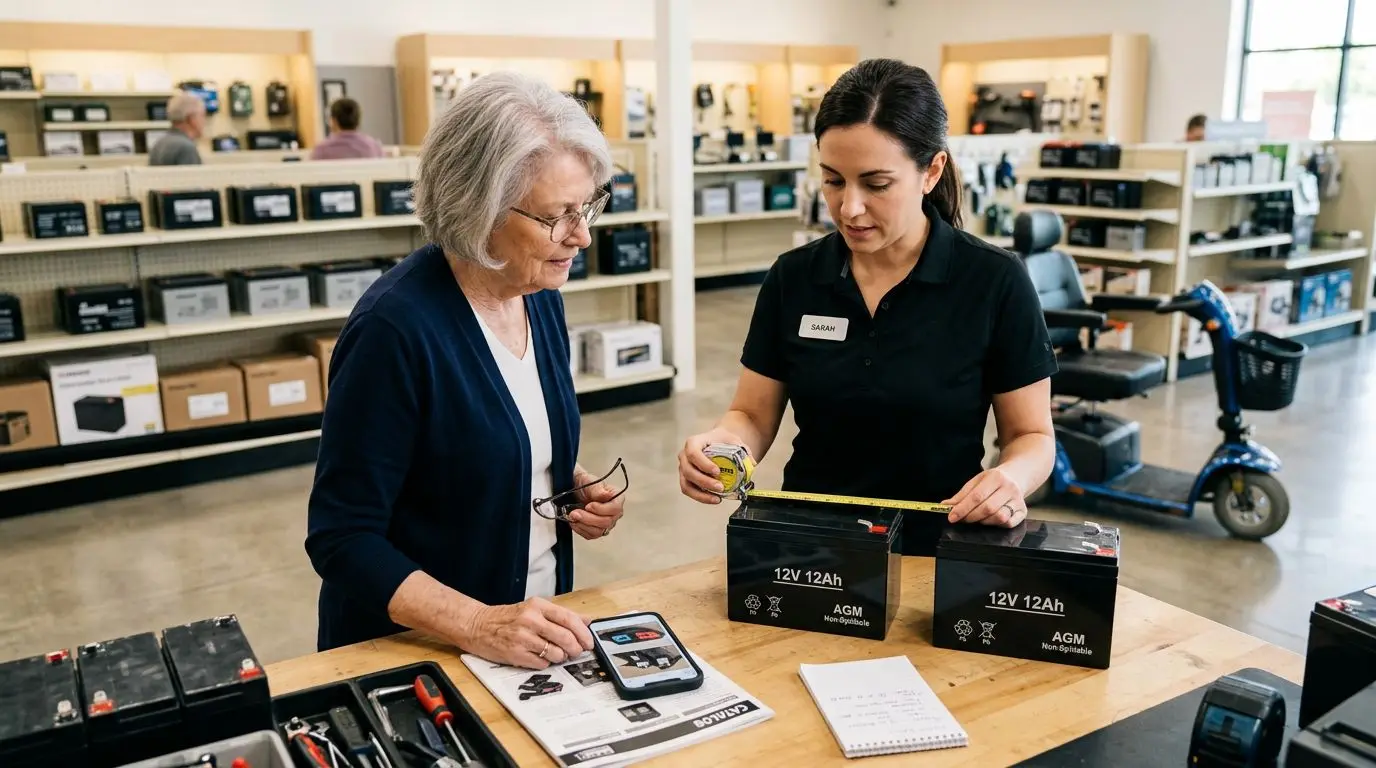
You can buy mobility scooter batteries near you from mobility equipment dealers, medical supply stores, battery specialty shops, scooter repair shops, and some general retailers with local pickup. Before you buy, confirm the scooter’s voltage, battery size, terminal type, chemistry, and return policy; a battery that is only 1 inch too tall or has the wrong terminals may not fit or connect safely.
The safest approach is to remove the old batteries, read the labels, measure the battery compartment, and bring photos of the wiring to the store. If the scooter uses 2 batteries wired together, replace both at the same time and match them as a set.
Where to buy mobility scooter batteries near you: 5 local options
Most mobility scooters use 2 sealed batteries in a 24-volt system, though some larger scooters use 36V or 48V systems. A local seller needs to supply the right quantity and style, not just “a scooter battery.” Start with places that understand deep-cycle batteries, tight battery compartments, and safe wiring.
These are the most common local buying options:
| Local source | Best for | What to ask before you go |
|---|---|---|
| Mobility equipment dealer | Fitment help, installation, and basic scooter inspection | Can you match 12V batteries by size, amp-hours, and terminal type? |
| Medical supply store | Common replacement batteries and local pickup | Do you stock sealed deep-cycle batteries for mobility scooters? |
| Battery specialty store | Wide selection of sealed lead-acid and lithium-compatible options | Can you test my old batteries and verify the replacement dimensions? |
| Scooter or power chair repair shop | Diagnosis when you are unsure whether the battery is the real problem | Can you check the charger, wiring harness, and battery voltage under load? |
| General retailer with local pickup | Convenience if you already know the exact specs | What is the return policy if the battery has been opened but not used? |
A repair shop or mobility dealer is often the better choice if the scooter stopped suddenly, will not charge, or shows a fault light. Dead batteries are common, but so are bad chargers, loose connectors, corroded terminals, and tripped circuit breakers. Paying for a quick test can help you avoid buying batteries you do not need.
Call before driving over. Tell the store the number of batteries, the voltage printed on each battery, the amp-hour rating, and the approximate length, width, and height. Ask whether they can recycle the old batteries; sealed lead-acid batteries should not go in household trash.
Verify voltage first: 24V, 36V, and 48V systems
Voltage is the first spec to check because the wrong voltage can damage scooter electronics or simply fail to run. Many travel and mid-size scooters use 2 individual 12V batteries connected in series to create 24V. Larger scooters may use 3 batteries for 36V or 4 batteries for 48V, depending on the design.
Do not guess from physical size. Two batteries can look alike but have different ratings or be wired differently. Look for the label on the old battery and the label inside the battery box. You may see markings such as “12V 35Ah” or “12V 22Ah.” The first number is voltage; the second is capacity.
- One 12V battery: less common for full-size mobility scooters, but possible in small equipment.
- Two 12V batteries: commonly makes a 24V scooter pack.
- Three 12V batteries: makes a 36V pack.
- Four 12V batteries: makes a 48V pack.
If your scooter has a removable battery box, open it only if you can do so safely and without forcing it. Some boxes have internal wiring that needs careful handling. Take a photo before disconnecting anything. A simple phone photo showing red and black wires can prevent confusion later.
When replacing a multi-battery pack, replace all batteries in the pack at the same time. Mixing a new battery with an old one can reduce range, strain the newer battery, and cause uneven charging. If a 24V scooter uses 2 batteries, buy 2 matched replacements with the same voltage, capacity, chemistry, and approximate age.
Match size, weight, and capacity within 1/8 inch when possible
Battery compartments are often tight. A replacement battery that is 1/4 inch too tall may keep the lid from closing, pinch wires, or stop the battery box from locking into the scooter. Measure length, width, and height to at least the nearest 1/8 inch before you buy locally.
Capacity is usually listed in amp-hours, often written as Ah. Common mobility scooter battery sizes include 12Ah, 18Ah, 22Ah, 35Ah, 50Ah, and higher capacities for larger scooters. A higher Ah rating may provide more range only if the battery physically fits, matches the scooter’s charging system, and is appropriate for the battery chemistry.
| Spec to check | Why it matters | How to verify |
|---|---|---|
| Length, width, height | The battery must fit the tray or battery box without crushing wires | Measure the old battery and the available compartment space |
| Amp-hours | Helps determine expected range and compatibility | Read the old battery label and scooter manual if available |
| Weight | Affects lifting, portability, and battery box handling | Ask the store for the battery weight before purchase |
| Terminal location | Wires may not reach if terminals are reversed or positioned differently | Compare positive and negative terminal positions from the same viewing angle |
Weight matters more than many shoppers expect. A small sealed lead-acid battery may weigh around 9 to 15 pounds, while larger deep-cycle scooter batteries can weigh 20 pounds or more each. If you remove batteries for charging, travel, or storage, consider whether you can lift the pack safely every time.
Be cautious with “upgrade” talk. More capacity is not automatically better. If the new battery is larger, heavier, or a different chemistry, confirm that the scooter and charger can handle it. A local seller should be able to explain the tradeoff in plain language without pressuring you.
Check terminals and wiring: F1, F2, ring, and 2-pin connectors
Terminal mismatch is easy to overlook. Many smaller sealed batteries use flat push-on terminals, often called F1 or F2 sizes. F1 terminals are commonly about 0.187 inches wide, while F2 terminals are commonly about 0.250 inches wide. That small difference can keep your existing connector from fitting securely.
Other scooter batteries may use bolt-down terminals with ring connectors, a plug-in harness, or a removable battery box with internal connectors. Bring the old battery or clear photos to the store. Include a close-up of the positive terminal, negative terminal, and any fuse holder or connector in the harness.
- Flat push-on terminals: common on smaller sealed batteries; width matters.
- Bolt-down terminals: common on larger batteries; check bolt size and terminal orientation.
- Ring connectors: must sit flat and tight; loose rings can heat up.
- 2-pin plug connectors: must match the scooter’s harness and polarity.
Polarity matters. The red wire usually connects to positive and the black wire usually connects to negative, but do not rely on color alone if the scooter has been repaired before. Compare markings on the battery case: plus sign to plus sign, minus sign to minus sign.
Never force a connector. A loose terminal can cause intermittent power loss, arcing, heat, or charging trouble. If a store offers installation for a reasonable labor fee, it may be worth it, especially for riders who rely on the scooter daily.
Choose the right chemistry: sealed lead-acid, AGM, gel, or lithium
Mobility scooters commonly use sealed lead-acid batteries, including AGM and gel types, or lithium-based batteries in newer or lighter designs. Chemistry affects weight, charging, cost, lifespan, airline rules, and compatibility. A 12V sealed lead-acid battery should not be swapped for lithium unless the scooter, charger, and battery management system are designed for that change.
Sealed lead-acid batteries are widely available locally and are often used in pairs for 24V scooters. AGM batteries are sealed and maintenance-free. Gel batteries are also sealed and may be used where vibration resistance and stable performance are priorities, but they require proper charging. Lithium batteries can be much lighter, but they need compatible charging and built-in protection circuitry.
| Battery type | Common advantage | What to check before buying |
|---|---|---|
| Sealed lead-acid | Common, local availability, familiar replacement process | Voltage, Ah rating, dimensions, terminal type, charger compatibility |
| AGM | Sealed, maintenance-free, widely used in mobility equipment | Correct size and deep-cycle rating, not a starting battery |
| Gel | Sealed design and steady deep-cycle use | Charger profile; some chargers are not suitable for gel batteries |
| Lithium-based | Lighter weight and strong energy density | Scooter compatibility, charger compatibility, protection system, transport rules |
Ask for deep-cycle batteries, not automotive starting batteries. A car battery is designed to deliver a quick burst of current to start an engine. A mobility scooter battery is designed to discharge and recharge over repeated cycles.
If you travel by air, battery chemistry and watt-hour rating matter. Airline and transportation rules can vary, and lithium batteries often face stricter documentation and size limits than sealed non-spillable batteries. Contact the airline before travel and get the battery specifications in writing from the seller.
Bring 7 details to the store before you purchase
A 10-minute check at home can prevent a frustrating return trip. Gather these 7 details before calling or visiting a local battery seller:
- 1. Scooter voltage: 24V, 36V, or 48V system if known.
- 2. Battery label: voltage, amp-hours, and chemistry from the old battery.
- 3. Quantity: the number of batteries in the pack.
- 4. Measurements: length, width, and height of the old battery and compartment.
- 5. Terminal type: push-on, bolt-down, ring connector, or plug-in harness.
- 6. Charger label: output voltage and battery type if printed on the charger.
- 7. Photos: battery box, wiring, labels, and connector close-ups.
If the old battery label is worn off, measure the battery and search your scooter paperwork for battery specifications. If you do not have the paperwork, a repair shop may be able to identify the battery from the compartment, wiring, and charger output.
Also note how the scooter is used. A rider who makes short indoor trips may not need the same capacity as someone who rides several miles outdoors each day. Terrain matters too. Hills, cold weather, rider weight, tire condition, and frequent stop-and-go riding all reduce practical range.
Check warranty, return rules, and battery date codes before paying
Batteries are often treated differently from ordinary store merchandise. Some stores will not accept returns once terminals are connected, packaging is opened, or the battery has been charged. Ask about the return window, warranty length, testing process, and whether installation affects eligibility.
Get these terms in writing on the receipt:
- Return window: for example, whether returns are allowed within 7, 14, or 30 days.
- Warranty process: whether the store tests the battery before approving a claim.
- Restocking fee: whether opened or special-order batteries carry a fee.
- Core or recycling fee: whether old sealed lead-acid batteries can be left for recycling.
- Installation coverage: whether the store guarantees fitment if they install it.
Ask about freshness. Batteries slowly self-discharge while sitting on a shelf. A reputable seller should be able to tell you whether the battery is recent stock and whether it has been kept charged according to its storage needs. This is especially important for sealed lead-acid batteries, which do not like sitting discharged for long periods.
Inspect the battery before leaving. Look for cracked cases, swollen sides, loose terminals, corrosion, missing labels, or signs of leakage. Do not buy a damaged battery. If the seller says damage is only cosmetic, ask for a different unit.
Who local battery buying is best for: 3 common situations
Buying nearby is especially helpful when you need the scooter working soon, when you are uncertain about fitment, or when the battery box is hard to open. Same-day pickup and hands-on comparison can be more useful than waiting for a shipment, particularly if the scooter is your main way to move around the home or community.
Local buying is a good fit if:
- You depend on the scooter daily and cannot wait several days for delivery.
- You are not sure whether the issue is the battery, charger, or wiring.
- You need help lifting, installing, or recycling batteries that weigh 10 to 25 pounds each.
- Your scooter uses a battery box with a harness, fuse, or special connector.
- You want a store to confirm the battery fits before you pay.
Ordering may work if:
- You know the exact voltage, Ah rating, measurements, chemistry, and terminals.
- You can safely install the batteries yourself.
- You have time to handle shipping delays or a return if the fit is wrong.
Neither option is automatically better. Local buying reduces guesswork. Remote ordering can be convenient for confident shoppers, but batteries are heavy and returns can be inconvenient if the wrong size arrives.
How to measure and choose in 10 minutes
Use this quick process before you buy. It takes about 10 minutes if the batteries are accessible, and it gives a local seller the details needed to help you accurately.
- Turn the scooter off and remove the key. Unplug the charger.
- Open the battery compartment carefully. Do not pull on wires.
- Take photos before disconnecting anything. Capture the full wiring layout.
- Read the labels. Write down voltage, Ah, and chemistry.
- Count the batteries. Note whether they are in a removable box or fixed tray.
- Measure the battery. Length, width, and height matter more than a rough guess.
- Identify terminals. Note whether they are flat, bolt-down, ring, or plug-in.
- Check the charger label. Match the charger output to the scooter’s battery system.
- Call ahead. Confirm stock, installation, recycling, warranty, and return rules.
If you see melted connectors, a burning smell, leaking material, or a swollen battery case, stop and contact a repair professional. Battery problems can involve heat and electrical risk. Safety comes first.
FAQ: 5 quick answers before you buy
Can I replace just one battery in a 2-battery scooter?
It is usually better to replace both batteries at the same time. In a 24V scooter with 2 batteries, an old weak battery can pull down the new one and reduce range. Matched batteries charge and discharge more evenly.
Can I use a higher Ah battery for longer range?
Possibly, but only if it fits, matches the voltage and chemistry requirements, and works with the charger and battery compartment. A higher Ah battery may be larger or heavier. Confirm with a qualified seller or repair shop before changing capacity.
How do I know if the battery or charger is bad?
A repair shop or battery store can test battery voltage and may perform a load test. They can also check charger output. If the scooter will not charge, the battery is not the only possible cause.
Are mobility scooter batteries recyclable?
Yes. Sealed lead-acid batteries should be recycled through a battery retailer, repair shop, recycling center, or approved collection site. Do not put them in household trash.
Should I switch from sealed lead-acid to lithium?
Only if the scooter and charger are designed or approved for that type of battery. Lithium batteries require proper protection circuitry and charging. An unsafe conversion can damage equipment or create a fire risk.
Frequently asked questions
Can I replace just one battery in a 2-battery mobility scooter? +
It is usually best to replace both batteries at the same time. In a 24V scooter with 2 batteries, one older weak battery can reduce range and strain the new battery.
What should I bring when buying mobility scooter batteries locally? +
Bring the old battery if practical, or bring photos of the label, terminals, wiring, battery box, and charger label. Also bring measurements for length, width, and height.
Can I use a higher amp-hour battery? +
Only if it fits the compartment, matches the voltage and chemistry requirements, and is compatible with the scooter and charger. Higher capacity can mean larger size and more weight.
How do I know whether my charger is the problem? +
A battery retailer or scooter repair shop can test the batteries and charger output. Charging trouble can come from weak batteries, a failed charger, loose wiring, or damaged connectors.
Are old mobility scooter batteries recyclable? +
Yes. Sealed lead-acid batteries and many lithium batteries should be recycled through approved battery recycling channels, local battery stores, repair shops, or recycling centers.
Related guides

Mobility Scooter Batteries Explained: Types, Voltage, Amp-Hours, and Compatibility
15 min read
Mobility Scooter Batteries and Chargers: Range, Replacement Cost, and Care Tips
14 min read
Mobility Scooter Battery Replacement: How to Match the Right Size, Voltage, and Connector
14 min read