In most cases, you should not add an extra passenger seat to a standard mobility scooter unless the scooter manufacturer specifically designed and rated it for two riders. A second seat can change weight distribution, braking distance, steering, and legal status, even if the scooter feels strong enough at low speed. If you regularly need to carry another person, the safer choice is usually a purpose-built two-seat mobility device or another transportation option rated for passengers.
This is not only a comfort issue. Mobility scooters are generally engineered around one seated user, a specific maximum load, and a predictable center of gravity. Adding a passenger can affect safety, insurance coverage, public access, and whether the scooter is still considered a personal mobility aid under local rules.
Why one extra seat can change a 300 lb rated scooter
A mobility scooter’s weight limit is not a suggestion; it is part of the machine’s design. Many adult scooters list maximum user weights in the broad range of about 250 to 500 lb, depending on frame size, motor, suspension, wheels, and intended use. That limit usually includes the rider and anything carried on the scooter, such as oxygen equipment, bags, baskets, canes, or accessory mounts.
If a scooter is rated for 300 lb and the main rider weighs 210 lb, it may look as if 90 lb remains. That does not mean a 90 lb passenger is automatically safe. The rating assumes one rider sitting in the intended seat position, not a second person behind, in front, or to the side. Moving weight even 8 to 12 inches away from the original seating position can increase tipping risk and frame stress.
Passenger add-ons also create forces the original frame may not have been tested to handle. A rear-mounted seat can act like a lever over the back axle. A side seat or improvised platform can load one side unevenly. A front child seat can interfere with tiller movement, knee clearance, or visibility.
That is why a simple-looking bracket is not simple. The scooter’s brakes, tires, axle, deck, steering column, and suspension all share the extra load. If one part was not designed for it, a setup that looks safe can still fail during a sharp turn, curb cut, ramp, or sudden stop.
Stability, braking, and turning risks at 4 to 8 mph
Most mobility scooters travel at walking to jogging speeds, often around 4 to 8 mph depending on the type and settings. Those speeds can feel gentle, but a loaded scooter still has momentum. With two people aboard, stopping distance increases, especially on a downhill sidewalk, wet pavement, gravel path, or ramp.
Stability is usually the first concern. Scooters are more stable when weight stays low, centered, and between the wheels. A passenger sitting higher or farther back raises and shifts the center of gravity. On a three-wheel scooter, that can make turns feel sharper and less forgiving. On a four-wheel scooter, stability is better in many situations, but a second rider can still overload the rear, lighten the front wheels, and reduce steering control.
Braking is the second concern. Scooter brakes are sized for the rated load. If the total carried weight rises from 220 lb to 360 lb, the braking system has to slow much more mass. Even if the motor brake engages, the scooter may take longer to stop. On a ramp with a 1:12 slope, which means 1 inch of rise for every 12 inches of run, extra load can make the descent harder to control.
Turning is the third concern. A second passenger may lean unexpectedly, shift a bag, or put a foot outside the deck. Even at low speed, that can be enough to tip or scrape. Indoors, the added seat may increase the turning radius and make doorways, elevators, and checkout aisles harder to navigate.
| Change made | What it can affect | Why it matters |
|---|---|---|
| Rear passenger seat | Rear axle load and front-wheel traction | Steering may feel light, especially uphill |
| Side-mounted seat | Left-right balance | Higher rollover risk on turns or uneven ground |
| Front-mounted child seat | Tiller clearance and visibility | May interfere with steering and braking controls |
| Extra foot platform | Ground clearance and turning space | Can strike curbs, door frames, or ramp edges |
Weight limit math: a 50 lb accessory still counts
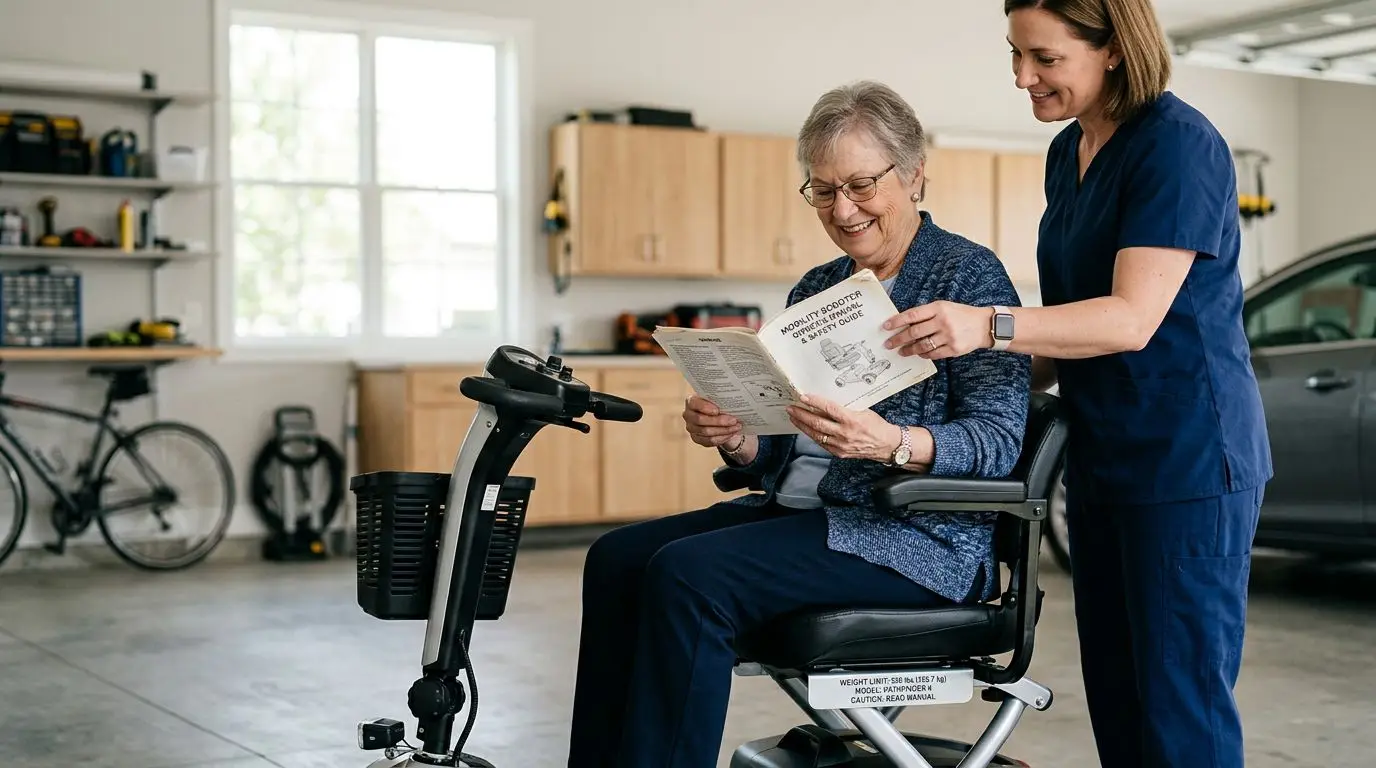
To understand the issue, start with the scooter’s published capacity. Look for terms such as maximum user weight, maximum load, rated capacity, or gross weight limit in the owner’s manual. If the manual says 350 lb maximum user weight, respect that number unless the manufacturer gives a different combined-load rating for a specific accessory.
Use conservative math. Add the main rider, the passenger, and everything attached to the scooter. A metal seat bracket, cushion, footrest, basket, oxygen cylinder, battery upgrade, or rear carrier may each seem minor, but together they can add 20, 30, or 50 lb. The scooter does not know which pounds are people and which are accessories.
Here is a practical example. A scooter is rated for 350 lb. The primary rider weighs 205 lb. A passenger weighs 95 lb. A seat kit, rear bracket, and bag add 30 lb. The total is 330 lb, leaving only 20 lb of margin before the listed rating. That still does not confirm safety, because the rating was likely based on one rider in the original seat location. It only shows that the setup is close to the limit before balance, braking, or frame stress are considered.
It is also wise to think about dynamic load. When a scooter hits a sidewalk seam, enters a curb cut, or rolls over a threshold, the force on the frame can momentarily be higher than the static weight. Two riders bouncing over a 1-inch lip can stress the seat post, welds, deck, and rear suspension more than the same combined weight sitting still.
- Never count unused weight capacity as permission to add a passenger.
- Include accessories, cargo, medical equipment, and groceries in the total load.
- Leave a safety margin rather than operating right at the limit.
- Do not drill, weld, or clamp into structural areas unless the manufacturer approves it in writing.
Who an extra-seat setup is best for: almost no one without a 2-rider rating
An added passenger seat is best for very few standard mobility scooter users. The only broadly reasonable situation is when the scooter is specifically designed, documented, and rated for two riders by its maker, with appropriate seating, foot positions, brakes, frame strength, and stability testing. Without that two-rider rating, an added seat is usually a safety compromise.
For a caregiver who needs to transport an older adult, a passenger add-on is rarely the right solution. The caregiver may be better served by walking alongside, using a transport chair for short indoor distances, arranging accessible transportation, or choosing a vehicle designed to carry passengers. For a grandparent who wants to give a child a ride, the risk is also meaningful. Children shift their weight quickly, may reach toward the tiller, and may not keep their feet clear of wheels.
For couples who both have limited mobility, a two-seat rated device may sound attractive, but it needs careful review. Some two-seat vehicles are closer to low-speed recreational or neighborhood vehicles than personal mobility aids. They may be too wide for indoor use, too heavy for lifts, or not allowed in certain pedestrian areas.
| User situation | Extra seat on standard scooter? | Safer direction to consider |
|---|---|---|
| Occasional child ride in a store | Not recommended | Use a cart, stroller, or separate mobility plan |
| Caregiver transporting an adult | Not recommended | Accessible vehicle, transport chair, or rated device |
| Two adults traveling outdoors together | Only if rated for 2 riders | Purpose-built two-seat device with documentation |
| Carrying groceries or medical gear | No passenger seat needed | Use rated baskets or carriers within load limits |
How to choose or measure before adding anything over 10 lb
Before adding any accessory, especially one weighing more than about 10 lb, read the owner’s manual and check the exact attachment guidance. Some scooters allow baskets, cane holders, cup holders, oxygen tank carriers, or rear bags when installed in approved mounting points. That is different from adding a human passenger seat.
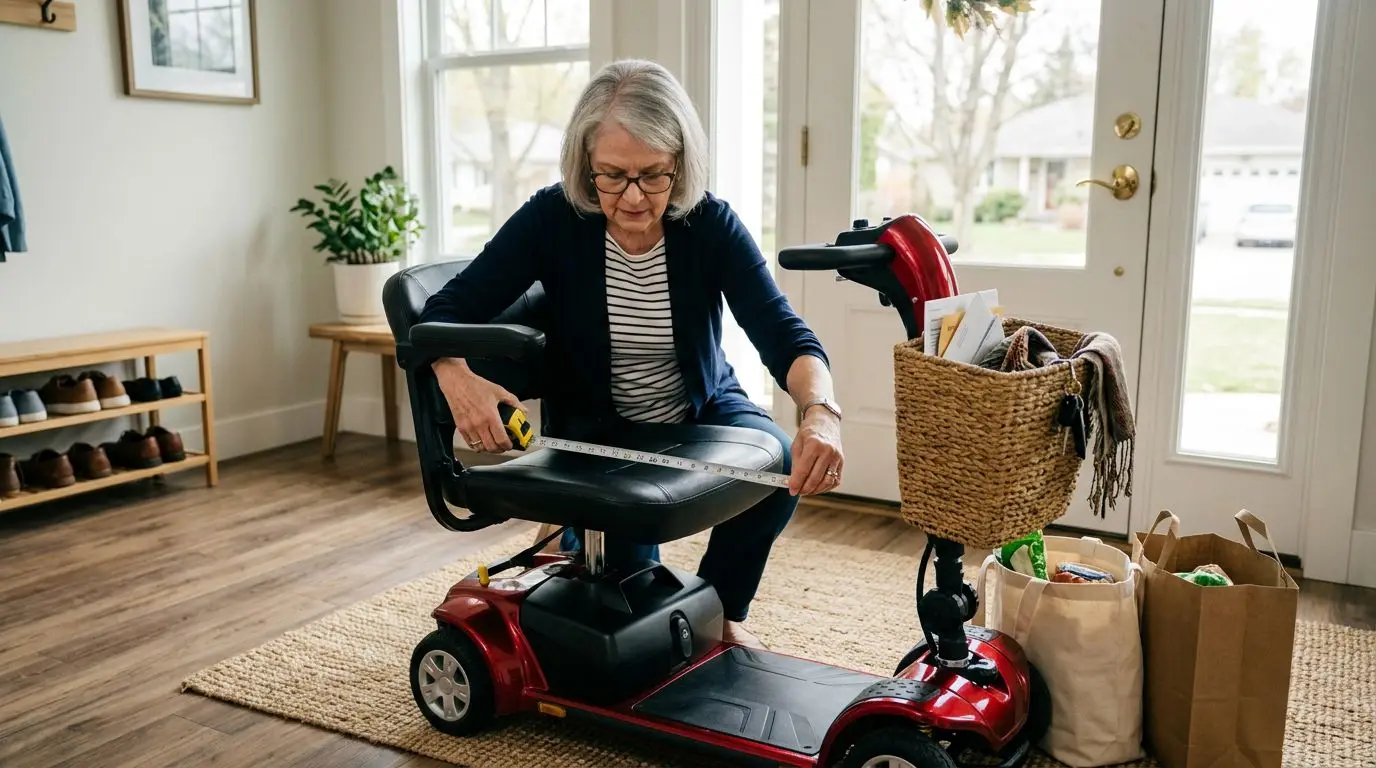
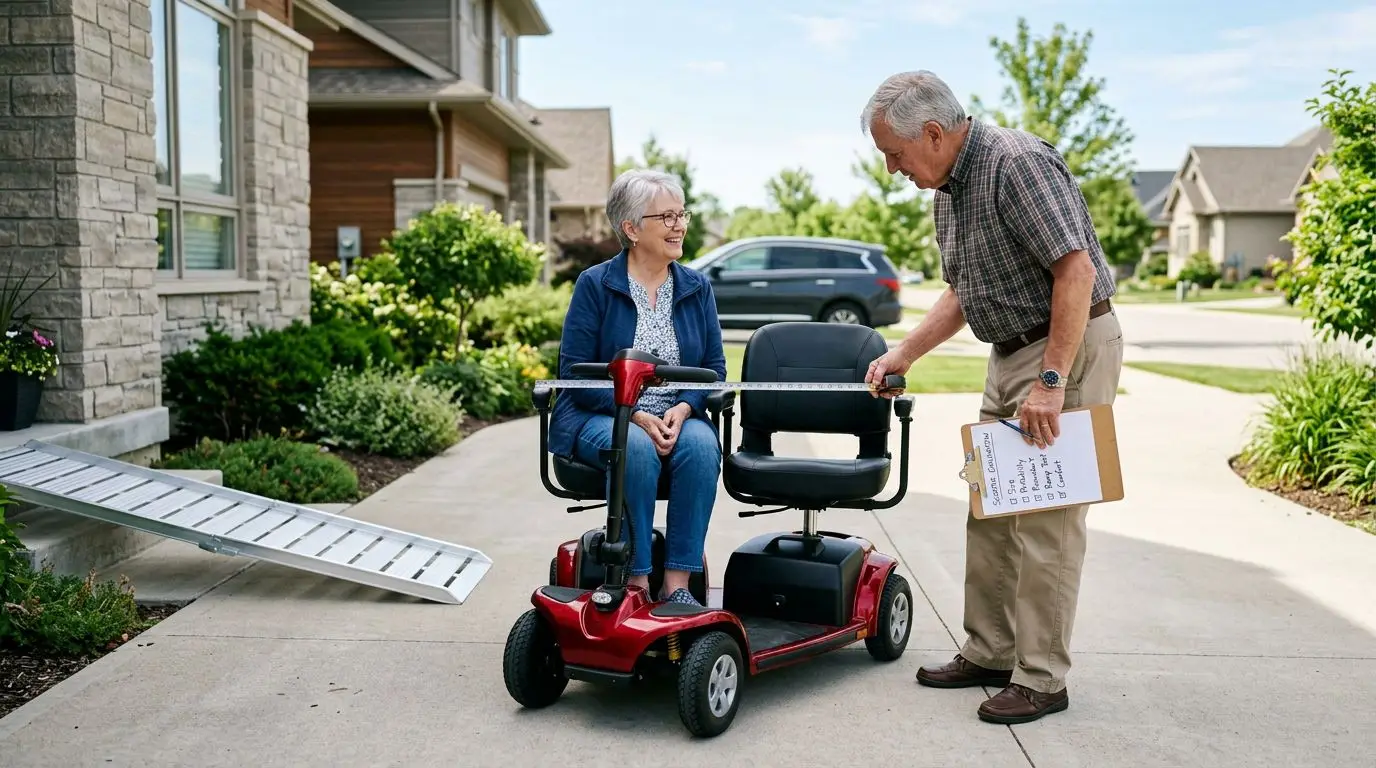
Start by measuring the scooter as it is now. Note the wheelbase, which is the distance between the front and rear axles. Check the overall width, seat height, deck space, ground clearance, and turning radius if listed. A compact scooter may be only about 20 to 22 inches wide, while a larger outdoor scooter may be closer to 24 to 28 inches wide. Adding a seat or footrest can make the scooter too wide for 32-inch doorways, narrow hallways, vehicle lifts, or public transit securement areas.
Next, check how the accessory would attach. A clamp on a seat post is not the same as a factory frame mount. A rear receiver-style tube may be intended for light cargo, not a person. Drilling through the frame can weaken it and may void warranty coverage. Welding can change metal strength and introduce failure points if not engineered and tested.
Then ask three questions. First, does the scooter manual explicitly allow a passenger seat? Second, does the accessory documentation list a combined rider capacity for that exact use? Third, can the scooter still turn, stop, and fit through the places you use every week? If the answer to any question is no, treat that as a stop sign.
Simple measuring checklist
- Measure total width after any proposed accessory, including armrests and footrests.
- Confirm total loaded weight: rider, passenger, accessory, and cargo.
- Check whether the passenger’s feet have a safe, fixed place away from wheels.
- Make sure the tiller can turn fully left and right without hitting knees or a seat.
- Test whether the scooter would still fit through a 32-inch doorway if that matters at home.
- Verify the scooter lift, ramp, or vehicle carrier can handle the heavier total load.
Legal and public-use issues in 50 states vary
In the United States, mobility scooter rules are shaped by a mix of federal access principles, state traffic laws, local ordinances, transit policies, and property rules. There is no single 50-state rule that says every extra-seat attachment is legal or illegal. The key issue is whether the device is still being used as a personal mobility aid by one person with a mobility need, or whether it has become a passenger-carrying vehicle.
On sidewalks, in stores, and in public buildings, a standard mobility scooter is generally treated differently from a motor vehicle because it helps one person move independently. Carrying a passenger may create problems with property managers, event venues, buses, paratransit providers, or airlines. A transit operator may refuse to secure a scooter if it is too large, too heavy, modified in a way that affects securement, or used to carry another rider.
Public-use rules also depend on speed and location. A scooter traveling around 4 mph indoors is not treated the same as a larger outdoor vehicle capable of higher speeds on roads or multiuse paths. If a two-seat device is wide, heavy, or road-oriented, local rules may require different equipment or restrict where it can be used.
Insurance is another concern. Homeowners, renters, liability, medical, or mobility equipment coverage may not apply if an accident involves an unapproved modification or carrying a passenger against the manual’s instructions. If another person is injured while riding as a passenger, the financial consequences can be serious. Ask your insurer direct questions before modifying any mobility device.
This article is informational, not legal advice. If you plan to use a two-rider device in public, check your state motor vehicle agency, local disability access office, transit provider, housing rules, and insurance policy.
Alternatives that keep one rider per scooter under a rated load
If the goal is companionship, caregiving, or carrying items, there are safer alternatives than adding a passenger seat. A second mobility scooter, a rollator for the companion, a transport chair, or accessible ride service may keep each person properly supported. For errands, approved storage accessories can help carry items without changing the scooter’s purpose.
For cargo, look for accessories that mount to approved points and stay within the load rating. A front basket may hold a few small items. A rear bag may carry light personal belongings. Some users carry oxygen equipment in a holder designed for that purpose. Even then, weight and balance matter. A 15 lb bag mounted behind the seat can affect handling more than the same 15 lb carried close to the center of the deck.
For two adults who truly need to ride together, compare purpose-built options carefully. A two-seat rated mobility device should have documented combined weight capacity, two secure seating positions, footrests for both riders, braking appropriate to the load, and dimensions that match where it will be used. It may also require more storage space and a stronger vehicle lift. Some lifts are rated around 350 lb, while larger scooters or two-seat devices can exceed that once batteries and accessories are included.
| Alternative | Best for | Key limitation |
|---|---|---|
| Second scooter | Two people with independent mobility needs | Requires storage, charging, and transport for 2 units |
| Transport chair | Short trips with a caregiver pushing | Caregiver must be able to push safely |
| Accessible ride service | Longer community trips | Requires scheduling and availability |
| Rated cargo accessory | Groceries, oxygen, personal items | Still counts toward the scooter’s load limit |
| Purpose-built two-seat device | Two riders on suitable outdoor routes | May face access, transport, and legal restrictions |
Red flags to stop immediately within the first 5 minutes
If you are evaluating any modification, stop using it at the first sign of unsafe handling. Many serious warning signs appear within the first 5 minutes of low-speed movement: wobbling, delayed braking, tire rubbing, steering interference, scraping, or the front end feeling too light. Do not try to get used to those symptoms with a passenger aboard.
Watch the scooter while it is stationary, too. If the rear suspension sags, the seat post flexes, a bracket shifts, or the scooter no longer sits level, the setup is not appropriate. Listen for clicking, creaking, or grinding when weight is added or removed. Check tire sidewalls and pressures if pneumatic tires are used, because underinflated tires can worsen instability.
Never test an unapproved passenger setup on a ramp, near traffic, near stairs, or in a crowded store. A flat, open area is safer for checking basic movement, but a successful test does not prove long-term safety. Heat buildup in motors and controllers can also occur under heavier loads, especially on hills or during repeated starts and stops.
- Stop if steering feels lighter or slower than normal.
- Stop if braking distance noticeably increases.
- Stop if any bracket moves, bends, or makes noise.
- Stop if a passenger cannot keep both feet secure.
- Stop if the scooter tips, rocks, or lifts a wheel during turns.
Questions to ask before carrying 2 people
Before carrying two people on any scooter-like device, get the important answers in writing when possible. A salesperson’s casual assurance is not the same as a manual, rating label, or manufacturer statement. You need to know what the device was designed to do, not just what it can physically move for a short distance.
Ask whether the scooter is rated for two riders and what the combined maximum load is. Ask whether the brakes, frame, batteries, tires, and seating were tested for that configuration. Ask how the device should be transported, whether public transit securement is allowed, and whether passenger use changes warranty or insurance coverage.
If the answer is unclear, do not carry a passenger. Mobility equipment should support independence, not create a preventable fall or liability risk. The safest rule is simple: one rated seat means one rider, unless the documentation clearly says otherwise.
FAQ: 5 common questions about scooter passenger seats
Can I put a child on my mobility scooter with me?
It is not recommended unless the scooter is specifically rated for a passenger and has a secure seating and foot position for the child. A child can shift weight quickly, reach controls, or place feet near moving parts, which increases risk even at low speed.
Does staying under the weight limit make an extra seat safe?
No. The weight limit is only one part of safety. A scooter may be rated for one rider in one seat position, so adding a second person can still affect balance, braking, steering, and frame stress while technically staying near the listed number.
Will adding a passenger seat void the warranty?
It may. Many equipment warranties exclude damage caused by unapproved modifications, overloading, drilling, welding, or using the scooter outside the manual’s instructions. Check the written warranty before making changes.
Can a mobility scooter with two seats go on public transit?
Maybe, but do not assume it can. Transit providers often have size, weight, securement, and safety policies. A modified scooter or two-seat device may be refused if it cannot be safely secured or if it is being used to carry a passenger.
What should I do if I need to transport another adult regularly?
Consider a transport chair, accessible vehicle service, a second mobility device, or a purpose-built two-seat device with documented ratings. The right choice depends on distance, terrain, caregiver ability, storage, and local rules.
Frequently asked questions
Can I put a child on my mobility scooter with me? +
It is not recommended unless the scooter is specifically rated for a passenger and has a secure seating and foot position for the child. Children can shift weight quickly, reach controls, or place feet near moving parts, which increases risk even at low speed.
Does staying under the scooter weight limit make an extra seat safe? +
No. The listed weight limit usually assumes one rider in the original seat position. A second person can still change balance, braking, steering, and frame stress even if the total load appears to be under the rating.
Will adding a passenger seat void the warranty? +
It may. Many warranties exclude damage from unapproved modifications, overloading, drilling, welding, or use outside the owner’s manual. Check the written warranty and manufacturer guidance before making changes.
Can a two-seat mobility scooter be used on public transit? +
It depends on the transit provider’s size, weight, securement, and safety policies. A modified scooter or large two-seat device may be refused if it cannot be safely secured or if passenger use is not allowed.
What is safer than adding a second seat to a standard scooter? +
Safer options include a second mobility scooter, a transport chair, accessible ride service, approved cargo accessories, or a purpose-built two-seat device with documented combined weight capacity and passenger ratings.
Related guides
Two-Seat Mobility Scooters: Safety, Practicality, and Alternatives to Consider
13 min read
Mobility Scooter Load Safety: Bags, Baskets, Groceries, Pets, and Passengers
14 min read
Heavy-Capacity Mobility Scooters: What Higher Weight Ratings Mean for Comfort, Range, and Transport
13 min read