Two-seat mobility scooters can work for some couples or caregivers, but for many everyday mobility needs they are not the safest or most practical option. The biggest issues are passenger safety, combined weight capacity, wider turning space, transport difficulty, and possible restrictions in stores, on sidewalks, or in public facilities.
If you need to ride with another person, first ask whether both riders truly need to be on one scooter. In many cases, two separate mobility devices, a companion walking aid, or a larger personal transportation device used only in appropriate areas will be safer and easier to manage than a double-seat scooter.
Are two-seat mobility scooters safe for 2 riders?
A two-seat scooter is only as safe as its design, weight rating, braking system, and the place it is used. A scooter that feels stable with one 180 lb rider may handle very differently with 2 adults, especially when turning, braking, climbing a ramp, or crossing uneven pavement.
The main safety concern is the center of gravity. Adding a passenger increases total weight and may shift that weight higher or farther back than the scooter was designed to handle. On a slope of just 6 degrees, which is not unusual for ramps or sloped driveways, a heavy rear passenger can make steering and braking feel less predictable.
Speed matters too. Many mobility scooters used for daily errands travel in the range of about 4 to 8 mph. That may sound slow, but a 600 lb combined load of scooter, rider, passenger, and cargo needs more distance to stop than a single rider on a lighter device. Wet leaves, gravel, curb cuts, and driveway lips can all increase risk.
Passenger seating also deserves close attention. A safe two-person setup should have a true second seat, back support, secure foot placement, and handholds. A person should not ride on a lap, basket, rear platform, armrest, or cargo area. Those positions can lead to falls and may also make the scooter harder to control.
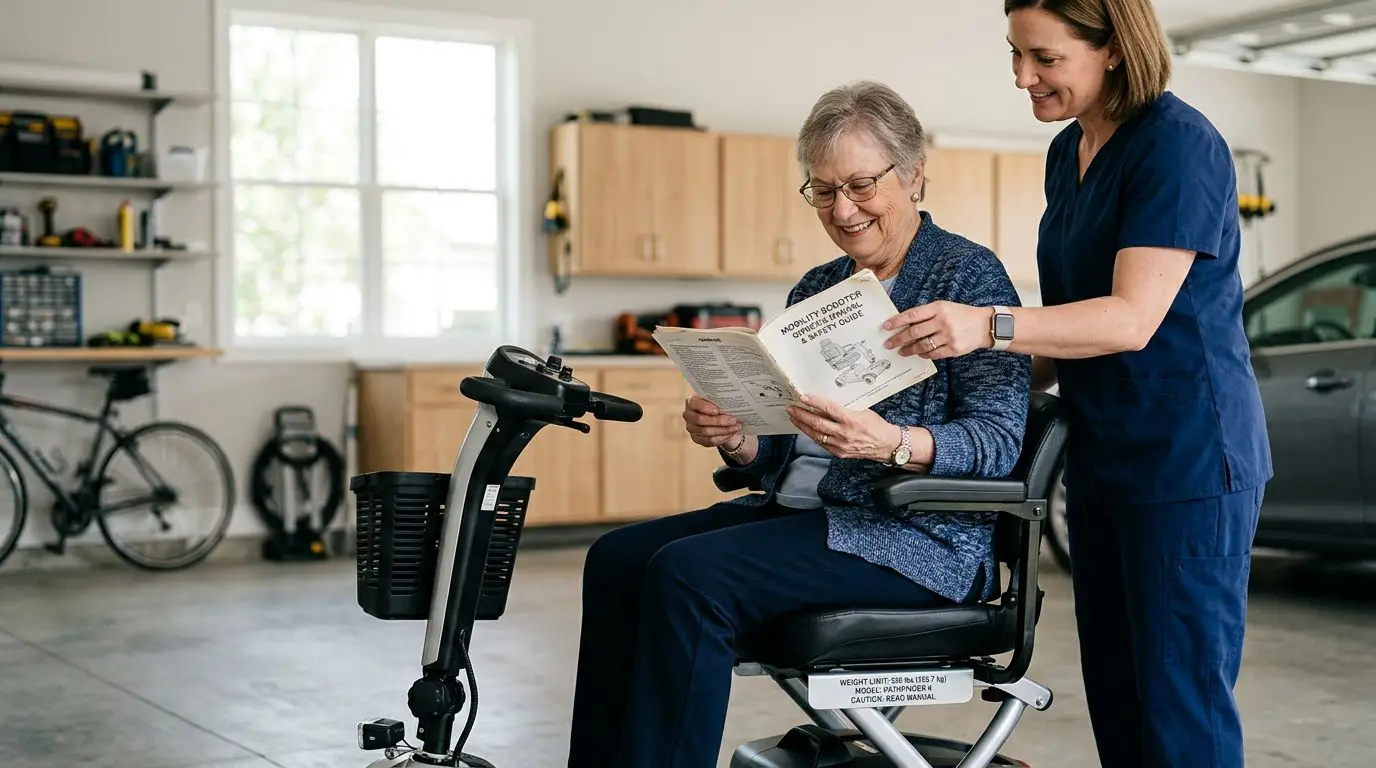
Before using any scooter with 2 people, verify that the manufacturer specifically allows passenger use and lists a combined weight capacity. If the manual describes the scooter as single-rider only, treating it as a two-seat vehicle is not a safe workaround.
Passenger use, access rules, and legal issues in the US
In the United States, most mobility scooters are treated as mobility devices when used by a person with a mobility disability. That does not automatically mean every two-seat scooter is allowed everywhere. Access can depend on size, speed, safety, local rules, and the policies of a specific facility.
The Americans with Disabilities Act generally protects the use of wheelchairs and other power-driven mobility devices in many public places when used by people with disabilities. Even so, businesses and public entities may assess whether a device can be operated safely in that setting. A very wide scooter, a fast recreational-style device, or a scooter carrying a passenger may raise safety concerns in narrow aisles, elevators, waiting rooms, or crowded events.
Sidewalk and street rules vary by state and city. Some areas allow mobility scooters on sidewalks but not in traffic lanes, while others have local rules about maximum speed, lighting, or where motorized devices may travel. A scooter closer in size to a small cart than a standard mobility scooter may be treated differently by property owners or local authorities.
Transportation is another practical issue. Paratransit services, buses, trains, and accessible vans often have size and securement limits. A common securement area may be built around a mobility device footprint near 30 inches wide by 48 inches long, though exact requirements vary. Many two-seat scooters are longer than that, and some may not fit safely on lifts, ramps, or tie-down systems.
Air travel can be difficult as well. Airlines have battery handling rules, cargo door size limits, and advance notification requirements. A larger two-seat scooter with heavy batteries may be possible to transport in some cases, but it usually requires more planning than a compact or standard single-seat scooter.
Size, weight capacity, and turning space: how to measure before buying
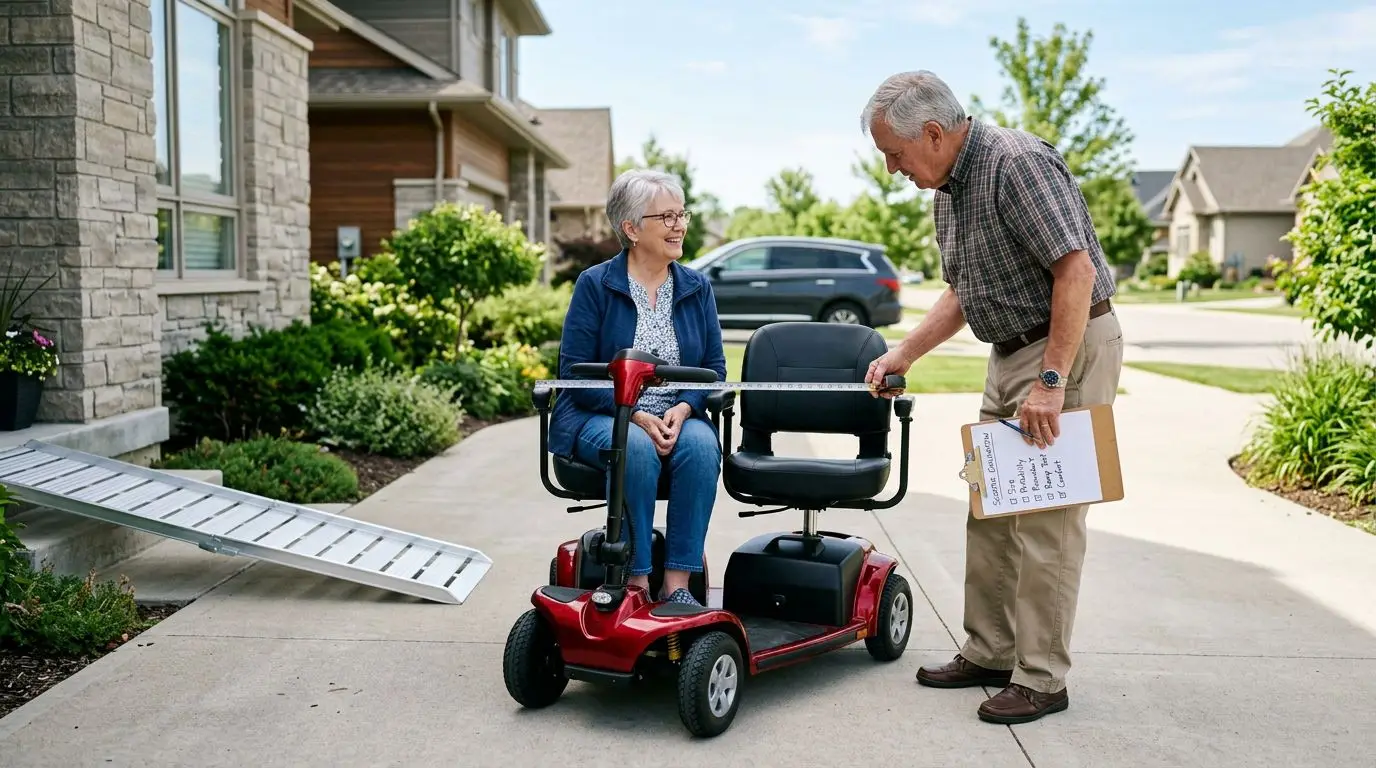
Measurement is where many two-seat scooter decisions become clear. Before comparing features, measure your home, vehicle, storage area, and the places you visit most often.
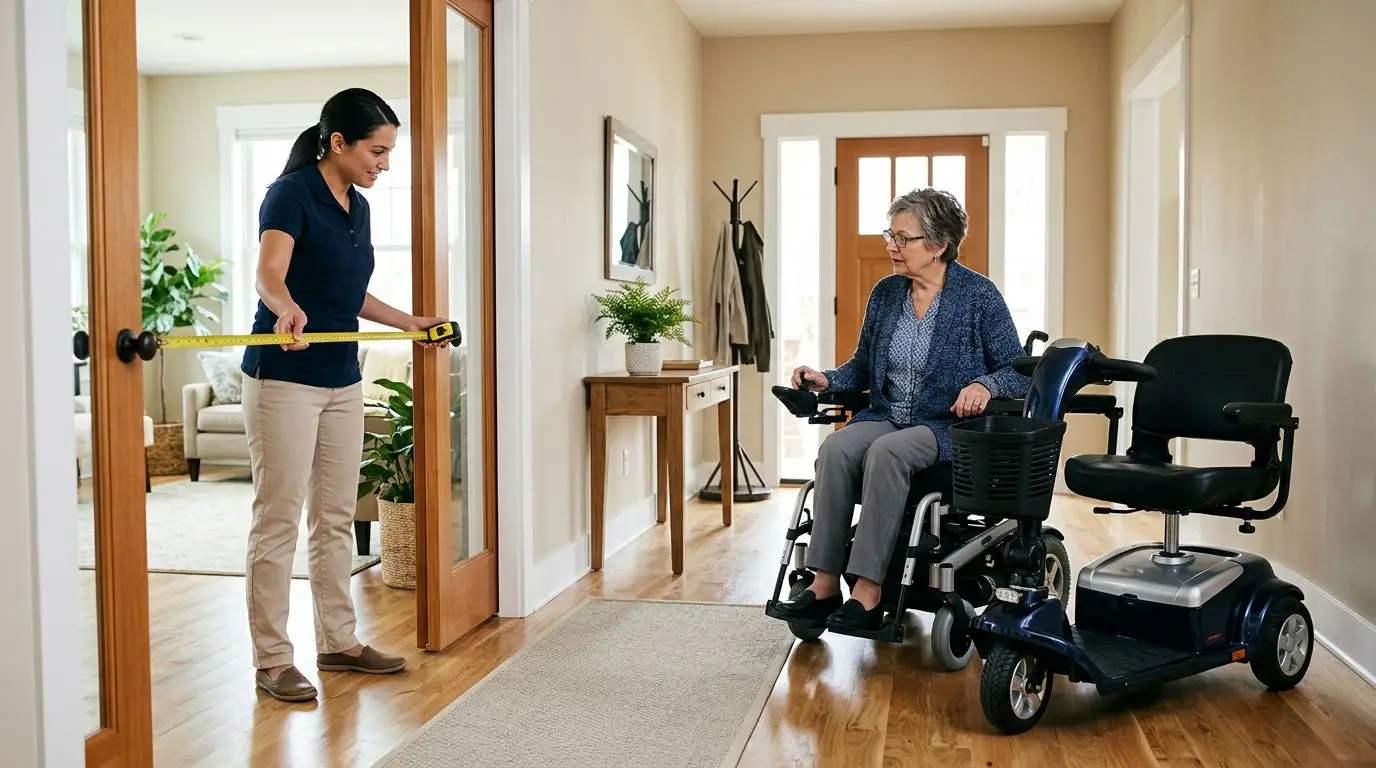
Start with doorways. Many interior doors are about 28 to 32 inches wide, while older homes may have narrower openings. A standard single-seat mobility scooter may fit through many wider doors, but a two-seat design can be wider, longer, or harder to angle through tight spaces. Measure the actual clear opening with the door open, not the nominal door size.
Next, measure turning space. A scooter may need 5 to 7 feet of open floor area to turn comfortably, depending on its wheelbase and steering design. Hallways, kitchens, laundry rooms, and small elevators can become frustrating if the scooter needs multiple back-and-forth maneuvers every time you turn around.
Check combined weight capacity carefully. Add the driver, passenger, clothing, oxygen equipment if used, bags, groceries, and any accessories. If one rider weighs 220 lb and the other weighs 170 lb, that is already 390 lb before cargo. A scooter rated for 400 lb would leave almost no margin, while a higher capacity design may handle the load more appropriately. Never assume the second seat automatically means the scooter can carry any 2 adults.
Vehicle transport is often the deciding factor. Many two-seat scooters are too large or heavy for a typical rear hitch lift, trunk, or small SUV cargo area. Some may require a trailer, wheelchair-accessible van, or garage storage with a ramp. If the scooter cannot be transported to medical visits, family events, or shopping areas, its usefulness may be limited.
Quick measuring checklist
- Measure the narrowest doorway you must pass through, in inches.
- Measure hallway width and the open space needed to turn at the end.
- Confirm ramp width, slope, and weight rating before use.
- Add both riders plus at least 20 to 30 lb for bags or accessories.
- Measure vehicle cargo height, length, and lift capacity if transport is needed.
- Check elevator dimensions in apartments, clinics, or senior housing.
Types of 2-person scooter setups compared
Not every double-seat scooter is the same. Some are essentially mobility scooters with an added passenger seat, while others are closer to small recreational electric vehicles. The distinction matters because a device built for paved paths may not be practical or acceptable inside a grocery store with 36 inch aisles.
| Type | Typical seating | Best use | Main tradeoff |
|---|---|---|---|
| Side-by-side two-seat scooter | 2 seats next to each other | Outdoor paths, campuses, larger private properties | Often too wide for narrow doors, aisles, and lifts |
| Tandem two-seat scooter | 1 seat behind the other | Straighter outdoor routes and shared errands | Longer turning radius and harder indoor maneuvering |
| Single scooter with approved companion seat | Driver plus designated passenger seat | Occasional passenger use where allowed | Weight capacity and balance must be verified carefully |
| Recreational electric cart-style device | 2 or more seats | Private property, resorts, gated communities where permitted | May not be treated as a medical mobility device in public spaces |
| Two separate mobility scooters | 1 seat per rider | Errands, travel, independence for both users | Requires both riders to operate safely and store 2 devices |
For indoor daily mobility, smaller is usually easier. For outdoor private property, a larger two-seat setup may feel more comfortable. The difficult part comes when one scooter is expected to do both jobs: fit inside a clinic and also carry 2 adults across rough pavement. That is a demanding combination.
Key features that matter with a 400 lb to 600 lb combined load
With two riders, features that may feel optional on a single-seat scooter become more important. The higher the combined load, the more you should focus on braking, tires, suspension, seat support, and stability rather than appearance.
| Feature | Why it matters for 2 riders | What to look for |
|---|---|---|
| Published weight capacity | Protects the frame, motor, brakes, and stability limits | A clear combined rating that exceeds riders plus cargo |
| Braking system | More weight increases stopping distance | Smooth, predictable brakes that hold on modest slopes |
| Wheelbase and track width | Affects tipping risk and turning behavior | A stable stance without being too wide for your routes |
| Tires | Small tires can catch on cracks or thresholds | Outdoor-capable tires if using sidewalks or uneven pavement |
| Suspension | Reduces jolts for both riders | Front and rear suspension for longer outdoor trips |
| Lighting and reflectors | Improves visibility near driveways and parking lots | Headlight, taillight, reflectors, and horn |
| Seat and foot placement | Passengers need stable posture and support | Backrests, armrests or handholds, and separate foot space |
Battery range should be viewed realistically. A scooter advertised with a long range may achieve that figure under ideal conditions with a lighter load on smooth, level ground. Two riders, hills, cold weather, and frequent stopping can reduce range noticeably. If your regular outing is 6 miles round trip, you do not want a battery plan that barely covers 6 miles on a perfect day.
Ground clearance also matters. A clearance of only a few inches may be fine indoors but can scrape on curb cuts, driveway transitions, or uneven paths. That said, more ground clearance may raise the seat and center of gravity, so it should be balanced against stability.
Who a two-seat mobility scooter is best for
A two-seat mobility scooter is best for a limited set of users: typically 2 people who ride together often, travel mostly on wide and predictable routes, have enough storage space, and can stay within the scooter’s combined weight limit with a safety margin.
It may make sense for a spouse or companion who cannot walk long distances but does not need to control a separate scooter. It can also work on large private properties, retirement communities with wide paths, or outdoor venues where the device size is permitted. In these situations, shared seating can reduce the need for one person to walk behind or push a manual wheelchair for long distances.
It is less suitable for crowded indoor shopping, small apartments, older homes with 30 inch doorways, frequent public transit use, or users who need a device for medical appointments in tight offices. It may also be a poor fit if either rider has trouble sitting upright, keeping feet positioned, holding on securely, or transferring safely.
Caregiver use deserves a careful look. If the passenger needs hands-on support, supervision, or medical monitoring, riding behind or beside the driver may not provide enough control. A scooter is not a substitute for a properly fitted wheelchair, transport chair, or clinical mobility plan when a person needs significant postural or transfer assistance.
Safer alternatives to consider before choosing 1 scooter for 2 people
Many families start with the idea of one scooter for two people and end up with a safer alternative. The right choice depends on whether the second person needs mobility help, companionship, or caregiver access.
| Alternative | Best for | Why it may be safer |
|---|---|---|
| Two separate mobility scooters | Couples who can both drive safely | Each device is used within its intended one-rider design |
| Mobility scooter plus rollator | Companion can walk short distances with rests | Less bulk and easier access indoors |
| Power wheelchair for one user | Tight indoor spaces and complex seating needs | Often has a smaller turning radius than many scooters |
| Manual transport chair | Short trips with a caregiver pushing | Lightweight and easier to load into many vehicles |
| Accessible van or community transport | Longer medical or social trips | Reduces the need to carry 2 people on one device |
| Outdoor-only personal electric cart | Private property or approved communities | Can be used where size and passenger seating are appropriate |
Two separate scooters often provide the most independence when both riders have the vision, reaction time, judgment, and hand control to operate safely. They also reduce the risk that one overloaded device will struggle with braking or turning. The downside is obvious: you need storage and charging space for 2 units.
For some households, a mixed approach works better. One person uses a scooter, while the companion uses a rollator for short distances and rests when needed. For medical visits, a lightweight transport chair may be easier than trying to maneuver a long two-seat scooter through a reception area and exam room.
How to choose: a 10-step test before you commit
Use this 10-step process before buying or regularly using a two-seat scooter. A short test in a parking lot is not enough; the scooter needs to work in your real environment.
- Confirm passenger approval. Read the manual and verify that the scooter is designed for 2 riders, not modified informally.
- Add the real load. Calculate both riders, bags, oxygen equipment, canes, groceries, and accessories.
- Measure every route. Include doorways, elevators, ramps, sidewalks, garage space, and vehicle access.
- Test transfers. Both riders should get on and off without twisting, stepping over unstable parts, or pulling the scooter off balance.
- Check foot placement. No feet should hang near wheels, steering parts, or the ground.
- Practice low-speed turns. Try left and right turns in a space similar to a hallway or store aisle.
- Test braking gently. Practice stopping with both riders on level ground before trying slopes.
- Try a modest ramp. Use only ramps within the scooter’s stated limits and avoid wet surfaces.
- Plan charging. Make sure the scooter can be charged where it is stored, ideally without running cords across walkways.
- Ask about service. Larger scooters may need in-home service or special transport for repairs.
If any step feels marginal, do not ignore it. A scooter that barely fits, barely stops, or barely meets the weight rating is not a good match for two-person use.
Practical safety habits for 2 riders at 4 to 8 mph
Safe operation is not just about the scooter. It is also about habits. Keep speed low around people, pets, parking lots, store entrances, and curb cuts. Even 4 mph can feel fast in a crowded lobby.
The driver should remain the only person controlling the scooter. The passenger should sit still, keep both feet in the intended area, hold designated handholds if provided, and avoid leaning during turns. Sudden movement can affect balance.
Avoid steep slopes, wet grass, loose gravel, and high curbs. Use curb cuts straight on rather than at an angle when possible. If the scooter feels like it is straining uphill or picking up speed downhill, stop using that route until you can confirm it is within the device’s limits.
Visibility helps prevent conflicts. Use lights in dim areas, add reflective clothing or accessories when appropriate, and make eye contact with drivers at driveways and parking lot crossings. A small horn or bell can help, but it should be used politely and early, not at the last second.
FAQ: 5 common questions about two-seat mobility scooters
Can 2 people ride on a regular mobility scooter?
No, not unless the scooter is specifically designed and rated for 2 riders. A standard mobility scooter is usually intended for one seated user, and carrying a passenger can affect braking, steering, frame stress, and stability.
Are two-seat mobility scooters allowed in stores?
Sometimes, but not always. Access depends on the scooter’s size, how safely it can be operated, aisle width, crowding, and whether the device is being used as a mobility aid by a person with a disability. A very large two-seat scooter may be difficult to use safely in tight retail spaces.
What weight capacity should I look for?
Add both riders plus all cargo, then choose a scooter with a published combined capacity above that number. For example, 220 lb plus 170 lb plus 25 lb of bags equals 415 lb, so a 400 lb rating would not be enough.
Is a side-by-side scooter better than tandem seating?
Side-by-side seating can feel more social and balanced in some outdoor settings, but it is usually wider. Tandem seating is narrower but longer, which can make turning harder. The better choice depends on your door widths, turning space, and typical routes.
What is the safest alternative for a couple?
If both people can operate safely, two separate single-rider mobility scooters are often more practical and safer than one shared scooter. If only one person needs mobility help, a scooter plus a rollator, transport chair, or planned accessible transportation may work better.
Frequently asked questions
Can two people ride on a regular mobility scooter? +
No. A regular mobility scooter is typically designed for one seated rider. Two people should ride only if the scooter is specifically designed and rated for passenger use.
Are two-seat mobility scooters safe? +
They can be safe in the right conditions, but they require careful attention to combined weight capacity, braking, stability, seating, and route conditions. They are often less practical in tight indoor spaces.
Are two-seat scooters allowed in stores and public places? +
Sometimes. Access depends on the device size, safe operation, local rules, and the setting. Large two-seat scooters may be restricted in narrow aisles, elevators, or crowded facilities.
How do I know what weight capacity I need? +
Add both riders, clothing, bags, medical equipment, and accessories. Choose a scooter with a published combined weight capacity above that real-world total.
What are safer alternatives to a two-seat mobility scooter? +
Common alternatives include two separate mobility scooters, a scooter plus a rollator, a power wheelchair for one user, a manual transport chair, or accessible transportation for longer trips.
Related guides
Can You Add an Extra Seat to a Mobility Scooter? Safety, Weight Limit, and Legal Considerations
14 min read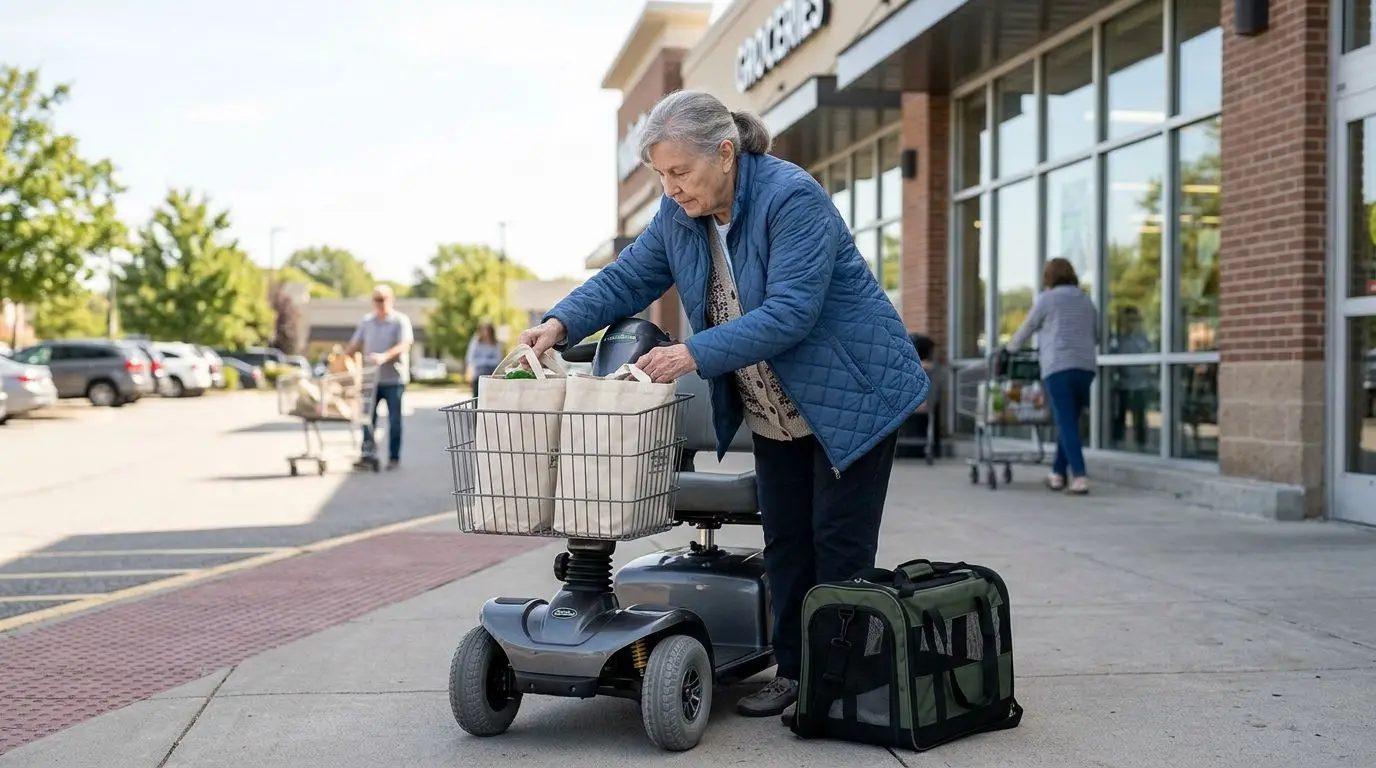
Mobility Scooter Load Safety: Bags, Baskets, Groceries, Pets, and Passengers
14 min read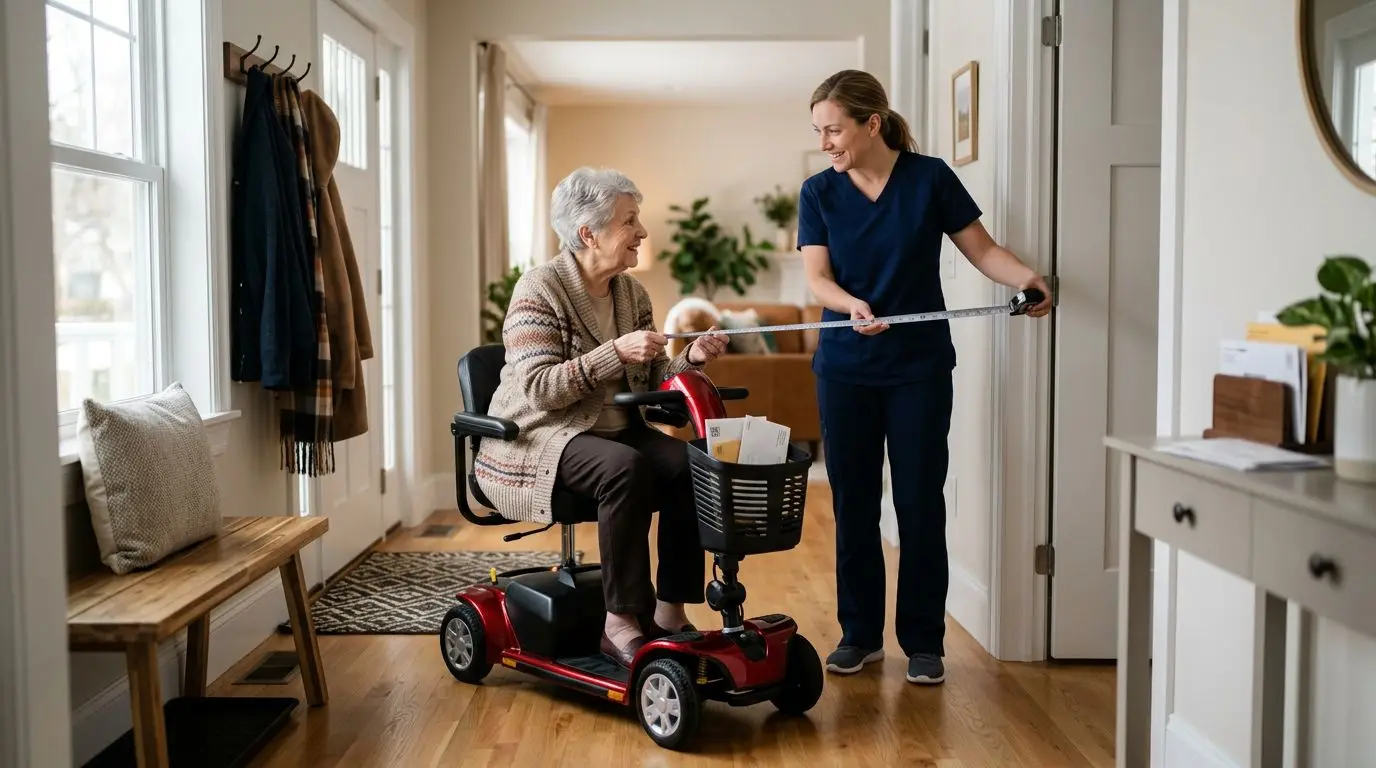
Mobility Scooters for Seniors: How to Pick the Right Scooter for Home, Errands, and Independence
14 min read