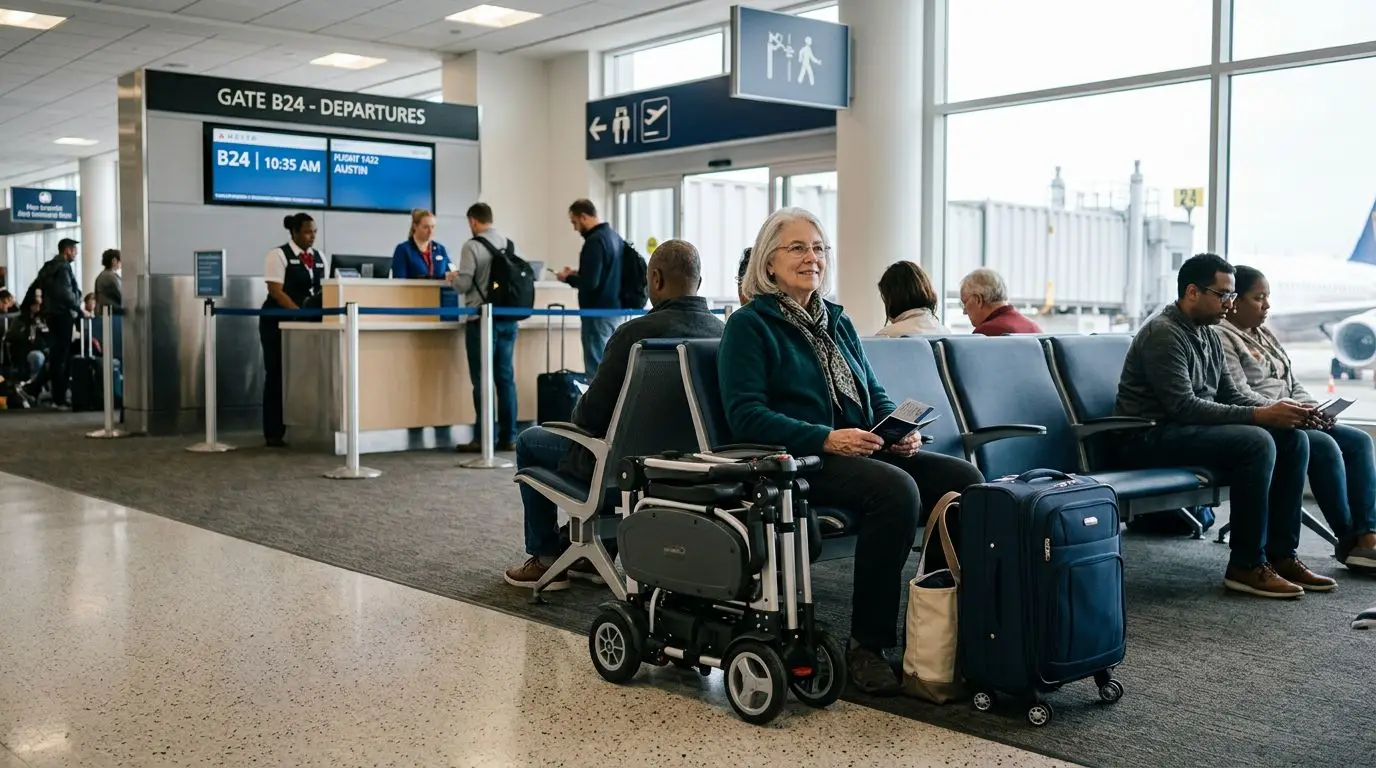
An “airline-approved mobility scooter” usually means the scooter has a travel-friendly battery, manageable size and weight, and documentation an airline can review before your flight. It does not mean every airline, airport, or aircraft will automatically accept it. Before you buy or travel, confirm the battery watt-hours, scooter dimensions, total weight, folding or disassembly steps, and your airline’s mobility-device policy.
The phrase works as a shopping shortcut, but it can also be misleading. Airlines approve mobility scooters case by case, often based on battery type and the cargo space available on your specific aircraft. A scooter that works well on one trip may still need advance approval on the next.
What “airline approved” really means before a 1-flight or 4-flight trip
There is no single government-issued sticker that makes a mobility scooter universally “airline approved.” In practice, the term means the scooter is designed to fit common airline rules: the battery is acceptable for air travel, terminals are protected, the scooter can be loaded safely, and the airline has enough information to handle it correctly.
That last part matters. If your itinerary has 1 nonstop flight, only one airline and one aircraft need to work with your scooter. If you have 4 flight segments involving a regional jet and a larger aircraft, each segment may bring a different cargo-door size, handling process, or battery documentation request.
Airlines are mainly concerned with safety and handling. They may ask for the scooter’s total weight, whether it folds, whether the battery is removable, what chemistry the battery uses, and the battery’s watt-hour rating. Airport staff also need to know how to put the scooter in freewheel mode and how to secure or remove the battery if required.
A helpful way to think about it: “airline approved” is not a product category. It is a travel-readiness checklist.
Battery rules: why 300 Wh and 160 Wh numbers matter
Battery type is usually the first thing to check. Many travel scooters use lithium-ion batteries because they are lighter than older battery types. Airlines commonly look for the lithium battery rating in watt-hours, written as “Wh.” For many mobility devices, a commonly used limit is up to 300 Wh for one lithium-ion battery, or up to two batteries that are each no more than 160 Wh, depending on how the device is configured and the airline’s policy.
Do not guess the watt-hour rating. It may be printed on the battery label. If not, you can often calculate it by multiplying volts by amp-hours. For example, a 24-volt, 10-amp-hour battery is 240 Wh. That number matters because the gate agent or special assistance desk may ask for it before accepting the scooter.
Battery chemistry also changes the process. Sealed non-spillable batteries, including many gel and AGM-style batteries, are handled differently from lithium batteries. Older spillable wet batteries require more special handling and are less convenient for air travel. Most shoppers who fly regularly look for a scooter with a clearly labeled, removable lithium battery that can be carried into the cabin when required.
Keep battery paperwork with you. A one-page battery specification sheet, a photo of the battery label, or the owner’s manual page showing chemistry and watt-hours can save time at check-in. Store a digital copy on your phone and keep a printed copy in your carry-on.
| Battery type | Common travel concern | What to verify before flying |
|---|---|---|
| Lithium-ion | Watt-hour limit and removable battery handling | Wh rating, terminal protection, airline approval in advance |
| Sealed non-spillable | Heavier scooter and cargo handling | Battery label says non-spillable; terminals are protected |
| Spillable wet battery | Special handling and possible restrictions | Airline procedure before booking; upright transport requirements |
Size and weight: check 3 measurements before you book
Airlines care about more than whether a scooter folds. They need to know if it can be moved safely through the airport and loaded into the aircraft cargo hold. Before traveling, record 3 measurements: overall length, overall width, and overall height when folded or disassembled. Also note the total weight and the weight of the heaviest single piece.
Many compact travel scooters are about 19 to 22 inches wide, which can help in hotel rooms, cruise terminals, and airport corridors. Length varies more, often depending on the wheelbase and foot platform. Folded height matters when an aircraft has a smaller cargo opening, especially on regional planes.
Weight deserves close attention. A scooter may be advertised as “portable,” but if the heaviest piece is 45 lb or more, you may still need help lifting it into a car trunk. Airport personnel may have loading equipment, but at home you are the one managing the garage, rideshare, shuttle, or hotel transfer.
When you contact the airline, use exact numbers rather than general descriptions. “It folds” is less helpful than “it folds to 38 inches long, 21 inches wide, and 18 inches high, with a removable battery.” Exact measurements make it easier for the airline to match the scooter to the aircraft.
Folding vs. disassembling: a 60-second setup is not the only goal
Many shoppers focus on how fast a scooter folds. A 60-second folding process is convenient, but travel success depends on more than speed. The better question is whether you can fold, unfold, lift, steer, and explain the scooter’s handling steps under airport conditions.
Folding scooters usually collapse into one main unit. That can be simple at the gate, though the folded unit may still be heavy. Disassembling scooters separate into several pieces, often including the seat, battery, basket, and base. Each piece may be easier to lift, although reassembly takes more steps.
For air travel, removable batteries are often a practical advantage. If the airline requires the battery to be carried into the cabin, you want a release system you can manage without tools. If the scooter uses a key, latch, or locking pin, practice at home until the steps feel familiar.
Also check whether the scooter can roll when folded. Some folding designs have small transport wheels, while others must be lifted. In a long airport terminal, that difference can affect both comfort and stress.
| Design type | Best travel advantage | Possible drawback | Good fit for |
|---|---|---|---|
| One-piece folding scooter | Quick fold and fewer loose parts | Folded unit may be heavy | Travelers who can manage one larger piece |
| Disassembling travel scooter | Heaviest piece may be easier to lift | More parts to track | Car trips, hotel stays, and travelers with a helper |
| Ultra-compact scooter | Smaller footprint for tight spaces | May have less legroom or lower ground clearance | Short airport distances and indoor use |
| Full-size scooter | More comfort and stability features | Heavier and harder to load | Travelers who need outdoor performance and have airline confirmation |
Who an airline-friendly scooter is best for on trips of 2 to 14 days
An airline-friendly mobility scooter is best for someone who needs reliable mobility at the airport and destination, but can stay within the limits of a compact travel design. It is especially useful for trips of 2 to 14 days where walking long terminals, hotel corridors, museums, or cruise ports would be difficult.
This type of scooter is often a good match for travelers who can transfer independently or with light assistance, manage a removable battery, and tolerate a smaller seat than a full-size scooter might provide. It can also help travelers who use a cane or walker at home but need more support across large airports.
It may not be the right fit for every rider. If you need a high-back captain’s seat, very high weight capacity, all-day outdoor range, or suspension for rough surfaces, a compact air-travel scooter may feel too limited. Smaller scooters can have lower ground clearance, narrower seats, and shorter battery range.
Think about the destination, not just the airport. A scooter that is perfect inside terminals may be less comfortable on brick sidewalks, steep ramps, gravel paths, or long outdoor resort grounds. For some travelers, renting a larger scooter at the destination and using airport wheelchair assistance during the flight may be a better plan.
How to choose: measure your scooter, battery, rider needs, and 48-hour airline window
Start with your body fit and daily needs, then work backward to airline requirements. Seat width, legroom, tiller adjustment, and weight capacity matter just as much as folded dimensions. A scooter that is accepted by the airline but uncomfortable for you is not the right choice.
Next, check the battery. Look for a label that clearly states voltage, amp-hours, watt-hours, and chemistry. If the battery is lithium-ion, confirm whether it is removable and how the terminals are protected. If you cannot find the watt-hour rating, ask the seller or manufacturer for written specifications before buying.
Then measure the scooter in its travel configuration. Use a tape measure and write down folded length, width, and height to the nearest inch. Weigh the scooter or confirm the published weight, including the battery. If it disassembles, record the heaviest piece because that is what you or a helper may need to lift.
Contact your airline early. Many airlines ask passengers to provide mobility-device details at least 48 hours before departure, and earlier is better for complex itineraries. Tell them you are traveling with a mobility scooter, provide the battery type and watt-hours, and ask whether the battery must be removed at the gate.
Finally, make a one-page travel sheet. Include your name, phone number, scooter dimensions, total weight, battery type, watt-hours, freewheel instructions, and folding or disassembly steps. Attach a copy to the scooter and keep another copy with your travel documents.
- Measure folded length, width, and height.
- Record total scooter weight and heaviest piece weight.
- Confirm battery chemistry and watt-hours.
- Check whether the battery removes without tools.
- Ask the airline about advance approval and gate-check handling.
- Practice folding, freewheel mode, and battery removal at home.
Airport day checklist: 6 steps that reduce gate surprises
Arrive earlier than you would without a mobility device. An extra 30 to 60 minutes can give staff time to inspect the battery label, tag the scooter, and answer handling questions without rushing. This is especially helpful during holiday travel or at large airports.
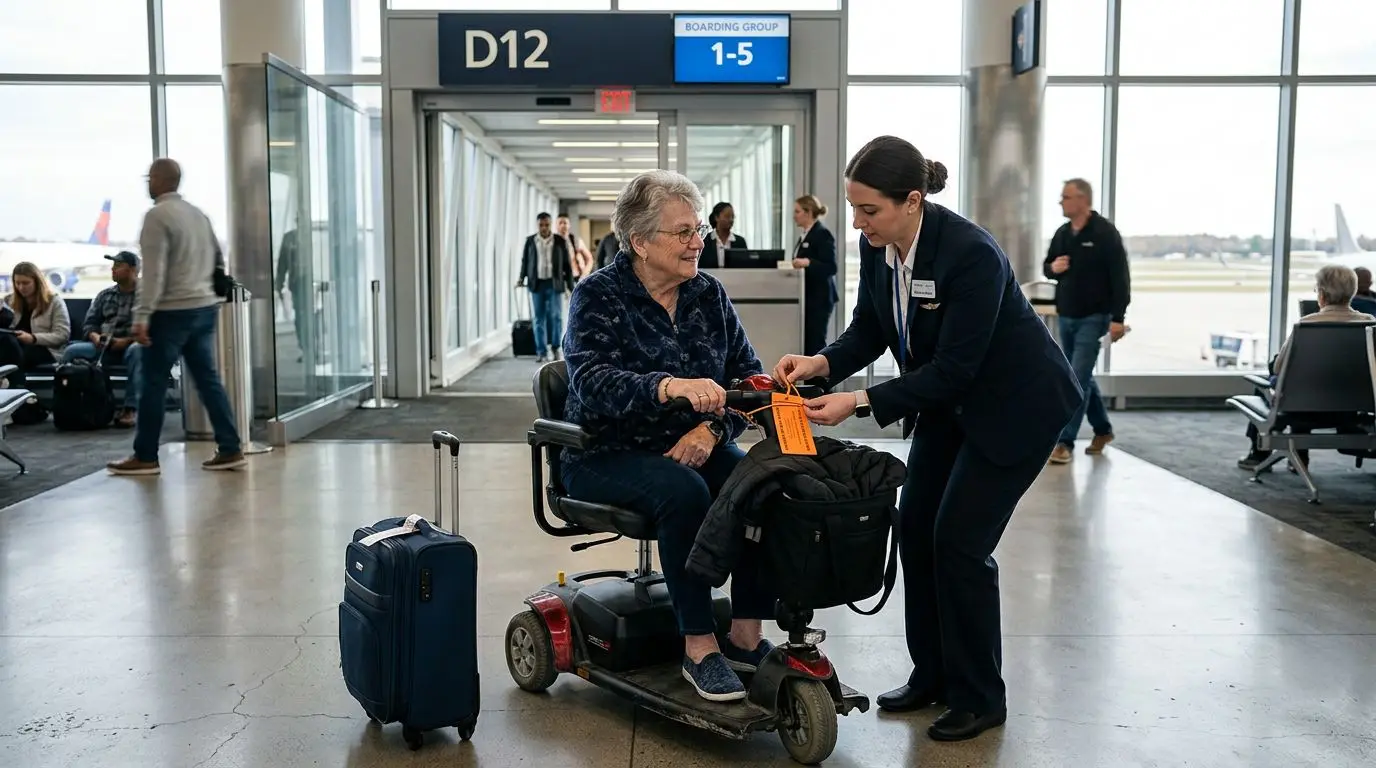
At check-in, remind the airline that you are traveling with a mobility scooter and ask where they want the device tagged. Many travelers use the scooter through the terminal and gate-check it near the aircraft door. Others check it earlier and use airport wheelchair assistance. The right choice depends on your mobility needs and the airline’s process.
Remove loose accessories before handing over the scooter. Baskets, cup holders, phone mounts, seat cushions, and canopies can get lost or damaged if left attached. Keep the key, charger, and removable battery with you if required by the airline.
Show staff the freewheel lever and battery release if they need to move the scooter. A bright tag or simple instruction card can help prevent confusion. If the scooter has a brake release, make sure it is returned to drive mode when you receive it back.
| Before boarding | Why it matters |
|---|---|
| Confirm battery status | Prevents delays if the battery must travel in the cabin |
| Remove loose items | Reduces chance of loss or breakage |
| Keep charger in carry-on | Helps if checked bags are delayed |
| Tag the scooter clearly | Helps staff identify the device at arrival |
| Explain freewheel mode | Allows safe movement without forcing the drive system |
| Inspect on return | Lets you report damage before leaving the airport |
Common shopping mistakes: 5 details travelers overlook
The first mistake is buying based only on the words “airline approved.” Treat that phrase as a claim to verify, not a guarantee. Ask for battery specifications, folded dimensions, total weight, and written travel guidance.
The second mistake is ignoring rider comfort. A very compact scooter may be easier to transport, but a narrow seat or short foot platform can become tiring after a long travel day. If possible, test the seating position for at least 10 minutes, not just a quick sit.
The third mistake is assuming all lithium batteries are the same. Two scooters can both use lithium-ion batteries, yet one battery may be under a common airline watt-hour limit while another may not be. The label is what matters.
The fourth mistake is overlooking the charger. Some chargers are compact, while others add bulk to your carry-on. If you are traveling internationally, check voltage compatibility and plug adapters. Do not assume the hotel will have an outlet near the scooter’s parking spot.
The fifth mistake is forgetting the return trip. If your scooter is damaged, the battery is misplaced, or you cannot recharge it at the destination, flying home becomes harder. Take photos of the scooter before handing it to airline staff so you have a record of its condition.
Airline approval is case by case, even with the same scooter 12 months later
A scooter that was accepted last year may still need review this year. Airline policies can change, aircraft assigned to the route can change, and staff may ask for documentation that was not requested on an earlier trip. This does not mean your scooter is unsuitable. It means air travel has several decision points.
The safest approach is to treat every trip as a fresh approval process. Confirm the scooter details when booking, again a few days before departure, and once more at check-in. If your itinerary includes partner airlines, contact each operating airline, not just the company that sold the ticket.
Keep expectations realistic. Airline-friendly scooters can make travel more manageable, but they do not remove every obstacle. You may still encounter jet bridges, tight elevators, curb cuts, crowded gate areas, or long waits for the scooter to be returned after landing.
For many travelers, the preparation is worth it. The right scooter, paired with clear documentation and early airline communication, can make airports and destinations easier to navigate while respecting safety rules that protect everyone on the aircraft.
FAQ: 5 questions to ask before flying with a mobility scooter
Does “airline approved” mean TSA approved?
No. TSA screening and airline acceptance are separate processes. TSA screens passengers and devices for security, while the airline decides how the scooter and battery will be transported on the aircraft.
Can I ride my mobility scooter all the way to the gate?
Often, yes, but the process depends on the airline, airport, and aircraft. Many travelers use their scooter to the gate and then gate-check it before boarding. Ask your airline how they handle scooters at your departure and connection airports.
Where does the scooter battery go during the flight?
It depends on the battery type and whether it is removable. Removable lithium-ion batteries are commonly carried in the cabin when required, with terminals protected. Non-removable or sealed batteries may remain installed if they meet airline rules.
What if my scooter battery label does not show watt-hours?
Look for voltage and amp-hours, then multiply them to estimate watt-hours. For example, 24 volts times 10 amp-hours equals 240 Wh. Still, it is best to get written specifications before flying.
Should I buy the lightest scooter for air travel?
Not automatically. A lighter scooter may be easier to lift, but it may also have less legroom, a smaller seat, lower ground clearance, or shorter range. Balance airline handling with your comfort and safety needs.
Frequently asked questions
Does “airline approved” mean TSA approved? +
No. TSA screening and airline acceptance are separate. TSA handles security screening, while the airline decides how your mobility scooter and battery will be transported on the aircraft.
Can I ride my mobility scooter to the gate? +
Often, yes. Many travelers use a mobility scooter through the terminal and gate-check it before boarding, but the exact process depends on the airline, airport, and aircraft.
What battery information does an airline need? +
Airlines commonly ask for battery chemistry, watt-hours, whether the battery is removable, and whether the terminals are protected. Keep the battery label or specification sheet with you.
How do I calculate watt-hours for a scooter battery? +
Multiply volts by amp-hours. For example, a 24V 10Ah battery equals 240 Wh. If the label is unclear, request written battery specifications before flying.
Is a folding scooter always better for air travel? +
Not always. Folding scooters are convenient, but some are still heavy as one piece. A scooter that disassembles may be easier to lift if the heaviest piece is manageable.
Related guides
Can You Take a Mobility Scooter on an Airplane? TSA, Airline, and Battery Rules for US Travelers
15 min read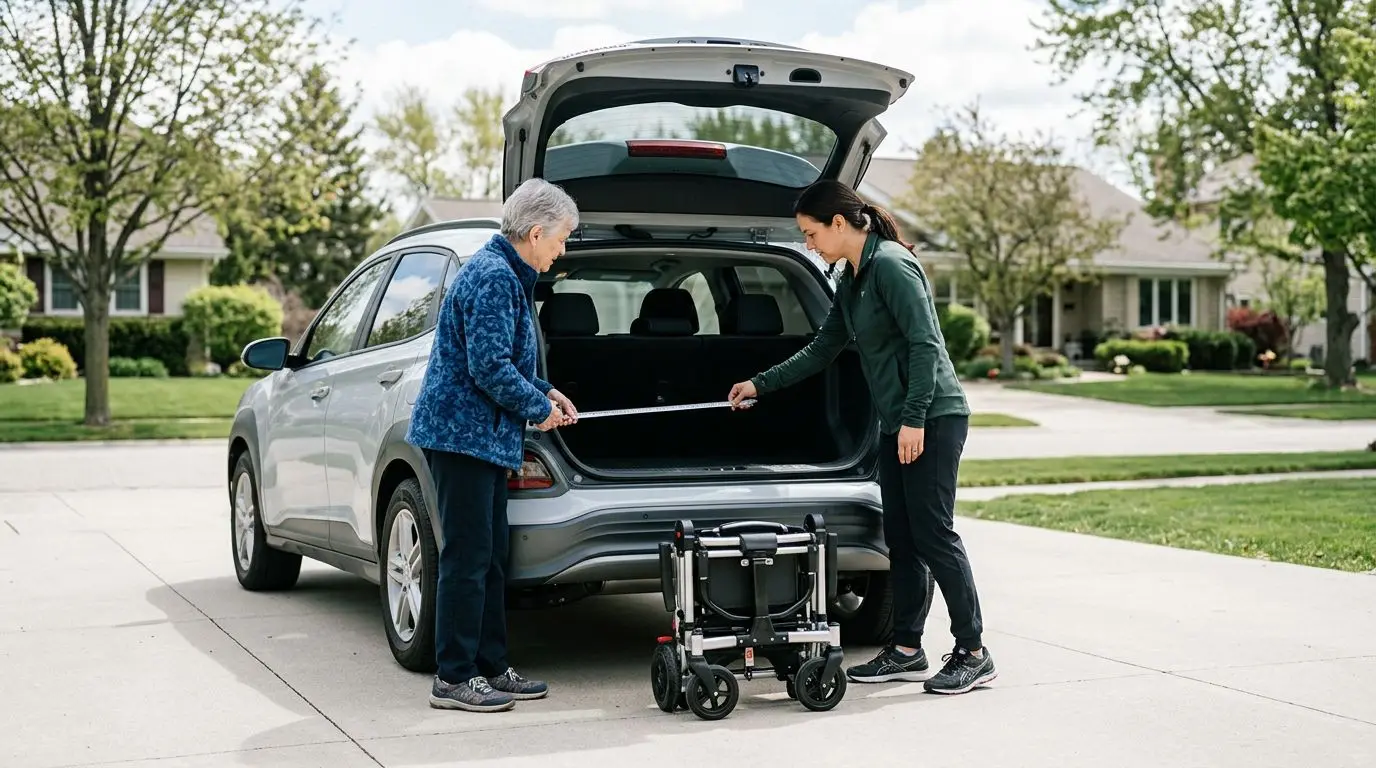
Travel, Folding, and Lightweight Mobility Scooters: What to Know Before You Buy
13 min read
Mobility Scooters for Adults Under 65: Work, Errands, Fatigue, and Long-Term Mobility Needs
13 min read