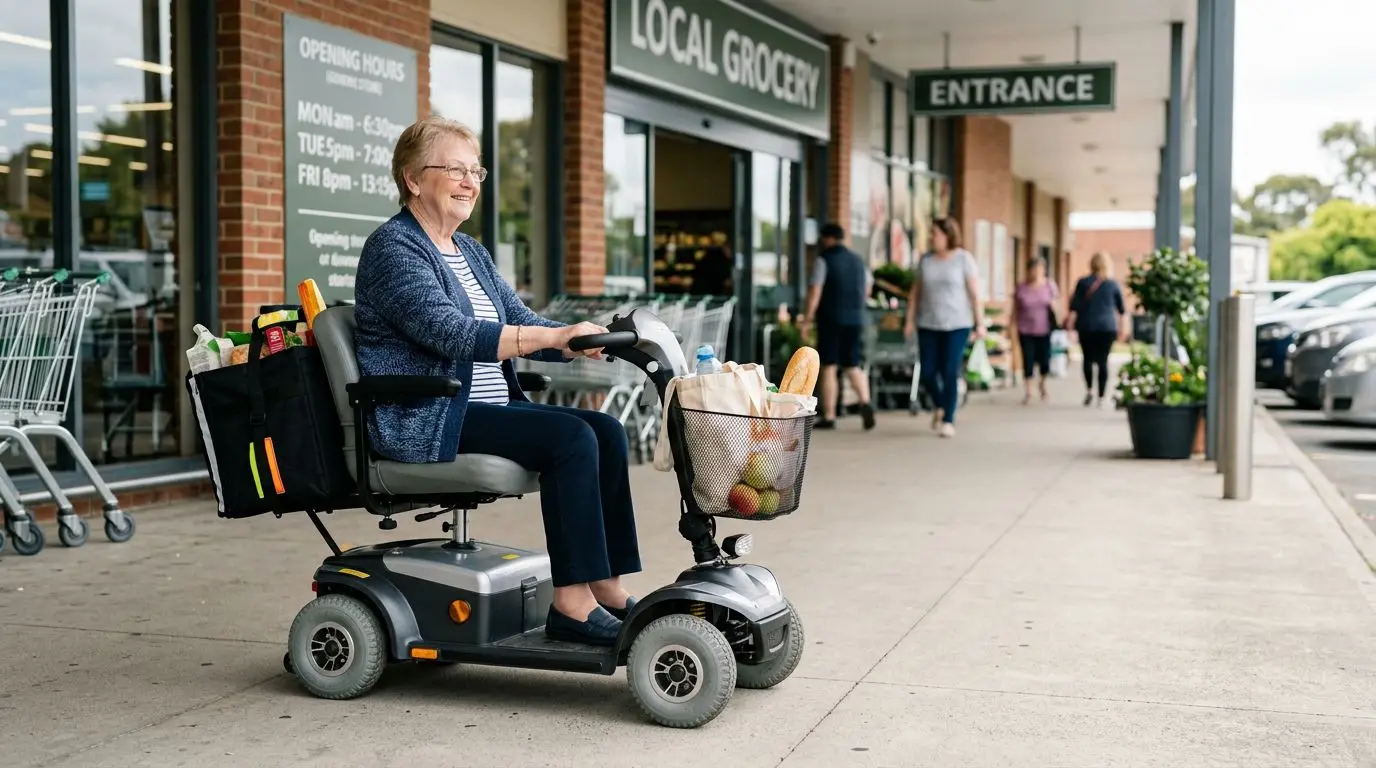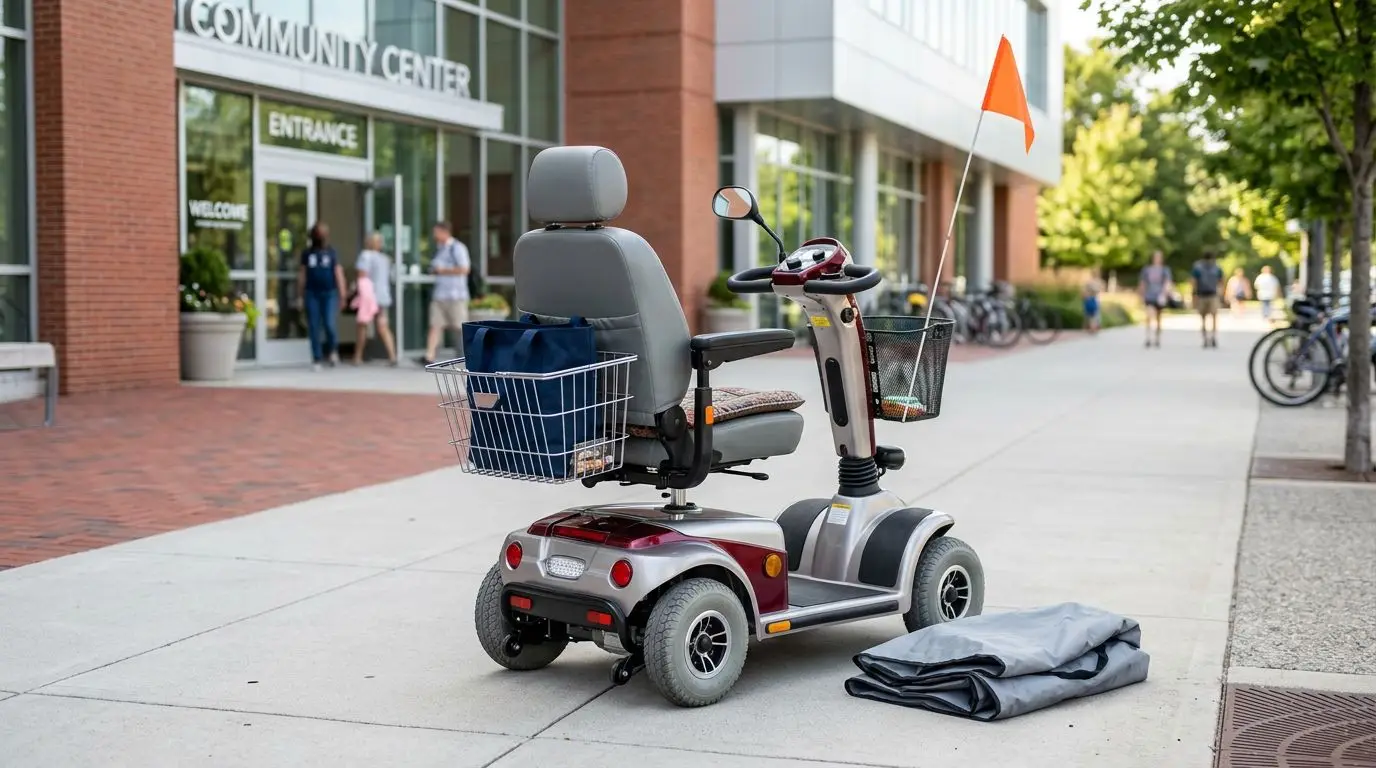
The best mobility scooter accessories for daily use are the ones that solve a real problem you deal with every week: carrying items, staying visible, sitting comfortably, or managing changing weather. Start with storage and safety accessories, then add comfort and weather protection based on your routine, scooter size, and local conditions.
A useful accessory should fit securely, stay within the scooter's weight limits, and make the scooter easier to use, not more complicated. Before buying anything, measure your seat, armrests, tiller, basket area, and available mounting points. Check that the accessory does not block controls, lights, brakes, or your ability to get on and off safely.
The 4 Accessory Groups That Matter Most for Daily Use
Most daily-use mobility scooter accessories fall into 4 practical groups: storage, safety, comfort, and weather protection. A typical scooter trip may last 15 to 45 minutes, long enough for a small inconvenience, such as having no place for a phone or dealing with a cold seat back, to become a daily frustration.
Good accessories do not need to be fancy. A rear basket, reflective flag, seat cushion, or rain cover can be more useful than a complicated add-on that is hard to install or remove. The right choice depends on where you ride, how much you carry, and how often you fold, disassemble, or transport the scooter.
| Accessory group | Best for | Common examples | Key fit check |
|---|---|---|---|
| Storage | Groceries, bags, personal items | Rear baskets, armrest bags, under-seat pouches | Weight capacity and attachment point |
| Safety | Visibility and awareness | Mirrors, lights, reflectors, flags, horns | Does not block the tiller or controls |
| Comfort | Longer rides and posture support | Cushions, armrest pads, cup holders, cane holders | Seat width, back height, and transfer space |
| Weather protection | Rain, wind, sun, dust | Covers, ponchos, tiller covers, canopies | Clearance, ventilation, and secure fastening |
Think of accessories as a small daily-use system. If you add a rear basket, for example, you may also need a better scooter cover because the scooter's overall length changes by several inches.
Storage Accessories: Carry 5 to 25 lb Without Clutter
Storage is often the first upgrade shoppers consider because most standard front baskets are small. Many front baskets work well for a wallet, water bottle, keys, or a light shopping bag, but they may not be enough for a full grocery run or bulky personal items.
Rear baskets usually provide the most extra space, but they also add length behind the seat. That matters in elevators, tight apartment hallways, and vehicle lifts. A loaded basket can also change how the scooter feels, especially on ramps or uneven pavement, so keep heavy items low and centered whenever possible.
Common storage options
- Front baskets: Convenient for lightweight items you want to reach quickly. Keep the load modest so steering stays easy.
- Rear baskets: Better for larger shopping bags or a folded jacket. Check that the mounting bracket is compatible with your scooter's seat post or rear frame area.
- Armrest bags: Good for phones, glasses, medication containers, a small notepad, or house keys. They can interfere with transfers if overfilled.
- Under-seat pouches: Useful for low-profile items, though access may be limited if the seat does not swivel or lift easily.
- Oxygen tank or cane holders: Designed for specific daily needs. These should be mounted securely and should not swing into the wheels.
As a rule, do not treat accessory storage as extra passenger weight. If your scooter has a published user weight limit, accessories and cargo count toward the total load the scooter must move and stop. For example, a 15 lb grocery load, a 3 lb basket, and a heavy jacket all add up.
Safety Accessories: Be Seen From 500 ft and Stay Aware
Safety accessories help other people see you and help you stay aware of your surroundings. They are especially useful in parking lots, retirement communities, shared pathways, and low-light conditions such as early morning or dusk.
Visibility is not just about having a headlight. A scooter rider sits lower than a standing adult, and drivers may miss a small scooter near parked cars. Reflective tape, side reflectors, and a bright safety flag can make the scooter easier to spot from the front, side, and rear.
| Safety accessory | Daily-use benefit | Best placement | What to avoid |
|---|---|---|---|
| Rear-view mirror | Helps monitor traffic and pedestrians behind you | Tiller or handlebar area | Mounting where it blocks hand controls |
| Reflective tape | Adds side and rear visibility | Basket, frame, rear shroud, cane holder | Covering lights or manufacturer labels |
| Safety flag | Makes a low scooter more visible | Rear mount or basket area | Using in very low indoor doorways if it catches |
| Extra lights | Improves visibility in dim areas | Front, rear, or side depending on need | Glare aimed at other pedestrians |
| Audible horn or bell | Alerts people nearby | Within easy thumb reach | Harsh sound in quiet indoor spaces |
A mirror is one of the most helpful low-complexity upgrades. Many riders find it easier to check behind them before reversing, changing direction on a sidewalk, or moving through a busy store entrance. Position it while sitting in your normal riding posture, not while standing beside the scooter.
Lights and reflectors should support safe riding habits, not replace them. Slow down around corners, avoid sudden turns near pedestrians, and use marked crossings whenever available. If you ride near traffic, follow local rules for mobility devices and pedestrian areas.
Comfort Accessories: Improve Support on 20- to 60-Minute Trips
Comfort accessories matter most when you use the scooter for more than quick indoor movement. On a 20-minute ride to a nearby store, small pressure points can be irritating; on a 60-minute outing, they can make you cut the trip short.
Seat cushions are common, but they need careful selection. A cushion that is too thick can raise your seating position by 2 or 3 inches, changing knee angle, foot placement, and tiller reach. It may also affect how safely you transfer on and off the scooter.
Comfort upgrades worth considering
- Seat cushions: Add padding or pressure relief. Choose a size close to your scooter seat width and depth so it does not slide over the edges.
- Lumbar support pads: Helpful for riders who prefer more lower-back contact, but they should not push you too far forward.
- Armrest pads: Useful if your elbows rest on narrow or firm armrests during longer rides.
- Cup holders: Keep a drink within reach. Use one that holds the container firmly and does not interfere with steering.
- Phone holders: Convenient for navigation or emergency contact access, but the screen should not distract you while moving.
- Cane or crutch holders: Keep walking aids secure and off the floorboard.
Comfort also includes ease of use. A poorly placed cup holder can catch on a doorway. A cane holder can make the scooter longer or wider. A plush cushion can feel good at first but make the seat too high. Test the riding position after every comfort upgrade, ideally in a safe open area before taking it into a crowded public space.
Weather Protection: Plan for Rain, Sun, and 40-Degree Mornings
Weather accessories protect the scooter, the controls, and the rider. They are especially useful if the scooter is stored in a garage, carport, apartment entry, or another area where dust, moisture, or sun exposure is common.
A full scooter cover is different from a rider rain poncho. A storage cover protects the scooter while parked, while a poncho or weather cape is worn during use. Tiller covers protect the control area from light moisture and dust, but they should not trap water around switches or displays.
| Weather accessory | Best use | Fit detail | Daily caution |
|---|---|---|---|
| Full scooter cover | Parked storage indoors or under shelter | Measure total length, width, and height | Let the scooter dry before long covered storage |
| Tiller cover | Light rain or dust protection for controls | Must allow safe hand access | Do not block the speed control or brake release |
| Rider poncho | Unexpected showers | Should cover lap without dragging | Keep fabric away from wheels |
| Sun shade or canopy | Sunny outdoor trips | Check height and mounting stability | Avoid windy conditions that can affect handling |
| Seat cover | Hot, cold, or damp seats | Match seat width and back shape | Secure it so it does not slip during transfer |
Wind is the hidden issue with canopies and large rain covers. A scooter is not a car, and a broad fabric surface can catch gusts. If your area regularly has 15 to 25 mph winds, be cautious with tall or wide weather accessories and avoid using them in conditions where they affect steering or balance.
For colder mornings, gloves with good grip may be more practical than a bulky tiller wrap. The goal is to keep your hands comfortable while still allowing precise speed control and braking.
How to Choose and Measure Accessories in 10 Minutes
You can prevent most accessory problems with a tape measure and a short checklist. Set aside 10 minutes before shopping, and write down the measurements instead of guessing.
Measure these areas first
- Seat width and depth: Needed for cushions and seat covers. Measure the usable flat seating area, not just the widest outer edge.
- Seat back height: Important for back cushions, weather covers, and some storage bags.
- Armrest length and thickness: Helps with armrest bags and padding.
- Tiller diameter and shape: Needed for mirrors, phone holders, lights, and cup holders.
- Rear mounting area: Check the seat post, accessory receiver, or frame space before choosing rear baskets or holders.
- Total scooter length and width: Needed for full covers and for judging elevator or hallway clearance.
Also measure your storage space at home. If your scooter already fits through a 30-inch doorway with little room to spare, a side bag, cane holder, or wide cup holder could become a daily nuisance. Likewise, if the scooter is transported in a vehicle, check that removable accessories come off without tools or fit inside the cargo area.
Weight matters too. A scooter that handles well with only the rider may feel different with a rear basket, cane holder, oxygen holder, groceries, and a weather canopy. Keep added weight balanced and avoid hanging heavy items from the tiller, which can affect steering feel.
Who Each Accessory Type Is Best For: 6 Common Rider Situations
The best accessory list changes from rider to rider. A person using a scooter mostly inside a senior living community may need different add-ons than someone who rides outdoors to a store 3 times a week.
| Rider situation | Most useful accessories | Why they help |
|---|---|---|
| Apartment or senior community use | Mirror, small armrest bag, reflective tape | Helps in hallways, elevators, and shared spaces without adding much bulk |
| Grocery and errand trips | Rear basket, secure front basket, cup holder | Adds carrying room while keeping essentials within reach |
| Outdoor sidewalk travel | Flag, lights, mirror, weather cover | Improves visibility and readiness for changing weather |
| Longer seated outings | Seat cushion, armrest pads, phone holder | Improves comfort and access to communication |
| Use with cane or crutch | Cane holder, rear storage, reflective striping | Keeps mobility aids secure and reduces clutter near the feet |
| Shared household storage | Full scooter cover, removable bags, cable lock where appropriate | Protects the scooter and keeps accessories organized |
If you are buying a scooter and accessories at the same time, choose the scooter first. Accessories should fit the scooter, not force you into an awkward setup. If you already own a scooter, start with the problem you notice most often: not enough storage, poor visibility, discomfort, or weather exposure.
Feature Comparison: 12 Daily-Use Accessories by Priority
Not every accessory deserves the same priority. For many riders, 2 or 3 carefully chosen add-ons are better than a scooter covered with attachments.
| Accessory | Priority for daily use | Typical benefit | Main tradeoff |
|---|---|---|---|
| Rear-view mirror | High | Better awareness behind you | Needs proper positioning |
| Reflective tape or reflectors | High | Low-cost visibility boost | Must be placed cleanly and securely |
| Front or rear lights | High for low light | Visibility in dim areas | Batteries or charging may be needed |
| Armrest bag | High | Keeps small items handy | Can interfere with transfers |
| Rear basket | High for errands | More carrying capacity | Adds length and rear weight |
| Seat cushion | Medium to high | Improves sitting comfort | Can raise seat height |
| Cup holder | Medium | Easy drink access | May catch on tight spaces |
| Phone holder | Medium | Navigation and quick access | Can distract if used while moving |
| Cane holder | High if needed | Secures walking aid | Adds rear or side projection |
| Full scooter cover | Medium | Protects while parked | Must fit over accessories |
| Rain poncho | Medium for outdoor riders | Rider weather protection | Loose fabric must be controlled |
| Canopy or sun shade | Situational | Sun relief outdoors | Can catch wind and add height |
The highest-priority accessories are usually the ones that improve safety or solve a recurring daily problem. A mirror used every ride is more valuable than a bulky add-on used twice a year.
Installation, Weight, and Scooter Fit: Check These 3 Things
Before installing any accessory, check 3 practical details: how it attaches, how much it weighs, and whether it changes your scooter's footprint. These checks take only a few minutes but can prevent loose mounts, blocked controls, and awkward handling.
Many accessories use clamps, hook-and-loop straps, brackets, or seat-post receivers. Clamps should be snug without crushing plastic trim or wiring. Straps should be tightened so the item does not swing into the wheels, but they should not press on cables, levers, or upholstery seams.
After installation, sit on the scooter and run through a basic test. Turn the tiller fully left and right. Reach the speed control, horn, light switch, and key. Practice getting on and off. Back up a few feet in a safe area. If anything catches your clothing, blocks your hand, or changes the way you transfer, adjust it before daily use.
Pay special attention to portable scooters. Travel and folding scooters often have tighter clearances, lighter frames, and fewer mounting points than larger full-size scooters. A large basket or canopy may not be practical if you frequently disassemble the scooter into 3 to 5 pieces for transport.
Buying Priorities for a Practical Starter Kit Under 5 Items
If you want a simple starter setup, keep it under 5 accessories at first. This makes the scooter easier to learn, easier to store, and easier to troubleshoot if something feels off.
For many daily riders, a practical starter kit includes a mirror, reflective tape or reflectors, a small storage bag, a basket suited to errands, and a cover if the scooter is stored where dust or moisture is a concern. Outdoor riders may swap the storage bag for lights or a rain poncho. Riders who use a cane may make a cane holder the first priority.
- First priority: Visibility and awareness, such as a mirror, reflectors, or lights.
- Second priority: Storage for the items you carry every day, not occasional bulky loads.
- Third priority: Comfort for your typical ride length and posture.
- Fourth priority: Weather protection based on local conditions and storage location.
- Fifth priority: Specialized holders for canes, crutches, oxygen, or other personal equipment.
Choose removable accessories when possible if you travel by car, use public transportation, or share tight indoor spaces. Simple is often safer. A clean, secure setup with a few well-chosen accessories will usually serve you better than a scooter loaded with items that rattle, shift, or get in the way.
FAQ: Mobility Scooter Accessories for Daily Use
What is the most useful mobility scooter accessory?
For many riders, the most useful accessory is a rear-view mirror or a secure storage bag, depending on the main need. A mirror improves awareness on nearly every ride, while storage helps with keys, phone, wallet, and shopping items.
Can I add a basket to any mobility scooter?
Not always. Some scooters have compatible front or rear mounting points, while others need a specific style of bracket or may not support a rear basket safely. Check the scooter manual, mounting area, and weight limits before adding one.
Do accessories affect scooter battery range?
They can. Extra weight, wind resistance from canopies, and bulky cargo may reduce range, especially on hills or rough surfaces. The effect varies by scooter, rider weight, battery condition, terrain, and how much weight is added.
Are canopies safe on mobility scooters?
Canopies can provide shade, but they are not ideal for every rider or location. They add height and can catch wind, so they should be mounted securely and avoided in gusty conditions or tight indoor spaces where clearance is limited.
How do I keep bags from interfering with transfers?
Place bags where they do not cover the armrest area you use for support. Keep side bags slim, avoid overfilling them, and practice getting on and off the scooter after installation in a safe, open space.
Should I buy accessories before or after buying a scooter?
If you are still shopping for a scooter, choose the scooter first and accessories second. Once you know the seat size, tiller shape, weight capacity, and mounting points, you can choose accessories that fit properly.
Frequently asked questions
What is the most useful mobility scooter accessory? +
For many riders, the most useful accessory is a rear-view mirror or a secure storage bag, depending on the main need. A mirror improves awareness on nearly every ride, while storage helps with keys, phone, wallet, and shopping items.
Can I add a basket to any mobility scooter? +
Not always. Some scooters have compatible front or rear mounting points, while others need a specific style of bracket or may not support a rear basket safely. Check the scooter manual, mounting area, and weight limits before adding one.
Do accessories affect scooter battery range? +
They can. Extra weight, wind resistance from canopies, and bulky cargo may reduce range, especially on hills or rough surfaces. The effect varies by scooter, rider weight, battery condition, terrain, and how much weight is added.
Are canopies safe on mobility scooters? +
Canopies can provide shade, but they are not ideal for every rider or location. They add height and can catch wind, so they should be mounted securely and avoided in gusty conditions or tight indoor spaces where clearance is limited.
How do I keep bags from interfering with transfers? +
Place bags where they do not cover the armrest area you use for support. Keep side bags slim, avoid overfilling them, and practice getting on and off the scooter after installation in a safe, open space.
Should I buy accessories before or after buying a scooter? +
If you are still shopping for a scooter, choose the scooter first and accessories second. Once you know the seat size, tiller shape, weight capacity, and mounting points, you can choose accessories that fit properly.
Related guides
Best Mobility Scooter Accessories for Safety, Storage, and Everyday Comfort
13 min read
Mobility Scooter Attachments for Errands and Independence
15 min read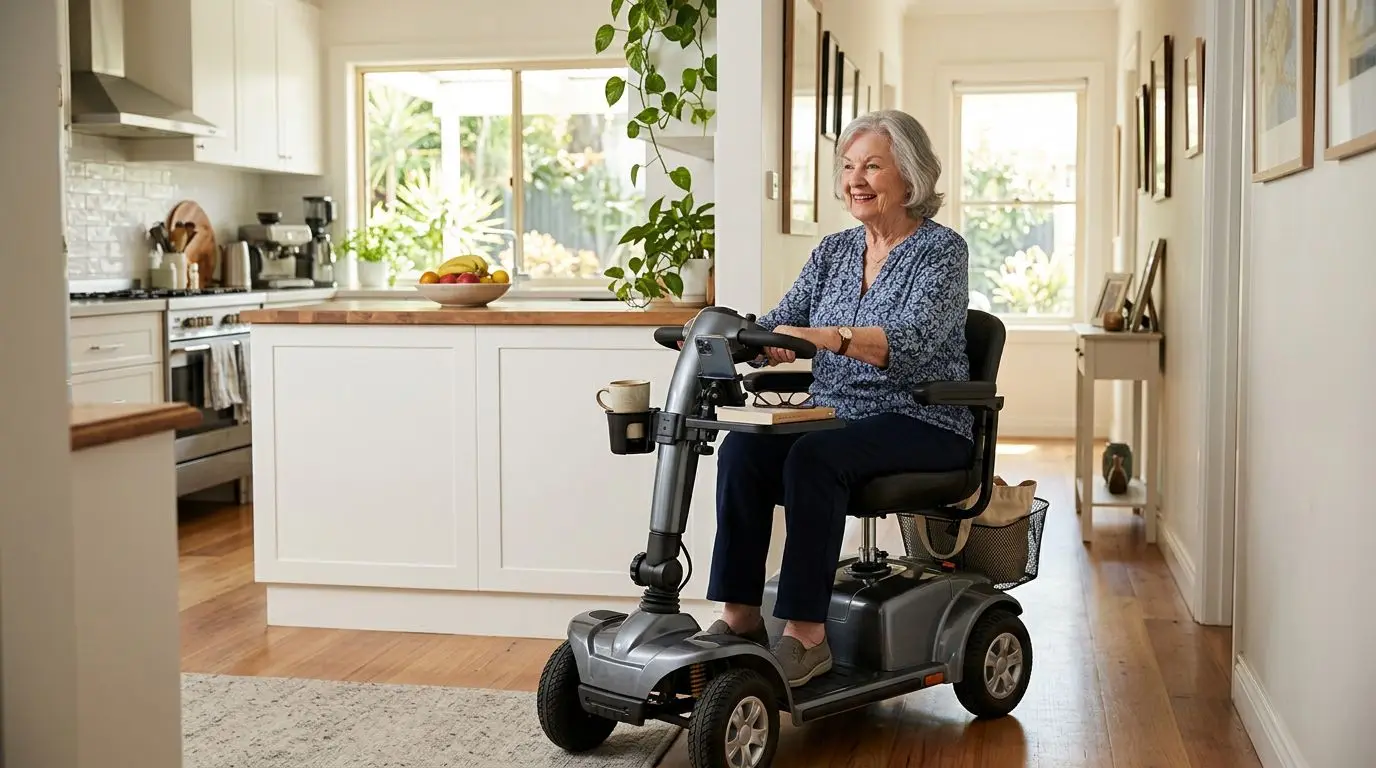
Mobility Scooter Cup Holders, Trays, and Phone Mounts: Safe Convenience Add-Ons
15 min read