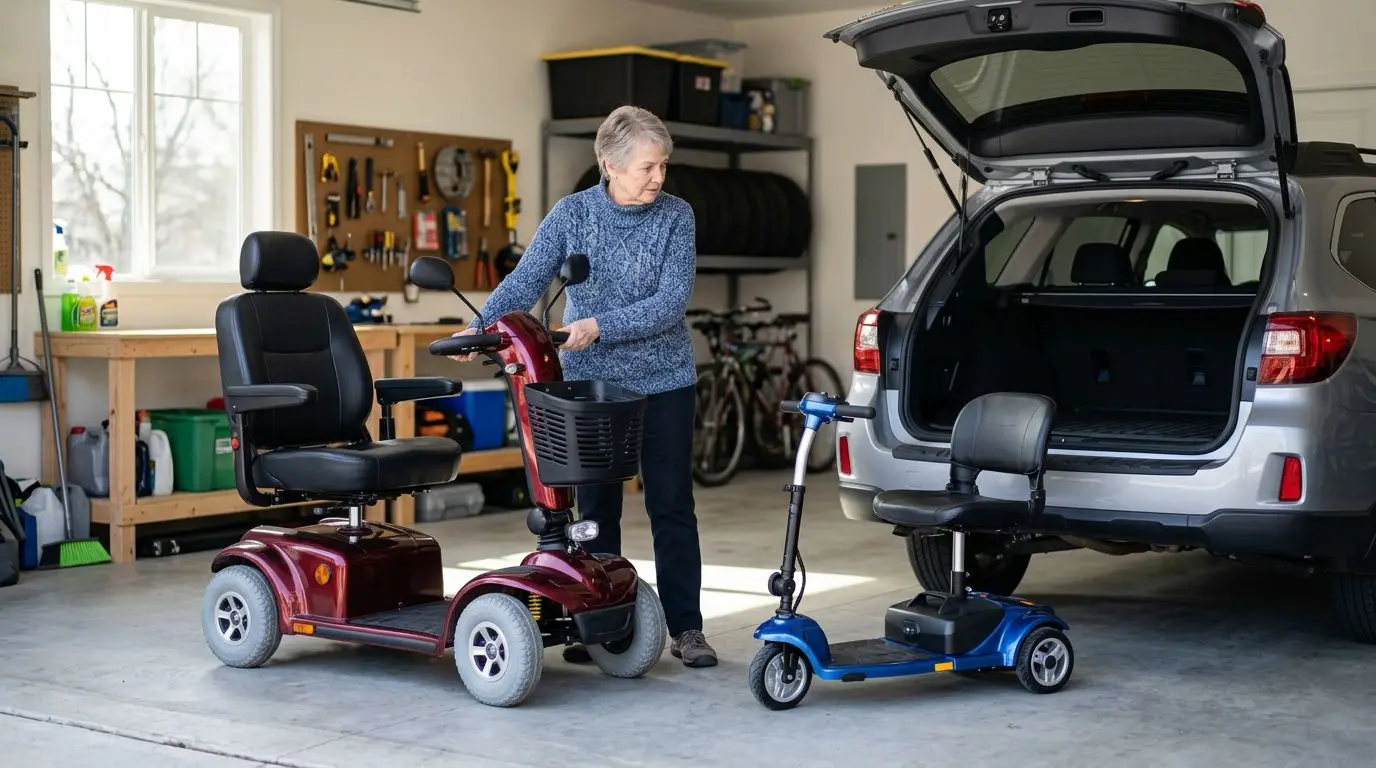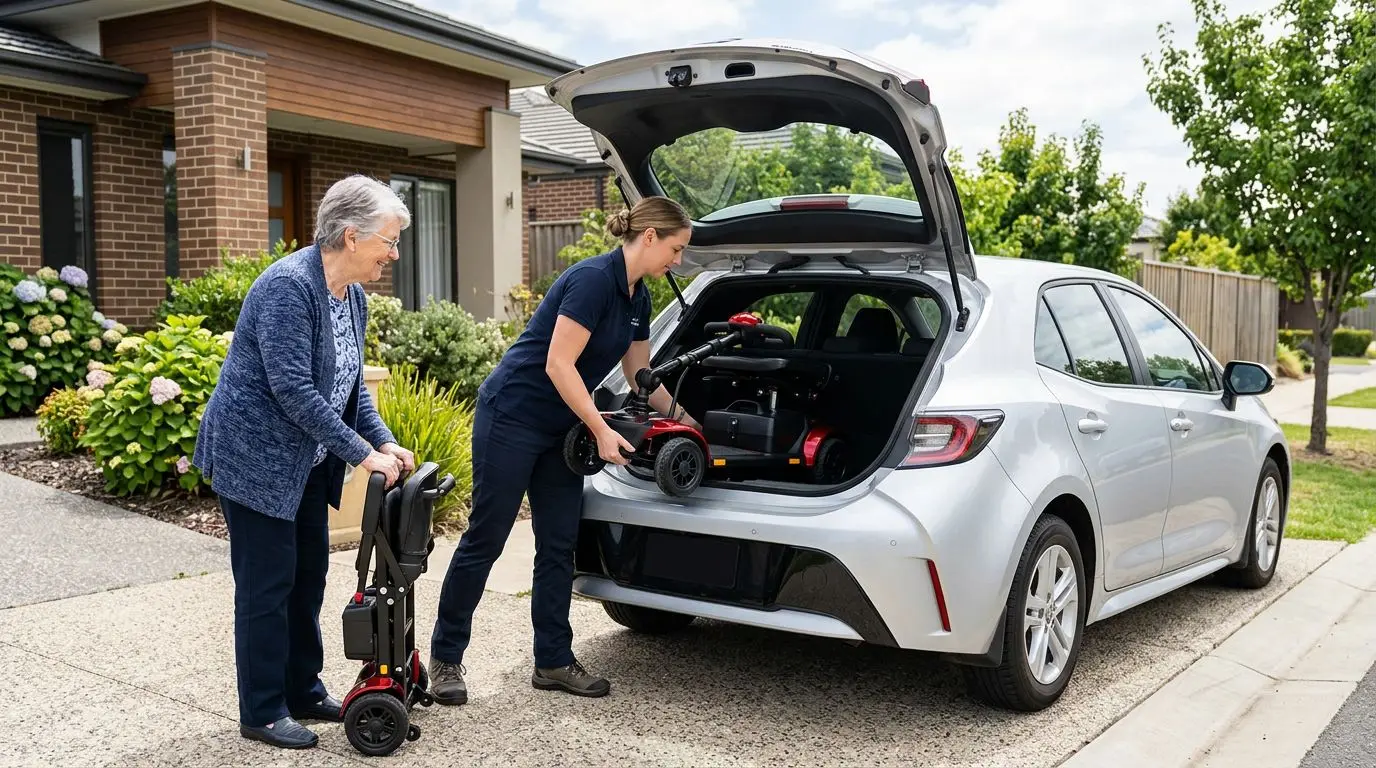
Lightweight mobility scooters are best for people who need a scooter that is easier to lift into a car, store in a small space, or use for short errands. You gain portability; you usually give up higher weight capacity, longer battery range, larger wheels, and the smoother ride of a full-size scooter.
A lighter scooter can be the right choice if most of your trips are indoors, around stores, through medical offices, or across fairly smooth sidewalks. If you routinely travel over rough pavement, need all-day range, or require a higher weight limit, a full-size scooter may be the smarter and safer buy.
What “lightweight” usually means: about 35 to 100 lb
In mobility scooters, “lightweight” is not one official category. It usually refers to compact travel scooters, folding scooters, or small-frame scooters that weigh roughly 35 to 100 lb, depending on the frame, battery, seat, and whether the scooter separates into pieces.
That total weight can be misleading. A scooter that weighs 85 lb may still be manageable if its heaviest removable piece is 35 lb. A folding scooter that weighs 55 lb as one solid unit may be harder to lift because you have to handle the whole scooter at once.
Most lightweight scooters use a 3-wheel or compact 4-wheel layout, a smaller seat, narrow tires, and a smaller battery pack. Many are designed to fit in a car trunk, behind a front seat, or in a closet. Some fold as one piece, while others disassemble into 3 to 5 parts.
The key question is not simply, “How much does it weigh?” It is, “Can I or my helper safely lift the heaviest piece, place it where it needs to go, and repeat that without strain?”
What you gain: easier transport in 1 car trunk or closet
The biggest advantage of a lightweight mobility scooter is practical portability. If you visit a grocery store, pharmacy, church, senior center, or doctor’s office several times a week, moving the scooter in and out of a vehicle can matter more than top speed or long-distance range.
Lightweight scooters are often easier to store. A full-size scooter may need a garage, porch, or dedicated indoor corner. A folding or take-apart scooter may fit in a hallway closet, apartment entryway, or the cargo area of a compact SUV. For people in apartments, assisted living communities, or smaller homes, that can be the difference between using a scooter daily and leaving it parked.
They are also easier to maneuver in tight spaces. Many lightweight scooters have a shorter overall length and a tighter turning radius than full-size scooters. That helps in elevators, narrow store aisles, small kitchens, and clinic waiting rooms. A 3-wheel lightweight scooter may turn especially sharply, though it can feel less stable than a comparable 4-wheel design on uneven ground.
Travel is another common reason buyers look for lighter scooters. A compact scooter is easier to load into a rideshare vehicle, family car, shuttle, or hotel room. For air travel, many scooters use removable lithium or sealed batteries, but airline rules vary. You must check the battery type, watt-hour rating if applicable, and airline approval process before your trip.
There is a caregiver benefit as well. If a spouse, adult child, or aide helps with transportation, a lighter scooter can reduce lifting burden. Still, 40 lb is a meaningful lift for many people, especially from a low trunk height or awkward angle.
What you give up: often 250 to 300 lb capacity, smaller batteries, and less padding
Lightweight scooters have real limits. Many have lower weight capacities than full-size scooters, commonly in the 250 to 300 lb range, though exact ratings vary by design. A scooter should never be used above its stated weight capacity, because that can affect braking, steering, frame stress, battery performance, and stability.
Battery size is another tradeoff. A lighter scooter usually carries a smaller battery pack, which helps reduce weight but can reduce range. Range estimates are often based on ideal conditions: a moderate rider weight, smooth flat surfaces, steady speed, and a fully charged battery. Real-world range can drop when the rider is near the scooter’s weight limit, the route includes hills, the tires are underinflated if pneumatic, or the scooter is used on carpet or rough pavement.
Ride comfort is usually more basic, too. Lightweight scooters often have smaller wheels, shorter wheelbases, thinner seat padding, and limited suspension. On smooth indoor flooring, that may feel fine. On cracked sidewalks, curb cuts, gravelly parking lots, or brick paths, the ride can feel bumpy and tiring.
Seat size matters more than many shoppers expect. A compact scooter may have a narrower seat, a shorter backrest, and fewer adjustment options. If you use the scooter for 15-minute errands, that may be acceptable. If you expect to sit for 2 or 3 hours at a fair, museum, or outdoor event, comfort becomes a major decision point.
Lightweight frames may also have less ground clearance. That can make thresholds, uneven driveways, and outdoor obstacles harder to handle. A scooter with low clearance can bottom out at a curb ramp or scrape on a raised doorway transition.
Lightweight scooter types compared: 3 common designs
Most lightweight scooters fall into one of 3 practical groups: folding, disassembling travel, and compact non-folding scooters. Each handles portability in a different way.
| Type | Typical portability style | Best use | Main tradeoff |
|---|---|---|---|
| Folding scooter | Folds as one unit, often around 40 to 70 lb total | Travel, storage, quick loading when one-piece lifting is manageable | Can be awkward to lift because the full scooter stays together |
| Disassembling travel scooter | Separates into 3 to 5 pieces, with a lighter heaviest piece | Car trunks, caregivers, people who prefer smaller lifts | Assembly and disassembly take time and hand strength |
| Compact non-folding scooter | Small frame but not always designed for frequent lifting | Indoor use, apartments, short neighborhood trips | May still need a ramp, lift, or storage space |
A folding scooter is convenient if you have the strength and balance to manage the full folded weight. The shape can be bulky, even when folded, and lifting it from the ground into a trunk may require bending and twisting.
A disassembling travel scooter spreads the weight across multiple parts. The seat comes off, the battery pack may lift out, and the front and rear sections separate. This can be easier on the back, but it requires remembering the assembly steps, securing the battery, and lining up connection points.
A compact non-folding scooter may be lighter than a full-size scooter without being truly portable. It can work well for an apartment building or senior community where the scooter stays on-site and does not need to be lifted into a car.
Who it’s best for: short trips of 1 to 5 miles on smooth surfaces
A lightweight scooter is often a good fit for someone who walks short distances but struggles with longer errands, standing in lines, or crossing large parking lots. It can help conserve energy and make outings more manageable, but it should match the user’s balance, vision, reaction time, and ability to operate controls safely.
It is best for mostly smooth environments: shopping centers, apartment hallways, medical campuses, paved paths, airports, and level sidewalks. If your usual outings are 1 to 5 miles total, and you can recharge between trips, a lightweight scooter may have enough range without carrying extra battery weight.
It also suits people with limited storage. If you need to keep a scooter in a small apartment, a foldable or take-apart design may be more realistic than a larger outdoor scooter.
It may not be best for someone who needs a very stable outdoor ride, weighs close to or above the scooter’s limit, frequently travels over grass or gravel, or spends long periods seated. A lighter scooter can feel less planted, especially when turning on slopes or crossing uneven surfaces.
- Good fit: indoor errands, smooth sidewalks, car travel, small storage spaces, shorter outings.
- Use caution: steep driveways, rough pavement, low curb cuts, long outdoor days, heavier cargo.
- Consider full-size: higher weight capacity, longer range, larger seat, bigger wheels, stronger suspension.
How to choose and measure: check the heaviest piece, seat width, and 32-inch doorways
Start with lifting reality. Look for the scooter’s total weight and the weight of the heaviest piece if it comes apart. If the heaviest piece is 38 lb, test whether you or your helper can lift a similar weight from floor height to trunk height. Do not judge by a quick waist-level lift in a showroom; real loading is more awkward.
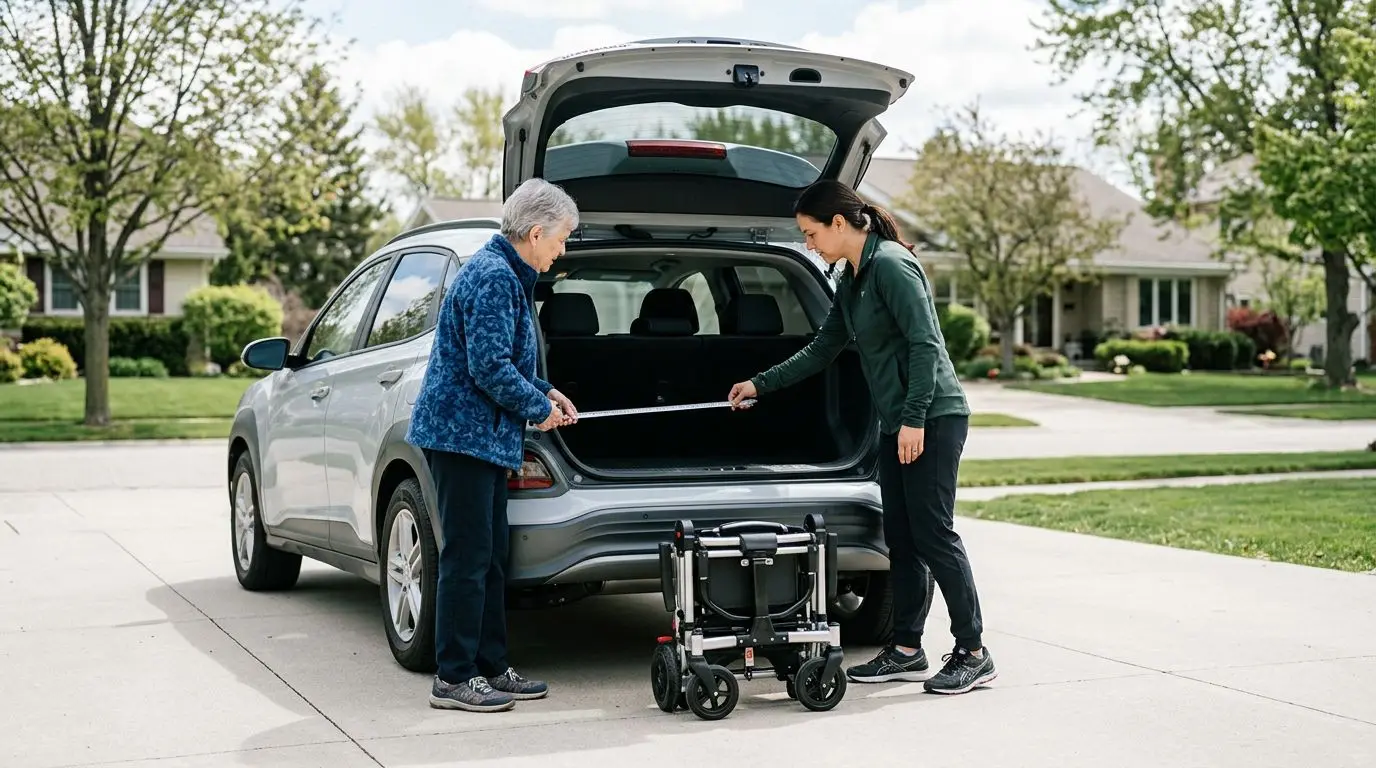
Measure your vehicle before buying. Check trunk width, trunk depth, cargo opening height, and the lift-over height from the ground to the trunk floor. A scooter may technically fit inside but still be difficult to angle through the opening. If you drive a sedan, the trunk opening can be the limiting factor. With an SUV or hatchback, cargo height and tie-down space matter.
Measure your home, too. Many interior doorways are about 28 to 32 inches wide, but older homes and bathrooms can be narrower. Measure the narrowest doorway, hallway turns, elevator entry, and storage spot. Also check turning space near your bed, favorite chair, or kitchen table.
Seat fit is personal. Measure your seated hip width and allow extra room for winter clothing. A seat that is too narrow can become uncomfortable quickly, while a seat that is too high may make transfers harder. Check whether the armrests lift or flip back if you transfer from the side.
Review the battery and charger setup. Some people prefer a removable battery that can be charged indoors while the scooter stays in a vehicle or storage area. Others prefer plugging in the whole scooter overnight. Ask how long a full charge typically takes; many mobility scooter batteries require several hours, and charging habits can affect battery life.
Finally, match speed to environment. Many scooters are designed around walking-to-jogging speeds, often topping out near 4 to 5 mph for compact travel designs. Faster is not always better indoors. Smooth control at low speed is more useful in a store aisle than a high maximum speed.
Feature tradeoffs to compare: 4 wheels, 2 battery types, and 1 real test ride
Features can look similar on paper, so focus on what changes daily use. A 4-wheel lightweight scooter usually feels more stable than a 3-wheel scooter, but it may have a wider turning radius. A 3-wheel scooter can be easier in tight spaces, yet it requires extra care on uneven surfaces and turns.
| Feature | Lighter scooter advantage | Possible drawback | What to check |
|---|---|---|---|
| Small frame | Easier storage and maneuvering | Less legroom and smaller seat | Can your knees and feet sit comfortably? |
| Smaller battery | Lower lifting weight | Shorter practical range | Can it cover your longest normal day? |
| Solid tires | No flats and low maintenance | Firmer ride on cracks and bumps | Do you use rough sidewalks? |
| Pneumatic tires | Softer ride | Can lose air or get punctured | Can you monitor tire pressure? |
| Foldable frame | Quick storage | One-piece lifting can be heavy | Can you load it safely without twisting? |
| Disassembly | Lighter individual pieces | More steps and latches | Can you assemble it with your hand strength? |
A real test ride is worth more than a long feature list. Try the scooter at low speed, make a tight turn, stop smoothly, back up, and drive over a small threshold if allowed. Sit for at least 10 minutes. Notice whether your shoulders relax, whether the tiller position feels natural, and whether your feet have enough room.
Pay attention to braking and control response. Some scooters stop more abruptly than others when you release the throttle. That can be reassuring for one rider and uncomfortable for another. If hand strength or arthritis is a concern, test the throttle style with both hands if the controls allow it.
When a full-size scooter is smarter: 300+ lb capacity or all-day outdoor use
A full-size mobility scooter is often the better choice when comfort, capacity, and outdoor stability matter more than portability. If the rider needs a capacity above 300 lb, a wider seat, more legroom, or a sturdier suspension, a larger scooter may provide a safer and more comfortable fit.
Full-size scooters typically offer bigger batteries, larger wheels, more ground clearance, and more supportive seating. Those features add weight, but they also help with longer days and rougher surfaces. If you regularly visit parks, outdoor markets, campuses, or neighborhoods with uneven sidewalks, the difference can be noticeable.
Choose a larger scooter if you plan to ride for hours at a time. Seat comfort, back support, armrest adjustment, and suspension become more important after the first 30 minutes. A lightweight scooter that feels acceptable during a quick test may feel tiring after a long outing.
Storage and transport are the main obstacles. A full-size scooter may require a vehicle lift, ramp, garage space, or protected charging area. If you cannot transport or store it, the added capability may not help. The smarter choice is the scooter you can use safely and consistently.
Safety and maintenance basics: inspect tires, brakes, and battery every 30 days
Lightweight scooters should still be treated as motorized mobility equipment, not luggage. Before regular use, read the manual, understand the controls, and practice in a quiet area. Learn how the scooter accelerates, stops, reverses, and turns before taking it into a busy store or sidewalk.
At least once every 30 days, check tire condition, battery connections, charger cord condition, seat lock, folding latch, and any quick-release points. If the scooter disassembles, make sure each part clicks or locks fully into place. A loose battery pack or seat post can create unsafe movement.
Avoid carrying heavy bags on the tiller unless the scooter is designed for that load. Weight hanging from the front can affect steering. Use the basket or approved storage areas, and keep cargo within the scooter’s stated limits.
Be careful on slopes. Lightweight scooters can be more sensitive to turning on inclines, wet curb ramps, and uneven pavement. Drive straight up or down gentle ramps when possible, keep speed low, and avoid sharp turns on a slope.
For medical questions, such as whether a scooter is appropriate after surgery, with balance issues, or with changing vision or cognition, talk with a qualified healthcare professional. A scooter can support independence, but it should be part of a safe mobility plan.
FAQ: 5 questions about lightweight mobility scooters
Are lightweight mobility scooters safe for outdoor use?
They can be safe outdoors on smooth, level surfaces such as paved sidewalks, parking lots, and curb ramps in good condition. They are not ideal for rough gravel, grass, steep hills, or broken pavement because smaller wheels and lower ground clearance can make the ride less stable.
How heavy is too heavy to lift into a car?
That depends on the person lifting, trunk height, and shape of the scooter. Many people find that even 35 to 45 lb can be difficult when lifting from the ground into a trunk. Test the heaviest piece, not just the total scooter weight.
Do lightweight scooters have enough battery range?
They often have enough range for errands, appointments, and short trips, but range depends on rider weight, hills, surface type, temperature, battery age, and speed. Choose based on your longest normal day, not the shortest trip.
Is a 3-wheel or 4-wheel lightweight scooter better?
A 3-wheel scooter usually turns more tightly, which helps indoors. A 4-wheel scooter usually feels more stable, especially outdoors. The better choice depends on whether your main challenge is tight indoor maneuvering or confidence on uneven surfaces.
When should I avoid a lightweight scooter?
Avoid choosing one solely for low weight if you need a higher weight capacity, a larger seat, all-day comfort, long range, or regular use on rough outdoor surfaces. In those cases, a full-size scooter may be safer and more practical.
Frequently asked questions
Are lightweight mobility scooters safe for outdoor use? +
They can be safe on smooth, level outdoor surfaces such as paved sidewalks, parking lots, and curb ramps in good condition. They are not the best choice for gravel, grass, steep hills, or broken pavement.
How heavy is too heavy to lift into a car? +
It depends on the person lifting and the vehicle, but many people find 35 to 45 lb challenging when lifting from ground height into a trunk. Always check the heaviest piece, not just total scooter weight.
Do lightweight scooters have enough battery range? +
Many have enough range for errands and appointments, but real-world range depends on rider weight, hills, surface type, speed, temperature, and battery age. Choose based on your longest normal outing.
Is a 3-wheel or 4-wheel lightweight scooter better? +
A 3-wheel scooter usually turns more tightly for indoor use. A 4-wheel scooter usually feels more stable, especially outdoors. The better choice depends on your space, surfaces, and comfort level.
When is a full-size scooter a better choice? +
A full-size scooter is often better if you need a higher weight capacity, larger seat, longer range, more suspension, bigger wheels, or regular outdoor use on uneven surfaces.
Related guides
Travel, Folding, and Lightweight Mobility Scooters: What to Know Before You Buy
13 min read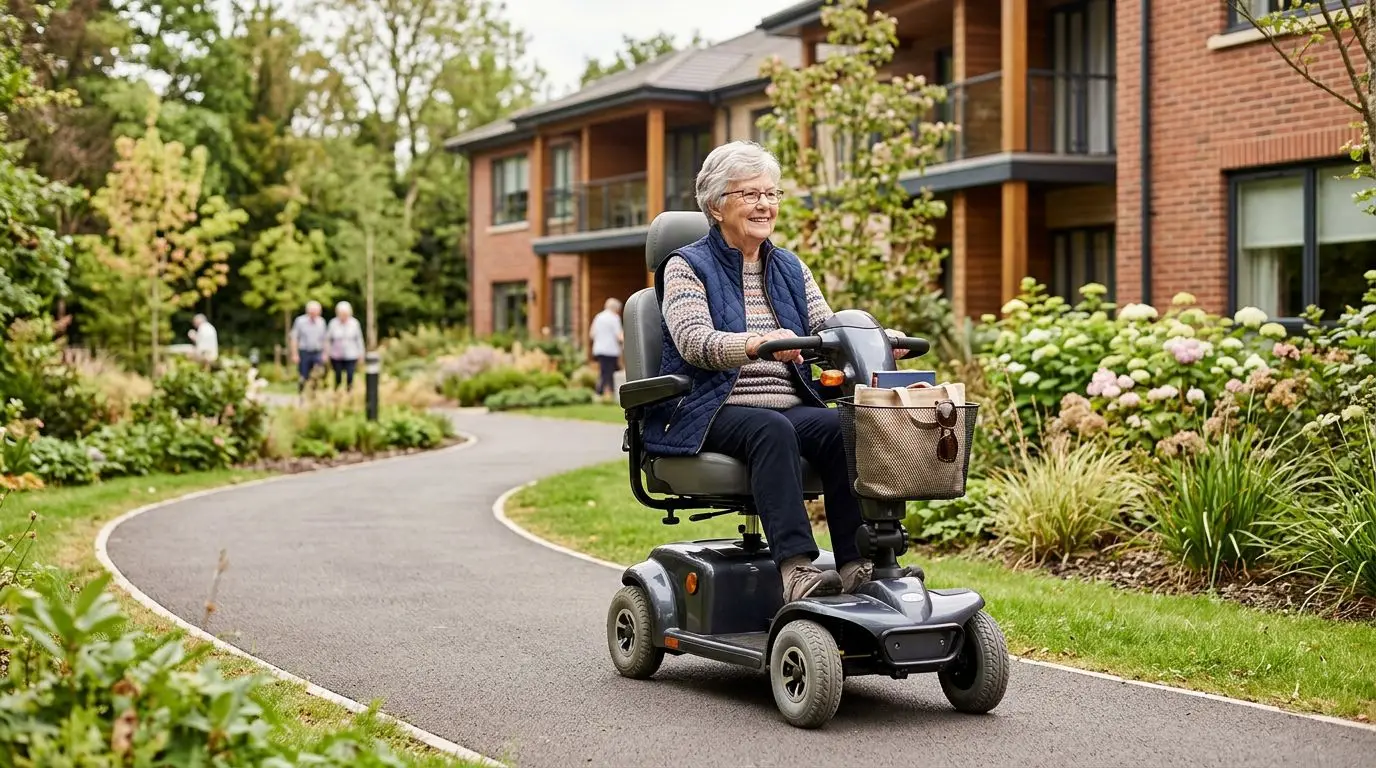
Full-Size Mobility Scooters Explained: Comfort, Range, Stability, and Who They’re Best For
14 min read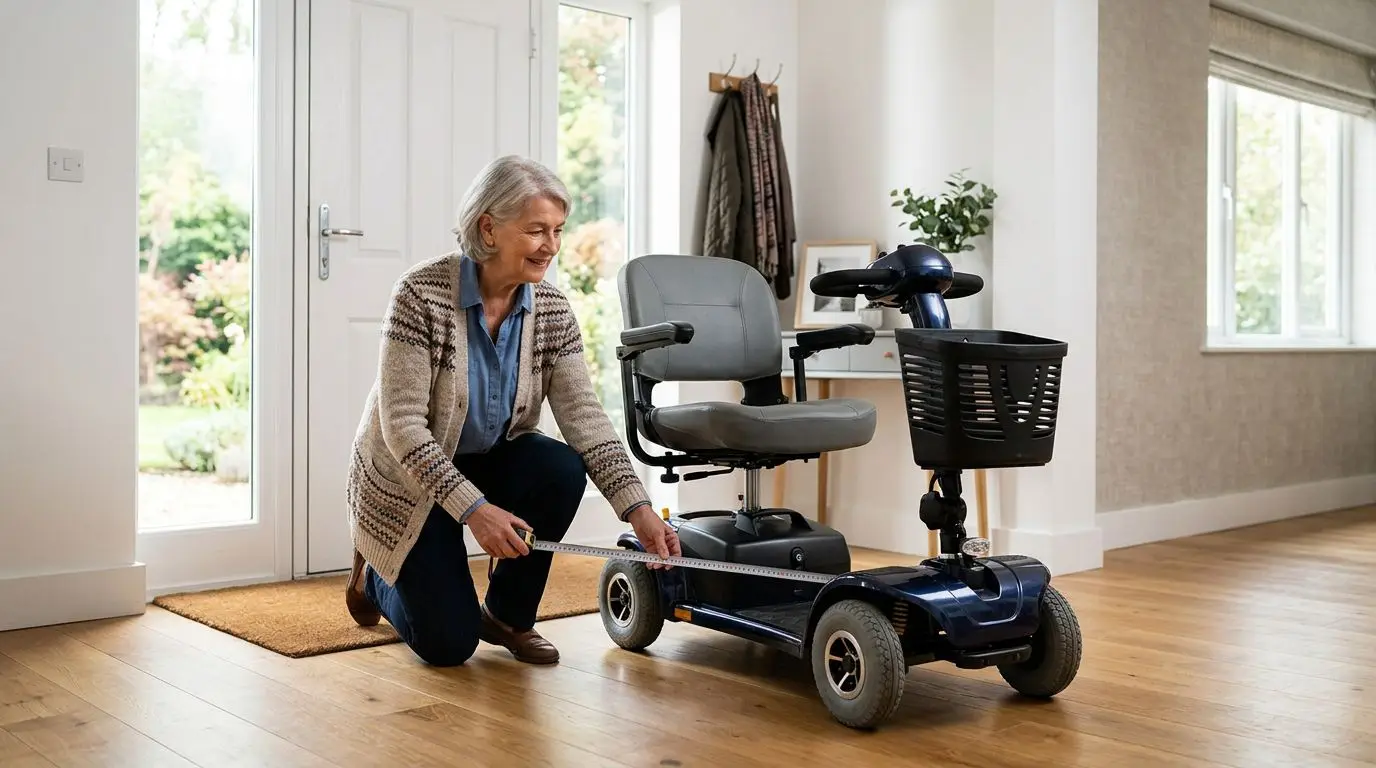
How to Choose a Mobility Scooter: A Practical Buying Guide for Seniors and Adults
13 min read