To find the right mobility scooter inner tube, match the tire size printed on the tire sidewall, then confirm the valve style and stem angle before buying a replacement. Most scooter flats are caused by punctures, underinflation, pinched tubes, worn tires, or a tube that is the wrong size for the tire. If a tube has one small, clean puncture, a patch may work. Repeated flats, valve damage, cracked rubber, or an unknown tube size usually mean replacement is the safer choice.
Mobility scooter tires look simple, but small sizing mistakes can create big problems. A tube that is even slightly too large may fold inside the tire, while one that is too small may stretch thin and fail early. The goal is to match the tire, protect the tube during installation, and keep the tire properly inflated for the rider, scooter, and surface being used.
1. Start With the Tire Sidewall: The Size Is Usually Printed in 2 or 3 Numbers
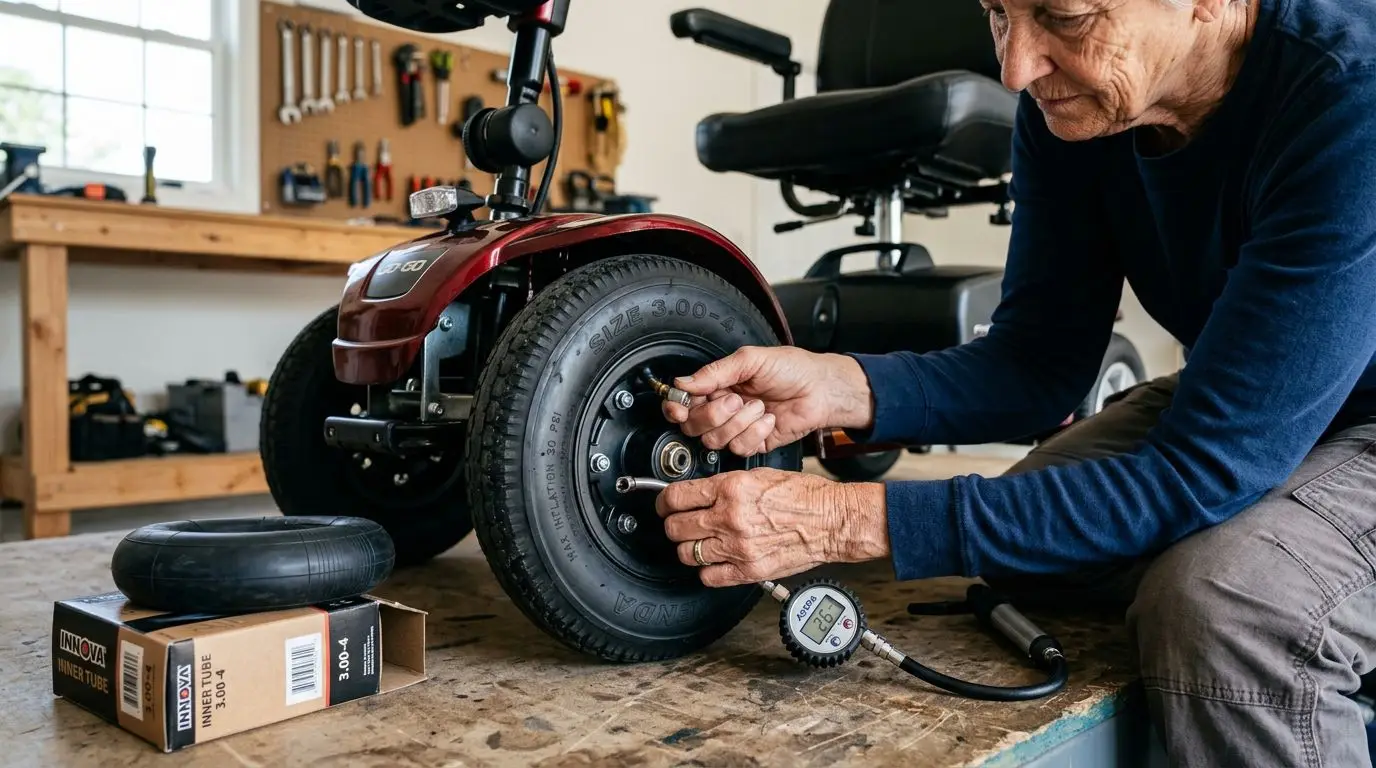
The first place to look is the tire sidewall, not the old tube. The tire controls the correct tube size, and most mobility scooter tires have numbers molded into the rubber. Common examples include sizes written like 3.00-4, 4.10/3.50-5, 2.80/2.50-4, or 200x50. These numbers may be dusty or worn, so use a flashlight and rotate the wheel slowly.
On many small scooter tires, the final number refers to the rim diameter in inches. For example, a 3.00-4 tire usually fits a 4-inch rim. A 4.10/3.50-5 tire usually fits a 5-inch rim. Metric-style markings such as 200x50 often describe the outside tire diameter and width in millimeters, although exact labeling can vary by tire type.
If the sidewall is too worn to read, measure carefully. Measure the outside diameter of the inflated tire from top to bottom, the tire width across the tread, and the rim diameter where the tire bead seats. Do not measure the full metal wheel edge-to-edge if it includes a lip, because that can add extra size and lead to the wrong tube.
| Marking style | Example | What it usually tells you | What to double-check |
|---|---|---|---|
| Inch tire size | 3.00-4 | Approximate tire width and rim diameter | Valve type and tire condition |
| Dual inch size | 4.10/3.50-5 | Compatible tire width range and rim diameter | Whether the tube lists both sizes |
| Metric size | 200x50 | Approximate outside diameter and tire width in mm | Rim fit and valve angle |
| Old or unreadable tire | No visible marking | Requires manual measurement | Measure tire and rim, not just the tube |
Write the size down exactly as shown. A tube labeled for a size range may cover more than one tire, but guessing is risky. If you are unsure, remove the wheel and bring the tire or old tube to a local mobility repair shop, a bicycle shop familiar with small tires, or a tire service counter.
2. Tube Size Matters Because a 4-Inch Rim Cannot Safely Use a 5-Inch Tube
An inner tube must fit both the tire cavity and the rim diameter. A 5-inch tube installed in a tire meant for a 4-inch rim can bunch up, wrinkle, and pinch during inflation. A tube that is too small may stretch like a rubber band, leaving thin areas that split under load.
Many mobility scooter tubes are sold with size ranges because rubber stretches. That can be useful, but the range must include your tire size. For example, a tube marked for 3.00-4 and 3.50-4 may be suitable for certain 4-inch rim tires, but it should not be assumed to fit a 5-inch rim tire. The rim number is one of the least forgiving parts of the size.
Compare tire width too. A very narrow tube inside a wider tire can move around and overheat from friction. A tube that is too wide can fold. Those folds often become pinch points, especially when the scooter rolls over thresholds, driveway seams, sidewalk cracks, or curb cuts.
How to measure when the markings are gone
- Outside diameter: Measure the tire from the ground-facing tread to the opposite tread edge. A common compact scooter tire may be around 8 inches across, but sizes vary.
- Tire width: Measure across the tread, side to side. Write this in inches or millimeters.
- Rim diameter: Measure the bead seat area, not the outermost lip. This is commonly 4, 5, 6, or 8 inches on many small scooter wheels.
- Valve hole location: Note whether the valve comes through the center, side, or at an angle in the wheel.
If your tire is badly cracked, bald, or separated, replacing only the tube may not solve the flat. The tire protects the tube. Once that outer shell fails, a new tube is likely to fail too.
3. Valve Type Is Critical: Straight, Bent, and 90-Degree Stems Fit Different Wheels
The valve is the small stem used to add air, and it must line up with the wheel opening. Many mobility scooter tubes use Schrader-style valves, the same general valve style found on car tires. The more important detail is often the stem angle: straight, bent, or 90-degree.
A straight valve works when there is enough clearance for an air chuck or pump head. A bent valve helps when the rim, motor housing, fork, or wheel cover blocks access. A 90-degree valve may be needed on compact wheels where a straight valve would press against the rim or be impossible to inflate.
Before removing the old tube, take a photo of the valve from 2 angles. Note where it exits the rim and which direction it points. If the old valve was rubbing the wheel or sitting at a sharp angle, that may be why the tube failed near the stem.
| Valve type | Best fit | Common problem if wrong | What to check |
|---|---|---|---|
| Straight Schrader | Open rims with easy pump access | Pump may not fit in tight wheels | Clearance around axle and fork |
| Bent stem | Wheels with partial obstruction | Stem can rub if angled poorly | Direction of bend after installation |
| 90-degree stem | Small or enclosed scooter wheels | Can point into the rim or frame | Valve hole position and rotation space |
Valve damage usually means the tube should be replaced, not patched. A torn stem base, leaking valve core, or stem that will not sit straight can lose air quickly. If the metal valve core is loose, it may be tightened with the right small tool, but a cracked rubber base cannot be made dependable with sealant or tape.
4. Repair or Replace? A Patch Can Fix 1 Small Puncture, But Not Every Flat
A patch may be reasonable for a single small puncture in the middle of the tube, especially if the tire is in good condition and the tube rubber is still flexible. Replacement is usually better when the tube has multiple holes, a split seam, a tear near the valve, dry rot, or damage from being ridden flat.
Patch kits are made for clean, round punctures. They are not meant to repair long cuts, shredded rubber, or stretched areas. If you find 2 small holes close together, often called a snakebite pattern, the tube was likely pinched between the rim and an obstacle. That points to low pressure, a hard impact, or an installation issue.
The age and condition of the tube matter as well. Rubber hardens over time. If the tube looks cracked, feels brittle, or leaves black residue on your hands, patching may only delay the next flat. Many scooter owners prefer replacing the tube once the wheel is already apart because labor and access are often the hard part.
A simple decision guide
| What you find | Patch? | Replace? | Likely cause |
|---|---|---|---|
| 1 small hole in center of tube | Usually possible | Optional | Nail, thorn, glass, wire |
| 2 side-by-side slits | Not ideal | Often better | Pinch flat from low air or impact |
| Tear at valve stem | No | Yes | Wrong valve angle or tube movement |
| Long split or seam failure | No | Yes | Aging, over-stretching, defect, damage |
| Multiple patches already | Maybe temporary | Usually best | Worn tire or repeated punctures |
Never keep riding on a flat scooter tire just to get a little farther if you can avoid it. Even 100 yards can chew up the tube, damage the tire bead, and make the scooter harder to steer. Stop in a safe place and arrange help if the scooter feels unstable.
5. Why Repeat Flats Happen: Check the Tire, Rim, and Pressure Within 24 Hours
If a new tube goes flat soon after installation, something is still wrong. Common causes include debris left inside the tire, a sharp rim edge, low air pressure, a pinched tube, or a valve being pulled sideways. Checking the tire only from the outside is not enough.
Run a cloth carefully around the inside of the tire. If the cloth snags, there may be a thorn, wire, staple, glass shard, or exposed cord. Use caution and gloves because the object that punctured the tube may still be sharp. Inspect the rim as well. Rust, burrs, spoke-like fasteners, or a damaged rim strip can cut into the tube every time the wheel turns.
Pressure is another common reason flats come back. The proper PSI is printed on many tire sidewalls. Some small scooter tires may list maximum pressures in the 30 to 50 PSI range, but you should follow the tire marking and the scooter maker’s guidance when available. Do not inflate by feel. Small tires can feel firm even when they are underinflated.
After installing or repairing a tube, check the tire pressure again within 24 hours. A small loss may mean the valve core is not fully seated, the patch did not seal, or the tube has another tiny puncture. Check again after the first ride too, especially if the scooter crossed rough pavement, gravel, or curb ramps.
- Look for embedded metal, thorns, glass, or sharp stones.
- Feel inside the tire before installing the new tube.
- Inspect the rim hole for sharp edges around the valve.
- Make sure the tire bead seats evenly on both sides.
- Inflate slowly and stop if the valve starts leaning.
- Recheck PSI the next day and weekly after that.
6. How to Prevent Flats: Use Weekly PSI Checks and Replace Worn Tires Before the Cord Shows
Flat prevention starts with air pressure. Check tire pressure at least once a week if the scooter is used often, and before longer outings if it has been sitting. A scooter stored for 2 or 3 weeks can lose air gradually even without a puncture. Low pressure lets the tire flex too much, which creates heat, pinches the tube, and makes steering feel heavy.
Use a pressure gauge that reads accurately at lower tire pressures. Car-style gauges may work if the range is suitable, but some are hard to read on small tires. Add air in short bursts and recheck. Overinflation can make the ride harsher and may stress the tube or tire, especially on older rubber.
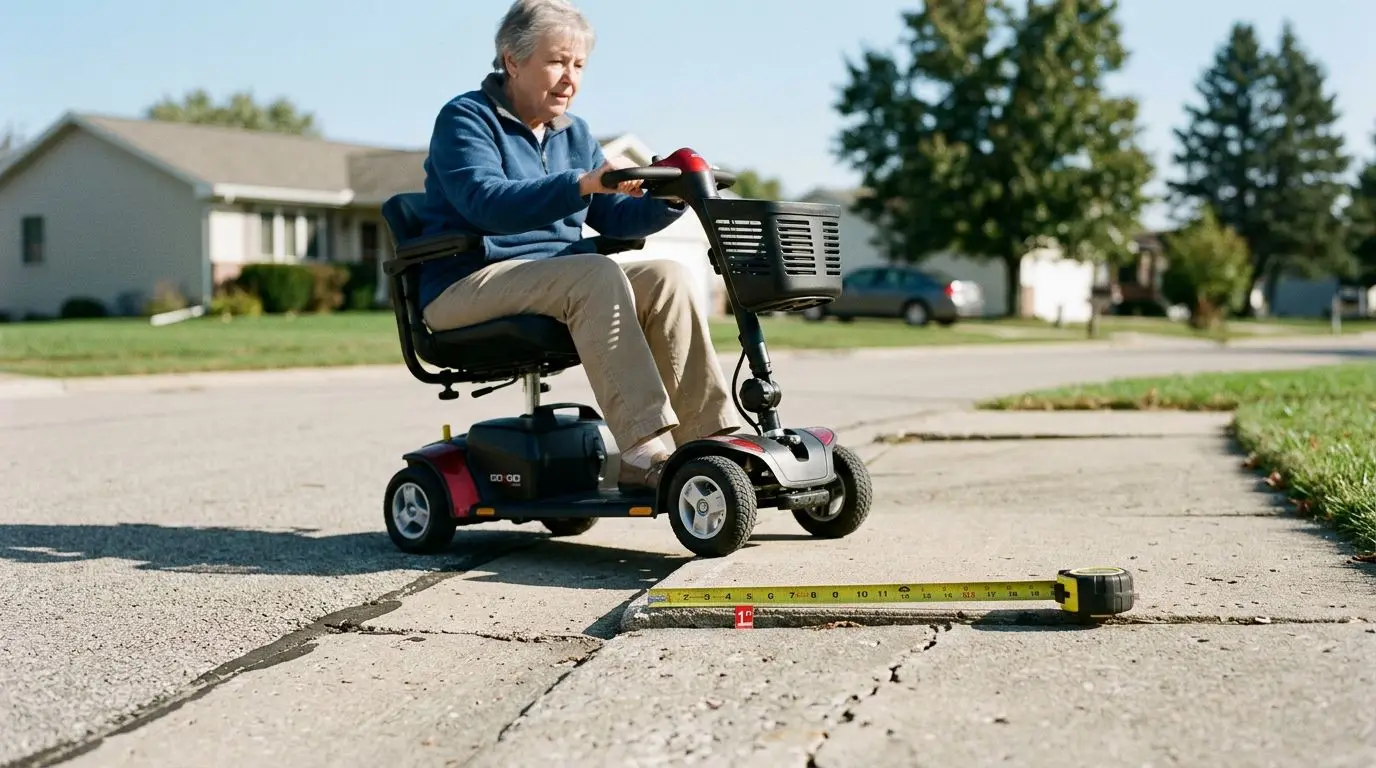
Route choice also helps. Avoid broken glass, landscaping thorns, metal shavings near construction areas, and gravel shoulders when possible. Slow down for curb cuts and driveway lips. A small 8-inch tire drops into cracks more easily than a large bicycle or car tire, so impacts can be sharper than they look.
Tire condition matters just as much as tube condition. Replace a pneumatic tire when the tread is bald, the sidewall is cracked, the casing is bulging, or fabric cord is visible. A worn tire cannot shield the tube from road debris. If flats keep happening in the same wheel, treat the outer tire as a suspect, not just the tube.
Who pneumatic tubes are best for
Air-filled tires with inner tubes are often best for riders who value a smoother ride on sidewalks, neighborhood streets, and uneven outdoor surfaces. The air cushion can reduce vibration compared with many solid tires, although comfort also depends on scooter suspension, seat design, rider weight, and speed. They do require maintenance, including PSI checks and occasional tube replacement.
Who may prefer flat-free tires
Flat-free or solid tire designs may suit riders who cannot easily check pressure, live around thorn-heavy landscaping, or need maximum puncture resistance for short daily trips. The tradeoff is that solid tires may ride firmer, and not every scooter wheel is designed to accept every flat-free tire type. Always match the wheel size and tire style that the scooter can safely use.
| Tire setup | Main advantage | Main tradeoff | Best for |
|---|---|---|---|
| Pneumatic tire with tube | Comfort and serviceability | Can puncture or pinch | Outdoor riders who can monitor PSI |
| Tubeless pneumatic tire | No inner tube to pinch | Requires compatible rim and bead seal | Some larger scooter wheels |
| Solid or foam-filled tire | No air-pressure flats | Firmer ride, fit limits | Short trips, puncture-prone areas |
7. Step-by-Step Tube Replacement Checks: Spend 10 Minutes Before Reassembly
If you replace the tube yourself, the inspection before reassembly is what prevents doing the job twice. Some scooter wheels are simple split-rim designs, while others require more disassembly. If the wheel contains wiring, a hub motor, or a brake assembly, take photos before removing anything and consider professional service if you are unsure.
Turn the scooter off, remove the key, and keep it stable before working. Do not place fingers near a powered wheel. If lifting the scooter, support it securely according to the owner information for that scooter type. Mobility scooters are heavy enough to injure hands or feet if they shift unexpectedly.
- 1. Confirm the size: Match the new tube to the tire marking, such as 3.00-4 or 4.10/3.50-5.
- 2. Confirm the valve: Compare straight, bent, or 90-degree stem direction with the old tube.
- 3. Inspect the tire: Remove every sharp object from the inside and outside.
- 4. Inspect the rim: Smooth or cover sharp edges only with appropriate rim protection; do not improvise with bulky tape that can shift.
- 5. Add a little air: Put just enough air in the tube to give it shape before installation.
- 6. Avoid pinching: Keep the tube away from bead edges and split-rim surfaces.
- 7. Seat the tire evenly: Inflate slowly, checking both sides as pressure rises.
- 8. Recheck after resting: Let the wheel sit for 10 minutes, then confirm pressure and valve position.
A very light dusting of tire talc is sometimes used in tube-type tire work to reduce friction between tube and tire, but use only a small amount and keep it away from brakes. Do not use oil or grease inside the tire. Lubricants can damage rubber, attract grit, or affect braking surfaces if they spread.
8. How to Choose the Right Replacement Tube in 5 Checks
Buying a replacement tube is easier when you use a checklist instead of guessing. The 5 checks are tire size, rim diameter, tire width range, valve style, and intended use. If all 5 match, the chance of repeat flats drops.
First, match the printed tire size exactly or choose a tube whose listed size range includes your tire. Second, confirm the rim diameter number. Third, make sure the tube is not too narrow or too wide for the tire. Fourth, match the valve angle so it can be inflated without bending or rubbing. Fifth, consider the rider’s normal surfaces: smooth indoor floors, sidewalks, asphalt, gravel paths, or areas with thorns.
For riders who depend on the scooter daily, keeping 1 spare tube at home in the correct size can be practical. Store it in a cool, dry place away from sunlight, motors, chemicals, and sharp tools. Keep the size written on the package or in a phone note so a caregiver, family member, or repair shop can help quickly.
| Check | What to write down | Why it matters |
|---|---|---|
| Tire size | Exact sidewall marking | Matches tube volume to tire cavity |
| Rim diameter | 4, 5, 6, 8 inches, or other marking | Prevents bunching or over-stretching |
| Valve style | Straight, bent, or 90-degree | Allows safe inflation access |
| Tire condition | Good, cracked, bald, bulging | Bad tires cause repeat flats |
| Use pattern | Indoor, sidewalk, rough pavement, thorns | Guides prevention and tire choice |
9. When to Get Professional Help: Motors, Brakes, and Split Rims Can Add Risk
Many scooter owners can check pressure and inspect tread, but wheel removal is not always simple. Get professional help if the wheel contains electrical wiring, the brake parts must be removed, the rim is damaged, or the scooter uses a split rim and you are not familiar with how it clamps together. A mistake in wheel assembly can affect steering, braking, or tire seating.
Professional help is also wise if the scooter has had 2 or more flats in the same tire within a short period. A technician can inspect the rim, tire bead, valve hole, axle alignment, and braking components. The problem may not be the tube at all.
For anyone with limited hand strength, balance concerns, or trouble lifting, having the wheel serviced is safer than wrestling with tire levers. A mobility scooter is an independence tool, and tire maintenance should support safe use rather than create a fall or hand injury risk.
FAQ: 5 Common Questions About Mobility Scooter Tubes and Flats
Can I use a bicycle tube in a mobility scooter tire?
Only if the tube size, rim diameter, tire width range, and valve style match the scooter tire. Many bicycle tubes are the wrong diameter or valve layout for small scooter wheels, so do not choose by appearance alone.
How do I know if my scooter tire has a tube?
Look for tire markings such as tube type, inspect the valve area, or check the scooter documentation if available. If the tire loses air quickly after a puncture and the wheel uses a small Schrader valve through the rim, it may have a tube, but some pneumatic tires are tubeless.
What PSI should I use in my mobility scooter tire?
Use the pressure listed on the tire sidewall or in the scooter information. Many small pneumatic scooter tires are in the tens of PSI, but the correct number depends on the tire. Do not inflate by feel.
Why does the new tube go flat right away?
The most likely causes are a sharp object still inside the tire, a pinched tube, a rough rim edge, a leaking valve, or the wrong tube size. Remove the tube and inspect the location of the hole to identify the cause before installing another one.
Are flat-free tires better than tubes?
They are better for puncture resistance, but not always better for comfort. Solid or foam-filled tires can ride firmer and must be compatible with the wheel. Tubed pneumatic tires often feel smoother but require pressure checks and occasional repair.
Frequently asked questions
Can I use a bicycle tube in a mobility scooter tire? +
Only if the tube size, rim diameter, tire width range, and valve style match the scooter tire. Many bicycle tubes are the wrong diameter or valve layout for small scooter wheels, so do not choose by appearance alone.
How do I know if my scooter tire has a tube? +
Look for tire markings such as tube type, inspect the valve area, or check the scooter documentation if available. Some pneumatic scooter tires use tubes, while others are tubeless.
What PSI should I use in my mobility scooter tire? +
Use the pressure listed on the tire sidewall or in the scooter information. The correct PSI depends on the tire, so do not inflate by feel.
Why does the new tube go flat right away? +
Common causes include debris still inside the tire, a pinched tube, a rough rim edge, a leaking valve, or the wrong tube size. Inspect the hole location before installing another tube.
Are flat-free tires better than tubes? +
Flat-free tires resist punctures, but they may ride firmer and must be compatible with the wheel. Tubed pneumatic tires often feel smoother but require air-pressure checks.
Related guides
Flat Mobility Scooter Tire or Inner Tube? Repair Options, Replacement Signs, and Prevention Tips
14 min read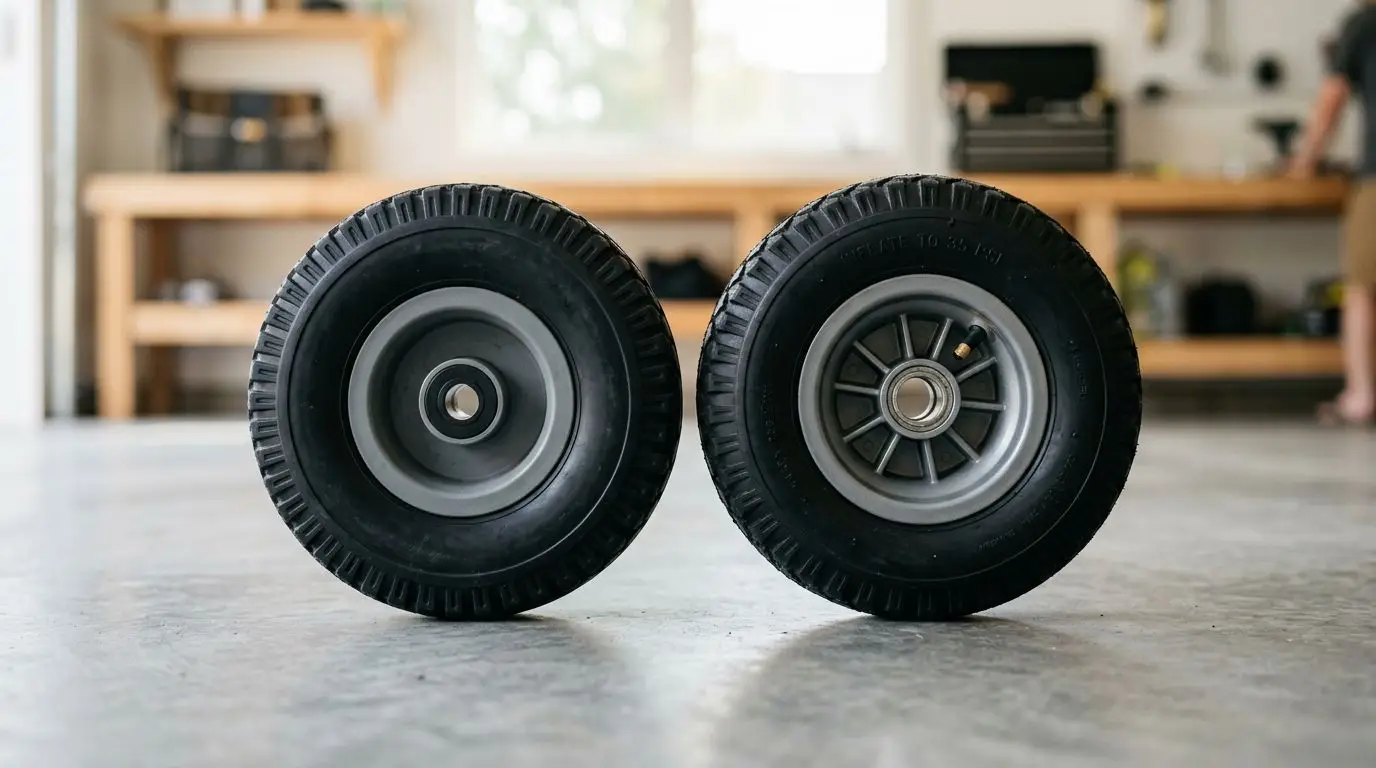
Solid vs. Air-Filled Mobility Scooter Tires: Comfort, Maintenance, and Best Uses
13 min read
Mobility Scooter Tire and Wheel Upgrades for Better Traction
15 min read