
Yes, you can often upgrade a mobility scooter battery for more range, but only within the scooter’s electrical and physical limits. The safest upgrade is usually a higher amp-hour battery pack at the same voltage, with the correct charger, matching terminals, proper fuse protection, and enough room in the battery compartment.
Do not increase battery voltage unless the scooter’s manufacturer or a qualified mobility technician confirms that the controller and motor are designed for it. A poorly matched battery can damage electronics, overheat wiring, void a warranty, or create a fire risk, especially when switching from sealed lead-acid to lithium.
What a range upgrade means: 12 Ah, 18 Ah, 22 Ah, and beyond
Mobility scooter range is mainly affected by battery capacity, measured in amp-hours, often written as Ah. A 24-volt scooter with two 12-volt, 12 Ah batteries has less stored energy than the same 24-volt scooter fitted with two 12-volt, 18 Ah batteries, assuming both sets are healthy and compatible.
Range does not increase in a perfectly straight line. A scooter rated for 10 miles with one battery size may not automatically go 15 miles after a 50% capacity increase, because rider weight, hills, speed, tire pressure, battery age, and outdoor temperature all matter. Still, higher Ah capacity at the same voltage is the most common way people try to extend range.
Think of voltage as the system the scooter is built around and amp-hours as the size of the fuel tank. The voltage must match. Capacity can sometimes be increased if the new pack fits, the wiring is appropriate, the charger matches the chemistry, and the scooter’s battery tray can safely support the weight.
For many smaller scooters, the battery box contains 2 batteries wired in series to create 24 volts. Larger scooters may use 36-volt or 48-volt systems. Before shopping for any replacement, confirm the voltage on the existing battery label, the charger label, and the owner’s documentation if available.
Compatibility checks: 24 V systems, 2-battery packs, and compartment size
The first rule is simple: match the scooter’s voltage. If the scooter is designed for 24 volts, the replacement pack must be 24 volts. In many cases, that means 2 matching 12-volt batteries wired in series. Installing batteries that raise the voltage can make the scooter faster for a moment, but it can also burn out the controller, motor, lights, display, or charging circuit.
The second rule is fit. Measure the battery compartment before assuming a higher-capacity battery will work. A common upgrade problem is that a taller or longer battery physically fits into the general space but pinches a wire, keeps the lid from closing, or leaves no room for the retaining strap. Even a 1/2-inch interference can become a safety issue if the battery moves during turns or transport.
Check these compatibility points before buying anything:
- Voltage: 24 V must stay 24 V, 36 V must stay 36 V, and 48 V must stay 48 V unless specifically approved.
- Capacity: Higher Ah may be acceptable if the battery type, size, and charger are compatible.
- Dimensions: Measure length, width, and height in inches, then allow extra room for wires and straps.
- Terminals: The connector style, terminal orientation, and cable length must match or be safely adapted.
- Weight: Two larger sealed batteries can add several pounds, which may affect portability and lifting.
- Battery box design: Some travel scooters use removable packs with very limited internal space.
- Fuse rating: The existing fuse and wiring should not be bypassed or upsized casually.
If a battery seller says a larger pack is compatible, ask what that compatibility is based on: dimensions, voltage, connector type, chemistry, or actual installation experience with the same scooter platform. Generic fit claims are not enough.
Battery types compared: sealed lead-acid, AGM, gel, and lithium
Most mobility scooters use either sealed lead-acid batteries or lithium battery packs. Sealed lead-acid is a broad category that includes AGM and gel designs. Lithium packs are lighter for the same usable energy, but they require a battery management system, correct charger, and careful compatibility checks.
Here is a practical comparison of common battery types used in scooters:
| Battery type | Common scooter use | Range upgrade potential | Key cautions |
|---|---|---|---|
| Sealed lead-acid, often 12 V blocks | Many 3-wheel and 4-wheel scooters | Moderate, if a higher Ah size fits | Heavier; range drops as batteries age; must be charged regularly |
| AGM sealed lead-acid | Frequent in portable and mid-size scooters | Good when moving from a lower Ah to a higher Ah in the same case size family | Still heavy; charger must match lead-acid charging profile |
| Gel sealed lead-acid | Some mobility applications needing sealed, low-maintenance batteries | Possible, but less forgiving of incorrect charging | Using the wrong charger can shorten battery life |
| Lithium-ion or lithium iron phosphate | Increasingly common in lightweight travel scooters and some retrofit packs | High energy for the weight, if fully compatible | Needs proper BMS, lithium charger, safe enclosure, and approval for the scooter |
Changing from one sealed lead-acid battery to another sealed lead-acid battery of the same voltage is usually the simplest path. Changing from sealed lead-acid to lithium is a bigger conversion, not just a battery swap. The charger, battery management system, low-voltage cutoff, connector, and physical restraint all matter.
Lithium can be appealing because it may weigh much less than lead-acid for comparable usable range. That weight savings can help if you lift a battery box into a car trunk. But lithium is not automatically safer, better, or compatible. A lithium pack must be designed for mobility use, protected against overcharge and overdischarge, and enclosed so it cannot be crushed, punctured, or exposed to water.
Charger limits: a 24 V battery still needs the right charging profile
A charger is not just a plug with a voltage label. It uses a charging profile suited to the battery chemistry. A 24 V sealed lead-acid charger should not be assumed safe for a 24 V lithium pack, even though the nominal voltage sounds the same.
Lead-acid batteries and lithium batteries charge differently. Sealed lead-acid chargers may use stages intended for absorption and float charging. Many lithium packs need a charger matched to the exact chemistry and battery management system. Using the wrong charger can cause incomplete charging, premature battery failure, overheating, or shutdown by the battery’s protection circuit.
Look at the charger label for 3 things: output voltage, output current in amps, and battery chemistry. If the label does not clearly match the new battery, do not guess. Contact the battery supplier, scooter service provider, or a qualified technician.
Charging current matters too. A charger with too high an output may stress a battery that is not designed for it. A charger with too low an output may be safe but slow. For example, a larger-capacity pack may take noticeably longer to charge on a low-amp charger, especially if it is deeply discharged after a full day out.
Keep the original safety habits no matter what battery you use: charge on a hard, dry surface, keep ventilation openings clear, avoid extension cords when possible, and unplug if you notice heat, odor, swelling, melted plastic, or unusual charger behavior. Those warning signs deserve immediate attention.
Controller, wiring, and fuse safety: do not bypass a 30 A protection system
The scooter’s controller controls how power moves from the battery to the motor. The wiring and fuse protect that circuit. A bigger battery does not force more current by itself, but it can supply current for longer, and some high-output packs may expose weak wiring, poor connectors, or modified circuits.
Never bypass a fuse to make a new battery work. If a 30-amp fuse keeps blowing, the answer is not a larger fuse unless a qualified technician identifies the cause and confirms the wiring is rated for it. Fuses are there to protect against overheating and electrical faults.
Also avoid homemade adapters that leave exposed terminals or loose connections. Mobility scooters vibrate over sidewalks, thresholds, curb cuts, and vehicle ramps. A connector that seems fine on a workbench can loosen during real use, creating arcing, heat, or sudden power loss.
Pay close attention after any battery work. If the scooter hesitates, shuts off under load, displays an error, smells hot, or the battery gauge behaves strangely after a replacement, stop using it until it is checked. A range upgrade is not successful if it reduces reliability.
Cost and warranty trade-offs: 4 line items to price before upgrading
Battery upgrades vary widely in total cost because the battery is only one part of the job. Without naming specific prices, it is fair to say that lithium conversions usually cost more than staying with sealed lead-acid, and a larger-capacity pack usually costs more than a smaller one of the same type.
Before approving an upgrade, ask for the total cost in writing across 4 line items:
- Battery pack: The matched set or complete pack, including any built-in battery management system.
- Charger: A chemistry-correct charger if the old one cannot be used.
- Installation parts: Connectors, straps, tray hardware, protective covers, or a replacement battery box.
- Labor and testing: Installation, load testing, charger verification, and safe recycling of old batteries.
Warranty is the other major issue. If the scooter is still under warranty, an unapproved battery change may void coverage for the electrical system or more. Even outside the warranty period, some repair shops may decline to service a scooter with nonstandard wiring or an undocumented battery conversion.
Ask these questions before spending money: Will this battery change be documented? Is the charger included or verified? Who is responsible if the controller fails after installation? Can the scooter be returned to its original battery type later? Clear answers are more valuable than a vague promise of extra miles.
How to measure before you buy: a 10-minute checklist
You can rule out many bad battery choices with a tape measure, a phone camera, and 10 minutes of careful notes. Do this before ordering batteries, not after they arrive.
Start with the existing battery label. Write down voltage, amp-hour rating, chemistry, and any warnings. If there are 2 batteries, record both labels. They should match. Mixing one old battery with one new battery in a series pair is poor practice because the weaker battery can limit performance and shorten the life of the new one.
Next, measure the available space. Do not measure only the old battery. Measure the tray or battery box interior, including lid clearance. Note the position of cables, brackets, foam pads, straps, and the connector. A battery that is 7 inches tall may not work in a compartment with 7 inches of total height if cables need to bend on top.
Use this checklist:
- Measure interior length, width, and height in inches.
- Photograph the battery labels and connector before removing anything.
- Confirm whether the pack is 12 V, 24 V, 36 V, or 48 V.
- Count how many batteries are inside the pack or box.
- Check whether the batteries are wired in series or contained in a sealed pack.
- Note terminal type and terminal direction.
- Weigh the removable battery box if lifting weight matters to you.
- Check the charger label for voltage, amps, and chemistry.
- Look for warranty language about approved batteries.
- Ask whether the upgrade can be installed without cutting factory wiring.
If any answer is unclear, stop and get help. Guessing with batteries is not worth the risk.
Who a battery upgrade is best for, and who should skip it
A range upgrade makes the most sense for someone whose scooter is otherwise reliable, whose daily trips are only slightly longer than the current safe range, and whose battery compartment can accept a larger compatible pack. For example, a person who regularly returns home with 1 battery bar left after a 4-mile errand route may benefit from more capacity, assuming the upgrade is approved and safe.
It is also a good fit when the existing batteries are due for replacement anyway. If you must replace them, comparing the standard capacity with a safely supported higher-capacity option is reasonable.
You should probably skip the upgrade if the scooter has controller faults, weak brakes, damaged wiring, loose battery terminals, worn tires, or a history of shutting off on hills. Fix reliability first. More battery capacity will not correct mechanical or electrical problems.
Be cautious if the scooter is mainly used for travel in vehicles. Larger sealed batteries may make the battery box too heavy to lift safely. Lithium can reduce weight, but travel rules, charger compatibility, and approved handling become more important. If you fly, check current airline and battery rules before relying on any lithium pack for air travel.
People who need a major range increase, such as doubling the original range, should consider whether a different scooter category is the safer solution. A compact travel scooter may not be built for long outdoor routes, steep hills, or heavy all-day use, even with a larger battery.
Safer alternatives: 6 ways to improve real-world range without a new battery
Sometimes the best range upgrade is not a battery upgrade. Small changes can help a scooter use its existing energy more efficiently, with less risk than modifying the electrical system.
- Replace worn batteries with the correct original capacity: A tired battery pack may deliver far less range than it did when new.
- Charge fully before longer trips: Partial charging can leave you short, especially on older lead-acid batteries.
- Keep tires properly inflated if pneumatic: Low pressure increases rolling resistance and reduces range.
- Reduce unnecessary cargo: Carrying an extra 10 to 20 pounds can matter on hills and longer routes.
- Use moderate speed: Running at top speed drains batteries faster than steady mid-speed travel.
- Plan flatter routes: Repeated ramps and hills can reduce practical range more than many riders expect.
Battery care matters too. Sealed lead-acid batteries generally prefer being recharged after use rather than being left deeply discharged. Store the scooter in a dry, moderate-temperature place when possible. Cold weather can temporarily reduce battery performance, and high heat can shorten battery life.
If range has dropped suddenly, do not assume you need a larger battery. You may have one failing battery, a bad charger, a corroded connector, dragging brake, underinflated tire, or a motor issue. A basic load test can often identify whether the battery is truly the problem.
Final safety decision: 5 questions to answer before upgrading
Before you approve any range upgrade, make sure you can answer 5 questions clearly:
- Is the replacement pack the same voltage as the original system?
- Does it physically fit with room for cables, straps, and ventilation?
- Is the charger correct for the battery chemistry and capacity?
- Will the installation keep the factory fuse and wiring protection intact?
- Will the upgrade affect warranty, service access, transport, or lifting weight?
If the answer to all 5 is yes, a battery upgrade may be a practical way to extend range. If any answer is no or uncertain, choose a safer path: replace the original battery type, have the scooter tested, or consider a scooter designed from the start for longer trips.
FAQ: 5 common battery upgrade questions
Can I put a higher Ah battery in my mobility scooter?
Often, yes, if the voltage stays the same, the battery fits securely, the terminals match, and the charger is compatible. Higher Ah capacity can support longer range, but it must not require unsafe wiring changes or overload the battery box.
Can I convert a lead-acid mobility scooter to lithium?
Sometimes, but it should be treated as a conversion, not a simple swap. A lithium pack needs the right battery management system, charger, low-voltage protection, physical mounting, and approval from a qualified source.
Will a bigger battery make my scooter faster?
A higher Ah battery at the same voltage should not significantly increase top speed. It is intended to provide more stored energy, not more speed. Increasing voltage to chase speed is unsafe unless the scooter is specifically designed for it.
Why did my scooter range drop even after replacing batteries?
Possible causes include an incorrect charger, one weak battery in a pair, loose connectors, underinflated tires, dragging brakes, cold weather, heavy loads, or steep routes. A load test and charger check are good next steps.
Is it safe to carry a spare battery pack?
It can be safe if the spare is approved for the scooter, protected from short circuits, secured during transport, and handled according to its chemistry. Loose batteries with exposed terminals should never be carried in a basket or bag.
Frequently asked questions
Can I put a higher Ah battery in my mobility scooter? +
Often, yes, if the replacement battery pack keeps the same voltage, fits securely, uses compatible terminals, and works with the correct charger. The scooter’s wiring, fuse, and battery box must also remain safe.
Can I use my old charger with a new lithium scooter battery? +
Do not assume so. Lithium batteries usually require a charger matched to their chemistry and battery management system. A lead-acid charger may be unsafe or may not charge the lithium pack correctly.
Will a bigger battery make my mobility scooter go faster? +
A higher amp-hour battery at the same voltage is meant to increase stored energy, not speed. Raising voltage to increase speed can damage the controller, motor, lights, or wiring unless the scooter is specifically designed for it.
What should I measure before buying upgraded batteries? +
Measure the battery compartment length, width, and height in inches, then check cable clearance, terminal direction, connector type, voltage, chemistry, charger label, and whether the scooter uses 2 batteries in series.
Can a battery upgrade void my mobility scooter warranty? +
Yes, it can. Unapproved batteries, lithium conversions, altered wiring, or nonstandard chargers may void warranty coverage for the electrical system. Check the written warranty or ask an authorized service provider before changing battery type.
Related guides

Mobility Scooter Battery Replacement: How to Match the Right Size, Voltage, and Connector
14 min read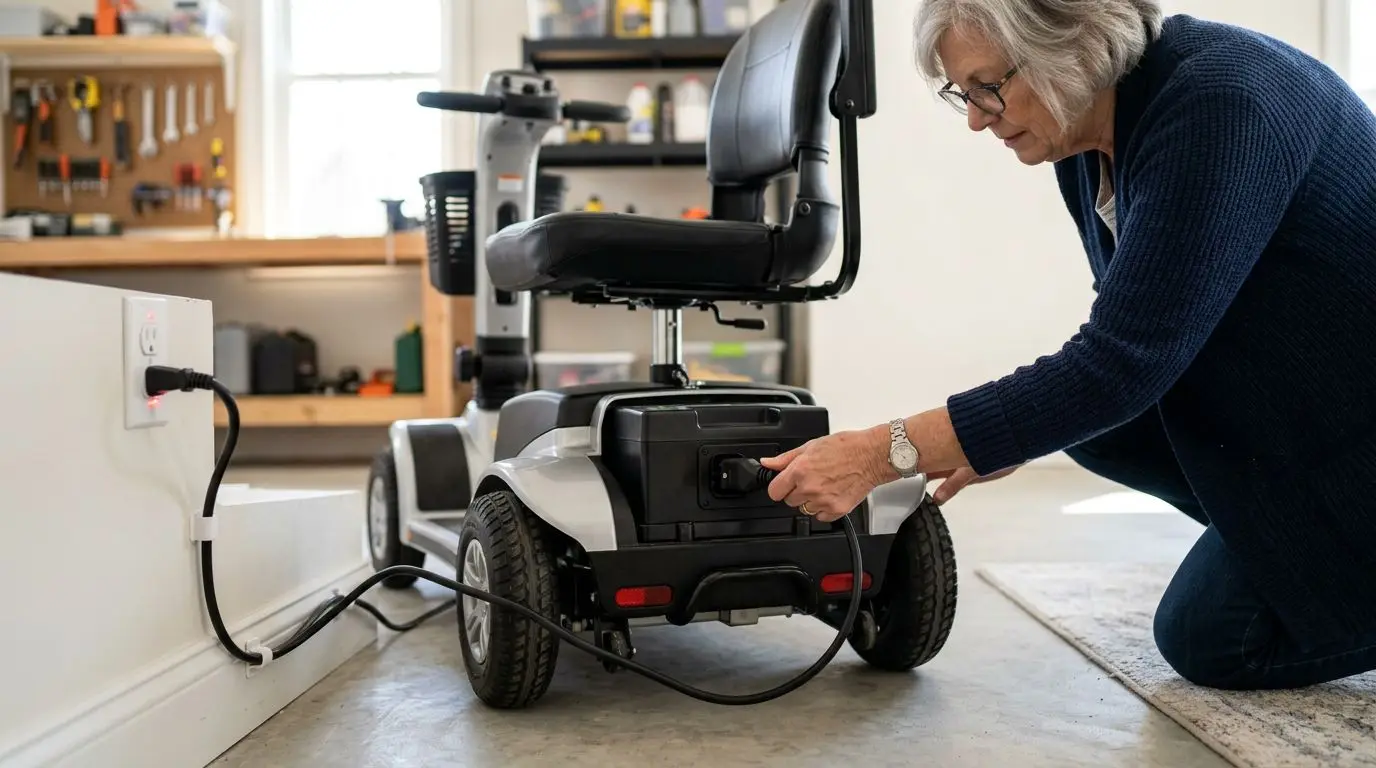
Mobility Scooter Batteries and Chargers: Range, Replacement Cost, and Care Tips
14 min read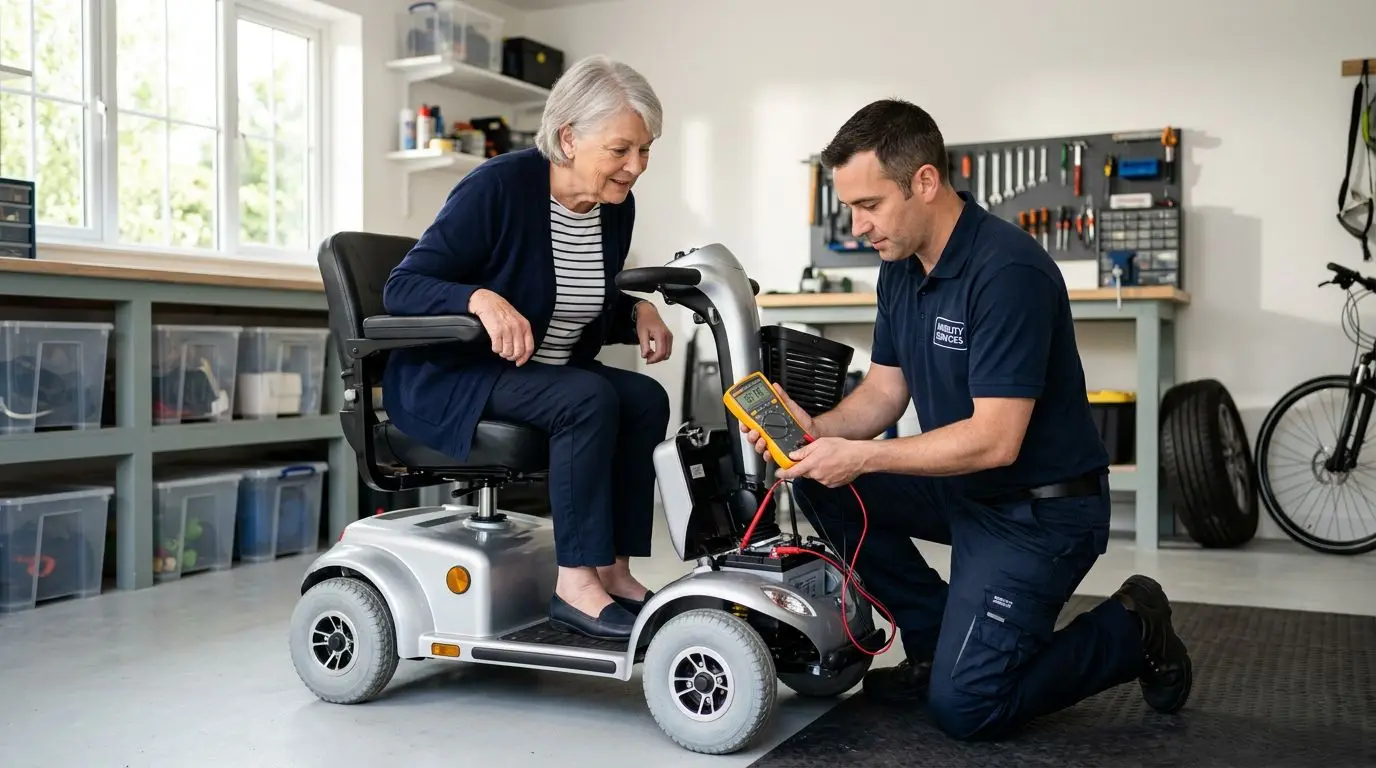
How to Tell If Your Mobility Scooter Battery Is Bad
14 min read