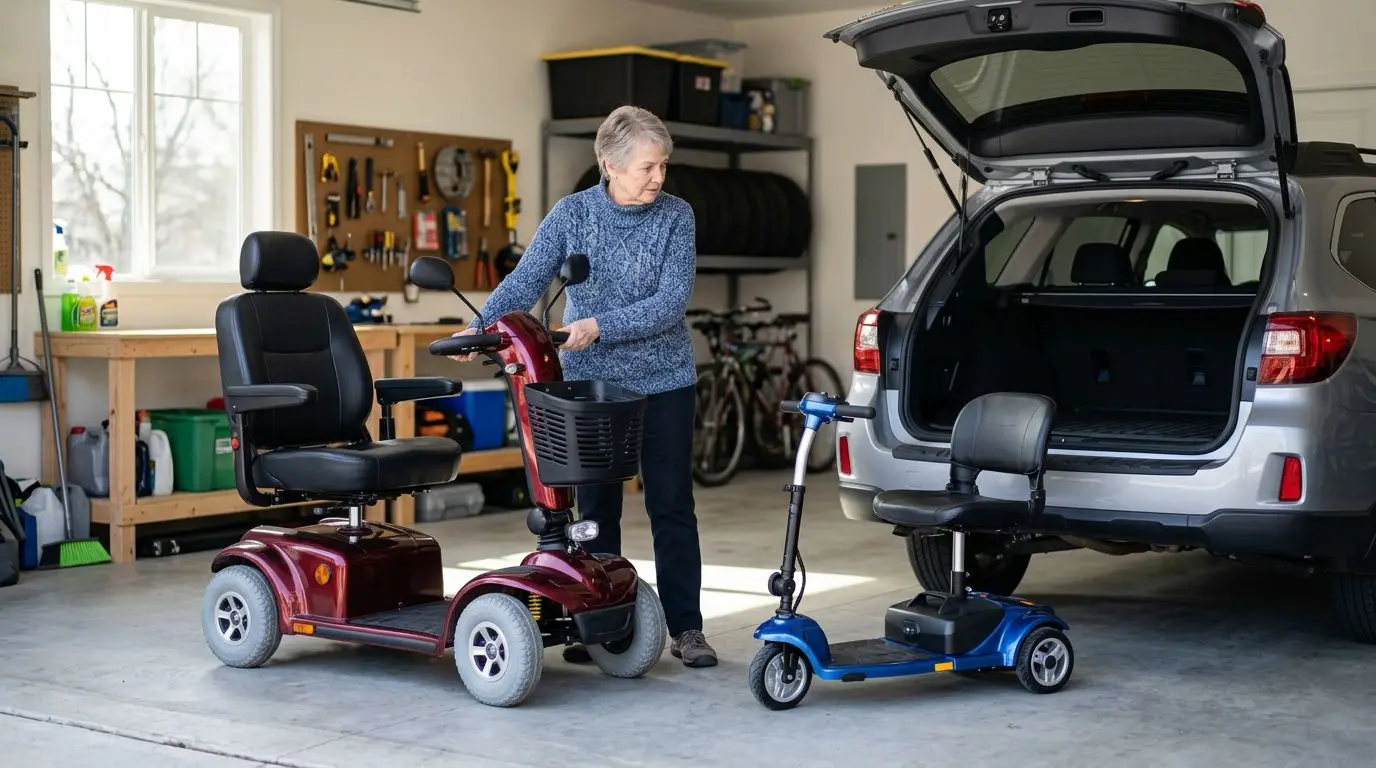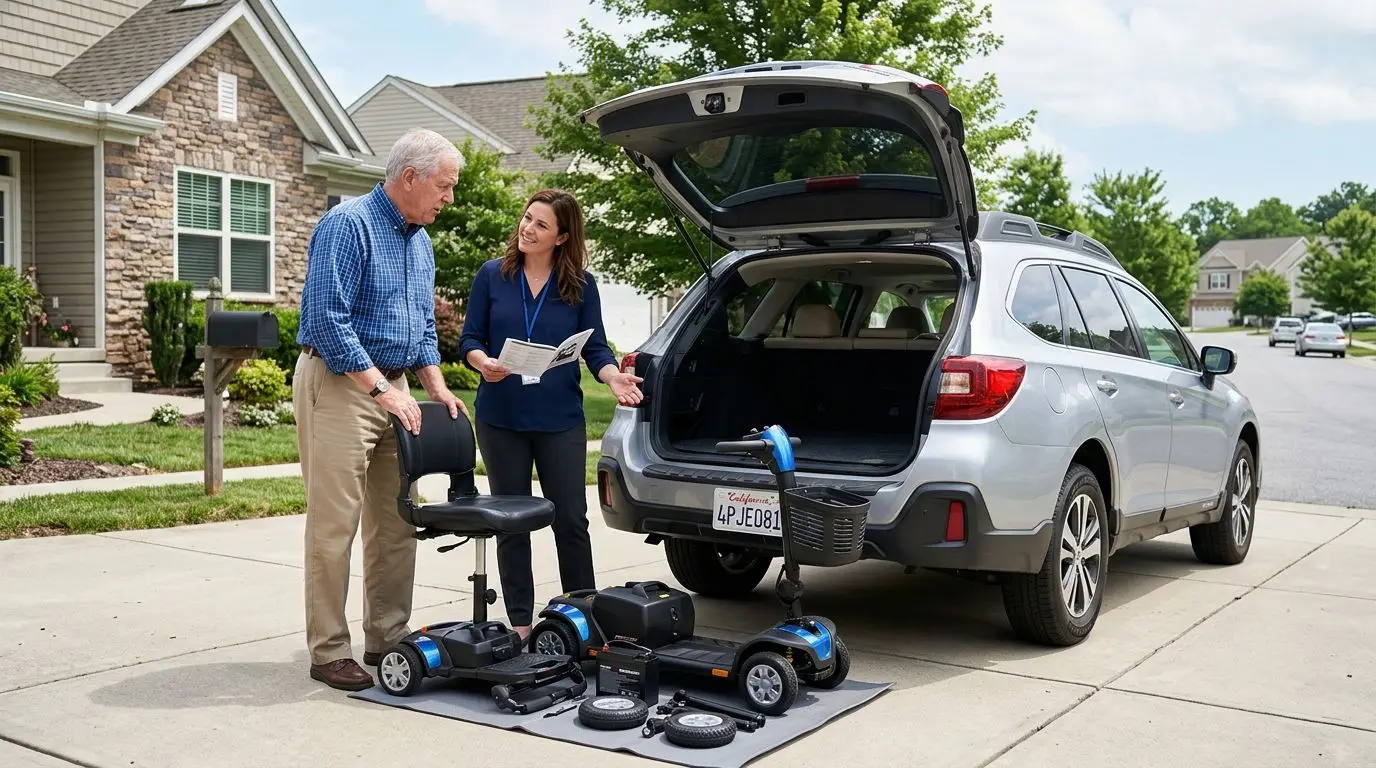
The best portable mobility scooter for a car depends on what you can lift safely, how much cargo space your vehicle has, and whether you need it for short errands or full-day outings. Folding scooters are compact but often have to be lifted as one unit, disassembling scooters separate into lighter pieces, and lift-compatible scooters make the most sense when the scooter is too heavy to load by hand.
If car transport is your main concern, start with two numbers: the weight of the heaviest piece and your vehicle’s cargo opening in inches. Those measurements usually narrow your choices faster than speed, color, or extra features.
Portable scooter formats at a glance: 3 main car-friendly types
Most car-transportable mobility scooters fit into 3 practical categories: folding, disassembling travel, and lift-compatible. They can overlap, but the loading experience is very different. A scooter that looks compact in a showroom may still be awkward if the heaviest part is 65 lb and your trunk lip is 28 inches off the ground.
| Type | How it loads | Typical heaviest lift | Best car fit | Main tradeoff |
|---|---|---|---|---|
| Folding scooter | Folds into one main unit | Often about 45 to 70 lb, depending on battery and frame | Hatchbacks, SUVs, wagons, some trunks | One-piece lifting can be difficult |
| Disassembling travel scooter | Separates into several pieces | Often about 30 to 55 lb for the largest section | Sedans, crossovers, minivans, SUVs | Requires setup and reassembly |
| Lift-compatible scooter | Loads using an installed vehicle lift or hoist | Manual lift may be 0 lb, but the lift has capacity limits | Vehicles with adequate hitch, cargo area, or interior space | Vehicle compatibility matters |
There is no single winner. The right format is the one that fits your body mechanics, your vehicle, and your routine. For many older adults, reducing the heaviest lift from 70 lb to 40 lb matters more than saving 6 inches of folded length.
Folding scooters: one-piece loading in about 30 to 60 seconds
A folding mobility scooter collapses into a smaller shape, making it easier to slide into a cargo area or trunk. Some models fold manually with levers, while others use powered folding. Either way, the scooter usually stays in one piece, which is the key point for car use.
The appeal is speed. A practiced user or caregiver may be able to fold the scooter in 30 to 60 seconds, lift it, and drive away. That helps with quick appointments, restaurant visits, or a daily commute where repeated assembly would get frustrating.
The challenge is concentrated weight. Even when a folding scooter is marketed as portable, the full unit may still weigh roughly 45 to 70 lb. The shape can also be bulky, with a low grip point that forces you to bend at the waist. If the battery is removable, taking it out before lifting may reduce the load by several pounds, but the frame still has to be handled safely.
Who folding scooters are best for
- Drivers or caregivers who can safely lift the scooter as one unit.
- People using hatchbacks, small SUVs, wagons, or vehicles with wide rear openings.
- Users who value fast setup for multiple stops in one day.
- Shorter outings where compact storage matters more than maximum comfort.
What to check before choosing a folding scooter
Measure the folded length, width, and height, then compare those numbers with your cargo opening, not just the inside cargo floor. A scooter may fit inside a trunk after it is loaded but still fail to pass through a narrow opening. Also check whether the folded scooter can stand upright or must lie flat; that can affect how much room remains for groceries, walkers, or luggage.
Folding scooters often use smaller wheels, commonly in the 6- to 8-inch range, and have lower ground clearance than full-size scooters. That is fine for smooth sidewalks, stores, and medical offices, but it can feel less stable over broken pavement, thick thresholds, or gravel. Shorter wheelbases are convenient in tight spaces, though they usually give up some ride comfort.
Disassembling travel scooters: 4 or 5 pieces for lighter lifting
Disassembling travel scooters are designed to come apart into manageable sections, often the seat, battery pack, rear drive section, front tiller section, and basket or shroud. Many separate into 4 or 5 main pieces without tools. For car transport, this format is often the most flexible because the heaviest component may be closer to 30 to 55 lb rather than the full scooter weight.
Setup takes longer than folding, but it is not complicated after some practice. A realistic routine is 2 to 5 minutes to disassemble and load, then another 2 to 5 minutes to unload and reassemble. If hand strength, balance, or fatigue are concerns, those extra minutes may be worthwhile because each lift is smaller and easier to position.
This style works especially well with sedans because the pieces can be distributed. The base may go in the trunk, the seat can ride in the back seat, and the battery pack can sit on the floor behind the front passenger seat. A single-piece folding scooter might not fit that same vehicle at all.
Who disassembling scooters are best for
- People who drive sedans or compact cars with limited trunk openings.
- Users who cannot safely lift 60 lb in one piece but can lift smaller components.
- Caregivers who prefer several controlled lifts instead of one awkward lift.
- Anyone who needs a practical balance of portability, seating, and stability.
What to watch closely
The rear drive section is usually the heaviest piece because it includes the motor, axle, and wheels. Ask for the heaviest-piece weight, not just the total scooter weight. A total scooter weight of 95 lb may sound manageable until you learn that one section is over 50 lb.
Connection points matter too. Look for clear latches, obvious alignment guides, and battery packs that click securely into place. If the seat post is hard to line up or the tiller lock requires strong hands, the scooter may be less practical after a long appointment or on a cold day when grip strength is reduced.
Lift-compatible scooters: useful when the scooter is 80 to 150 lb or more
A lift-compatible mobility scooter is not necessarily portable by hand. Instead, it becomes transportable by car when paired with the right vehicle lift, hoist, or carrier system. This approach can make sense for scooters that are too heavy, too wide, or too comfortable to break down for every trip.
Many mid-size and larger scooters weigh about 80 to 150 lb or more without the user, and some have wider seats, larger batteries, 9- to 10-inch wheels, or suspension features that improve outdoor comfort. Those benefits may be worth keeping if the user needs more stability or a longer riding range than a compact travel scooter provides.
This article is not a carrier buying guide, but the scooter still has to be compatible with the transport method. Important numbers include scooter weight, overall length, overall width, ground clearance, wheelbase, and the location of secure tie-down points if required. The vehicle has limits too, including hitch rating, tongue weight rating, cargo area height, and electrical capacity for powered lifts.
Who lift-compatible scooters are best for
- Users who need a sturdier scooter but cannot lift heavy pieces.
- People who take longer outings where comfort and battery range matter.
- Caregivers who want to avoid repeated bending, twisting, and lifting.
- Households with a vehicle that can safely accept the proper lift setup.
Key tradeoffs
A lift-compatible setup may reduce manual lifting to almost 0 lb, but it adds planning. It may affect parking, rear access, vehicle length, and garage clearance. Some exterior carriers expose the scooter to rain and road grime, while interior hoists require enough cargo space for the scooter to sit inside the vehicle.
Before choosing a heavier scooter because a lift is possible, confirm the whole system: scooter dimensions, vehicle capacity, storage space at home, and whether another driver can use the vehicle comfortably with the lift installed.
How to measure your car in 10 minutes before shopping
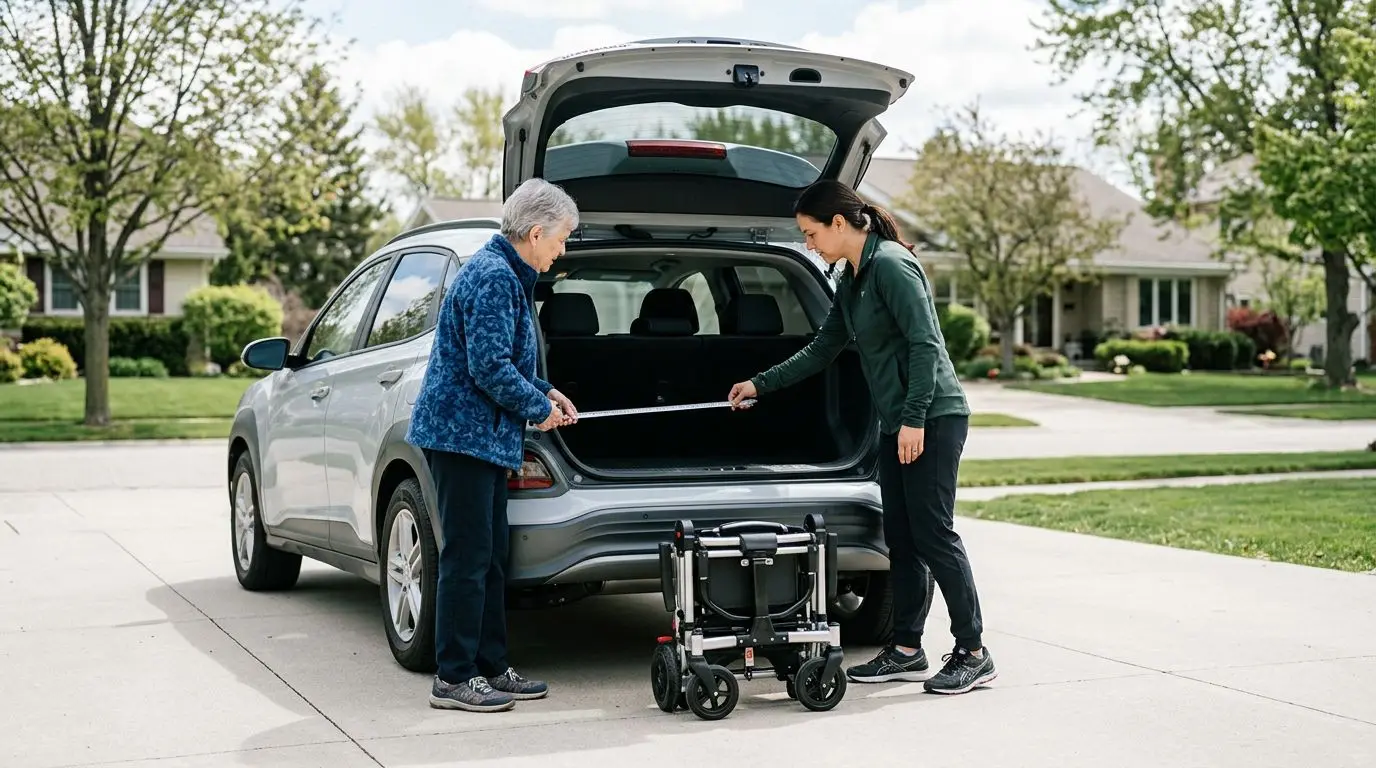
A tape measure can prevent an expensive mismatch. Take 10 minutes and write the numbers down before comparing scooter types. Do not rely only on vehicle cargo volume in cubic feet, because a trunk with 15 cubic feet can still have a narrow opening or a high lift-over edge.
- Cargo opening width: Measure the narrowest usable width at the trunk or hatch opening.
- Cargo opening height: Measure from the cargo floor to the lowest point of the opening.
- Cargo floor depth: Measure from the back of the rear seats to the inside edge of the closed door or trunk.
- Lift-over height: Measure from the ground to the trunk lip or cargo floor. A 30-inch lift-over is very different from a 22-inch one.
- Diagonal clearance: Some scooters fit only when angled. Measure corner to corner if the opening is tight.
- Back-seat option: Measure door opening width and seat height if you plan to place lighter pieces in the rear seat area.
Then measure the person doing the loading, not with a tape measure but with a realistic trial. Can that person lift a 40 lb object from knee height to trunk height without twisting? Can they repeat it twice? If not, a lower heaviest-piece weight or a lift-compatible setup may be safer.
Features that matter for car travel: 6 details beyond total weight
Total weight matters, but car portability depends on several smaller design details. Two scooters with the same 100 lb total weight can feel very different if one breaks into 5 balanced pieces and the other leaves a 62 lb rear section with no comfortable handle.
| Feature | Why it matters in a car | Practical target |
|---|---|---|
| Heaviest-piece weight | Determines safe manual loading | Choose a number the loader can repeat without strain |
| Removable battery | Can reduce lifting weight and simplify charging | Check that removal is easy and secure |
| Folded or disassembled dimensions | Must fit through the vehicle opening | Compare to inches measured at the car, not just cargo volume |
| Handle placement | Affects grip and body position | Look for balanced lifting points on the heaviest section |
| Wheel size | Influences ride comfort and obstacle handling | Smaller wheels pack easier; larger wheels ride better outdoors |
| Tiller adjustment | Helps reduce folded height or length | Confirm it locks firmly after transport |
Batteries deserve special attention. Many portable scooters use sealed or lithium-style battery packs, depending on the design. Removable packs are convenient because they allow indoor charging and reduce what you lift into the car. Check the battery weight, charging routine, and whether the scooter can be moved easily when the battery is removed.
Seat comfort matters as well. Compact portable scooters often use lighter seats to save space, while larger lift-compatible scooters may offer more padding, width, and support. Comfort does not treat a medical condition, but it can affect how long someone is willing to use the scooter during errands or community outings.
Who each portable format is best for: 5 common car situations
Matching the scooter to the vehicle is easier when you picture a real routine. Here are 5 common situations and the format that often makes the most sense.
| Situation | Likely best fit | Reason |
|---|---|---|
| One caregiver loads the scooter several times a week | Disassembling travel scooter | Lighter pieces reduce repeated strain |
| User drives alone and has a hatchback | Light folding scooter, if lifting is safe | Fast loading with fewer loose parts |
| Compact sedan with a small trunk opening | Disassembling scooter | Pieces can be split between trunk and rear seat |
| Long outdoor outings and rougher sidewalks | Lift-compatible mid-size scooter | Larger wheels and sturdier frame may ride better |
| Very limited lifting ability | Lift-compatible setup | Manual lifting can be greatly reduced |
If two formats both seem workable, choose the one that will still feel manageable on a tired day. A scooter is only truly portable if it can be loaded after a doctor visit, in light rain, or at the end of a shopping trip when energy is lower than it was at home.
Safety and handling checklist: 60 seconds before every drive
Before driving away, take 60 seconds to make sure the scooter and vehicle are ready. Most problems are simple: a loose battery, an unlocked tiller, a seat that was not latched, or a scooter piece that can slide during a hard stop.
- Confirm the scooter is powered off before loading.
- Remove the key if the scooter uses one.
- Lock the tiller or steering column when the design allows it.
- Secure loose parts so they cannot move in a sudden stop.
- Keep battery contacts clean, dry, and protected during transport.
- Verify the seat is latched before anyone sits on it after reassembly.
- Check that anti-tip wheels, small rear rollers, and caster wheels are not bent or blocked.
- Do not exceed vehicle, lift, or carrier weight ratings.
Avoid lifting while twisted. Position the scooter close to the cargo area, bend at the knees as much as your body allows, and ask for help if the piece is beyond your comfortable limit. If loading causes pain, dizziness, or unsafe balance, the scooter format is not the right match for that routine.
FAQ: 5 questions about portable scooters for cars
Can a mobility scooter fit in a regular car trunk?
Yes, some can, especially disassembling travel scooters that separate into 4 or 5 pieces. A one-piece folding scooter may fit some trunks, but the opening width, opening height, and lift-over height are just as important as trunk volume.
Is a folding scooter always easier than a disassembling scooter?
No. Folding is faster, but it often means lifting the whole scooter as one unit. A disassembling scooter takes longer to set up, yet the heaviest piece may be much easier to manage.
What heaviest-piece weight should I look for?
Choose a weight the loader can lift safely and repeatedly, not just once in a store. Many shoppers aim for the lowest practical heaviest-piece weight, often in the 30 to 45 lb range, if manual loading is required.
Do portable scooters work well outdoors?
They can work on smooth sidewalks, parking lots, indoor floors, and firm paths, but smaller wheels and lower ground clearance limit comfort on rough pavement, gravel, grass, or steep transitions. For frequent outdoor use, compare wheel size, ground clearance, stability, and seat comfort carefully.
Do I need a vehicle lift for a portable scooter?
Not always. Many folding and disassembling scooters are designed for manual car loading. A lift becomes more attractive when the scooter is too heavy, the user has limited lifting ability, or the household wants to transport a more comfortable mid-size scooter.
Frequently asked questions
Can a mobility scooter fit in a regular car trunk? +
Yes, some can, especially disassembling travel scooters that separate into 4 or 5 pieces. A one-piece folding scooter may fit some trunks, but the opening width, opening height, and lift-over height are just as important as trunk volume.
Is a folding scooter always easier than a disassembling scooter? +
No. Folding is faster, but it often requires lifting the whole scooter as one unit. A disassembling scooter takes longer to set up, yet the heaviest piece may be much easier to manage.
What heaviest-piece weight should I look for? +
Choose a weight the loader can lift safely and repeatedly, not just once in a store. Many shoppers aim for the lowest practical heaviest-piece weight, often in the 30 to 45 lb range, if manual loading is required.
Do portable scooters work well outdoors? +
They can work on smooth sidewalks, parking lots, indoor floors, and firm paths, but smaller wheels and lower ground clearance limit comfort on rough pavement, gravel, grass, or steep transitions. For frequent outdoor use, compare wheel size, ground clearance, stability, and seat comfort carefully.
Do I need a vehicle lift for a portable scooter? +
Not always. Many folding and disassembling scooters are designed for manual car loading. A lift becomes more attractive when the scooter is too heavy, the user has limited lifting ability, or the household wants to transport a more comfortable mid-size scooter.
Related guides
Travel, Folding, and Lightweight Mobility Scooters: What to Know Before You Buy
13 min read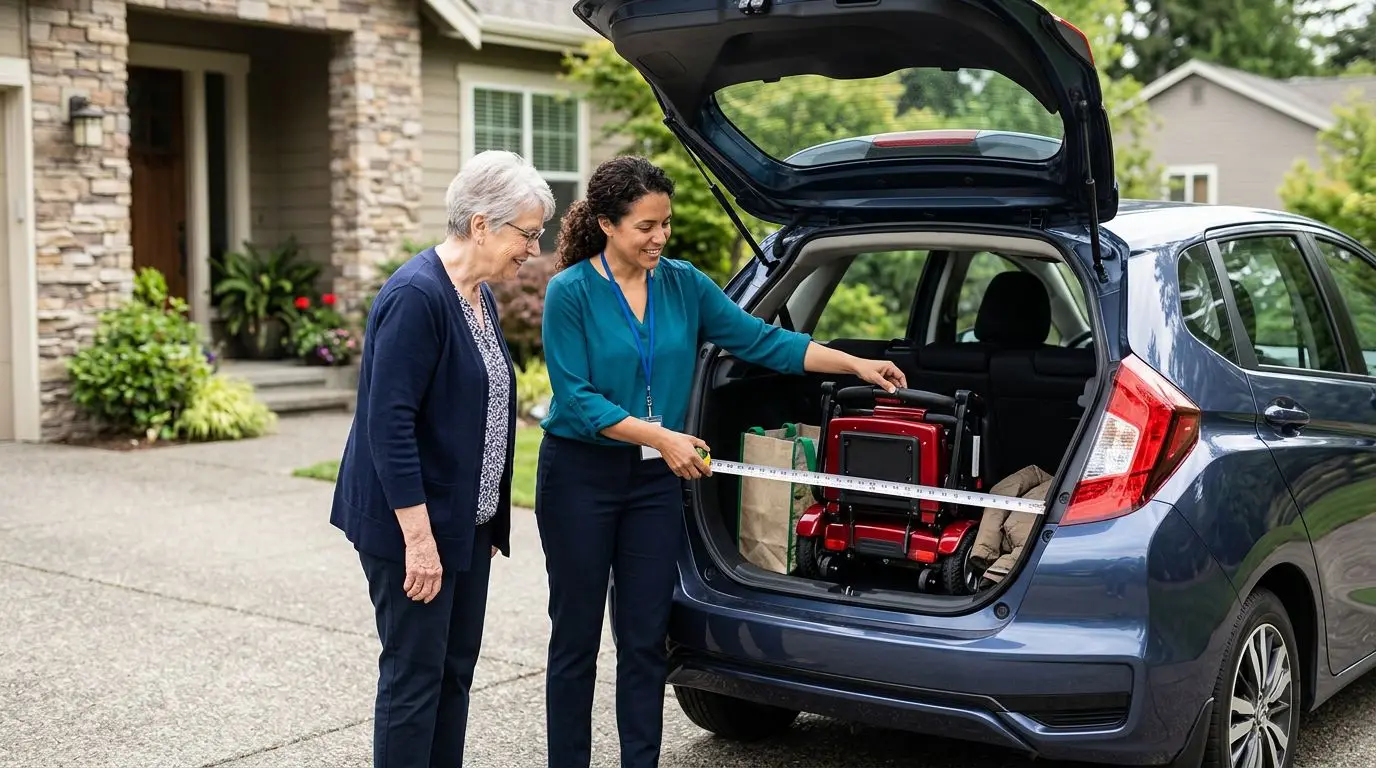
Foldable Lightweight Mobility Scooters: Manual Folding, Auto Folding, and Disassembly Options Explained
14 min read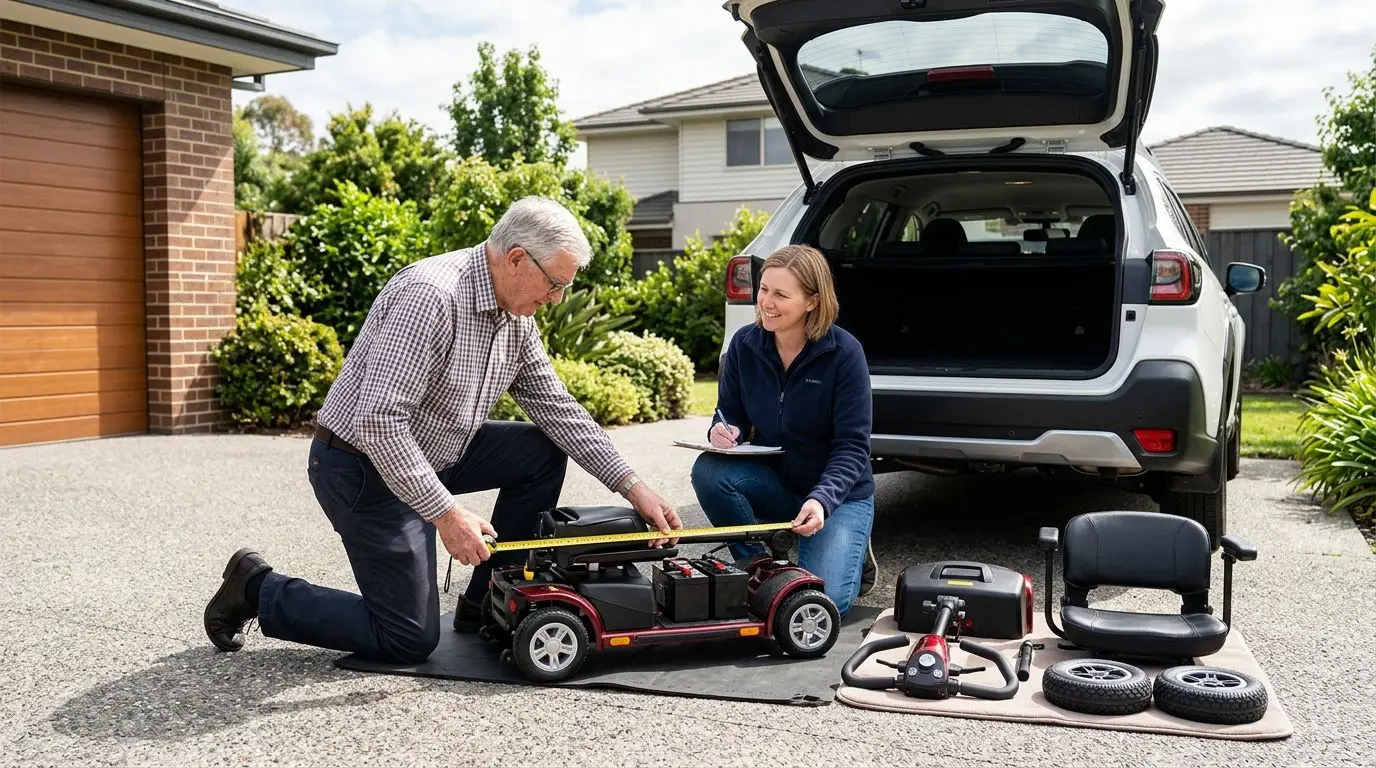
How to Transport a Mobility Scooter in a Car, SUV, or Van
14 min read