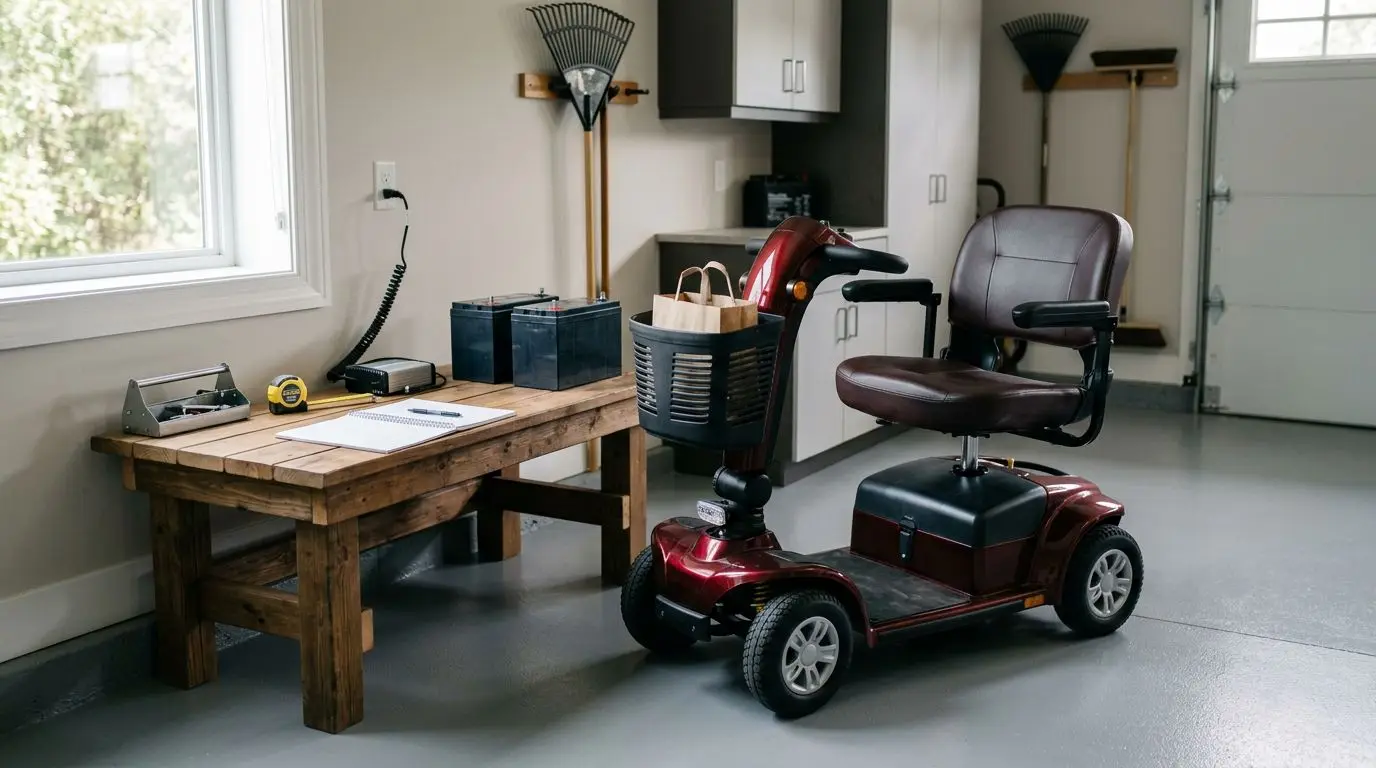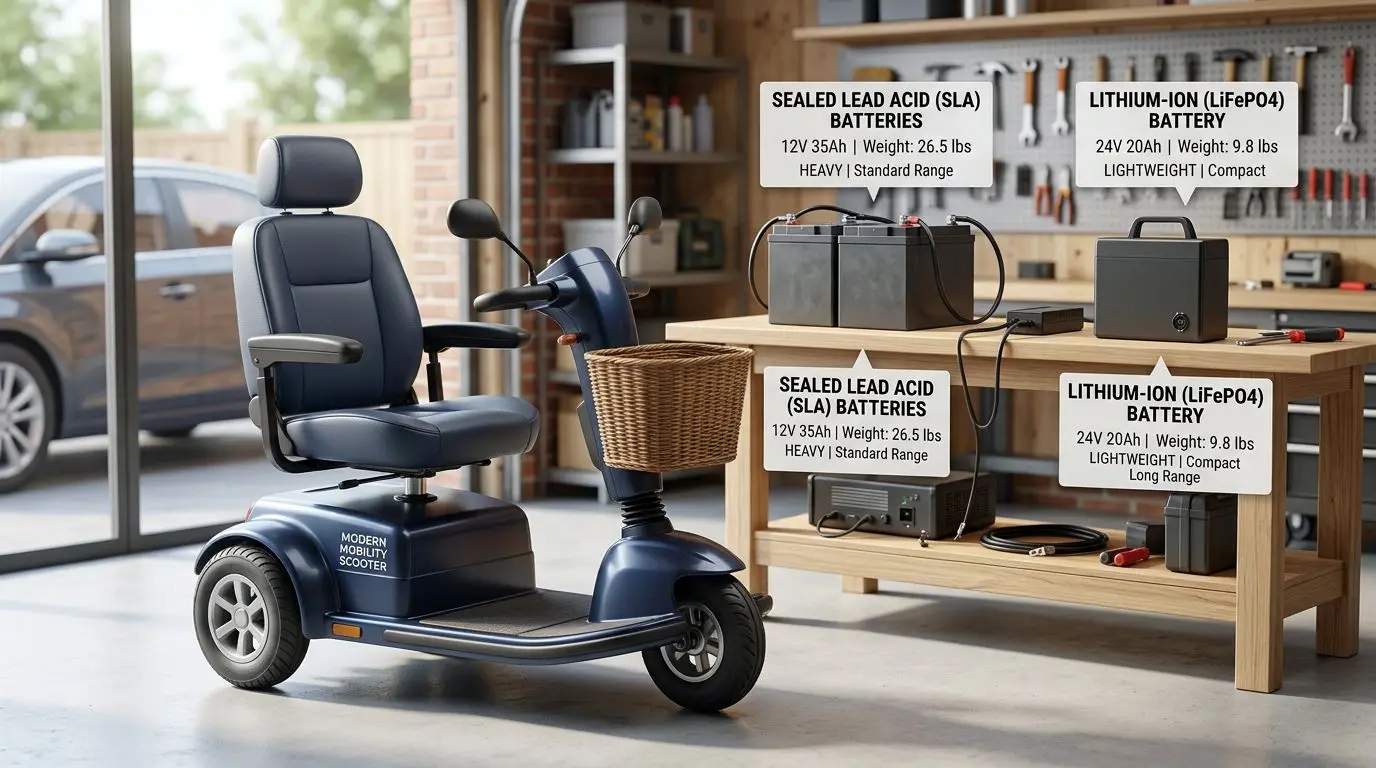
SLA batteries are usually cheaper up front, while lithium batteries are lighter, last longer, and charge faster in many mobility scooters. A lithium upgrade can be practical, but only when the scooter, charger, battery compartment, wiring, and battery management system are compatible. If compatibility is uncertain, replacing SLA with the same type is often the safer choice.
For many owners, the battery is the most confusing part of a mobility scooter. Two scooters can look almost identical, yet one may use a pair of sealed lead acid batteries weighing more than 40 lb total, while another uses a compact lithium pack that lifts out with one hand. The right choice depends on how far you ride, how often you lift the scooter, where you store it, and whether your scooter was designed for the chemistry you want to use.
SLA vs. lithium at a glance: 2 common battery families
Most mobility scooters use either sealed lead acid batteries, often called SLA, or a lithium-based pack. SLA batteries are typically AGM or gel types. They are sealed, rechargeable, and widely used in travel, mid-size, and full-size scooters. Lithium scooter packs are usually built from lithium-ion cells or lithium iron phosphate cells, often shortened to LiFePO4, with an internal battery management system.
A common 24-volt mobility scooter setup uses two 12-volt SLA batteries connected in series. Lithium scooters may run on a 24-volt, 36-volt, or 48-volt pack, depending on the scooter design. Voltage matters. A 24-volt scooter is not interchangeable with a 36-volt battery system, even if the connector looks similar.
| Battery type | Typical strengths | Common trade-offs | Best fit |
|---|---|---|---|
| SLA AGM or gel | Lower purchase cost, widely available, familiar service process | Heavier, slower charging, shorter cycle life if deeply discharged | Budget-focused owners, occasional riders, scooters kept mostly assembled |
| Lithium-ion | Lighter weight, higher energy density, faster charging in many systems | Requires compatible charger and protection electronics | Frequent riders, travel scooter users, people who lift batteries often |
| LiFePO4 lithium | Stable chemistry, long cycle life, consistent voltage delivery | May cost more and may not fit every compartment | Owners wanting long service life in a compatible scooter |
SLA is not outdated in every situation, and lithium is not automatically the right answer. The safest choice is the battery type your scooter was designed and approved to use, unless the manufacturer or a qualified mobility technician confirms a compatible upgrade path.
Lifespan comparison: 200 to 1,000+ charge cycles is a realistic range
Battery lifespan is usually described in two ways: years of service and charge cycles. A charge cycle means using and recharging a meaningful portion of the battery capacity. It does not always mean running the scooter to empty.
Many SLA mobility scooter batteries last about 1 to 3 years with normal use, though light use and careful charging can stretch that. In cycle terms, SLA batteries commonly deliver a few hundred cycles, often around 200 to 400 depending on depth of discharge, temperature, storage habits, and battery quality. Repeatedly running an SLA battery very low can shorten its life quickly.
Lithium packs often last longer. Depending on chemistry and design, a lithium mobility scooter battery may provide several hundred to more than 1,000 cycles. LiFePO4 packs are often valued for higher cycle life, though real-world performance still depends on build quality, charging behavior, temperature, and the scooter's electrical load.
Depth of discharge makes a big difference. SLA batteries do not respond well to being regularly drawn down deeply. Many owners get better life by recharging after each ride instead of waiting until the gauge is near empty. Lithium batteries generally tolerate deeper discharge better, but they still should not be abused or stored fully depleted.
Watch for signs of aging. Reduced range, slower hill climbing, a battery gauge that drops quickly under load, or a charger that finishes unusually fast can point to tired batteries. If a scooter used to travel 10 miles and now struggles after 3 miles on the same route, battery condition is a likely suspect.
Weight and portability: lithium can save 20 to 40 lb on some scooters
Weight is where lithium often feels most different. SLA batteries are dense and heavy. A small travel scooter may use two 12 Ah SLA batteries weighing roughly 18 to 25 lb combined, while larger scooters with 35 Ah or 55 Ah batteries can carry much more battery weight. In some full-size setups, the battery pair alone can weigh 50 to 80 lb.
Lithium packs with similar usable energy are often much lighter. Depending on capacity, a lithium pack may weigh half as much as the comparable SLA setup, and sometimes less. For a person lifting the battery box into a car trunk, even a 10 lb difference can matter. A 25 lb removable pack is a very different task from lifting a 45 lb battery box.
This matters especially with travel scooters. Many portable scooters separate into pieces, and the battery is one of the main pieces people handle. If the scooter itself breaks down into 4 or 5 parts, the battery weight may determine whether loading it into a vehicle is realistic without help.
There is a caution, though. A lighter battery does not change the scooter's frame rating, brake design, motor rating, or stability. A lithium battery may reduce the weight you lift, but it does not make a scooter safe for steeper ramps, heavier loads, or outdoor terrain beyond its design limits.
Charging time and habits: 4 to 12 hours is common
SLA charging is usually slower. Many mobility scooter SLA systems take about 6 to 12 hours to recharge, depending on battery capacity, charger output, and how far the batteries were discharged. Overnight charging is common, and many chargers switch to a maintenance or float mode after the batteries are full.
Lithium batteries may charge faster, often in the 3 to 8 hour range, but this is not guaranteed. Charger amperage, pack capacity, the battery management system, and scooter design all determine the actual charging time. A large lithium pack can still take hours.
The most important rule is simple: use the correct charger for the battery chemistry and voltage. An SLA charger may not follow the charging profile required by a lithium pack. A lithium charger may not be appropriate for SLA. Using the wrong charger can reduce battery life, cause charging failure, or create a safety risk.
Charging habits matter with both types. SLA batteries generally do best when recharged after use and not left discharged for long periods. If an SLA scooter sits unused for weeks, the batteries can sulfate and lose capacity. Lithium batteries also need storage care. Many lithium packs should be stored partially charged if the scooter will sit for a long time, but the exact recommendation depends on the pack design.
- Charge in a dry, ventilated area away from direct heat.
- Do not charge a visibly damaged battery pack.
- Unplug and inspect if you smell burning, see swelling, or notice unusual heat.
- Follow the scooter and battery instructions for long-term storage.
Range and performance: amp-hours do not tell the whole story
Shoppers often compare batteries by amp-hours, such as 12 Ah, 18 Ah, 35 Ah, or 55 Ah. That number is useful, but it can be misleading when comparing SLA and lithium. Voltage and usable capacity both matter. Watt-hours give a clearer picture because they combine voltage and amp-hours. The formula is simple: volts multiplied by amp-hours equals watt-hours.
For example, a 24-volt, 20 Ah battery system stores about 480 watt-hours. A 24-volt, 30 Ah system stores about 720 watt-hours. Actual range is less predictable because rider weight, hills, tire pressure, pavement quality, temperature, speed setting, and stop-and-go use all affect power draw.
SLA batteries also lose effective capacity under heavy load. Climbing a hill or accelerating with a heavier rider can make voltage sag more noticeable. Lithium batteries often hold voltage more consistently until they are closer to empty. That can make a scooter feel steadier during a ride, but it can also mean the battery gauge behaves differently than an SLA gauge.
Do not assume a lithium battery with the same amp-hour rating will always give the same range as SLA, or vice versa. Compare watt-hours, chemistry, and the scooter's approved battery options. If the scooter's battery meter was calibrated for SLA voltage behavior, it may not display lithium state of charge accurately after an upgrade.
Upgrade safety: 24V, 36V, connectors, and BMS compatibility matter
A lithium upgrade is not just a battery swap. It is an electrical compatibility decision. The scooter's controller, charger port, wiring, fuse rating, battery compartment, and charging system all need to work with the new pack. The battery also needs a properly rated battery management system, usually called a BMS, to help protect against overcharge, over-discharge, short circuit, and temperature extremes.
Start with voltage. If your scooter is built for 24 volts, use only a compatible 24-volt battery system unless a qualified technician confirms otherwise. Installing a higher-voltage pack can damage the controller and motor. Installing the wrong lower-voltage pack may cause faults or poor performance.
Next, check current capability. Scooters draw more power when climbing ramps, starting from a stop, or carrying a heavier rider. A battery pack must be able to safely supply the scooter's peak current demand. A pack that looks correct by voltage and size may still shut down if its BMS current limit is too low.
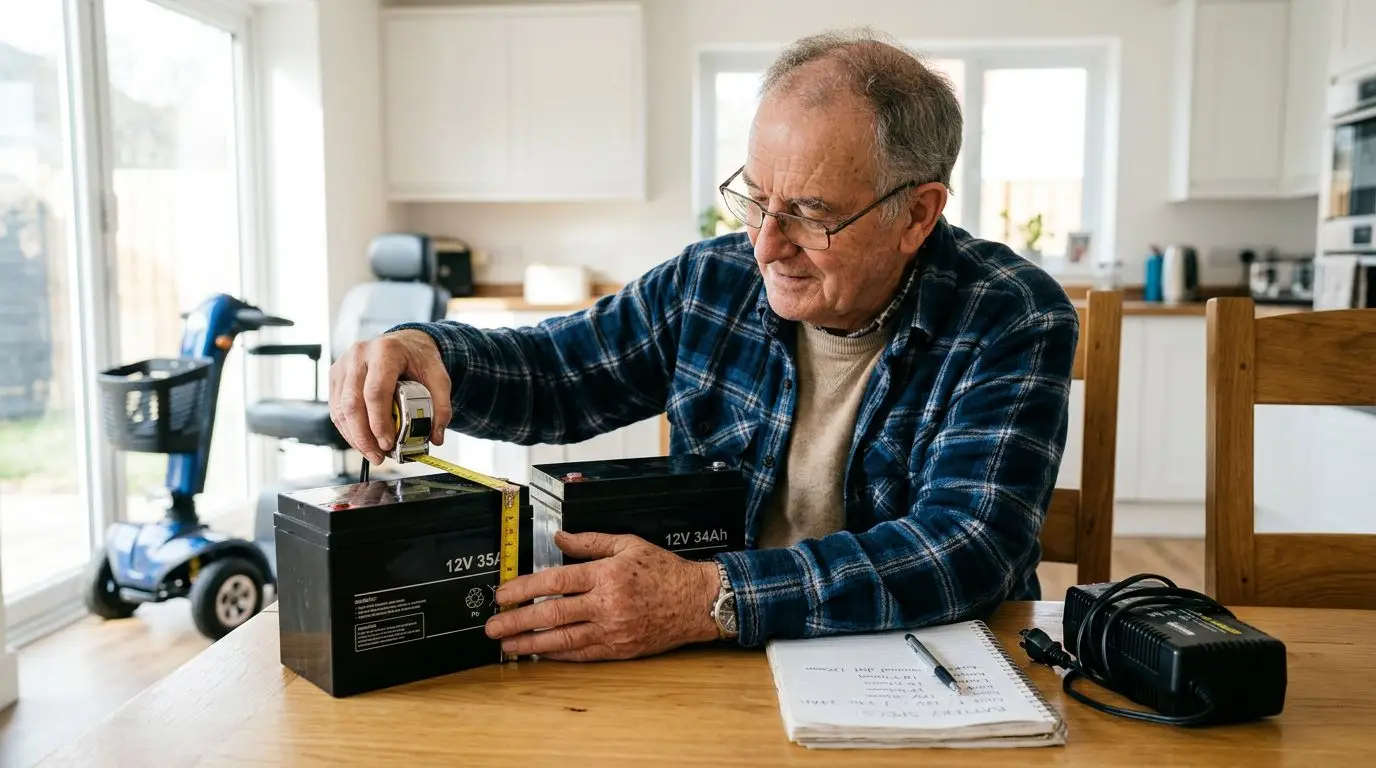
Physical fit is just as important. Measure the battery compartment in inches, including height under the cover, available width, cable clearance, and space for connectors. Some SLA compartments were designed around two rectangular batteries. A lithium case may be shaped differently, and improvised padding or loose wiring can create problems.
Connector matching should never be treated casually. Similar-looking plugs can have different pin layouts or polarity. Reversing polarity can damage electronics immediately. If you cannot verify the wiring, do not guess.
| Upgrade checkpoint | What to verify | Why it matters |
|---|---|---|
| Voltage | 24V, 36V, or 48V system requirement | Wrong voltage can damage the scooter or prevent operation |
| Charger | Chemistry-specific output and connector | SLA and lithium charging profiles are different |
| BMS rating | Continuous and peak current capacity | Underrated packs may shut off under load |
| Compartment size | Length, width, height, and cable space | A tight or loose fit can damage wires or the pack |
| Battery gauge | Compatibility with lithium voltage curve | The display may not show charge accurately |
If the scooter maker does not list lithium as an approved option, speak with a qualified mobility service provider before changing chemistry. This is not only about performance. It is about fire safety, electrical protection, and reliable braking and control behavior.
Who each battery type is best for: 3 practical owner profiles
SLA is often best for owners who ride occasionally, keep the scooter at home, and want the lowest reasonable replacement cost. If the scooter is not lifted into a vehicle and the current range is enough, a fresh set of SLA batteries may be perfectly practical. Many owners use SLA scooters successfully for neighborhood rides, appointments, and indoor-outdoor daily errands.
Lithium is often best for people who need portability. If you lift the battery pack several times per week, store the scooter in a car, or depend on a compact travel scooter, lighter weight can make daily use easier. Lithium can also be a good fit for frequent riders who value longer cycle life and quicker recharge times, assuming the scooter is designed for it.
A like-for-like replacement is best for owners who are unsure about compatibility. If your scooter has a 24V SLA system and the manual only lists SLA batteries, replacing with the same voltage, size, and chemistry is usually the conservative route. It may not be the lightest choice, but it reduces the risk of electrical mismatch.
| Owner situation | Likely better choice | Reason |
|---|---|---|
| Rides a few miles a week and stores scooter assembled | SLA | Lower up-front cost and weight is less of an issue |
| Lifts battery into a car 3 or more times weekly | Lithium, if compatible | Lower weight can reduce handling strain |
| Needs maximum simplicity for an older scooter | SLA replacement | Matches the original design in many scooters |
| Uses scooter daily and charges often | Lithium, if approved | Longer cycle life may be worthwhile |
How to choose and measure: 7 checks before buying
Before buying any replacement battery, write down the information from your current battery label and scooter manual. At minimum, identify voltage, amp-hour rating, chemistry, terminal or connector type, and physical dimensions. Measure the space yourself with a tape measure; do not rely only on photos.
- Confirm system voltage. Many scooters use 24V, but some use 36V or 48V. Match the scooter requirement exactly.
- Check battery capacity. Compare amp-hours and watt-hours. A lower-capacity pack may reduce range.
- Measure the compartment. Record length, width, and height in inches, plus room for cables and the cover.
- Match terminal type or connector. Do not assume two plugs are wired the same.
- Verify charger compatibility. SLA batteries need an SLA charger; lithium packs need the correct lithium charger.
- Check weight you can safely lift. If 35 lb is too much, battery weight should be a deciding factor.
- Ask about service support. A battery that cannot be tested, supported, or safely installed may not be a good value.
Also consider the scooter's age. If the motor, tires, brakes, seat, and controller are worn, investing in an expensive battery conversion may not make sense. On a newer scooter with a sound frame and good service support, a compatible lithium pack may be more reasonable.
Keep expectations grounded. A battery upgrade will not fix dragging brakes, underinflated pneumatic tires, corroded connectors, or a weak motor. If range has dropped suddenly, have the scooter checked before assuming the batteries are the only problem.
Storage, travel, and winter use: temperature can cut range by 20% or more
Temperature affects both SLA and lithium batteries. Cold weather reduces available capacity, so a scooter that performs well at 70°F may travel a shorter distance at 35°F. A range drop of 20% or more in cold conditions is not unusual, especially with older batteries.
SLA batteries should not be left discharged in storage. If stored for a month or longer, they usually need periodic charging according to the scooter manual. Leaving SLA batteries low over winter is one of the most common ways to ruin them.
Lithium batteries also need proper storage, but the details vary. Many lithium packs prefer a partial charge for long storage rather than sitting full or empty for months. The battery management system may draw a small amount of power even when the scooter is off, so periodic checks are still wise.
Air travel adds another layer. Mobility scooter batteries are subject to airline and transportation rules, and lithium batteries often require watt-hour documentation. Some removable lithium mobility aid batteries may be limited by airline policy and federal rules, commonly around 300 watt-hours for certain removable packs, but requirements depend on how the battery is installed and the carrier's procedures. Contact the airline well before travel and carry battery documentation.
For car travel, secure the battery and scooter parts so they cannot slide or tip. Do not leave batteries for long periods in a hot trunk. Heat accelerates aging and can increase safety risk, especially if a pack is damaged.
Cost and value: look beyond the first replacement price
SLA batteries usually cost less at purchase. That is why they remain common. For an occasional user, the lower up-front cost can be the sensible choice, especially when the scooter already works well with SLA and weight is manageable.
Lithium batteries typically cost more initially, but they may provide longer service life, lower weight, and better convenience. The value depends on actual use. If lithium lasts several years longer in a compatible scooter, the higher price may be easier to justify. If the scooter is rarely used or may be replaced soon, the math changes.
Do not judge value only by advertised range or capacity. Include charger cost, installation help, warranty terms, service availability, and whether the scooter's battery gauge will remain useful. A safe, supported battery is worth more than a cheaper pack with unclear specifications.
Disposal matters too. Both SLA and lithium batteries should be recycled through appropriate battery recycling channels. SLA batteries are widely recycled, but they still contain lead and acid. Lithium packs should not go in household trash. Local recycling rules vary, so check with a battery recycler, mobility service shop, or municipal waste program.
FAQ: 5 common battery questions
Can I replace SLA batteries with lithium in any mobility scooter?
No. A lithium upgrade must match the scooter's voltage, current needs, charger setup, connector wiring, compartment size, and safety requirements. If lithium is not listed as an approved option, get professional guidance before converting.
Will lithium make my scooter go faster?
Usually no. Scooter speed is controlled by the motor, controller, gearing, and programmed limits. A lithium battery may hold voltage more steadily, but it should not be used to bypass the scooter's designed speed or safety limits.
Do I need a new charger for lithium?
In most cases, yes. SLA and lithium batteries use different charging profiles. Use the charger specified for the exact battery voltage and chemistry.
Why did my SLA batteries fail after sitting unused?
SLA batteries can lose capacity when stored discharged. Sulfation can occur if they sit low for weeks or months, and the scooter may show poor range even after charging.
Is a higher amp-hour battery always better?
Not always. Higher capacity can increase range, but only if it fits safely, matches the scooter's electrical system, and does not exceed design limits. Physical size, weight, charger compatibility, and support matter too.
Bottom line: choose the battery your scooter can safely support
For many shoppers, SLA is the economical, familiar choice, while lithium is the lighter and longer-lasting option. The practical answer depends on your scooter design and how you use it. A travel scooter owner who lifts the battery daily may benefit greatly from lithium, while an occasional rider with an older SLA scooter may be better served by a simple like-for-like replacement.
If you are considering an upgrade, do not start with price alone. Start with voltage, charger compatibility, BMS rating, dimensions, connector wiring, and service support. A battery that fits the scooter safely is the only battery worth buying.
Frequently asked questions
Can I replace SLA batteries with lithium in any mobility scooter? +
No. A lithium upgrade must match the scooter's voltage, current demand, charger, connector wiring, compartment size, and safety requirements. If lithium is not approved for your scooter, ask a qualified mobility technician before converting.
Do lithium mobility scooter batteries last longer than SLA? +
Often, yes. SLA batteries commonly last about 1 to 3 years or a few hundred cycles, while lithium packs may last several hundred to more than 1,000 cycles depending on chemistry, use, charging habits, and storage conditions.
Will a lithium battery make my scooter lighter? +
Usually. Lithium packs are often much lighter than comparable SLA batteries, sometimes saving 20 to 40 lb on larger setups. The exact savings depends on battery capacity and scooter design.
Do I need a different charger for lithium batteries? +
In most cases, yes. SLA and lithium batteries require different charging profiles. Use only a charger specified for the battery's voltage and chemistry.
Is a higher amp-hour battery always better? +
Not always. Higher amp-hours may increase range, but the battery must fit safely, match voltage and current requirements, work with the charger, and be supported by the scooter's electrical system.
Related guides
Mobility Scooter Batteries Explained: Types, Voltage, Amp-Hours, and Compatibility
15 min read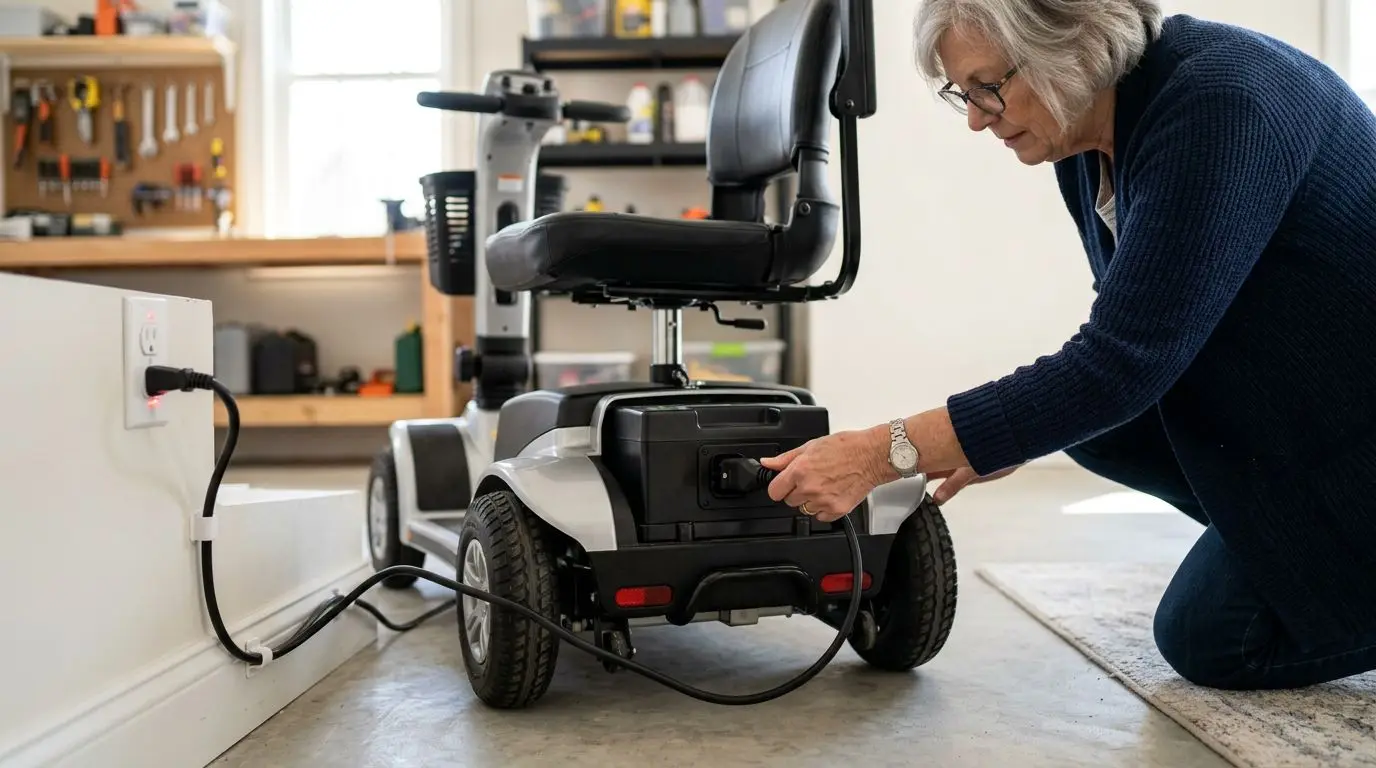
Mobility Scooter Batteries and Chargers: Range, Replacement Cost, and Care Tips
14 min read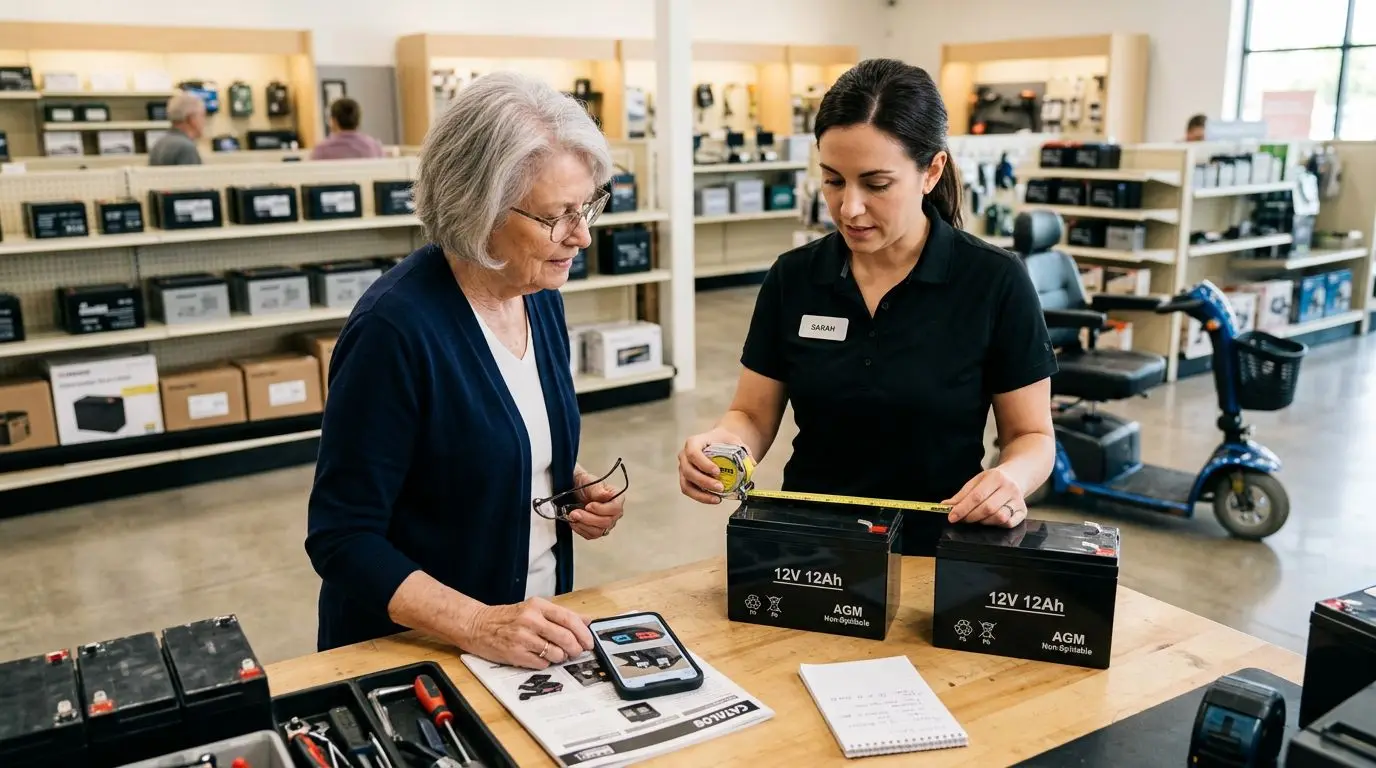
Where to Buy Mobility Scooter Batteries Near You: What to Check Before You Purchase
13 min read