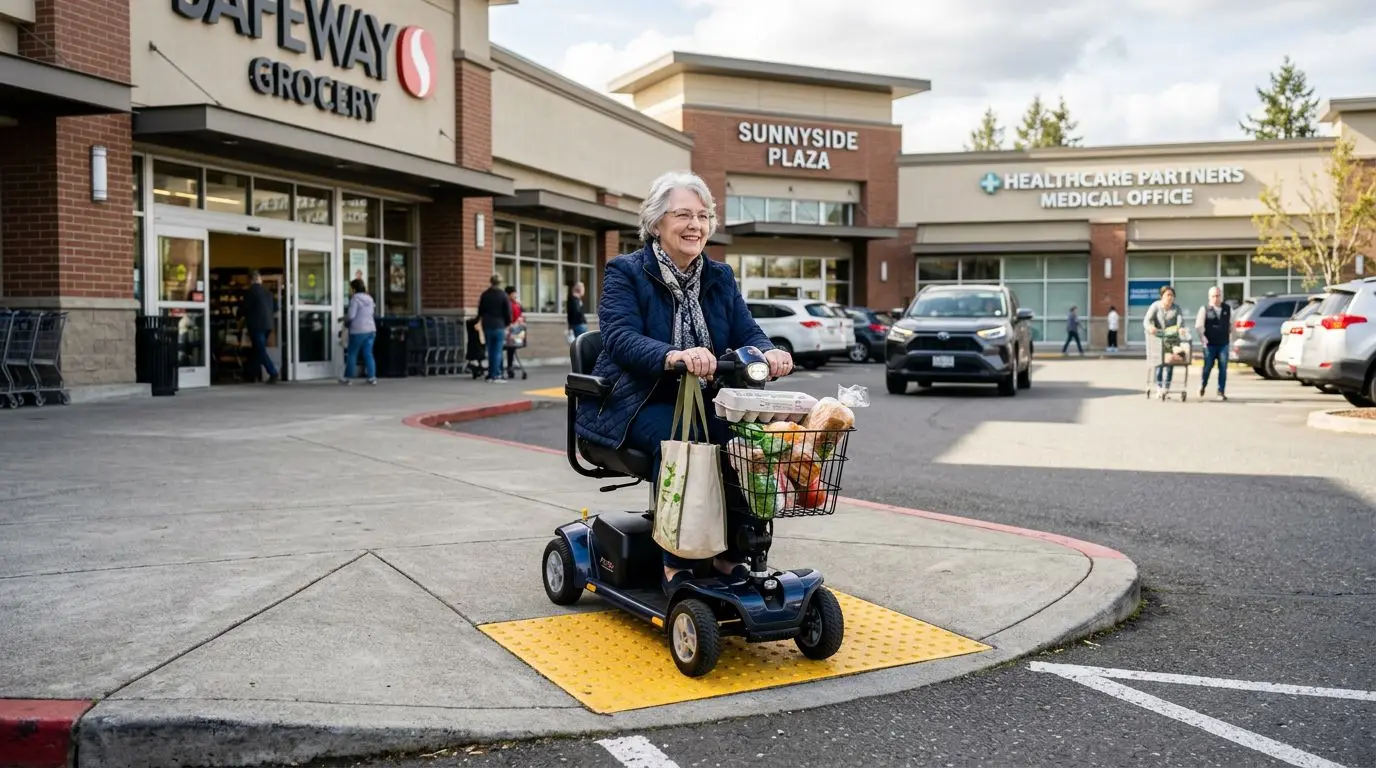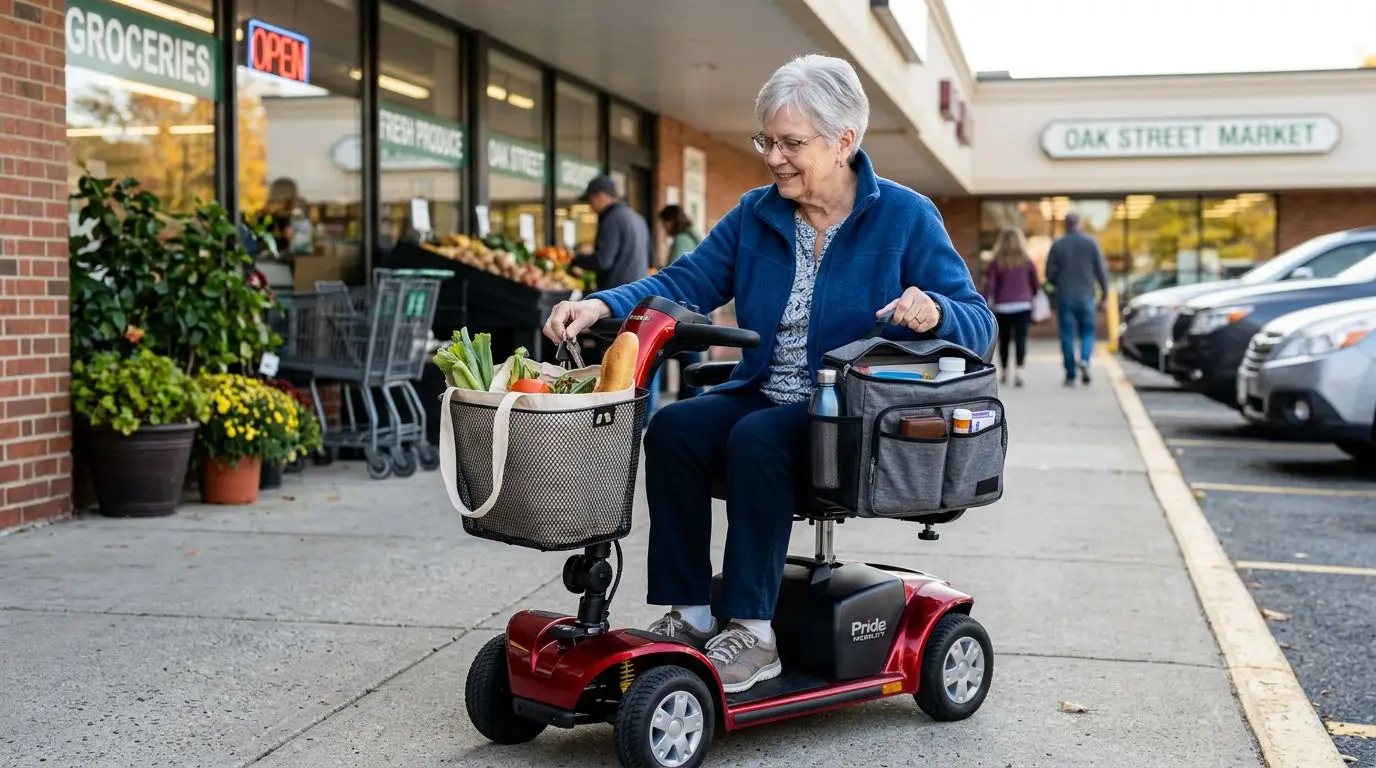
The right mobility scooter storage accessory depends on what you carry, how often you shop, and where the storage sits on the scooter. For quick errands, a front basket or tiller bag is usually the easiest to reach. For bulkier grocery trips, rear storage may hold more, while armrest bags and under-seat compartments work best for small personal items.
Choose storage that fits your scooter, stays within weight limits, does not block controls or lights, and keeps heavier items low and secure. Bags provide weather protection and privacy; baskets provide structure, airflow, and quick access.
Storage choices at a glance: 5 common scooter options
Most scooter storage falls into five everyday categories: front baskets, rear baskets, armrest bags, tiller bags, and under-seat storage. Each solves a different problem. A 6-inch-tall bottle of water, a 10-inch tablet, and a 5-pound bag of groceries do not fit the same way, so it helps to start with the shape and weight of your usual cargo.
The table below compares the main options without relying on any specific brand or model. Capacities vary by scooter and accessory, so use these as typical shopper guidelines rather than fixed limits.
| Storage type | Best everyday use | Typical load range | Access while seated | Main caution |
|---|---|---|---|---|
| Front basket | Small groceries, mail, a light jacket | Often about 5–10 lb | Usually easy | Can affect steering if overloaded |
| Rear basket | Bulkier groceries, larger bags, folded items | Often about 10–25 lb | Usually requires stopping or twisting | Can change rear clearance and scooter length |
| Armrest bag | Phone, keys, wallet, glasses, medication organizer | Often about 1–5 lb | Very easy | May interfere with arm movement or transfers |
| Tiller bag | Small personal items, paperwork, snacks | Often about 1–5 lb | Very easy | Must not cover controls, horn, or display |
| Under-seat storage | Compact valuables or backup items | Varies widely; often small volume | Usually not while driving | Limited by seat design and battery location |
Front storage is convenient because it stays in your line of sight. Rear storage helps when you need more volume. Side and tiller bags are best for items you want close at hand, not for heavy shopping loads.
Who each storage accessory is best for
A useful way to choose is to picture one ordinary trip: maybe a 20-minute visit to the pharmacy, a weekly grocery run, or a ride through a senior community campus. Once you know what you carry most often, the decision gets much easier.
Front baskets: best for light, frequent errands
A front basket works well for people who carry a few predictable items: a small grocery bag, mail, a book, or a light rain shell. Many front baskets are roughly the size of a small shopping basket, often around 10–16 inches wide, though exact dimensions vary. They are easy to see and easy to reach when the scooter is stopped.
Front baskets are not ideal for heavy canned goods, large water bottles, or a full load of groceries. Too much weight at the front can make steering feel different, especially on a 3-wheel scooter or uneven pavement. Keep front loads modest and balanced.
Rear baskets: best for bulkier shopping
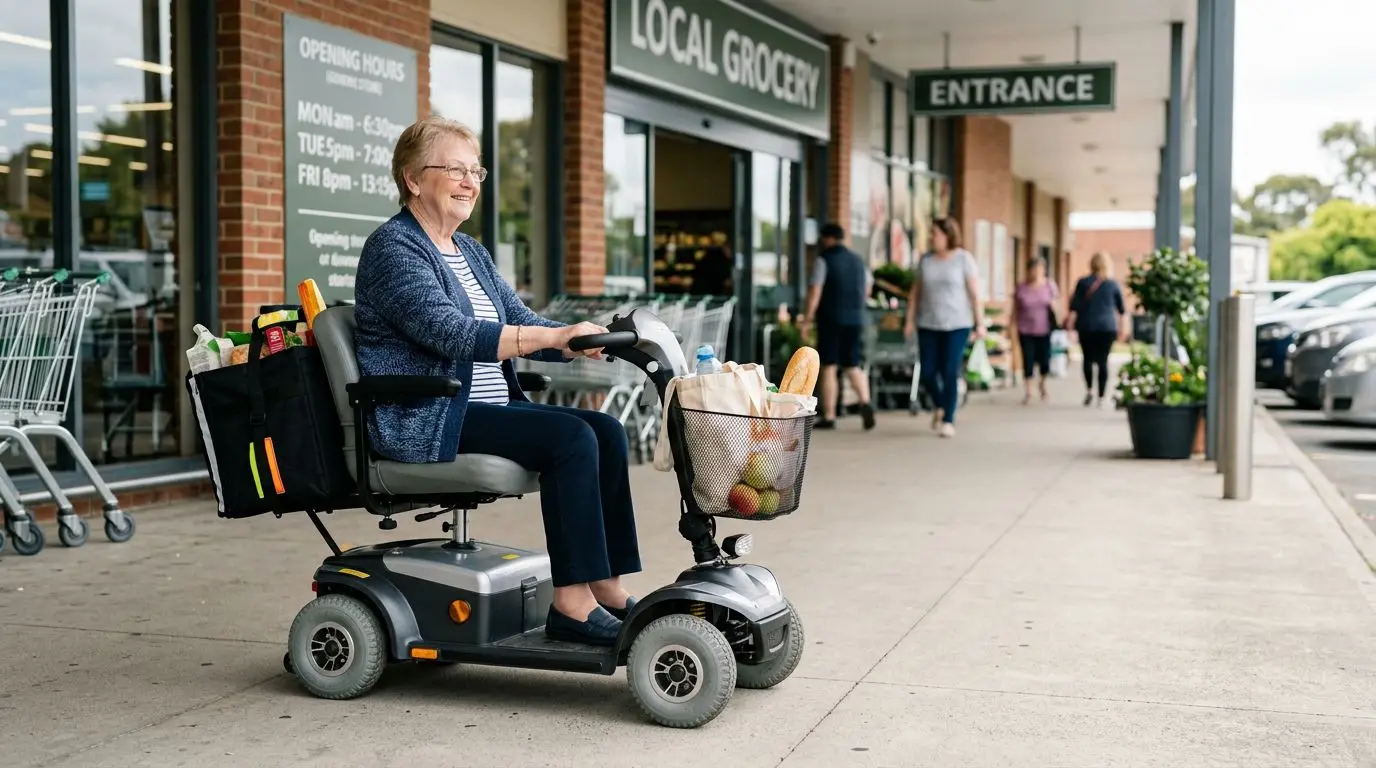
Rear baskets are usually better for larger items because they sit behind the seat and may offer more usable space. They can be helpful for a grocery bag, a larger purse, or a folded jacket. Some rear storage mounts to a seat post or rear accessory receiver, so fit matters.
The trade-off is access. If you have limited shoulder rotation or balance concerns, reaching behind you may be awkward. Rear baskets also add length, sometimes several inches or more, which can matter in elevators, tight apartment hallways, and store aisles that are only 36 inches wide.
Armrest bags: best for personal essentials
Armrest bags are handy for small items you want within reach: keys, phone, tissues, reading glasses, a wallet, or a compact medication case. Many attach with hook-and-loop straps and hang on the outside of the armrest. That makes them convenient, but it also means they should stay light.
They are not a substitute for a shopping basket. A bag that bulges outward by 3 or 4 inches can catch on door frames, counters, or chair arms. If you transfer sideways from your scooter, make sure the bag does not block your hand placement or snag your clothing.
Tiller bags: best for quick-reach items
A tiller bag mounts near the steering column, often facing the rider. It is a good place for a phone, note card, pen, small snack, or sunglasses. For many riders, this is the easiest storage to access without twisting.
The key issue is visibility and access to controls. A bag should not cover the speed dial, battery indicator, key switch, horn, lights, or any lever you use to drive. Even a small bag can become a problem if it swings into the throttle area during a turn.
Under-seat storage: best for compact backup items
Under-seat storage is useful when available, but it is usually limited. Depending on scooter design, the area beneath the seat may be used for batteries, seat hardware, or wiring. When there is a small compartment, it often works best for a poncho, lock, charging cord, or compact personal item.
This type of storage is less convenient during a trip because you may need to stop, turn the seat, or stand to access it. For items you need every 5 minutes, choose a tiller or armrest bag instead.
Bags vs. baskets: the trade-offs that matter on a 3–5 mile errand
For daily errands, the choice between a bag and a basket usually comes down to protection, structure, visibility, and ease of cleaning. A basket keeps items open and easy to drop in. A bag adds privacy and may help keep items from bouncing out.
| Feature | Bags | Baskets |
|---|---|---|
| Weather protection | Better if zippered or water-resistant | Limited unless covered |
| Quick loading | Moderate; zippers or flaps take time | Excellent; drop items in quickly |
| Item visibility | More private | Easy to see contents |
| Shape support | Soft sides may sag | Rigid shape supports groceries better |
| Cleaning | Fabric may need spot cleaning | Plastic or metal often wipes clean |
| Security | Zippers can reduce casual visibility | Open baskets expose contents |
If you run short errands of 1 or 2 miles and carry only a wallet and phone, a small bag may be enough. If you regularly pick up produce, boxed goods, or pharmacy items, a basket may be easier because it holds its shape.
Think realistically about weather. A water-resistant bag may protect papers during a 10-minute drizzle, but it should not be treated like a waterproof safe unless the manufacturer clearly rates it that way. Open baskets can work well in dry climates, while a simple cover or inner tote may help when rain is common.
Privacy matters too. A basket lets you see everything at a glance, but everyone else can see it too. A zippered bag is better for a wallet, house keys, or medical paperwork, though valuables should still stay with you whenever possible.
How to choose and measure before you buy
Before buying any scooter storage accessory, measure the scooter and your common cargo. A tape measure, a bathroom scale, and 10 minutes can prevent a poor fit.
1. Measure the mounting area
For a front basket, measure the width and height of the front mounting bracket or the space available near the tiller. For a rear basket, measure the distance from the back of the seat to any rear bumper, anti-tip wheels, or accessory receiver. Leave clearance for turning, seat swivel, and battery access.
If your scooter folds or disassembles for transport, check whether the storage accessory must be removed first. A basket that adds 8 inches to the rear may be fine at home but frustrating when loading the scooter into a vehicle.
2. Measure your usual items
List the items you carry in a normal week. A half-gallon of milk weighs about 4 lb. A gallon weighs about 8.3 lb. A small pharmacy bag may weigh less than 1 lb, while a bag with canned goods can get heavy fast. This matters because scooter storage limits are often lower than people expect.
Do not estimate by volume alone. A bulky loaf of bread is light; three cans of soup are compact but heavy. Put your usual bag on a scale and use that number when comparing storage options.
3. Check attachment style
Common attachment methods include brackets, clamps, straps, hooks, and seat-post mounts. Rigid baskets often need a compatible bracket. Soft bags may use straps, but straps should be snug and should not wrap around moving parts, exposed wiring, brake cables, or throttle components.
If you cannot attach the accessory without blocking controls or stressing the scooter frame, it is not the right fit. Universal does not always mean appropriate for every scooter.
4. Test reach and transfers
Sit on the scooter and mimic your normal routine. Can you reach the zipper? Can you drop mail into the basket without leaning far forward? Can you transfer on and off without the bag catching your leg or walker?
A good storage setup should reduce effort, not create a new obstacle. If possible, test with a 3–5 lb load before using it for a full errand.
Safety, weather, and weight limits to check
Storage affects how a scooter handles. Even a 10 lb load can change balance if it is placed high, far forward, or off to one side. The safest storage setup keeps weight within the accessory and scooter limits, secured against movement, and away from controls.
Keep weight low and centered
Heavy items should sit as low and centered as possible. Avoid hanging a heavy tote from the tiller or handlebars. That can interfere with steering and may pull the scooter off line during turns. If you need to carry heavier groceries, rear storage or a stable basket is usually better than a dangling bag.
Do not block lights, reflectors, or controls
Check the scooter from the front, sides, and rear. Storage should not cover headlights, rear reflectors, turn signals if equipped, or the visibility of the scooter itself. On a tiller, keep the display, speed control, key, and horn fully accessible. A blocked horn can be a real problem in a crowded store aisle.
Secure loose items
Open baskets are convenient, but items can bounce or slide, especially over sidewalk cracks or curb cuts. Use a small inner tote, elastic cover, or zippered pouch for loose items. Avoid placing canes, umbrellas, or long objects where they can stick out more than a few inches and catch on doorways.
Plan for rain and heat
If you ride in rainy conditions, choose materials that dry quickly and avoid storing electronics in an open basket. If you live in a hot climate, remember that a dark bag in direct sun can heat up quickly during a 30-minute stop outside a store. Do not leave heat-sensitive items, medications, or electronics exposed.
Follow the scooter manual
The scooter manual is the final authority for accessory mounting and weight limits. Some scooters are not designed for rear baskets. Others may have a front basket bracket but limited load capacity. Staying within those limits protects handling, battery access, and the scooter frame.
Practical storage setups for 4 common daily errands
Many riders do best with a small combination rather than one oversized accessory. The goal is not to carry the most possible weight. It is to carry the right items safely for the trip you actually take.
Pharmacy or medical office visit
A tiller bag plus a small front basket usually works well. Keep identification, insurance cards, phone, and paperwork in the bag. Use the basket for a light pharmacy purchase or folded jacket. If documents are private, choose a zippered pouch rather than leaving them visible in an open basket.
Small grocery run
A front basket may be enough for bread, produce, and a few light items. For heavier goods, use rear storage if your scooter supports it and stay within the stated limit. Try to split weight evenly instead of putting all heavy items on one side.
Community room, library, or mail pickup
An armrest bag can be ideal for keys, phone, glasses, and a library card. A front basket can hold books or mail, but remember that books are dense. Three hardcover books may weigh 5 lb or more.
Outdoor ride or longer campus trip
For a ride lasting 30–60 minutes, a water bottle, light layer, phone, and small repair or charging item may be enough. A tiller bag or under-seat compartment keeps the essentials contained. If using a basket, secure loose items so they do not bounce out on uneven paths.
Buyer checklist: 10 details to confirm
Use this checklist before choosing between a bag and a basket. It takes only a few minutes and can prevent returns, unsafe loading, or daily frustration.
- Weight limit: Confirm the accessory limit and the scooter’s approved storage limit.
- Dimensions: Measure width, height, depth, and added scooter length in inches.
- Mounting method: Check whether it uses straps, brackets, hooks, clamps, or a rear receiver.
- Control clearance: Make sure the throttle, horn, display, key, and lights remain clear.
- Transfer clearance: Confirm the bag or basket does not interfere with getting on or off.
- Turning clearance: Check tight turns near furniture, counters, and 36-inch doorways.
- Weather needs: Decide whether you need open airflow, a cover, or a zippered bag.
- Cleaning: Consider whether fabric, plastic, or metal is easiest for your use.
- Security: Use zippered storage for private items and avoid leaving valuables unattended.
- Transport: Check whether the accessory must be removed before folding, lifting, or disassembling the scooter.
FAQ: mobility scooter bags and baskets
Is a bag or basket better for groceries?
A basket is usually better for groceries because it holds its shape and is easy to load. For heavier grocery items, rear storage may be more practical than a front basket, but always stay within the scooter and accessory weight limits.
Can I hang a shopping bag from the scooter tiller?
It is not recommended to hang a heavy shopping bag from the tiller. A dangling load can affect steering, swing into the controls, or catch on nearby objects. Use a proper basket or secured bag instead.
How much weight can a mobility scooter basket hold?
It varies. Many front baskets are intended for light loads, often in the 5–10 lb range, while some rear baskets may handle more. Check the scooter manual and the accessory instructions rather than guessing.
Are under-seat compartments secure?
Under-seat storage can hide small items from view, but it should not be treated as theft-proof. It is best for compact backup items, not valuables you would be upset to lose. Keep wallets, keys, and phones with you when leaving the scooter.
Will a rear basket make my scooter harder to drive?
It can change the scooter’s length and rear clearance, especially in elevators, narrow hallways, and tight store aisles. If loaded too heavily or unevenly, it can also affect handling. Test it slowly in a familiar area before using it on a busy errand.
Can I use more than one storage accessory?
Yes, many riders use a small combination, such as a tiller bag for personal items and a basket for errands. The important point is total weight, secure attachment, and clear access to controls, lights, and transfers.
Frequently asked questions
Is a bag or basket better for groceries? +
A basket is usually better for groceries because it holds its shape and is easy to load. For heavier grocery items, rear storage may be more practical than a front basket, but always stay within the scooter and accessory weight limits.
Can I hang a shopping bag from the scooter tiller? +
It is not recommended to hang a heavy shopping bag from the tiller. A dangling load can affect steering, swing into the controls, or catch on nearby objects. Use a proper basket or secured bag instead.
How much weight can a mobility scooter basket hold? +
It varies. Many front baskets are intended for light loads, often in the 5–10 lb range, while some rear baskets may handle more. Check the scooter manual and the accessory instructions rather than guessing.
Are under-seat compartments secure? +
Under-seat storage can hide small items from view, but it should not be treated as theft-proof. It is best for compact backup items, not valuables you would be upset to lose. Keep wallets, keys, and phones with you when leaving the scooter.
Will a rear basket make my scooter harder to drive? +
It can change the scooter’s length and rear clearance, especially in elevators, narrow hallways, and tight store aisles. If loaded too heavily or unevenly, it can also affect handling. Test it slowly in a familiar area before using it on a busy errand.
Can I use more than one storage accessory? +
Yes, many riders use a small combination, such as a tiller bag for personal items and a basket for errands. The important point is total weight, secure attachment, and clear access to controls, lights, and transfers.
Related guides
Mobility Scooter Storage Accessories: Baskets, Bags, Under-Seat Space, and Weight Balance
15 min read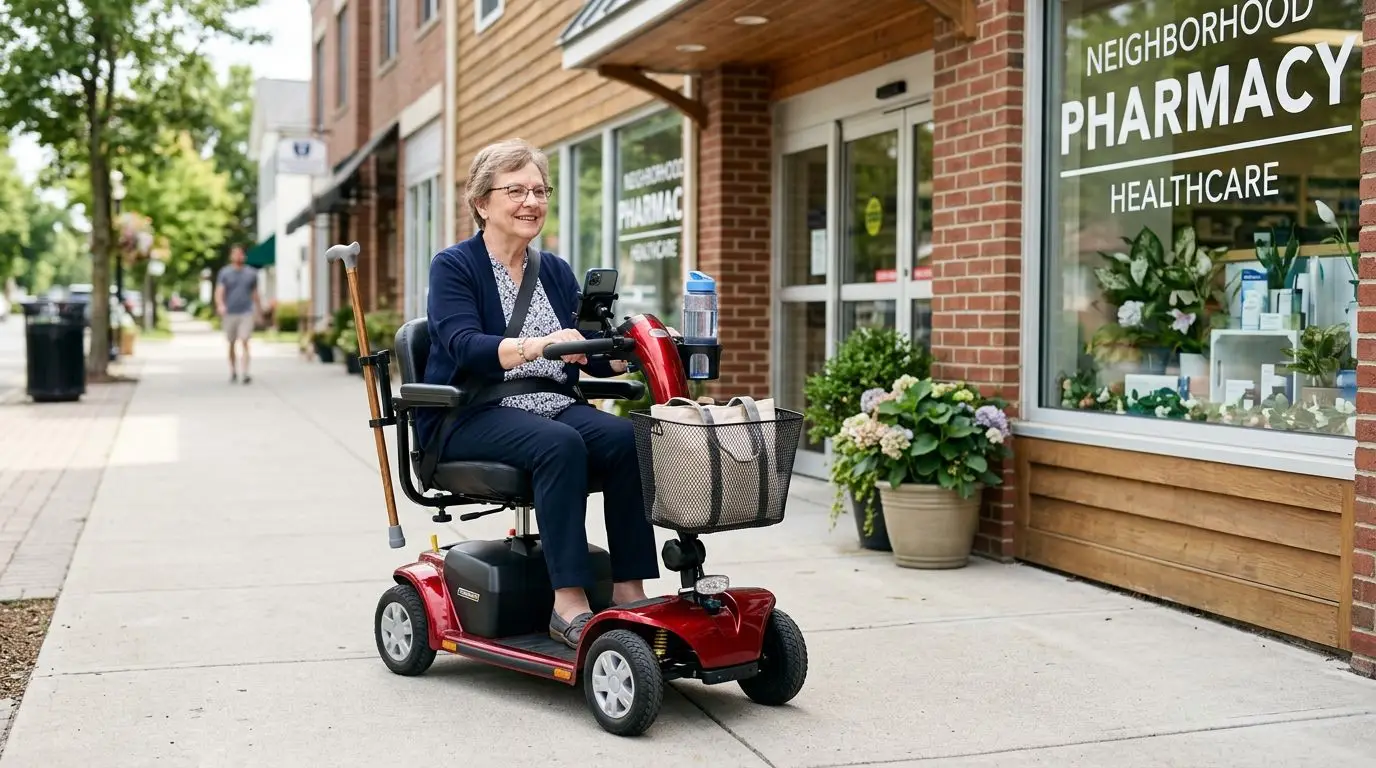
Mobility Scooter Attachments for Errands and Independence
15 min read
Best Mobility Scooter Accessories for Safety, Storage, and Everyday Comfort
13 min read