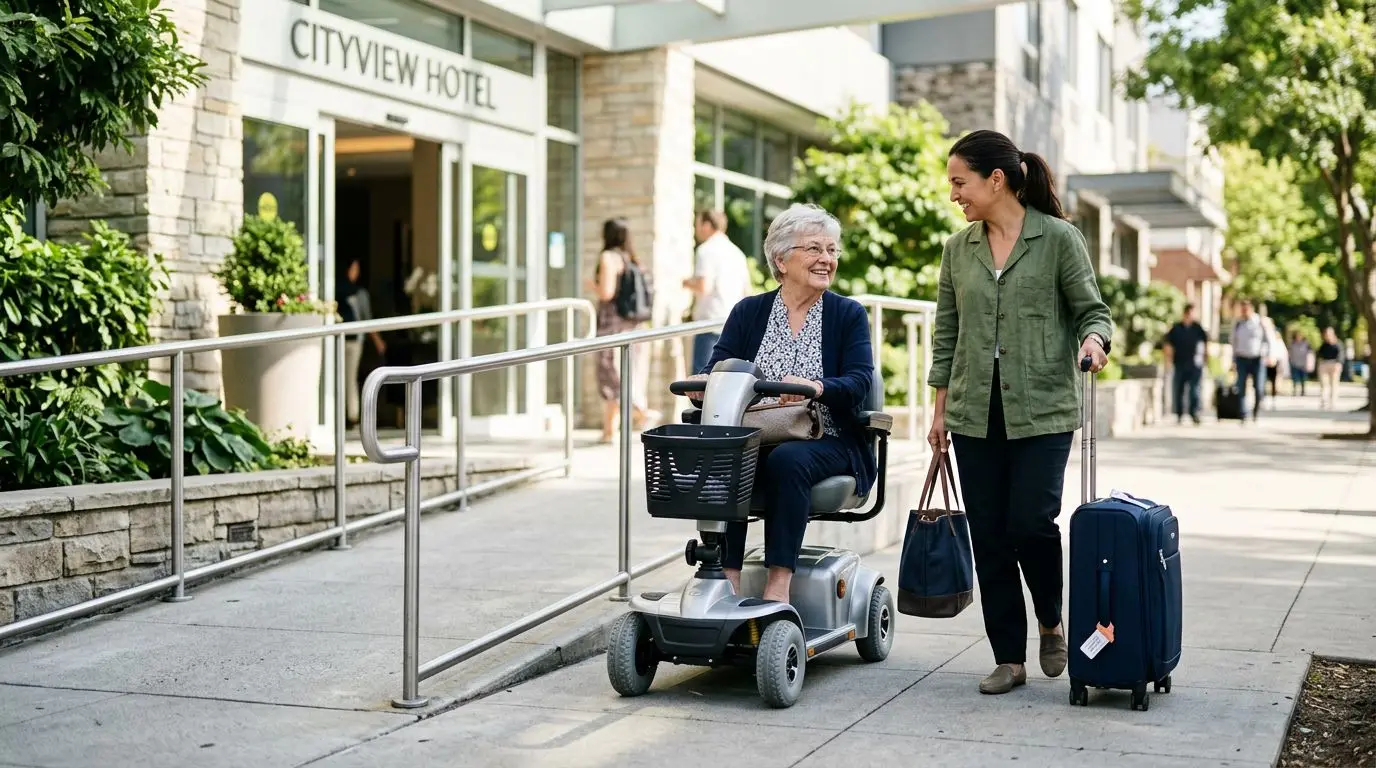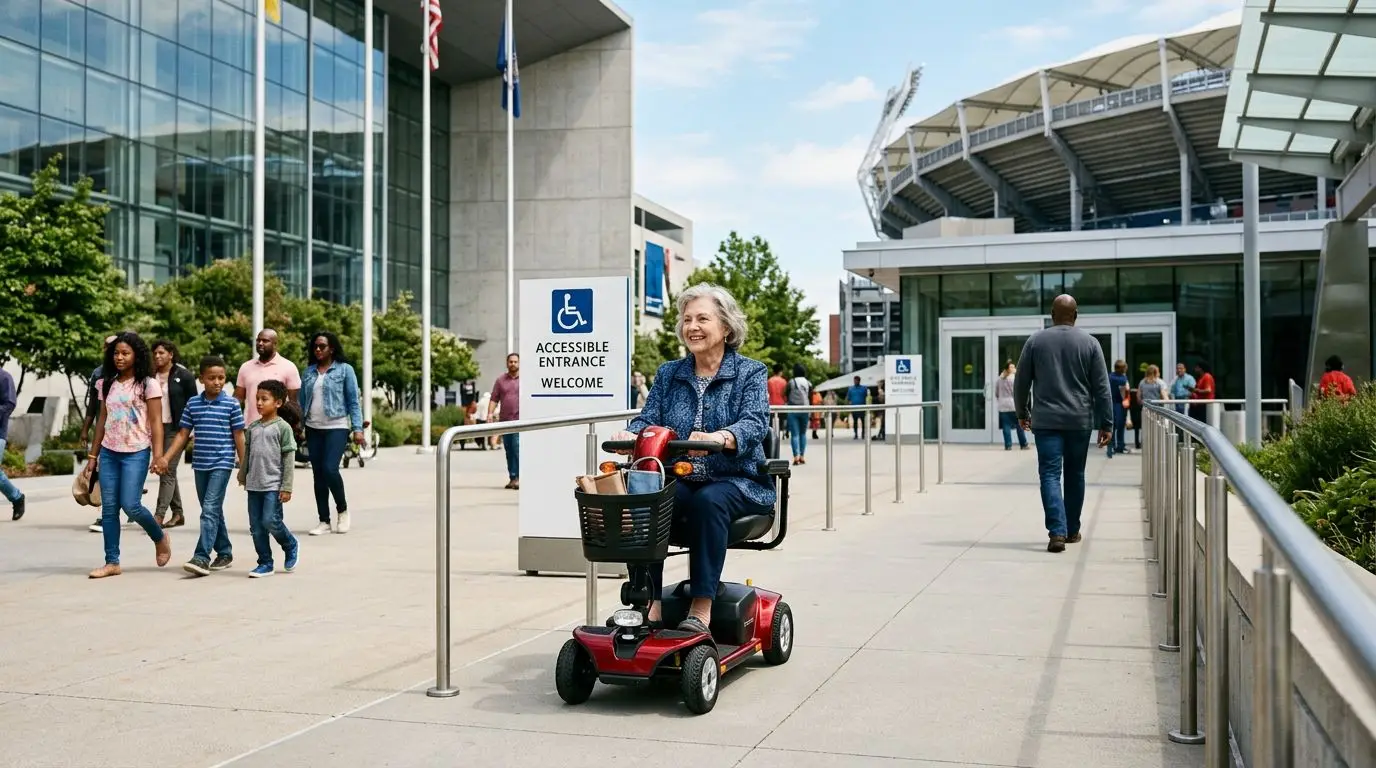
Yes, you can usually bring a mobility scooter to theme parks, stadiums, museums, zoos, convention centers, and similar public venues in the United States. Most public attractions must allow mobility devices in visitor areas, unless a specific device creates a legitimate safety concern or cannot physically fit in a certain space. The main thing is to confirm scooter size rules, accessible routes, queue procedures, seating policies, rental availability, and battery or charging restrictions before you arrive.
Policies can vary widely from one venue to the next. A compact travel scooter may glide through a museum gallery, while a larger full-size scooter may be harder to use in older buildings, crowded food courts, or tight stadium concourses. Planning ahead helps you avoid surprises at security, ticketing, ride entrances, elevators, and accessible seating areas.
What most venues allow under ADA rules: 3-wheel and 4-wheel scooters
In the U.S., mobility scooters are generally treated as mobility devices when they are used by a person with a mobility disability. Under federal accessibility rules, public accommodations such as amusement parks, arenas, museums, theaters, hotels, restaurants, and event venues typically must allow wheelchairs and powered mobility devices in visitor areas where the public is allowed to go.
That does not mean every scooter can go everywhere. A venue may set reasonable safety rules based on actual risks, such as a narrow historic hallway, a steep backstage ramp, a crowded ride platform, or an evacuation route that must stay clear. But a blanket “no scooters” policy is usually not appropriate in spaces open to the public.
Most visitor scooters have 2 common layouts: 3-wheel scooters and 4-wheel scooters. A 3-wheel scooter often has a tighter turning radius, which can help in gift shops, restrooms, elevators, and queue switchbacks. A 4-wheel scooter may feel steadier outdoors, especially on pavers, mild slopes, or long stadium approaches.
Venues may also separate standard mobility scooters from unusual powered devices. A conventional seated scooter with 3 or 4 wheels is usually easier to approve than a recreational vehicle, gas-powered device, or oversized personal transporter. Gas-powered scooters are generally not appropriate indoors because of fumes and fire risk.
Staff should not ask detailed medical questions. They may ask whether the device is needed because of a mobility disability if the need is not obvious, but they should not require you to explain your diagnosis. For most visitors, a calm, simple answer is enough: “Yes, I use this for mobility.”
Common size limits: width, length, turning space, and weight
Size is the most common practical issue. Many public access standards are built around a clear floor space of about 30 inches by 48 inches for a wheelchair position. That does not mean every scooter must be exactly that size, but it does explain why venues often design wheelchair seating areas, elevators, turnstiles, and queue gates around similar dimensions.
A typical travel scooter may be around 21 to 23 inches wide. A mid-size scooter may be closer to 24 to 27 inches wide. A larger outdoor scooter can be 28 inches wide or more and may be longer than 50 inches. If your scooter is wide, long, or has a large front basket, it may still be allowed, but some spaces may require an alternate route.
Door clearances matter. Accessible doorways commonly provide at least 32 inches of clear width when the door is open. Many accessible routes are at least 36 inches wide, but temporary barriers, merchandise displays, stanchions, crowds, and trash cans can reduce usable space. Stadiums and amusement parks also use security screening lanes, and some lanes may be narrower than the main entrance gate.
Weight can matter for lifts, shuttles, tram boarding platforms, and older elevators. A scooter plus rider can easily total several hundred pounds. If you plan to use a venue shuttle, ask about the lift capacity and whether scooters are permitted while occupied. Some shuttle operators may ask you to transfer to a seat while the scooter is secured.
| Scooter type | Typical venue fit | Watch for |
|---|---|---|
| Compact travel scooter | Often easiest in museums, queues, elevators, and crowded concourses | Smaller battery range and less comfort for full-day outings |
| 3-wheel mid-size scooter | Good for tight turns in shops, food courts, and indoor attractions | May feel less steady on uneven outdoor surfaces |
| 4-wheel mid-size scooter | Balanced choice for mixed indoor and outdoor venues | Needs more turning room than many 3-wheel scooters |
| Large outdoor scooter | Comfortable for long distances at large parks, fairs, and campuses | May be difficult in narrow queues, galleries, elevators, or seating decks |
Theme parks and attractions: queues, rides, and 6-hour days
Theme parks and large attractions can involve a lot of distance. A full park day may last 6 to 10 hours, and the trip from parking to security to the far side of the property can be a major challenge. Bringing your own scooter can make the day easier because you already know how it handles, how long the battery lasts, and which seating position is comfortable.
Most theme parks allow mobility scooters on main walkways, in restaurants, in shops where space allows, and through accessible entrances. Ride procedures are more complicated. Some queues can accommodate scooters all the way to the boarding area. Others use a separate accessible entrance, return time, elevator, or transfer zone because the standard queue has stairs, tight switchbacks, moving walkways, or emergency egress limits.
In many cases, you will need to transfer from the scooter to the ride vehicle. Staff may provide instructions, slow a moving platform, or direct you to a loading area, but they usually cannot physically lift you. If you cannot transfer independently or with help from your companion, ask before waiting in line. Some attractions may allow a manual wheelchair closer to the ride vehicle when scooters are too large for the loading platform.
Battery range is important at theme parks. If your scooter’s real-world range is 8 miles on flat ground, hills, frequent stopping, heavier loads, heat, and older batteries can reduce that range. Carry your charger if the venue permits it, but do not assume you can plug in anywhere. Charging outlets may be limited to first aid, guest services, or specific charging areas, and staff may not allow cords across public walkways.
Rain policies matter, too. Many scooters are not designed for heavy rain. Bring a seat cover, tiller cover, and a small towel if weather is possible, but avoid covering lights or controls in a way that affects safe operation. If storms close outdoor rides, indoor areas may get crowded quickly.
Stadiums and arenas: accessible seating, elevators, and 30-inch spaces
Stadiums and arenas usually permit mobility scooters, but seating logistics are often the biggest issue. Accessible seating locations are designed for wheelchairs and mobility devices, often with a level space and a companion seat nearby. Many wheelchair spaces are planned around the 30-by-48-inch clear floor space concept, so a very long scooter may not fit neatly without blocking an aisle.
Buy accessible seating in advance whenever possible. Do not assume you can buy a standard seat and park your scooter nearby. Fire codes require aisles, vomitories, railings, and exits to stay clear. If you plan to transfer from your scooter to a fixed seat, ask whether the venue has scooter storage near your section and whether staff can direct you to it.
Elevators are another key detail. Some stadiums have only a few public elevators serving upper levels, and lines can be long before and after an event. Arrive 45 to 60 minutes early if you need an elevator, accessible entrance, or assistance finding your section. After the event, waiting 15 to 30 minutes may be more comfortable than trying to move through the heaviest crowd.
Security screening can affect scooters as well. You may be asked to pass through an accessible screening lane, open baskets or under-seat storage, and remove prohibited items. Stadium bag policies often limit bag size, even for visitors using scooters, though medically necessary items may have a separate screening process. Call ahead if you carry oxygen, medications, tools, or battery-related equipment.
Outdoor stadiums add surface and slope concerns. Long ramps, textured concrete, bridge plates, and crowded concourses can drain batteries faster than smooth indoor floors. Keep speed low in crowds. A walking pace, often around 2 to 3 miles per hour, is safer and easier for pedestrians to predict.
Museums, theaters, zoos, fairs, and historic sites: 36-inch routes are common
Museums and cultural venues often welcome scooters, but older buildings may have tight galleries, small elevators, heavy doors, and uneven thresholds. Many accessible routes aim for at least 36 inches of clear width, yet exhibit cases, benches, velvet ropes, and visitors standing still can make the usable route narrower. A compact scooter is usually easier to maneuver in these spaces.
Some museums restrict scooters in delicate galleries if turning space is limited or displays are close to the path of travel. They may offer a manual wheelchair instead, or they may suggest a specific route through the building. This is usually about protecting fragile objects and keeping visitors safe, not excluding scooter users.
Theaters and performing arts venues work more like stadiums, just on a smaller scale. You may need wheelchair-accessible seating, a transfer seat with removable armrests, or a scooter storage plan. Ask whether accessible seating is on the orchestra level, balcony, or another section, because some older theaters have limited elevator access.
Zoos, gardens, fairs, and outdoor festivals can be scooter-friendly, but terrain matters. Gravel paths, grass overflow parking, temporary cable covers, steep hills, and mud can create real barriers. A 4-wheel scooter may be more comfortable on outdoor paths, while a compact scooter may struggle with soft ground or long grades.
Historic sites deserve extra planning. A house built 150 years ago may not have elevator access to every floor, and narrow doorways may prevent scooter entry into some rooms. Many sites provide photo books, videos, virtual tours, or guided interpretation when an upper level or small room is not accessible.
Rentals versus bringing your own scooter: 1 deposit can change the plan
Many major attractions offer mobility scooter rentals, but availability is often limited. Rentals may be first come, first served, and a deposit, photo ID, or credit card hold may be required. Prices and rules vary by venue, so it is better to confirm directly than rely on old online comments.
Bringing your own scooter gives you control. You know the seat height, steering feel, battery condition, turning radius, and comfort level. That can be especially helpful for a long day, a multi-building museum campus, or a stadium event where accessible parking may still be far from your seat.
Renting can make sense if you are traveling, if your scooter is too large for the venue, or if you only need help for part of the day. Some venues also rent manual wheelchairs, which may be easier for tight indoor spaces if you have a companion who can push. Rental scooters may not be allowed outside the property boundary, including into nearby parking lots, hotels, or transit stations.
| Option | Best for | Questions to ask |
|---|---|---|
| Bring your own scooter | Visitors who need consistent support all day | Are there size limits, charging locations, and accessible entrances? |
| Rent on site | Visitors who can walk short distances but need help inside | How many rentals are available, and can one be reserved? |
| Use a manual wheelchair | Tight museums, ride platforms, or older buildings | Is a companion needed, and are chairs available at every entrance? |
| Use venue shuttle assistance | Large parking lots, campuses, or fairgrounds | Can the shuttle carry scooters, and what is the lift capacity? |
If you rent, inspect the scooter before leaving the rental desk. Check battery level, brakes, horn, speed control, seat swivel, and whether the charger is included. Report problems immediately so you are not blamed for pre-existing damage.
Who it’s best for: visitors who need 15 minutes or more of walking relief
Bringing a mobility scooter to a public attraction is best for people who can enjoy the venue more safely and comfortably with seated mobility. That may include someone who cannot stand in a 30-minute queue, walk from distant parking, manage repeated ramps, or keep pace with a group over several hours.
A scooter can also help conserve energy. Many visitors can walk short distances but struggle with a full day of stop-and-go movement. Using a scooter does not mean you must stay seated the entire time. Some people park it near a bench, exhibit, or accessible viewing area and stand or walk briefly when they choose.
It may not be the best choice for every outing. If a venue is extremely crowded, has many stairs, uses shuttle buses with limited lift space, or includes narrow historic rooms, a smaller mobility aid or rented manual wheelchair may work better. If you have new balance, vision, cognition, or reaction-time concerns, practice driving in a quiet area before using a scooter in crowds.
Companions should plan realistically, too. A scooter user may need more time at elevators, security, accessible restrooms, and boarding areas. Building in 10 to 20 extra minutes between scheduled activities can reduce stress for everyone.
How to choose and measure before you go: 5 numbers to write down
Before visiting a major venue, measure and write down 5 numbers: scooter width, scooter length, turning radius if known, total weight with rider, and real-world battery range. These numbers make phone calls much easier. Staff can give more useful answers when you say, for example, “My scooter is 24 inches wide and 46 inches long,” instead of “It’s a normal scooter.”
Measure width at the widest point, not just the seat. Armrests, rear wheels, mirrors, baskets, and cup holders can add inches. Measure length from the front basket or tiller area to the back of the rear wheels or anti-tip wheels. If accessories can be removed, note the size with and without them.
Battery range should be realistic. Manufacturer-style range estimates are often based on ideal conditions. For a venue day, think about your actual performance on sidewalks, slopes, and stop-and-go travel. If your battery is more than 2 years old, has been stored without charging, or drops quickly under load, test it before the trip.
Check transport as well. If you are using a car lift, paratransit, hotel shuttle, rideshare-accessible vehicle, or public transit, confirm scooter rules for that part of the trip. Getting into the venue is only one part of the day.
| What to measure | Why it matters | How to use it |
|---|---|---|
| Width in inches | Doors, security lanes, queues, elevators | Ask if the narrowest public route can handle it |
| Length in inches | Accessible seating spaces and shuttle lifts | Ask if it can park without blocking aisles |
| Total weight | Lifts, ramps, platforms, older elevators | Include rider, bags, oxygen, and accessories |
| Battery range | Long days and hilly sites | Plan charging or a shorter route |
| Turning radius | Switchback queues, galleries, restrooms | Ask about alternate entrances if turns are tight |
What to confirm 24 to 72 hours before visiting
Call, email, or use the venue’s accessibility contact 24 to 72 hours before your visit. For ticketed events, earlier is better because accessible seating and rental scooters can sell out. Keep the answers in writing when possible, especially for stadiums, concerts, festivals, and timed museum entries.
Ask about the specific entrance you should use. Large venues may have accessible entrances on only certain streets, gates, or parking levels. Also ask whether security screening has a scooter-friendly lane and whether you need to arrive early.
Confirm queue procedures. At theme parks and interactive attractions, ask whether scooters can enter standard queues, whether return times are used, and whether a transfer is required for rides or exhibits. For museums, ask whether all floors are accessible by elevator and whether any galleries are too narrow for scooters.
For stadiums and theaters, confirm the seating setup. Ask whether you may remain seated on your scooter, whether a companion seat is next to you, whether you can transfer to a fixed seat, and where the scooter can be stored if you transfer. If you bought tickets through a third party, contact the venue directly to verify accessible seating.
Do not forget the practical details: accessible parking, drop-off zones, restroom locations, charging options, food service routes, re-entry rules, and emergency evacuation procedures. A 5-minute phone call can prevent a 50-minute problem at the gate.
Safety, etiquette, and battery tips for crowds of 1,000 or more
Busy venues call for patient scooter driving. In a crowd of 1,000 people or more, pedestrians may stop suddenly, step sideways, or fail to see you. Keep your speed low, use the horn sparingly, and give children, strollers, and distracted visitors extra space.
Use the lowest practical speed indoors. Fast starts and sharp turns can surprise nearby visitors and may cause tipping or collisions. On ramps, go straight up or down when possible rather than turning across the slope. Avoid carrying heavy bags on the tiller if they interfere with steering.
Charge the night before. Bring the charger if allowed, but label it with your name and phone number. If your scooter uses a removable battery, confirm whether the venue permits spare batteries and how they should be carried. Most indoor venues prefer sealed, non-spillable batteries; damaged, leaking, or modified batteries can be refused for safety reasons.
Park only where staff directs you. Blocking an aisle, exit door, fire extinguisher, or accessible restroom entrance can create a hazard and may lead staff to move the scooter. If you transfer to a seat, take the key with you.
Be courteous but firm. Most staff members want to help, but seasonal employees may not know every accessibility policy. If you receive conflicting instructions, ask for a supervisor or guest services representative instead of arguing at a crowded entrance.
FAQ: 5 common questions about scooters at public venues
Can a venue ask for proof that I need a mobility scooter?
Usually, staff should not ask for medical records, a diagnosis, or a disability ID. If the need for the device is not obvious, they may ask whether it is needed because of a mobility disability. A brief answer should be enough in most situations.
Can I stay on my scooter in accessible seating?
Often yes, if the accessible seating space can safely fit your scooter without blocking aisles or exits. Some spaces are tighter than others, especially in older theaters or stadium sections. Confirm the scooter length and width with the box office before buying tickets.
Can I take my scooter through ride queues at theme parks?
Sometimes. Many queues are accessible, but others have stairs, tight turns, moving walkways, or evacuation limits. The venue may use an alternate entrance, return time, transfer chair, or separate loading area.
What if my scooter is too large for a museum gallery or historic building?
Ask for an alternate route, staff assistance, a manual wheelchair, or accessible interpretation such as photos or video. Older buildings may not be fully accessible in every room, but staff should explain available options clearly.
Are scooter rentals guaranteed at attractions?
Not always. Many venues offer rentals on a first-come, first-served basis, and some require a deposit or ID. If you depend on a scooter, reserve one if the venue allows reservations or consider bringing your own.
Frequently asked questions
Can a venue ask for proof that I need a mobility scooter? +
Usually, staff should not ask for medical records, a diagnosis, or a disability ID. If the need is not obvious, they may ask whether the scooter is needed because of a mobility disability.
Can I stay on my scooter in accessible seating? +
Often yes, if the accessible seating space can safely fit your scooter without blocking aisles or exits. Confirm the scooter’s width and length with the venue before buying tickets.
Can I take my scooter through theme park ride queues? +
Sometimes. Some queues allow scooters, while others require an alternate entrance, return time, transfer chair, or separate loading area because of stairs, tight turns, or evacuation limits.
What should I measure before bringing a scooter to a venue? +
Write down scooter width, length, turning radius if known, total weight with rider, and real-world battery range. These numbers help staff confirm routes, seating, lifts, and storage.
Are mobility scooter rentals guaranteed at public attractions? +
Not always. Rentals may be limited, first come first served, and may require a deposit, ID, or credit card hold. Reserve ahead if possible or bring your own scooter if you depend on one.
Related guides
Mobility Scooter Rentals for US Theme Parks: On-Site vs. Off-Site Planning Guide
14 min read
Mobility Scooter Safety in Crowds: Theme Parks, Events, Airports, and Busy Sidewalks
15 min read
Mobility Scooter Access at Medical Offices, Hospitals, and Clinics
14 min read