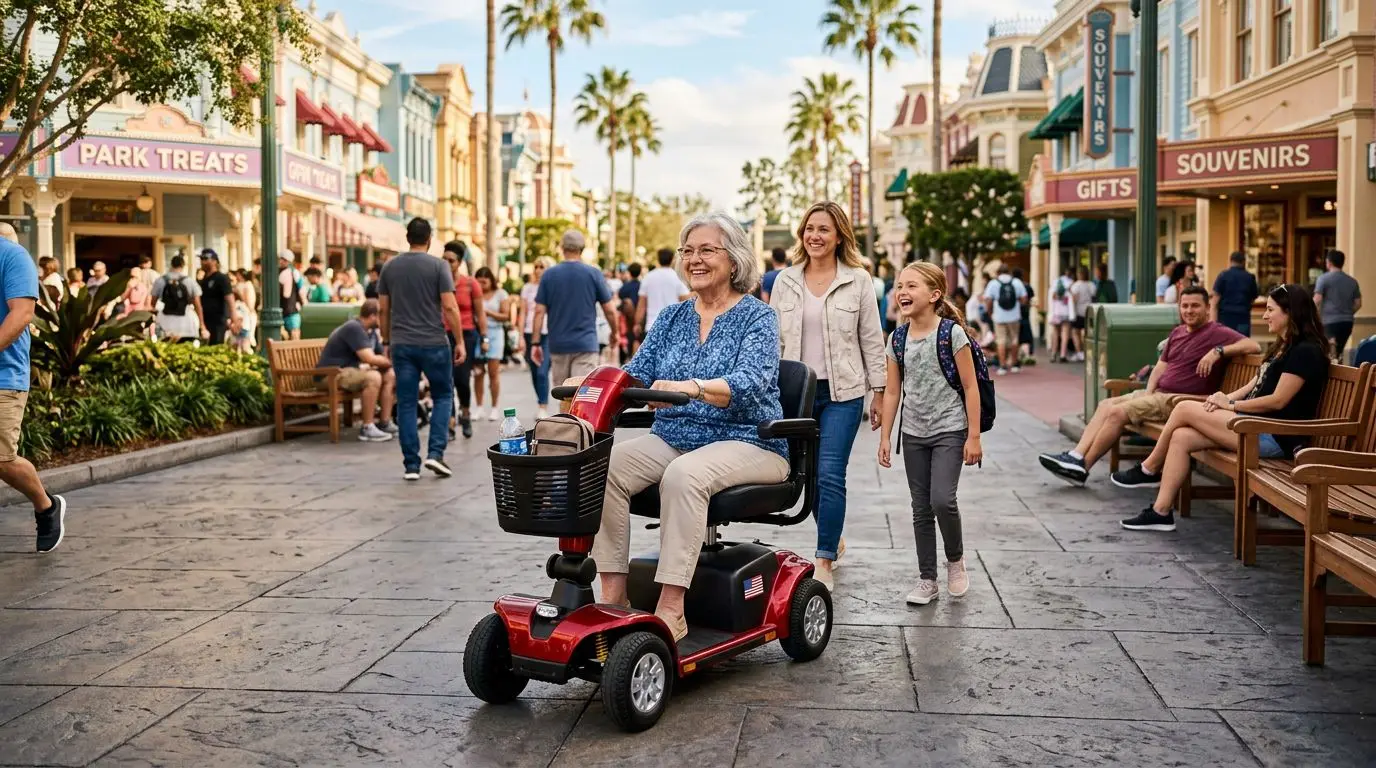
The best mobility scooter for everyday errands is the one that fits your real route: tight store aisles, parking lots, sidewalks, waiting rooms, and your vehicle or storage space at home. For most shoppers, the key decision points are turning radius, scooter width, basket capacity, seat comfort, battery range, and whether the scooter needs to be lifted into a car.
If you mainly visit grocery stores, pharmacies, medical offices, and neighborhood sidewalks, start with a compact 3-wheel or 4-wheel scooter instead of the largest model available. A scooter that turns easily within about 32 to 55 inches, stays comfortable for 30 to 90 minutes, and is practical to transport will usually be more useful than one loaded with features you rarely need.
Start With Your Weekly Errands, Not the Scooter Specs
Before comparing features, write down your most common trips during a normal week. A scooter used for 3 pharmacy visits, 1 grocery run, and 2 medical appointments has different needs than one used mainly around a retirement community or apartment building.
Think about your actual path. Do you ride from your front door to the mailbox, across a parking lot, into a store, through checkout, and back to the car? Or do you load the scooter into a trunk, assemble it at the clinic, ride 300 feet to the entrance, and wait indoors for an hour? Those details matter more than a long list of accessories.
- For indoor-heavy errands: prioritize a narrow body, tight turning radius, and simple speed control.
- For parking lots and sidewalks: look for stable tires, enough ground clearance, good lights, and a seat that does not tire your back.
- For car transport: focus on total weight, heaviest piece weight, folding or disassembly, and whether a lift is needed.
- For shopping: consider front basket size, optional rear storage, and how you will carry 10 to 20 pounds of items safely.
Do not buy only for the longest possible trip. Buy for the trip you take most often, then confirm the scooter can safely handle the occasional longer appointment day.
Compare Everyday Scooter Types: 3-Wheel, 4-Wheel, Folding, and Heavy-Duty
Most everyday mobility scooters fit into a few practical categories. Typical widths range from about 19 to 27 inches, while common turning radii can run from roughly 32 inches on compact scooters to over 60 inches on larger outdoor-oriented models.
| Type | Typical strengths | Trade-offs | Best everyday use |
|---|---|---|---|
| 3-wheel compact scooter | Tighter turns, often easier in store aisles and exam rooms | May feel less planted on uneven outdoor surfaces | Pharmacies, clinics, small stores, apartments |
| 4-wheel compact scooter | More stable feel, better for sidewalks and parking lots | Usually a wider turn than similar 3-wheel scooters | Grocery stores, medical campuses, mixed indoor and outdoor trips |
| Folding scooter | Good for travel and storage in tight spaces | Smaller seats and baskets are common | Car errands, appointments, occasional use away from home |
| Disassembling travel scooter | Breaks into manageable pieces for a trunk or back seat | Assembly takes time and hand strength | Frequent errands where a caregiver or user can lift parts |
| Heavy-duty scooter | Higher weight capacity, larger seat, stronger outdoor handling | Wider, heavier, larger turning radius | Longer outdoor routes, larger riders, rougher sidewalks |
For everyday errands, compact does not mean flimsy. It means the scooter is sized for doorways, store aisles, check-in desks, and vehicle loading. A larger scooter may feel comfortable outdoors but become frustrating inside a small medical office.
Turning Radius and Width: Why 32 to 55 Inches Matters Indoors
Turning radius is one of the most important everyday specs. It tells you how much space the scooter needs to make a tight turn. A scooter with a turning radius around 32 to 45 inches will usually be easier in pharmacies, elevators, apartment hallways, and exam-room corridors than one that needs 55 to 65 inches.
Width matters too. Many interior doorways are about 30 to 36 inches wide, and older homes or medical suites can feel tighter once chairs, trash cans, or display racks are in the way. A scooter that is 21 inches wide on paper may still need more room if mirrors, armrests, or baskets extend outward.
How to measure your home and routine stops
- Measure your narrowest doorway from trim to trim. Subtract 2 inches for safer clearance.
- Measure hallway width, especially near turns into a bedroom, bathroom, or garage.
- Check elevator depth if you live in an apartment or senior community. Some smaller elevators are easier with a compact scooter.
- At your regular clinic, notice whether you must turn around in a hallway, waiting room, or exam room.
- At the grocery store, think about end caps, checkout lanes, and seasonal displays that shrink aisle space.
A quick test can help. At home, use painter’s tape or cardboard to mark a 36-inch circle and a 48-inch circle on an open floor. This gives you a visual sense of how tight a turn really is.
Baskets and Storage: Plan for 10 to 20 Pounds of Errands
Storage is easy to underestimate. A front basket may be enough for prescriptions, mail, a small purse, or a few grocery items, but it may not hold a full shopping bag. Many scooter baskets are better suited to light loads, often in the 5 to 15 pound range depending on size and mounting.
For daily errands, storage should be secure, balanced, and reachable. Hanging heavy bags from the tiller can interfere with steering and may make the scooter feel unstable. If you routinely buy milk, canned goods, or several pharmacy items, look for a scooter that accepts safer storage options such as a rear basket, under-seat pouch, or approved accessory bag.
| Errand type | Storage need | What to look for |
|---|---|---|
| Prescription pickup | Small items, paperwork, wallet | Front basket, tiller pouch, secure personal bag |
| Grocery quick trip | One light bag, produce, bread | Deeper front basket or rear basket option |
| Medical appointment | Insurance card, jacket, documents | Basket plus under-seat or rear storage |
| Community errands | Mail, water bottle, phone | Cup holder, basket, small zippered pouch |
Keep your heaviest items low and centered whenever possible. A scooter is not a shopping cart, and overloaded storage areas can affect steering, braking, and stability.
Sidewalks, Parking Lots, and Curb Cuts: Check Ground Clearance and Tires
Everyday errands often include rougher surfaces than people expect. A typical trip may involve a 100-foot parking lot crossing, a sloped curb cut, a cracked sidewalk, and a metal threshold at a store entrance.
Ground clearance is the space between the lowest part of the scooter and the ground. Compact scooters may have only a few inches of clearance, while larger outdoor-oriented scooters may offer more. If your area has uneven sidewalks, steep driveway lips, or rough pavement, clearance and tire size become more important.
Tire style also affects comfort. Solid tires reduce flat-tire concerns and are common on many scooters, but they may transmit more bumps. Air-filled tires can feel softer on rough surfaces, though they require pressure checks and can go flat. Some scooters use foam-filled or hybrid-style tires that try to balance both needs.
- For smooth indoor floors: smaller solid tires are often adequate.
- For sidewalks and parking lots: larger tires can improve comfort over seams and shallow cracks.
- For frequent outdoor use: consider suspension, brighter lighting, and a more stable 4-wheel design.
- For steep ramps: check the scooter’s rated incline and use conservative judgment.
Most mobility scooters are not designed for curbs, grass, loose gravel, or deep potholes. Use curb cuts, slow down before surface changes, and avoid crossing sloped pavement sideways when possible.
Comfort for 30 to 90 Minutes: Seat, Arms, Controls, and Ride Feel
A scooter that feels fine for 5 minutes in a showroom may feel tiring after a 60-minute appointment day. Comfort is not just a padded seat. It includes posture, arm support, legroom, vibration, visibility, and how naturally your hands reach the controls.
Seat width and depth should support you without forcing your knees outward or making transfers difficult. Many everyday scooters use smaller seats to keep the frame compact, while larger scooters may offer wider seats and higher backs. If you have long legs, limited hip flexibility, or back discomfort, check legroom carefully before deciding.
Armrests matter during transfers and while waiting in line. Flip-up or width-adjustable arms can make it easier to sit down, stand up, and fit through narrower spaces. A swivel seat may help if you load into the scooter from a car, kitchen chair, or clinic waiting area.
Control comfort checklist
- Can you steer without hunching your shoulders?
- Can your hands operate the throttle comfortably for 10 minutes at a time?
- Is the speed dial easy to see and adjust?
- Can you read the battery indicator in daylight?
- Can you turn the key, horn, and lights on without strain?
If you have reduced hand strength, arthritis, tremor, or limited sensation, ask a qualified clinician or mobility professional which control style may be safer for you. A scooter should fit your abilities, not force you to work around them.
Transport and Storage: Know the Heaviest Piece Before You Buy
Transport needs can make or break an everyday scooter choice. Some portable scooters disassemble into several pieces, with the heaviest piece often weighing somewhere in the 30 to 60 pound range. Larger scooters may be too heavy for manual lifting and may require a vehicle lift, ramp, or van.
Do not focus only on total scooter weight. Ask how much the heaviest piece weighs, how many pieces there are, and whether you can lift each piece safely into your trunk or cargo area. A 95-pound scooter that breaks into 5 parts may be more manageable than a 70-pound folding scooter that must be lifted as one awkward unit.
| Transport setup | Good fit | Questions to ask |
|---|---|---|
| Trunk or back seat | Disassembling travel scooter | What is the heaviest piece, and will it fit through the trunk opening? |
| SUV cargo area | Folding or disassembling scooter | Can you lift it high enough without twisting? |
| Vehicle lift | Larger 4-wheel or heavy-duty scooter | Is the lift rated for the scooter weight plus accessories? |
| Home-only storage | Compact or full-size scooter | Will it fit in a hallway, garage, or charging location? |
Storage at home needs planning too. Many scooters are charged indoors or in a protected area. Measure the floor space where the scooter will park, and make sure a standard outlet is nearby. Leave room to walk around it safely, especially at night.
Battery Range for Errands: Leave a 30 Percent Safety Margin
Battery range estimates are often based on ideal conditions: moderate rider weight, smooth surfaces, good battery condition, and steady travel. Real-world range can drop with hills, cold weather, heavier loads, frequent starts and stops, and rough pavement.
For everyday errands, build in a safety margin of about 30 percent. If your typical outing is 5 miles total, a scooter rated near 8 miles may feel too close for comfort after the battery ages. A higher range can be useful, but it should not come at the expense of maneuverability or transport if those are your bigger daily needs.
Charging routine matters more than many buyers expect. Some people prefer removable batteries that can be carried indoors for charging. Others park the entire scooter near an outlet. Either way, read the charging instructions and avoid letting the battery sit fully depleted for long periods.
- Estimate the round trip distance for your longest common errand.
- Add time for detours inside large stores or medical buildings.
- Consider hills, ramps, and outdoor temperature.
- Choose range with reserve, not just enough to barely get home.
Battery performance changes over time. If range begins to drop noticeably, have the battery and charger checked rather than assuming the scooter itself has failed.
Safety Features for Stores, Crosswalks, and Waiting Rooms
Everyday scooter safety is about predictability. A typical walking speed is around 3 miles per hour, while many mobility scooters can travel faster, often around 4 to 6 miles per hour depending on design. Indoors, slower is usually safer.
Look for speed control that can be turned down in stores and clinics. A horn, reflectors, lights, anti-tip wheels, and reliable braking are practical features, not extras. Rear visibility is useful in parking lots, especially near backing vehicles.
Good habits matter just as much as equipment. Slow down before turns, avoid sudden throttle changes, and keep both feet on the platform. In stores, give pedestrians extra space because children, carts, and displays can appear suddenly.
- Use the lowest comfortable speed in crowded areas.
- Cross parking lots at marked crosswalks when available.
- Make eye contact with drivers before crossing lanes.
- Avoid carrying loose bags near the wheels or controls.
- Keep the scooter maintained, including tires, brakes, and battery connections.
If you are unsure whether a scooter is appropriate for your balance, vision, reaction time, or cognition, ask a healthcare professional for guidance. Mobility devices support independence best when they match the user’s abilities and environment.
How to Choose: A 7-Step Measuring and Test-Ride Plan
A structured test can prevent an expensive mismatch. Set aside at least 30 minutes for measuring and, if possible, 20 to 30 minutes for a test ride in conditions similar to your normal errands.
Step 1: Measure your body and seating needs
Note your height, weight, hip width while seated, and how easily you transfer. Compare these to the scooter’s weight capacity and seat dimensions. Choose capacity with reasonable margin, especially if you carry bags or oxygen equipment.
Step 2: Measure doorways and storage space
Measure your narrowest doorway, hallway turn, elevator, trunk opening, and parking spot. Write the numbers down. Guessing by eye leads to mistakes.
Step 3: Map your weekly route
List your 3 most common destinations. Include parking surface, entry ramp, sidewalk condition, elevator use, and how long you typically stay.
Step 4: Decide your transport limit
Find the maximum weight you or your helper can lift safely. If the heaviest scooter piece exceeds that number, consider a lift, ramp, delivery transport, or a lighter style.
Step 5: Test turning and backing up
Try a U-turn, a three-point turn, a doorway approach, and backing away from a counter. These are more realistic than simply driving straight down an aisle.
Step 6: Test comfort under time
Sit and drive long enough to notice pressure points. A 2-minute trial rarely reveals seat, hand, or back discomfort.
Step 7: Review service and maintenance
Ask how tires, batteries, chargers, upholstery, and brakes are serviced. Even a simple scooter needs maintenance, and local support can matter when it is part of your weekly routine.
Who It Is Best For: Match Scooter Type to Daily Errand Style
The right choice depends on where the scooter spends most of its time. A person who navigates a 900-square-foot apartment and small pharmacy needs a different setup than someone crossing a large medical campus every week.
| User situation | Best-fitting scooter traits | Why it helps |
|---|---|---|
| Apartment resident with elevators | Narrow frame, tight turning radius under about 45 inches | Easier in hallways, elevators, and small lobbies |
| Frequent clinic appointments | Comfortable seat, basket for documents, easy speed control | Supports waiting, check-in, and indoor maneuvering |
| Grocery and pharmacy errands | Stable 4-wheel feel, useful storage, good battery reserve | Handles parking lots, bags, and longer store routes |
| Caregiver-assisted car travel | Disassembles into pieces under the caregiver’s lifting limit | Makes loading and unloading more realistic |
| Rough sidewalks near home | Larger tires, more clearance, suspension if available | Improves comfort and reduces scraping on uneven surfaces |
Try not to choose based on a single feature. A very tight-turning scooter may lack outdoor comfort. A large comfortable scooter may be difficult in stores. The best everyday option balances the few features you use every day.
Common Mistakes to Avoid Before Spending $1,000 or More
Mobility scooters vary widely in cost, and many buyers spend $1,000 or more depending on size, battery, seating, and transport features. The goal is not to buy the most expensive scooter. It is to avoid paying for the wrong one.
- Buying too large: A big scooter can be comfortable outdoors but awkward in small stores and clinics.
- Ignoring the heaviest piece: If you cannot lift it, the scooter may stay home.
- Overlooking turning radius: This is one of the first specs to check for indoor errands.
- Assuming all baskets are equal: Basket size, depth, and attachment strength vary.
- Choosing range over usability: Extra range is helpful only if the scooter still fits your route.
- Skipping a real test ride: Comfort, steering, and control feel are hard to judge from photos.
When comparing options, keep your own measurements on one sheet of paper: doorway width, trunk opening, lifting limit, weekly mileage, and storage needs. Those numbers will narrow the field quickly.
FAQ: Everyday Mobility Scooter Buying Questions
What turning radius is good for stores and medical offices?
For tight indoor errands, a turning radius around 32 to 45 inches is often easier to manage. Larger scooters with a 55-inch or greater turning radius may still work in wide aisles but can be harder in exam rooms, elevators, and checkout areas.
Is a 3-wheel or 4-wheel scooter better for errands?
A 3-wheel scooter usually turns tighter, which helps indoors. A 4-wheel scooter often feels more stable on sidewalks and parking lots. If your errands are mostly indoors, consider compact 3-wheel designs; if you regularly cross pavement and curb cuts, compare compact 4-wheel options too.
How much battery range do I need for appointments and shopping?
Estimate your longest normal outing and add about 30 percent reserve. If your round trip is 5 miles including travel inside buildings, look for enough rated range that you are not returning home nearly empty.
Can I use a mobility scooter inside grocery stores?
In many stores, yes, if the scooter is small enough to maneuver safely and you operate it at low speed. Store layouts vary, so tight checkout lanes, displays, and crowded aisles may still require patience or assistance.
What should I measure before buying?
Measure your narrowest doorway, hallway turns, trunk or cargo opening, storage area, and the distance of your usual errands. Also note the maximum weight you or a helper can lift safely if transport is required.
How much storage do I need on a scooter?
For prescriptions and small items, a front basket may be enough. For grocery runs, plan for secure storage that can handle roughly 10 to 20 pounds without hanging heavy bags from the steering tiller.
Frequently asked questions
What turning radius is good for stores and medical offices? +
For tight indoor errands, a turning radius around 32 to 45 inches is often easier to manage. Larger scooters with a 55-inch or greater turning radius may work in wide aisles but can be harder in exam rooms, elevators, and checkout areas.
Is a 3-wheel or 4-wheel scooter better for errands? +
A 3-wheel scooter usually turns tighter, which helps indoors. A 4-wheel scooter often feels more stable on sidewalks and parking lots. Choose based on whether your errands are mostly indoors or include frequent outdoor pavement and curb cuts.
How much battery range do I need for appointments and shopping? +
Estimate your longest normal outing and add about 30 percent reserve. Real-world range can be lower than the rated range because of hills, rider weight, starts and stops, cold weather, and battery age.
Can I use a mobility scooter inside grocery stores? +
In many stores, yes, if the scooter is small enough to maneuver safely and you operate it at low speed. Tight checkout lanes, displays, and crowded aisles may still require extra care or assistance.
What should I measure before buying a mobility scooter? +
Measure your narrowest doorway, hallway turns, elevator if used, trunk or cargo opening, storage space, and usual errand distance. Also note the heaviest scooter piece you or a helper can safely lift.
How much storage do I need on a mobility scooter? +
For prescriptions and small items, a front basket may be enough. For grocery runs, plan for secure storage that can handle roughly 10 to 20 pounds without hanging heavy bags from the steering tiller.
Related guides

Mobility Scooters for Seniors: How to Pick the Right Scooter for Home, Errands, and Independence
14 min read
Travel vs. Full-Size Mobility Scooters: How to Choose Between Portability, Comfort, and Range
15 min read
Indoor vs. Outdoor Mobility Scooters: How to Match the Scooter Type to Where You’ll Use It
14 min read