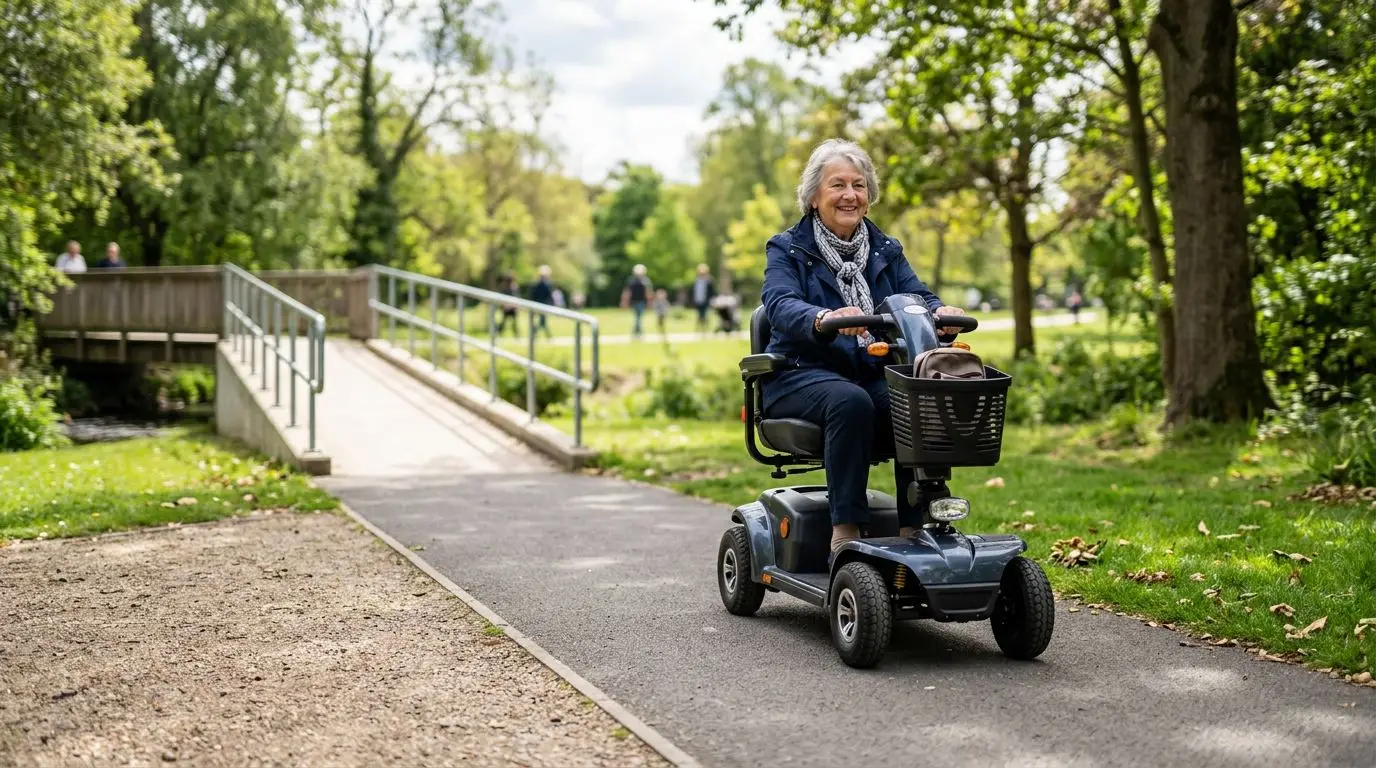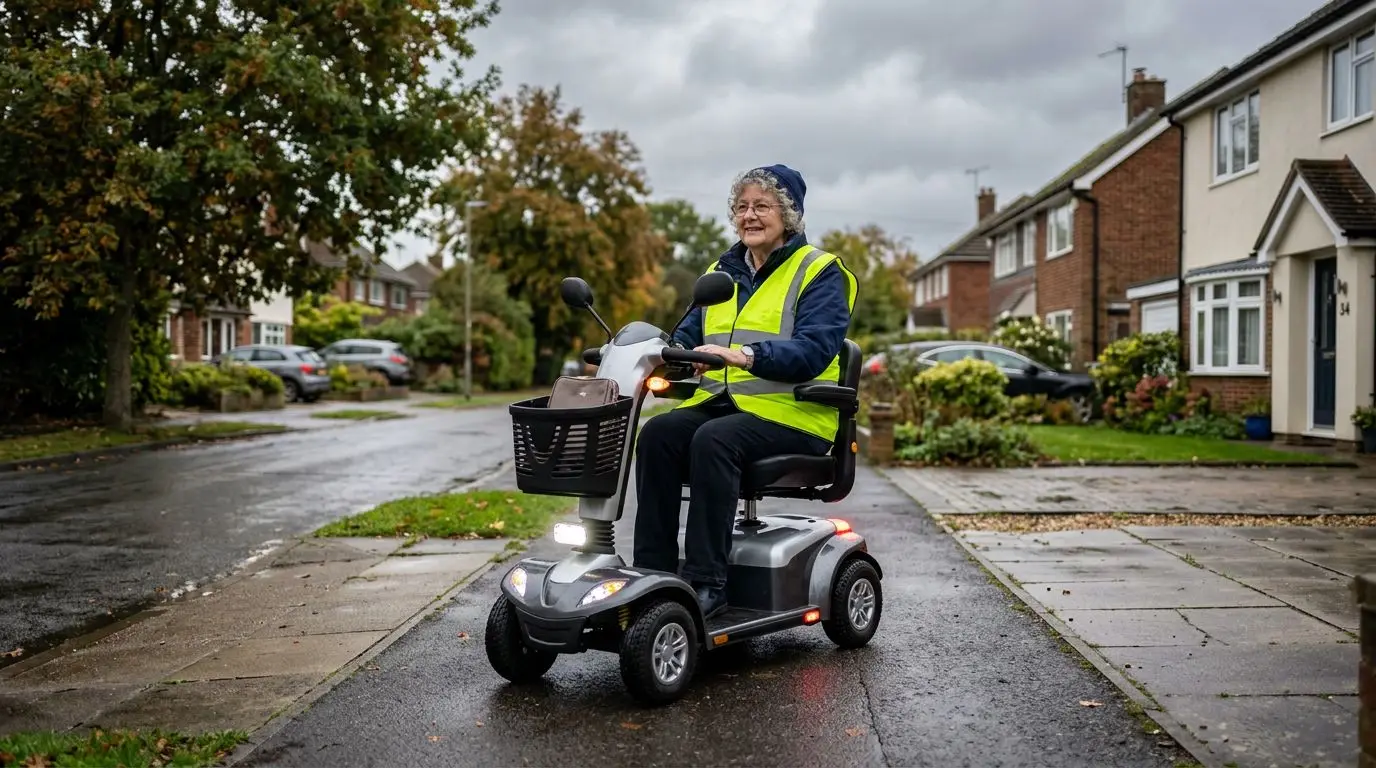
Mobility scooter weather safety depends on traction, electrical protection, battery performance, and visibility. Light rain, mild heat, cool temperatures, or riding at dusk may be manageable with the right preparation. Heavy rain, standing water, ice, extreme heat, high winds, and poor visibility are strong reasons not to ride.
A mobility scooter is a transportation aid, not an all-weather vehicle. If the surface is slippery, the controls are getting wet, your battery range is uncertain, or drivers and pedestrians may not see you from a safe distance, it is safer to delay the trip or use another ride.
Weather safety basics: 3 checks before every ride
Before riding in challenging weather, make three quick checks: the route, the scooter, and your own comfort. It takes about 2 minutes and can help prevent common problems such as wheel slip on wet ramps, reduced battery range in cold weather, or glare that makes it hard for others to see you.
Start with the route. Watch for steep curb cuts, puddles, cracked sidewalks, gravel, wet leaves, construction plates, and intersections where cars turn across the sidewalk. A scooter that feels stable on dry pavement can behave very differently on a wet painted crosswalk or a sloped driveway apron.
Next, check the scooter. Make sure the tires or rollers have visible tread, the brakes respond promptly, the tiller controls are dry, and the battery indicator shows enough charge for the round trip. If your scooter has lights, reflectors, a horn, or a basket cover, confirm they are secure before you leave.
Finally, check yourself. Weather affects reaction time, hand comfort, hydration, and judgment. If you feel overheated, chilled, dizzy, rushed, or distracted, postpone the ride. Independence matters, but the goal is a safe trip.
| Weather issue | Main risk | Safer operating choice |
|---|---|---|
| Rain or wet pavement | Reduced traction and possible electrical exposure | Slow down, avoid puddles, keep controls dry |
| Heat above 90°F | Rider overheating and faster battery stress | Ride early, carry water, shorten the trip |
| Cold below 40°F | Lower battery range and stiff hands | Plan extra charge, wear warm gloves |
| Dusk, fog, or glare | Drivers and pedestrians may not see you | Use lights, reflectors, and high-contrast clothing |
Riding in rain: avoid water deeper than 1 inch
Most mobility scooters are built to handle everyday outdoor use, but that does not mean they are waterproof. Rain can reduce tire grip, splash the battery compartment, wet the controller, and make braking less predictable. A simple rule helps: if water is more than about 1 inch deep, or you cannot see the pavement beneath it, do not drive through it.
Wet traction can change quickly. Smooth solid tires, small front wheels, steep curb ramps, metal plates, wet leaves, and painted markings can all become slippery. Even scooters with larger pneumatic tires can slide if the rider turns sharply or brakes hard on a wet slope.
Slow speed is your best tool. On wet surfaces, reduce speed before turns, ramps, curb cuts, and crowded sidewalks. Avoid sudden joystick or throttle movement. Give yourself at least twice as much stopping space as you would on dry pavement, especially near street crossings.
Electrical risk needs special attention. Keep the tiller, throttle, key area, charging port, and battery area as dry as possible. Do not cover controls with a loose plastic bag that could interfere with steering or throttle movement. A fitted weather cover may help protect the scooter while parked, but it should not block your view, lights, hands, or controls while riding.
Never charge a scooter when the charger, charging port, or floor around the scooter is wet. Move the scooter to a dry, ventilated area, wipe away visible moisture, and allow damp areas to dry before plugging it in. If the scooter behaves oddly after getting wet, such as jerking, losing power, beeping unexpectedly, or failing to brake normally, stop using it and arrange service.
Heat safety above 90°F: protect the rider and the battery
Hot weather affects both the person and the machine. When temperatures rise above about 90°F, plan shorter trips, avoid midday sun, and check how you feel every 20 to 30 minutes. Heat can cause fatigue, dehydration, lightheadedness, and slower reaction time, especially when pavement and parking lots radiate extra heat.
The scooter needs care as well. Batteries generally perform best in moderate temperatures, and heat can add stress during long rides, long climbs, or repeated stop-and-go travel. Store and charge the scooter in a shaded, dry, well-ventilated area when possible. Avoid leaving it for hours in direct sun if a shaded location is available.
Seat surfaces, armrests, and black tiller parts can become uncomfortable or even unsafe to touch after sitting in the sun. Before sitting, touch the seat and controls briefly with the back of your hand. If they feel too hot, move the scooter into shade and let the surfaces cool.
Heat also affects route planning. A 1-mile errand that feels easy in spring can feel draining in July if the route has no shade, no benches, and several long crossings. Carry water, wear a brimmed hat or cooling towel if appropriate for you, and tell someone your route if you are traveling alone in very hot weather.
Do not ride if you already feel faint, confused, unusually weak, or overheated. Those symptoms need attention, not a scooter trip. If you have a medical condition that affects heat tolerance, ask your clinician for personal guidance before riding in high temperatures.
Cold weather below 40°F: expect shorter range and slower reactions
Cold weather can reduce practical scooter range, stiffen hands, and make ramps or sidewalks harder to judge. Below about 40°F, plan a shorter trip than usual and do not rely on the last bar of your battery indicator as your safety margin. A practical approach is to plan for at least 25% more battery reserve than you would need in mild weather.
Battery indicators can behave differently in the cold. A scooter may show less charge under load, especially on hills, then recover slightly after resting. Do not treat that rebound as extra usable range. If the trip is essential, choose a route with places to stop indoors and avoid long detours.
Cold hands are a real safety issue. Bulky gloves can make throttle control clumsy, while thin gloves may leave fingers numb. Choose gloves that let you operate the throttle, brake release, horn, and speed dial smoothly. Practice in your driveway or hallway before taking a longer cold-weather ride.
Watch for ice even when the air temperature is above freezing. Shaded curb cuts, bridge surfaces, garage entrances, and north-facing sidewalks can stay slick. Wet leaves can be nearly as slippery as ice under small scooter wheels. If you see frost, slush, or shiny patches, turn around.
After a cold ride, let the scooter return to a moderate indoor temperature before charging if the battery or charger manual advises it. Charging in a dry indoor location is usually safer than charging in a cold garage with damp floors, but always follow the instructions for your specific scooter and battery type.
Low visibility: be seen from at least 200 feet
Low visibility means more than nighttime. Dawn, dusk, fog, heavy rain, smoke, deep shade, and sun glare can all make a scooter harder to see. Aim to make yourself noticeable from at least 200 feet in typical neighborhood conditions, and do not assume drivers will notice a low-profile scooter at a driveway or crosswalk.
Use front and rear lights if your scooter has them. Reflective tape, reflective ankle bands, a bright vest, and a high-contrast basket flag can also help. Steady lights are easier for many people to judge than small, dim, or hidden lights. Check that bags, oxygen holders, coats, or baskets do not block lights or reflectors.
Positioning matters. Stay predictable, follow pedestrian rules where required, and avoid weaving between parked cars. At crossings, make eye contact when possible and wait for vehicles to stop fully before entering the path. A driver may look in your direction without actually seeing you.
Low visibility also affects what you can see. Potholes, raised sidewalk joints, loose gravel, and puddles may be hidden until the last second. Reduce speed enough that you can stop within the clear distance ahead. If glare or fog prevents you from seeing the ground 10 to 15 feet in front of the scooter, it is time to stop and reassess.
Who weather riding is best for: 2 rider profiles
Weather riding is best for riders with predictable routes and a scooter suited to outdoor conditions. Two common profiles do well: a neighborhood rider traveling short distances on familiar sidewalks, and an errand rider using a stable scooter with good lighting, adequate battery reserve, and a route with safe crossings.
Short neighborhood riders usually travel less than 1 or 2 miles at a time. They benefit from watching the forecast, waiting out heavy rain, and keeping a phone with them. For these riders, the biggest risks are often curb ramps, wet leaves, and visibility at driveways.
Errand riders may travel farther and spend more time near traffic. They need better route planning, more battery reserve, brighter visibility gear, and a clear bad-weather backup plan. If a trip includes busy intersections, long parking lots, or road shoulders, weather conditions should be judged more strictly.
Weather riding is not a good fit for everyone. If you have poor vision in low light, difficulty regulating body temperature, slow hand response, or limited ability to transfer if the scooter gets stuck, be conservative. A scooter can support independence, but it should not put you in a situation where help is hard to reach.
How to choose and measure weather readiness: 6 practical checks
You can judge a scooter's weather readiness without comparing brands or model names. Use six practical checks: tire size and tread, ground clearance, braking feel, lighting, battery reserve, and protection of electrical areas. Write down the results once, then update them after tire changes, battery changes, or any repair.
Measure ground clearance at the lowest point under the scooter, not just under the foot deck. Many scooters have only a few inches of clearance. If the lowest point is 2 to 3 inches above the ground, a deep puddle, high threshold, or snow ridge can become a serious obstacle.
Check tire or wheel type. Small solid tires are low maintenance but can feel harsher and may have less grip on uneven wet surfaces. Larger pneumatic tires can improve comfort and traction, but they need proper inflation and can be damaged by sharp debris. Some specialty mobility devices use track-style systems for soft ground or rough terrain, but they are generally wider, heavier, and not a substitute for safe operation on ice, flooded paths, or public sidewalks.
| Scooter or drive type | Typical weather strength | Common caution |
|---|---|---|
| Compact 3-wheel scooter with small solid tires | Maneuverable indoors and on smooth dry pavement | Less stable on wet slopes, gravel, or uneven curb cuts |
| 4-wheel scooter with medium tires | Better straight-line stability and outdoor comfort | Still vulnerable to puddles, wet leaves, and low visibility |
| Larger outdoor scooter with pneumatic tires | Improved ride over cracks and rough pavement | Needs tire pressure checks and more stopping distance |
| Track-style mobility device | Can spread weight over soft surfaces in limited settings | Often heavy, wide, and unsuitable for many sidewalks or indoor spaces |
Battery reserve is another measurable item. If your normal round trip uses half the battery in mild weather, do not plan that same trip in cold, wind, or heat with only half a charge showing. Weather, slopes, rider weight, tire pressure, and cargo can all affect real-world range.
| Feature to check | What to measure or test | Weather value |
|---|---|---|
| Ground clearance | Lowest point in inches | Helps avoid scraping and shallow water hazards |
| Tread depth | Visible grooves and even wear | Improves grip on wet pavement |
| Brake response | Stop smoothly from slow speed in 3 to 5 test runs | Shows whether stopping feels predictable |
| Lights and reflectors | Check front, rear, and side visibility | Helps others see you at dusk or in rain |
| Battery reserve | Plan to return with charge remaining | Reduces risk of being stranded |
| Control protection | Look for exposed ports or wet control areas | Reduces electrical trouble in damp conditions |
When not to ride: 8 weather stop signs
Some conditions are not worth testing. Do not ride when any of these 8 warning signs are present: lightning, flooding, ice, snow accumulation, winds strong enough to push the scooter, visibility under about 200 feet, heat that makes you feel unwell, or any scooter fault after exposure to water.
Flooded areas are especially risky. Water can hide potholes, curbs, soft ground, and open drainage grates. Even shallow moving water can push against small wheels. If a car splashes through a puddle beside you, the scooter controls and rider can be soaked in seconds.
Ice and snow are also no-go conditions for most mobility scooters. A scooter's drive wheels may spin, the front wheels may slide, and stopping distance can become unpredictable. Salt and slush can also affect metal parts and electrical connectors over time.
High wind deserves respect. Scooters with canopies, flags, large bags, or rain covers can catch wind. A gust at a driveway entrance or parking lot can shift your line unexpectedly. If you are struggling to steer straight, turn back before you reach a more exposed area.
Do not ride during thunderstorms. A mobility scooter does not protect you from lightning, and heavy rain can quickly overwhelm visibility and drainage. Wait indoors until the storm has passed and pathways are clear.
After-weather maintenance: a 10-minute safety check
After a wet, hot, cold, dusty, or salty ride, spend 10 minutes checking the scooter before the next trip. Wipe down the seat, tiller, armrests, lights, and foot area with a dry cloth. Look for water around the charging port, battery compartment, and any seams where moisture may collect.
Check the tires or wheels for leaves, gravel, glass, or wrapped debris. If you use pneumatic tires, confirm they are properly inflated according to the tire sidewall or owner instructions. Underinflated tires can reduce range and make steering feel heavy.
Test the horn, lights, throttle response, and braking at very low speed in a safe area. Listen for unusual clicking, grinding, or scraping. If the scooter was exposed to heavy rain, road salt, or standing water, consider arranging a professional inspection before relying on it for essential travel.
Let the scooter dry in a protected area for several hours if it became damp. Do not use a high-heat dryer or direct intense heat on batteries, controls, or plastic panels. Gentle airflow and time are safer than trying to force-dry electrical parts.
FAQ: 5 common weather safety questions
Can I ride a mobility scooter in light rain?
Sometimes, but only if the route is safe, visibility is good, and the scooter's controls and electrical areas can stay reasonably dry. Avoid puddles, slow down, and stop if the scooter behaves differently.
Are mobility scooters waterproof?
Most mobility scooters are not waterproof. Some tolerate light outdoor moisture better than others, but standing water, heavy rain, wet charging areas, and soaked controls can create safety and repair problems.
How does cold weather affect scooter batteries?
Cold weather can reduce practical range and make the battery indicator less predictable under load. In temperatures below about 40°F, plan shorter trips and keep more charge in reserve.
What should I wear for low-visibility scooter riding?
Wear bright or reflective outerwear, and use front and rear lights when available. Reflective tape, a vest, or ankle bands can help drivers notice movement from a greater distance.
When should I cancel a scooter trip because of weather?
Cancel or delay the trip during lightning, flooding, ice, snow, high wind, extreme heat symptoms, or visibility so poor that drivers cannot see you clearly. If you are unsure, choose the safer option.
Frequently asked questions
Can I ride a mobility scooter in light rain? +
Sometimes, if the route is safe, visibility is good, and the scooter controls and electrical areas can stay reasonably dry. Avoid puddles, slow down, and stop if the scooter handles differently.
Are mobility scooters waterproof? +
Most mobility scooters are not waterproof. They may tolerate light outdoor moisture, but heavy rain, standing water, wet chargers, and soaked controls can create safety and repair risks.
Does cold weather reduce mobility scooter range? +
Yes, cold weather can reduce practical battery range and make the battery indicator less predictable. Below about 40°F, plan shorter trips and keep extra charge in reserve.
What is the safest way to ride in low visibility? +
Use front and rear lights if available, wear reflective or high-contrast clothing, slow down, and avoid crossing until drivers have fully stopped. If visibility is under about 200 feet, consider delaying the trip.
When should I not ride my mobility scooter because of weather? +
Do not ride during lightning, flooding, ice, snow accumulation, strong wind, extreme heat symptoms, or any condition where you cannot see the path clearly or others cannot see you.
Related guides
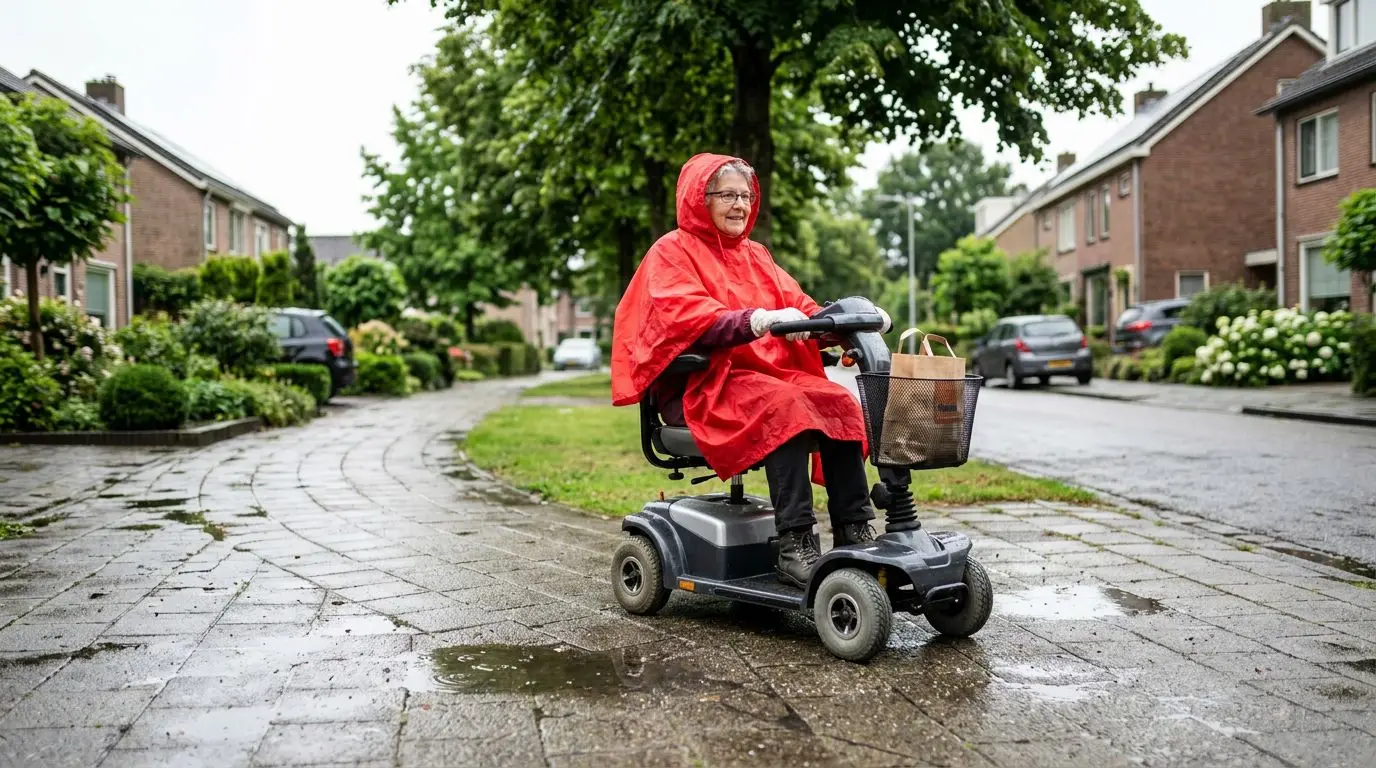
Can You Use a Mobility Scooter in Rain? Wet-Weather Riding Risks and Safety Tips
13 min read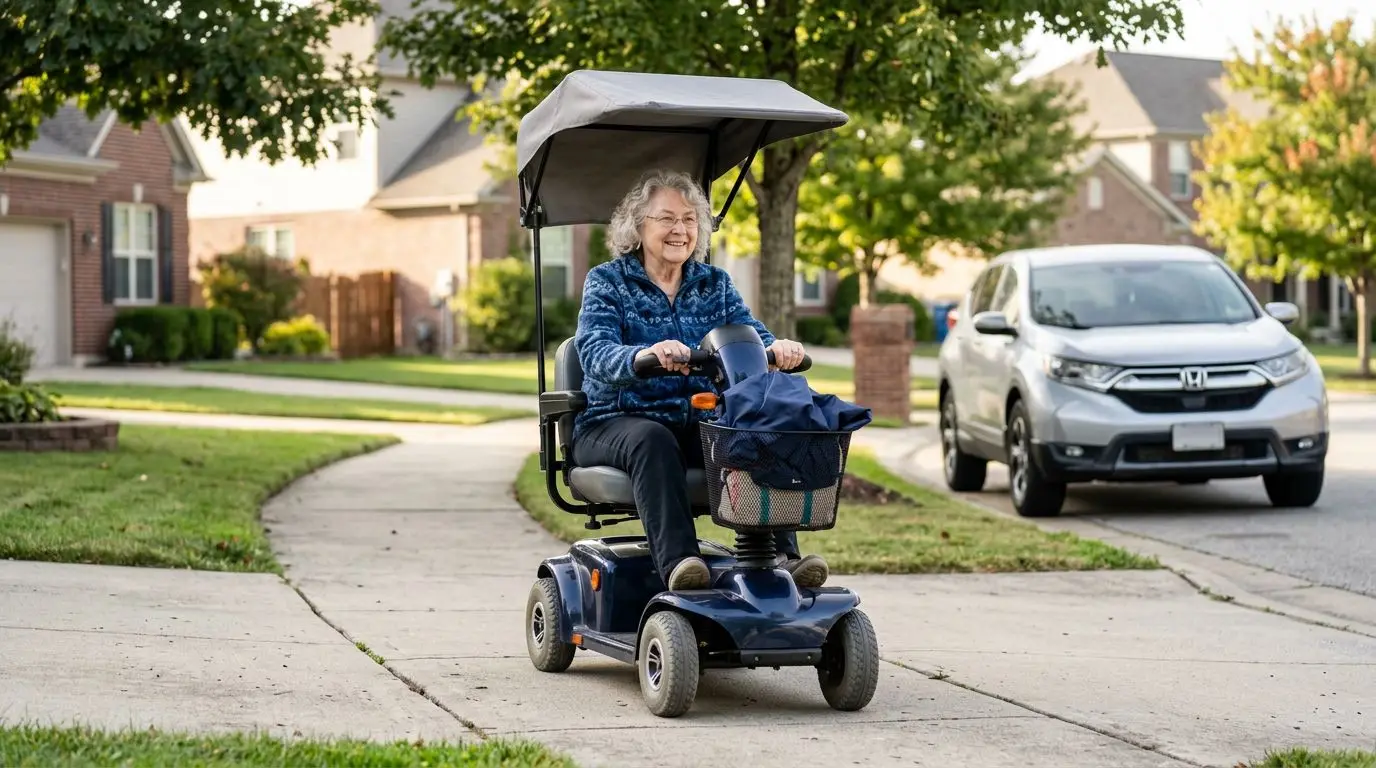
Weather Accessories for Mobility Scooters: Sun, Rain, and Cold Protection
13 min read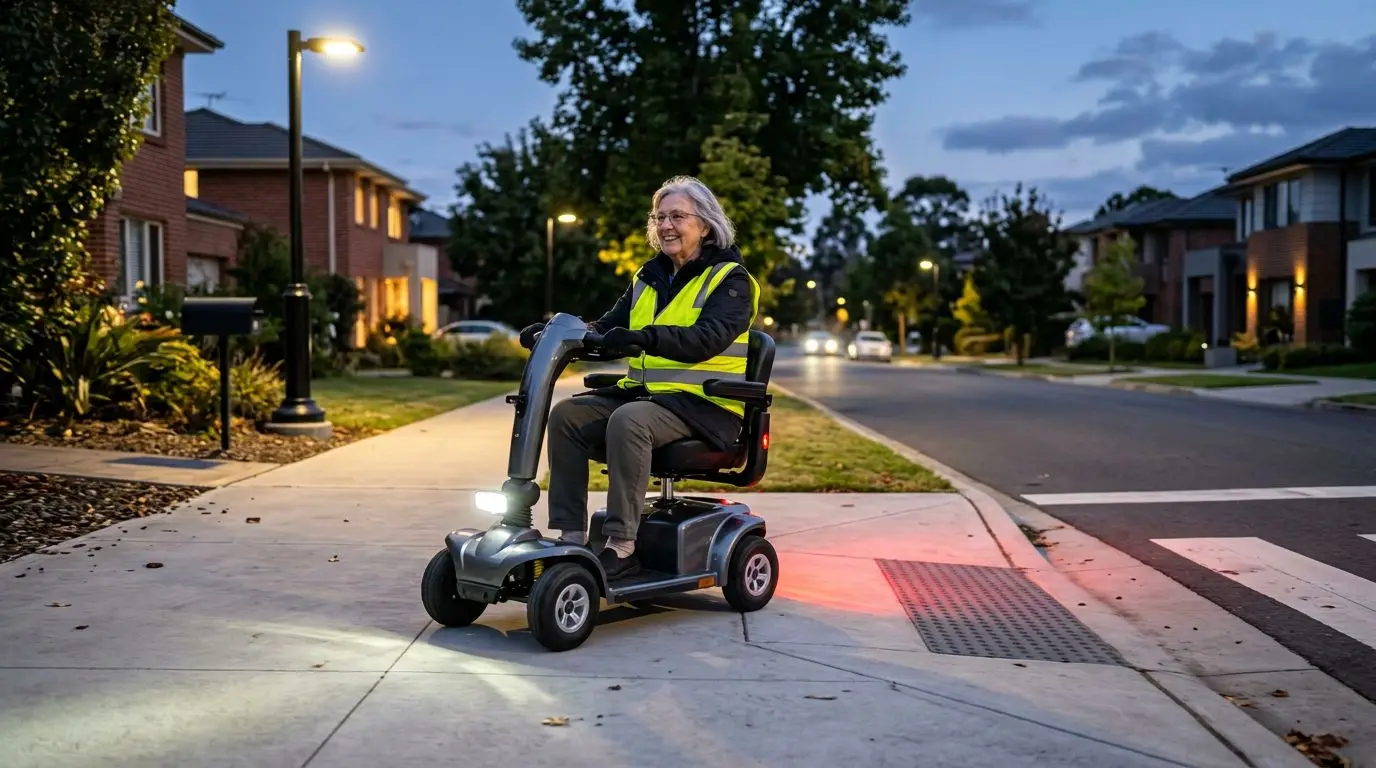
Nighttime Mobility Scooter Safety: Lights, Reflectors, Visibility, and Route Planning
14 min read