Safety & Operation
Independent, data-backed mobility scooter guides and comparisons.
Safe scooter operation means matching your speed, route, and riding habits to the space, surface, weather, and people around you. This category helps you think through everyday decisions before you ride. You can compare safer speeds for stores, sidewalks, and crowds. You can learn what to check before each trip, including tires, battery, brakes, lights, and loose parts. You can also review basic riding skills like turning, stopping, and parking with more confidence.
Use these guides when you are unsure about a place or condition. Sidewalk and road articles explain US rules, right-of-way, and safety tips. Ramp and surface articles cover grass, gravel, uneven ground, slopes, curbs, turns, and weight balance. Weather articles look at rain, heat, cold, and low visibility, so you can decide when extra caution is needed or when a ride may not be a good idea.
These articles are for riders, caregivers, and family members who want a clearer safety routine. They do not replace training from a qualified professional. If you have questions about your balance, vision, reaction time, or whether a scooter is safe for your needs, ask a physician or therapist.
Browse by category
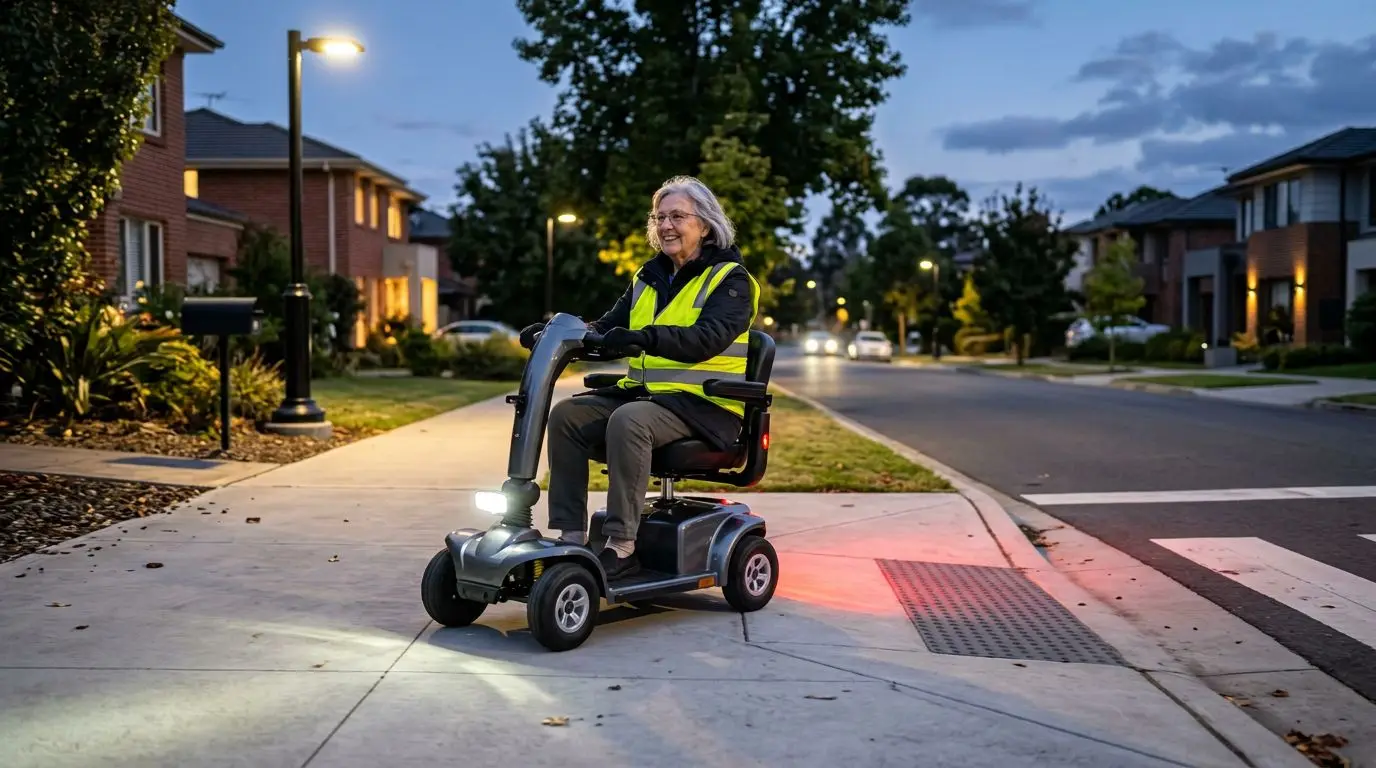
Nighttime Mobility Scooter Safety: Lights, Reflectors, Visibility, and Route Planning
Ride more safely after dark with practical scooter lighting, reflector, visibility, and route-planning tips.
Read guide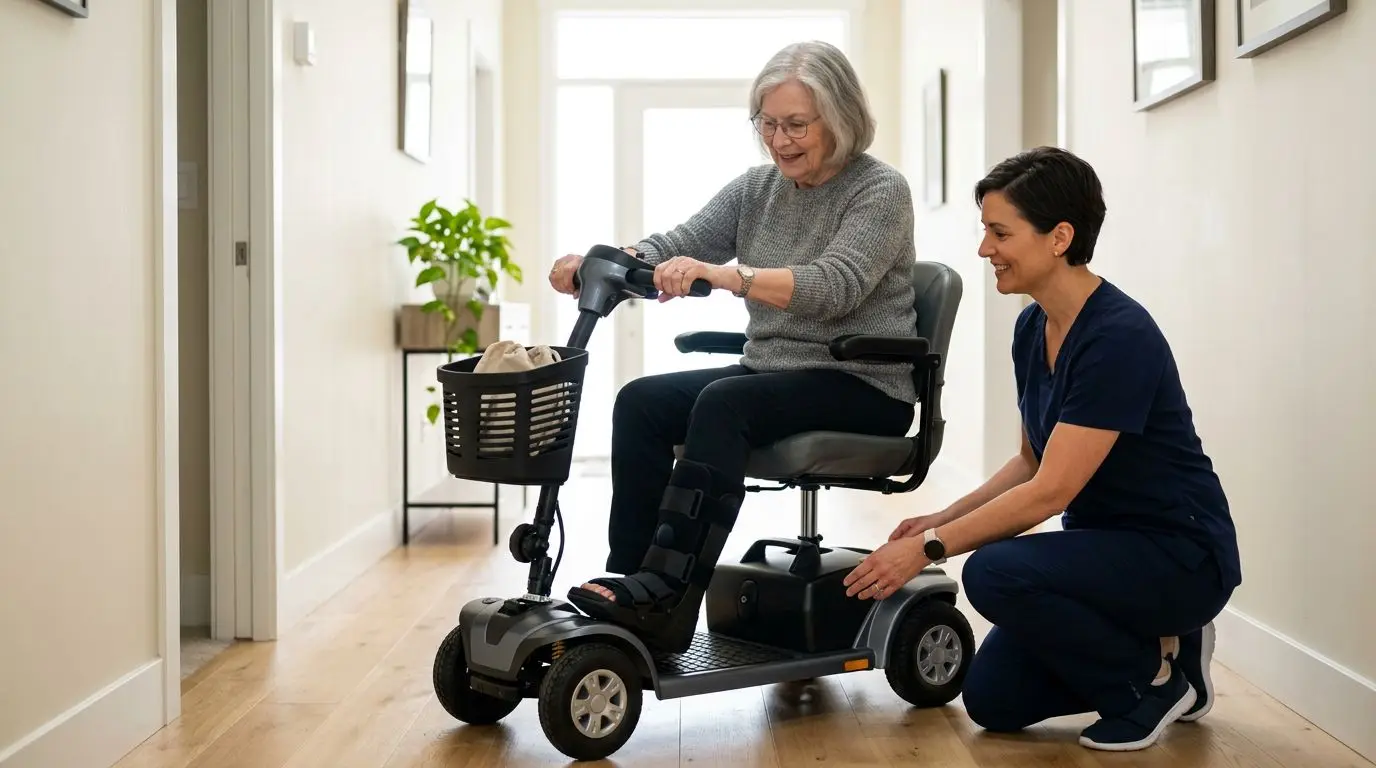
Using a Mobility Scooter After a Foot, Ankle, or Leg Injury: Safety Considerations Before You Ride
Learn when a mobility scooter may be suitable after a lower-limb injury, with safety tips for transfers, balance, pain limits, and clinician questions.
Read guide
How to Drive a Mobility Scooter Safely in Stores, Malls, and Grocery Aisles
Practical safety tips for driving a mobility scooter in stores, grocery aisles, malls, checkout lanes, and other tight public spaces.
Read guide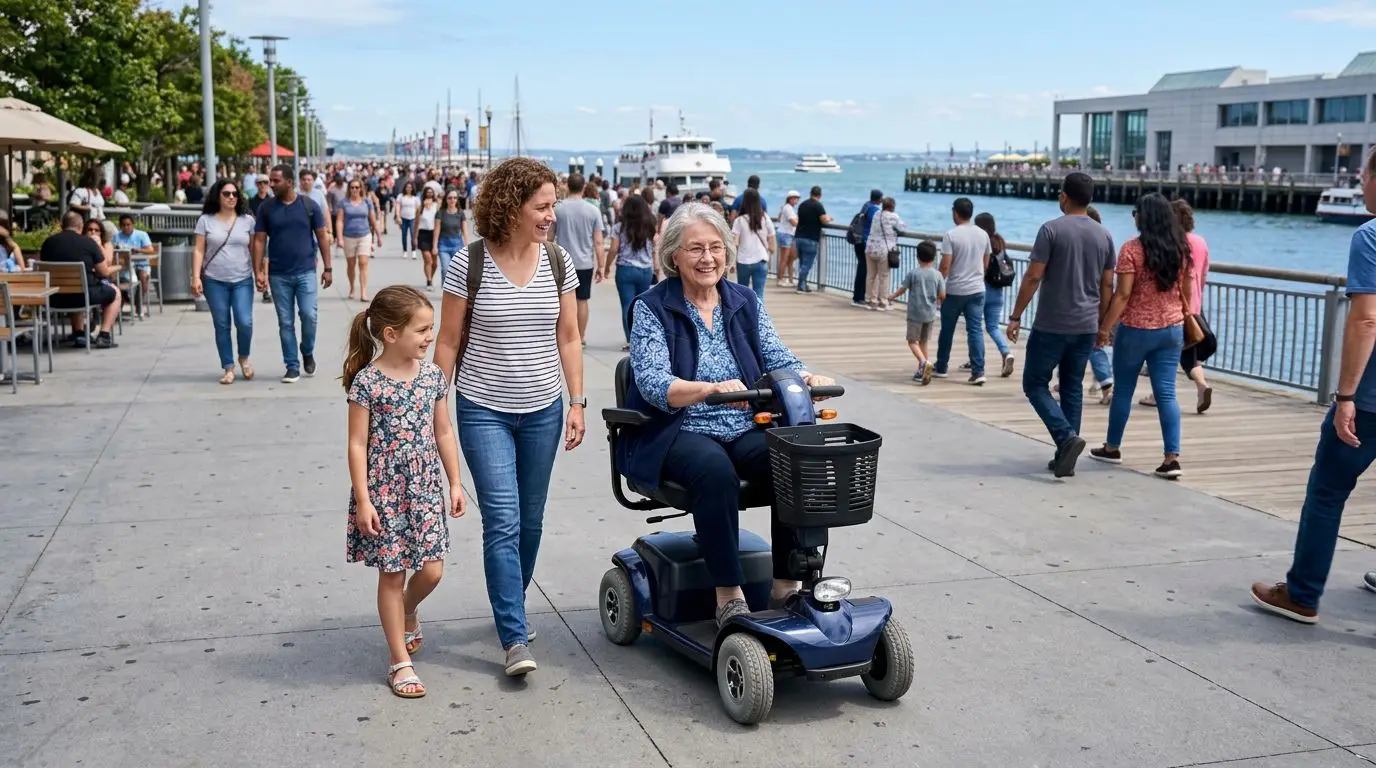
Mobility Scooter Safety in Crowds: Theme Parks, Events, Airports, and Busy Sidewalks
Practical, brand-neutral safety tips for using a mobility scooter in crowded public places, from airports to theme parks.
Read guide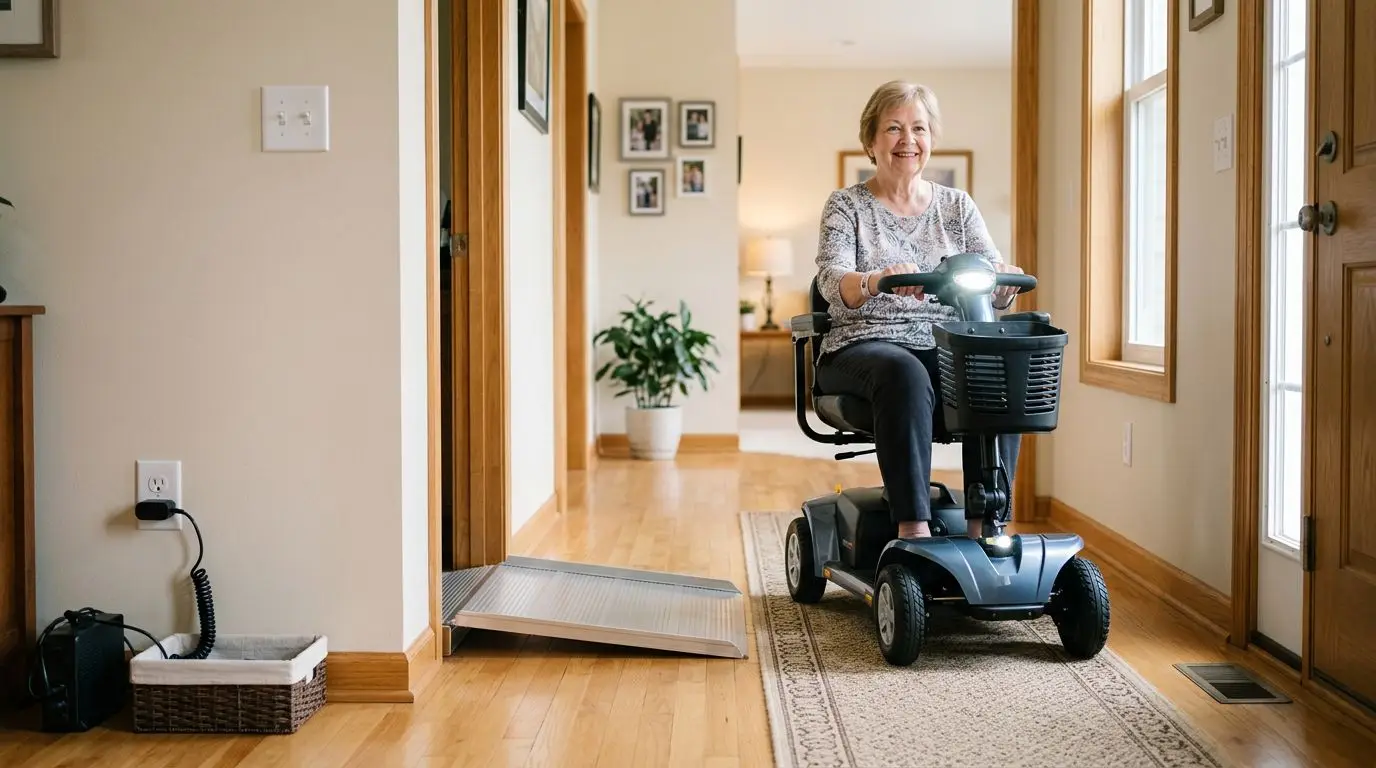
Mobility Scooter Safety at Home: Doorways, Thresholds, Rugs, Tight Turns, and Charging Areas
Set up safer scooter routes indoors with practical measurements for doorways, thresholds, rugs, turns, and charging areas.
Read guide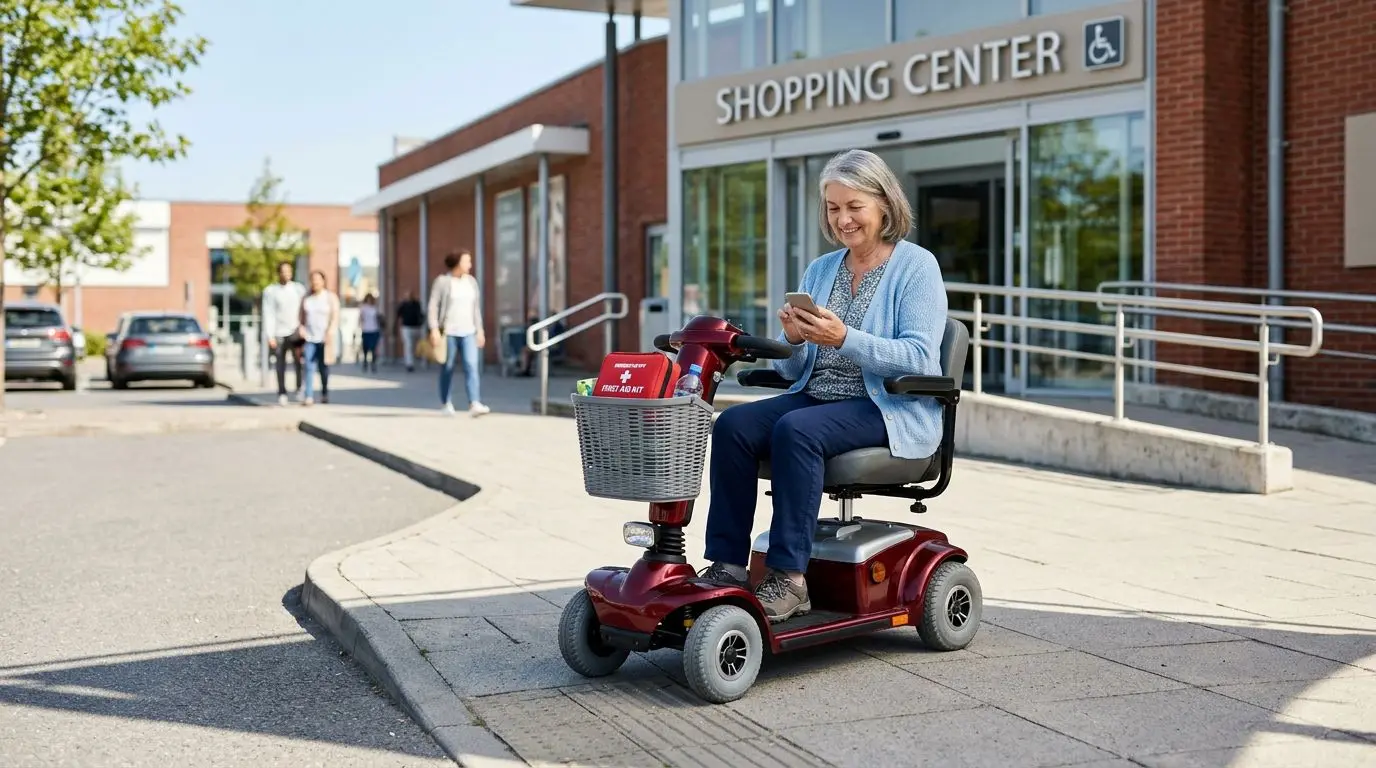
What to Do If Your Mobility Scooter Breaks Down Away From Home
A practical, brand-neutral breakdown guide for mobility scooter riders: safety steps, battery checks, warning signs, and preparedness tips.
Read guide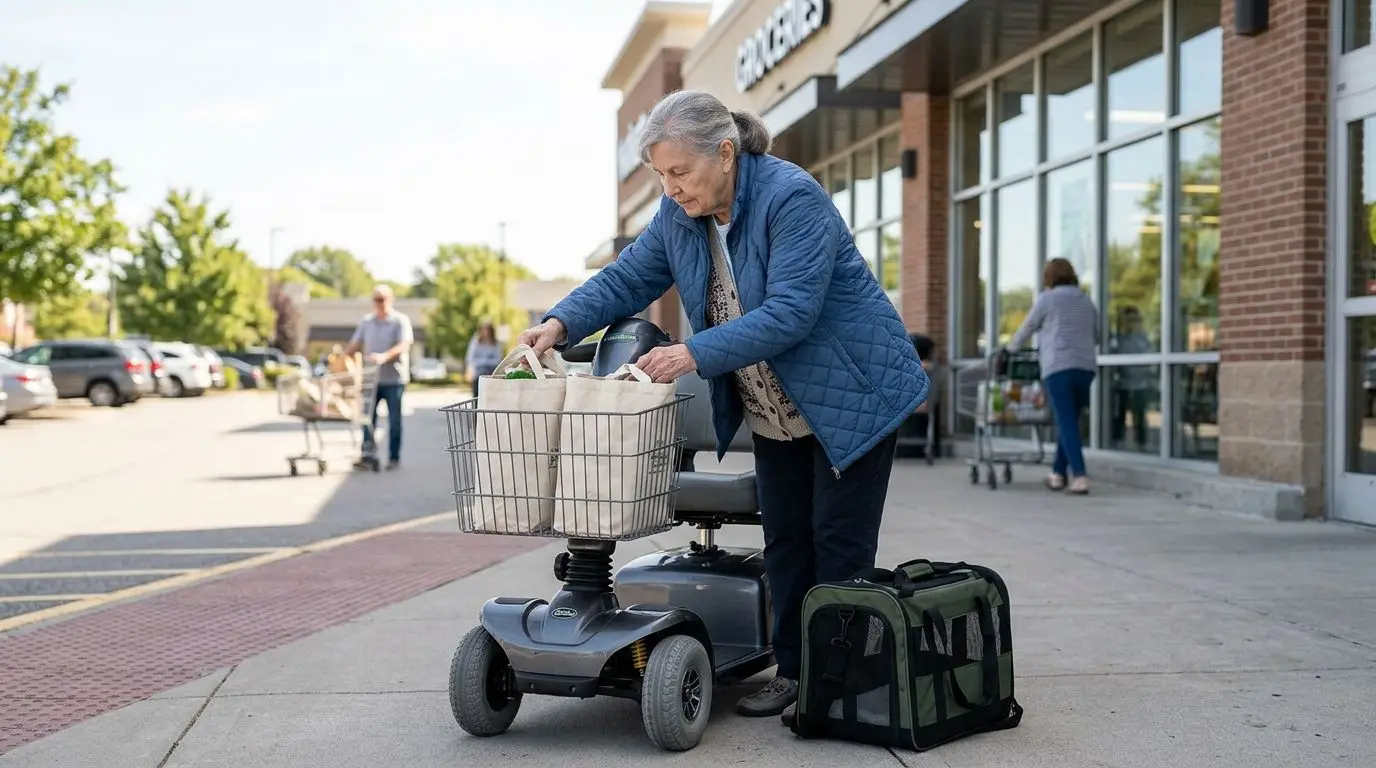
Mobility Scooter Load Safety: Bags, Baskets, Groceries, Pets, and Passengers
Learn how to load bags, baskets, groceries, pets, and accessories on a mobility scooter without upsetting balance or weight limits.
Read guide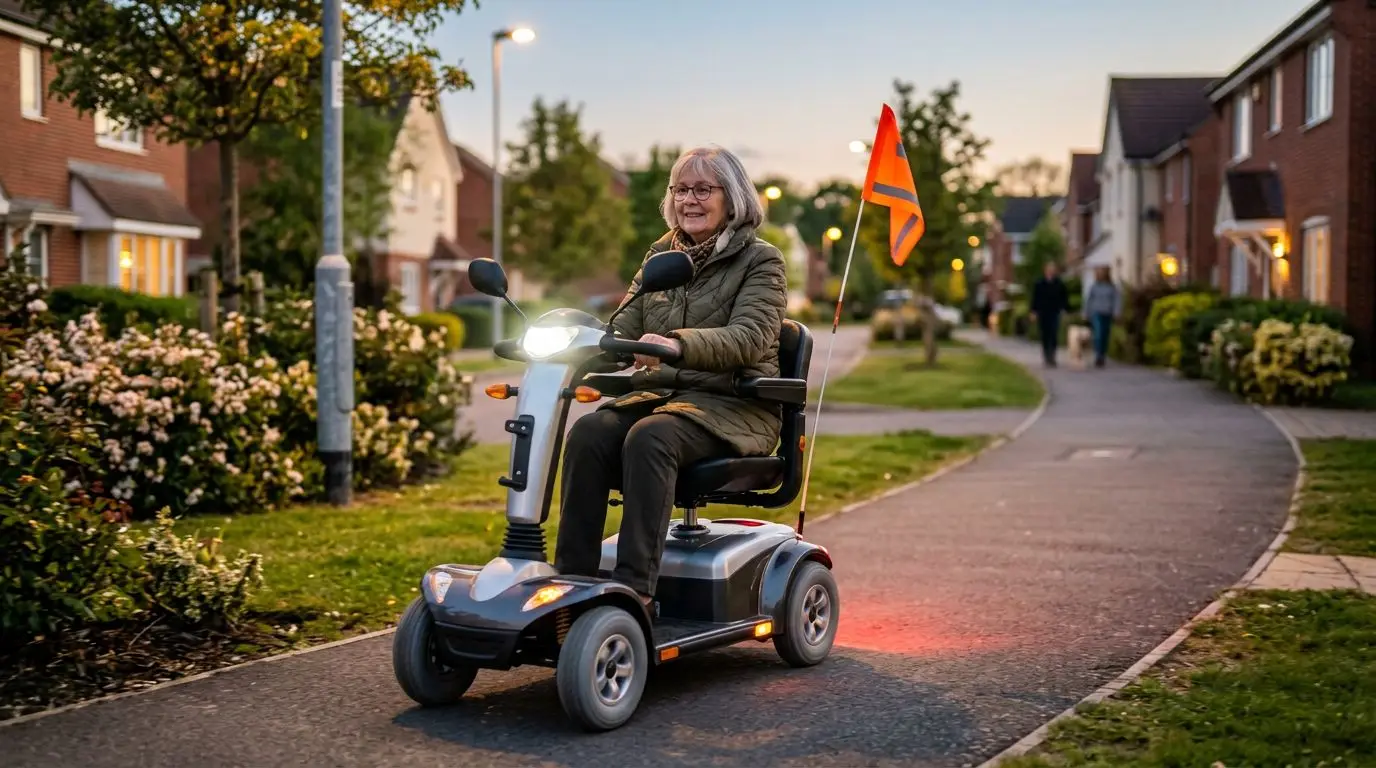
Mobility Scooter Visibility Safety: Lights, Reflectors, Mirrors, Flags, and Night Riding Tips
Learn how lights, reflectors, mirrors, flags, and smart night-riding habits help mobility scooter users stay more visible.
Read guide
First-Time Mobility Scooter Safety Checklist for Seniors, Caregivers, and New Riders
A practical first-ride mobility scooter safety checklist covering controls, charging, practice, daily checks, and caregiver support.
Read guide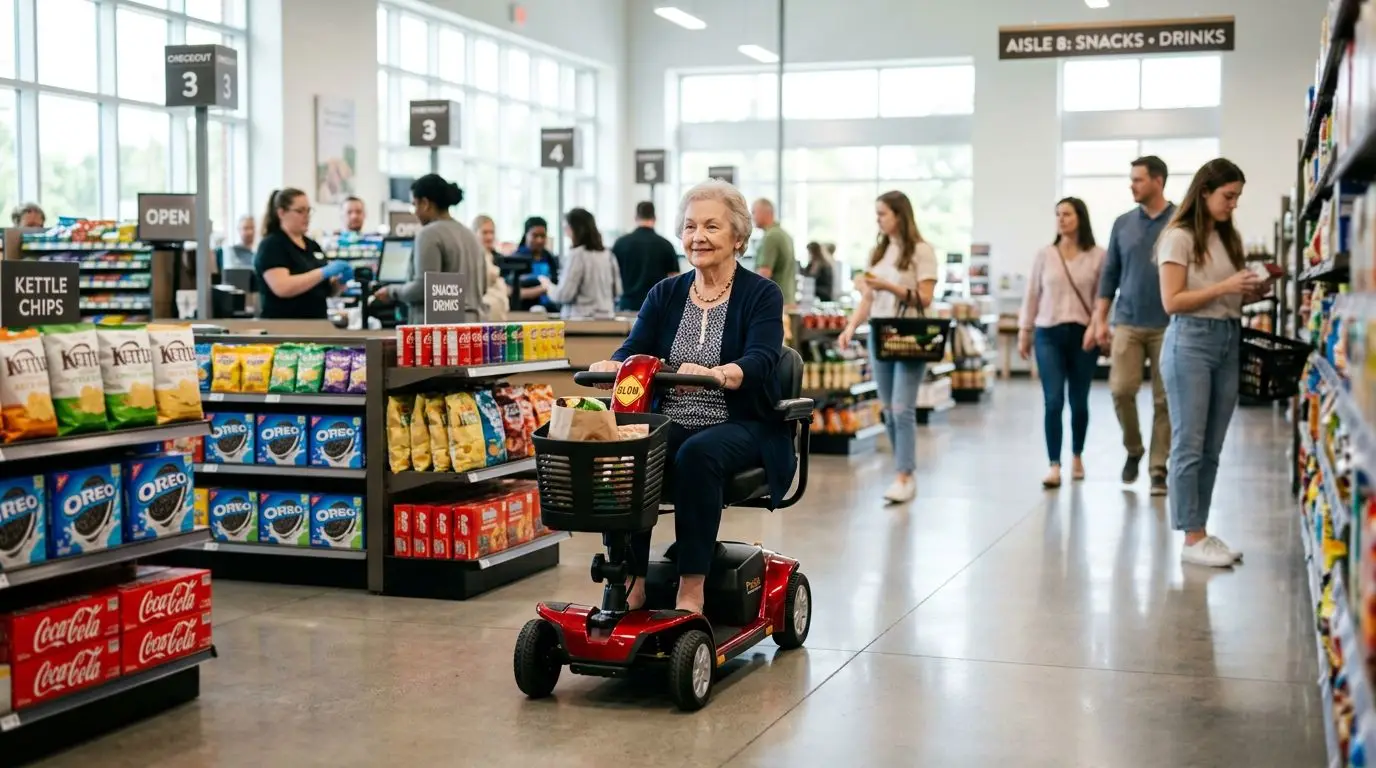
Using a Mobility Scooter Safely in Stores, Elevators, Hallways, and Crowded Public Places
Practical safety tips for using a mobility scooter in stores, elevators, hallways, doors, checkout lanes, and crowds.
Read guide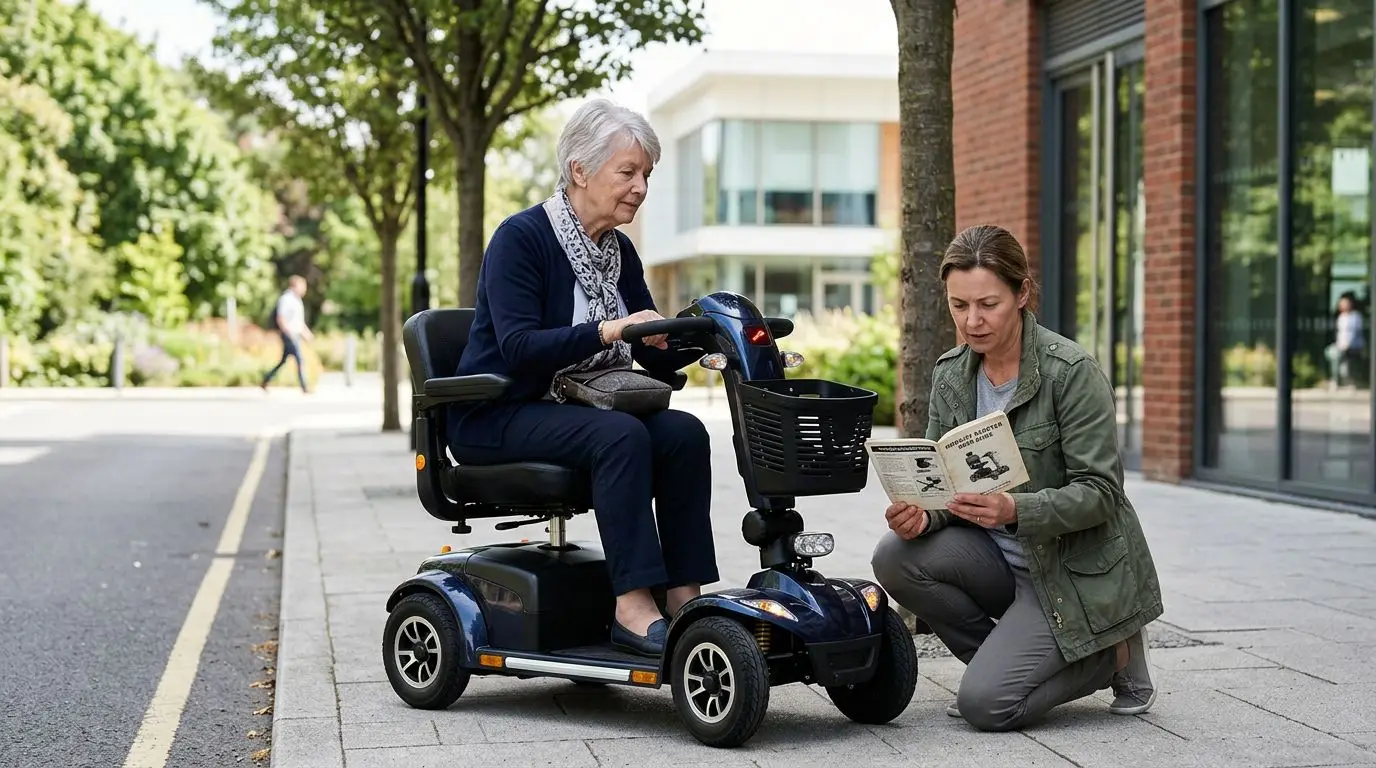
Mobility Scooter Beeping or Flashing? What Warning Signals Mean Before You Keep Riding
Learn what mobility scooter beeps and flashing lights usually mean, when to reset, and when to stop riding for safety.
Read guide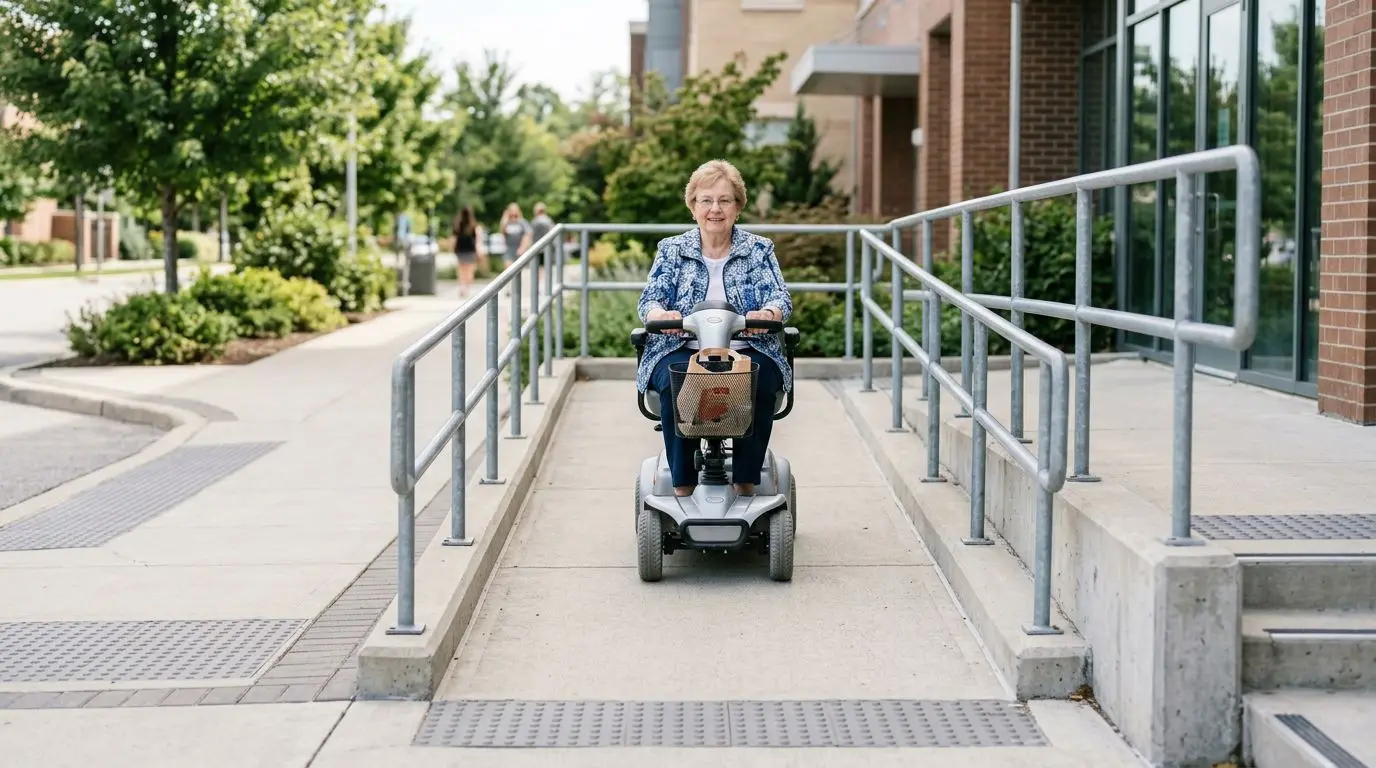
How to Ride a Mobility Scooter Safely on Ramps, Slopes, Driveways, and Curb Cuts
Learn safe scooter techniques for ramps, slopes, driveways, and curb cuts, including incline limits, turning risks, and when hills are too much.
Read guide