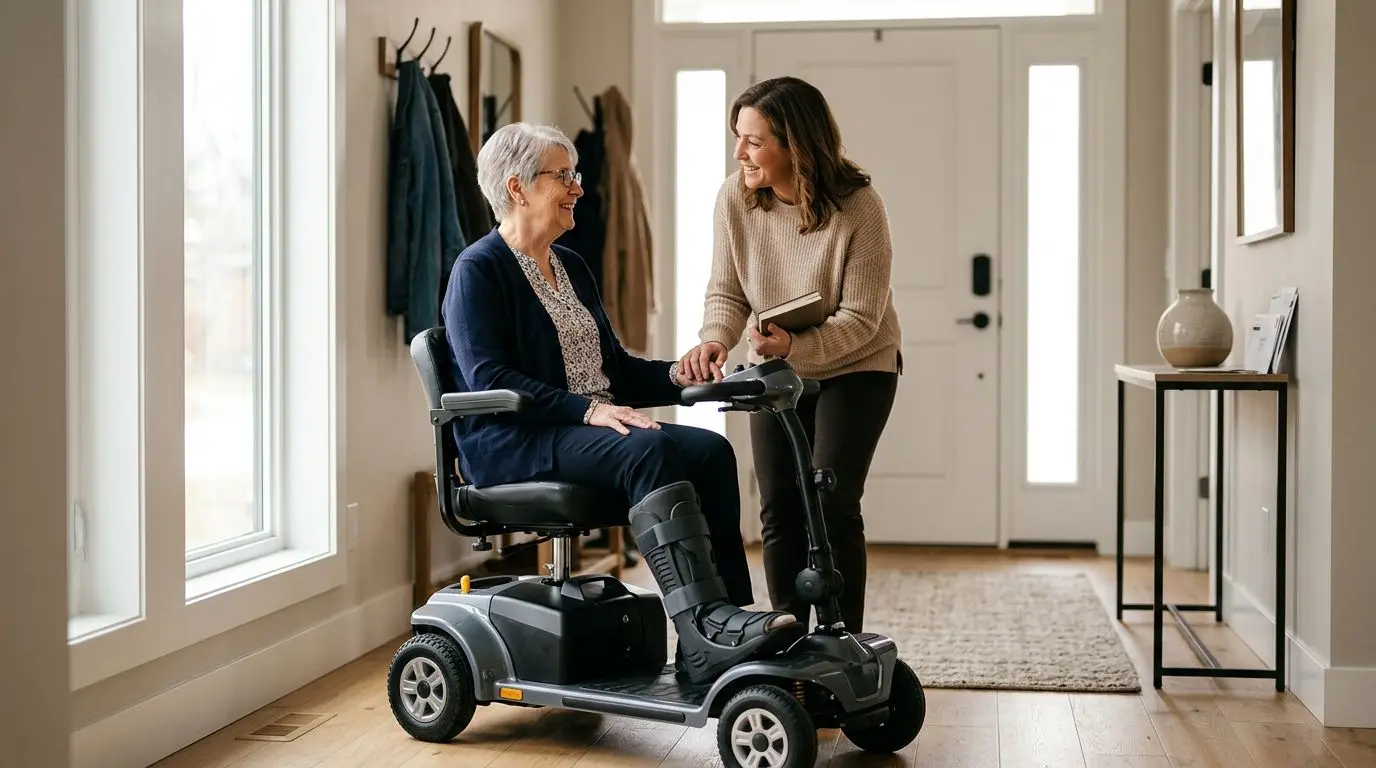
A powered mobility scooter can be a practical option after a broken foot, ankle injury, or surgery when you cannot safely walk longer distances, stand in lines, or use crutches for daily tasks. It is usually most helpful during temporary recovery periods of about 2 to 12 weeks, especially for medical visits, errands, work, or moving around a larger home. It is not a substitute for your surgeon’s weight-bearing instructions, so confirm that seated powered mobility fits your specific recovery plan.
The right choice depends on your home layout, transportation needs, balance, upper-body strength, and whether you must keep the injured leg elevated. For short-term use, many people compare compact travel scooters, standard 3-wheel or 4-wheel scooters, knee scooters, and manual wheelchairs before deciding what is safest and most practical.
When a powered scooter makes sense for 2 to 12 weeks
A broken foot or post-surgery recovery can make ordinary distances feel overwhelming. Walking 100 feet from a parking lot to a clinic entrance may be simple when you are healthy, but exhausting or unsafe when you are non-weight-bearing, in a boot, or using crutches. A powered mobility scooter helps by letting you sit while moving, steer with both hands, and save energy for transfers, therapy exercises, and basic daily routines.
Powered scooters are most useful when your limitation is temporary but significant. Common examples include foot or ankle surgery, fractures that require a cast or walking boot, tendon repairs, wound-healing restrictions, or a period when your clinician has told you to avoid putting weight on one foot. A scooter can also help if your healthy leg, shoulders, wrists, or back cannot handle the repeated strain of crutches.
Still, a mobility scooter is not automatically the best tool for every recovery. It requires enough vision, judgment, hand control, and sitting balance to operate safely. You also need a place to store and charge it, usually near a standard household outlet for 6 to 10 hours depending on battery size and charger type. If your living space has narrow halls, multiple steps, thick rugs, or no room to turn, a different device may work better indoors.
Think of a powered scooter as a distance and energy solution. It can be excellent for getting through a large medical campus, a grocery store, a workplace corridor, or an apartment complex. For short bathroom trips or tight bedrooms, you may still need crutches, a walker, a knee scooter, or a wheelchair plan recommended by your care team.
Who it is best for—and who should consider another option
A powered scooter is best for someone who can transfer on and off a seat safely, keep both hands available for steering, and understand how to slow down in crowded spaces. Most scooter seats are roughly chair height, often around 18 to 22 inches from the ground, though designs vary. If that height is close to a kitchen chair you can use safely, transfers may be manageable.
It is less ideal for someone who cannot bend the knee comfortably, must keep the leg elevated above heart level most of the day, or needs hands-on assistance every time they stand. Some scooters have limited foot platform space, and the platform is not the same as a medical leg-elevation setup. If elevation is required for swelling control, ask your clinician how long you can safely sit with the leg down.
| Recovery situation | Powered scooter fit | Why it matters |
|---|---|---|
| Non-weight-bearing for 4 to 8 weeks | Often helpful for distance | Reduces repeated hopping or crutch use across longer areas. |
| Strong hands and stable sitting balance | Good fit | Most scooters use hand controls and require controlled steering. |
| Very narrow home paths under 30 inches | May be difficult indoors | Many scooters need more turning space than walkers or crutches. |
| Need leg elevated most waking hours | Use caution | A standard foot deck may not provide medical-level elevation. |
| Stairs at every entrance | Limited use at home | Mobility scooters are not designed to be driven up household stairs. |
If you are recovering alone, be especially conservative. A scooter can increase independence, but it also adds charging, transfers, doorways, and transport decisions. If you have dizziness from medication, reduced reaction time, or numbness in the hands, discuss those issues before relying on powered mobility.
Powered scooter types for temporary recovery: 3 common choices
For short-term recovery, the most practical powered options are compact travel scooters, standard 3-wheel scooters, and standard 4-wheel scooters. Heavy outdoor scooters also exist, but they are often larger than a temporary foot-injury user needs and may be difficult to transport. The best style is the one that fits your real spaces, not the one with the most features.
| Type | Typical strengths | Trade-offs | Best temporary use |
|---|---|---|---|
| Compact travel scooter | Often disassembles into 4 or 5 pieces; lighter sections may be easier to lift | Smaller seat, shorter battery range, less room for an injured leg | Appointments, errands, car transport, short indoor routes |
| 3-wheel scooter | Tighter turning radius, more knee and foot room in front | Can feel less stable on uneven outdoor surfaces than 4 wheels | Indoor corridors, stores, clinics, smoother surfaces |
| 4-wheel scooter | Better stability on mild outdoor terrain and curb-cut transitions | Wider turning circle; may be harder in small rooms | Apartment complexes, sidewalks, longer building-to-building trips |
For a broken foot, front foot space matters more than many shoppers expect. A boot, cast, or post-surgical shoe can be bulky, and you may need to avoid bumping the injured side. A 3-wheel design can provide more open space near the front column, while a compact scooter may feel cramped. If possible, test the scooter while wearing the exact boot or brace you will use most often.
If the scooter disassembles, check the heaviest piece. Some travel scooters separate into sections, but one piece may still weigh around 30 to 45 pounds. If your helper cannot safely lift that into a trunk, transport will be frustrating. If you will use paratransit, rideshare vehicles, or medical transport, ask about size and battery rules before the day of your appointment.
How to choose and measure before you rent or buy
Measure first. This prevents most short-term scooter mistakes. Use a tape measure and write down at least 6 numbers: your narrowest doorway, hallway width, bathroom entrance, turning space near your bed, distance from storage spot to outlet, and vehicle cargo opening if you plan to transport it.
- Door width: Many interior doors are about 28 to 32 inches wide. Measure the clear opening with the door fully open, not just the door slab.
- Turning space: Check whether you have a circle or T-shaped area where the scooter can turn without hitting furniture. Tight bedrooms are common trouble spots.
- Seat height: Compare the scooter seat with a chair you can stand from safely. A difference of even 2 inches can affect transfers after surgery.
- Foot platform length: Sit with your boot or cast on and estimate how much room your injured foot needs without twisting the ankle or toes.
- User weight capacity: Choose a scooter rated above the user’s actual weight plus carried items, such as a bag or portable oxygen device if used.
- Battery range: For temporary recovery, realistic daily use may be only 1 to 5 miles, but hills, rider weight, surfaces, and frequent stops reduce range.
Do a route audit inside your home. Start at the bed, then trace the path to the bathroom, kitchen, entry door, and charging spot. Remove loose throw rugs, cords, pet bowls, and low tables from the travel path. A scooter that works beautifully at a clinic may still be wrong for a hallway with a sharp 90-degree turn.
If you are considering a rental, ask for the overall width, overall length, turning radius, battery type, charger instructions, and the weight of the heaviest removable part. You do not need a brand name to make a good decision. You need dimensions that match your body, home, vehicle, and recovery restrictions.
Home, car, and appointment logistics to check in 10 minutes
Before relying on a powered scooter, walk through one normal day on paper. A 10-minute logistics check can reveal whether the scooter solves the main problem or creates a new one. Start with the first transfer of the morning and end with overnight charging.
At home, decide where the scooter will live when not in use. The spot should be dry, stable, and close to an outlet. Avoid blocking an exit path. Charging in a hallway that narrows the walking route can create a fall risk for you or another household member. If you have pets or grandchildren visiting, keep the scooter key and controls out of casual reach.
For car transport, measure the trunk or cargo opening. Do not assume a folding or disassembling scooter will fit. Check the lift height too. Raising a 35-pound section from knee height to trunk height can be too much for a caregiver with back or shoulder problems. If you need the scooter mainly for medical appointments, accessible transport may be easier than loading and unloading it yourself.
For appointments, call ahead. Ask whether the building has step-free access, automatic doors, elevators, accessible restrooms, and space to park or turn a scooter near the exam room. Some clinics have wheelchairs at the entrance, which may reduce the need to bring a scooter inside. Others have long corridors where powered mobility is a major help.
Do not forget weather. Small scooter wheels can struggle with gravel, deep cracks, snow, wet leaves, or steep curb cuts. A broken foot recovery is not the time to test limits outdoors. If the path from car to door includes a ramp, check that it is dry, uncluttered, and not too steep for safe control.
Safety and comfort tips for the first 48 hours
Treat the first 48 hours with a powered scooter as a practice period. Start at the lowest speed setting in an open area. Practice stopping, turning, backing up, approaching a table, and positioning for transfers before you try a crowded store or busy clinic entrance.
- Transfer slowly: Lock or power off the scooter before sitting or standing. Do not use the tiller as a grab bar unless the instructions say it is designed for that.
- Protect the injured foot: Keep the boot, cast, or surgical shoe fully on the platform and away from door frames, chair legs, and shopping carts.
- Use the lowest practical speed: Indoor spaces often require walking speed or slower. Fast turns can feel unstable.
- Keep pathways clear: Remove rugs, cords, and clutter along routes used several times a day.
- Charge consistently: Many users charge overnight so the scooter is ready for appointments the next day.
- Watch swelling: If your foot throbs, changes color, or swells more while sitting on the scooter, follow your discharge instructions and contact your clinician when appropriate.
Comfort matters, but it should not override medical instructions. Some people add a small cushion for seat comfort, but it can raise the sitting height and make transfers less stable. A bag or basket can help carry small items, yet heavy loads on the tiller may affect steering. Keep items light and centered.
If pain medication makes you sleepy, do not operate the scooter until you feel alert. Powered mobility requires judgment, especially around pedestrians, pets, elevators, and ramps. A slow scooter is still a vehicle in the places where people walk.
Short-term rental vs buying: what to weigh over 4 to 12 weeks
For many broken foot or surgery recoveries, the need lasts 4 to 12 weeks, which makes renting worth considering. Buying may make sense when recovery is uncertain, future surgeries are planned, or an existing condition already limits walking. The right choice is less about ownership and more about fit, service, transport, and how long you truly need powered mobility.
| Decision point | Rental may fit when | Buying may fit when |
|---|---|---|
| Expected recovery time | You need help for a defined period, such as 6 weeks | Your mobility needs may continue beyond one recovery |
| Fit uncertainty | You want to try a size and return it if it does not work | You have measured carefully and know the style fits |
| Maintenance | You prefer provider support for a temporary device | You are comfortable managing charging, storage, and upkeep |
| Transport | You only need local delivery or clinic use | You have a repeatable way to load, lift, or transport it |
Ask clear, practical questions before agreeing to either option. What happens if the battery does not hold a charge? Is delivery available to your home or hotel? Are there cleaning expectations? Can the seat height or armrests be adjusted? What is the return process if your surgeon advances weight bearing sooner than expected?
Insurance coverage, if available, depends on medical necessity, documentation, and plan rules. Some plans focus on in-home mobility rather than community errands, and temporary needs may be handled differently than long-term disability needs. Keep your expectations realistic and ask your clinician’s office what paperwork they can provide if you plan to pursue coverage.
FAQ: 5 common questions about powered scooters after foot surgery
Can I use a mobility scooter if I am non-weight-bearing?
Often, yes, but only if you can transfer safely without putting weight on the injured foot and your clinician agrees. The scooter helps with distance after the transfer; it does not solve the standing or pivoting part by itself.
Is a powered mobility scooter better than a knee scooter?
It depends on your injury, balance, and environment. A knee scooter is smaller and human-powered, while a powered scooter lets you sit and may be easier for longer distances. If kneeling is painful or not allowed after surgery, a knee scooter may not be appropriate.
Will a scooter fit through my house?
Maybe. Measure the clear width of doors and halls, especially anything under 32 inches. Also check turning space near the bathroom, bed, and kitchen, because turning is often harder than driving straight.
Can I drive a mobility scooter with one foot injured?
Most mobility scooters use hand controls, so the injured foot usually does not operate the device. The bigger issue is whether your foot can rest safely on the platform without pain, pressure, or unsafe positioning.
Do I need a 3-wheel or 4-wheel scooter?
A 3-wheel scooter often turns more tightly and may give more front foot space. A 4-wheel scooter usually feels steadier outdoors. Choose based on your tightest spaces and the surfaces you will use most.
Frequently asked questions
Can I use a mobility scooter if I am non-weight-bearing? +
Often, yes, if you can transfer safely without putting weight on the injured foot and your clinician agrees. The scooter helps with distance, but it does not make standing or pivot transfers automatically safe.
Is a powered mobility scooter better than a knee scooter after foot surgery? +
It depends on your restrictions and environment. A knee scooter is smaller and human-powered, while a powered scooter lets you sit and may be better for longer distances or users who cannot tolerate kneeling.
Will a mobility scooter fit through my house? +
Measure first. Check clear doorway width, hallway width, bathroom access, and turning space near the bed and kitchen. Doorways under about 30 to 32 inches can be challenging for some scooters.
Can I operate a mobility scooter with one foot injured? +
Most powered mobility scooters use hand controls, so the injured foot typically rests on the platform. Make sure the boot, cast, or surgical shoe fits without pressure and that you can keep the foot protected.
Should I rent or buy a scooter for a broken foot? +
For a defined recovery period of a few weeks, renting is often practical. Buying may make more sense if your mobility need will continue, recovery time is uncertain, or you expect to use the scooter again.
Related guides
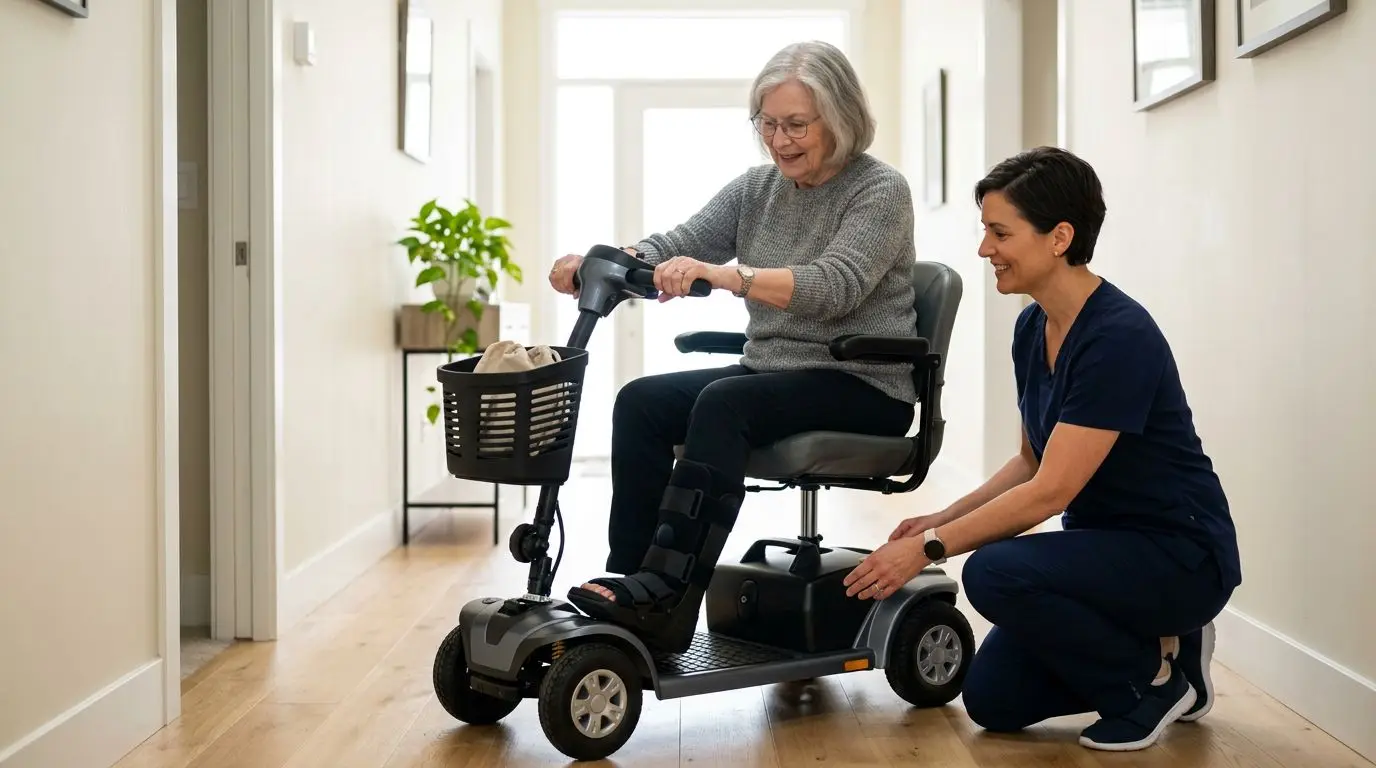
Using a Mobility Scooter After a Foot, Ankle, or Leg Injury: Safety Considerations Before You Ride
14 min read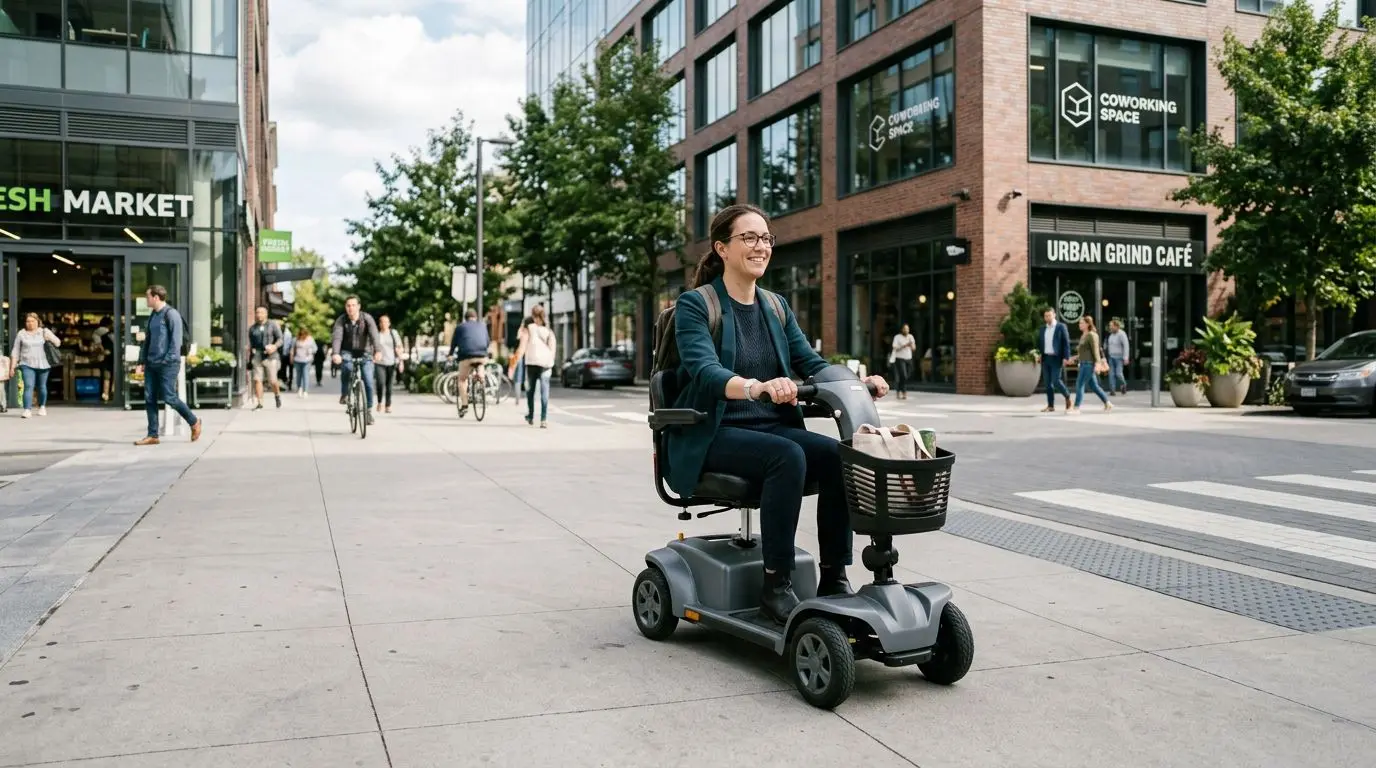
Mobility Scooters for Adults Under 65: Work, Errands, Fatigue, and Long-Term Mobility Needs
13 min read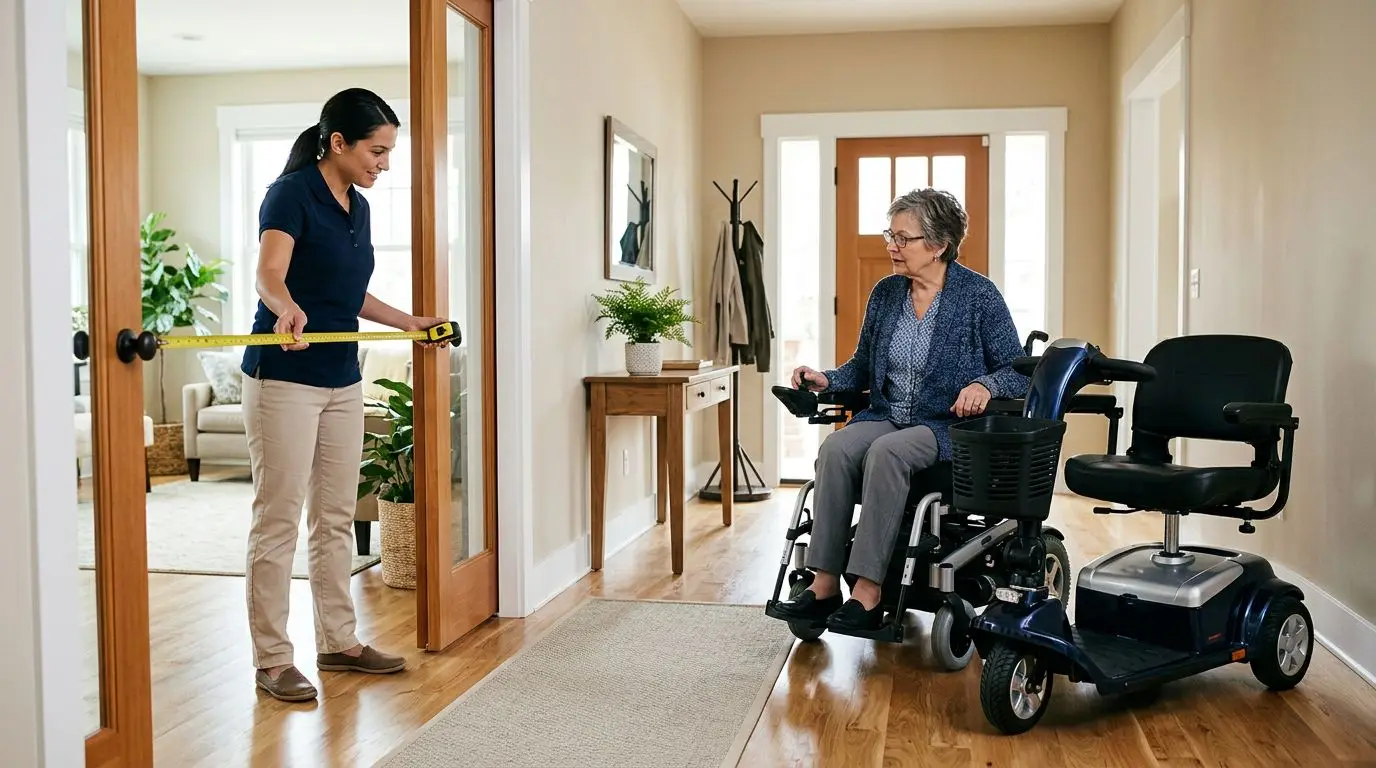
Mobility Scooter vs. Power Wheelchair: Which Mobility Device Is Right for You?
15 min read